Every Second

Eternity Playhouse, July 1

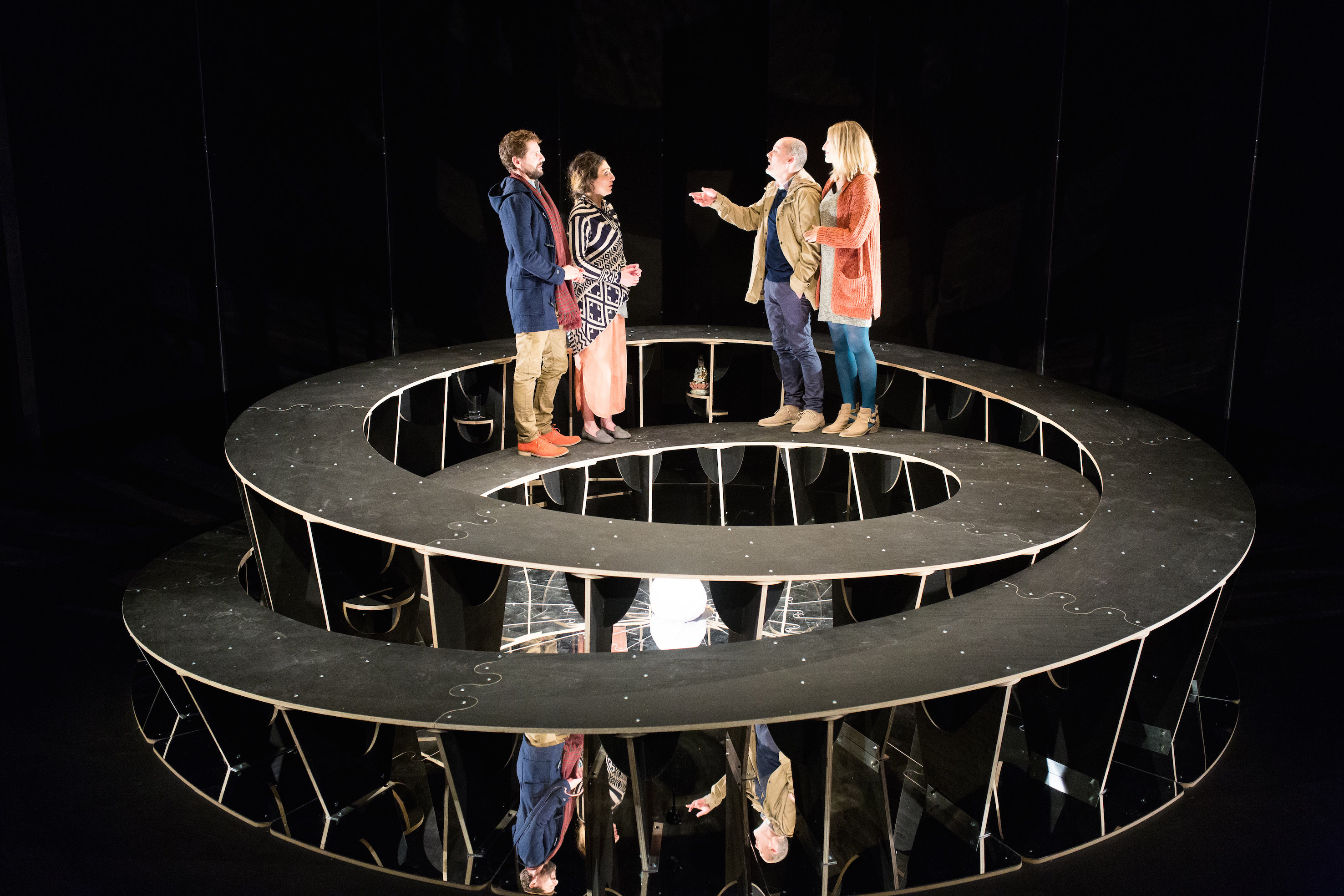
Simon Corfield, Julia Ohannessian, Glenn Hezeldine, Georgina Symes. Photo: Louis Dillon-Savage

Simon Corfield, Julia Ohannessian, Glenn Hezeldine, Georgina Symes. Photo: Louis Dillon-Savage

“How could there not be a baby? With all that love?”

So says Bill in Every Second, a new Australian play by Vanessa Bates about two couples struggling to conceive.

Bill (Glenn Hazeldine) and Jen (Georgina Symes) decide to try IVF and stay strong through the ordeal. Their younger friends Meg (Julia Ohannessian) and Tim (Simon Corfield) are finding their quest for a baby more stressful.

Meg opts for natural therapies but is becoming very anxious. Tim is heartily sick of vile-tasting herbal remedies and sex becoming a chore. (There are several candid representations of sex and fertility testing, just so you know.)

Bates’s writing is pared back, heightened and very funny at times. She creates believable characters but needs to explore their situation in greater emotional depth if we are to be moved by their plight. Desperately wanting a child and not being able to have one is emotionally devastating for many people and Bates goes some way to capturing that. But it would be interesting if she were to analyse why they want a child so desperately. Is it just the hormonal urge or something else?

Certain things in the script (a hit-and-run accident, a plea to a dead friend, an extramarital fling) feel unresolved and rather cursorily dealt with, while a sperm ballet (a nod, presumably, to the sperm scene in Woody Allen’s film Everything You Always Wanted to Know About Sex) sits oddly and isn’t that funny.

That said, Shannon Murphy directs a terrific, nifty, inventive production for Darlinghurst Theatre Company, with strong performances from all four actors. Andy McDonell’s abstract set – a spiral ramp around a womb-like core – works extremely well.

One in 33 Australian babies are conceived via IVF so Bates has tuned into a common experience. For the drama to resonant more broadly, she could usefully expand her story and deepen its emotional layers.

Every Second plays at the Eternity Playhouse in Darlinghurst until July 27. Bookings: www.darlinghursttheatre.com

A version of this review appeared in the Sunday Telegraph on July 13

Mario

Hayes Theatre Co, July 9

Blake Bowden and Phil Scott. Photo: supplied

Blake Bowden and Phil Scott. Photo: supplied

The new cabaret show Mario, conceived and performed by Phil Scott and Blake Bowden, takes a fairly straightforward biographical approach to the life of Mario Lanza, lacing the narrative with much of the music he was famous for singing.

With his glorious romantic tenor voice, the Brooklyn-born American-Italian was a 1950s superstar. He could have sung at the Met but chose to stay at MGM, where he had become a silver screen heartthrob, in order to play his hero in The Great Carouso.

Lanza’s career blazed brightly – but fizzled out just as quickly. He over-indulged in food and drink, and threw his weight around on set, getting himself sacked from MGM’s The Student Prince. He died aged 38, probably from a pulmonary embolism – though there were rumours the mafia had bumped him off.

Written by Scott and directed by Chris Parker, the show takes a linear, chronological approach. Given the 70-minute time constraint, it fairly hurtles through Lanza’s life: his discovery, rocketing career, marriage, the war and his demise.

Some things like his many affairs are dealt with in a phrase or two, while cheeky jump cuts help pack it all in. A brief war scene is followed by the comment, “Well, now that the war’s over” (or words to that effect). And on we go.

Scott’s script is well-written but is a fairly superficial skimming over Lanza’s life with just enough information to link the musical numbers.

Although Bowden doesn’t have quite the same dark, passionate, Italianate sound as Lanza, he does have a lovely tenor voice and sings the material beautifully, moving effortlessly between numbers including Granada, Your tiny hand is frozen from La Boheme, Nessun Dorma, We’ll Meet Again, The Loveliest Night of the Year, and the drinking song from The Student Prince.

Lanza’s growing girth, so frequently referred to, is left to our imagination – (Bowden is a lithe, trim figure) – and a padded jacket or some such costuming might not go astray.

Scott accompanies him brilliantly on piano, with his usual panache. He also plays a cavalcade of characters including a singing teacher, Louis B. Mayer, a personal trainer and a mafia hit man, lending the piece an extra theatricality.

If you know about Lanza, there’s nothing terribly surprising here in terms of the story or the way it is told. But for many in the opening night audience it was clearly a wonderful nostalgia trip. For those who don’t know about Lanza, it’s an entertaining introduction to a legendary performer who died all too young, that may well send them in search of more information.

Mario plays at the Hayes Theatre Co tonight and tomorrow at 6.30pm. Bookings: www.hayestheatre.com.au

Love and Death and an American Guitar

Hayes Theatre Co, July 6

Toby Francis. Photo: supplied

Toby Francis. Photo: supplied

Even if you don’t know the name Jim Steinman, you will almost certainly know many of his songs. He wrote Meatloaf’s epic Bat out of Hell, for starters, along with Total Eclipse of the Heart, Holding Out for a Hero, You Took the Words Right Out of My Mouth and It’s All Coming Back to Me Now.

In his new cabaret show, Love and Death and an American Guitar, Toby Francis picks up a red Fender Stratocaster and in the guise of Steinman gives voice to his songs, ambitions and frustrations. Chief among the latter are his bitter resentment at Meatloaf getting all the glory (and the money) and his angst at never getting his musical Neverland off the ground.

Francis, who wrote the show, has employed a clever structure in which he has Steinman talk through his ideas for Neverland – a dystopian take on J.M. Barrie’s Peter Pan, set in New York, which he is struggling to finish – as if pitching the show to potential producers.

Steinman did, in fact, begin his career in musical theatre, where his credits include writing the lyrics for Andrew Lloyd Webber’s Whistle Down the Wind and music for Dance of the Vampires. In 1997, he held a workshop of Neverland, three songs from which were picked up by Meatloaf: Bat out of Hell, Heaven Can Wait, and The Formation of the Pack, which was re-titled All Revved Up With No Place to Go.

Francis begins his show with Steinman’s spoken rock song Love and Death and an American Guitar (later recorded as Wasted Youth) and from there launches into Bat Out of Hell.

With occasional support from guest singer Noni McCallum, he rips through many of Steinman’s hits, his rock tenor voice well suited to the material. The dialogue gives us a fascinating taste of Steinman’s career and the musical that Neverland might have been, as well as a keen sense of his disillusionment.

Directed by Neil Gooding with moody projections evoking the world of Neverland by production designer Lauren Peters, the show begs to be performed with a fierce, rocking live band but musical director Andrew Worboys does a good job on piano and synthesizer.

The three-performance season as part of the Hayes Theatre Co Cabaret Season ended on Sunday with Francis going down on bended knee to propose to Peters at the curtain call. What an encore!

The show deserves to make a return – and doubtless will.

Snow White – Winter Family Musical

State Theatre, July 4

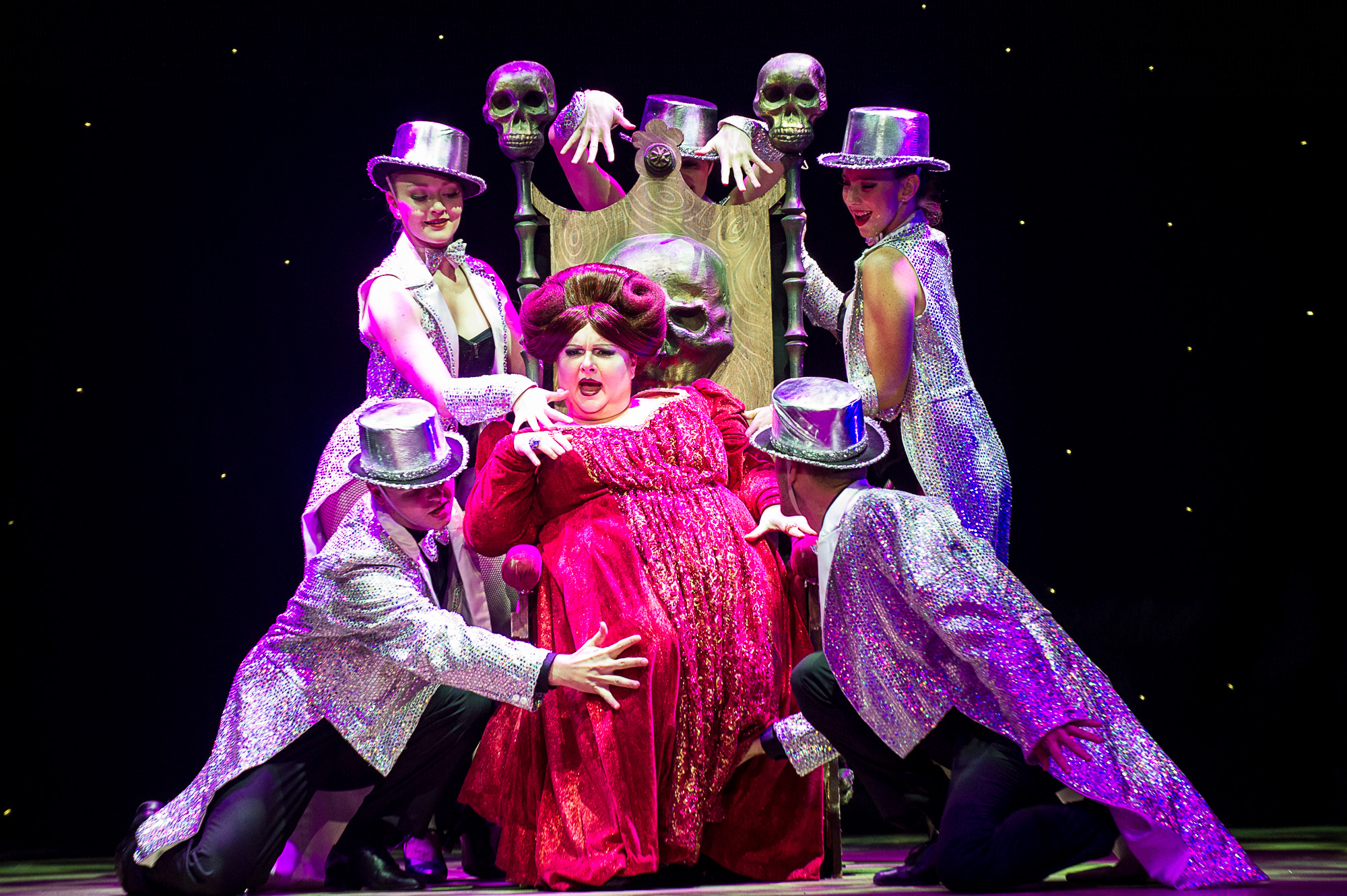
Magda Szubanski and ensemble. Photo: Kurt Sneddon, Blueprint Studios

Magda Szubanski and ensemble. Photo: Kurt Sneddon, Blueprint Studios

The Christmas pantomime is a popular British tradition. After success in the US, Bonnie Lythgoe hopes to introduce an annual panto here. If her first production, Snow White – Winter Family Musical, is anything to go by, she could be onto a winner.

Snow White takes the time-honoured panto formula and gives it a contemporary shake, adding pop songs by the likes of One Direction and Michael Jackson, and lacing the script with just enough local references and topical jokes for both adults and children.

The costumes and old-school painted backdrops hark back to classic panto, giving the show a nostalgic charm, and look great.

On opening night, the performers quickly involved the audience who entered into the spirit of it with gusto, booing the Wicked Queen, shouting to warn Snow White not to eat the apple, and shrieking during the famous ghost gag.

Lythgoe, who produces and directs, has cast the show cleverly with celebrities and actors who understand the performance style. Magda Szubanski, in particular, is fabulous as the wicked Queen Grismalda, interacting with the audience with quick-smart ease.

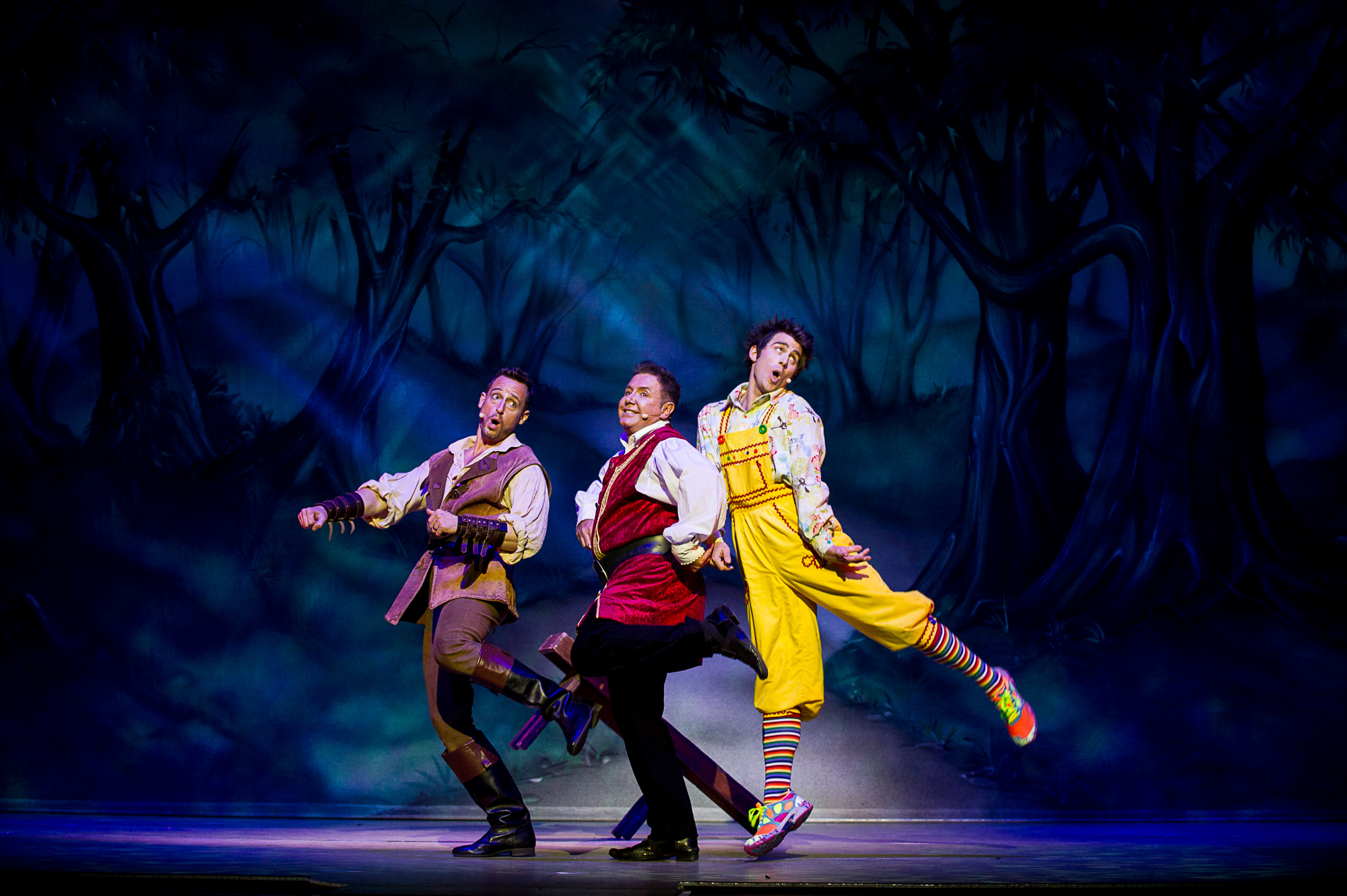
Josh Adamson, Peter Everett and Jimmy Rees. Photo: Kurt Sneddon, Blueprint Studios

Josh Adamson, Peter Everett and Jimmy Rees. Photo: Kurt Sneddon, Blueprint Studios

Jimmy Rees (aka Jimmy Giggle from the ABC TV show Giggle & Hoot) also nails it as the hapless jester Muddles, who is hopelessly devoted to Snow White. Both of them pitch their performances perfectly, mining every ounce of comedy without overdoing it.

Newcomer Erin Clare (who was discovered during a national search for an unknown performer to play the role) shines as Snow White, embodying just the kind of fairytale heroine that little children imagine. Peter Everett is endearing as Chambers, loyal courtier and friend to Snow White, Andrew Cutcliffe is suitably dashing as Prince Handsome, and Josh Adamson has the right swagger as Herman the Huntsman. Sir Cliff Richard and Kyle Sandilands lend strong support as the Queen’s (pre-recorded) two-faced mirror.

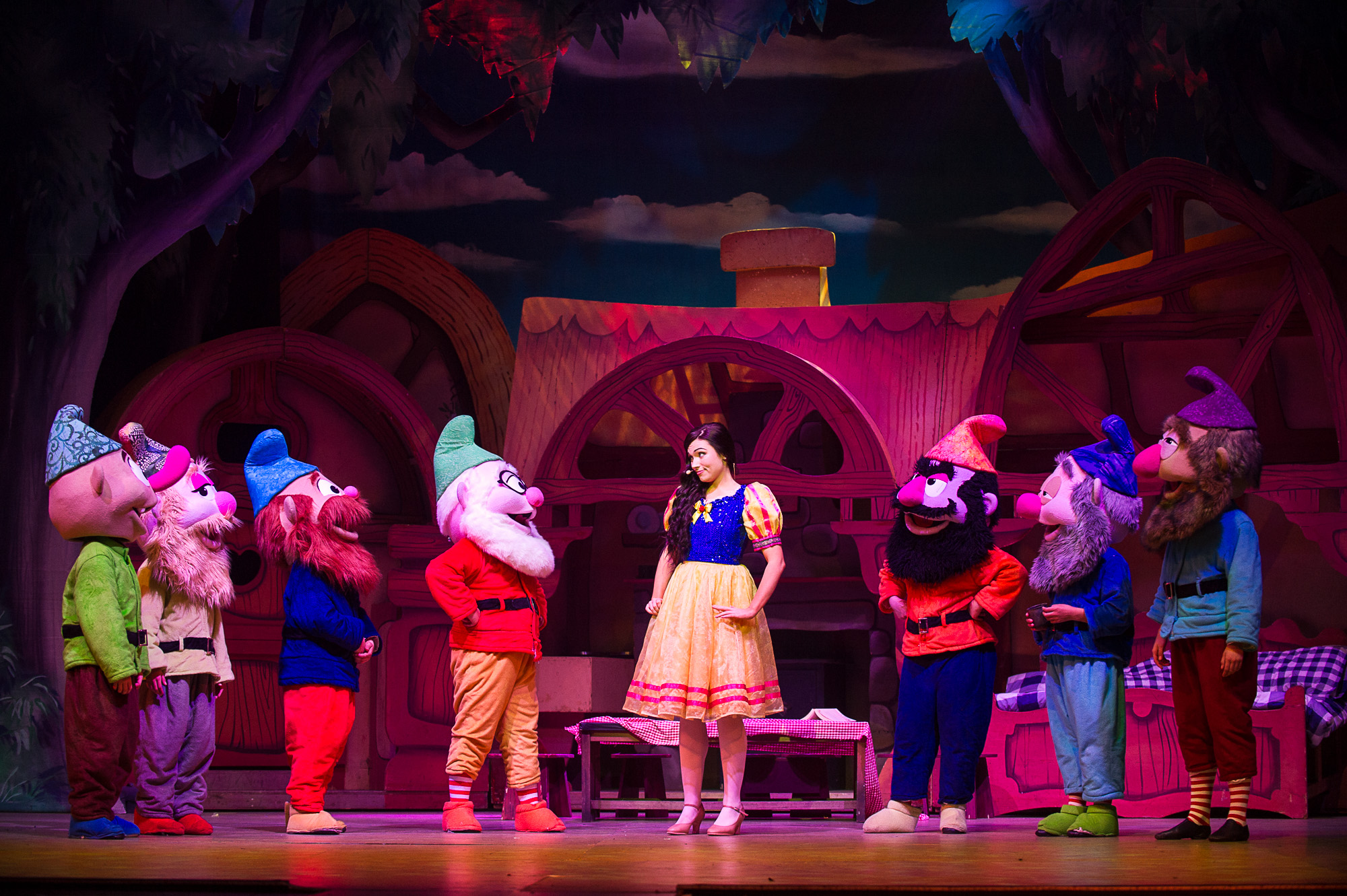
The seven dwarves are played by children in cartoony heads, straight out of a picture book or animated film, which works surprisingly well.

Erin Clare with the seven dwarves. Photo: Kurt Sneddon, Blueprint Studios

Erin Clare with the seven dwarves. Photo: Kurt Sneddon, Blueprint Studios

Running just over two hours including interval, Snow White does feel a little long at times, particularly the extended ghost gag. The odd nip and tuck wouldn’t hurt. However, the three little girls in front of us, who ranged in age from around three to six, clearly had a wonderful time and hardly a restless moment.

In Lythgoe’s care, Snow White is good old-fashioned entertainment and great fun for all the family. “Oh no it isn’t! Oh YES it is!”

Snow White – Winter Family Musical plays at Sydney’s State Theatre until July 13. Bookings: www.ticketmaster.com.au or 136 100

A version of this review ran in the Sunday Telegraph on July 6

The Chimney Sweep

City Recital Hall, July 5

Stuart Haycock and Amelia Farrugia. Photo: Keith Saunders

Stuart Haycock and Amelia Farrugia. Photo: Keith Saunders

The surtitles before the start of The Chimney Sweep announce the restoration of Salieri’s reputation – and Pinchgut Opera certainly does him proud with this delightful production.

Most people these days would only know Antonio Salieri’s name from the 1984 Academy Award-winning film in which he was depicted as a mediocre composer who poisoned his fierce rival Mozart out of jealousy.

In truth, Salieri was more famous in his day than Mozart and almost certainly did not murder him. But where Mozart is now one of the most performed composers in the world, Salieri’s music is rarely heard.

Thanks to Pinchgut – which dedicates itself to the presentation of rarely seen operas from the 17th and 18th centuries – Sydneysiders have the chance to see the Australian premiere of Salieri’s comic work The Chimney Sweep (Der Rauchfangkehrer). A huge hit when it was first staged in 1781, it all but disappeared after the mid-1800s.

The Chimney Sweep is a rollicking comedy centring on Volpino, a musically gifted chimney sweep who is in love with Lisel, a cook in the household of wealthy widow Mrs Hawk and her stepdaughter Miss Hawk.

Learning that Mr Bear and Mr Wolf have won the lottery and hope to marry the Hawks, Volpino and Liesel cook up a plan to better themselves financially.

Pretending to be an Italian count disguised as a sweep, Volpino uses his musical skills to worm his way into the affections of the Hawks who he then auctions off to Wolf and Bear. From there it spins off into all kinds of comic complications – but as you’d expect it all ends happily.

Right from the start of the overture you can hear the fun in Salieri’s music, emphasised by a quick little leap of joy by Erin Helyard, who conducts the marvellous Orchestra of the Antipodes. The music doesn’t compare to Mozart’s operas (though it is often reminiscent of Mozart) but much of it is lovely and thoroughly enjoyable.

Written as a singspiel in which the musical numbers alternate with dialogue, Pinchgut performs it in English. Director Mark Gaal has translated the dialogue, while Andrew Johnston has translated the lyrics. Both have done a great job. Occasional phrases like “My god, they go ballistic” had the audience chuckling but the translations aren’t so tricksy that they compromise the original 18th century setting.

Gaal has staged a simple but effective production with gorgeous costumes and set by Emma Kingsbury. Performed against a gold wooden backdrop with a huge gargoyle-faced fireplace, and just a few props, Gaal uses signs (flamboyantly displayed by Gary Clementson as the servant Hansel) to announce each new location.

The performers all handle the dialogue and dramatic challenges extremely well, playing the comedy to the hilt, while the ladies really shine vocally. Amelia Farrugia is outstanding as Mrs Hawk and young soprano Janet Todd is also very impressive as Miss Hawk. Together they steal the show.

Stuart Haycock has a fairly light tenor voice but brings plenty of charisma to the role of Volpino. There is strong support from David Woloszko as Mr Bear, Christopher Saunders as Mr Wolf, Alexandra Oomens as Lisel and David Hidden as the master chimney sweep Tomaso, as well as Clementson, Nicholas Hiatt, Troy Honeysett and Sabyrna Te’o as the servants. The Sydney Children’s Choir makes up the cast as Tomaso’s young apprentices.

Overall, The Chimney Sweep is lots of fun and yet another feather in Pinchgut’s already well-covered cap.

The Chimney Sweep has its final performance tonight. Bookings: www.cityrecitalhall.com or 02 8256 2222

Hedda Gabler

Belvoir St Theatre, July 2
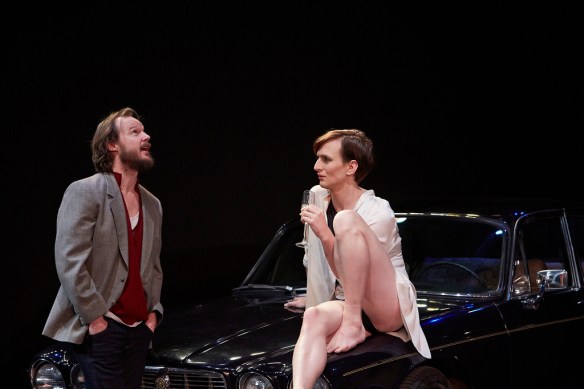
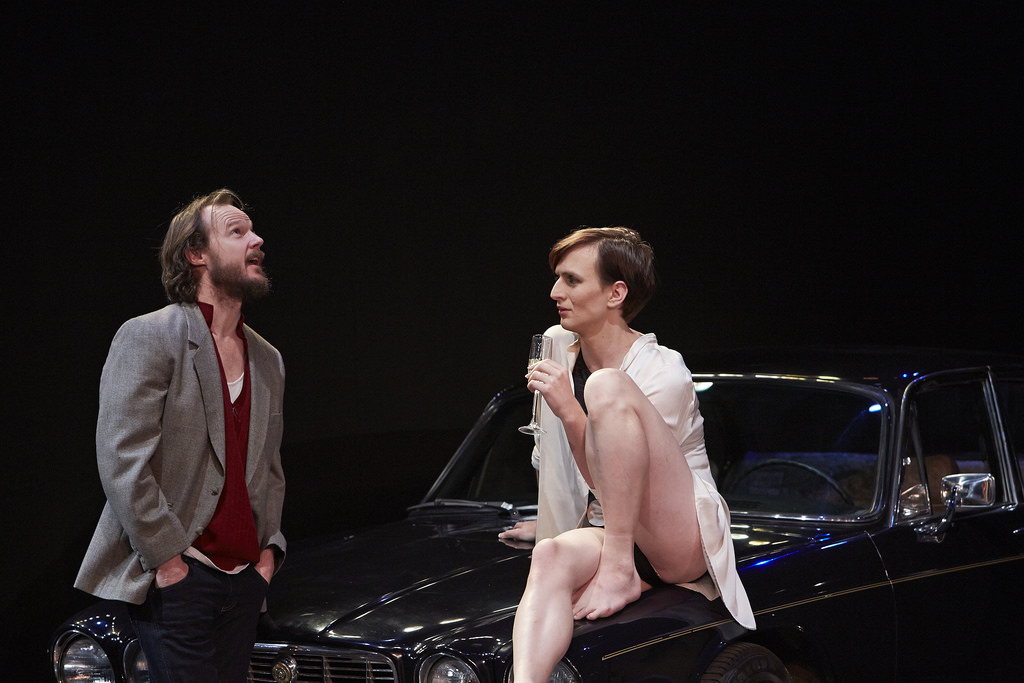
Oscar Redding and Ash Flanders. Photo: Ellis Parrinder

Oscar Redding and Ash Flanders. Photo: Ellis Parrinder

At the end of Belvoir’s new production of Henrik Ibsen’s Hedda Gabler you come out thinking why? Why to many things in the production, but most particularly why cast a man in the title role?

Written in 1890, Hedda Gabler is one of the great dramatic female roles. There are few enough of them to begin with. What’s more, she is a strong woman feeling so trapped by a repressive, male-dominated society and unfulfilled marriage that she eventually finds herself in a situation where she believes the only escape is suicide.

A production needs to offer a fresh, compelling insight to justify casting a man in the role – and we don’t get that here.

Naturally, there has been a huge amount of interest and coverage around the decision by director Adena Jacobs to cast Ash Flanders as Hedda. Flanders is a co-founder of Melbourne’s queer indie theatre group Sisters Grimm, which has gone from cult following to a mainstream presence.

I saw Flanders play a glamorous, alcoholic housewife in Little Mercy, Sisters Grimm’s send-up of the “evil child” movies. He did it brilliantly. His performance was poised, very funny and believable within the camp, spoofy world they set up.

However, take him out of that world where he has so much flair and he doesn’t look quite so convincing – not on the basis of the choices made in this production anyway.

In interviews, Jacobs has said that casting Flanders “frames the crisis of Hedda Gabler as one of identity, and the problems of difference, rather than solely one woman’s drama.”

Flanders has said he’s “playing Hedda as written, as a person first, then as a woman and below that is the male actor. Adena has been saying you will forget that you are watching a man but at the same time there are moments that we can bring that to the forefront and it becomes something different altogether, hopefully something that is post-gender. Because I think Hedda is almost beyond gender, she is almost a mythical creature.”

With his own hair and a little make-up Flanders (who spends much of the production in a swimsuit) looks somewhat androgynous but you never forget that he is a man. There are a couple of moments when he briefly dons a long wig only to quickly toss it aside again. There are titters in the audience at the mention of a possible pregnancy.

At one point he stands naked. It’s a somewhat confusing image given the flat male chest but female genitalia (‘tuck job’ presumably) leading you to question exactly who he/she is supposed to be. Jacobs presumably presents this image of Hedda as both man and woman to underline the universal nature nature of her situation – as one of difference rather than solely a woman’s dilemma, as she articulated – but that sense of universality didn’t resonate for me in the production.

Clearly there’s no point in Flanders playing a woman so convincingly that we think he is one. You might as well cast a woman. But his performance doesn’t transcend the novelty of the casting or lend any fresh insight to the play.

His Hedda moves and speaks at one pace. She is forever observing or talking with a quiet, cold detachment, while posing languidly. Instead of the mass of paradoxes and emotional complexity usually associated with her, his Hedda feels flat and one-dimensional. Even when she plays with the pistol or guns down people in a violent video game, it’s done without any display of emotion. We never see any vulnerability, she just comes across as icily manipulative. Hedda may be bored, but she shouldn’t be boring and she comes perilously close to that here. It’s hard to see quite why all the men around her are in her thrall.

What’s more, there is precious little chemistry or tension between Flanders and any of the other actors – all of whom seem to be wrestling with characters that feel underwritten in Jacobs’ adaptation.

Marcus Graham is the most compelling as Judge Brack, played here as a suave, louche playboy, while Tim Walter’s Tesman is a bland, ineffectual, anxious figure. Oscar Redding fires things up briefly as Lovborg, and Anna Houston as Thea Elvstead and Lynette Curran as Aunt Julie bring some warmth to the production. But none of the cast seems really comfortable and you don’t feel anything for any of them.
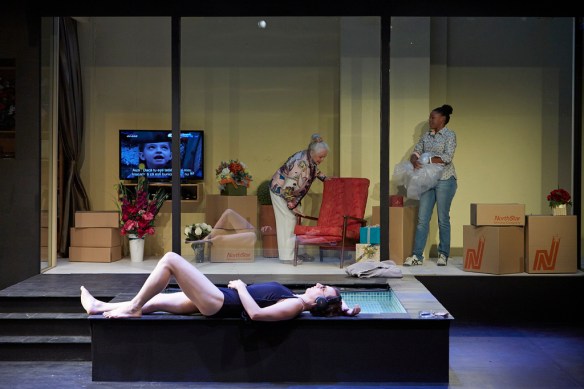
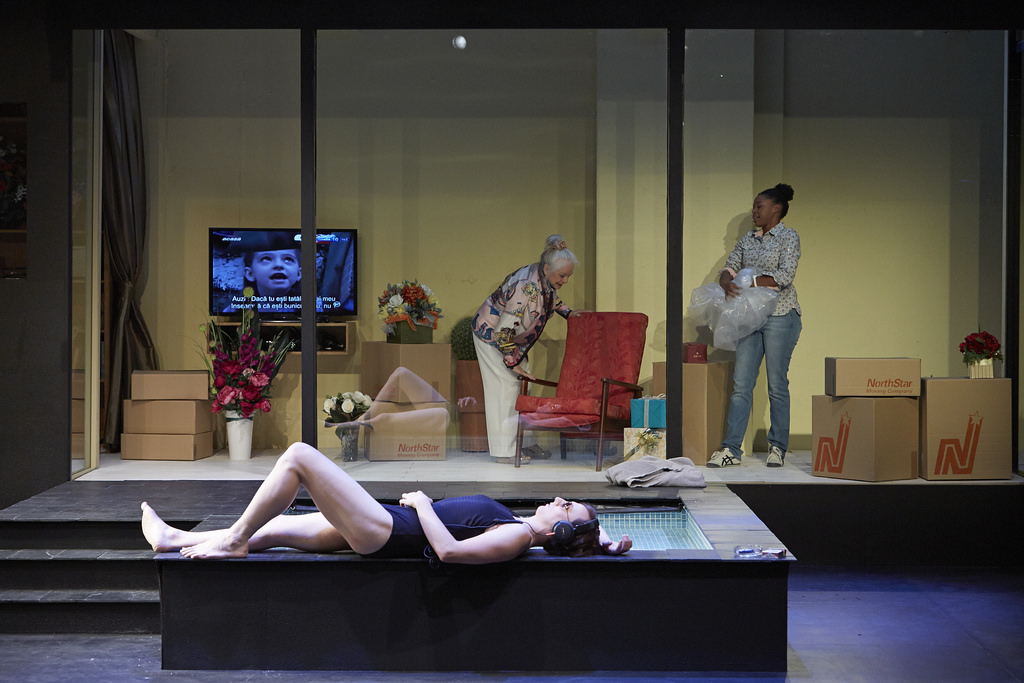
Ash Flanders, Lynette Curran and Branden Christine. Photo: Ellis Parrinder

Ash Flanders, Lynette Curran and Branden Christine. Photo: Ellis Parrinder

Jacobs’s decision to set the production in a contemporary world is a bit hit and miss.

Entering the theatre there is a strong sense of déjà vu. The set (by Dayna Morrissey) features the interior of a spanking new, soulless house at the back of the stage. Seen through sliding glass doors, it’s reminiscent of Ralph Myers’s set for Benedict Andrews’s The Seagull (along with any number of other glass boxes seen on Sydney stages in recent years). In front of the house is a small swimming pool. A large, flash, vintage car sits to one side of the stage, which inevitably brings Belvoir’s 2012 Death of a Salesman to mind.

There are sound issues whenever the actors are inside the house or in the car, with their amplified voices sounding muffled. In the car, it’s actually hard to understand some of what is said.

The production starts slowly in silence. A television inside the house shows a film featuring a wedding. (Hedda and Tesman are, of course, just back from their honeymoon). Hedda gazes from the window blankly then lies by the side of the pool with headphones on. The maid (Branden Christine) smokes a cigarette behind the car. Tesman arrives home sweating after a run. Not a word is spoken. It sets up the boredom of Hedda’s life – but from there you expect things to start to flare and they don’t.

Jacobs’s adaptation, which runs 90 minutes without interval, uses a lively contemporary idiom while sticking pretty faithfully to Ibsen’s plot (though the script has been ruthlessly pruned). By updating it, however, there are various paradoxes. In a world with television and smart phones wouldn’t Lovborg write his precious book on a computer rather than by hand?

So many things like this become distractions, from Hedda’s bare bottom beneath a short fur jacket to the maid taking a dip in the pool. Would Hedda really have let her maid do that without asking? And how come when Hedda locks Thea in the car, she’s desperate to get out but apparently sleeps through a vital conversation not long after being shut in?

The fact that you sit there asking yourself such questions when you should be immersed in the drama is indicative of how little the production engages. It’s a disappointing experience that seemed to promise so much, for whatever the success, or otherwise, of the gender politics at play, the production falls flat as a piece of drama.

Hedda Gabler is at Belvoir St Theatre until August 3

 

Patyegarang, Bangarra Dance Theatre

Drama Theatre, Sydney Opera House, June 24

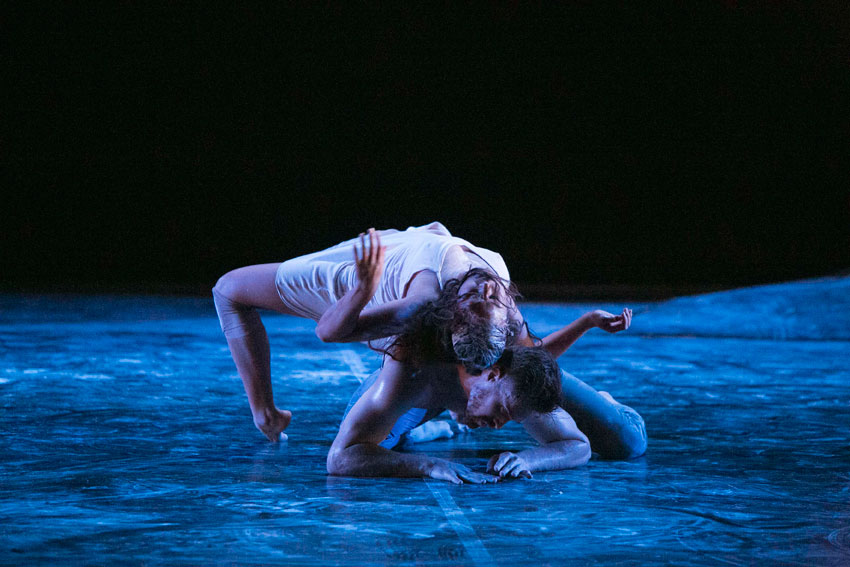
Jasmin Sheppard and Thomas Greenfield. Photo: Jess Bialek

Jasmin Sheppard and Thomas Greenfield. Photo: Jess Bialek

Patyegarang is a luminously beautiful work in its staging, its performance and the story it tells.

Choreographed by Stephen Page as the centerpiece of Bangarra Dance Theatre’s 25th anniversary year, it is the first Sydney story that the company has tackled – and what a fascinating “first contact” tale it tells.

The inspiration was the relationship between Patyegarang, a 15-year woman of the Eora nation, and Lieutenant William Dawes, an astronomer, linguist and mathematician who arrived with the First Fleet and became the colony’s timekeeper. Patyegarang befriended Dawes and taught him her language and about her culture – which he detailed in his diaries, rediscovered at the University of London in 1972.

In creating this 70-minute work, Page successfully avoids literal story telling. Instead the piece unfolds in haunting, almost dreamlike fashion through 13 scenes, which take different themes that evoke the spirit of the land and people before the arrival of the early settlers, their culture, the notion of time, conflict, intimacy, resilience etc.

The choreography is lovely, combining the grounded traditional movement now so closely associated with the company with contemporary dance. The contrast between the movement for Dawes and the other indigenous men could have been highlighted a little more initially but there are some stunning solos, duets and ensemble numbers.

Jasmin Sheppard is radiant as Patyegarang, dancing with a lithe, gentle, expressive fluidity. A tiny figure next to guest artist Thomas Greenfield who is a strong, striking presence as Dawes, they are gorgeous together. Elma Kris and Waangenga Blanco are also standouts.

The Bangarra ensemble in Patyegarang. Photo: Jess Bialek

The Bangarra ensemble in Patyegarang. Photo: Jess Bialek

Jacob Nash’s stark, rugged set, Jennifer Irwin’s costumes and Nick Schlieper’s richly coloured lighting make for a work of stunning visual beauty, while David Page’s score, which combines traditional, classical and electronic music with spoken words, has a mesmerising, pulsing quality.

Dawes built up a relationship of trust with the local Aboriginal people. He wanted to stay in Sydney but was ordered home after he defied an order to take part in a punitive expedition against them. Patyegarang’s grief as she lies with his red jacket over her head is here a deeply moving image.

Richard Green, a Dharug man who acted as the cultural advisor for the project puts it simply: “Dawes was different, he listened.” Patyegarang intimates what might have been had there been more people like him. A beautiful work.

Patyegarang plays in Sydney until July 5 then Canberra July 17 – 19, Perth July 30 – August 2, Brisbane August 15 – 23 and Melbourne August 28 – September 6.

Ruthless! The Musical

Reginald Theatre, Seymour Centre, June 20

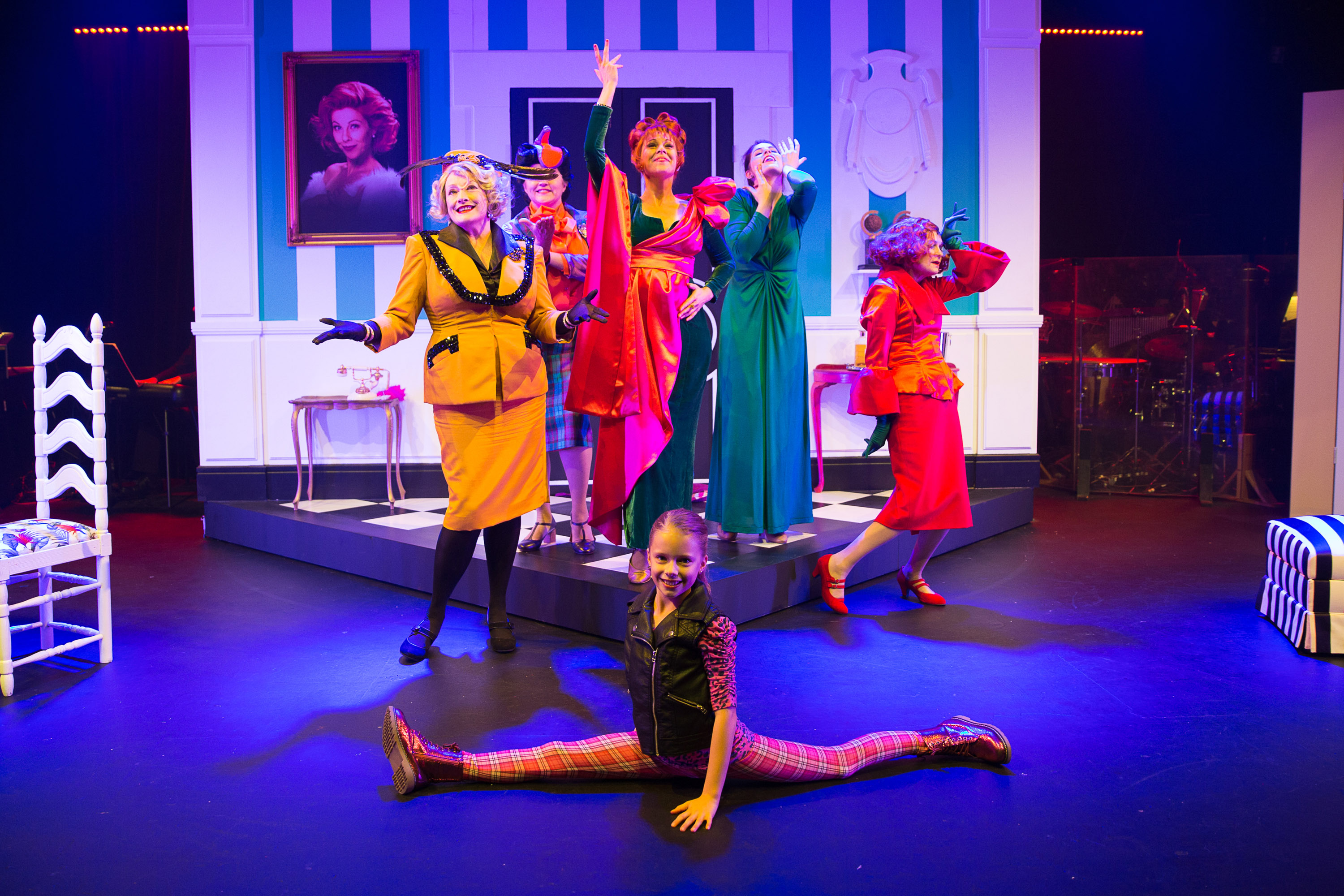
The cast of Ruthless! Photo: Blueprint Studios

The cast of Ruthless! Photo: Blueprint Studios

Eight-year old Tina is done with childhood. She was “born to entertain” and it’s time to get serious. In fact, she’d kill to get to the top. So look out Louise Lerman who lands the lead role in the school musical.

Marvin Laird and Joel Paley’s 1992 off-Broadway show Ruthless! The Musical is a very funny send-up of showbiz, talent and the pursuit of fame.

Featuring an all-female cast of broadly comic characters, most of whom aren’t what they seem, it’s a lightweight, cartoon bright and exuberantly farcical show.

Full of theatrical in-jokes, you’ll get most out of it if you can spot the abundant film and stage references (Gypsy, All About Eve, The Bad Seed etc) but it’s a hoot even if you can’t.

Presented by new Sydney company The Theatre Division, Lisa Freshwater directs a superbly cast, well staged production with stylish set and costume design by Mason Browne.

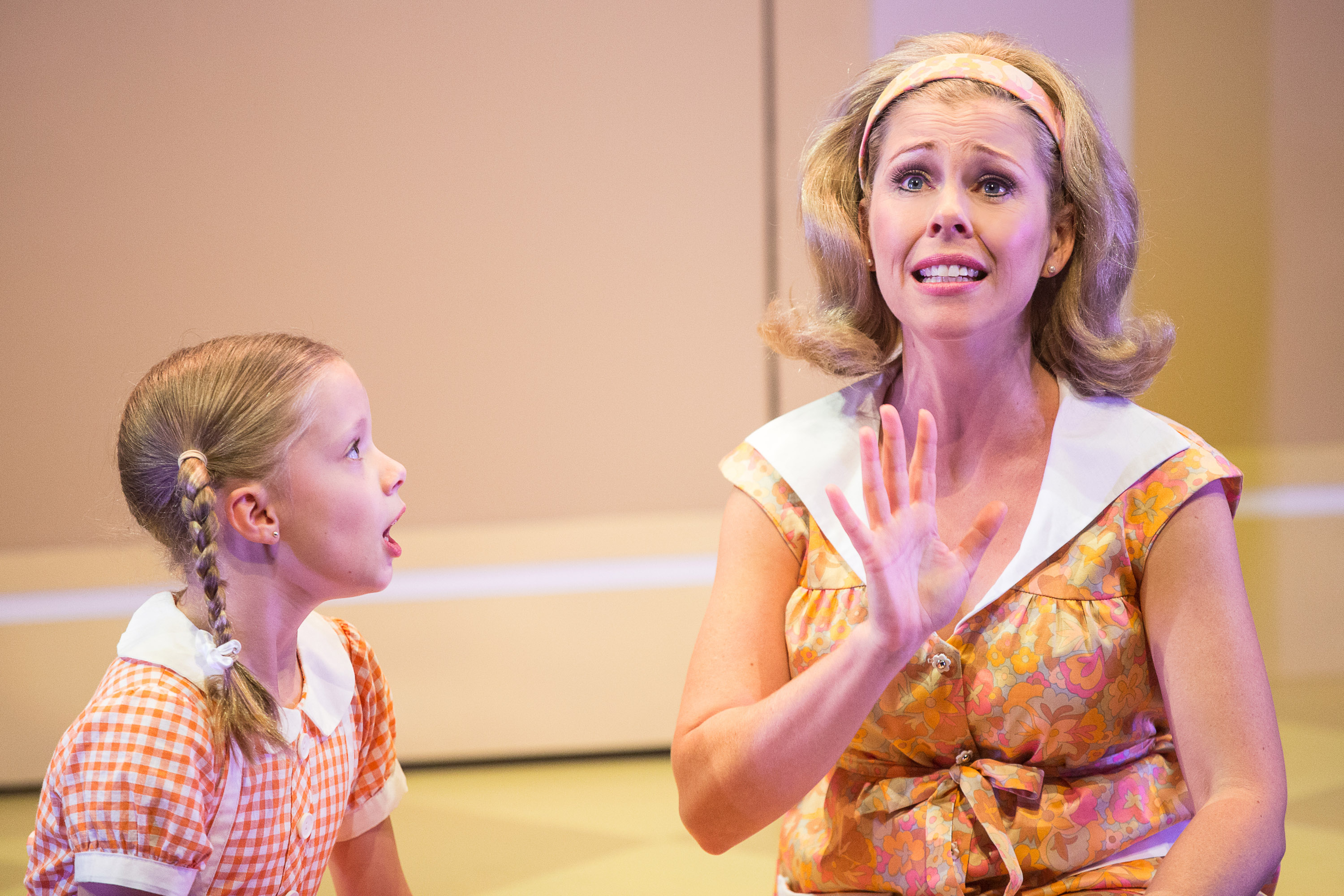
With her agile, powerful voice and delicious sense of comedy, Katrina Retallick is sensational as Tina’s mother Judy, a perfect housewife unaware of the talent running in her veins who makes a stunning transformation in the second act.

Madison Russo and Katrina Retallick. Photo: Blueprint Studios

Madison Russo and Katrina Retallick. Photo: Blueprint Studios

Ten-year old Madison Russo – a pint-sized triple threat with a powerhouse voice – is scarily good as Tina (a role she shares with Jade Gillis) and Geraldine Turner rips it up as Tina’s grandmother, the acidic theatre critic Lita Encore who loves closing shows and hates musicals.

In fact, there are terrific performances from the entire cast, which also includes Margi de Ferranti who is excellent as the school teacher who directs the musical and a star-struck journalist from Modern Thespian, Meredith O’Reilly as agent Sylvia St Croix who is as hell-bent on Tina’s success as Tina herself, and Caitlin Berry as Louise and Broadway personal assistant Eve.

Ruthless! sure ain’t subtle or deep. Towards the end it starts to feel like an overextended sketch but it’s such fun that a good time is guaranteed.

Ruthless! The Musical runs at the Seymour Centre until July 12. Bookings: www.seymourcentre.com or 02 9351 7490

A version of this review ran in the Sunday Telegraph on June 29

Hilary Cole in O.C.Diva

Hayes Theatre Co, June 22

Hilary Cole. Photo: supplied

Hilary Cole. Photo: supplied

Hilary Cole is one of the brightest new stars in Sydney musical theatre. After stepping confidently into the limelight in Squabbalogic’s much admired productions of Carrie and The Drowsy Chaperone, she now takes on her first cabaret show as part of the Hayes Theatre Co Cabaret Season.

Titled O.C.Diva, it’s an interesting, brave little show full of smart song choices, some clever reworking of lyrics and terrific musical arrangements (courtesy of her musical director and accompanist Stephen Kreamer) in which she charts her obsessive compulsive behaviour.

She still has to master the art of delivering her patter as if chatting to the audience rather than reiterating a script (occasionally delivered here at breakneck speed), and she could also work on developing a warmer rapport with the audience (she frequently seems to internalise rather than reach out) but it’s an impressive debut. And she is certainly singing beautifully in that lovely pure voice of hers.

Looking gorgeous in a figure-hugging gown, Cole swans onto stage as if she is an ego-mad diva who treats her pianist (whatever his name is) like shite. It’s a tongue-in-cheek set-up for her opening number “You and Me (But Mostly Me)” from The Book of Mormon, with amusing, rewritten lyrics, but presenting herself this way, even in jest, doesn’t come across as the warmest way to start a show. A little more twinkle in the eye perhaps?

However, once she starts talking about her obsessions – opening a different shaped bottle of water every time she wants a drink, Lord of the Rings, Bernadette Peters and other strange behavioural tics – she gradually draws you in with her honesty and the vulnerability she reveals.

There’s a wonderful section in which she solves a Rubik’s Cube while singing a shimmering medley of Sondheim songs: “Colour and Light” from Sunday in the Park with George, “You Could Drive a Person Crazy” from Company and “Losing My Mind” from Follies.

She also sings “Being Alive” from Company, “No One is Alone” from Into the Woods and “Bill” from Showboat but it’s not all show tunes by any means. Other numbers include Blondie’s “One Way or Another” (with a touch of Phantom) for her story about stalking Peters and a mash-up of Gnarls Barkley’s “Crazy” and Beyonce’s “Crazy in Love”.

Cole is a real talent. As she settles into the cabaret genre, her confidence is bound to grow and this show, which already has much to recommend it, will grow too. Well worth a look.

Hilary Cole in O.C.Diva has one more performance at the Hayes Theatre Co on Sunday June 29 at 8.30pm. Bookings: http://www.hayestheatre.com.au

David Campbell Sings John Bucchino

Hayes Theatre Co, June 18

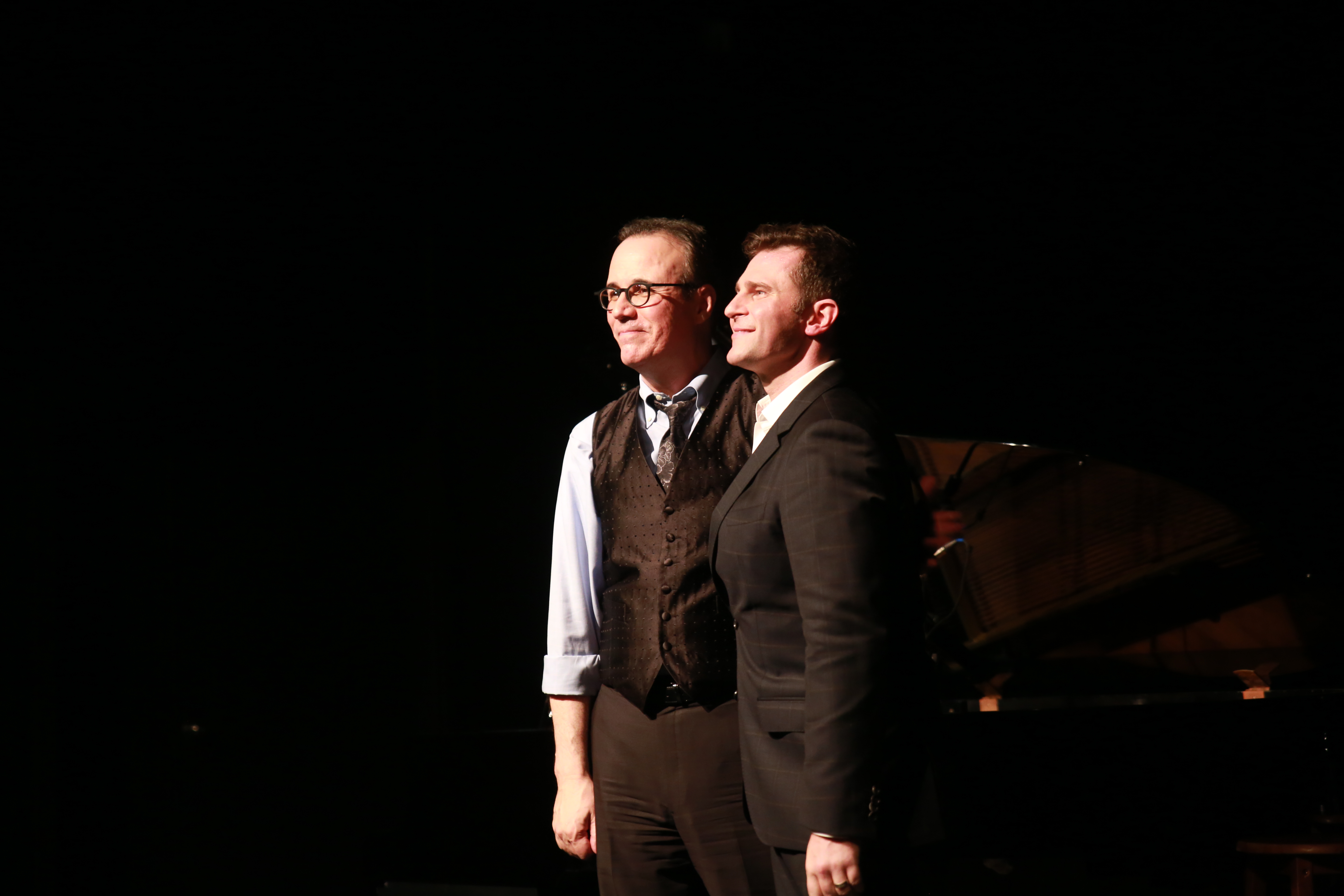
John Bucchino and David Campbell. Photo: Sam Bratby

John Bucchino and David Campbell. Photo: Sam Bratby

David Campbell and renowned songwriter John Bucchino met in New York 17 years ago. Friends ever since, their ease with each other shows in their new cabaret show David Campbell Sings John Bucchino currently playing as part of the Hayes Theatre Co Cabaret Season.

In the intimate setting of the tiny theatre, with Bucchino on piano, they perform songs from across Bucchino’s career, from the heartfelt “Grateful” to the jazzy “Puddle of Love” to a number from the DreamWorks animated film Joseph: King of Dreams.

They’re beautiful songs with lovely, sophisticated melodies and lyrics in which Bucchino wears his heart on his sleeve. Many have a theatrical feel and a strong sense of storytelling. They may not be widely known but they are accessible.

Campbell sings most of them though Bucchino does a few himself, while Bucchino has the lion’s share of the patter as he talks (delightfully) about how the two met, his career and the inspiration for the numbers (often love and loss). Campbell chips in with the odd witty comment and bit of banter but for the most part stands respectfully to one side when Bucchino chats.

When it comes to the musical numbers, Campbell is in fine voice, singing with supreme control and beauty, and connecting to the lyrics with great sensitivity. Highlights include his dramatic performance of “I Stayed” from Bucchino’s 2008 Broadway musical A Catered Affair  – how good it would be to see him back on stage in a musical – and a moving version of Learn How to Say Goodbye, as well as Bucchino singing songs like Unexpressed.

The chance to get so up close and personal with the composer and hear his songs performed by such a superb interpreter makes this a special show.

David Campbell sings John Bucchino is at the Hayes Theatre Co until June 28 and at Riverside Theatres, Parramatta on June 29

A version of this review appeared in the Sunday Telegraph on June 22