Carrie the Musical

Seymour Centre, Sydney, November 15
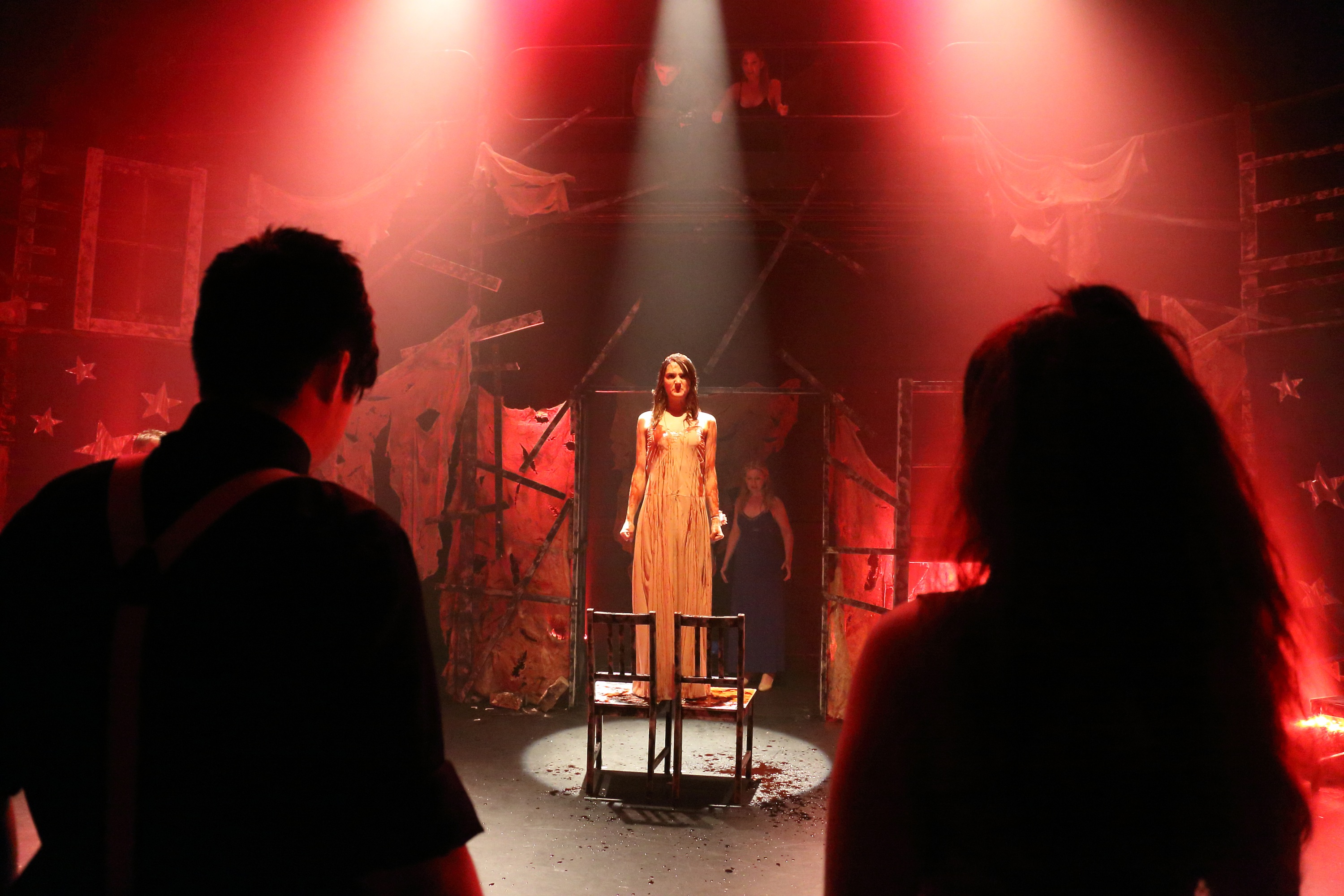
Hilary Cole as Carrie. Photo: Michael Francis

Hilary Cole as a bloodied Carrie. Photo: Michael Francis

How wonderful to finally have the chance to see Carrie the Musical – that most infamous of Broadway flops.

Based on Stephen King’s 1974 novel and Brian de Palma’s 1976 movie, it opened on Broadway in 1988 where it survived just 16 previews and five performances. It comes to Sydney now in the reworked version seen off-Broadway in 2012 thanks to independent musical theatre company Squabbalogic.

Not only is praise due to Squabbalogic for staging the musical here for the first time but they have timed it well given the release this week of Kimberly Peirce’s film remake.

As most would know, the story centres on Carrie, a teenage misfit with a fanatically religious mother who is bullied remorselessly at school. Life isn’t much better at home, particularly when her mother discovers that Carrie has begun menstruating and treats it like the proverbial ‘curse’ from God.

Discovering that she has telekinetic powers, Carrie eventually takes terrible revenge when the bullying turns decidedly nasty at the high school prom.

It would be so easy to camp it up but director Jay James-Moody has played it straight, directing a terrific production, complete with litres of blood, that hones in on genuine emotion and human drama wherever he can find it.

Despite the rewrite, the musical – with music by Michael Gore, lyrics by Dean Pitchford and book by Lawrence D. Cohen – hasn’t ironed out all its problems. The book doesn’t have a great deal of emotional and psychological depth, while the new framing device, which has nice girl Sue  (the sole survivor from the prom) telling the story in flashback via interrogation, feels clunky and unnecessary.  The lyrics, meanwhile, too often veer to the obvious.

The songs are catchy and the score rocks along, though the number in which the kind, sympathetic teacher Miss Gardner urges Carrie to open herself up to love (“Unsuspecting Hearts”) feels inappropriate and unlikely – particularly with intercut dialogue like “Listen to me, you have beautiful eyes.”

Having said all that, I thoroughly enjoyed the show and felt for Carrie – here movingly portrayed by Hilary Cole in a very impressive Sydney debut.

Set in a burnt out gym, with tattered drapes adding a spooky feel, Sean Minahan’s set creates just the right atmosphere, while the telekinetic effects are nicely done.

James-Moody directs with a great deal of assurance and love, establishing a convincingly teenage vibe with his young, enthusiastic cast.

The most powerful scenes (and this is to do with the writing) are between Carrie and her mother Margaret – here superbly performed by Cole and Margi de Ferranti.
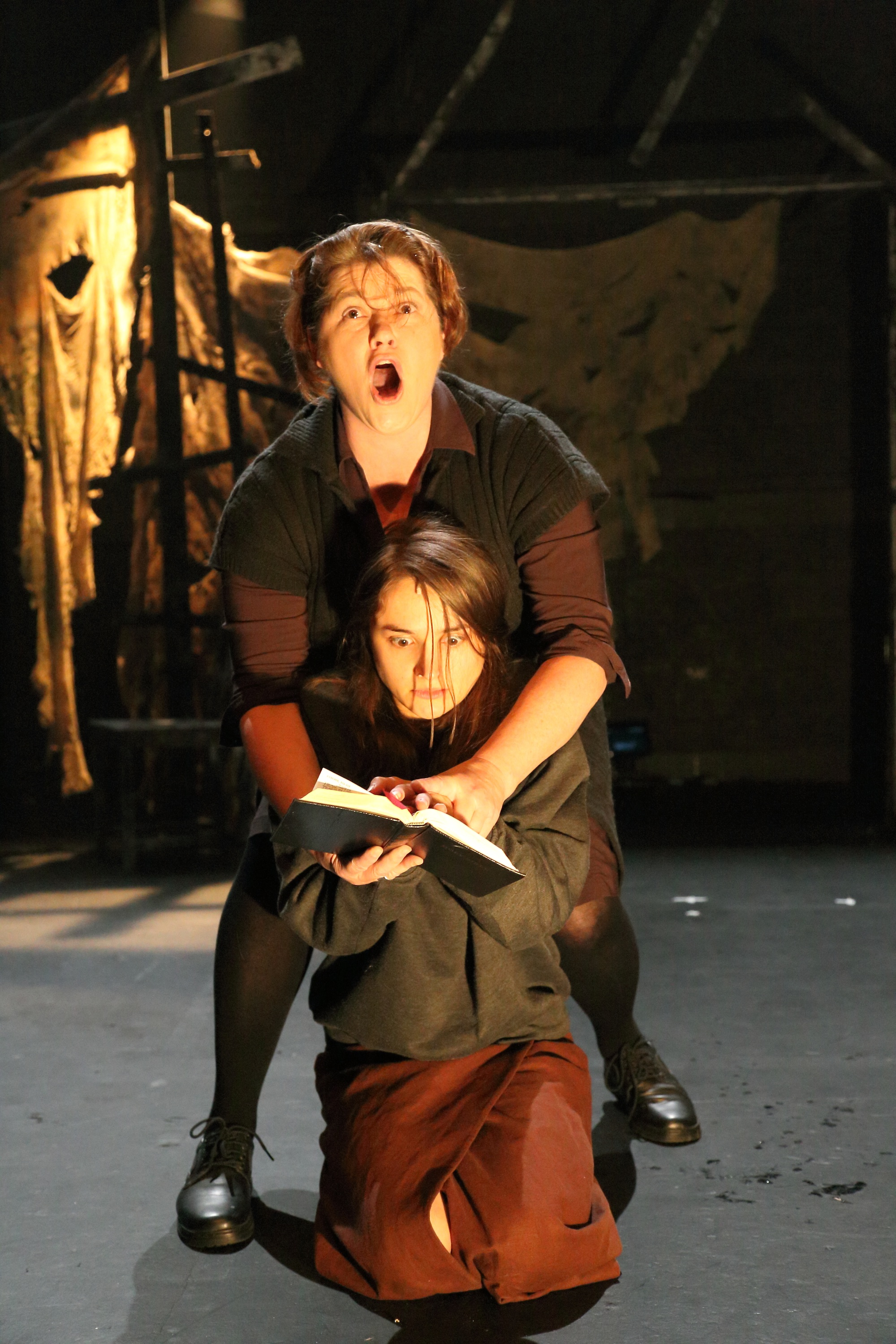
Margi de Ferranti and Hilary Cole. Photo: Michael Francis

Margi de Ferranti and Hilary Cole. Photo: Michael Francis

Cole is a real find. Petite and pretty, she makes a very believable transformation from dowdy outcast in baggy clothes– her shoulders hunched, her eyes constantly downcast – to blossoming Prom Queen. Her pure voice is lovely and she sings from the soul, really connecting to the lyrics so that your heart goes out to her.

De Ferranti is in fine form vocally and dramatically as Carrie’s bitter, fanatical mother, giving her a crazed air. Beneath Margaret’s avenging fear and Carrie’s desperate need to escape, the two of them convincing portray the needy love between them.

Adèle Parkinson is also lovely as all-American-girl-with-a-heart-of-gold Sue, with strong support from Prudence Holloway as bad girl Chris, Toby Francis as her too-easily led, loser boyfriend Billy, Rob Johnson as good guy Tommy, Garry Scale as wry teacher Mr Stephens and Bridget Keating as Miss Gardner, along with the rest of the ensemble (Tim Dal Cortivo, Jaimie Leigh Johnson, Andy Johnston, Monique Sallé, Zach Smith and Maryann Wright).

Musical director Mark Chamberlain leads a sharp, eight-piece band, seated in the balcony above the stage.

Despite the show’s shortcomings, Squabbalogic once again give us a smart, high-energy, engaging production of a rarely seen musical that musical theatre aficionados won’t want to miss.

Carrie the Musical runs at the Reginald Theatre, Seymour Centre until November 30. Bookings: 9351 7940
Dance Clan 3

Bangarra Studio, Pier 4, November 21

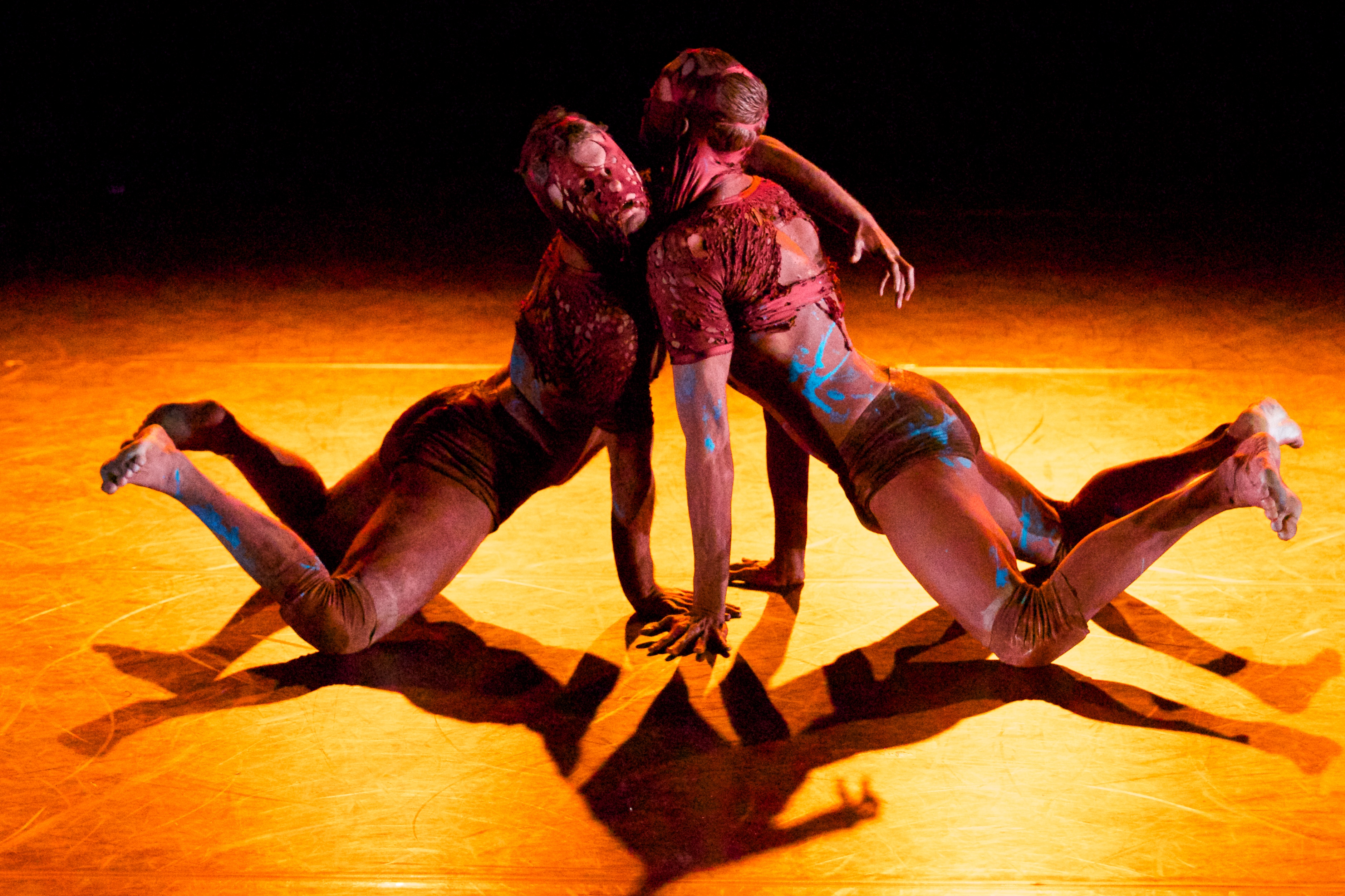
Beau Dean Riley Smith and Leonard Mickelo in Nala. Photo: Greg Barrett

Beau Dean Riley Smith and Leonard Mickelo in Nala. Photo: Greg Barrett

For Bangarra Dance Theatre’s contribution to the inaugural Corroboree Sydney festival celebrating indigenous arts and culture, artistic director Stephen Page commissioned four new works for Dance Clan 3 – a program he initiated in 1998 to nurture storytelling by the company’s artists.

In a bold, pro-active move, he decided this time to commission four of the company’s senior female dancers – Deborah Brown, Yolande Brown, Tara Gower and Jasmin Sheppard – all of whom rose to the occasion with pieces full of beauty and promise.

Performed in the intimate space of the company’s rehearsal studio on Pier 4, the evening began in high spirits with a playful scene at an outdoor cinema in Gower’s Nala. Jumping from deckchairs to dance with giant crisp bags on their feet, it got the night off to a joyous start. Drawing on the love affair between her grandparents in Broome, Nala then turned more serious with duets suggesting social and cultural divide as progress takes its toll on the land and way of life.

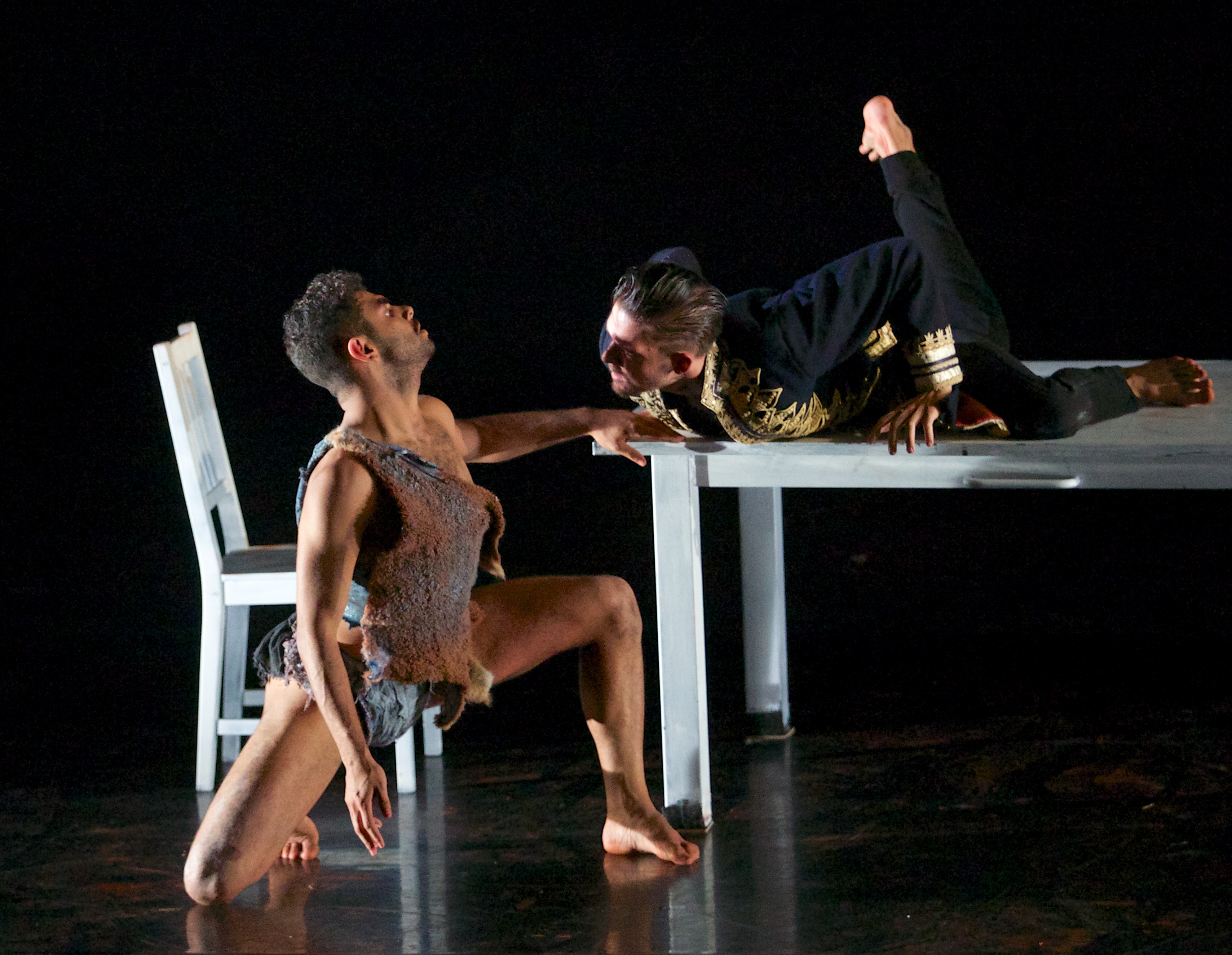
Sheppard’s Macq, centred on and around a large table, explored the 1816 ‘March of Macquarie’ on Aboriginal people after Governor Macquarie’s well-intentioned social policies fell apart, with the might of the colonial power set against the anguish of the Aboriginal people. Daniel Riley was a commanding presence as Macquarie, some of the choreography around the table was wonderfully inventive, while a stunning image of hanging men shook you with its simple beauty and shocking, haunting power.

Beau Dean Riley Smith and Daniel Riley in Macq. Photo: Greg Barrett

Beau Dean Riley Smith and Daniel Riley in Macq. Photo: Greg Barrett

Deborah Brown choreographed a dance film called Dive about pearl fishing in the Torres Strait, shown on a large screen hoisted up on ropes. Interweaving film extracts with choreography featuring two dancers in large diving helmets and dancers depicting the pearls, she created a wonderful underwater world.

Yolanda Browne’s Imprint, inspired by the 1978 women’s Batik project to support native title and Emily Kame Kngwarreye’s yam-dreaming stories, used images of threads, weaving and fabric as a woman is covered with the colours of the earth, eventually becoming part of the land.

All the pieces had a distinctive feel, but they were staged so they flowed one into the other without breaks.

Performing as a true ensemble, the dancing was lovely with Elma Kris shining, while the music by Huey Benjamin, David Page and Steve Francis, set design by Jacob Nash, costumes by Jennifer Irwin and lighting by Matt Cox supported each piece beautifully.

Though the Bangarra style, aesthetic and vocabulary was understandably evident in each work, all four choreographers showed moments of real individuality, suggesting much promise and potential. The night I saw it the performance certainly struck a chord with a packed audience who sat rapt and applauded wildly at the end.

Dance Clan 3 plays at Bangarra’s Studio, Pier 4 until December 1. Bookings: bangarra.com.au

Atomic

NIDA Parades Theatres, November 18

Michael Falzon as Leo Szilard. Photo: Gez Xavier Mansfield Photograph

Michael Falzon as Leo Szilard. Photo: Gez Xavier Mansfield Photography

The life of Hungarian-American physicist Leo Szilard, who was involved with the development of the atomic bomb, is a dark but meaty subject for a musical with plenty of emotional and moral complexity.

However, the new musical Atomic – which is currently playing its world premiere season in Sydney – attempts to cover so much ground while telling his story in linear biographical fashion (apart from an opening scene featuring two young Japanese lovers torn asunder as the bomb falls) that it doesn’t have the depth or impact that it might.

Born in 1898 in Hungary to Jewish parents, Szilard trained as a physicist in Germany but was forced to flee the Nazis with his wife-to-be Trude, going first to England and then to America.

Having conceived the idea of nuclear chain reaction in 1933, he patented the first nuclear reactor with Italian physicist Enrico Fermi and was co-opted to work on The Manhattan Project where he was involved with developing the atomic bomb that was dropped on Japan, despite his own grave misgivings.

After World War II, his work included the development of radiation therapy to treat cancer (which he himself suffered) – something that the musical counterpoints with his guilt about the lives lost in Nagasaki and Hiroshima.

Written by Australian Danny Ginges and American Gregory Bonsignore (book and lyrics) and Australian Philip Foxman (music and lyrics), Atomic traces Szilard’s life from 1933, throwing in such a welter of incidents, characters, themes and ideas that in processing all the information (some of which isn’t really necessary) we aren’t able to focus enough on the character of Szilard, his relationship with the loyal Trude as he puts science ahead of family, or the moral dilemma at the heart of the piece.

Running close to three hours, it feels as if the writers weren’t quite sure how to end it either. Towards the end of the show there’s a powerful song called “What I Tell Myself” about the guilt that all Szilard’s colleagues are feeling as they lie awake at night, then on we go with yet more biographical narrative followed by a ballad for Trude about her love for her husband, which is beautiful but completely out of place at that point.

There’s plenty of interest in there but it needs a tighter focus (a restructure away from straightforward biography perhaps) to really engage you with the characters and themes.

Musically, the score is predominantly rock-based, much of it catchy and some of it rousing. There’s also an Andrews Sisters-like song, clearly inspired by “Boogie Woogie Bugle Boy” as well as Yiddish and Broadway influences. However, a comic number called “America Amore” sung by Fermi sits oddly – an all-too-obvious bid for light relief that doesn’t come off despite David Whitney’s energetic performance.

For this premiere season, American director Damien Gray helms a well-staged, small-scale production featuring excellent performances by a cast of seven. Neil Patel’s set with its scaffolding and sliding screens that quickly create different spaces as well as moving trains, boats and planes is effective, with dramatic lighting by Niklas Pajanti while Emma Kingsbury’s costumes are terrific.

The actors commit whole-heartedly and do a marvellous job, dealing admirably with sound problems on opening night. Michael Falzon is in fine voice as Szilard and gives a sensitive performance that drives the show emotionally. He is well matched by Bronwyn Mulcahy as Szilard’s wife, who also sings beautifully. Blake Erickson, Simon Brook McLachlan, Lana Nesnas, Christy Sullivan and David Whitney are all excellent in a range of cameos and ensemble roles.

Atomic has enough going for it to see that it has potential. As it stands now, it’s a long night that never quite soars, but it is well worth future development.

Atomic plays at NIDA Parades Theatres until November 30. Bookings: ticketek.com.au or 1300 795 012

Waiting for Godot

Sydney Theatre, November 16

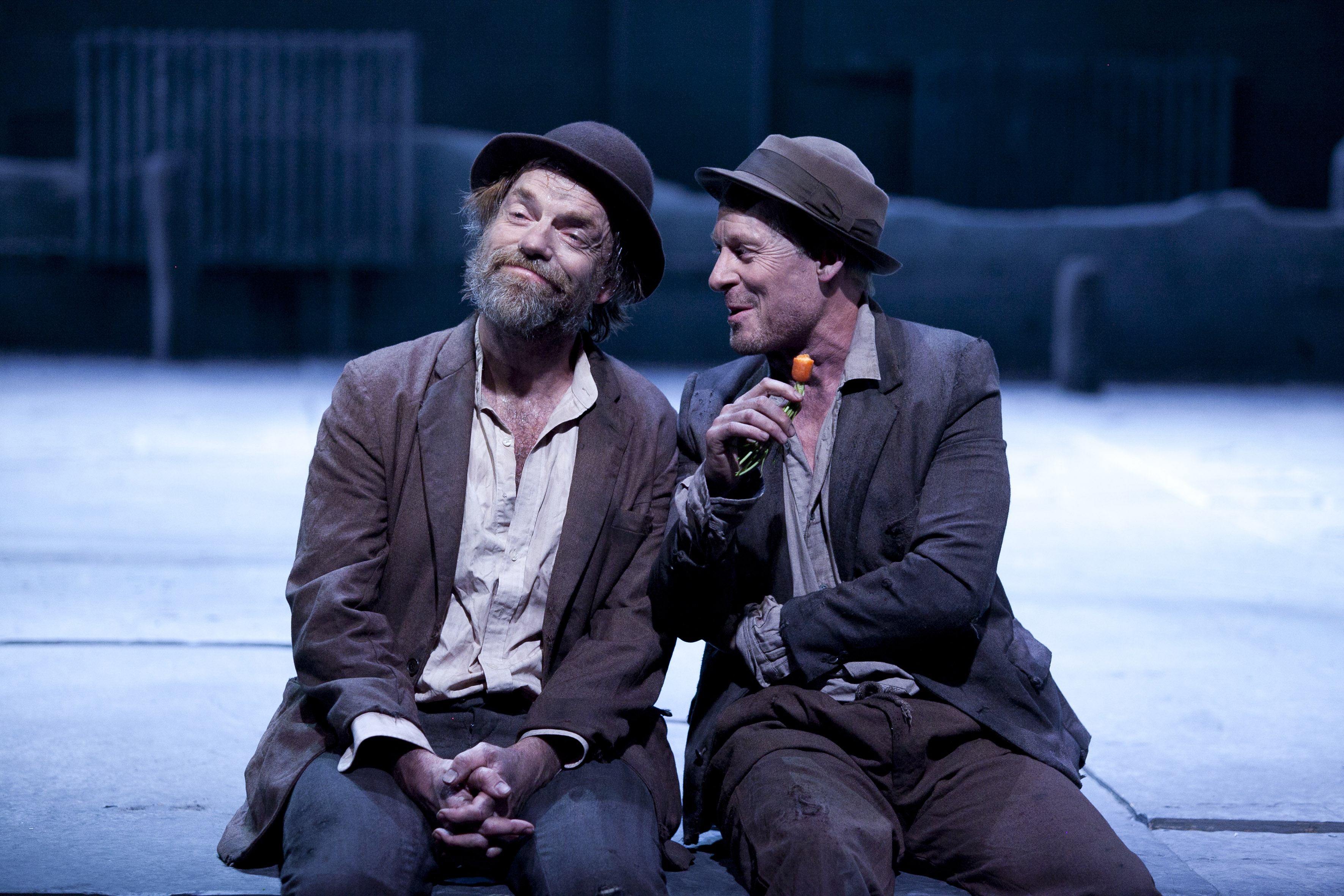
Hugo Weaving and Richard Roxburgh. Photo: Lisa Tomasetti

Hugo Weaving and Richard Roxburgh. Photo: Lisa Tomasetti

It’s just three years since Ian McKellen and Roger Rees toured here in a British production of Waiting for Godot that played up the vaudevillian theatricality in Samuel Beckett’s extraordinary, absurdist drama, with Vladimir and Estragon relating to each other like a well-oiled comedy duo.

Now comes a Sydney Theatre Company production starring Richard Roxburgh as Estragon and Hugo Weaving as Vladimir that undoes you emotionally in a far more profound way. The comedy is still there, beautifully so ­– though less self-consciously vaudevillian – but beneath both the humour and the existential bleakness is great tenderness, humanity, pathos and a disarming sense of caring.

Even the oppressed Lucky (Luke Mullins) gently wipes the face of his tyrannical master Pozzo (Philip Quast), having helped him to his feet at they prepare to depart in Act Two. It’s an incredibly touching moment that takes you completely by surprise and has you suddenly re-evaluating their relationship.

The production was to have been helmed by Hungarian director Tamas Ascher, who directed Roxburgh and Weaving in the STC’s acclaimed 2012 Uncle Vanya. When an injury left him unable to fly, Andrew Upton stepped into the breach, with Ascher’s assistant Anna Lengyel as his associate, and directs a production of great clarity that is light on its feet yet terribly moving.

Zsolt Khell’s stark set resembles a charred, empty theatre, open to the back wall, within a false proscenium studded with broken and missing light bulbs. The famous tree is a thin streak of trunk with a single branch that arches heavenwards, disappearing from view.

It is beautifully lit by Nick Schlieper, who bathes the stage in a sudden snap of blue light as night descends, while Alice Babidge’s costumes are suitably tattered and worn.

Weaving and Roxburgh are like two sad but resilient clowns who have made their way together, for better or worse. Roxburgh’s boyish Gogo is the more lost, despairing and occasionally angry, tugging plaintively at his ill-fitting boots and looking to Didi for comfort and food, yet he is playfully funny too.

Weaving’s Didi is jauntier and more in control, rolling the words around his mouth as he enunciates crisply like an old theatrical pro, the one who seems to remember more of the past, including the fact that they are to meet the enigmatic Godot.

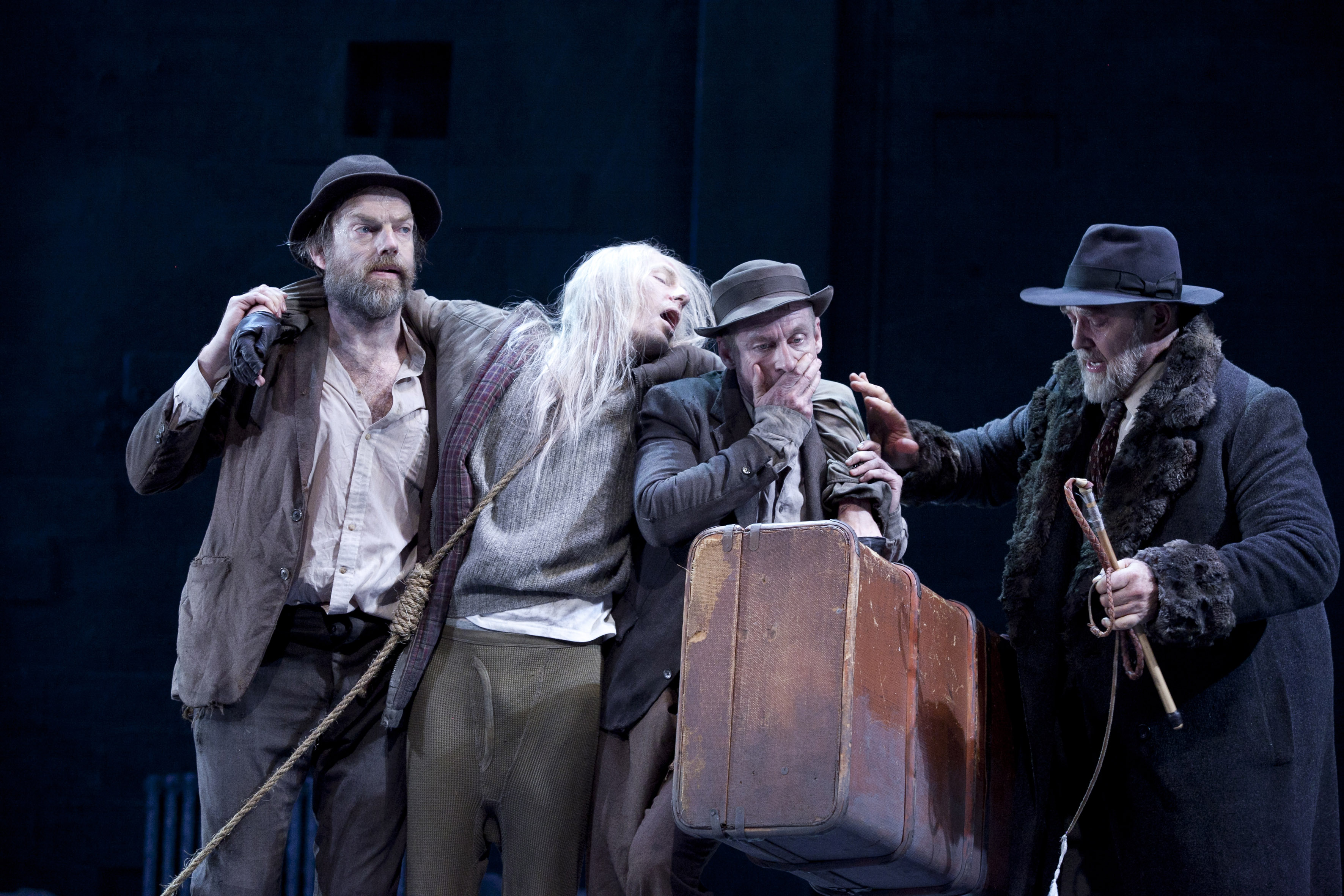
Hugo Weaving, Luke Mullins, Richard Roxburgh and Philip Quast.  Photo: Lisa Tomasetti

Hugo Weaving, Luke Mullins, Richard Roxburgh and Philip Quast. Photo: Lisa Tomasetti

Quast and Mullins are more than their match as Pozzo and Lucky who appear in both acts, helping to alleviate the endless waiting.

Mincing onto the stage, his back arched dramatically as if promenading amongst high society, Quast is superb as the pompous, grandiose Pozzo: a big, corpulent figure compared to his scrawny servant. With his rich, resonant voice, Quast’s Pozzo is like a ringmaster in the first act, brutally in control. In the second act, now blind, he staggers on like a wounded bull, his authority undone.

With long, straggly white hair, Mullins is a ghostly yet feral presence and knocks you for six with his explosive, tortured outpouring of Lucky’s famous “thinking” monologue.

On opening night Rory Potter completed the exemplary cast as the boy who arrives, twice, to say that Godot won’t be coming.

In this thrilling, incredibly special production, you experience afresh Beckett’s iconic, exquisitely written play about everything and nothing. It really does seem to encompass the whole of life. Unforgettable.

Waiting for Godot runs at the Sydney Theatre until December 21. Bookings: 9250 1777 or sydneytheatre.com.au

An edited version of this review appeared in the Sunday Telegraph on November 24

Summertime in the Garden of Eden

SBW Stables Theatre, November 22

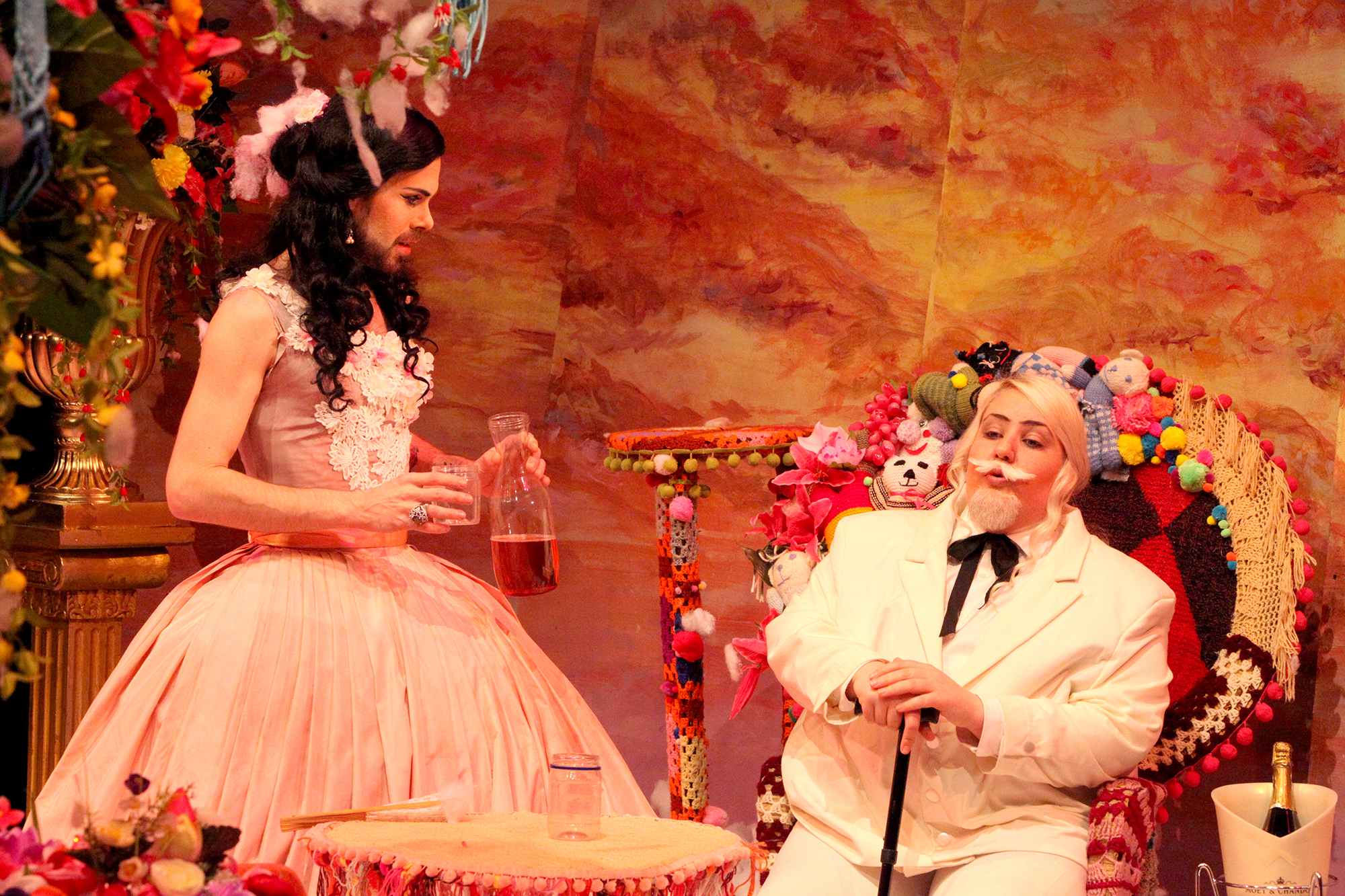
Agent Cleave and Bessie Holland. Photo: Marg Horwell

Agent Cleave and Bessie Holland. Photo: Marg Horwell

The life-sized horse in the foyer, with a crochet blanket skin and a mane of plastic flowers, is just a taster for what’s to come inside the theatre.

There, Marg Horwell’s dizzily colourful set  – with hanging baskets of iridescent flowers, a spouting golden statue fountain, a cane chair covered in crotchet and adorned with knitted toys, and mountains of cotton wool on the floor – is the perfect setting for Sisters Grimm’s gloriously camp, gothic melodrama Summertime in the Garden of Eden.

Sisters Grimm are a self-styled “queer DIY” theatre group formed by Ash Flanders and Declan Greene in 2006 in Melbourne, where they have built a cult following.

They were first seen in Sydney earlier this year, when Sydney Theatre Company presented their 2010 show Little Mercy, which put a trademark gender-bending spin on a film genre. In the case of Little Mercy, it was the “evil child” movie, with Flanders giving a dazzling performance as the bored, alcoholic wife of a musical theatre director with everything except offspring.

Now comes Summertime in the Garden of Eden, presented in association with Melbourne’s Theatre Works as part of Griffin Independent.

First staged last year in a shed in the Melbourne suburb of Thornbury, the current, reworked production arrives direct from a hugely successful season at Theatre Works.

Co-written by Flanders and Greene, and directed by Greene, Summertime draws on the Southern antebellum sweeping epic, notably films like Gone with the Wind and Jezebel, while the repression of desire and family secrets, as well as the onset of madness, is also reminiscent of Tennessee Williams plays Suddenly, Last Summer and A Streetcar Named Desire.

Flanders doesn’t appear this time – though the eagle-eyed may spot a frocked-up portrait of him on the wall as part of the Summertime set design.

Set in 1861 in the Deep South during the American Civil War, Summertime tells the tale of the Washington family: plantation owner Big Daddy and his daughters Honey Sue and Daisy May.

The cross-gender casting sees Bessie Holland as Big Daddy, while Melbourne drag artists Agent Cleave and Olympia Bukkakis don the crinolines as his daughters.

It begins with the homecoming of Honey Sue, who hasn’t been seen since she ran away 10 years ago on the night of her 16th birthday party. It’s clear she is much changed. What was it that happened in Big Daddy’s greenhouse (the so-called Garden of Eden) to make her flee on that fateful night? Where has she been since then and why is she back now?

Waiting at home with Big Daddy is her younger sister Daisy May, recently engaged to the dashing Clive O’Donnell (Peter Paltos). Naturally enough, everything is not as it seems, with revelations aplenty.

Though Summertime is as camp as Chloe, the production is precisely pitched, walking a knife-edge but never tripping over it and going too far over the top. For all the outrageous fun, the performances are played with enough honesty that the production stops short of becoming a drag show – even though it allows for Olympia Bukkakis to include a drag number.

Making an unforgettable entrance, Agent Cleave is entrancing as Daisy May. With his own long, thick hair flowing, he makes an incredibly beautiful southern belle, even with a beard, tattoos and sneakers, his every gesture convincingly demure and girlish – until pushed.

Olympia Bukkakis has all the right mannerisms as the worldly-wise, diva-like Honey Sue, Holland brings a Colonel Sanders-like gruffness to Big Daddy, and Paltos negotiates the plot’s twists and turns with charm and gusto.

Genevieve Giuffre makes up the cast, giving a hilarious performance as the family slave Mammy, with Giuffre manipulating a golliwog doll held in front of her, which makes you wince even as you laugh.

You have to suspend your disbelief more than a little with one of the final revelations in particular but fiddle-dee-dee. Beneath all the outrageous frivolity and tongue-in-cheek fun, there are serious political themes about gender, sexual power, race. privilege and prejudice. There’s even a touch of pathos at the end.

Running 65 minutes without interval, Summertime is as smart as it is fun. The high-camp, lo-fi aesthetic – complemented by Katie Sfetkidis’s lighting and Russell Goldsmith’s sound – is a blast of fresh air from young, audacious theatre-makers who are clearly going places, with political points to make while presenting ridiculously enjoyable shows.

Summertime in the Garden of Eden plays at the SBW Stables Theatre until December 14. Bookings 02 9361 3817 or http://www.griffintheatre.com.au

All My Sons

Eternity Playhouse, November 5

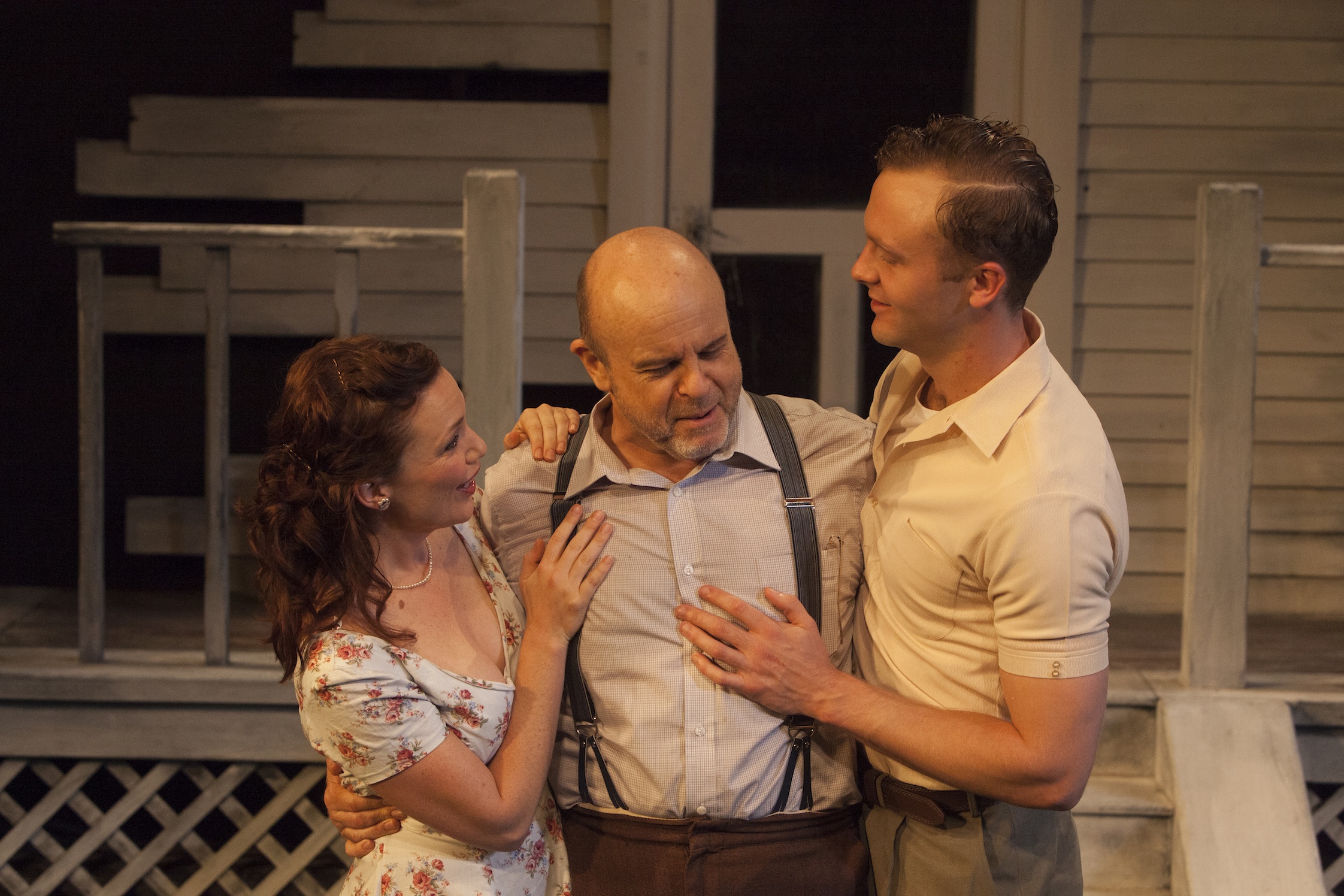
Meredith Penman, Marshall Napier and Andrew Henry. Photo: Brett Boardman

Meredith Penman, Marshall Napier and Andrew Henry. Photo: Brett Boardman

Darlinghurst Theatre Company has christened the new Eternity Playhouse with Arthur Miller’s first commercially successful play, the gut-wrenching All My Sons from 1947 – and both the venue and the production have come up trumps.

The sensitive conversion of the newly restored Baptist Tabernacle, a 126-year old, heritage-listed building in Burton Street, Darlinghurst features a spacious timber foyer and a beautifully appointed 200-seat theatre with excellent sight lines and acoustics. It all feels fresh and welcoming, while original features such as the ornate ceiling and stained glass windows add to the venue’s charm.

Miller’s tightly plotted play resonates powerfully in the intimate space. Set in the aftermath of World War II, Joe Keller (Marshall Napier) and his wife Kate (Toni Scanlan) are living a life of suffocating denial.

Convicted for knowingly supplying faulty aircraft engine parts from his factory, which caused the death of 21 pilots during the war, Joe was subsequently exonerated leaving his business partner Steve to take the rap. Kate, meanwhile, clings to hope that her son Larry, a fighter pilot, is still alive despite having been missing for three years.

A sense of tragedy hangs over the play from the beginning, as Joe and Kate’s other son Chris (Andrew Henry) invites Larry’s former sweetheart Anne (Meredith Penman) to stay, hoping to marry her. Anne, who grew up next door, is Steve’s daughter.

When Anne’s brother George (Anthony Gooley) arrives, having just visited their father in jail, dark secrets are revealed leaving no possibility of a happy outcome for any of them.

Unlike many of the auteur, re-imagined productions of classics that we have seen in Sydney of late, Iain Sinclair directs a traditional production set in the period and using American accents, but it is fluent, well paced and beautifully performed, unfolding with the inexorable undertow of Greek tragedy.

Scanlan breaks your heart as the desperate, deluded, at times feverish Kate who dares not admit the possibility that her son is dead, while Napier convincingly conveys the gruff bonhomie covering a dark, gnawing secret.

Henry excels as the open-hearted Chris who longs to step out of Larry’s blighted shadow and live his own life, while Gooley ramps up the energy with a bristling anger as George.

On opening night, Penman brought a sparkling warmth to the role of Anne, but due to a major television opportunity has since been replaced by Anna Houston.

In the supporting roles, Sinclair (who plays a doctor as well as directing), Mary Rachel Brown, Briallen Clarke and Robin Goldworthy all acquit themselves admirably.

Luke Ede’s set works well enough and is subtly lit by Nicholas Rayment. Occasionally Nate Edmondson’s music feels a little too overtly manipulative emotionally as in a film score, particularly in the climactic scenes when it is distracting and unnecessary, but that’s a minor quibble.

Performed with an intense honesty, Miller’s timeless story about the link between commerce and war, and self-interest in the name of the family, still rings devastatingly true in this stirring production.

All My Sons runs at the Eternity Playhouse until December 1

 An edited version of this review ran in the Sunday Telegraph on November 10

Dirty Rotten Scoundrels

Matt Hetherington and Tony Sheldon. Photo: Kurt Sneddon

Matt Hetherington and Tony Sheldon. Photo: Kurt Sneddon

Theatre Royal, Sydney, October 24

Dirty Rotten Scoundrels is a complete delight from start to finish: a joyous night of perfectly cast, laugh-out-loud musical comedy.

Based on the 1988 film starring Michael Caine and Steve Martin, the show is set in the French Riviera where two conmen – the suave, sophisticated Lawrence Jameson and the younger, brasher Freddy Benson – compete to swindle $50,000 from a soap heiress called Christine Colgate. The loser must leave town.

Jeffrey Lane’s book and David Yazbeck’s catchy, melodic songs are deliciously witty and full of double entendres as well as occasional outright bawdiness, all of which inspire genuine, giddy mirth. There is also some priceless playing with the fourth wall (“Did I miss a scene?” asks Lawrence at one point) along with other meta-theatrical in-jokes including references to the musicals Oklahoma! and My Fair Lady.

Lane’s book cleverly builds the comedy, which becomes ever more farcical as the two scam artists spin their web of deceit in the hope of ensnaring their target. In the hands of this fine cast every comic moment is mined for all it’s worth, without it ever becoming heavy-handed.

Tony Sheldon makes a triumphant homecoming in the role of Lawrence, returning especially to play the part from the US where he is now based after his Tony Award-nominated performance in the Broadway production of Pricilla, Queen of the Desert. With his twinkly, dimply charm and immaculate comic timing, Sheldon is a natural for the debonair, charismatic Lawrence. He nails every laugh and makes the most of the opportunity to use several ludicrously funny accents.

It’s a consummate performance, matched by Matt Hetherington who is the perfect foil as the vulgar upstart Freddy. Hetherington’s unrestrained physical comedy and whacky slapstick is inspired – particularly when he is playing Lawrence’s supposed loony, sex-mad brother Ruprecht. He is also in great voice.

Hetherington played Freddy with great success for The Production Company in Melbourne in 2009 and was offered it in a US touring production but was unable to accept as his working visa was about to run out. Now we see why; he’s brilliant.

Together he and Sheldon are dream casting, managing to make the two scoundrels a hugely likeable odd couple despite their dubious trade.

Amy Lehpamer, who hasn’t been seen in Sydney since Rock of Ages never got here, is gorgeous as the kind, pretty, clumsy Christine Colgate (who is also not quite what she seems) and sings superbly. Katrina Retallick is downright hilarious as Jolene Oakes, a crass lass from an oil-rich family in Oklahoma, who is determined to marry Lawrence and take him home to the ranch.

In a romantic sub-plot, Anne Wood is very funny as a droll, swinging American divorcée, who having been duped by Lawrence becomes romantically involved with his side-kick, the Chief of Police played by John Wood. Wood’s questionable French accent wanders between Europe and Australia, but he plays the character with understated charm.

Having cast the production in exemplary fashion (the ensemble is also terrific), Roger Hodgman’s excellent direction puts the focus firmly on the performers in a production that is deliciously light on its feet. There’s a modest but attractive, flexible set by Michael Hankin, elegant, colourful costumes by Teresa Negroponte, beautiful lighting by Nicholas Rayment and appealing choreography by Dana Jolly, while musical director Guy Simpson conducts the 18-piece orchestra with panache.

All in all, it’s a superb production of a hugely entertaining show that exudes the charm of classic musical theatre, and is oodles of fun.

Hats off to producers James Anthony Productions and George Youakim. It’s their first big production and they deserve to have a massive hit on their hands.

Dirty Rotten Scoundrels runs at the Theatre Royal until December 8.

An edited version of this review appeared in the Sunday Telegraph on October 27.

Grease review

Lucy Maunder as Rizzo leads the cast of Grease. Photo: Jeff Busby

Lucy Maunder as Rizzo leads the cast of Grease. Photo: Jeff Busby

When Grease premiered in 1971, it was a show with attitude that took a rough, raunchy look back at 1950s teenagers and celebrated the music of the era. Over the years, particularly with the advent of the much-loved film, the edges have been knocked off it and it’s become much less gritty.

This latest incarnation, which originated in the UK with direction by David Gilmore and choreography by Arlene Phillips, could do with a bit more of that original grunt.

Restaged by Jason Capewell and Charlotte Bull, the production feels a tad too slick for its own good and somewhat heartless. It needs to trust the moments more and find the truth in them to connect you better with the characters. As it is, you don’t really care about them.

Lucy Maunder’s Rizzo is a notable exception. She really owns the role of the snarky, cynical leader of the Pink Ladies and her moving rendition of There Are Worse Things I Could Do is an emotional and musical highlight.

The production begins, somewhat strangely, with a sing-along of We Go Together led by Miss Lynch (Val Lehman) while the students of Rydell High enter via the auditorium. In my experience, sing-alongs are never terribly popular with audiences at the best of times – let alone at the top of a musical. Here it is forced and awkward.

After that slow start, much of Act I feels a bit flat. Though the cast performs energetically and the show rocks along (almost too frenetically at times) it all feels a bit hollow and the songs don’t really get things pumping the way you’re willing them to.

The production picks up with Greased Lightin’ led by Stephen Mahy as Kenickie but it’s not until Todd McKenney’s appearance as Teen Angel that the show hits its groove. Resplendent in a gleaming white suit studded with rhinestones, a silver waistcoat, silver boots and white blonde wig that makes him look like a cross between Liberace and a cheesy Elvis, it’s a literally glittering turn. It may be unashamedly over-the-top but McKenney exudes the charisma, star power and fun that the show needs at that point to really lift: definitely another production highlight.

Rob Mills and Gretel Scarlett are both likeable as Danny and Sandy. Mills’ voice has grown in recent years and he brings his winning, cheeky charm to the character, while Scarlett has a lovely voice, which soars with crystal clarity in Hopelessly Devoted to You. However, there’s little chemistry between them.

Other characters among the Rydell High students are less well delineated and get somewhat lost in the mix, particularly the boys, with a couple of songs getting hardly any response from the opening night audience.

Bert Newton may be a much-loved Australian celebrity and cast for that reason but he is far too old to play DJ Vince Fontaine – something that becomes wince-makingly obvious when he is called on to flirt with Marty (Karla Tonkich) – and his accent comes and goes. As Johnny Casino, Anthony Callea puts a contemporary pop spin on Born to Hand Jive instead of the original 1950s rhythm and blues rockabilly style – and something is lost.

The set is relatively modest though it does the job and the colourful costumes work well but the choreography could do with a sharper 1950s vibe and edge.

The story itself is so simple it doesn’t bear much analysis. The teenagers’ problems come and go very quickly, while the ending has always sent a somewhat mixed message with Sandy transforming herself into a bad girl to get her guy. But it’s always been that way and when everything is hitting the mark it doesn’t matter. Here, it is somewhat exposed.

Nonetheless, the songs are great and so familiar that the audience laps them up. (They certainly did in Brisbane where the show sold out before coming to Sydney). Promoted as “the number one party musical”, this production of Grease is fun but it’s hardly electrifyin’.

Grease plays at the Lyric Theatre until December 8 then at Melbourne’s Her Majesty’s Theatre, January 2 – February 9.

An edited version of this review ran in the Sunday Telegraph on October 20

Shahrukh Khan interview

Shahrukh Khan, who arrives in Sydney this weekend

Shahrukh Khan, who arrives in Sydney this weekend

He’s known as “the King of Bollywood” or “King Khan” – with good reason.

Shahrukh Khan is one of Bollywood’s biggest stars with five million twitter followers and a fan base estimated at over one billion. Named “the world’s most powerful movie star” by the Los Angeles Times in 2011, he has made 75 Hindi films including this year’s Chennai Express.

Said to be worth over $US 540 million, he co-owns two production companies as well as the Indian Premier League cricket team the Kolkata Knight Riders, which won the IPL in 2012.

On Monday, Kahn performs in Sydney in Temptation Reloaded, a hugely successful Bollywood stage spectacular, which arrives here as part of Parramatta’s four-day Parramasala Festival, after playing to sell-out crowds in 12 countries.

The show is a colourful explosion of Indian music, dance and comedy in which Khan stars with Bollywood actresses Madhuri Dixit, Rani Mukerji and Jacqueline Ferandez. There are 40 dancers and several singers, including controversial Punjabi rapper Yo Yo Honey Singh.

Khan’s “people” insisted on vetting questions before the interview with instructions that he wouldn’t discuss his family or personal matters. However, he was very charming when he took time out from a film shoot to field questions about bringing Temptation Reloaded to Sydney.

How did Temptation Reloaded come about?

You know actually we had done this show before about seven or eight years ago and I took it around the world then, when it was known simply as Temptations. This time round we have added some fresh components to the show, reloading it with more and therefore changing its title to Temptation Reloaded to inject some new energy into the show also. I actually came to Australia many years ago with the original show but it was much smaller than this production so it didn’t reach as many people on a national scale. But it got the name out there and the interest, and here we are returning bigger than ever.

How would you describe it? Is it a concert or a variety show?

It’s a mixture of everything to be honest. A bit of dancing, singing, groups and solo singing and a few little comedic skits thrown in for good measure too. I don’t sing live but will in the group numbers as we have actual solo male and female singers who take that lead. We like to incorporate the singing and dancing and skits into a storyline really so that there is meaning and purpose to what the audience is watching. It is more of a variety show than a concert and there will be a section in the show where I interact with the audience and teach them a lot about the art of Bollywood, which is lots of fun. I just hope everybody that comes to see it walks away a little brighter after being immersed in the color and passion of the show.

So it is very spectacular?

Yes, it is extremely colourful, an energetic and fun show that I believe will appeal to everyone. I am very proud to be in this amazing show and sharing it with our Australian fans.

How many people perform in it?

The production tour will consist of about 110 people who will include close to 60 dancers and production, make up, hair and stylists’ people that accompany us on the road. At any given time there will be about 40 dancers performing on stage, three actresses, a few actors and all the people behind the scenes who make the production run as effectively as it does.

How many numbers are you featured in?

(laughs) I’m in quite a few of the featured songs, including a duet with one of the leading actresses and the experience was amazing.

Does it have a similar vibe to a Bollywood movie?

Yes, there is a certain feel to this show that lends itself to a Bollywood movie but with more of a variety show element than the storyline of a movie.

Why do you think Bollywood films are so successful?

There’s a couple of reasons really. The uniqueness of Bollywood is what I believe intrigues people to it most, the color, the passion and the need for people to want to be a part of an industry that helps to create laughter and happiness and highlight the lighter side of life. The world is a crazy place indeed and Bollywood stares at the world and continues pushing and inspiring many to follow their dreams whatever they may be.

Did you grow up watching Bollywood films?

(chuckles) Yes, I did watch them when I was little. I remember curling up at my mother’s feet and watching them with her on a few occasions. My mum was really into movies and theatre and just loved the ceremony of how a Bollywood movie can make a person feel happy just by watching. Emotions are the universal language and Bollywood movies depict a realist approach to showcasing what people, especially Indians, want in life.

I believe you studied economics. What inspired you to become an actor?

(laughs) That’s correct; I am what you call an accidental actor. I wanted to be a film director at one stage as well as a hockey player too when I was younger. The acting thing was not the initial route I wanted to take but when I was approached for some acting roles in Mumbai I decided to take the plunge and haven’t looked back since.

Once you started acting did you want to become a Bollywood star?

I simply enjoyed the aspect of being an actor and getting regular work to be honest. I also knew that embracing our culture and sharing every facet of acting to the Indian community was a positive way to highlight our nation’s diversity and strength.

What does it take to be a successful Bollywood star?

A mixture of things actually. The ability to relay everyday life scenarios through comedy, drama, dance and song whilst capturing the heart and minds of true Bollywood. Looking good is also an important appeal to the viewers as well as having a strong work ethic.

How do you cope with the adulation? And do you sometimes wish you led a more ‘normal’ life?

You know I don’t get too attached or waylaid by social media networks and statistics to be honest but I gauge my popularity and reach by the work I do and the fans I reach through Twitter etc. Of course I am most honoured to receive the recognition and awards etc but I am just grateful for my blessings and thankful for my loved ones who have supported me from day one.

I believe you need six bodyguards in India. Will you be bringing bodyguards with you to  Australia?

(laughs) Yes I do just in case it gets a little crazy during my set. I will be bringing them to Sydney. Oh! how embarrassing! (laughs) Sometimes things can get a little out of control with some of my fans and it’s just easier to have security on hand.

You have been to Australia before?

Yes, I have visited Australia many times and performed there on several occasions so it will be great to return again. I actually shot a film out there called Chak De India in Melbourne and Sydney. It was a wonderful experience and I have a huge love and appreciation for Australia, so I am looking forward to returning. I really hope I get some time to do some sightseeing, especially in Sydney this time.

Did you expect Chennai Express to be such a massive hit?

You know as with everything I do in life I always put my best foot forward and that movie highlighted the sheer work ethic of a very successful team. I enjoyed the movie then and am also shocked when I see the amount of people that remembered this movie.  I will continue to enjoy the movie as the years go by.

You obviously love cricket given your involvement with the Kolkata Knight Riders?

Yes, I do enjoy cricket and have many outstanding Australian team member on my team for a good game. My team actually consists of a few Australian players like Ricky Ponting and they are wonderful people. I am really enjoying this team and all the hidden talents amongst us all.

Do you agree with people who say T20 is ruining Test Match cricket?

I don’t really have a radical outlook on sports to be honest. Times are changing, people’s attitudes are changing and schedules are changing so I think anyone wanting to embrace this movement should base it on individual merit and just to continue to enjoy the game for what it is.

Temptation Reloaded plays at Allphones Arena, Sydney on October 7. Bookings: ticketek.com.au or 132 849

An edited version of this interview appeared in the Sunday Telegraph on September 29


South Pacific

Joan Sutherland Theatre, Sydney Opera House, September 12

Lisa McCune and Teddy Tahu Rhodes. Photo: Jeff Busby

Lisa McCune and Teddy Tahu Rhodes. Photo: Jeff Busby

When Opera Australia’s South Pacific opened last year it became the most successful production in the history of the Sydney Opera House – and so it’s back, by popular demand, with Lisa McCune and Teddy Tahu Rhodes reprising their starring roles.

They are joined by several new cast members: Gyton Grantley as Luther Billis, Christine Anu as Bloody Mary and Blake Bowden as Lieutenant Cable, all of them terrific.

With its memorable songs and stirring story, Rodgers and Hammerstein’s musical is one of the greatest all of time and Bartlett Sher’s magnificent production, which originated at New York’s Lincoln Centre in 2008, really does make for an enchanted evening.

First performed in 1949, in the wake of World War II, the show’s exploration of war, class and, in particular, racism was radical in its day.

The musical is set on a South Pacific island where the Americans are doing strategic battle with the Japanese. At its heart is Ensign Nellie Forbush (Lisa McCune), a “hick” nurse from Little Rock who falls in love with French plantation owner Emile de Becque (Teddy Tahu Rhodes) but must confront her prejudice when she discovers he has fathered two children with a Polynesian woman.

Restaging his production for OA on Michael Yeargan’s elegant sets, Sher gives full rein to the show’s romance and exuberant production numbers but balances this with a gritty truthfulness, ensuring that the show’s serious themes still hit home. Keeping the staging relatively simple, he puts the focus firmly on the characters and the human story they tell rather than razzle-dazzle.

McCune is lovely as Nellie. The warmth, sparkle, playfulness and emotional depth she brings to the role is utterly beguiling, keeping us on Nellie’s side despite her self-confessed small-mindedness. The final scene, when she moves beyond this to accept Emile and his children, is deeply moving while her earlier, high-spirited rendition of I’m Gonna Watch That Man Right Outa My Hair is musical theatre at its most joyous. Her bright voice sounds stronger this time around; it really is a stunning performance.

Appearing in his first musical, Rhodes, who has an international opera career, is sensational as Emile. The role was originally written for opera’s Ezio Pinza and Rhodes’s beautiful, burnished bass-baritone is so rich and powerful that his renditions of Some Enchanted Evening and This Nearly Was Mine are utterly thrilling. What’s more, the chemistry between him and McCune sizzles.

The subplot concerns the educated, courageous Lieutenant Joe Cable (Blake Bowden) who falls in love with Tonkinese girl Liat (Celia Yuen)  – the daughter of Bloody Mary – but knows he could never take her back to America as his wife. Bowden gives a sensitive portrayal, making Cable’s conflicting emotions convincing and understandable, and sings smoothly though his voice sounded slightly tight at the top of his register on opening night.

Making an impressive musical theatre debut, Grantley gives a wonderful robust, endearingly comic performance as the rascally seabee Billis who is sweet on Nellie, while Anu brings plenty of fiery grunt to Bloody Mary in a nuanced performance.

There is strong support from the rest of the company and the energetic ensemble, while the Australian Opera and Ballet Orchestra’s performance of the glorious score, under conductor Vanessa Scammell, is a delight.

All in all, this is musical theatre of the highest order, justifying its inclusion in an opera season.

South Pacific plays at the Sydney Opera House until November 2 then in Perth, November 10 – December 6 and Adelaide, December 29 – January 12

Edited versions of this review appeared in the Sunday Telegraph on September 15, 2013 and in August 2012