Hedda Gabler

Belvoir St Theatre, July 2
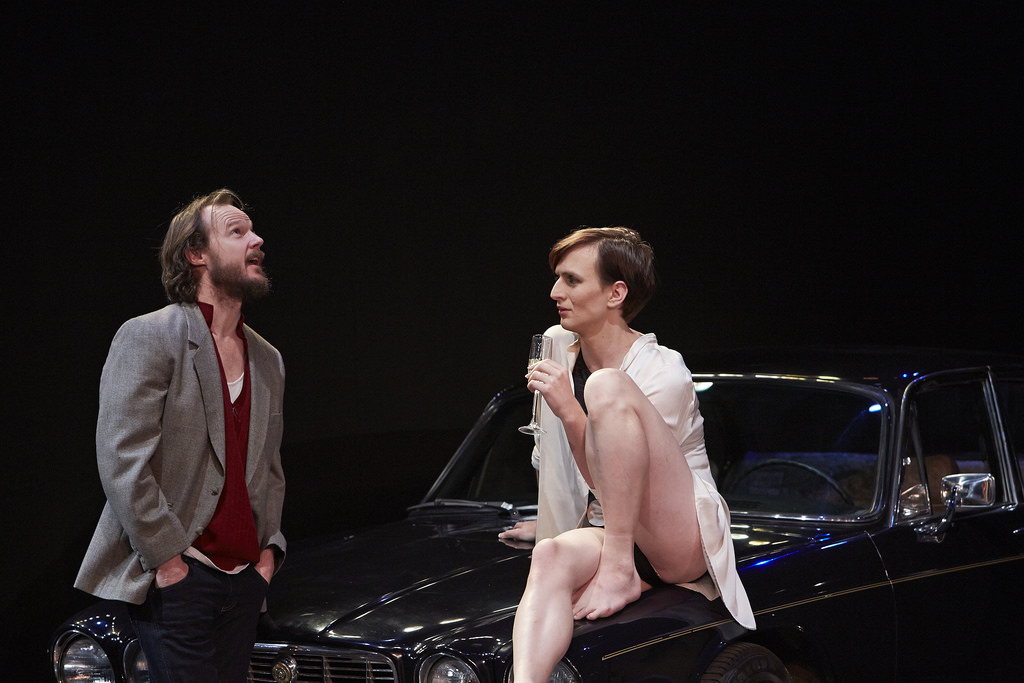
Oscar Redding and Ash Flanders. Photo: Ellis Parrinder

Oscar Redding and Ash Flanders. Photo: Ellis Parrinder

At the end of Belvoir’s new production of Henrik Ibsen’s Hedda Gabler you come out thinking why? Why to many things in the production, but most particularly why cast a man in the title role?

Written in 1890, Hedda Gabler is one of the great dramatic female roles. There are few enough of them to begin with. What’s more, she is a strong woman feeling so trapped by a repressive, male-dominated society and unfulfilled marriage that she eventually finds herself in a situation where she believes the only escape is suicide.

A production needs to offer a fresh, compelling insight to justify casting a man in the role – and we don’t get that here.

Naturally, there has been a huge amount of interest and coverage around the decision by director Adena Jacobs to cast Ash Flanders as Hedda. Flanders is a co-founder of Melbourne’s queer indie theatre group Sisters Grimm, which has gone from cult following to a mainstream presence.

I saw Flanders play a glamorous, alcoholic housewife in Little Mercy, Sisters Grimm’s send-up of the “evil child” movies. He did it brilliantly. His performance was poised, very funny and believable within the camp, spoofy world they set up.

However, take him out of that world where he has so much flair and he doesn’t look quite so convincing – not on the basis of the choices made in this production anyway.

In interviews, Jacobs has said that casting Flanders “frames the crisis of Hedda Gabler as one of identity, and the problems of difference, rather than solely one woman’s drama.”

Flanders has said he’s “playing Hedda as written, as a person first, then as a woman and below that is the male actor. Adena has been saying you will forget that you are watching a man but at the same time there are moments that we can bring that to the forefront and it becomes something different altogether, hopefully something that is post-gender. Because I think Hedda is almost beyond gender, she is almost a mythical creature.”

With his own hair and a little make-up Flanders (who spends much of the production in a swimsuit) looks somewhat androgynous but you never forget that he is a man. There are a couple of moments when he briefly dons a long wig only to quickly toss it aside again. There are titters in the audience at the mention of a possible pregnancy.

At one point he stands naked. It’s a somewhat confusing image given the flat male chest but female genitalia (‘tuck job’ presumably) leading you to question exactly who he/she is supposed to be. Jacobs presumably presents this image of Hedda as both man and woman to underline the universal nature nature of her situation – as one of difference rather than solely a woman’s dilemma, as she articulated – but that sense of universality didn’t resonate for me in the production.

Clearly there’s no point in Flanders playing a woman so convincingly that we think he is one. You might as well cast a woman. But his performance doesn’t transcend the novelty of the casting or lend any fresh insight to the play.

His Hedda moves and speaks at one pace. She is forever observing or talking with a quiet, cold detachment, while posing languidly. Instead of the mass of paradoxes and emotional complexity usually associated with her, his Hedda feels flat and one-dimensional. Even when she plays with the pistol or guns down people in a violent video game, it’s done without any display of emotion. We never see any vulnerability, she just comes across as icily manipulative. Hedda may be bored, but she shouldn’t be boring and she comes perilously close to that here. It’s hard to see quite why all the men around her are in her thrall.

What’s more, there is precious little chemistry or tension between Flanders and any of the other actors – all of whom seem to be wrestling with characters that feel underwritten in Jacobs’ adaptation.

Marcus Graham is the most compelling as Judge Brack, played here as a suave, louche playboy, while Tim Walter’s Tesman is a bland, ineffectual, anxious figure. Oscar Redding fires things up briefly as Lovborg, and Anna Houston as Thea Elvstead and Lynette Curran as Aunt Julie bring some warmth to the production. But none of the cast seems really comfortable and you don’t feel anything for any of them.
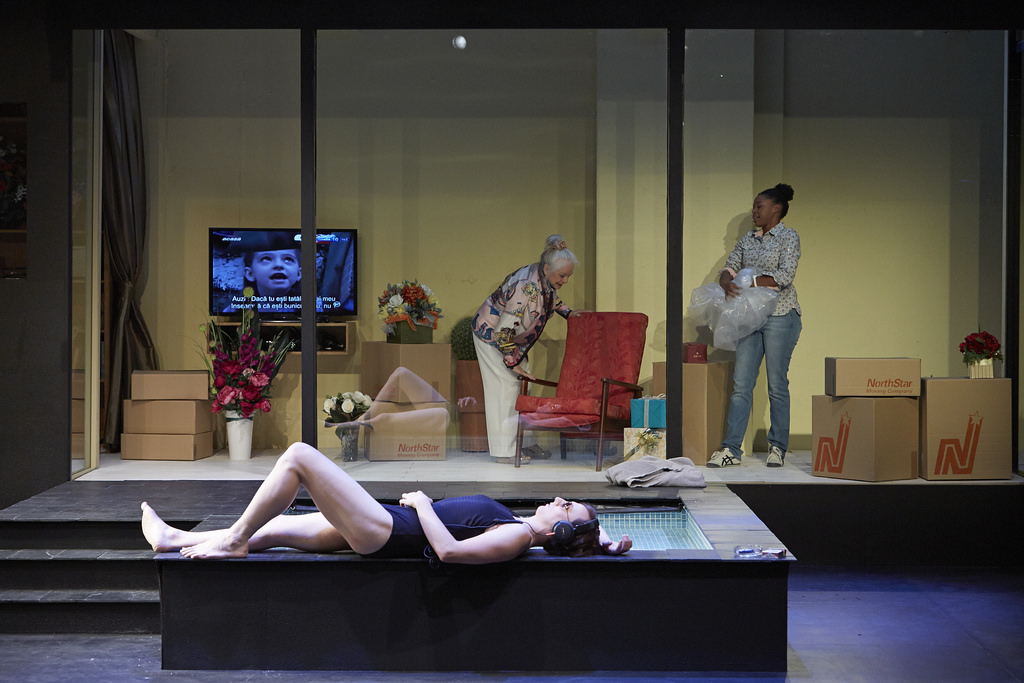
Ash Flanders, Lynette Curran and Branden Christine. Photo: Ellis Parrinder

Ash Flanders, Lynette Curran and Branden Christine. Photo: Ellis Parrinder

Jacobs’s decision to set the production in a contemporary world is a bit hit and miss.

Entering the theatre there is a strong sense of déjà vu. The set (by Dayna Morrissey) features the interior of a spanking new, soulless house at the back of the stage. Seen through sliding glass doors, it’s reminiscent of Ralph Myers’s set for Benedict Andrews’s The Seagull (along with any number of other glass boxes seen on Sydney stages in recent years). In front of the house is a small swimming pool. A large, flash, vintage car sits to one side of the stage, which inevitably brings Belvoir’s 2012 Death of a Salesman to mind.

There are sound issues whenever the actors are inside the house or in the car, with their amplified voices sounding muffled. In the car, it’s actually hard to understand some of what is said.

The production starts slowly in silence. A television inside the house shows a film featuring a wedding. (Hedda and Tesman are, of course, just back from their honeymoon). Hedda gazes from the window blankly then lies by the side of the pool with headphones on. The maid (Branden Christine) smokes a cigarette behind the car. Tesman arrives home sweating after a run. Not a word is spoken. It sets up the boredom of Hedda’s life – but from there you expect things to start to flare and they don’t.

Jacobs’s adaptation, which runs 90 minutes without interval, uses a lively contemporary idiom while sticking pretty faithfully to Ibsen’s plot (though the script has been ruthlessly pruned). By updating it, however, there are various paradoxes. In a world with television and smart phones wouldn’t Lovborg write his precious book on a computer rather than by hand?

So many things like this become distractions, from Hedda’s bare bottom beneath a short fur jacket to the maid taking a dip in the pool. Would Hedda really have let her maid do that without asking? And how come when Hedda locks Thea in the car, she’s desperate to get out but apparently sleeps through a vital conversation not long after being shut in?

The fact that you sit there asking yourself such questions when you should be immersed in the drama is indicative of how little the production engages. It’s a disappointing experience that seemed to promise so much, for whatever the success, or otherwise, of the gender politics at play, the production falls flat as a piece of drama.

Hedda Gabler is at Belvoir St Theatre until August 3
 

The Young Tycoons

Eternity Playhouse, May 20

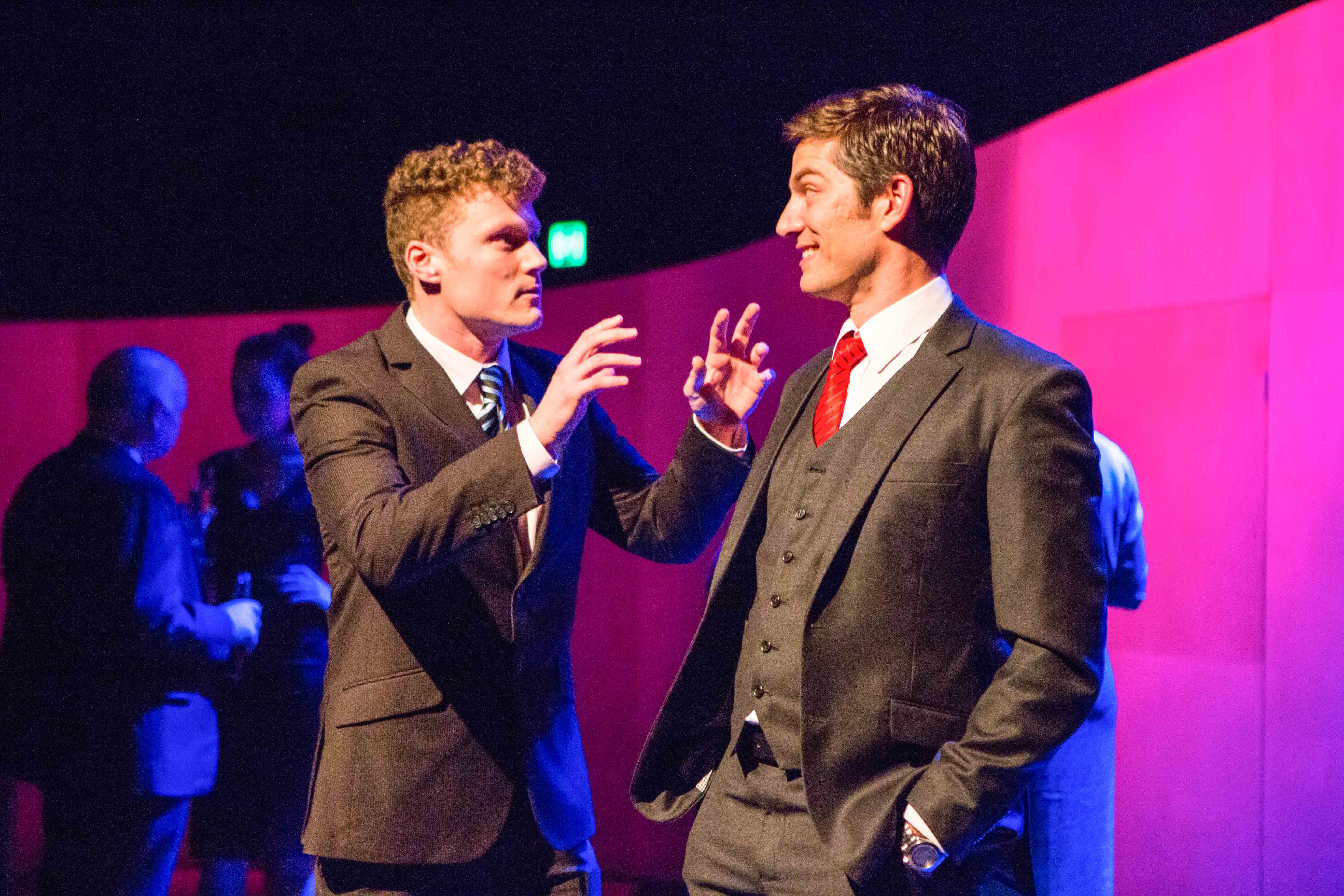
Edmund Lembke-Hogan and Andrew Cutcliffe. Photo: Noni Carroll

Edmund Lembke-Hogan and Andrew Cutcliffe. Photo: Noni Carroll

A smash hit in 2005 and 2006, Darlinghurst Theatre Company is reviving CJ Johnson’s gleefully corrosive satire at its new venue.

Subtitled “a ruthless comedy”, The Young Tycoons is set in 2003 as two aging Australian media moguls start to hand over control of their empires to their sons.

The warring families are fictionalised, of course, but no prizes for guessing who they’re modeled on.

The fathers and their heirs are a study in contrasts. The bullying, potty-mouthed Ted Vogler (Laurence Coy), now focused primarily on television, is a high roller, loves cricket and has a dodgy heart, not helped when his “knucklehead” son Kim (Edmund Lembke-Hogan) loses a billion in a bad investment.

Liam Warburton (John Turnbull), who dominates the nation’s newspapers, is cool, pragmatic and US-based, while his suave son Trevor (Andrew Cutcliffe) is Ivy League educated.

Then there are the son’s girlfriends (Paige Gardiner and Gabrielle Scawthorn), a business journo from an opposition broadsheet (James Lugton) who has them in his sights, Liam’s long-serving, right-hand-man Donald (Terry Serio), and Kim’s personal assistant/press secretary (Briallen Clarke).

It’s a world where wives are picked as if part of a business deal – though the women in the play are no pushovers.

Johnson’s script unfolds over numerous short scenes not unlike a TV drama but director Michael Pigott keeps things moving snappily on Katja Handt’s excellent, sparse set with its curving plywood wall, helped by Murray Jackson’s jazzy music.

The writing is robust with plenty of laughs. Act I takes a little time to hit its stride but the play ramps up in Act II when there is more punchy drama between the characters.

Johnson decided not to update the play but has added a few new references (Grange, Barangaroo), while a punch-up was apparently included just days before the James Packer-David Gyngell street brawl.

Lembke-Hogan is outstanding as the pugnacious, not-so-smart Kim, revealing flickers of self-doubt as he tries to assert himself with blinkered, puppy-dog impulsiveness. Serio is also excellent as the veteran newspaperman who finds himself becoming collateral damage, while Turnbull and Coy contrast each other nicely as the two rival media barons. But all the cast are terrific and deserve praise.

Johnson doesn’t depart too far from reality so there are few real surprises, particularly since this era has been much picked over of late on TV. However, the play plugs into Australia’s continuing fascination with its business heavyweights offering an entertaining, fly-on-the-wall look at the lives of the filthy rich and very powerful.

The Young Tycoons runs until June 15. Bookings: 02 8356 9987 or www.darlinghursttheatre.com

A version of this review ran in the Sunday Telegraph on May 25

Cain and Abel

Belvoir Downstairs, May 17

Dana Miltins commits another murder as Cain. Photo: Brett Boardman

Dana Miltins commits another murder as Cain. Photo: Brett Boardman

Watching Cain and Abel by acclaimed independent Melbourne theatre company The Rabble, the phrase “style over substance” (once leveled at Sydney Theatre Company many years ago) kept popping into my mind.

The performance piece purports to ask what would have happened if it was a daughter of Adam and Eve who murdered her sister in the biblical story rather than Cain murdering his brother Abel?

“What if the first murderer was female? What if the guilt and the grief belonged to women? How would this affect our existence?” writes director Emma Valente in her theatre program notes.

As far as I could discern, the production doesn’t answer any of these questions. And I doubt you’d realise that this was what the theatre-makers were exploring if you didn’t know the name of the piece.

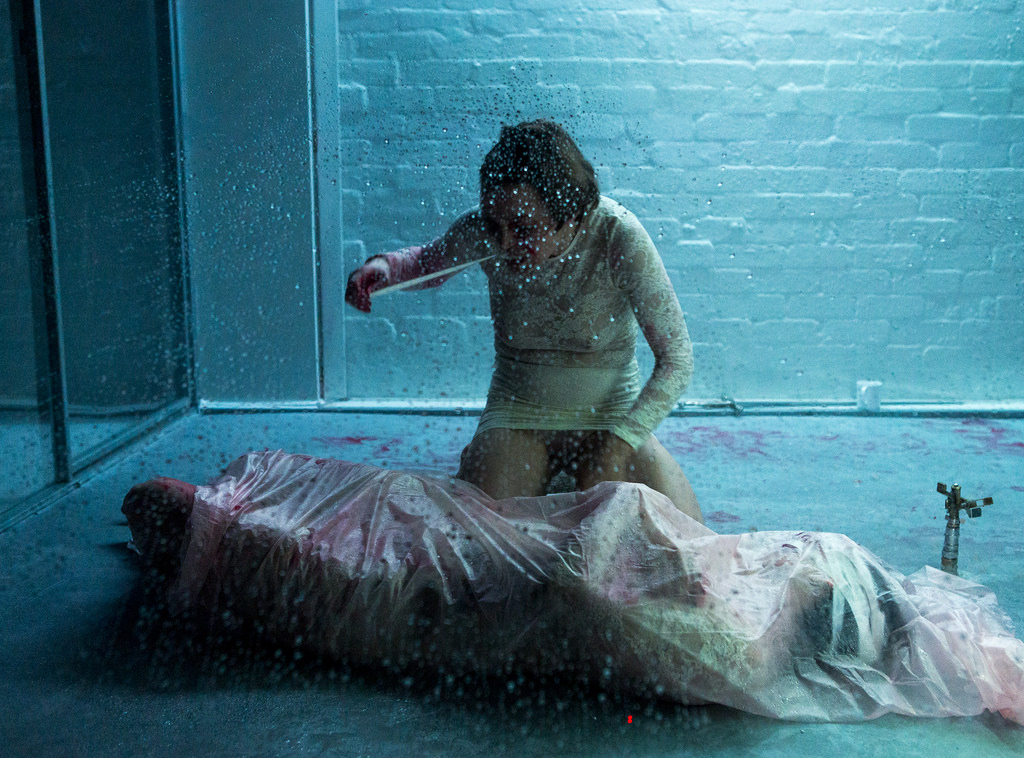
Created by The Rabble’s co-artistic directors Kate Davis and Valente, the production is staged in and around a glass prism (a much-used device of late) resembling a claustrophobic, white hothouse filled with mist. It starts ponderously as two actors (regular Rabble collaborators Dana Miltins and Mary Helen Sassman) move at a snail’s pace, peer through the glass and breath on it. The few lines of dialogue are hard to hear at this point.

Cain (Miltins) then regurgitates red flowers (I think) into the water in a white esky-like box. Abel regurgitates white marbles (or something similar) into said box. Then staring heavenwards, Cain murders Abel in a ritual act of sacrifice.

From there, we witness several acts of violence through the ages: a duel between medieval knights (Valente’s lighting suggests The Crusades perhaps), a more contemporary scene about domestic violence in which Cain repeatedly questions Abel about a black eye, a cheerleaders segment and then, finally, possible salvation when Abel pulls back from committing a discussed murder.

What makes this any different from violence committed by men isn’t clear. None of the scenes are particularly compelling – the domestic violence scenario being the closest the piece comes to flaring into life.

The white setting and costumes, gradually stained red with blood (which runs freely under a sprinkler), inevitably recalls the opening section of post’s Oedipus Schmoedipus at Belvoir in January – only there the violence was much more powerfully and shockingly executed than it is here.

Though the press release promises a work that will be “distinctly feminist in its unpicking of gender and violence”, it’s hard to work out what The Rabble are saying with Cain and Abel.

Though it only runs around an hour, it feels much longer. Since I wasn’t engaged or affected by it, I found myself wondering if the chunk of meat they were hacking at was real, hoping Sassman had plenty of room to breathe when rolled up in a plastic sheet, wondering pedantically how you could ask how different the world would be if women committed the first act of violence without at some point acknowledging that they are the child-bearers (unless the hunk of meat is somehow supposed to represent the womb which I wondered briefly during the medieval duel. Though I think not).

It’s true that some of the visual imagery is striking but what it all means never becomes clear. Instead the production feels abstruse at times and plain silly at others.

In the end all I came back to was a piece where style triumphs over substance.

Cain and Abel runs until June 8. Bookings: www.belvoir.com.au or 02 9699 3444

Eight Gigabytes of Hardcore Pornography

SBW Stables Theatre, May 7

Steve Rodgers and Andrea Gibbs. Photo: Brett Boardman

Steve Rodgers and Andrea Gibbs. Photo: Brett Boardman

Eight Gigabytes of Hardcore Pornography is a provocative title so it should be said right up front that this new play by Melbourne writer Declan Greene is emotionally hardcore rather than pornographic.

There is some nudity, but it accompanies a fleeting glimpse of tenderness rather than anything raunchy, and some strong language. Essentially, however, the play is a dark, raw exposé of two desperately lonely people.

Greene has written a very ‘now’ play set in the Internet world where people around the world are connected like never before, while genuine human interaction seems more difficult than ever; a world where everything from groceries to porn are just a few clicks away.

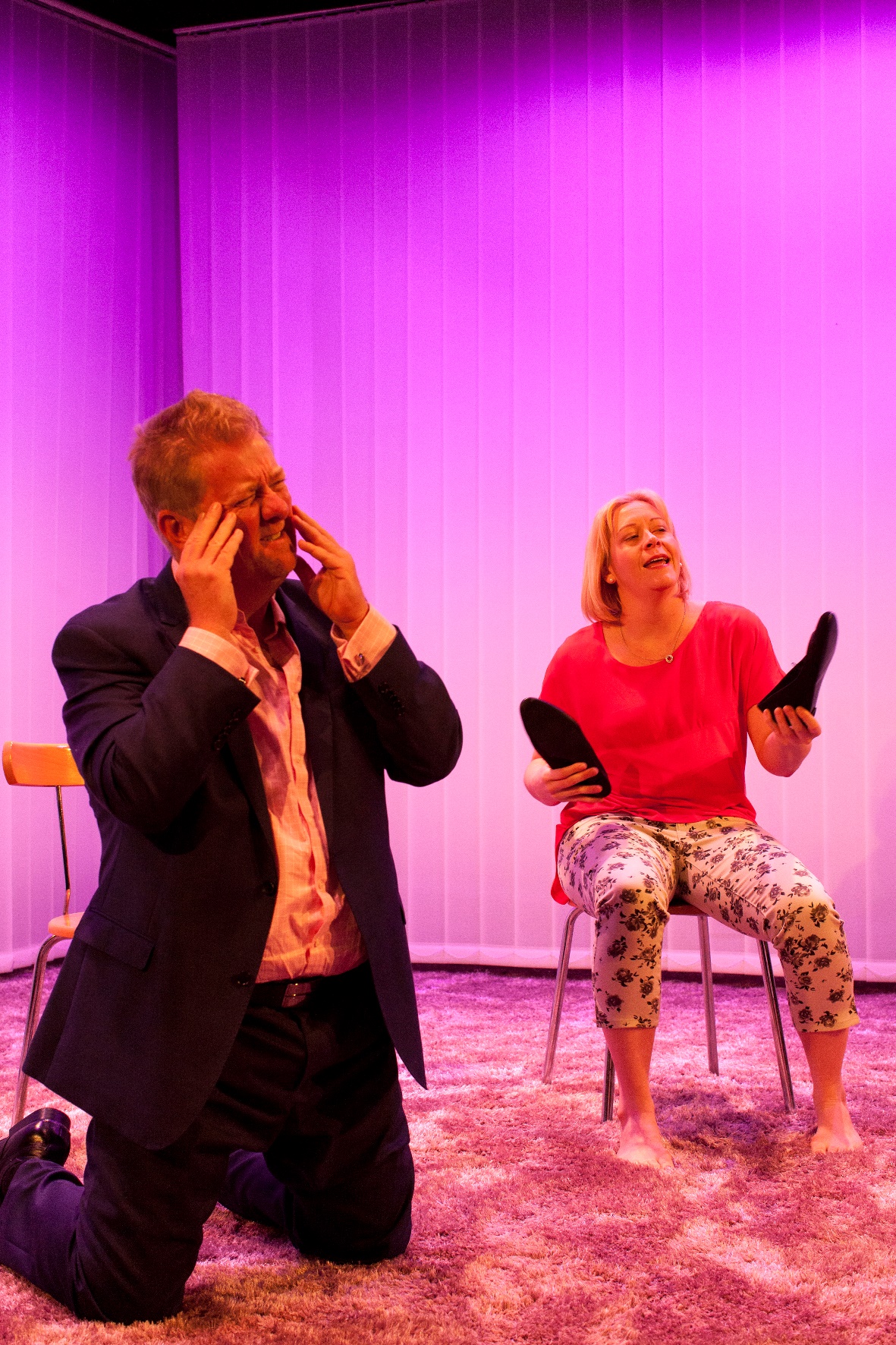
It features two fairly unprepossessing, unfulfilled, middle-aged people. He (Steve Rodgers) works in IT and is unhappily married. She (Andrea Gibbs) is a nurse with two children and a crushing debt. Both are lonely and full of self-loathing. To fill the void he consumes Internet porn, she shops. They connect via an online dating site then meet at a bar.

Written with an incisive economy, most of the spiky dialogue is addressed directly to the audience as the characters confess their fears, dreams and dark secrets. Only now and again do they actually talk to each other. In a way this holds us a little at bay – which is partly the point – but gradually the actors draw us in.

Co-produced by Griffin and Perth Theatre Companies, Lee Lewis directs a stark production on a minimal set by Marg Horwell (pale mauve shagpile carpet on the floor and walls, and large white blinds), colourfully lit by Matthew Marshall, which captures the anonymity of cyberspace and the aridity of their lives, with a nod to the world of porn.

Lewis’s direction is as taut as the writing but she also leavens the bleakness with a surprising amount of humour.

Rodgers and Gibbs give unflinchingly brave performances as they mine their characters’ addictions, vulnerability and longing with devastating authenticity, bringing warmth where it might easily not exist.

Running a tight one hour, Eight Gigabytes is troubling, insightful and terribly sad.

Eight Gigabytes of Hardcore Pornography runs until June 4. Bookings: www.griffintheatre.com.au or 02 9361 3817. It then plays at The Street Theatre, Canberra, June 17 – 21, and Studio Underground, State Theatre Centre of WA, July 1 – 12.

His Mother’s Voice

ATYP Studio, May 4

Isaiah Powell as Little Liu. Photo: Tessa Tran

Isaiah Powell as Little Liu. Photo: Tessa Tran

Justin Fleming’s new play His Mother’s Voice is a fascinating, absorbing play that combines sweeping politics with a powerful human drama.

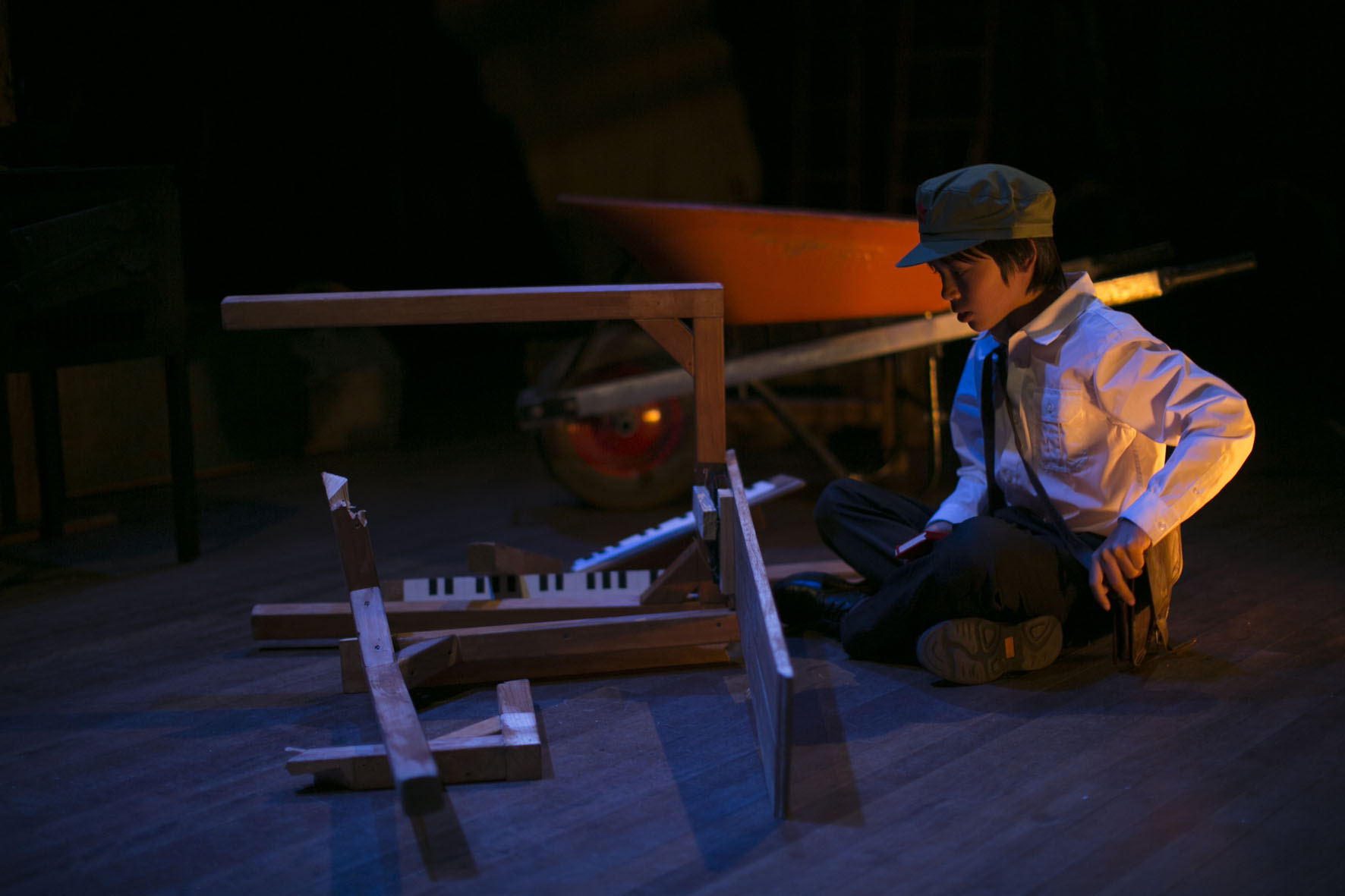
Set mainly in Shanghai during the Cultural Revolution, it tells the story of a virtuoso pianist Qian Liu (Isaiah Powell as a child and Harry Tseng as an adult) whose mother Yang Jia (Renee Lim) teaches him to play the piano at a time when it was considered “the most dangerous of all Western instruments” and when Western music was banned.

Even when Liu’s father (John Gomez Goodway) is murdered and their piano is destroyed by Chinese apparatchiks, she finds a way to keep up her son’s lessons, despite the danger of severe punishment as a counter-revolutionary.

Eventually, Liu defects – with his mother’s blessing – while visiting Australia for an international piano competition, accompanied by his wife, an Australian woman working in Shanghai as a translator (Dannielle Jackson), and his father-in-law (Michael Gooley) who is a diplomat.

Fleming’s play resonates with passionate arguments about music and politics. Mao’s Communist Party will only sanction Chinese music; Yang Jia believes that Chinese and Western music complement each other and should be equally respected.

There are times when the play becomes a bit overtly didactic, particularly in the debates between Liu and his father-in-law, but overall it is beautifully written, capturing both the epic nature of the political background and the intimate personal relationships. The emotional stakes feel high and very real.

His exploration of the Chinese embrace of contradiction in a touching encounter when Yang Jia is interrogated in prison, and an amusing scene when Chinese officials negotiate Liu’s return is particularly well evoked.

Suzanne Millar directs the play for bAKEHOUSE Theatre Company with great clarity on a simple set, which she co-designed with John Harrison and uses very cleverly.

Performed with great commitment by a cast of 12 (10 of them from Asian backgrounds), Renee Lim shines as Yang Jia, quietly capturing her strength, courage, idealism, intelligence and deep love for her son in a radiant, moving performance.

His Mother’s Voice plays at the ATYP Studio until May 17. Bookings: 9270 2400

Cruise Control

Ensemble Theatre, April 30

Clockwise from back left, Helen Dallimore, Henri Szeps, Kate Fitzpatrick, Felix Williamson, Michelle Doake and Peter Phelps. Photo: Clare Hawley

Clockwise from back left, Helen Dallimore, Henri Szeps, Kate Fitzpatrick, Felix Williamson, Michelle Doake and Peter Phelps. Photo: Clare Hawley

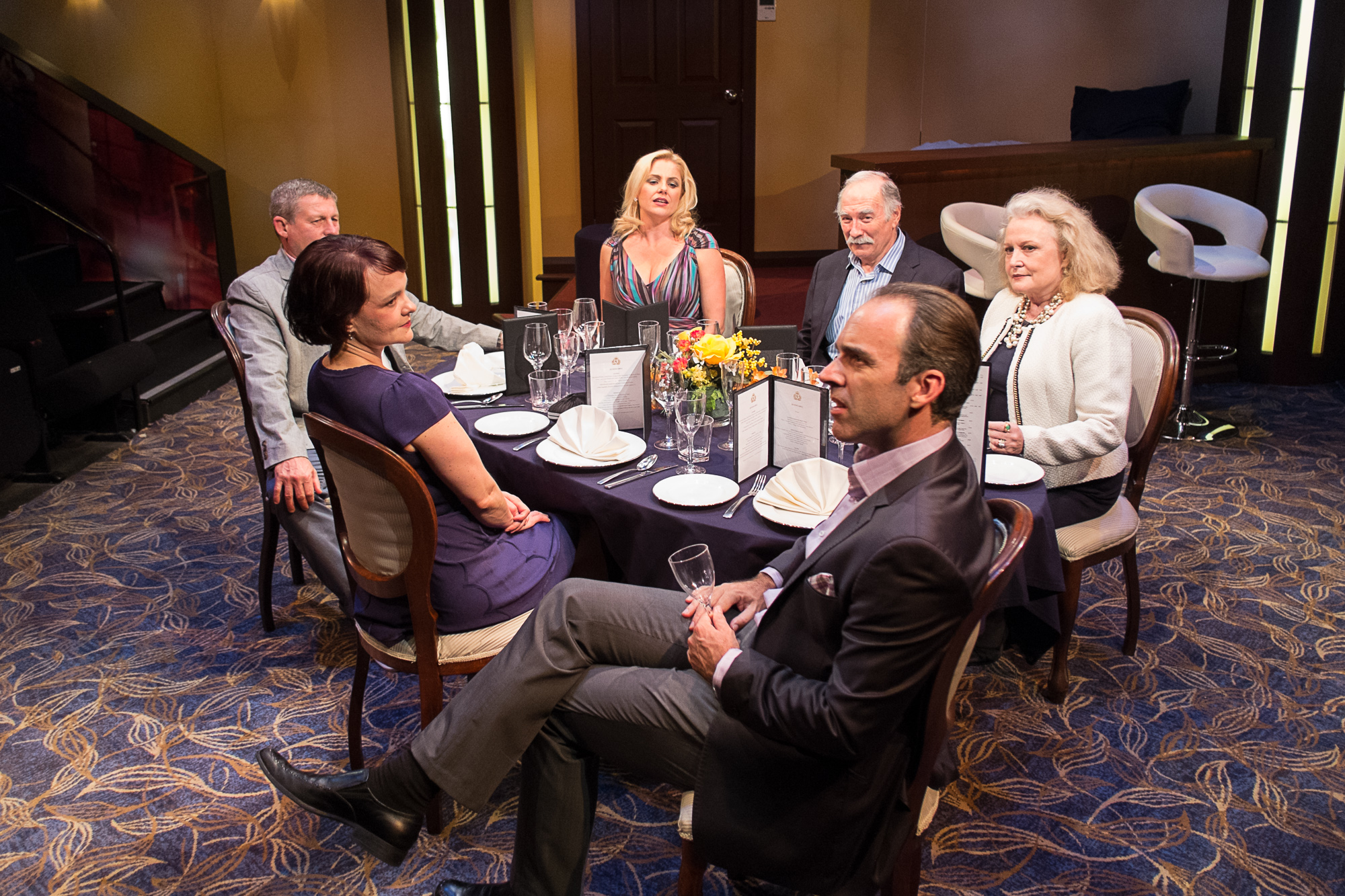
Inspired by a transatlantic cruise that he and his wife took, David Williamson’s latest comedy Cruise Control features three incompatible couples, each hoping to resolve their relationship issues on a luxury cruise, who find themselves having to share a dinner table every night.

There’s Richard (Felix Williamson), a failed British novelist who is arrogant, abusive and a compulsive womaniser, and his long-suffering wife Fiona (Michelle Doake), a successful publisher.

Joining them are elderly New York Jewish periodontist Sol (Henri Szeps) and his bored wife Silky (Kate Fitzpatrick) who spends his money freely while constantly undermining him, along with Australians Darren (Peter Phelps), a Bra Boy who manufactures surf wear, and his gorgeous wife Imogen (Helen Dallimore) who was “cut and polished” at Ascham.

Looking after them is Filipino waiter Charlie (Kenneth Moraleda), who is just happy to be providing for his much-loved family.

The first act is an entertaining comedy of manners as Williamson establishes the characters and the spiky dynamics between them. But in the second act some of the steam goes out of the play with a few fairly unconvincing plot turns and a lack of any real tension as things begin to feel predictable.

The final tying up of the light-weight plot is somewhat contrived and spelling out what happens to Richard at the end feels unnecessarily tacked on.

Williamson directs the play himself and keeps the action moving fluidly on Marissa Dale-John’s cleverly compact set, which certainly captures the world of a cruise ship. In the naturalistic setting, it’s odd though (and distracting) to see the actors “pouring” pretend wine into cheap plastic glasses.

The play is well performed by the strong cast. Felix Williamson gives a darkly entertaining performance as the irredeemably unlikeable Richard, Phelps brings just the right swagger to the tough, tattooed Darren, Dallimore shines as the voluptuous Imogen who is frustrated by her husband’s lack of attention, Doake is also very good as the put-upon, kindly Fiona, Fitzpatrick nails many of the biggest laughs as the elegant, bored Silky, Szeps is touching as Sol (though he was a little hesitant with some of his lines on opening night), and Moraleda injects some welcome heart as Charlie.

Though Cruise Control isn’t as gripping as it clearly aims to be, and peters out towards the end, there are some very funny lines, some astute observations and some poignant moments.

Cruise Control runs at the Ensemble Theatre until June 14. All performances are sold out so three new performances have been added at The Concourse, Chatswood on June 24 & 25. Bookings: http://www.ensemble.com.au or 02 9929 0644 or http://www.ticketek.com.au or 1300 795 012

A version of this review ran in the Sunday Telegraph on May 4

Pinocchio; The Incredible Book Eating Boy

Sydney Opera House is presenting two children’s shows for the school holidays: Windmill Theatre’s Pinocchio and CDP Theatre Producers’ The Incredible Book Eating Boy. And with one end of the western foyer converted to a play area, it’s a lively place for families to be.

Pinocchio

Drama Theatre, April 13

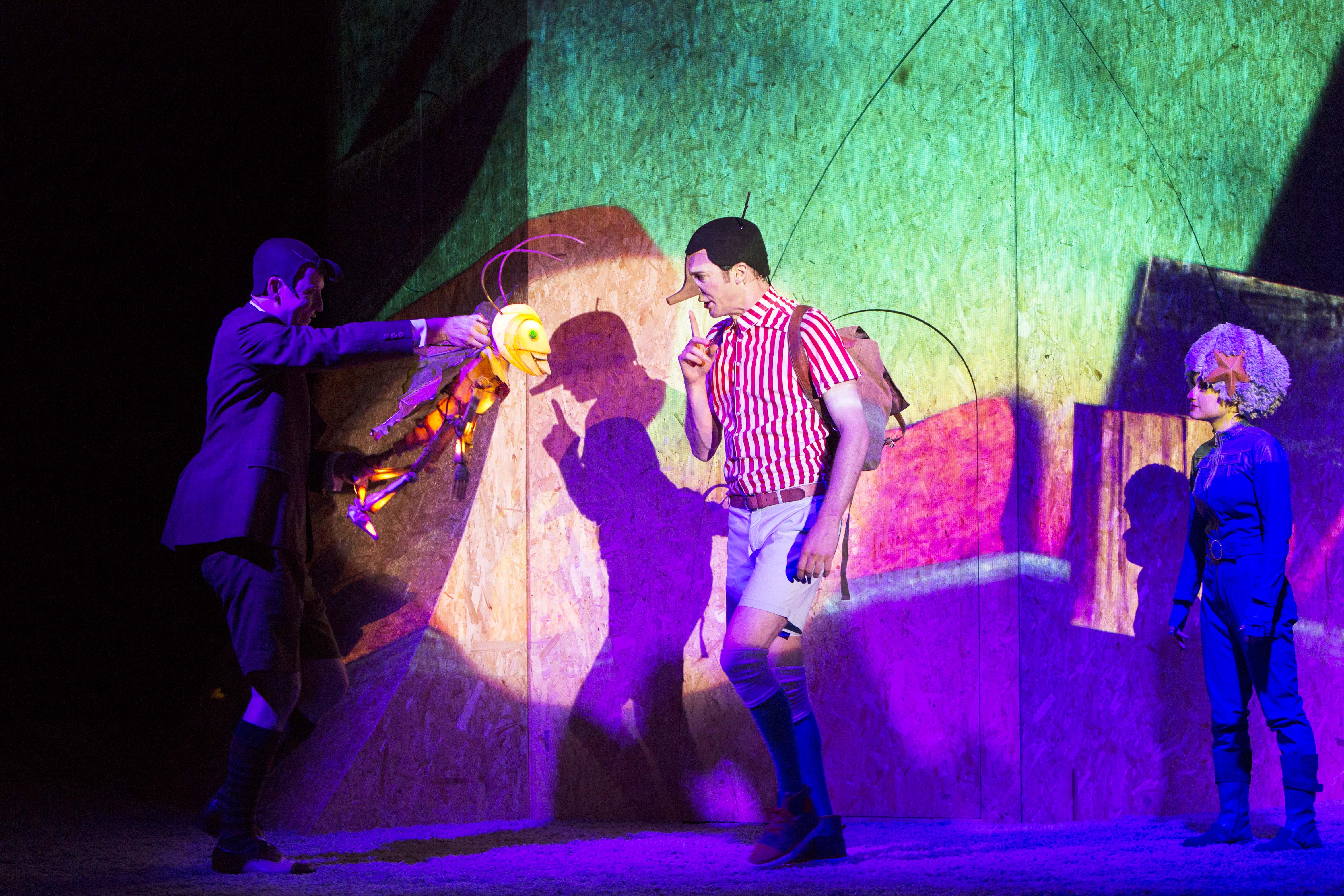
Jonathon Oxlade, Nathan O'Keefe and Danielle Catanzariti. Photo: Brett Boardman

Jonathon Oxlade, Nathan O’Keefe and Danielle Catanzariti. Photo: Brett Boardman

Acclaimed Adelaide company Windmill Theatre, which makes adventurous shows for children, is in Sydney with its 2012 musical production of Pinocchio, presented by the Sydney Opera House and Sydney Theatre Company.

Based on Carlo Collodi’s book about the wooden boy who longs to become real, director Rosemary Myers and writer Julianne O’Brien have created a version that combines a dark fairytale feel with a fun modern edge.

It begins unexpectedly with a blue-haired girl crashing her motorbike into the tree from which Pinocchio will be carved (an underdeveloped take on the blue fairy, who we don’t see again until the second act).

Then we’re into familiar territory with the tale of the naughty, easily led Pinocchio who is lured away from his maker/father the lonely toymaker Geppetto by the evil Stromboli. After a series of frightening adventures, Pinocchio returns home to Geppetto with love in his heart.

With one section set in the reality TV-like Stromboliland, Windmill’s production is more of a cautionary tale about greed and the lure of celebrity, while raising questions about what is real, rather than about simply telling the truth.

It’s cleverly staged around a large, flexible tree trunk on a revolving stage (designed by Jonathon Oxlade) onto which images are projected. The most charming effects, however, are the simpler theatrical ones – the way Geppeto carves Pinocchio, the way Pinocchio’s nose grows.

There are excellent performances across the board. Nathan O’Keefe uses his lanky frame brilliantly as a larky, willful Pinocchio, Alirio Zavarce is touching as the soft-hearted, clown-like Geppetto, Paul Capsis is a deliciously wicked Stromboli, Jude Henshall and Luke Joslin are very funny as roving wannabes Kitty Poo and Foxy, Danielle Catanzariti is suitably ethereal as Blue Girl and Oxlade is delightfully whimsical as the cricket (for which he uses a puppet).

Pinocchio runs around two hours including interval. For all its colourful treatment, it’s a fairly dark show (as is Collodi’s original story) and younger children could be frightened. It’s recommended for ages 7+.

Jethro Woodward’s songs have an energetic rock vibe but I’m not sure they are pitched at children and some of the humour didn’t land with youngsters around me. Others clearly loved it, however, and the show got a rousing response at the end.

Pinocchio runs until May 4. Bookings: sydneytheatre.com.au or 02 9250 1777

A version of this review ran in the Sunday Telegraph on April 20

The Incredible Book Eating Boy

Playhouse Theatre, April 13

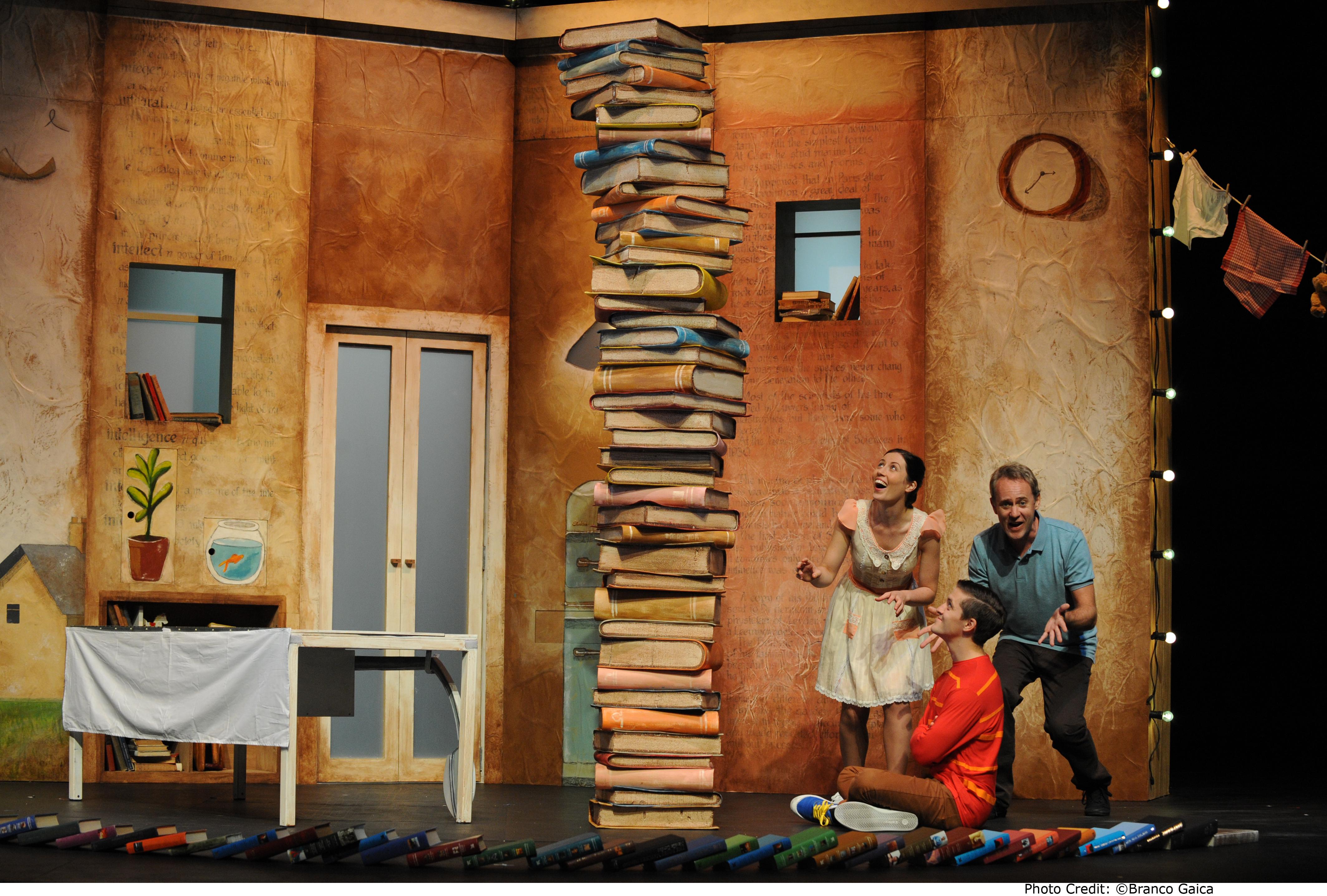
Madeleine Jones, Gabriel Fancourt and Jo Turner. Photo: supplied

Madeleine Jones, Gabriel Fancourt and Jo Turner. Photo: supplied

For the littlies (aged 3+) the Opera House is presenting CDP Theatre Producers’ stage adaptation of Oliver Jeffers’ best-selling picture book The Incredible Book Eating Boy.

Henry loves books – well, eating them anyway. The more he eats, the smarter he gets and so his appetite for the printed word grows and grows. But that many books are hard to digest. When he starts to feel ill and begins muddling up all the information he has consumed, he has to stop. Eventually, a sad Henry picks up one of his half-eaten books and begins to read it and falls in love with books afresh.

Writer Maryam Master fleshes out the story with an opening nightmare and more about Henry’s family and cat, most of which works well though the extended cat poo joke feels overdone and gratuitous – in fact, it made me feel a bit sick. By the time Henry began regurgitating books, I was feeling almost as queasy as him.

Directed by Frank Newman, the production is beautifully staged. Andrea Espinoza’s lovely set and costumes have the look of a picture book while cleverly incorporating books into every aspect of the stage design.

The cast of three – Gabriel Fancourt as Henry with Madeleine Jones and Jo Turner playing several roles – are all very good, creating characters the young audience can relate to.

The message that it’s better to read books than chow down on them is a quirky way to inspire children. The production would benefit from a little more dramatic magic at the end when Henry finally discovers the joy of reading to underline how exciting books can be. As it is, he just smiles, so it’s the images of eating and vomiting books that we remember.

The Incredible Book Eating Boy runs until April 27. Bookings: www.sydneyoperahouse.com or 02 9250 7777

The Government Inspector

Belvoir St Theatre, March 30

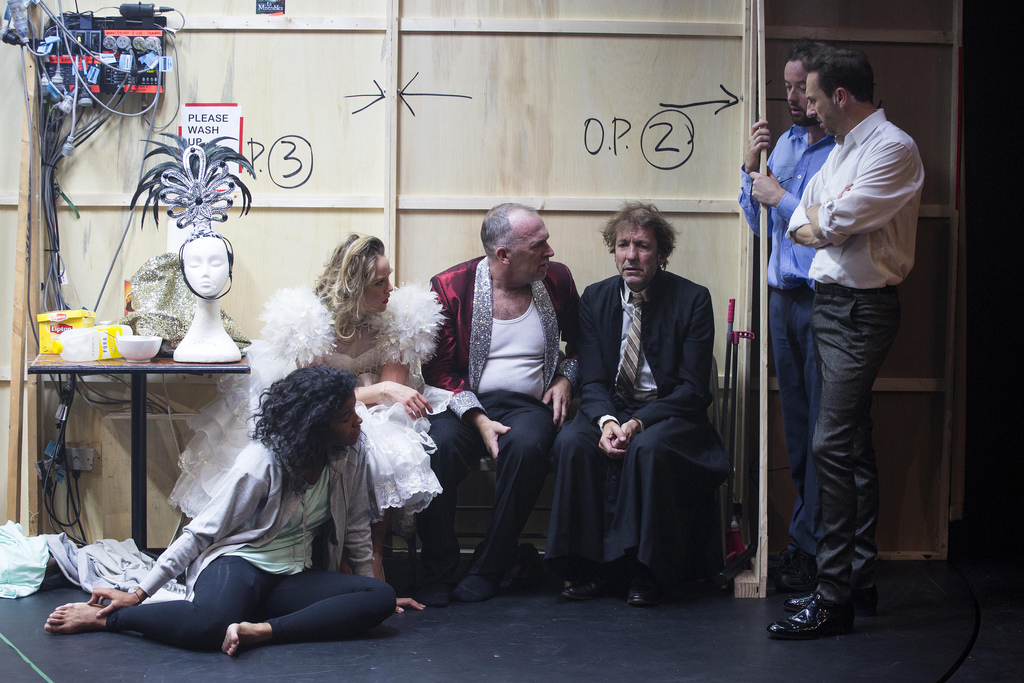
Zahra Newman, Eryn Jean Norvill, Greg Stone, Robert Menzies, Gareth Davies. Photo: Pia Johnson

Zahra Newman, Eryn Jean Norvill, Greg Stone, Robert Menzies, Gareth Davies, Mitchell Butel. Photo: Pia Johnson

As many would know, Belvoir’s 2014 season was to have included a radically reworked production of The Philadelphia Story “created by Simon Stone, based on the play by Philip Barry”.

However, after the subscription brochure was released, it transpired that Barry’s wife was a silent co-writer. The play was therefore not out of copyright and her estate refused to grant the rights.

To fill the gap Stone decided to use the same cast in a production of Nikolai Gogol’s 1836 political satire The Government Inspector. Well, sort of.

Gogol’s farce is set in rural Russia where corrupt bureaucrats mistake a lowly civil servant for a government inspector. They bribe him rotten until, having taken full advantage of them, he does a bunk just before the real inspector arrives.

Stone and his co-writer Emily Barclay have created a piece, devised with the actors, that riffs on Gogol’s themes while being set in a theatre.

The show begins with a morose Robert Menzies, in priest’s garb, stalking on stage to explain that not only will we not be seeing The Philadelphia Story but we won’t be seeing The Government Inspector either, so if anyone wants to leave, now’s the time.

On Ralph Myers’s revolving set – which has a performance space with a gold curtain on one side, and a backstage area on the other – Stone then whisks us back to three weeks before opening.

The actors – Menzies, Fayssal Bazzi, Mitchell Butel, Gareth Davies, Zahra Newman, Eryn Jean Norvill and Greg Stone – are discovered digesting the news that The Philadelphia Story has been cancelled. Next they learn that Stone has quit as director. Then Davies dies, choking on an activated almond.

Someone suggests staging The Government Inspector and a Google search locates Seyfat Babayev, an Uzbekistani director who recently mounted an avant-garde production. An invitation is sent and he agrees to come. To say more would spoil things.

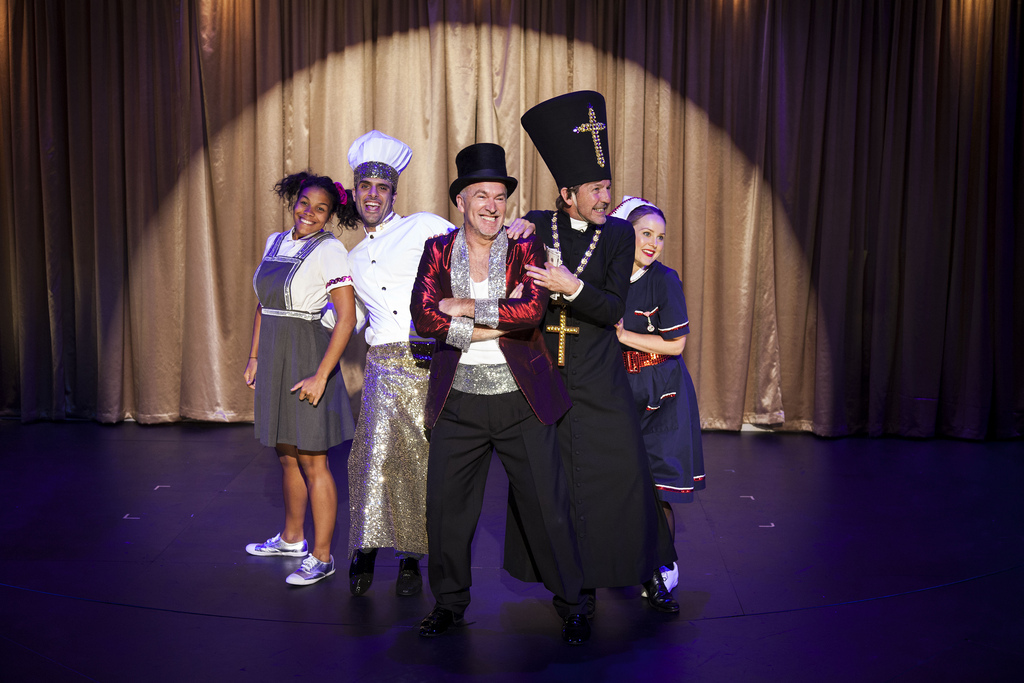
Using their own names, the actors play heightened, wickedly comical versions of themselves. Butel is a flouncing, self-obsessed luvvie ready to decamp to Playschool if necessary, Norvill an air-headed soap star, Menzies, a grouch who will only enunciate clearly when paid, Stone, needy and ambitious, and Bazzi, a quiet, somewhat vague observer. Davies also plays a hapless actor called Frank who arrives to audition for an improvisation project, while Newman is a Hispanic cleaner with a love of musicals (and what a lovely singing voice she has).

Zahra Newman, Fayssal Bazzi, Greg Stone, Robert Menzies, Eryn Jean Norvill. Photo: Pia Johnson

Zahra Newman, Fayssal Bazzi, Greg Stone, Robert Menzies, Eryn Jean Norvill. Photo: Pia Johnson

They all work together as a tight ensemble. To play the panic and escalating chaos in the play requires absolute precision otherwise it descends into a total mess. They do it brilliantly with perfectly pitched performances, making sure we hear what we need to amid the hubbub.

The production becomes a rollicking, clever take on Gogol, skewering human vanity, pretension, ego and ambition, while poking delicious fun at Australian auteur directors (like Stone himself) influenced by European theatre, as well as musicals and theatre in general.

People in the business and committed theatre-goers will probably get most out of it but it’s so hilariously funny you’d have to be as curmudgeonly as Menzies is here not to enjoy it.

The Government Inspector is at Belvoir St Theatre until May 18. Bookings: www.belvoir.com.au or 02 9699 3444

A version of this review ran in the Sunday Telegraph on April 6

Perplex

Wharf 1, April 4

Tim Walter, Andrea Demetriades, Glenn Hazeldine and Rebecca Massey. Photo: Lisa Tomasetti

Tim Walter, Andrea Demetriades, Glenn Hazeldine and Rebecca Massey. Photo: Lisa Tomasetti

Perplex by German playwright Marius von Mayenburg starts intriguingly. Andrea (Andrea Demetriades) and Glenn (Glenn Hazeldine) arrive back at their apartment after a holiday to find that the electricity has been cut off, there’s an odd pot-plant in the kitchen and something strange about the coffee table in the lounge – not to mention an awful smell.

Their friends Rebecca (Rebecca Massey) and Tim (Tim Walter), who have been watering the plants for them while they were away, appear and things get weirder. Not only is the electricity on but as far as Rebecca and Tim are concerned, this is their apartment. Outplayed, Andrea and Glenn are evicted.

Then Andrea and Glenn – the four actors use their own names throughout – reappear. Now, Glenn is Rebecca and Tim’s tantrum-throwing son and Andrea is their au pair. Rebecca doesn’t remember hiring an au pair but pretty soon the power shifts and Rebecca is sent packing as Tim and Andrea cosy up.

And so it goes, with characters and relationships morphing and blurring as one scene slides into the next without referencing previous ones.

Once you realise that this is the conceit and structure, the play somehow loses its bite and fascination. There is philosophical talk embracing Darwin and evolution, Plato, and Nietzsche but though Glenn appears at one point in Nazi brown shirt regalia, and the play ends with an absurdist, Pirandello-like scene in which the actors realise they have been abandoned by their director, the dramatic stakes don’t feel particularly high or truly dangerous. In large part that’s because with each change of scene and situation, the characters are let off the existential hook so instead of the tension building, it dissipates.

As Perplex plays with themes of what is real (in life and on the stage), identity and middle class mores and morality, it entertains but doesn’t pack as much of a punch as previous von Mayenburg plays The Ugly One and Fireface.

That’s no reflection on this classy Sydney Theatre Company production, directed by Sarah Giles, who lulls us into a false sense of up-beat security with a mood-enhancing blast of Queen’s greatest hits as we enter the auditorium.

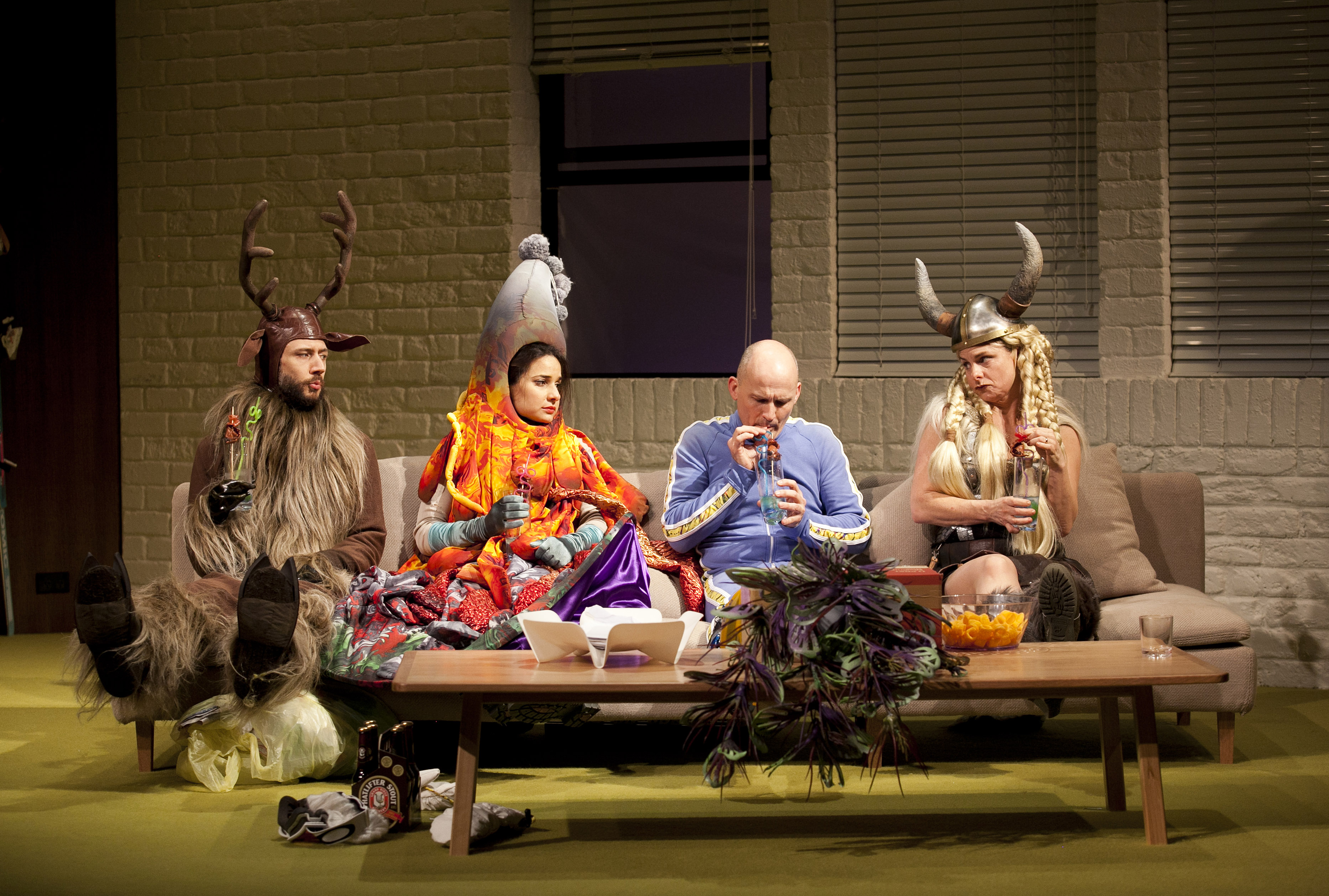
Staged on a suitably anonymous, minimalist set designed by Renee Mulder (cream brick wall, mustard carpet, sofa and wooden coffee table) the polished production moves briskly with excellent performances from all four actors. A Nordic fancy dress party, which sees Tim dressed as an elk, Andrea as a volcano, Rebecca as a Viking and Glenn as a skier, with a hilariously madcap sex scene between man and elk, is particularly funny, while Tim spends long spells expounding his theories stark naked. Hazeldine’s brilliantly observed tantrum as the boy Glenn is an inspired piece of physical comedy and a standout moment.

Mid-way through, however, I found my interest in the play waning. Maybe some of the scenes have a different resonance in Germany but here, though the plot may perplex the play doesn’t disturb, perturb or provoke and so it ends up rather washing over you in entertaining, non-threatening, bloodless fashion.

Perplex plays at Wharf 1 until May 3. Bookings: www.sydneytheatre.com.au or 02 9250 1777

All’s Well That Ends Well

Seymour Centre, April 3

Francesca Savige and Edmund Lembke-Hogan. Photo:  Seiya Taguchi

Francesca Savige and Edmund Lembke-Hogan. Photo: Seiya Taguchi

With a new production of All’s Well That Ends Well, created for the large York Theatre at the Seymour Centre rather than for one of its outdoor seasons, Sport for Jove confirms once more that it is one of Sydney’s most impressive independent companies and its artistic director Damien Ryan an exceptionally fine director of Shakespeare.

One of Shakespeare’s so-called “problem plays”, All’s Well That Ends Well is rarely seen. It is a tricky piece: a dark comedy set against a backdrop of war, in which Helena, a smart, virtuous, beautiful young woman does her all to win the love of Bertram, a young French count and seemingly undeserving young whelp who treats her with disdain. He doesn’t love her so doesn’t want to be forced to marry her – fair enough – but his rejection is brutal.

The happy denouement is achieved thanks to a bed-swapping trick and an implausible back-from-the-dead scene – but Ryan’s intelligent, bold, contemporary production takes all this in its stride and not only gives us a compelling drama, with plenty of humour, but one that is very moving at the end.

In a nutshell, Bertram’s mother adopted the orphaned Helena after the death of her father, an eminent physician. While Bertram views her in sisterly fashion, she loves and desires him.

Helena follows Bertram to Paris where she cures the king of a fatal illness. As thanks, the king allows her to choose any husband. Bertram is horrified when she picks him. Though forced to marry her, he refuses to sleep with her and flees to fight on the frontline in Italy, vowing that he will never be her husband until she can get the ring off his finger and bear his child.

Helena sets out on a barefoot pilgrimage and eventually encounters three women, one of whom is being courted by Bertram. Through their help, she finally wins her heart’s desire.

Battles of all kinds rage in the play. A literal war provides part of the backdrop but love and sex are also frequently referred to in military-like terms.

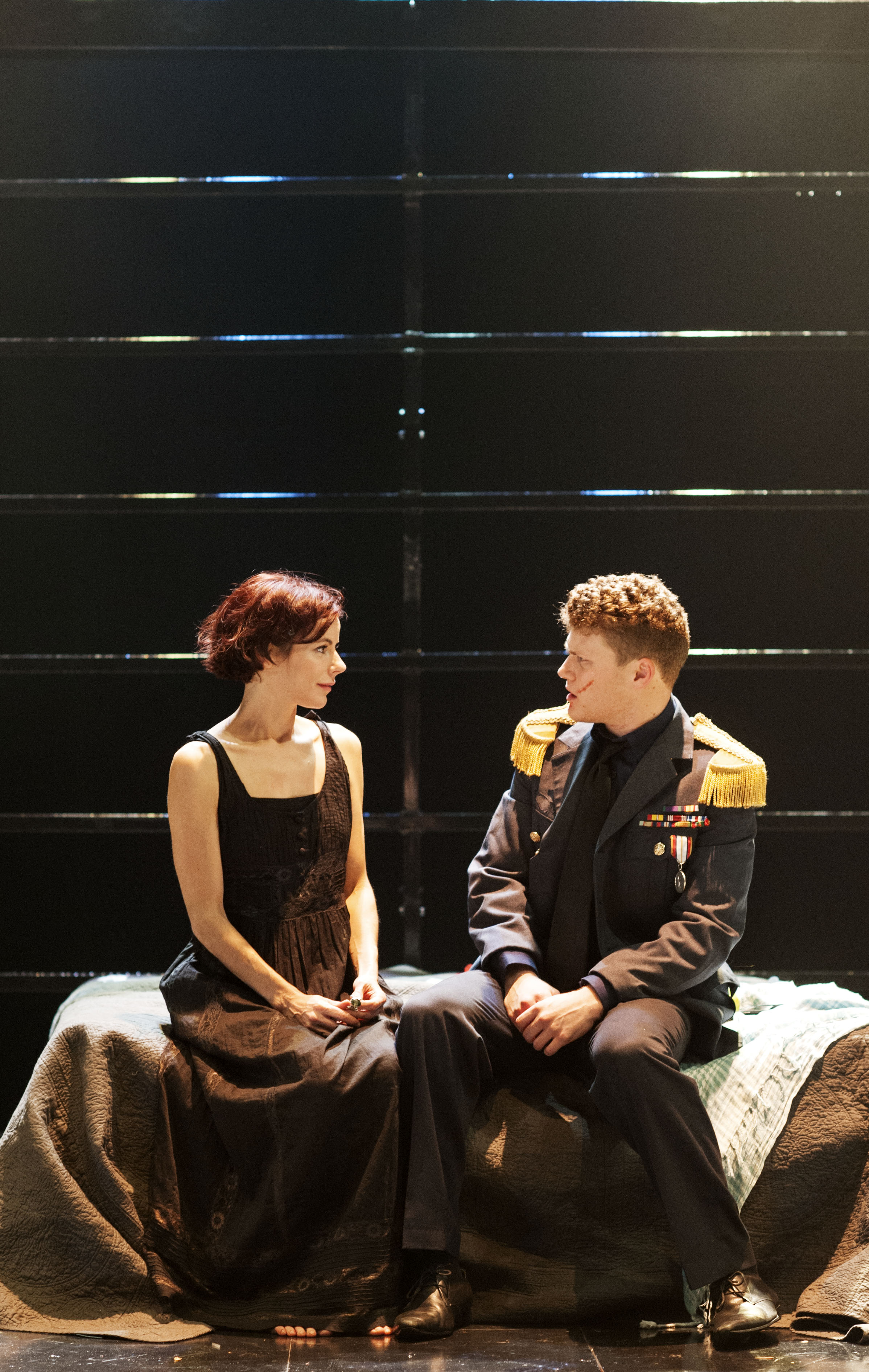
Ryan’s production begins with Bertram (Edmund Lembke-Hogan) sitting on a sleek, glossy black four-poster bed playing a war game on a gaming console, the sounds of battle filling the air as Helena (Francesca Savige) enters in shorts, tights and red Doc Martens to do the hoovering.

Antoinette Barboutis’s set design centres on the one clever, versatile structure, which transforms from the four-poster bed to a sauna-like steam room, military training equipment, a field hospital and Helena’s deathbed. Apparently there are sightline problems if you sit in the side seating blocks but from the front it’s a very effective devise that morphs quickly, making for fluid scene changes.

Ryan tells the story clearly and inventively, driving his production with a hard-edged, modern, punchy energy, complimented by David Stalley’s sound and Toby Knyvett’s lighting. At the same time, the strong cast handles the language exceptionally well, by and large, with the meaning and poetry shining through.

There are lots of clever little touches, which illuminate and entertain without feeling at all gimmicky. Helena is seen reviving a swatted fly to illustrate the magical healing powers she inherited from her father and will use to save the king, while the use of smart phones for Bertram’s rejection of Helena and her bedding of him work a treat.

As for the male nudity in the scene in which all the bachelors are presented for Helena’s consideration, it’s very funny yet apposite. Without knowing most of them, it really is a meat market.

Portraying the three women who help Helena as nurses at a field hospital for wounded soldiers is also an intelligent decision, further marrying the themes of love, sex and war.

The performances are robust and considered across the board. Lembke-Hogan has a strong stage presence and manages Bertram’s sudden emotional conversion at the end so well that it is genuinely moving. Against the odds, we are left feeling that a happy ending between he and Helena is genuinely possible.

Robert Alexander is a standout as the king – frail and at death’s door one minute then in commanding, authoritative form the next, while George Banders brings emotional depth and comic nous to the role of the cowardly Parolles.

But all the cast – which also includes Savige as Helena, Sandra Eldridge, James Lugton, Eloise Winestock, Teresa Jakovich, Megan Drury, Chris Stalley, Sam Haft, Robin Goldsworthy, Chris Tomkinson, Damien Strouthos and Mike Pigott – deserve praise.

Running for three hours and ten minutes, there are times when you feel a little editing might not go astray but no matter. This is a great chance to see a little-staged play in a clear, intelligent, funny and visceral production.

All’s Well That Ends Well is at the Seymour Centre until April 12. Bookings: www.sportforjove.com.au or 02 9351 7940