Tim Minchin: Part 1

In a wide-ranging interview with Tim Minchin, he discusses the ins-and-outs of writing Matilda, Groundhog Day, Larrkins, acting and his move to LA: so much that I’m breaking it into two parts.

The second part, coming soon, will focus on Groundhog Day, Larrikins and his move to Los Angeles. In this first part, he talks about his encounter with a (fictional) little girl called Matilda.
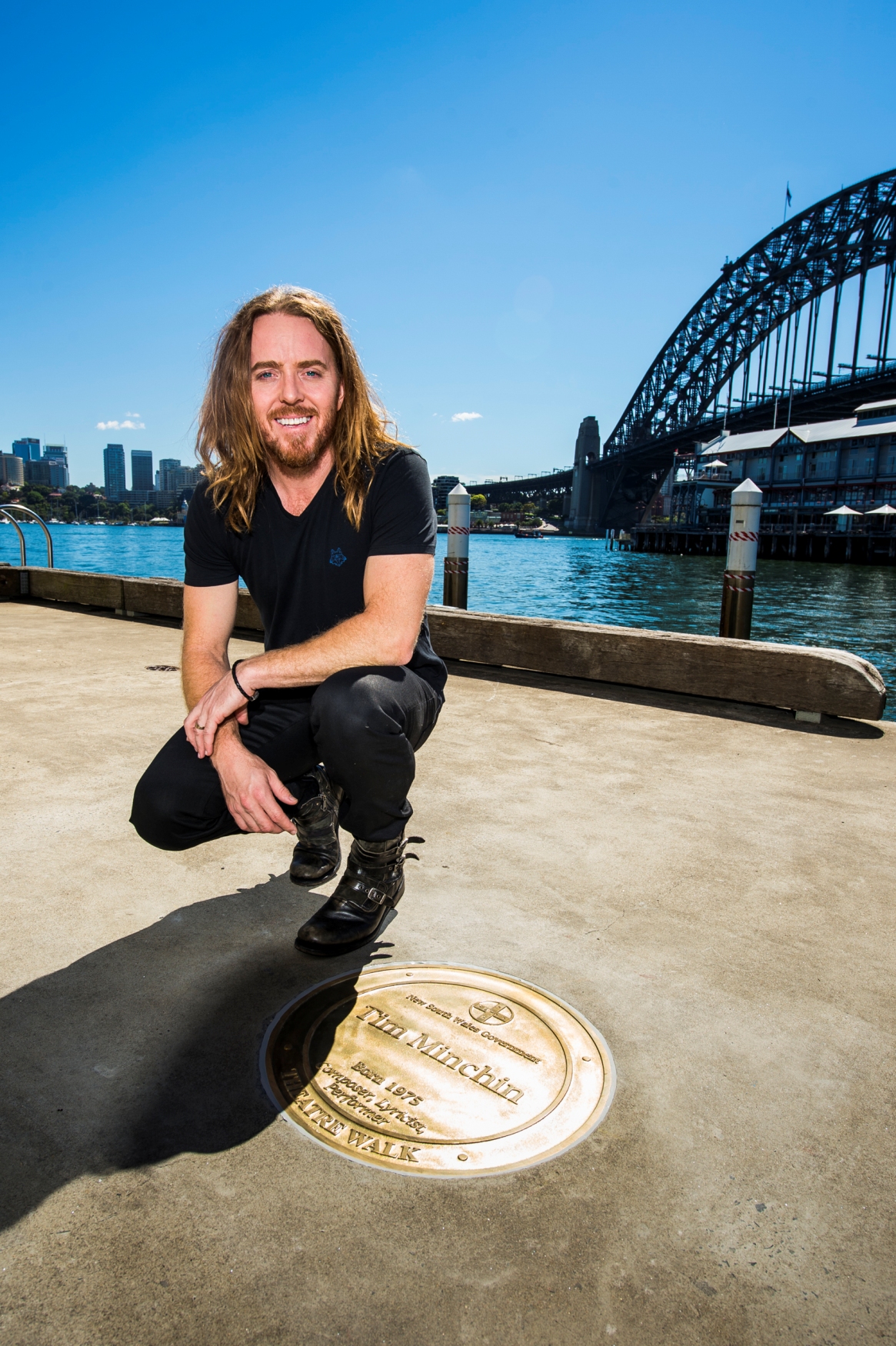
Tim Minchin is honoured with a plaque in Sydney's Theatre Walk. Photo: Brett Hemmings

Tim Minchin is honoured with a plaque in Sydney’s Theatre Walk. Photo: Brett Hemmings

When the Royal Shakespeare Company was looking for someone to write the songs for their musical of Matilda, director Matthew Warchus went to see one of Tim Minchin’s solo shows in London.

As Minchin tells it, by the show’s end Warchus had decided that he wasn’t right for the job. Then as an encore, Minchin sang White Wine in the Sun, his beautiful, heartfelt song to his baby daughter Violet about Christmas, family and love, and Warchus changed his mind.

“He was thinking, ‘no’ and then he went, ‘oh, there’s another dimension’. I’m so glad. Can you imagine? It’s made such a profound impact on my life, this musical, and my whole career,” says Minchin.

Based on Roald Dahl’s popular children’s book, Matilda the Musical has proved a phenomenal success. It won a record seven Olivier Awards in London and four Tony Awards on Broadway, where the New York Times described it as “the most satisfying and subversive musical ever to come out of Britain.”

The Australian production begins previewing in Sydney on July 28. Minchin, who grew up in Perth, will be at the official opening on August 20 and says it feels “genuinely special” to be bringing the show home to Australia.

The feeling is reciprocated. Matilda is probably the most hotly anticipated musical of the year in Sydney where the love affair with Minchin continues to grow. Tickets were snapped up in next to no time when he played two sold-out shows on the steps of the Sydney Opera House in February. He held the ecstatic audience in the palm of his hand, with more than a few tears during White Wine in the Sun. His own mascara seemed to run a bit too.

And when he came to Sydney last October for the launch of Matilda, Destination NSW took the opportunity to honour the self-proclaimed “rock ‘n’ roll nerd” with a plaque in Sydney’s Theatre Walk at Walsh Bay, joining the likes of Cate Blanchett, Geoffrey Rush, Jacki Weaver and John Bell.

Minchin was a star before Matilda. A comedy songwriter with trademark ratty hair, kohl-rimmed eyes and bare feet, his genius for combining pithy, witty, pointed lyrics with catchy tunes had already won him such a cult following that he could fill arenas for his solo shows and front symphony orchestras in concert halls.

But Matilda has made him a superstar, in demand around the world. He is now writing songs for a musical based on the 1993 film Groundhog Day, also directed by Warchus, which will premiere at London’s Old Vic next year prior to a Broadway opening in 2017.

He is also the songwriter and director for an animated DreamWorks movie called Larrikins, set in Australia, scheduled for release in 2018. There’s a film of Matilda the Musical in the pipeline too.

“Without Matilda, I could have gone more down the path that people who get known for comedy go on but this has taken me back to what I was doing as a kid. I wrote loads of music for the theatre in my late teens and early 20s,” says Minchin.

“Then I started getting a couple of roles in plays and I moved to Melbourne and then I got frustrated because no one would take any notice of me and so I started doing comedy. But even at the beginning of my comedy career I was writing musical scores.”

In 2004, he wrote the songs for This Blasted Earth, a Christmas musical written with Travis Cotton and Toby Schmitz, which played at Sydney’s 40-seat pub theatre at the Old Fitzroy in Woolloomooloo. In 2005, he and Kate Mulvany wrote Somewhere, a musical about Penrith for the opening of the Q Theatre. That same year, he won the Best Newcomer Award at the Edinburgh Fringe Festival.

“It does strike me as really amazing that (working on Matilda is so similar to) what I was doing 10 years ago,” he says munching on jelly snakes to keep himself awake as he battles raging jetlag.

“I listen back to those songs I wrote for the Old Fitz show and the songs from Somewhere and there are definitely songs in the Penrith musical that are as good as anything in Matilda. There was no change in tools; there was just a change in status, in who was asking me to write for them.”

Funnily enough, in a now famous anecdote, while he was writing music for theatre shows in Perth, Minchin – who is mad Dahl fan from way back – enquired about getting the stage rights for a musical of Matilda. When Dahl’s estate asked for a sample of his score, he panicked and dropped the idea.

“It’s a great story. It doesn’t sound very believable but it’s true,” he says.

Matilda tells the tale of a smart, book-loving little girl who uses intelligence, imagination, courage and magic to defy her mean parents and vicious, tyrannical headmistress Miss Trunchbull.

As Minchin puts it: “The show’s about a tiny person starting a revolution to overthrow the oppressors.”
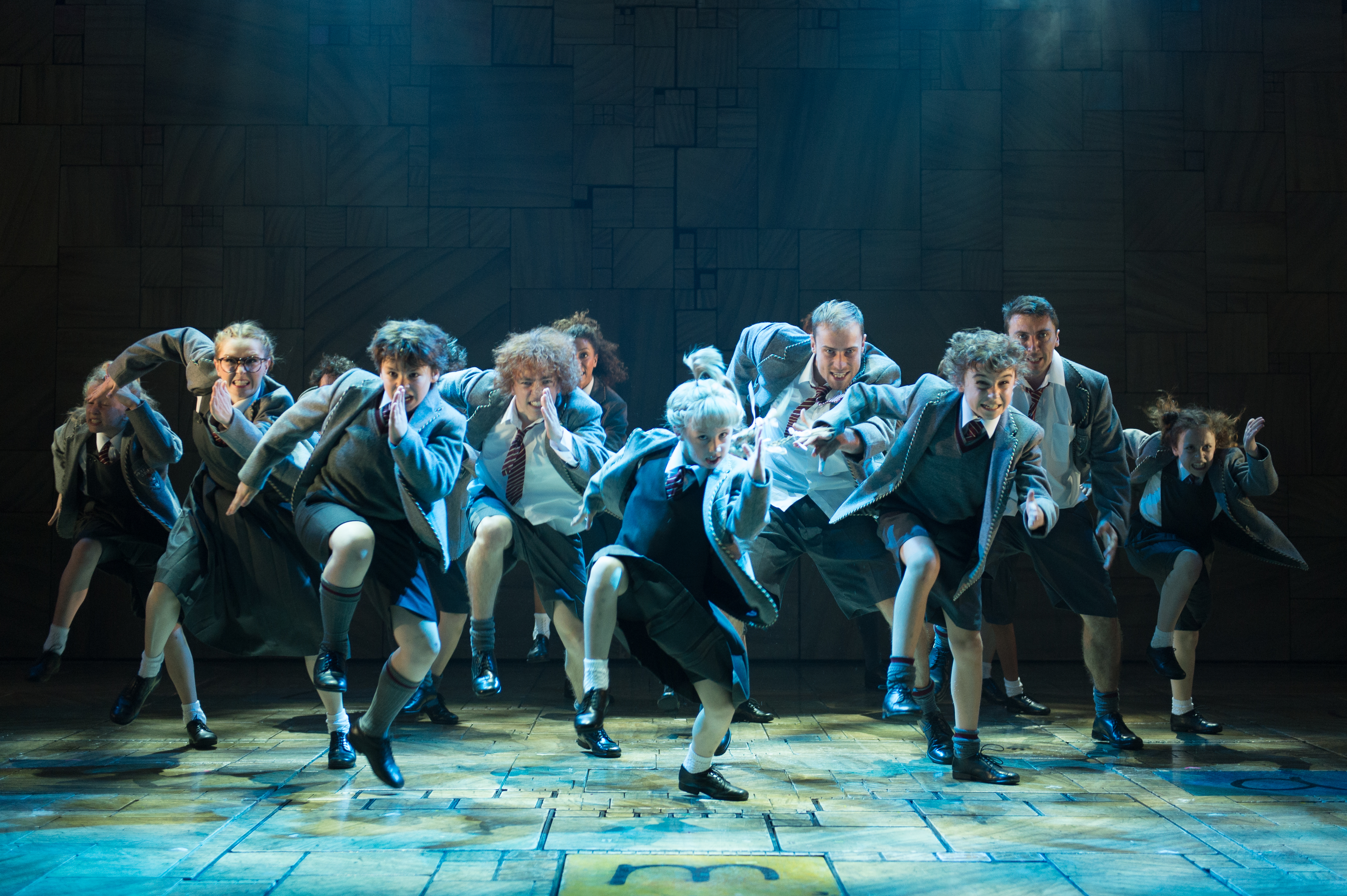
The UK company in the RSC production of Matilda the Musical. Photo: Manuel Harlan

The UK company in the RSC production of Matilda the Musical. Photo: Manuel Harlan

Minchin’s songs are absolutely brilliant: funny, bolshie, poignant and refreshingly different to so many of the pop scores of contemporary musical theatre. In retrospect, it’s hard to think of anyone else more suited to the task. His intelligence, irreverence, wit and heart seem such a perfect match for Dahl.

Matilda feels a particular way. It doesn’t just feel like me, it feels like me interpreting Dahl,” he says. “There’s an angularity to the opening and this semi-tonal thing going on. The dominant movement through the whole thing is a semi-tonal shift with all these crunchy harmonics. In musical theatre, it’s usually big shifts and fourths, not semi-tones. But I do think Matilda has an aesthetic that seems to work.”

You might think the first thing Minchin would have done after being commissioned by the RSC was to pick up Dahl’s novel again, but no. Instead, he looked to the show’s book by writer Dennis Kelly.

“I never went back and re-read the book because I decided Dennis’s adaptation was my source text,” says Minchin. “I didn’t re-read all my Dahl. I just had an utterly convinced sense that I knew what Dahl-ness was and I knew his themes. Obviously there’s that cheeky little tip-of-the hat to Roald Dahl’s Revolting Rhymes: ‘We are revolting children, Living in revolting times, We sing revolting songs, Using revolting rhymes…’ (Hooley-dooley, Tim Minchin is singing for me). I was taking from all Dahl’s work without even knowing I was doing it really.”

When Minchin came on board, Kelly had already been working on Matilda for a year.

“He had a script adaptation and he said, ‘I’ve (marked) some places where I think there might be songs, I’ve even written a few lyrics,’” recalls Minchin. “And I said, ‘you can’t give me any lyrics or song titles. I just want “song here, question mark” and we’ll discuss what you think they might be about, because you might have a great idea but how will I know if I have a better one if that gets in my head?’

“So he gave me a script with no songs and Matthew (Warchus) and me and Chris Nightingale, the orchestrator, who was in from the very beginning, and Dennis just talked and talked and talked. Your most pretentious, in-depth tutorial in an English Literature of a university got nowhere near the level of textural analysis that we were doing!

“I went away and broke it down and put songs in different colours representing different styles, so if it was a chorus number it was this colour and if it was a solo number it was another colour and all that sort of thing, which kind of mapped it. I didn’t start writing songs until we had a really strong map.”

Hard though it is to believe now, Minchin reveals that at one point they considered making Matilda a non-singing character.

“Early on, Matilda had no songs. I couldn’t work out how to make her sing, weirdly, because she’s so quiet. Then I wrote Quiet,” he says.

“That’s not quite true. She had a song in the second act where Quiet is now, which is just as she is about to do magic for the first time. It had this big rumbling build-up to ‘Magical! but we all went, ‘that’s not right’ so when we did the first workshop we just discarded it. She had no songs at that point and we were considering the possibility that she might not have songs; that the world revolves around her and she is a still force.

“There was another character called Hortensia who had two big songs, Revolting Children and another called Now That She’s Gone when Trunchbull leaves. It’s a really funny song but it didn’t belong in the musical and nor did Hortensia so she got dissolved and we gave her spirit to Matilda so she can sing, ‘sometimes you have to be a little bit naughty’ – the language of rebellion.”

One of the most well-known and popular songs in the show is the sweet When I Grow Up. The idea behind it came from one of Minchin’s own childhood memories.

“I remember promising myself I would never open the farm gate. We used to spend a lot of time when I was growing up on my grandfather’s farm and you would always climb over the gate or flip over the gate. I’d watch the oldies fiddle with the (padlock) and I would go: ‘I hope I never have to walk through gates. Gates are to be hurdled,’” he says.

“That idea of looking at things as a child and promising yourself that as an adult you’ll do all the things you think are awesome as a child (is the idea behind the song). It’s somehow sad because you are so wrong. Or maybe you were right. That’s the point. Dahl would say that we forget that kids have the wisdom. We’re sad as adults because we don’t climb trees and eat sweets and wake up with the sun. That’s where all the melancholy comes from in that.

“As you can tell when I talk about these things, I tend to go, ‘oh, here’s an idea and if I do that….’ That’s how I find my way into things. There’s a lot of emotion to be got out of thinking your way into it. But I think having young kids really allowed that.”

Asked if he does still leap the gate, he grimaces a bit. “No. I’m a bit sore these days. But when I run I have a compulsion to jump up on picnic tables. I’m like an old shitty Parkour runner.”

When I Grow Up is the first non-narrative song Minchin wrote for the show. “It’s a reflective piece, although in the musical Miss Honey sings the last verse about being brave enough to fight the creatures, which gives you a hint of what’s to come,” he says.

When I Grow Up always sat outside the piece and one of the ways it doesn’t now is because I took the whole thing and wrote a new tune over the chord structure and that’s Naughty. It’s basically the same song. Naughty and When I Grow Up are almost identical harmonically and that’s why they go from one to the other in the mash-up (at the end).”

Thinking back on the robust working relationship between him and Kelly, as Matilda gradually took shape, Minchin laughs with genuine pleasure.

“He’d never written a musical before. We tugged and pulled and pushed for the whole writing period. We didn’t know each other very well early on and Matthew would sit there quietly letting us fight it out. Then he’d say one sentence and we’d go, ‘right’. He’s such a genius and so quiet. But we’d all make each other laugh all the time.

“Dennis Kelly is now one of my favourite humans on the planet,” adds Minchin. “We’re from very different backgrounds and we approach art in a different way. I don’t know but perhaps if you write something like this and it goes so well, you are bonded by a very positive experience. As the time went on, I just fell in love with him. He’s such a brilliant guy.”

Matilda plays at Sydney’s Lyric Theatre from July 28. Bookings: Ticketmaster 1300 795 267

 A version of this story ran in the Sunday Telegraph on June 28

Asian Provocateur

Hayes Theatre Co, June 26

Josie Lane. Photo: supplied

Josie Lane. Photo: supplied

Josie Lane is a gorgeous, bubbly, warm, fabulously fierce little dynamo, both on stage and off – and her new cabaret show Asian Provocateur is all of those things and more.

Premiering as part of the Hayes Theatre Co Cabaret Season, it’s outrageously funny, sweet and ballsy. In drawing on anecdotes from her life and career, the show is not only irresistibly entertaining but has serious things to say about discrimination, without ever labouring the point.

Lane is of an “Asian persuasion” as she puts it. Her mother is from The Philippines and her father is from Footscray – making her too Asian to have many friends at primary school but not Asian enough for certain roles (or so she suspects in some instances). Apparently that’s why she didn’t get an audition for The King And I.

On the other hand, she has been prone to typecasting, though her career extends beyond that with credits in musicals such as Priscilla, Queen of the Desert, Avenue Q, The 25th Annual Putnam County Spelling Bee for Sydney Theatre Company, Into the Woods for Victorian Opera and, most recently, Miracle City at the Hayes.

For Asian Provocateur, she makes a dramatic entrance in a sparkly kimono with an ornate headpiece, then tosses the extravagant outfit aside to reveal a sassy little red and gold cheongsam.

With her musical director Mathew Frank providing excellent accompaniment on the piano, she sings a selection of songs with an Asian connotation from shows including Flower Drum Song, The King And I, South Pacific, Chess, The Mikado and Miss Saigon, as well as numbers such as Whitney Houston’s Saving All My Love For You. Frank also sings Pretty Lady from Pacific Overtures while she changes frocks later in the show.

As for her stories, they pour out at a million miles, exuberant, touching, risqué: everything from eating fish semen to her surprise at being asked to play Power Rangers at school (only because they wanted her to be the Asian Yellow Power Ranger).  She does a hilarious imitation of her wonderfully eccentric mother who constantly imagines the very worst happening to her daughter and isn’t above ringing her at two in the morning with dire warnings.

Along the way, she has a dig at the casting of Teddy Tahu Rhodes in The King and I, and Emma Stone as Eurasian character Allison Ng in the movie Aloha.

Then there’s the unfortunate, icky toilet incident which left her with Bali Belly for an entire holiday and her recent visits to a couple of Bangkok nightclubs, one called Super Pussy and another with a live gay sex show. (Yep, the show comes with an 18+ rating).

The thing about Lane is that she has the happy knack of being able to tell stories that are completely out-there without coming across as crass or crude. Instead, her vivacious storytelling is hysterically, endearingly funny. It also feels absolutely natural and truthful as if she is regaling friends at a dinner party. And she certainly makes her point.

On top of that, lordy can she sing. She has a glorious, thrilling voice that is true, clear and strong. She can belt with the best but her vocals are also coloured with emotion from the wistful beauty of Something Wonderful (The King and I) to the heartfelt pain of The Movie in My Mind (Miss Saigon).

The show looks terrific too. James Browne has designed a simple but very effective set with rice paper and bamboo screens (lit with plenty of coloured light) and two large lanterns.

Though it was advertised as running 75 minutes, the show ran for more than 90 minutes on Friday and while it never flags, a little tightening might not go astray. And – call me old-fashioned – but I didn’t think she needed to use the f-word quite so much. It felt out of place somehow.

But consider those the most minor of quibbles. Asian Provocateur is a terrific, spunky cabaret show and deserves to be widely seen.

Triassic Parq

Reginald Theatre, Seymour Centre, June 19

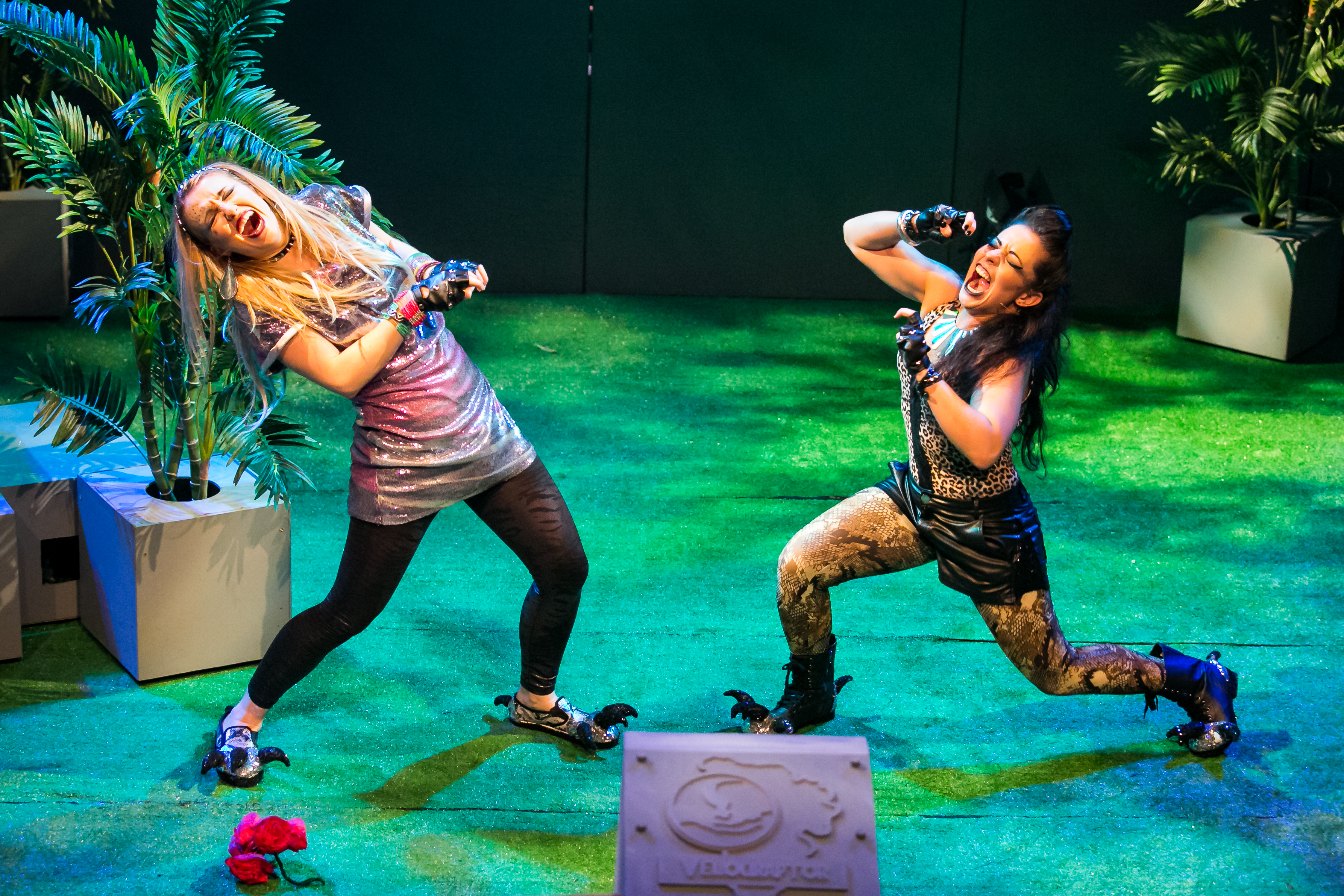
Adele Parkinson and Monique Salle as T-Rex 2 and 1. Photo: Michael Francis

Adele Parkinson and Monique Salle as T-Rex 2 and 1. Photo: Michael Francis

You can’t fault the timing: Squabbalogic is staging the musical Triassic Parq (“no, not that other park because we don’t want to get sued”) just as the newly released film Jurassic World is doing a roaring business at the box office, generating plenty of dino talk.

And you can’t really fault the production. But despite the best efforts of everyone involved, Triassic Parq is only sporadically diverting. Yes, it’s sweet and it’s fun, with a catchy, tuneful pop rock score (by Marshall Pailet) and occasionally witty lyrics and book (Pailet, Bryce Norbitz and Steve Wargo) but overall it feels like a mildly amusing, over-extended sketch.

The musical is a comic riff on Steven Spielberg’s 1993 film in which, as you’ll probably recall, scientists clone dinosaurs for a theme park using dino DNA and some frog to complete the DNA chain. All the dinosaurs are female to prevent breeding, but that little bit of frog causes one hell of a problem, allowing the dinosaurs to change sex in order to reproduce and ensure the survival of the species.

Triassic Parq tells the story from the dinosaurs’ point of view. Life for the “Lab” worshipping dinosaur community is thrown into chaos when T-Rex 2 (Adèle Parkinson) suddenly sprouts a penis. Meanwhile, the Velociraptor of Innocence (Rob Johnson) finds her way over the electric fence in search of answers. Bumping into T-Rex 2 outside the park, they work out what a “dick stick” is for, sending T-Rex 2’s bestie T-Rex 1 (Monique Sallé) into a jealous, rampaging rage.

The Velociraptor of Faith (Blake Erickson) – a dino with secrets – is forced to question his trust in “Lab” when the delicious goats the deity normally supplies suddenly stop appearing. And then the exiled Velociraptor of Science (Keira Daley) returns. Completing the dino cast are the mute Mimeosaurus (Crystal Hegedis) and the Pianosaurus (musical director Mark Chamberlain).

Themes of love, religion, science and gender underpin the silliness but it’s all pretty lightweight: fluff and nonsense being the prevailing tone.

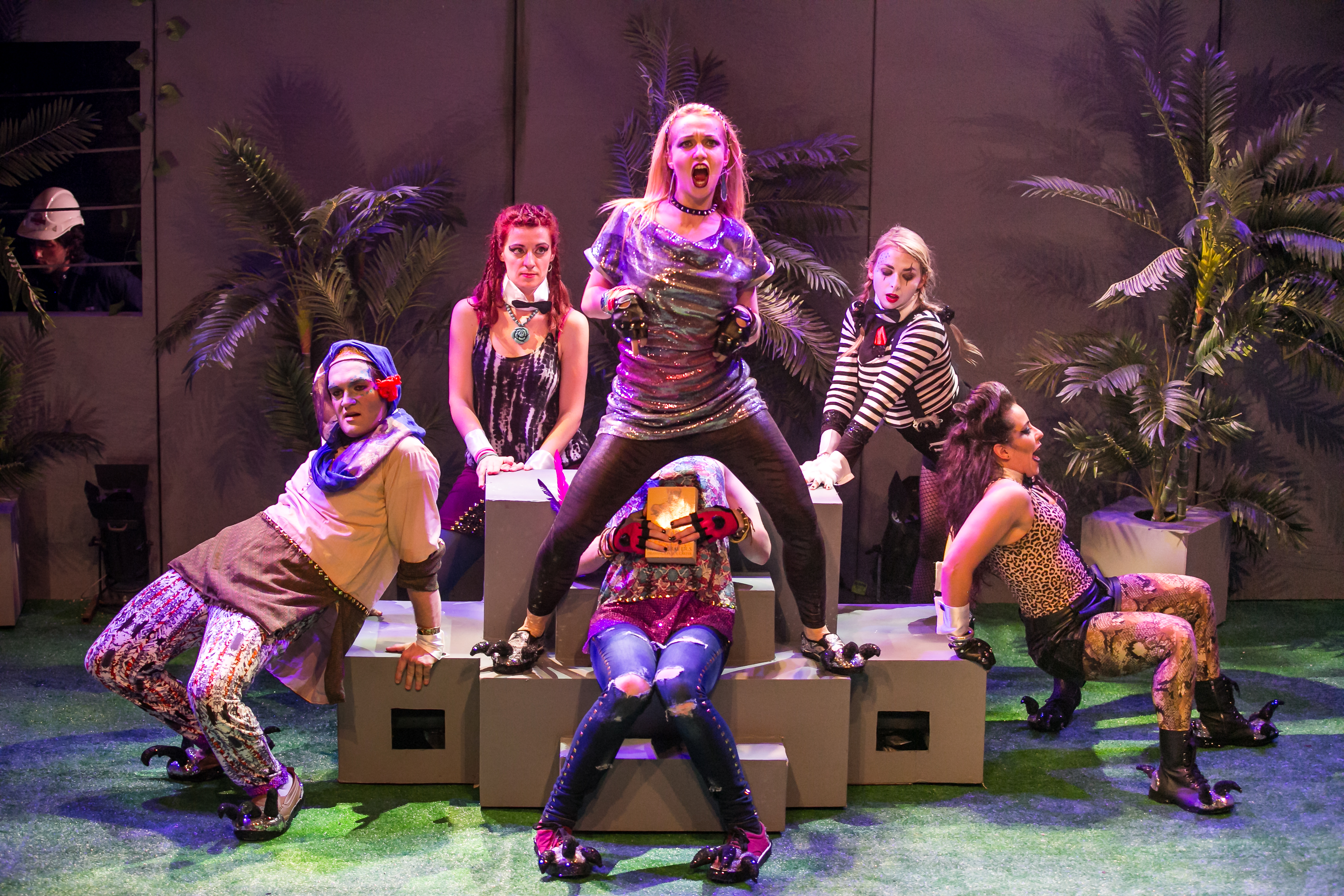
The Triassic Parq company. Photo: Michael Francis

The Triassic Parq company. Photo: Michael Francis

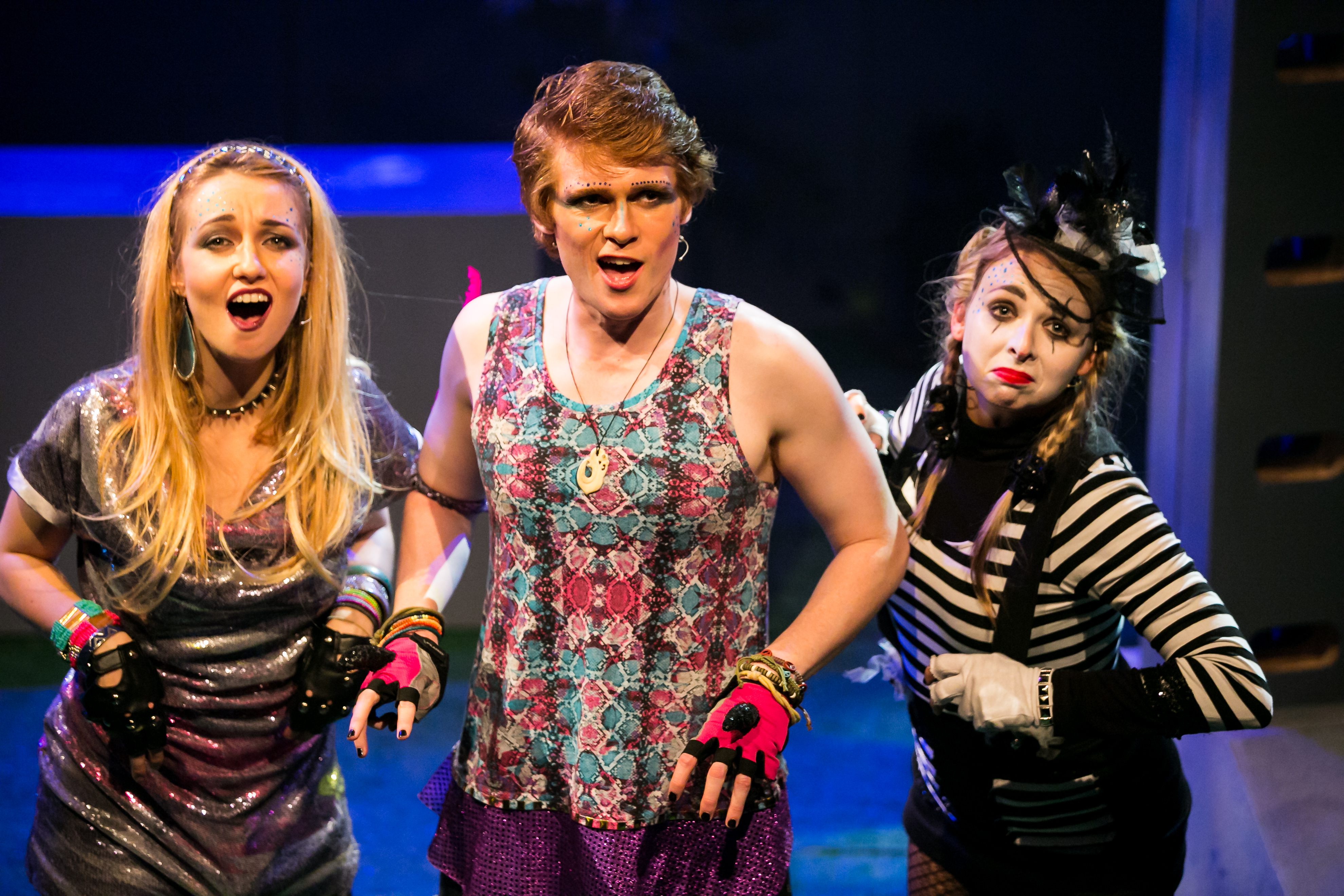
Jay James-Moody directs with his usual verve and the production has a bright, chirpy aesthetic. Neil Shotter’s clever set uses towering electric fences, which open up, and a few pot plants to create the park and the jungle outside, with lighting by Mikey Rice. Elizabeth Franklin has designed cute costumes pairing contemporary street clothes with sparkly dino feet sporting padded claws, make-up and a fair bit of bling.

The cast throw themselves into it with hugely committed performances. The singing is excellent and they perform Dean Vince’s tongue-in-cheek choreography with gusto.

Erickson gives a hilarious impersonation of Morgan Freeman before being quickly eaten, Johnson finds just the right level of innocence as the questing dino who is a little different to the rest, while Sallé and Parkinson also shine. In fact, the performances are terrific across the board. But all their exuberance can’t disguise the thinness of the show.

Adele Parkinson, Rob Johnson and Crystal Hegedis. Photo: Michael Francis

Adele Parkinson, Rob Johnson and Crystal Hegedis. Photo: Michael Francis

Triassic Parq won Best Musical at the 2010 New York International Fringe Festival. You can’t help wondering what the competition was like. Squabbalogic have done their darndest with it, but in the end it’s fun without being that funny and hard to get excited about.

Triassic Parq runs at the Seymour Centre until July 4. Bookings: www.seymour.com or 02 9351 7944

Mother Courage and her Children

Belvoir St Theatre, June 10

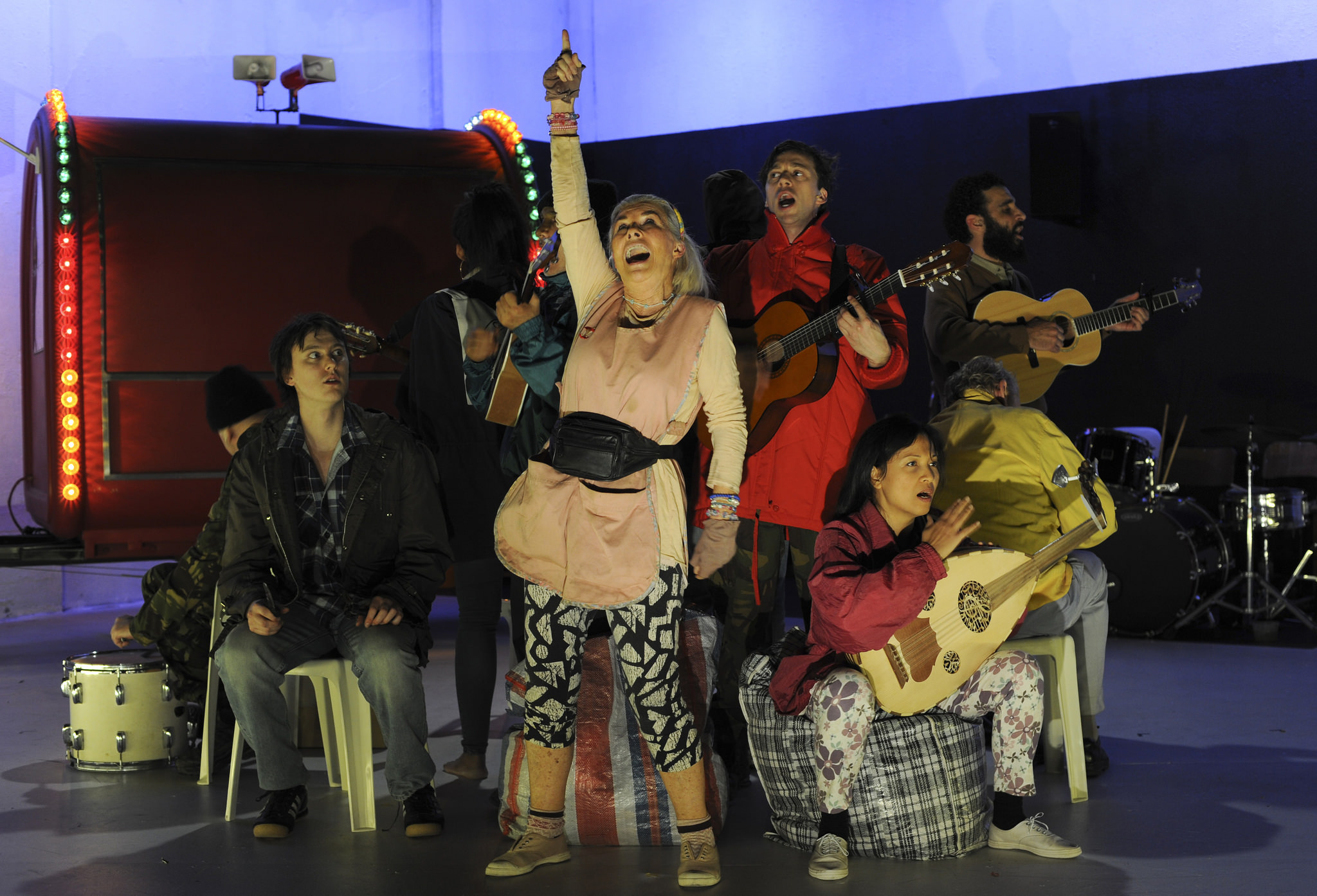
Robyn Nevin and the cast of Mother Courage. Photo: Heidrun Lohr

Robyn Nevin and the cast of Mother Courage. Photo: Heidrun Lohr

Mother Courage is one of the great theatre roles for women. Physically and emotionally demanding, she is on stage for virtually the entire play as she navigates her profiteering way through the horror of war, losing all three of her children in the process.

Robyn Nevin makes the role her own in this exuberant, economically staged Belvoir production directed by incoming artistic director Eamon Flack.

Written by Bertolt Brecht in the late 1930s, Mother Courage and her Children was his response to the rise of fascism in Germany and Germany’s invasion of Poland. He set the play during the Thirty Years War (1618 – 1648), a long, arduous, pointless, religious conflict. (Some things never change). A wily refugee called Anna Fierling – or Mother Courage as she is known – follows the troops with her three grown-up children and a cart from which she sells food, liquor and other goods, doing whatever it takes to survive. She is desperate for her children not to become casualties but when the chips are down she is unable to protect them.

A rage against war, capitalism and man’s inability to learn from history, it’s a tough play about both the surrender and resilience of humanity during extreme times.

Using a sharp new translation by Michael Gow and new music by Stefan Gregory for the songs, Flack’s production bristles with as much vitality as brutality, with snappily choreographed scene changes keeping the action moving.

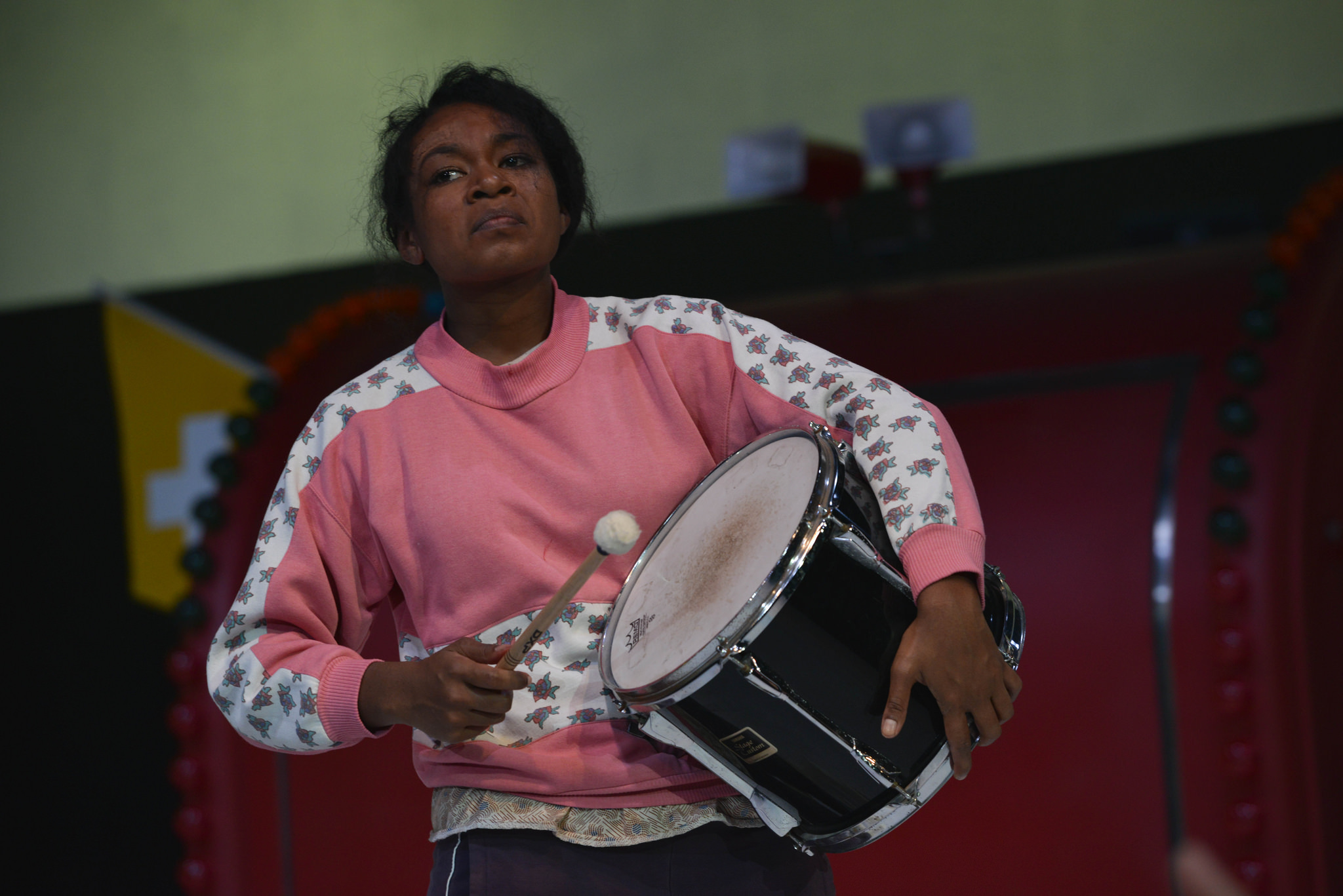
Robert Cousins’s set has a black painted area in the corner resembling a backstage room with props and musical instruments where the actors often sit when not performing: a constant reminder that we are watching theatre being made. Alice Babidge’s contemporary costuming includes military gear and clothes the characters might have got from op shops or the cheapest of stores as they struggle to keep body and soul together.

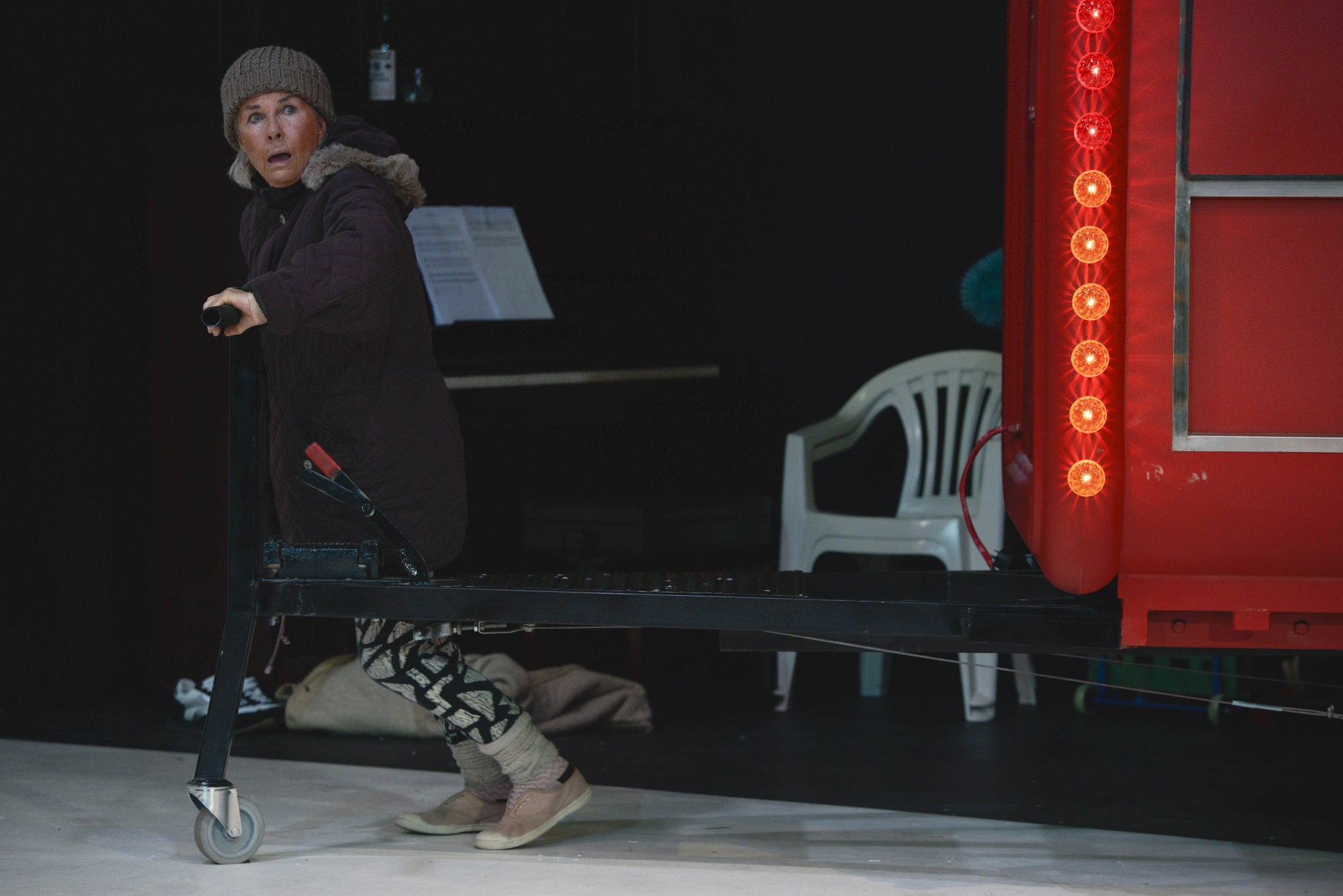
The centerpiece of the design is the cart, which is here bright red with circus-like coloured lights, pictures of hotdogs and other junk food as well as cheap tat like plastic beach thongs. Other than that the stage is bare apart from a few plastic chairs, while firecrackers exploding in a metal bucket help evoke the sounds of war.

Emele Ugavule as Kattrin. Photo: Heidrun Lohr

Emele Ugavule as Kattrin. Photo: Heidrun Lohr

Flack has mustered an excellent ensemble cast, who play various characters and musical instruments, and each nail their moments. Paula Arundell is gloriously funny as the feisty prostitute Yvette and sings up a storm, delivering the Song of Fraternisation standing on a plastic chair, while newcomer Emele Ugavule is very touching as Mother Courage’s mute daughter Kattrin. Tom Conroy and Richard Pyros are also particularly strong as Mother Courage’s two sons.

But the production is driven by Nevin’s riveting portrayal of the fast-talking, pragmatic Mother Courage. While the character rarely betrays any emotion, Nevin still manages to convey the tragedy that envelops and batters her, as well as her wicked sense of humour. We glimpse emotions flit across her face only to be immediately concealed; we see her body droop just a tiny bit then steel itself.

Though she’s no singer or dancer, she also throws herself into both with endearing gusto, touchingly reinforcing the fact that Mother Courage will do whatever it takes.

Robyn Nevin as Mother Courage. Photo: Heidrun Lohr

Robyn Nevin as Mother Courage. Photo: Heidrun Lohr

Then there are the brief flashes of tenderness that strike at the heart. The way she spoons soup into her daughter’s mouth like a mother bird ­– an unspoken vow that she won’t desert her child – is an unforgettably poignant moment.

The famous, final image of her pulling her cart alone, having lost all her children, hits hard as the lights snap off.

Mother Courage plays at Belvoir St Theatre until July 26. Bookings: www.belvoir.com.au or 02 9699 3444

A version of this review ran in the Sunday Telegraph on June 14

Kurt

Hayes Theatre Co, June 18

Justin Burford gets on his Kurt Cobain in Kurt. Photo: supplied

Justin Burford gets his Kurt Cobain on in his rock-cabaret show Kurt. Photo: supplied

I’m no Nirvana buff but Justin Burford seems to me to do an amazing job of channeling Kurt Cobain in his rock-cabaret Kurt.

First seen at the 2012 Adelaide Cabaret Festival, Burford weaves some carefully chosen words (all of them Cobain’s own, taken from his writings and interviews) through a selection of songs, both the big hits and lesser-known tracks, among them Aneurysm, In Bloom, Come As You Are, Rape Me and, of course, Smells Like Teen Spirit.

Assuming that the audience will have some knowledge of Cobain’s life, Kurt is no Wikipedia-like, A to Z bio-show. Instead, Burford has selected pithy, telling quotes, which capture Cobain’s dry sense of humour and offer an insight into where he and his music came from, the kind of complex man he was, his marriage to Courtney Love, the heroin addiction, his struggle with fame, and how things all got to be too much. At the same time, he maintains an element of enigma.

Burford, the former front man of pop-rock band End of Fashion and star of the musical Rock of Ages, takes on Cobain’s softly spoken voice and captures his grungy look, laid-back demeanour and mannerisms.

As for his singing, he has a great, growling, gravelly rock voice that is perfectly suited to Nirvana’s material and Cobain’s angst-filled, raging vocals.

Performing the show as part of the Hayes Theatre Co’s 2015 cabaret season, Burford is joined by Phil Ceberano on guitar, Nick Sinclair on bass guitar and Ben Isackson on drums – an exceptionally tight rock outfit.

Cobain isn’t your traditional expansive cabaret persona. A self-deprecating, laid-back, almost introverted figure, Burford draws the audience to him rather than reaching out to us. But the band really rips into the music. Kurt is a change of pace to most cabaret shows but still fits under the umbrella of a genre that is an increasingly broad church.

As I said, I’m no Nirvana buff and I didn’t know all the songs as some in the audience clearly did, but the show really takes you into Cobain’s world, offering an insight into his brief but blazingly influential career.

Kurt plays at the Hayes Theatre Co on June 19. Bookings: www.hayestheatre.com.au or 02 8065 7337

B-Girl

Playhouse, Sydney Opera House, June 9

iOTA as fantasy glam-rocker Clifford North. Photo: Daniel Boud

iOTA as fantasy glam-rocker Clifford North. Photo: Daniel Boud

B-Girl begins in silence with a jumpy young woman sitting nervously at a kitchen table. Suddenly musical chords crash and roar and iOTA appears silhouetted in blue light: an androgynous, glam-rock god in all his strutting glory. Talk about an entrance.

Since bursting onto the theatre scene in 2006, iOTA has established himself as a bona fide star with gender-bending performances in the cult musical Hedwig and the Angry Inch, his concept show Smoke & Mirrors, and the Rocky Horror Show.

You can certainly see why director Craig Ilott (who collaborated with him on Hedwig and Smoke & Mirrors) might come up with the idea of a show, featuring iOTA as a fantasy glam-rocker.

As you’d expect, he’s phenomenal: sexy, enigmatic, commanding attention whenever he’s on stage. However, the show itself is a strange hybrid between a concept album and a theatre work, with a clunky structure and flimsy plot.

Co-written by Ilott and iOTA, with original songs by iOTA, B-Girl is about troubled young woman called Rachel (Blazey Best), who uses music to escape the grim reality of life with an abusive husband (Ashley Lyons). Dreaming up the glam-rocking Clifford North (iOTA), he gradually becomes more than just a figment of her imagination, giving her the strength to pack her bags and leave.

Nicholas Dare’s set design is pure rock concert, with the band on stage, a walkway over their heads, and a back wall of LED lights. Matt Marshall’s stunning lighting and the sound levels are equally rock ‘n’ roll.

A standard lamp and a table and chairs on the corners of the stage represent Rachel’s home. However, the domestic scenes feel sketchily simplistic and aren’t convincingly integrated into the show. You find yourself wanting more of Clifford instead – so much so you can’t help wondering whether it would be better if he had just told a similar story about abuse, domination and freedom through song alone in a solo show.

Blazey Best and iOTA. Photo: B-Girl

Blazey Best and iOTA. Photo: B-Girl

That’s no disrespect to Best (who also performed with iOTA in Hedwig). Though her character isn’t given much dramatic complexity, she brings a powerful emotional rawness and strong vocals to the part, while Lyons is suitably menacing in the thankless role of her violent husband.

But it’s iOTA’s show. Costumed by Heather Cairns, he is a vision in electric blue Lycra with platform boots, feathers and silver sequins. You can’t take your eyes off him. And his voice is better than ever.

He’s written some sensational songs, ranging from dirty, thrusting rock to soulful ballads and he sings the hell out of them, powering in rock mode one minute then the next, caressing gentle melodies in heart-breaking fashion. Backed by a fierce four-piece band, led by Joe Accaria on drums, the show really fires musically.

So, B-Girl is a strangely mixed experience, let down by some under-developed dramaturgy. However, iOTA’s fans won’t be disappointed by his electrifying performance.

B-Girl plays until June 21. Bookings: www.sydneyoperahouse.com or 02 9250 7777

 A version of this review ran in the Sunday Telegraph on June 14

Marina Prior: A Prior Engagement

Hayes Theatre Co, June 6

Who knew that a long, gold, beaded gown could be a health and safety issue in a cabaret show?

Marina Prior found herself in a slightly slippery situation in her cabaret show A Prior Engagement: An Intimate Evening with Marina Prior when she sat on a stool to play guitar and promptly slid off, having to perch rather cautiously from then on. A shiny stool is like ice, it transpires, when you sit on it in a beaded dress. Needless to say, she handled the situation with amused aplomb and grace.

Tracing her 30-year career, Prior mixes it up in A Prior Engagement performing folksy pop and Gaelic songs (her heritage is Irish and Scottish) as well as musical theatre numbers.

Prior was famously a student and regular busker when she saw an advertisement for open auditions for a production of The Pirates of Penzance and landed the role of Mabel. Since then, she has never looked back, going on to roles in umpteen musicals including the original Australian productions of The Phantom of the Opera and Les Misérables, as well as West Side Story, Mary Poppins and The 25th Annual Putnam County Spelling Bee among countless others.

Recently, she was seen in a Sydney Theatre Company/Melbourne Theatre Company co-production of Jumpy, a comedy by British playwright April De Angelis, and said that later this year she will be in another big show, which she couldn’t name. She did say, however, that one of the songs she would sing during the night was a hint. My guess is that an audience sing-along to Eidelweiss was the clue. (The cast of the new Australian production of The Sound of Music is to be announced tomorrow).

The rest of her eclectic set included Joni Mitchell’s Both Sides Now, Kate Bush’s Wuthering Heights, Simon & Garfunkel’s Scarborough Fair (on which she played guitar), Adelaide’s Lament from Guys and Dolls and Before I Gaze at You from Camelot.

She also gave a beautiful rendition of The Music of the Night, originally written for Christine Daae, apparently, then reworked for the Phantom when Andrew Lloyd Webber decided he needed another song.

Along the way, she told some gently amusing anecdotes including one about the challenge of performing opposite a very grouchy Richard Harris in Camelot when she was just 20 and still very inexperienced.

She finished the night with Auld Lang Syne and the Italian popoperatic number Con te partior (Time to Say Goodbye).

Accompanied on piano by David Cameron (her musical director for 24 years), as well as three ladies on strings, her husband, performer Grant Piro, also popped up now and again as a wry stagehand.

Prior’s lush soprano is still a beautiful instrument, her voice soaring on The Music of the Night and Time to Say Goodbye. With an effortless ease, grace and elegance on stage, she exudes genuine star quality.

An audience of adoring fans – many of whom who had clearly followed her career since day dot – gave her a rapturous standing ovation, clearly relishing the opportunity to see her up close in such an intimate setting.

Phil Scott: Reviewing the Situation

Hayes Theatre Co, June 4

Phil Scott plays Lionel Bart. Photo: supplied

Phil Scott plays Lionel Bart. Photo: supplied

Phil Scott is in fine form in his new cabaret show Reviewing the Situation about celebrated British composer Lionel Bart, best known for his musical Oliver!

It’s a fairly straightforward bio-cabaret but extremely well written by Scott and Terence O’Connell (who also directs) and engagingly performed.

Bart’s story is an entertaining and, at times, sad one: a rags-to-riches-and-back-again tale as Bart (born Lionel Begleiter) rises from humble beginnings in the East End to fame and fortune.

Living in a 27-room “fun palace” in Chelsea, he rubs shoulders with the likes of Noel Coward, Judy Garland, the Rolling Stones, the Beatles and Rudolph Nureyev among others. But he squanders his fortune through poor decision-making and profligate spending, while drink and drugs take a toll on his health and career.

In Reviewing the Situation, we find him living alone in a small flat about a laundrette in Acton, a bottle of gin at the ready as he looks back over his career and what brought him so low.

Taking on Bart’s cockney accent, Scott creates an endearing character with a ready wit, who sees how and where it all went wrong but accepts the situation without bitterness. The story of a lover who fleeced him but got off scot-free because Bart was still in the closet so didn’t dare report the incident is particularly poignant.

Not surprisingly, Scott sings quite a few songs from Oliver! but also includes numbers from Bart’s other shows Fings Ain’t Wot They Used T’Be and Blitz!. He also performs songs such as Living Doll, which he wrote for Cliff Richard’s first film Serious Charge, From Russia With Love composed for the James Bond film, and Little White Bull, which he wrote for Tommy Steele’s film Tommy the Torreador (I had no idea).

His personal story is cleverly woven through the songs – the way he uses As Long As He Needs Me while talking about his relationships works extremely well, for example.

Scott’s wizardry on the piano is a genuine delight as his fingers fly effortlessly across the keys bringing Bart’s simple melodies to jaunty life.

All in all, a thoroughly entertaining show.

Reviewing the Situation plays as part of the Hayes Theatre Co Cabaret Season until June 6, at the Adelaide Cabaret Festival from June 18 – 20, and then at the Melbourne Cabaret Festival, June 24 & 25.

Robyn Nevin plays Mother Courage

Robyn Nevin has had a long, illustrious stage career, but 2015 could be one of her most memorable years yet.

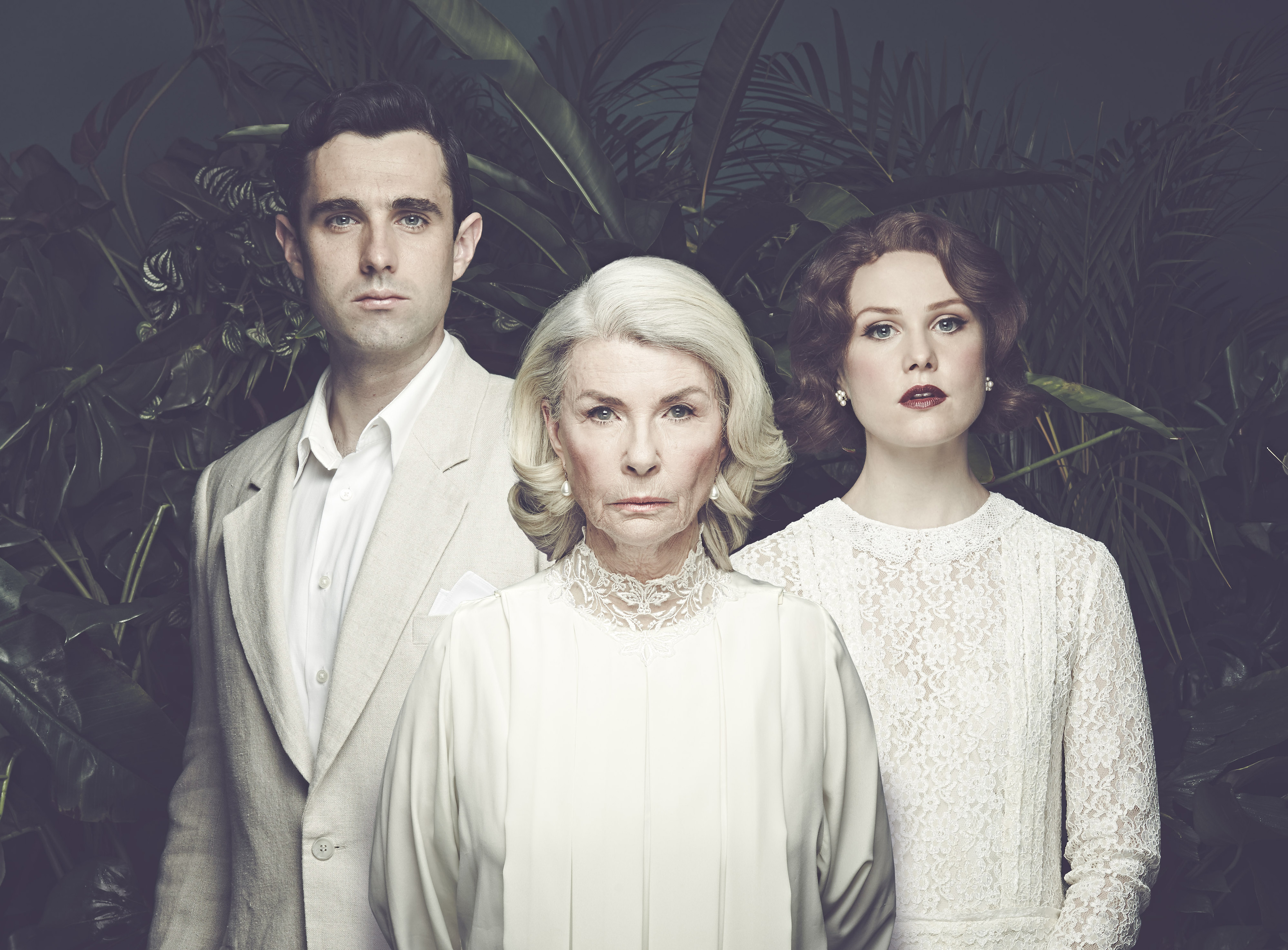
Robyn Nevin with Mark Leonard Winter and Eryn Jean Norvill in a promotional image for Suddenly Last Summer. Photo: James Green

Robyn Nevin with Mark Leonard Winter and Eryn Jean Norvill in a promotional image for Suddenly Last Summer. Photo: James Green

She started it as the ruthless Mrs Venable in Tennessee Williams’ Suddenly Last Summer for Sydney Theatre Company, earning rave reviews, and will end the year there playing the Fool to Geoffrey Rush’s King Lear in a production directed by Neil Armfield.

Currently, she is preparing to play Mother Courage in Bertolt Brecht’s great anti-war play Mother Courage and her Children for Belvoir, directed by in-coming artistic director Eamon Flack, who helmed Belvoir’s superb 2013 production of Angels in America in which Nevin also performed.

“It’s a wonderful year. I’m one very grateful woman,” says Nevin, now 72, during a break in rehearsals.

Best known as one of our leading stage actors, Nevin has found a whole new fan base since playing the posh, bigoted Margaret in the ABC-TV comedy Upper Middle Bogan.

She looks set to boost her screen profile still further with her performance in Brendan Cowell’s new film Ruben Guthrie, a black comedy based on his play, which opened the Sydney Film Festival this week before its general cinema release on July 16.

Ruben is a hard-living advertising executive who tries to get sober when he nearly kills himself jumping off a roof while pissed. Nevin plays his well-heeled mother, who keeps pushing him to go back on the bottle, because she finds him more fun when he drinks.

“It’s a great role. She’s fantastic,” says Nevin enthusiastically.

“She was a hard character to understand because I’m a great believer in Alcoholics Anonymous and the 12-step program. I know people who’ve been saved by those programs. I value them very highly. She’s got one fabulous line where she says, ‘Oh, I don’t think that’s very impressive, do you, one day at a time?’ She’s just a brute, a wonderful character. I loved it. I had a wonderful time doing that film and Brendan was wonderful directing it. It’s a quintessentially Sydney story in its outlook and tone and visually. In a way, it’s a wonderful celebration of Sydney and a terrible indictment of it at the same time.”

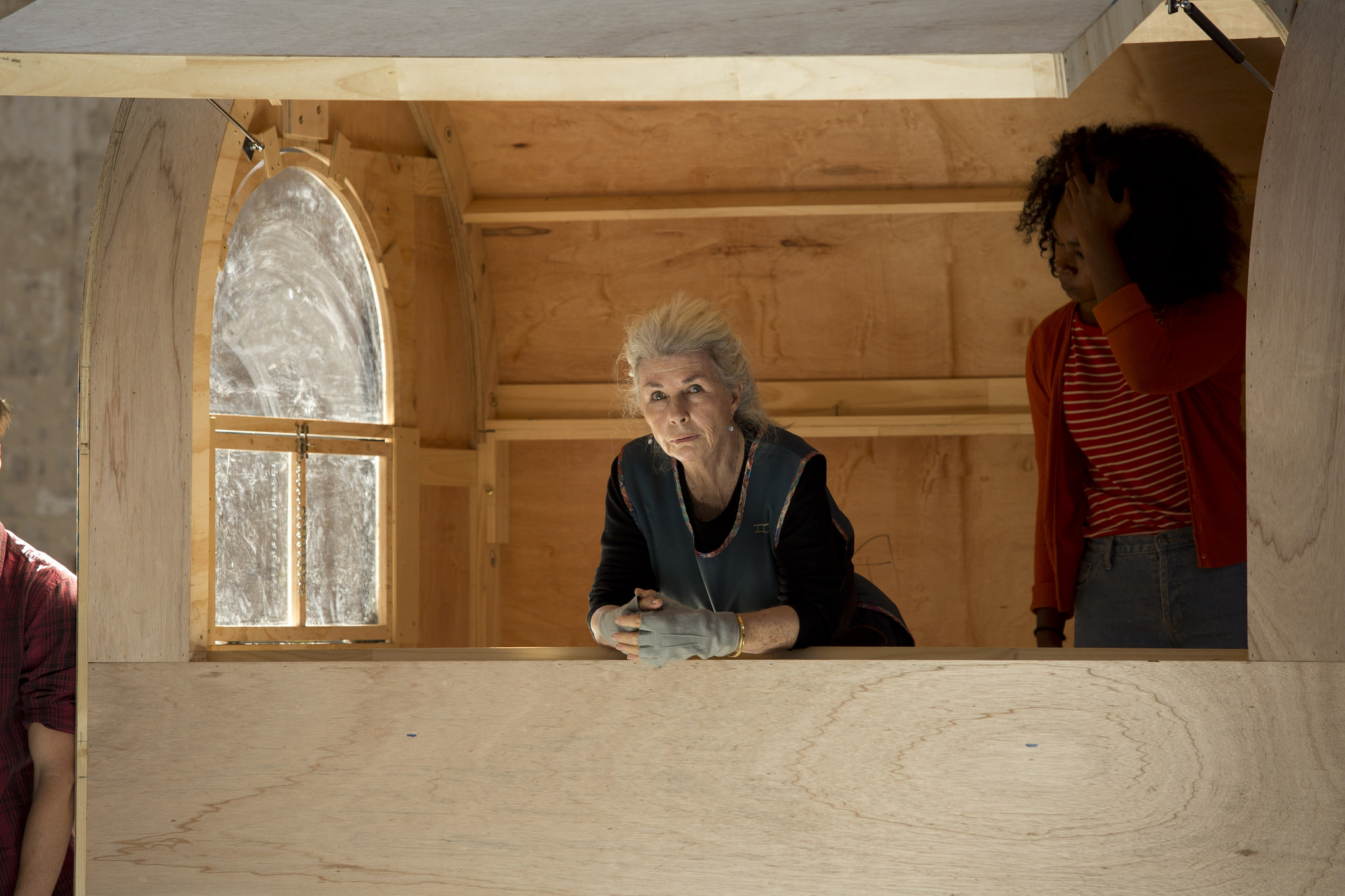
Robyn Nevin during rehearsals for Mother Courage.  Photo: Lisa Tomasetti

Robyn Nevin during rehearsals for Mother Courage. Photo: Lisa Tomasetti

Anna Fierling – or Mother Courage as she is known – is yet another formidable character in Nevin’s armory (joining the likes of Miss Docker in Patrick White’s A Cheery Soul and Ana in Lally Katz’s Neigbourhood Watch). A refugee with three children and a cart, from which she sells food, liquor and other provisions, she buys and sells her way through a pointless, religious war, putting profit above all else. During the play, her three children are all killed.

Brecht wrote it in 1939 in response to the rise of fascism in Germany and Germany’s invasion of Poland.

Nevin directed the play for STC in 2006, choosing it as the first production for her newly formed ensemble, the STC Actors’ Company, with Pamela Rabe in the title role. Since then, it’s been on her bucket list of roles.

“I didn’t feel it was finished business although it was a very successful production. I loved getting to know the play and so I just thought, ‘yes, that’s a role I could one day have a go at,’” she says.

She programmed it at STC, she says, because she considers it “a great ensemble piece. It’s a very powerful piece of theatre. It’s arresting and gripping and entertaining and it’s a challenge for a company. Brecht has written it in such a way that there are 12 scenes and each scene requires a complex transition, which needs to be made slick and easy.

“In a small space, that takes a lot of time and effort and everyone is involved in that. I think audiences love watching a production unfold with ease and skill in a deft kind of way and Eamon is brilliant at that. But it’s taken an awful lot of time and it does require trust in each other. We all have to work very carefully in concert with each other, which I like about the piece itself. I like being part of a team. I’m addicted to the notion of an ensemble. I think they work, I think they’re very valuable and everybody gets better as a result of being in an ensemble production because so much is required of everyone.”

Asked whether she ever considered playing the role herself in the STC production, she gives the idea short shrift.

“I couldn’t possibly have considered playing it because I couldn’t give myself the lead role in the first play (by the STC Actors Company). The commentary from the media would have been too much for me to handle at that stage. They would have just thought it was personal vanity and I was not ambitious in that way at all. I gave opportunities to other people and rarely took the best opportunities for myself. And that was an occasion where I thought it would just look like hubris for me to lead the company in the first, inaugural production of the Actors’ Company so I directed it instead.”

Flack’s production for Belvoir features a new translation by Australian playwright Michael Gow and new songs by Stefan Gregory.

Brecht originally set the play in the 17th century during the Thirty Year War, but the Belvoir production has a contemporary setting. Nevin describes Gow’s translation as “ short, sharp and to the point. It’s got a directness, which I like. The lyrics are wonderful; the songs are fantastic….. It’s completely new compositions, it’s absolutely wonderful (music) by Stefan Gregory. He last did the entire musical score for Suddenly Last Summer. That was brilliant too.

“I don’t know how to describe (the Belvoir) production but it’s a thrill to be in it so I think it will be thrilling to see.”

An example of Brecht’s epic theatre, he wrote it to engage the audience intellectually rather than emotionally and apparently rewrote the role of Mother Courage when audiences sympathised too much with her.

Robyn Nevin rehearses Mother Courage. Photo: Lisa Tomasetti

Robyn Nevin with Anthony Phelan in rehearsals for Mother Courage. Photo: Lisa Tomasetti

Nevin says she doesn’t spend time wondering how audiences will relate to the character.

“I just play one moment at a time and one action at a time. I play the action of the scenes; the meaning will be determined by the audience. I can’t preoccupy myself with what sort of person she is. She is defined by her actions so if I play the actions then the audience will judge as they will judge. But if you want to know what I think…..” she adds with a huge laugh.

She then cites a horrendous scene, which they have just been rehearsing, in which Mother Courage’s daughter Kattrin returns having been brutally raped. Her mother tells her that she is lucky she’s not better looking or it could have been worse.

“That’s the tough job that Brecht gives the actors to do. He makes them say things that shock the audience horribly, (telling) a girl who’s just been raped that she probably would have been raped over and over if she’d been attractive enough. That’s actually what the woman is saying, and it’s hard to say, but that’s her way of dealing with it,” says Nevin.

“But in a minute she talks about Kattrin is a very different way, which shows her concern but is in no way sentimental, never sentimental. Over the course of the play she’s tough, she’s pragmatic, she’s only concerned about survival through trade even as her three children are killed.

“Brecht wrote that but he can’t stop that well of emotion, he can’t separate an audience from their humanity. (But) in a way the play is saying, ‘what good is humanity during war?’

“One of the songs really speaks to this quite clearly. It’s the Song of Solomon. One by one they describe the qualities of the great men of history and each one of them died for their good qualities: their wisdom, their courage. So what’s the point of being brave, of being wise, of telling the truth, of fearing God? So you’re playing characters who crush their better qualities in order to survive.”

Funnily enough, it’s King Lear that Nevin has been having nightmares about during Mother Courage rehearsals, rather than the Brecht.

“I’ve already had my Lear nightmare in which we were about to go on stage and I didn’t know a word, not a word. I was asking for a script and no one had one because they all knew theirs and they’d left it at home. Just terrifying! Then we went on stage and Geoffrey lay back and didn’t say a word and I thought, ‘well if he’s not going to speak, I’m not going to speak.’ It was just awful.”

Nevin laughs. “I should be having nightmares about Mother Courage, I’m already having nightmares about Lear.”

Accepting the offer to play the Fool was “a hard decision”, she says. “I don’t even know where to begin with the Fool but the thought of being in a (rehearsal) room with Neil doing a Shakespeare was exciting because I haven’t done a Shakespeare with Neil. I’ve done very few Shakespeares so that’s very exciting.”

Mother Courage and Her Children plays at Belvoir St Theatre, June 6 – July 26. Bookings: www.belvoir.com.au or 02 9699 3444

King Lear plays at Sydney Theatre, November 24 – January 9. Bookings: www.sydneytheatre.com.au or 02 9250 1777

A version of this story appeared in the Sunday Telegraph on May 31