Stop Kiss

ATYP Studio, March 13

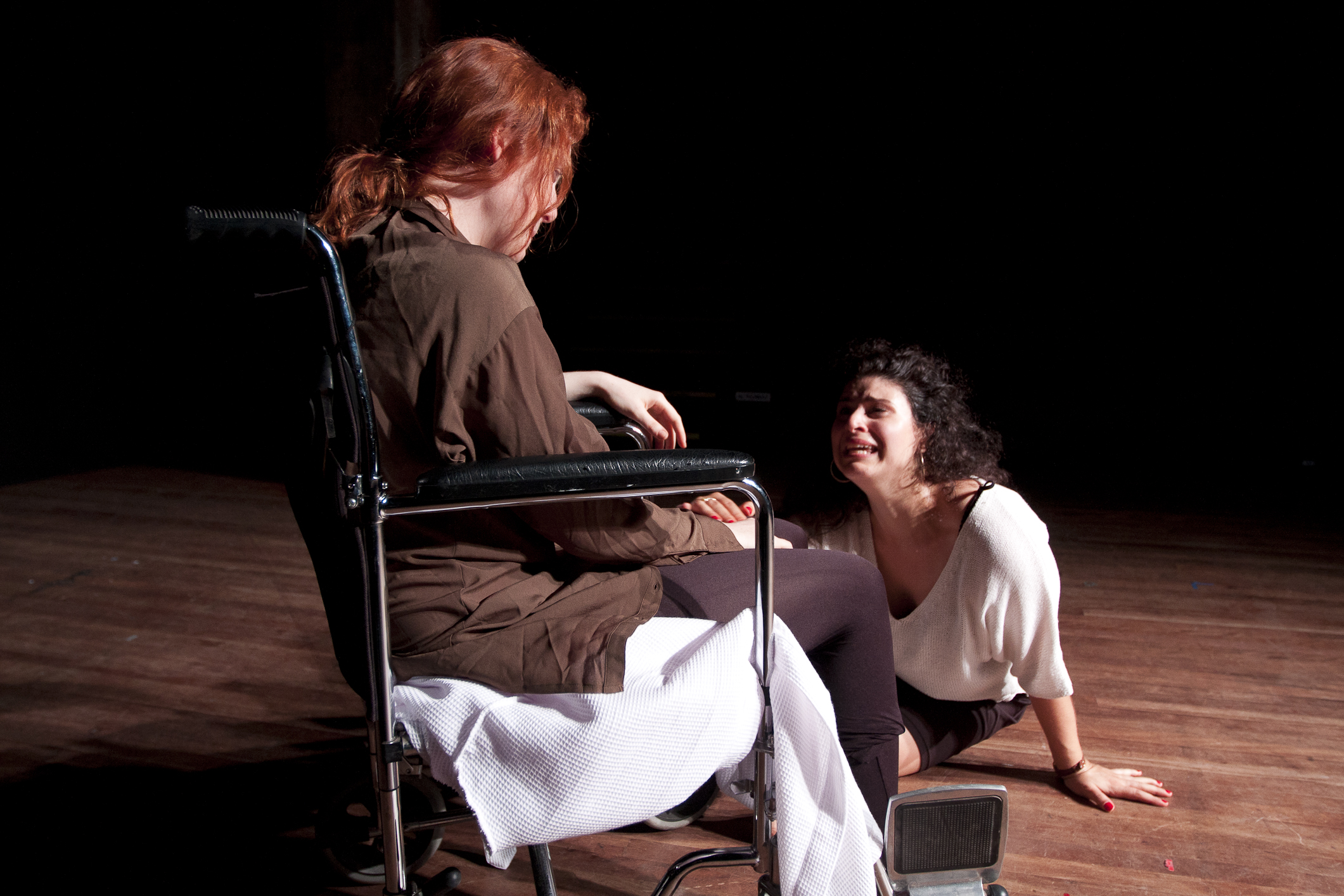
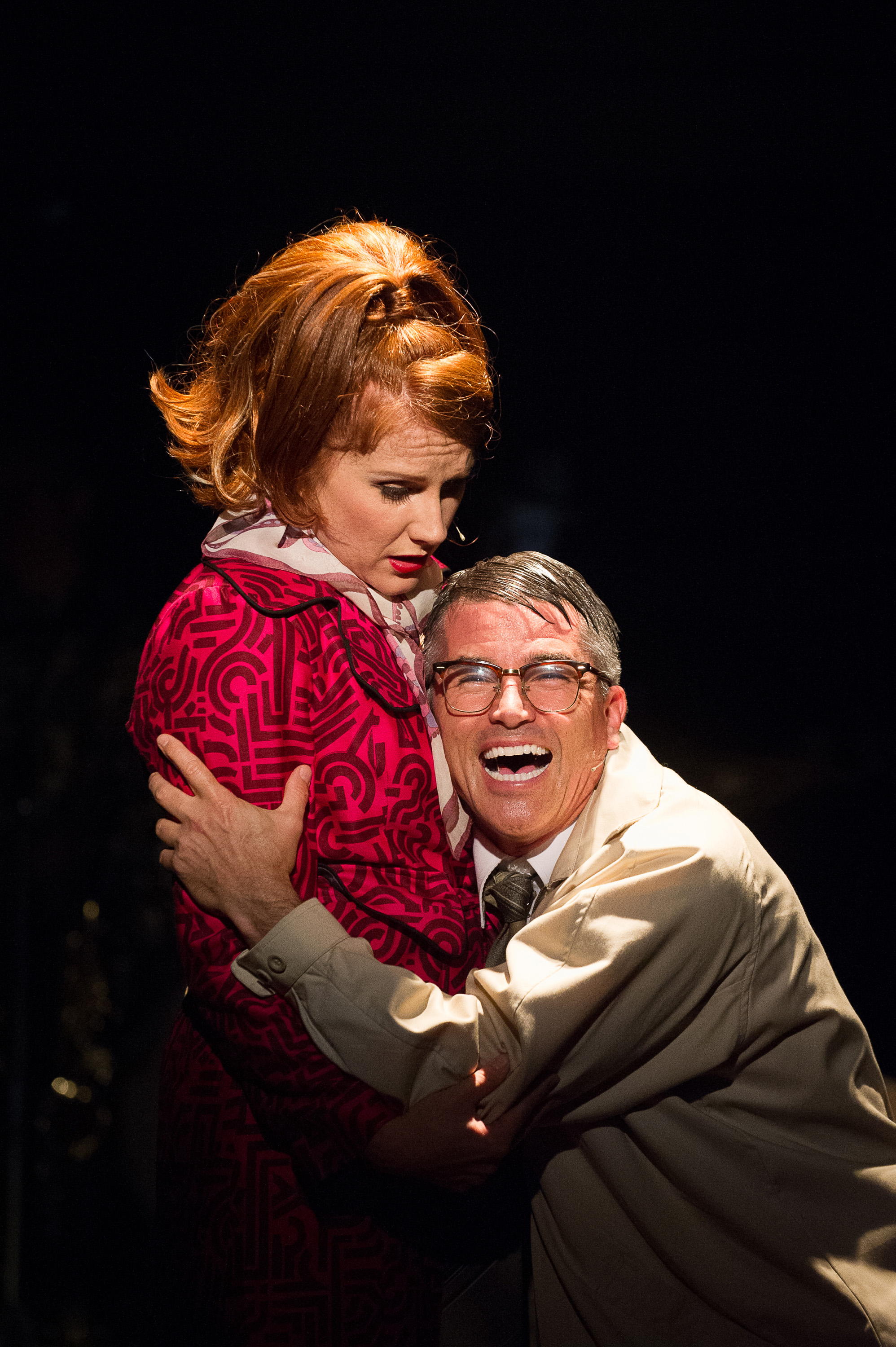
Gabrielle Scawthorn and Olivia Stambouliah. Photo: Gez Xavier Mansfield Photography

Gabrielle Scawthorn and Olivia Stambouliah. Photo: Gez Xavier Mansfield Photography

Diana Son’s gentle drama Stop Kiss was first staged in New York in 1998 at a time when homophobia and gay hate crimes were very much in the news.

Pivoting on a random act of violence perpetrated against two women, the production resonates freshly in Sydney given the current debate about alcohol fuelled violence and coward punches.

Callie (Olivia Stambouliah) is a stylish, breezy New Yorker who eats at all the right restaurants yet “swerves” through life avoiding commitment. She isn’t fulfilled by her job as a helicopter traffic reporter, while her boyfriend George is a more of a friend with benefits.

Sara (Gabrielle Scawthorn), on the other hand, who has just moved to the Big Apple from St Louis against the wishes of her family, has a quiet determination about her. Excited to be in New York, and comfortable in herself, she is idealistically committed to her job as a teacher at a disadvantaged school in the Bronx.

Their friendship begins awkwardly but gradually a mutual attraction between them blossoms into something more.

The play moves back and forth in time with scenes leading up to the violent act at its core, and its aftermath. Structured so that we slowly discover what happened at the same time as we watch their deepening relationship, it’s heartbreaking knowing what is coming as their love blossoms.

Directed by Anthony Skuse for Unlikely Productions (in association with the Sydney Gay and Lesbian Mardi Gras), Skuse shows once again what a sensitive director he is. Staged on Gez Xavier Mansfield’s minimal set, the play unfolds with an unforced fluency that draws you in to the story. Skuse knows just when to add something (music, a song) and when to put the focus tightly on the actors. Where the play could become sentimental, he instead gives us unadorned, heartfelt truth.

Stambouliah and Scawthorn are both excellent, each creating entirely believable characters and mining the frissons, false starts, misunderstandings and tenderness in their relationship beautifully. The rapport between them fairly crackles and the outcome of their relationship strikes at the heart.

Aaron Tsindos and Ben McIvor are also impressive as the men in their lives.

Stop Kiss has a clear political message but delivers it gently, without didactic raging, in a sweet, funny, sad play – the subtlety of which is matched by Skuse’s production. Well worth a look.

Stop Kiss runs until March 22. Bookings: www.atyp.com.au or 02 9270 2400 

Noises Off

Drama Theatre, Sydney Opera House, February 21

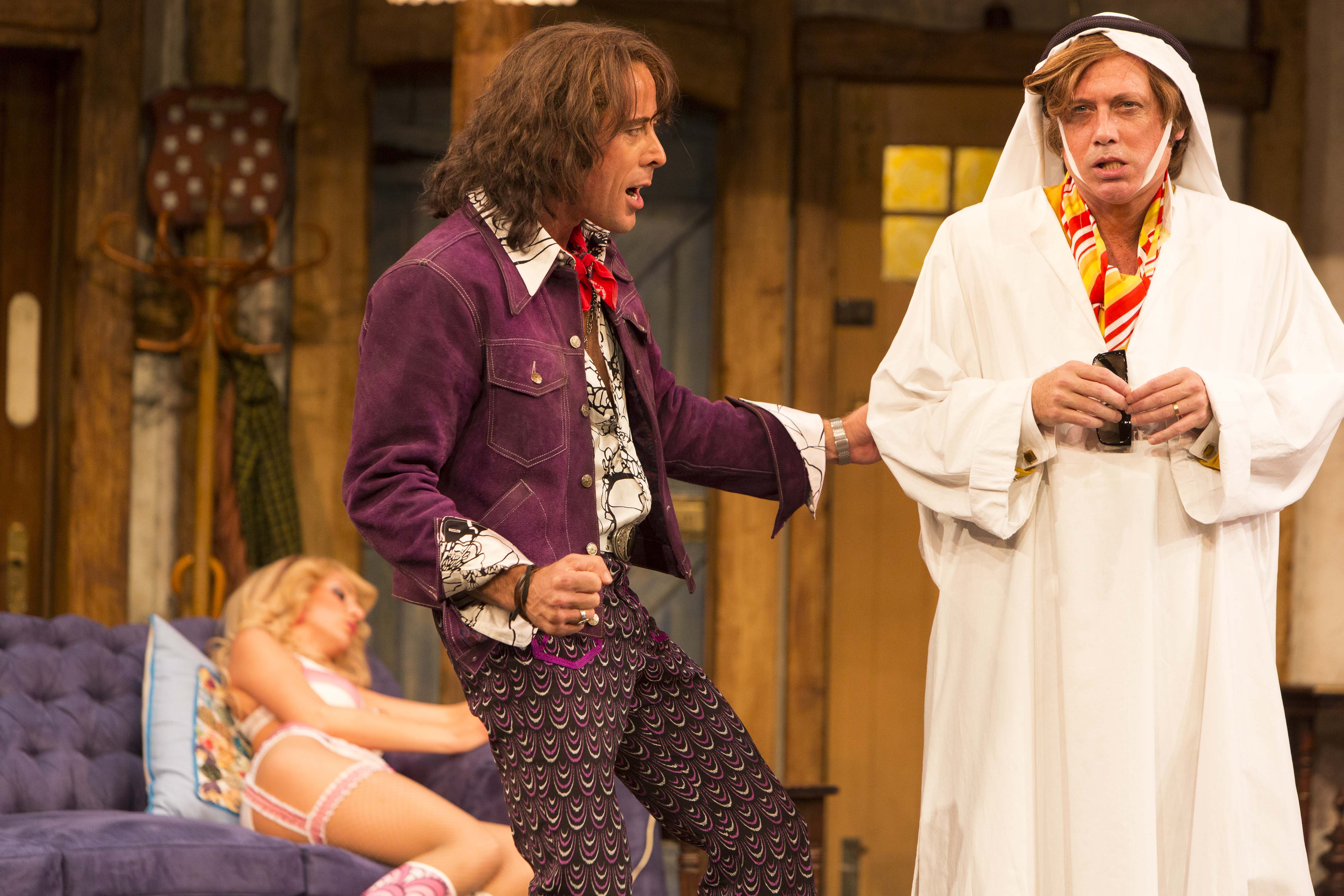
Marcus Graham and Alan Dukes. Photo: Brett Boardman

Marcus Graham and Alan Dukes. Photo: Brett Boardman

Waves of laughter swept through the opening night audience at Sydney Theatre Company’s riotously funny production of Noises Off.

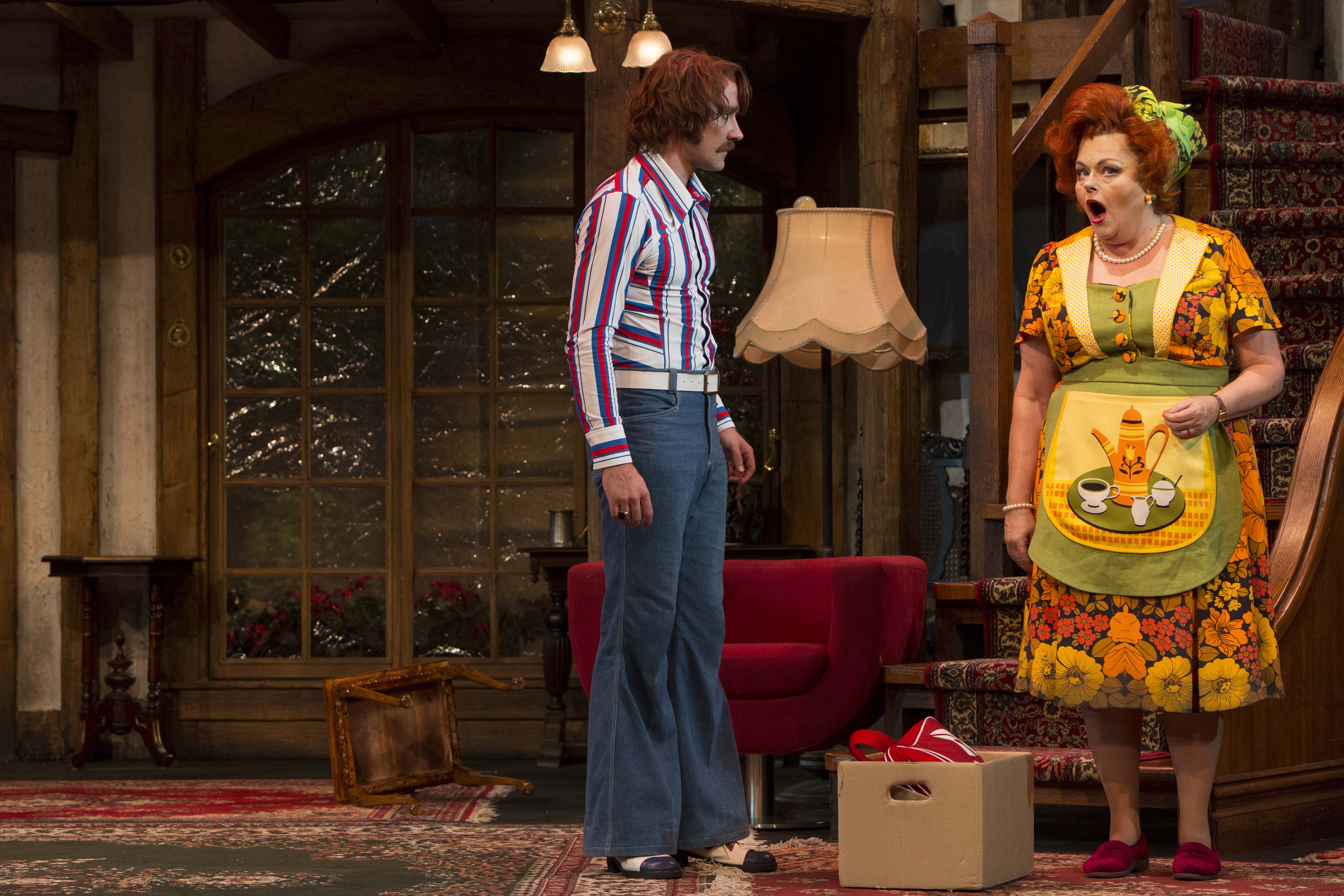
Michael Frayn’s 1982 comic masterpiece is a mind-bogglingly clever feat of construction. Add to that Julie Lynch’s gloriously OTT, psychedelic 70s costumes (which drew applause of their own) and some superb comic performances, and you have a night of laugh-out-loud mayhem.

The farce-within-a farce (which comes with a very funny program-within-a-program) follows a third-rate company of actors as they tour the English provinces with a lame bedroom farce called Nothing On.

Frayn has peopled Noises Off with a rum bunch. There’s the show’s backer Dotty Otley (Genevieve Lemon), a one-time “name” who is playing the housekeeper Mrs Clackett and having an affair with Nothing On’s temperamental leading man, the younger Garry Lejeune (Josh McConville); the somewhat vacant Brooke Ashton (Ash Ricardo), a blonde bombshell who keeps losing her contact lenses and who is having a fling with the philandering director Lloyd Dallas (Marcus Graham); Belinda Blair (Tracy Mann) who tries to keep things on an even keel but loves a good gossip; an elderly dipsomaniac (Ron Haddrick); and the morose, anxious Frederick Fellowes (Alan Dukes) who needs to be given acting motivations for every move his character makes.

Getting/keeping the show on the road are the timid but conscientious assistant stage manager Poppy Norton-Taylor (Danielle King) who is also involved with the director Lloyd, and the sleep-deprived stage manager/general dog’s body Tim Allgood (Lindsay Farris).

Over the course of three acts, we watch the same section of Nothing On as the production gradually disintegrates.

In Act I we see the disastrous dress rehearsal. Act II takes place at a matinee a month later when things are beginning to go wrong – the twist being that it’s shown from backstage. Act III takes place at the end of the tour when hostilities between the actors are spilling onto the stage and everything that could go wrong does.

Act I feels a little slow as Frayn sets everything up but from there on the play is like a runaway train.

The unfolding chaos requires absolute precision – which it gets in Jonathan Biggins’ very fine production, staged on Mark Thompson’s handsome, suitably old-fashioned set complete with the requisite eight doors. The set then spins to show the Spartan backstage area.

Lynch’s costumes are a delight: patchwork bell bottom jeans, patterned flares, clinging polyester shirts, frocks with bold geometric designs and platform boots among other wonderfully colourful outfits.

Josh McConville and Genevieve Lemon. Photo: Brett Boardman

Josh McConville and Genevieve Lemon. Photo: Brett Boardman

Biggins’ has elicited priceless comic performances across the board from his excellent cast but McConville is an absolute standout as Lejeune, his daredevil physicality drawing gasps. Lemon is also a hoot, while Graham is “faded charm” to a tee as the droll, exasperated director.

Beneath all the hilarity there is a dark sense of the absurd and the creeping terror of things spiraling beyond our control. We laugh uproariously but we can’t help but feel for the characters, trapped in an existential theatrical nightmare, much of it of their own making.

Noises Off runs until April 5. Bookings: http://www.sydneytheatre.com.au or 02 9250 1777

A version of this review appeared in the Sunday Telegraph on March 2

The Winter’s Tale

Playhouse, Sydney Opera House, March 5

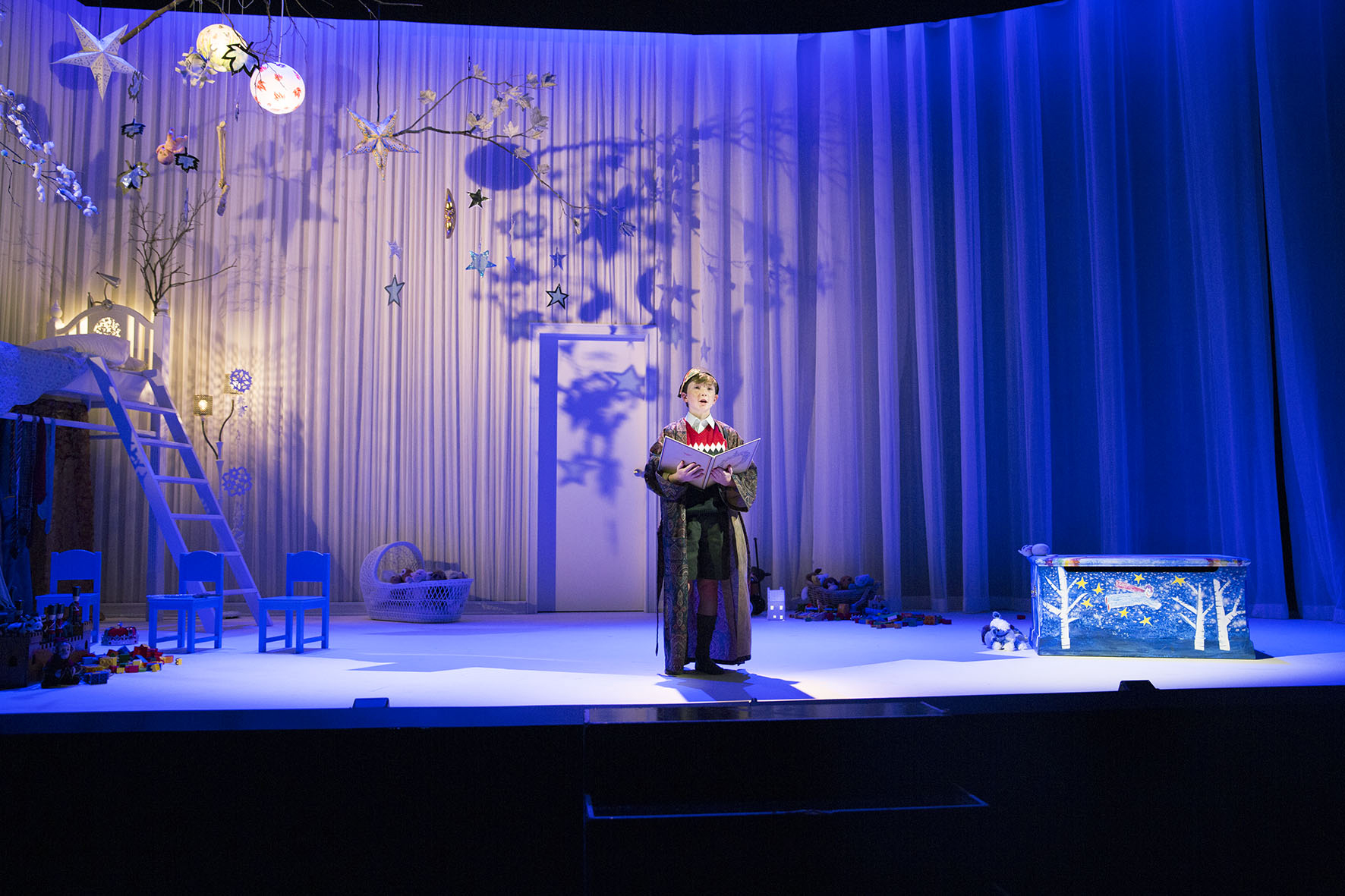
Rory Potter as Mamillius. Photo: Michele Mossop

Rory Potter as Mamillius. Photo: Michele Mossop

Shakespeare’s rarely performed play The Winter’s Tale is tragic and terrible in the first half, fantastical in the second, moving in fairytale fashion from jealousy and cruelty to love and forgiveness. Because of the stylistic disparity, it’s often considered one of his “problem” plays.

Out of the blue, for the flimsiest of reasons, a suddenly jealous King Leontes of Sicily (Myles Pollard) wrongly accuses his wife Hermione (Helen Thomson) of adultery with his best friend King Polixenes of Bohemia (Dorian Nkono).

Leontes imprisons Hermione and orders that their newborn daughter Perdita be abandoned. His young son Prince Mamillius (Rory Potter) and Hermione both die of heartbreak.

In the second half, set sixteen years later, order is magically restored and the characters are reconciled.

In this new production for Bell Shakespeare Company, director John Bell focuses his interpretation around Mamillius, presenting the play from the boy’s perspective. So, the first half is what really happens and the second half is what the boy – now a spiritual observer – wishes had happened and conjures with magic wand in hand.

It’s an interesting, intelligent idea, which Bell is able to explore without altering the text. He merely reallocates a few lines to Mamillius (the reading of the Delphic oracle and the description of Perdita’s reunion with Leontes, told using hand puppets).

However, the production doesn’t totally work, somewhat diminishing the horror of Leontes’ actions at the beginning and detracting a little from the moving reconciliation at the end.

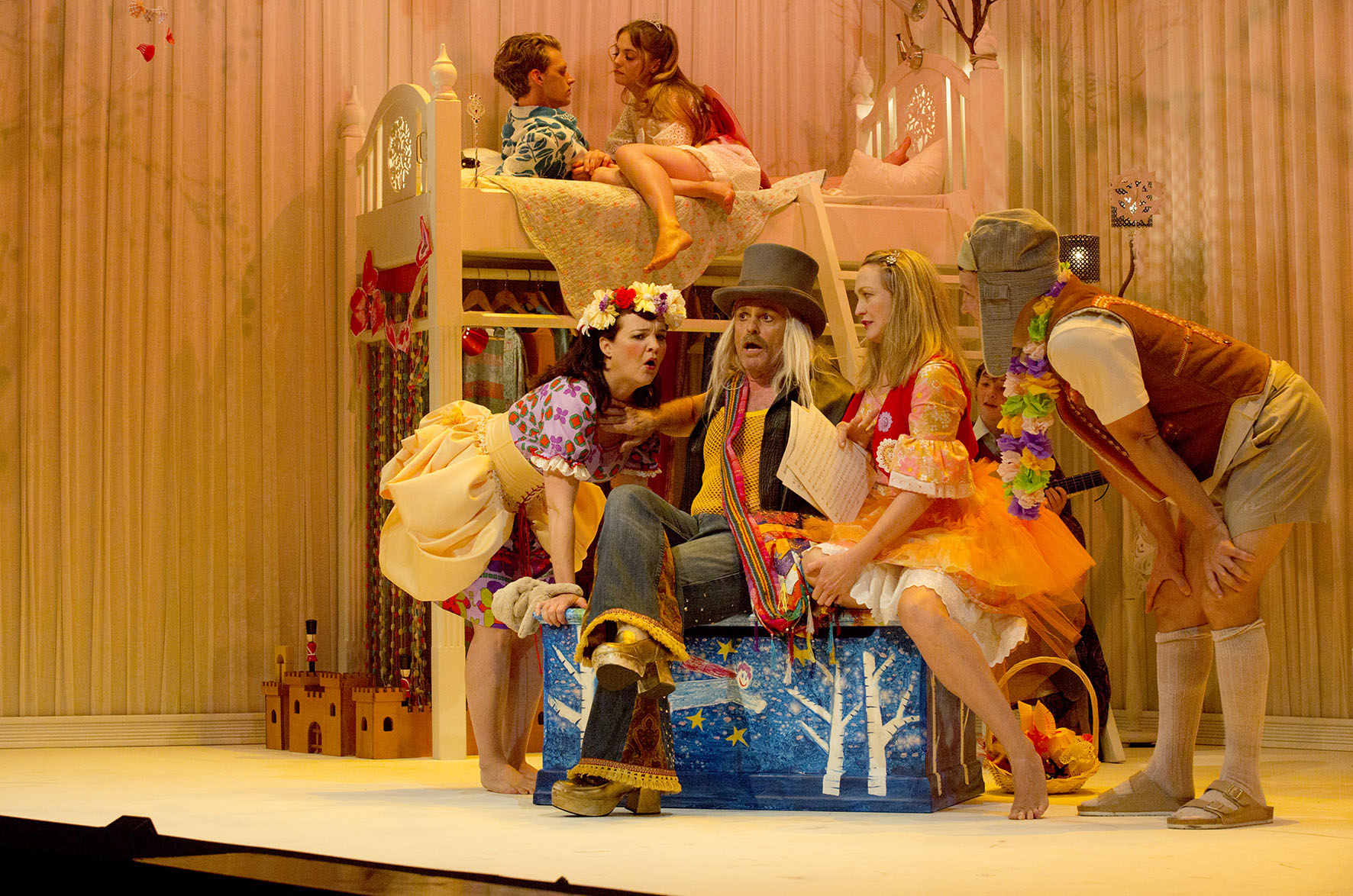
The entire play is set in a child’s bedroom – though Stephen Curtis’s set looks more like a pretty nursery than a boy’s room with diaphanous white curtains, a wicker basinet for the impending baby, a white bunk bed on stilts, and a large mobile with stars and other pretty knick-knacks as well as a few macabre ones (a naked baby doll, a skeletal forearm) foreshadowing things to come. There are also a few boys’ toys (castle, lego, dinosaur, teddy bear) and a dress-up box.

Many scenes in the first act sit oddly in such a setting. Some of the audience laughed on opening night when Leontes sat on a toddler’s chair holding a toy sword as he pronounced his awful judgment on Hermione. It did make him seem somewhat crazed – which works on one level – but we should have been shuddering not laughing. Pollard was not able to cut through and bring quite enough menace to the situation.

Most of the second half is set in Bohemia, which is here given a kind of 60s hippy-trippy vibe, with the plot, colourful costumes and special effects emerging as if from Mamillius’s imagination and dress-up box.

Michelle Doake, Terry Serio, Helen Thomson and Justin Smith. In the background, Felix Jozeps and Liana Cornell. Photo: Michele Mossop

Michelle Doake, Terry Serio, Helen Thomson and Justin Smith. In the background, Felix Jozeps and Liana Cornell. Photo: Michele Mossop

There are some lovely moments. The famous stage direction “Exit, pursued by a bear” is cleverly done – one of several neat effects using shadows – and Matthew Marshall’s many-hued lighting also adds lots of colour, emphasising mood swings.

There are a few changes to the mobile and some vibrantly bright costumes – but the idea of moving from cold, hard reality to Mamillius’s dream-world might have been more effective if the transformation in the set had been a little more dramatic perhaps.

Though the second half exudes a sense of joyousness, it labours under too much comedy that no longer strikes a chord today and does start to drag. (The production runs for three hours).

The acting is a little mixed. Pollard’s light voice and Aussie inflections don’t bring sufficient weight to the difficult role of Leontes and he isn’t totally convincing in either his fury or his anguish.

Thomson is moving as Hermione and Michelle Doake is in commanding form as Hermione’s fiercely loyal friend Paulina, delivering the language with great clarity. Both are also very funny as shepherdesses.

Meanwhile, at the heart of the production 13-year old Potter (who shares the role with Otis Pavlovich) gives yet another wonderfully subtle, touching performance as Mamillius, remarkable for one so young.

The Winter’s Tale runs until March 29. Bookings: www.sydneyoperahouse.com or 02 9250 7777

A version of this review ran in the Sunday Telegraph on March 9

Bob, Sweat and Tears

Sydney Theatre, February 27

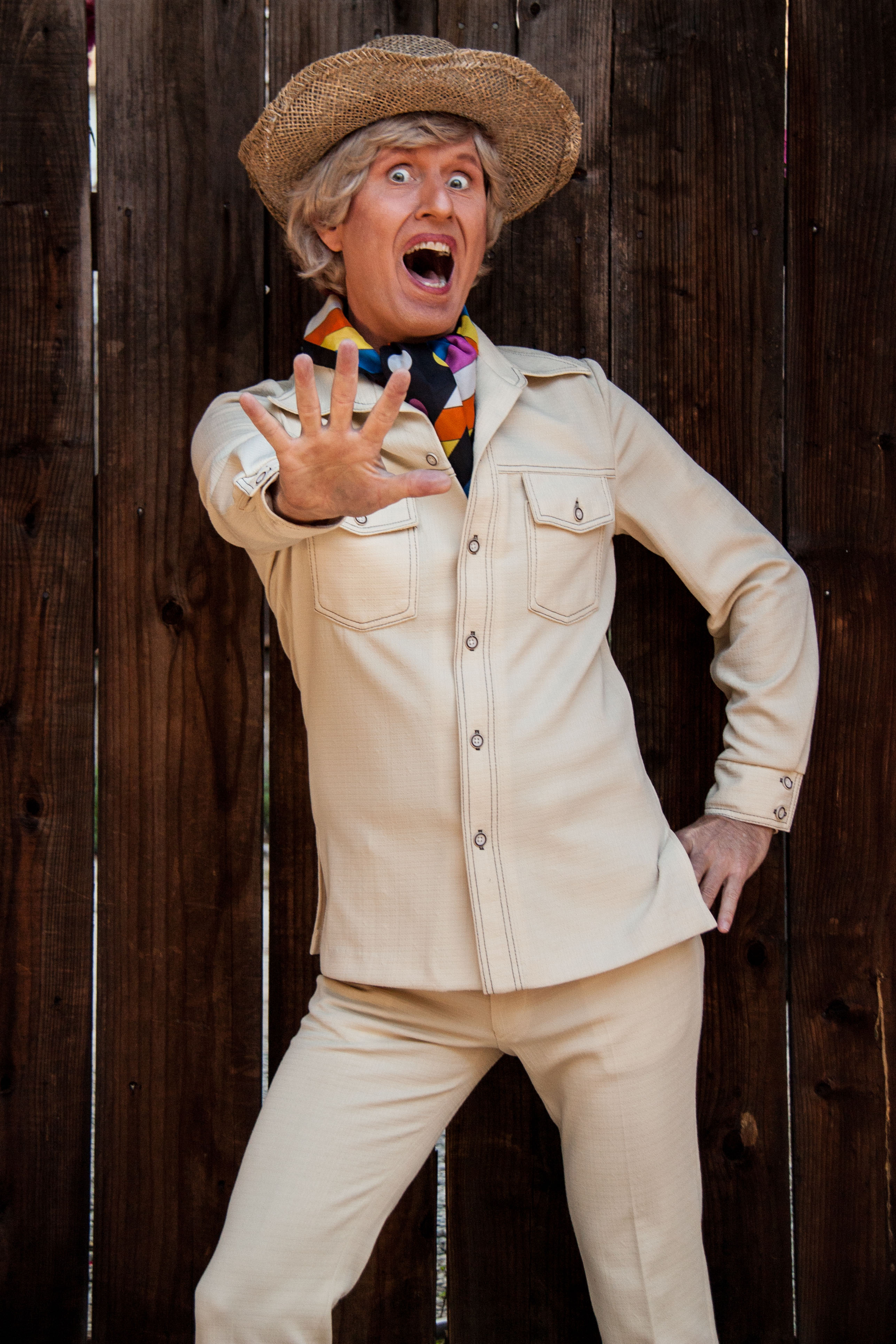
Bob Downe (aka Mark Trevorrow). Photo: Suzanna Shubeck

Bob Downe (aka Mark Trevorrow). Photo: Suzanna Shubeck

Given a rock star welcome by a decidedly eclectic audience, Bob Downe shimmied onto stage in all his camp, synthetic glory looking as young and gloriously cheesy as ever.

The self-styled Prince of Polyester has been flashing his dazzling pearly whites at audiences for decades now. Over the years, Bob (the sublimely funny alter ego of Mark Trevorrow) has become as iconic a comic creation as Dame Edna, yet despite the passing of time his act feels as fresh and funny as ever.

But Bob is here to tell you that all this time he has been living a lie. His latest show Bob, Sweat and Tears revolves around the shock revelation that Bob is actually straight – something he has discovered with the help of a therapist. So it’s goodbye to songs like “I Am What I Am” and “Two Little Boys” (“too gay”) and hello to a newly manned-up Bob, sitting with legs splayed rather than crossed.

As you might imagine Bob’s idea of straight wouldn’t cut it with too many macho blokes. His dress sense remains unaltered for starters. He opens the show in cream safari suit, neckerchief and white shoes plus trademark platinum wig, then changes into a natty, striped three-piece suit for the second act.

Forever on the prowl, pulling off jaunty little moves that wouldn’t look out of place on Thunderbirds, his snappy sense of humour remains as mischievous as ever too, laced with topical barbs (Sydney’s new liquor lockout laws, Rolf Harris etc).

His patter in Bob, Sweat and Tears is genuinely funny as are his send-ups of a wonderful selection of 30-plus pop and rock classics from the 1960s and 70s including “Leader of the Gang”, “Sweet Caroline”, “Spinning Wheel” and “24 Hours from Tulsa” (or Lithgow). What’s more, he can really sing.

He is joined by a series of guests including Gretel Killeen as Mona Loud, the mother of Bob’s love child Cory Bernardi over whom they are fighting a custody battle (neither want him). With a fag hanging out of the corner of her mouth and a bored demeanour, Killeen is extremely funny in one of the highlights of the evening.

There are also appearances by drag queen Cindy Pastel (aka Ritchie Finger), Jane Markey as Bob’s mum Ida Downe and Shauna Jensen.

Performing in Sydney as part of the Mardi Gras, Bob was backed by a three-piece band called The Full Catastrophe – John Thorn (keyboards), Sam Leske (guitar) and Holly Thomas (drums).  ­The first act rocketed past but mid-way into the second act, the show lost a little momentum and started to feel over extended. I could happily have done without the sketch with Bob’s mother Ida, for example, and I can’t help feeling that it would have worked better without an interval.

A few cuts would sharpen the show, sending us home on a wave of hilarity rather than feeling that we’ve come down from the ride before it was quite over. Heaps of fun, nonetheless.

Bob, Sweat and Tears plays at the Arts Theatre, Adelaide as part of the Adelaide Fringe, March 5 – 15, and at Melbourne’s Athenaeum Theatre, March 28 – April 20.

Eugene Onegin

Sydney Opera House, February 28

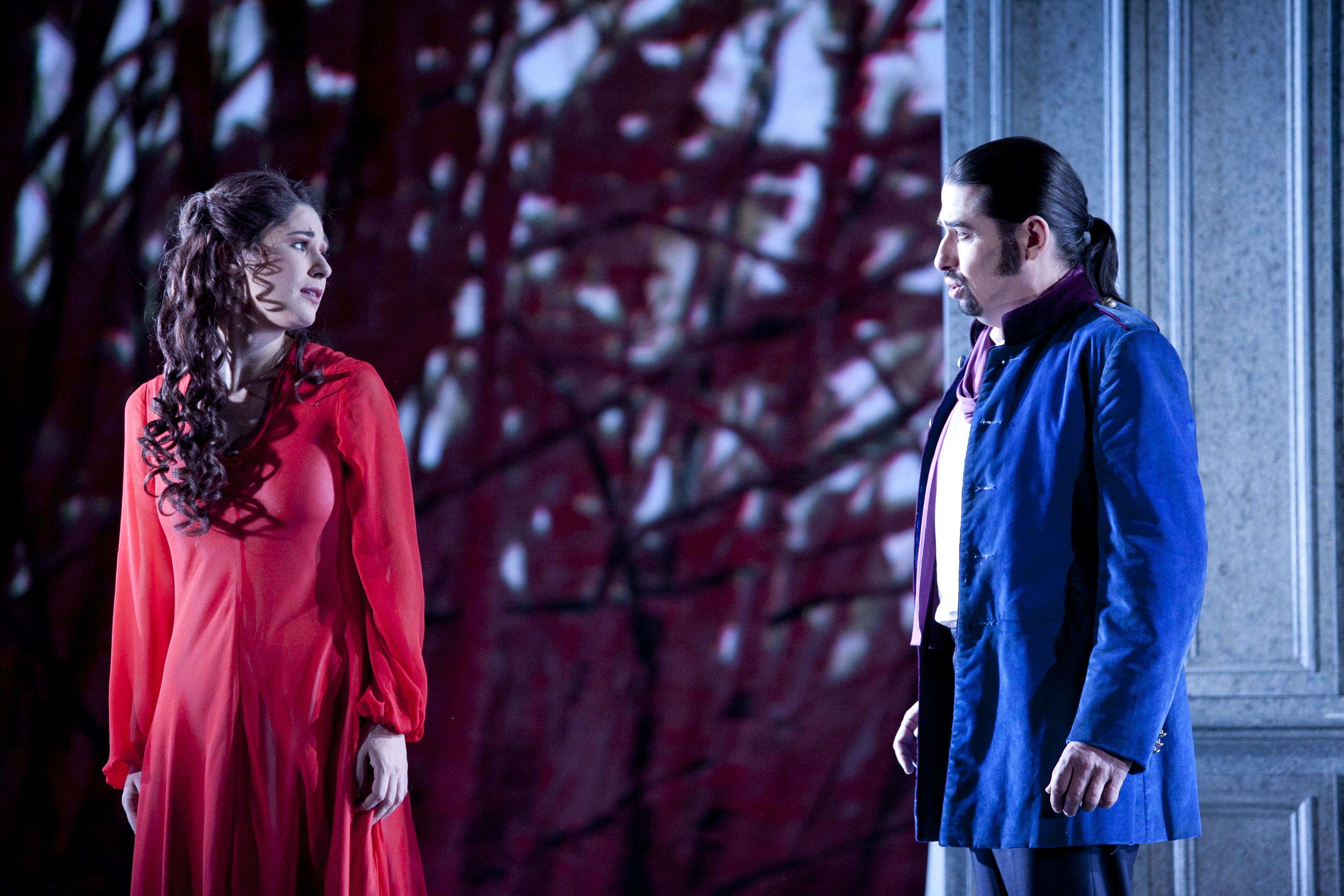
Nicole Car and Dalibor Jenis. Photo: Lisa Tomasetti

Nicole Car and Dalibor Jenis. Photo: Lisa Tomasetti

When Nicole Car went to the wings to lead conductor Guillaume Tourniaire on stage during the opening night curtain call for Eugene Onegin, he dropped to one knee and kissed her hand.

It seemed the perfect acknowledgement of Car’s radiant performance as Tatyana in Tchaikovksy’s passionate, melancholic opera of lost love based on Pushkin’s novel.

Directed by Kasper Holten, the 39-year old Director of Opera at the Royal Opera House, Covent Garden (where it was first seen last year), the production is being shared by the Royal Opera House, Opera Australia and Fondazione Theatro Regio, Turin.

Overall, the production is thoughtful, deeply moving and passionately performed though there are elements that occasionally jar.

Holten has decided to frame the opera in the memory of the two central protagonists, Tatyana and Onegin, staging it as if they are looking back on their lives: Tatyana’s passionate declaration of love in a letter when they first meet in the country, Onegin’s rejection of her, the duel in which Onegin kills his best friend Lensky, Onegin’s later realisation that Tatyana is the love of his life, and her rejection of him, choosing to remain loyal to her husband Prince Gremin despite her feelings for Onegin.

Holten has two solo dancers playing their younger selves at pivotal points in their relationship, while the singers watch on, either singing or merely observing.

The results are mixed. At times, it feels unnecessary. The emotion is all there in the music anyway and Car, in particular, is such an expressive performer vocally and dramatically that we don’t need a dancer to act out what she is feeling. In the letter scene the dancer is distracting – though it is moving to see the compassion with which Car watches her younger self.

It is also affecting to see Onegin’s younger self emotionally undone by having killed his best friend Lensky in a duel, while Dalibor Jenis stands to one side, bolt upright as he sings, all emotion internalised.

Dance features prominently in the opera, so you can see understand why Holten decided to extend its use. There’s the peasant’s dance, a waltz when Onegin flirts with Tatyana’s sister Olga to punish Lensky, a polonaise and the ball at Prince Gremin’s palace.

Holten’s portrayal of the Act III polonaise is brilliantly done, becoming a sinister evocation of Onegin’s travels through Europe. Surrounded by female dancers, who flirt with him, reject him and die in his arms, it is disturbingly effective.

The simple staging works well for the most part. Mia Stensgaard’s grey set – three sets of towering double doors with bookcases between them, which open to reveal projections of the landscape behind – suits the opening act.

However, the set feels cramped later on, particularly for the ball at Gremin’s palace. This is doubtless in part because of the small Sydney Opera House stage. The problem is compounded by remnants from the past being left on stage to represent memories crowding in on them: a crumpled letter, a broken chair, the branch and snow from the duel scene, and even Lensky’s corpse.

Having Lensky’s body on stage becomes increasingly distracting and in the tight space the branch twice got caught on dresses at the ball.

Katrina Lindsay’s lovely costumes work extremely well. The dark clothes for the peasants and for the socialites create a sense of gloom and doom in the background, against which the red and sparkling white of Tatyana’s dress, royal blue of Onegin’s jacket and turquoise of Olga’s frock stand out.

Making her debut in the role, Car is outstanding as Tatyana. She sings beautifully across her entire range with a gorgeous clarity and expressiveness, while her acting rings deeply true as she moves convincingly from youthful naivety to mature dignity.

Czech baritone Dalibor Jenis gives a powerful performance as Onegin. His dark, burnished voice works well with Car’s and he also brings dramatic nuance to his role, convincingly portraying Onegin’s emotional awakening.

They are well supported by James Egglestone as Lensky, Sian Pendry as Olga, Dominica Matthews as the girl’s socially ambitious mother Madame Larina and Jacqueline Dark as their loving nurse Filippyevna.

Kanen Breen gives a deliciously comic cameo as the French dandy Triquet and Russian bass Konstantin Gorny is extremely impressive as Gremin.

The orchestra does justice to Tchaikovsky’s rich, beautiful, soaring score under Tourniaire’s baton, while the chorus sings superbly.

All in all, despite the odd dramatic distraction, this is a powerful, moving production full of raw passion and aching sadness.

Eugene Onegin runs at the Joan Sutherland Theatre, Sydney Opera House until March 28. Bookings: sydneyoperahouse.com or 02 9250 7777

The Last of the Red Hot Mamas

Hayes Theatre Co, February 16

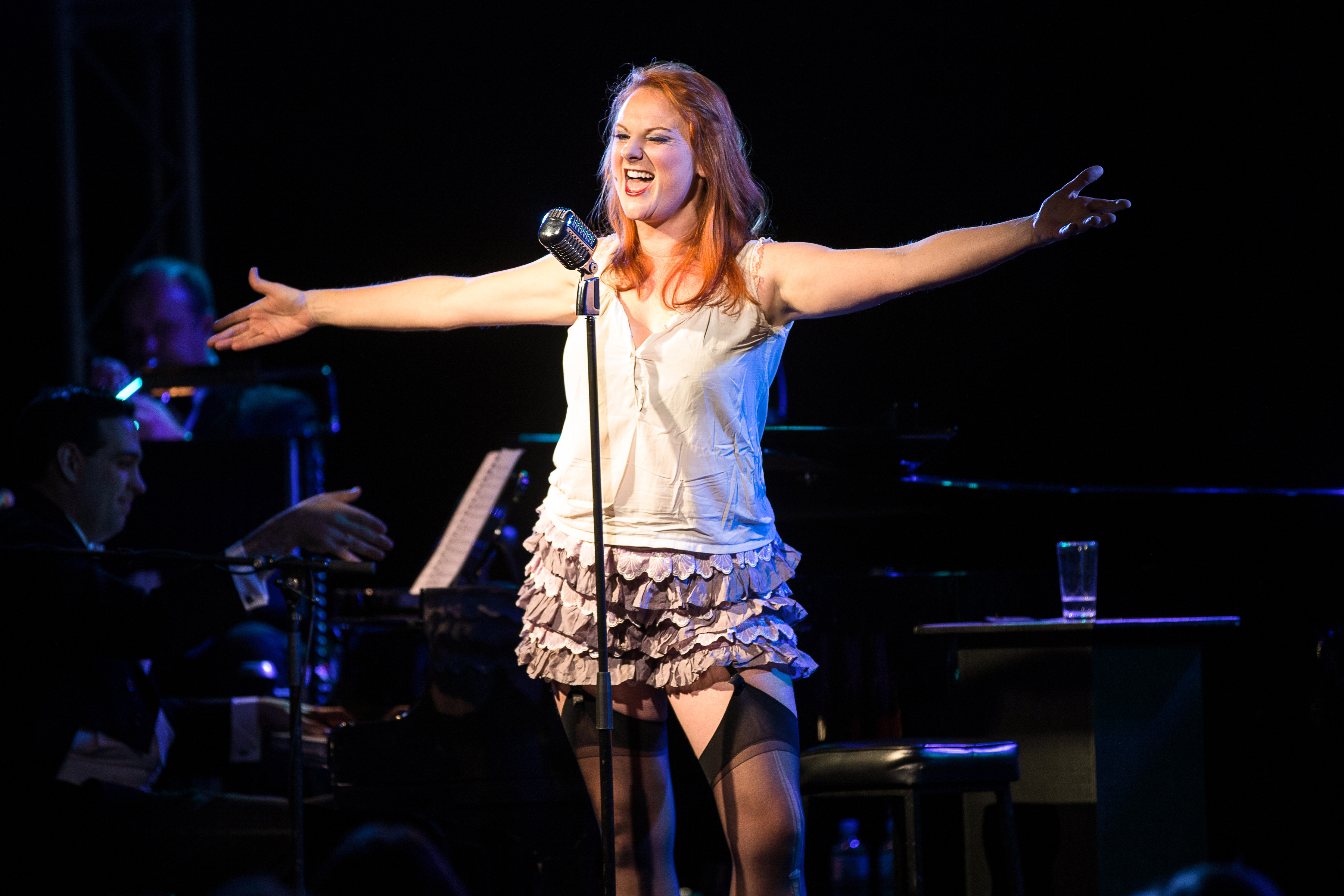
Marika Aubrey in The Last of the Red Hot Mamas. Photo: Alek Mak

Marika Aubrey in The Last of the Red Hot Mamas. Photo: Alek Mak

Sophie Tucker (or Sonya Kalish as she started life) was born on the side of the road in the Ukraine into a dirt-poor Jewish family, who eventually migrated to America.

Fedko Kryczko entered the world in a neighbouring village around the same time “in circumstances similarly shitty” as his great-granddaughter Marika Aubrey put it. As a young man, Fedko fled to Australia where Aubrey was later born.

In her new cabaret show The Last of the Red Hot Mamas, Aubrey tells Tucker’s story in a fairly straightforward, linear fashion but weaves through it the story of Fedko and her own visit back to his Ukrainian village.

It brings a nice personal element to the show, giving it another dimension, though in the end it adds little to Tucker’s story and means there is less time to document her life in any depth.

We learn of Tucker’s tough beginnings, the discovery of her voice while singing for tips in her father’s kosher restaurant, the start of her career performing “coon” songs in blackface, and her metamorphosis into the renowned, outrageous star of 1920s vaudeville, known for her comic chops and risqué songs. Nicknamed The Last of the Red Hot Mamas, she was still performing into her late 70s.

Aubrey starts the night in a black and white satin dress with jewellery, headdress and long gloves then gradually removes articles until she is performing in vintage underwear.

Backed by a three-piece jazz band led by Bev Kennedy on piano, she sings a good, varied selection of songs associated with Tucker, among them “Life Upon the Wicked Stage”, “After You’ve Gone”, “The Man I Love”, “Hello My Baby”, “Some of These Days”, “My Yiddishe Momme” and “Nobody Loves a Fat Girl, But Oh How a Fat Girl Can Love” – in which she showcases her own comic facility.

Aubrey has a big, clear singing voice, which she uses well. It’s higher pitched than Tucker’s husky, powerhouse instrument – something she addresses upfront with a quick, light-hearted aside to Kennedy about the key she’ll sing in.

She also has a big personality and commands the small space at the Hayes Theatre Co with ease. Her patter between the numbers is lively and she develops a warm rapport with the audience.

Inevitably, Aubrey is only able to skim the surface of Tucker’s life. What she tells us is fascinating but we are left feeling we’d like to know more. Nonetheless, it’s an entertaining show by an assured, engaging performer.

Produced by Aubrey and Neil Gooding Productions in association with the Hayes Theatre Co, The Last of the Red Hot Lovers has been playing as the first of the Hayes’s Month of Sundays cabaret series. If you want to catch it, you’ll need to get cracking as there’s just one show left.

The Last of the Red Hot Mamas has its final performance at the Hayes Theatre Co, Greenknowe Avenue, Potts Point on Sunday March 2 at 8.30pm. Bookings: www.hayestheatre.com.au

Boys Like Me; The Vaudevillians

Boys Like Me

Sydney Theatre, February 25

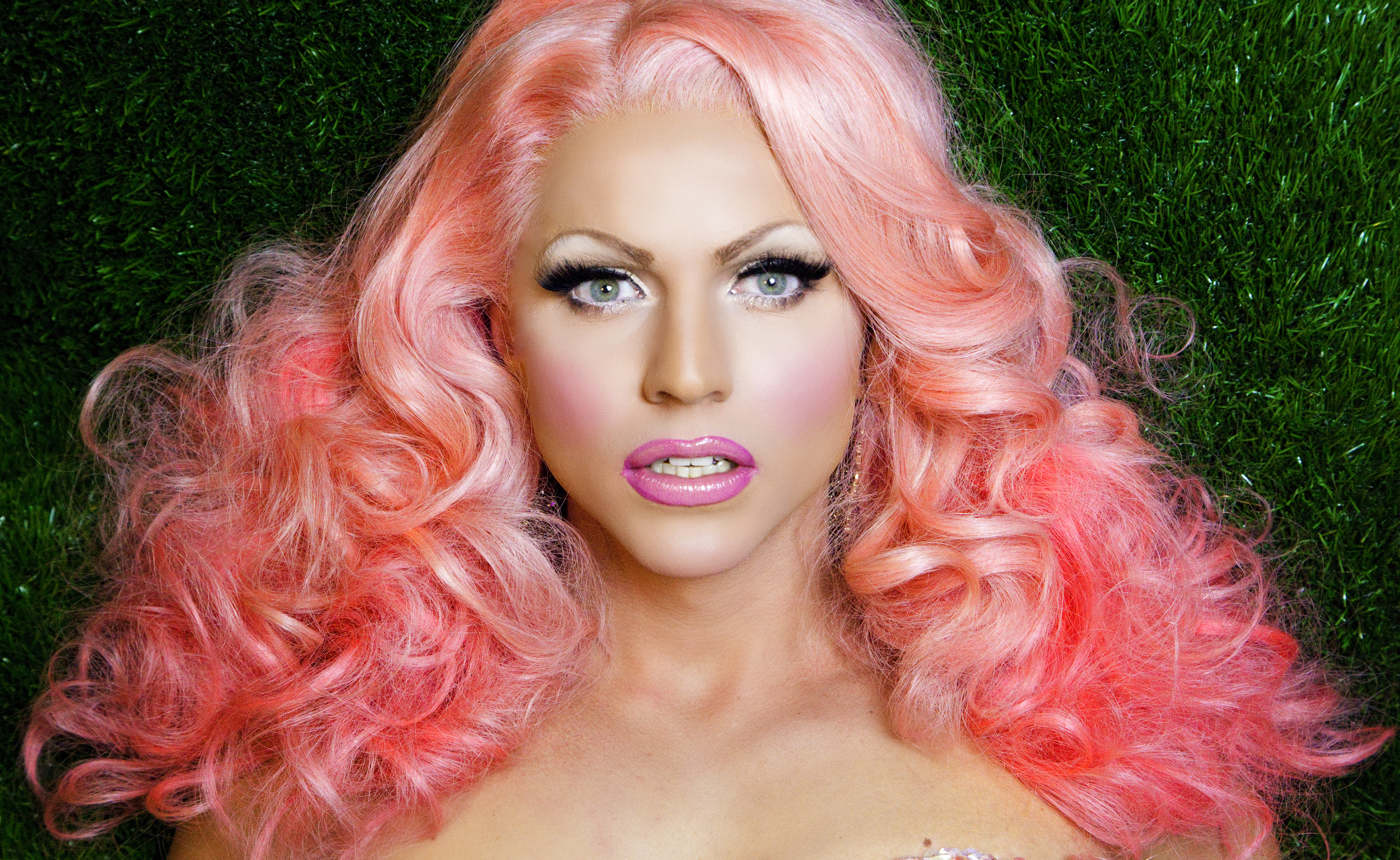
Courtney Act. Photo: supplied

Courtney Act. Photo: supplied

Boys Like Me: it’s a great title, with a double meaning that aptly describes Courtney Act’s highly entertaining new cabaret show.

Not only does Act (the drag persona of Shane Jenek) talk insightfully about what it’s like to live “on the gender divide” but – given the string of amorous adventures detailed – we can safely say boys like Shane/Courtney a lot. As did the boys, and girls, in the audience at this one-off performance staged as part of the Sydney Gay and Lesbian Mardi Gras (of which Act is a patron).

Act has to be one of the most gorgeous looking drag artists around (hell, I’d love to look like her), appearing here in three stunning outfits: a short, shimmery green dress, a long blue gown with sequins and feathers, and a flesh-coloured dress with rhinestones split up to here, under which she confided she wore nothing but duck tape.

Quick-witted with a warm, engaging manner, a certain way with words and an innate sense of comic timing, Act is a natural, charismatic entertainer who tells naughty stories with winning charm. Rather than getting too close to the bone, as it were, she pitches anecdotes just the right side of “too much information” – though her sex life (and Shane’s) features prominently and in some detail at times.

The image of a Pomeranian rooting a Rottweiler to describe one relationship will be hard to forget. (“Sorry Mum”, quipped Act whose parents were in the audience).

We hear how Shane lost his virginity to a girl (known to be accommodating). There’s a very funny story about separate sexual encounters with identical male Canadian twins, both of whom professed to be straight, and a moving account of finding his own sexual identity and appeal somewhere between Shane and Courtney.

Accompanied by a four-piece band led by musical director Lance Horne on piano, Act sang Katy Perry’s “I Kissed a Girl”, “I’m Not That Girl” from Wicked, Madonna’s “Like a Virgin”, Joni Mitchell’s “Both Sides Now”, “Sweet Transvestite” from The Rocky Horror Show and a West Hollywood twist on “At the Ballet” from A Chorus Line, among other songs.

Despite battling sound problems, she sang with a warm, clear, bright voice and wrung the emotion and meaning from the songs beautifully.

The show also featured a couple of duets with transgender man Chaz Bono (born Chastity Bono to Sonny and Cher). Bono is no singer but a good sport and the reworked lyrics to “Bosom Buddies” (“we’ll always be gender rebels”) made for a powerful moment.

In the end, the message of Boys Like Me is that sexuality isn’t straightforward, there really are 50 shades of pink, and a real man is someone who isn’t afraid to be themselves.

Running two hours including interval, the show could do with a bit of a nip and tuck, and would arguably work better without the interval. But it’s an entertaining night – and a forthright, thoughtful one at that.

Act is featured in the new season of RuPaul’s Drag Race (a reality TV competition for drag queens), which has just begun screening in the US, so her profile is set to soar. Here’s hoping she wins. #teamcourtney

 The Vaudevillians

The Vanguard, February 20
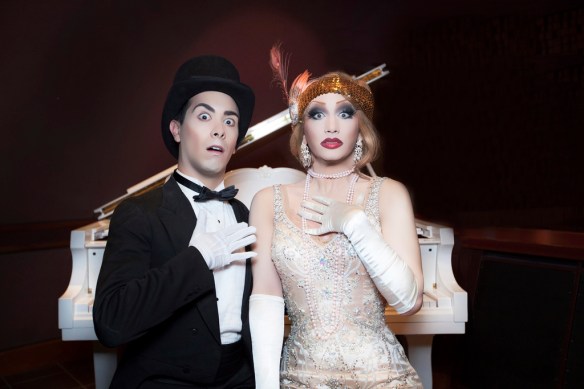
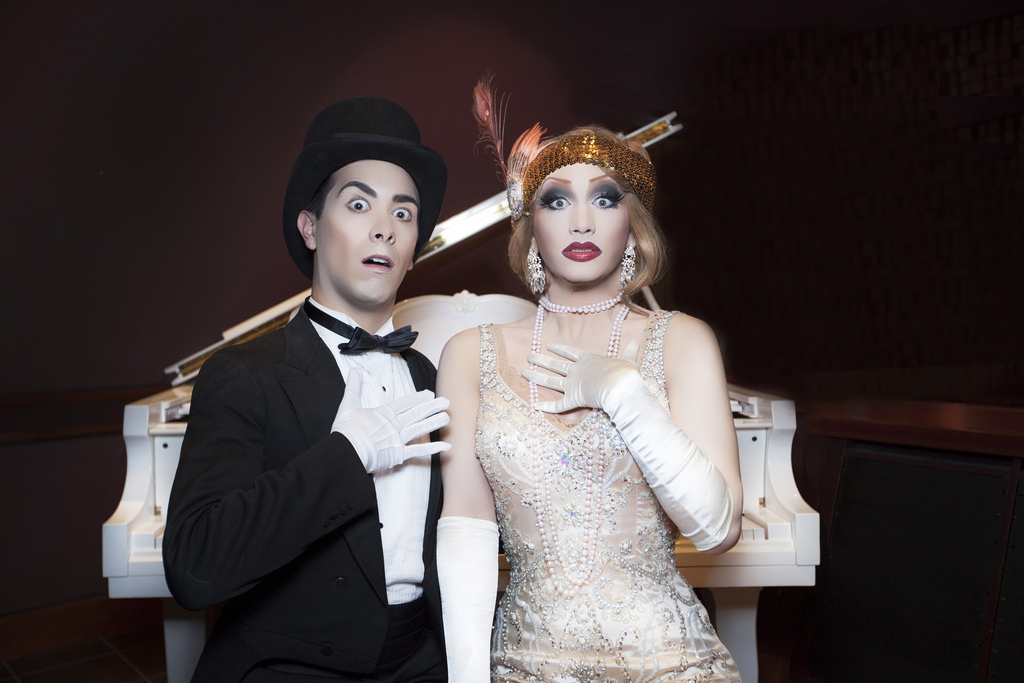
Major Scales and Jinkx Monsoon in The Vaudevillians. Photo: supplied

Major Scales and Jinkx Monsoon in The Vaudevillians. Photo: supplied

Meanwhile, across town, Jinkx Monsoon, the winner of RuPaul’s Drag Race season five, which screened in the US last year, is performing with Major Scales in The Vaudevillians, also as part of the Mardi Gras arts festival.

Monsoon (the drag persona of Jerick Hoffer) and Major Scales (the alter ego of composer/musician Richard Andriessen) play 1920s vaudevillians Kitty Witless and her sidekick Dr Dan Von Dandy.

The conceit of the show is that while touring Antarctica they were struck by an avalanche and frozen for 90 years. However, thanks to global warming they have thawed out and returned to civilization only to discover that many of their original songs have been pinched by contemporary artists.

Cyndi Lauper’s “Girls Just Wanna Have Fun” was really a suffragette anthem. Gloria Gaynor’s “I Will Survive” was the opening number for their musical theatre sequel to Ibsen’s A Doll’s House. Snoop Dogg’s “Drop It Like It’s Hot” celebrated the invention of the electric iron.

With Von Dandy at the piano (and Monsoon frequently draped over it) various other numbers – “Anything Goes”, Soft Cell’s “Tainted Love”, Queen’s “Fat Bottomed Girls” and a mash-up of Britney Spears’ “Toxic” with “Big Spender” from Sweet Charity, among others – are given a vaudeville-like musical treatment.

Monsoon has a fierce, diva-esque presence (“read a book” she snaps when a reference to Henrik Ibsen is met with blank stares) and a superb, big, ballsy, belting voice to match. Her physicality is pretty impressive too (think headstand on an audience member’s lap – yes, there’s audience participation – dramatic falls to the stage and leaps onto the piano).

Scales, meanwhile, does dandy-on-speed to a tee and even manages to wear a fez with something approaching a dandified sense of style.

The Vaudevillians is fierce, fab and funny. Fans of RuPaul’s Drag Race, in particular, will be in their element.

The Vaudevillians plays at The Vanguard, Newtown until March 2. Bookings: thevanguard.com.au

Once in Royal David’s City

Belvoir St Theatre, February 12

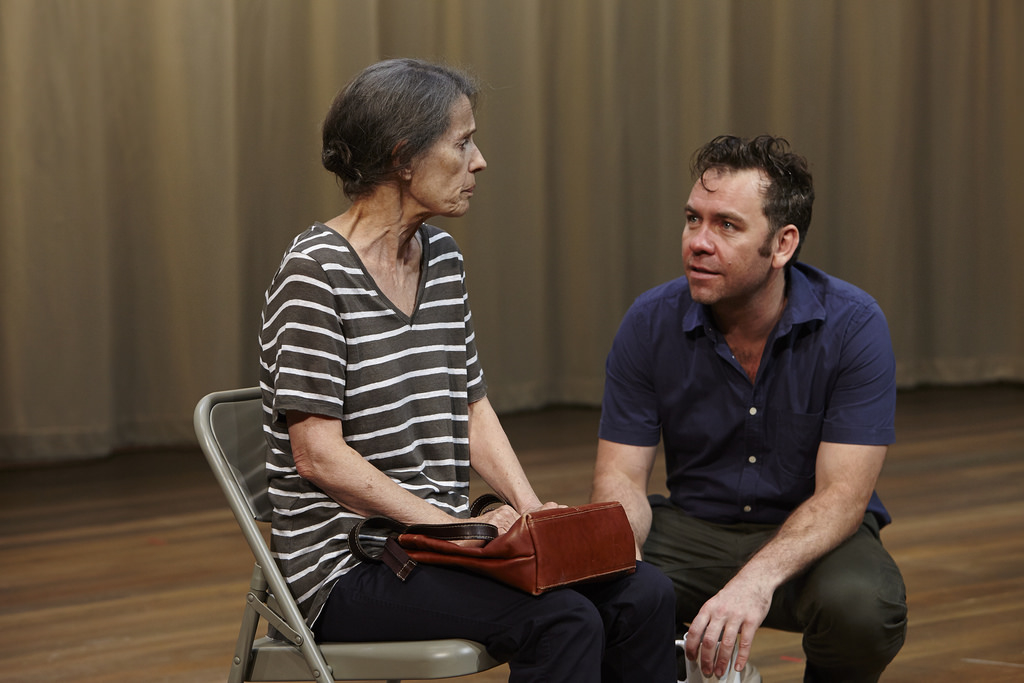
Helen Morse and Brendan Cowell. Photo: Ellis Parrinder

Helen Morse and Brendan Cowell. Photo: Ellis Parrinder

Michael Gow’s new play Once in Royal David’s City is full of big ideas yet intimate at the same time, a piece that plays with form, and throbs with love and anger.

Theatre director Will Drummond (Brendan Cowell) is feeling somewhat adrift and in search of meaning after the death of his father (Anthony Phelan). Pulling out of a production of The Importance of Being Earnest, he plans to spend Christmas with his mother Jeannie (Helen Morse) at a friend’s beachside house.

When she suddenly collapses, Will dupes himself into believing that it’s not that serious. In fact, she is dying of pancreatic cancer. Faced with the awful truth, Will sits by her hospital bed talking to her.

Locating the play right from the start as taking place in a theatre, Will sometimes addresses the audience directly and introduces scenes in Brechtian fashion.

Through his interactions with an eclectic range of characters – a school teacher who wants him to lecture on Brecht, his mother’s best friend, a woman consumed by grief and a Bible-basher who both visit his mother in hospital, a teenage boy fleeing family arguments over the Christmas Dinner table – Gow takes on a host of weighty subjects: Brecht and political theatre, Marxism, rampant consumerism, capitalist exploitation, the power of church music, mortality, grief and love among them.

Eamon Flack directs a clean, clear, eloquent production on Nick Schlieper’s pristine, open set that makes the Belvoir stage look bigger than I’ve ever seen it. A circular, white curtain around the space covers quick scene changes, while the cast performs harmonised Christmas carols (music by Alan John).

Flack draws excellent performances from his impressive cast, which also includes Helen Buday, Maggie Dence, Harry Greenwood, Lech Mackiewicz and Tara Morice.

Will is a huge role and Cowell pulls it off magnificently with a raw, compelling performance that captures Will’s pain and his rage at the world. Morse is radiant as Jeannie, seeming to fade into bird-like frailty before our eyes when illness hits.

I’m not sure that all the different elements of the play come together completely. A couple of scenes seem to add little, while Will’s final school lecture feels like an all-too-obvious device for Gow to vent without really shocking us into fresh insight – though he makes his points.

However, much of it is extremely moving (there is plenty of robust humour too), particularly the scenes between Cowell and Morse. The encounter between Will and the teenage skateboarder (Greenwood) is also unexpectedly poignant, while Phelan is terribly touching as an awkward, gentle godbotherer with a surprising insight into the gospels.

Once in Royal David’s City runs at Belvoir St until March 23. Bookings: www.belvoir.com.au or 02 9699 3444

An edited version of this review ran in the Sunday Telegraph on February 16

Privates on Parade

New Theatre, Newtown, February 15

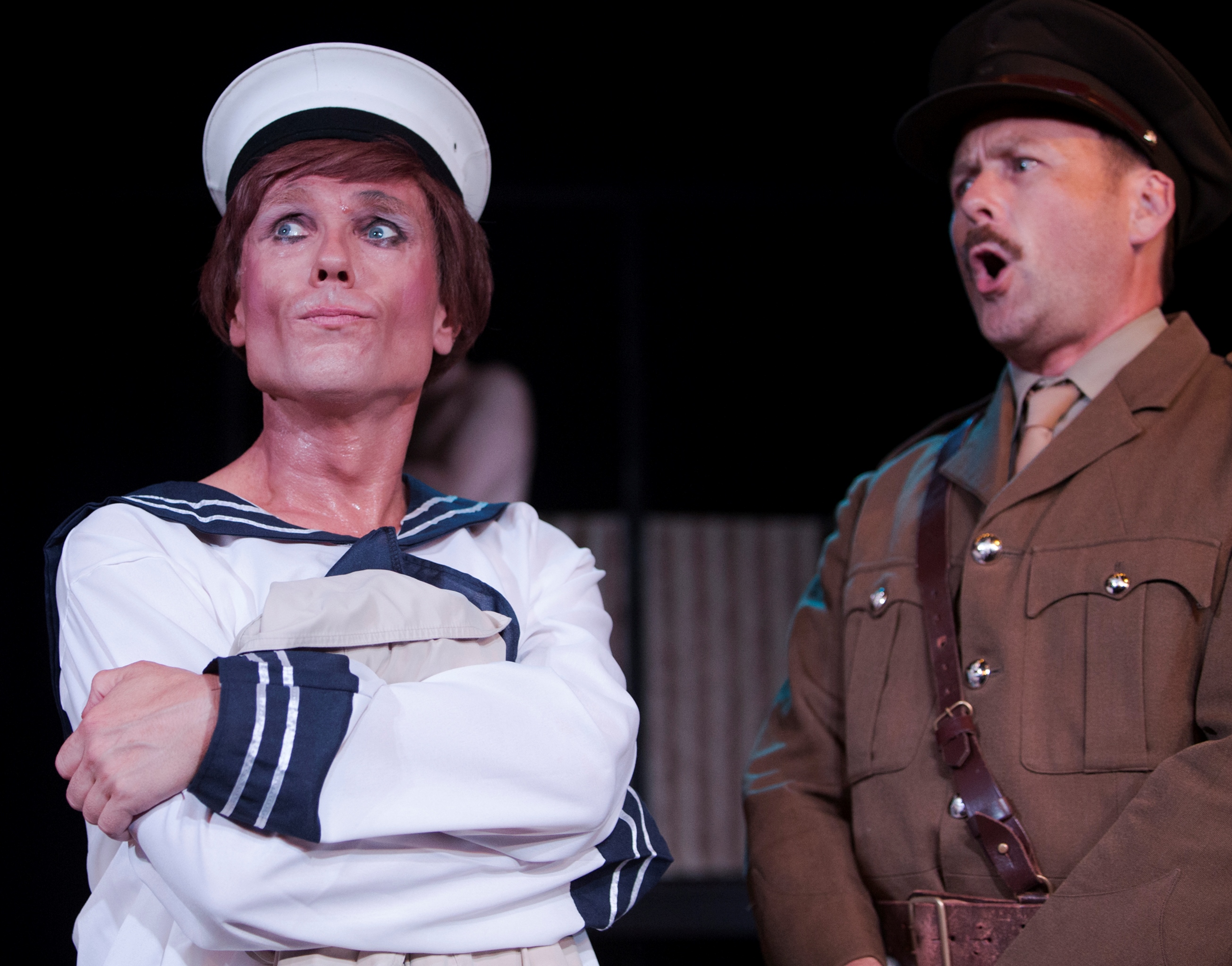
James Lee and Peter Eyers. Photo: Bob Seary

James Lee and Peter Eyers. Photo: Bob Seary

Peter Nichols’ Privates on Parade is a fruity, somewhat dated affair, old love – but beneath the camp humour it has serious things to say about sexual politics, racism and colonialism, which still strike a chord.

The 1977 play with music was based on Nichols’ own personal experience of doing National Service in Calcutta and then Singapore as part of the Combined Services Entertainment alongside the likes of Kenneth Williams and Stanley Baxter.

Set in Malaya in 1948, it follows the naïve Private Steven Flowers (David Hooley) who is sent to investigate corrupt goings-on at the Song and Dance Unit South East Asia, a rag-tag bunch of misfits (both straight and gay) whose job it is to entertain the British troops fighting Communist Insurgents.

There, Flowers meets Acting Captain Terri Dennis (James Lee), a flamboyant drag queen who directs and stars in the unit’s shows, and becomes romantically involved with a local Welsh-Indian beauty called Sylvia Morgan (Diana Perini) who longs to leave for London.

Staged by the New Theatre as part of Mardi Gras, Alice Livingstone directs an exuberant production that gives full vent to the show’s camp humour and production numbers, including a ballet, a tap routine and some truly terrible jokes. Trent Kidd’s choreography suits the piece perfectly and has some nice humour built into it. There’s also a tastefully handled shower scene in which some of the privates’ privates are briefly on parade.

But alongside the frivolity there are darker elements including the arrogant ordering around of the Asian servants, Flowers’ cavalier treatment of Sylvia, the behaviour of the abusive, corrupt, homophobic Sergeant Major Reg Dummond (Matt Butcher) and the sudden eruption of war-time violence.

Lee drives the show as the camper-than-Chloe Terri, all jutting cheekbones and arching eyebrows as he relishes each and every double entendre. His impersonations of Marlene Dietrich, Vera Lynn and Carmen Miranda are played to the hilt, but he then reins in his Noel Coward number beautifully.

As well as Terri’s flamboyance, Lee captures his loneliness, loyalty and generous spirit, particularly in his care of Sylvia. It’s a lovely performance.

Hooley is very good as the essentially decent Flowers, Peter Eyres is commanding as Major Flack, an unbending military man with a Christian fervour, and Perini is affecting as Sylvia, proving herself a genuine triple threat.

They are generally well supported by the rest of the cast: Morgan Junor-Larwood, Henry Moss, Jamie Collette, David Ouch and Gerwin Widjaja.

If the production is a bit rough around the edges at times, somehow it seems to suit the piece with its knockabout energy.

Livingstone’s decision to have Moss, Ouch and Widjaja as The Boogie Woogie Bugle Boys in satin cheongsams singing in the foyer and then on stage before the show is a nice touch. Not only does it set the mood but it allows Ouch and Widjaja to strut their stuff, since they get to say nothing in the play as servants.

All in all, an enjoyable evening.

Privates on Parade plays at the New Theatre, Newtown until March 8. Bookings: http://www.newtheatre.org.au

Sweet Charity

Hayes Theatre Co, February 13

Verity Hunt-Ballard as Charity. Photo: supplied

Verity Hunt-Ballard as Charity. Photo: supplied

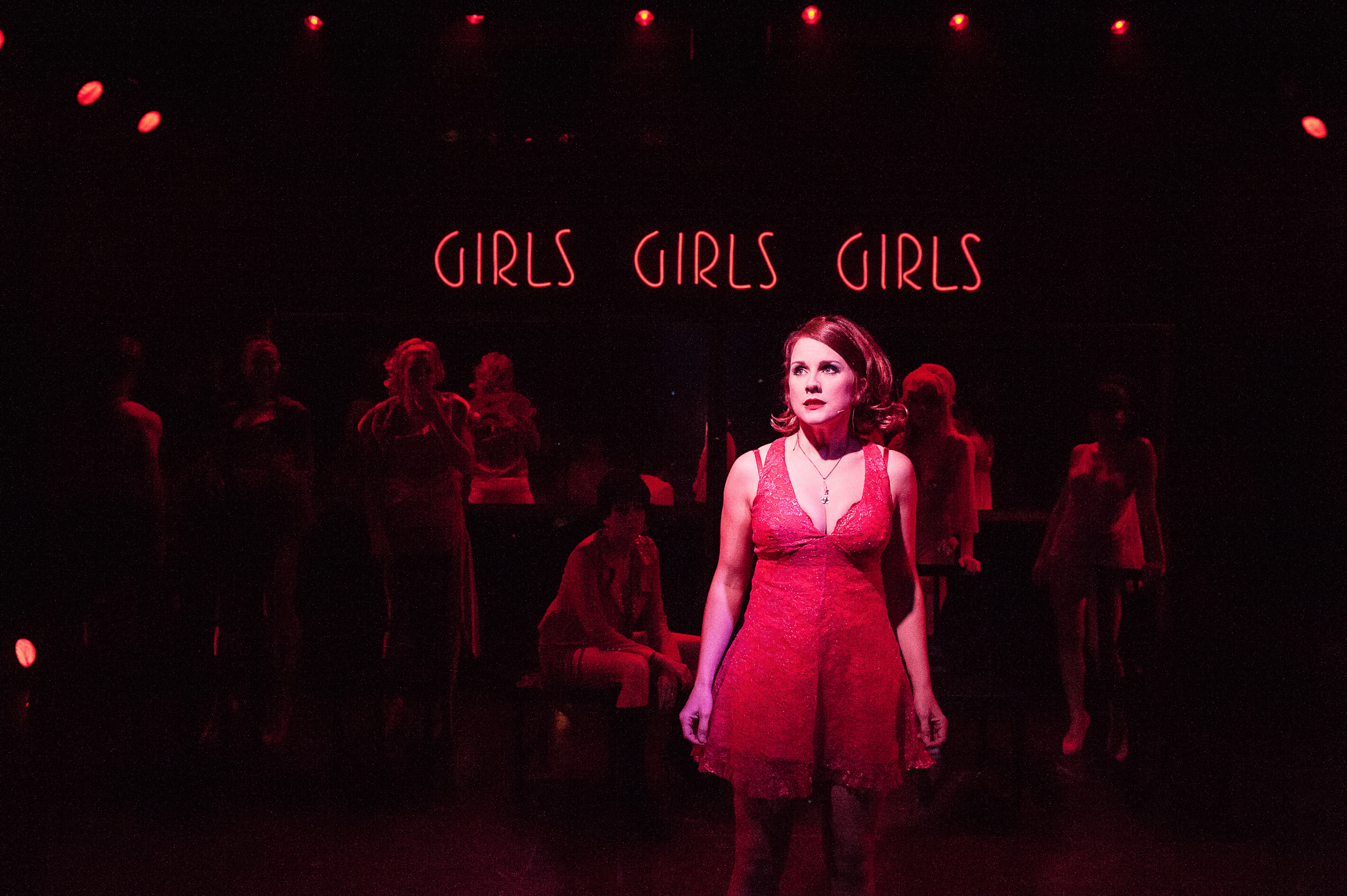
Walking into the tiny theatre at Potts Point you are thrust straight into the world of Sweet Charity. A red neon sign reads “Girls, Girls, Girls”, the band is vamping, and the sexily clad ladies at the seedy Fandango Ballroom where Charity works are already on stage, enticing men from the audience to dance with them.

It’s the perfect start to a fabulous production of the 1966 musical (music by Cy Coleman, lyrics by Dorothy Fields, book by Neil Simon), brilliantly re-imagined by director Dean Bryant for the times and the intimate venue.

Produced by Luckiest Productions and Neil Gooding Productions, Sweet Charity is the first production for the new Hayes Theatre Co, which is turning the venue (formerly known as the Darlinghurst Theatre) into a home for small-scale musicals and cabaret.

Sweet Charity tells the story of a dance hall hostess with a heart of gold looking for love in all the wrong places. With its episodic structure, it’s not the greatest musical ever written, merely following Charity as she is dumped by a louse called Charlie, encounters suave Italian movie star Vittorio Vidal, and becomes engaged to neurotic accountant Oscar. But it’s joyous, funny and touching with some great songs including “Big Spender”, “If My Friends Could See Me Now” and “The Rhythm of Life”.

Bryant has given the show a dirtier, grittier edge that makes it feel more current. It’s a small theatre for a musical but Bryant stages it ingeniously on Owen Phillips’s simple, grungy set (a few costume racks and some chairs), making inspired use of a couple of two-way mirrors. Ross Graham’s moody lighting is also impressive.

A small, sharp band, led by musical director Andrew Worboys on keyboards, sits at the back of the stage and there’s a cast of 12 but the production rarely feels squashed.

Occasionally you sense the dance routines longing to break out as in Bob Fosse’s famous, original choreography. However, Andrew Hallsworth has done a fantastic job of choreographing distinctive, tight little movements and routines, while his twist on the Rich Man’s Frug, with surrealistic costumes by Academy Award-winner Tim Chappel, works a treat.

The terrific new musical arrangements by Worboys (who also plays Fandango owner Herman) and Chappel’s witty, sexy costumes (with wigs by Ben Moir) heighten the edgy vibe perfectly.

In her little, red, lacy dress, Verity Hunt-Ballard is gorgeous as Charity, capturing her kookiness, sweetness, sunny optimism and vulnerability. In a production this gritty, Charity might perhaps have been a little more “shop soiled” but it’s a radiant, endearing performance; sensationally sung, danced and acted, with knockout comic timing.

Verity Hunt-Ballard and Martin Crewes as Oscar. Photo: supplied

Verity Hunt-Ballard and Martin Crewes as Oscar. Photo: supplied

Martin Crewes plays Charlie, Vittorio and Oscar and delineates them with wonderfully detailed performances, making us care about the dorky Oscar as well as Charity.

Debora Krizak is also a standout, doubling as Nickie, Charity’s hard-bitten friend at the Fandango Ballroom, and Ursula, Vittorio’s glamorous, jealous girlfriend (here with an English accent). My date for the evening didn’t realise they were the same performer. But the entire ensemble is on song.

Having begun with the stage buzzing, the production ends in poignant fashion with Charity alone on an empty stage: a powerful conclusion to a fresh, thrilling production.

Sweet Charity announces the arrival of an exciting new musical theatre initiative in Sydney in emphatic fashion. It has set the benchmark high. Don’t miss it.

Sweet Charity plays at the Hayes Theatre Co, 19 Greenknowe Avenue, Potts Point until March 9. Bookings: www.hayestheatre.com.au

A slightly edited version of this review ran in the Sunday Telegraph on February 16