Clybourne Park

Ensemble Theatre, March 19

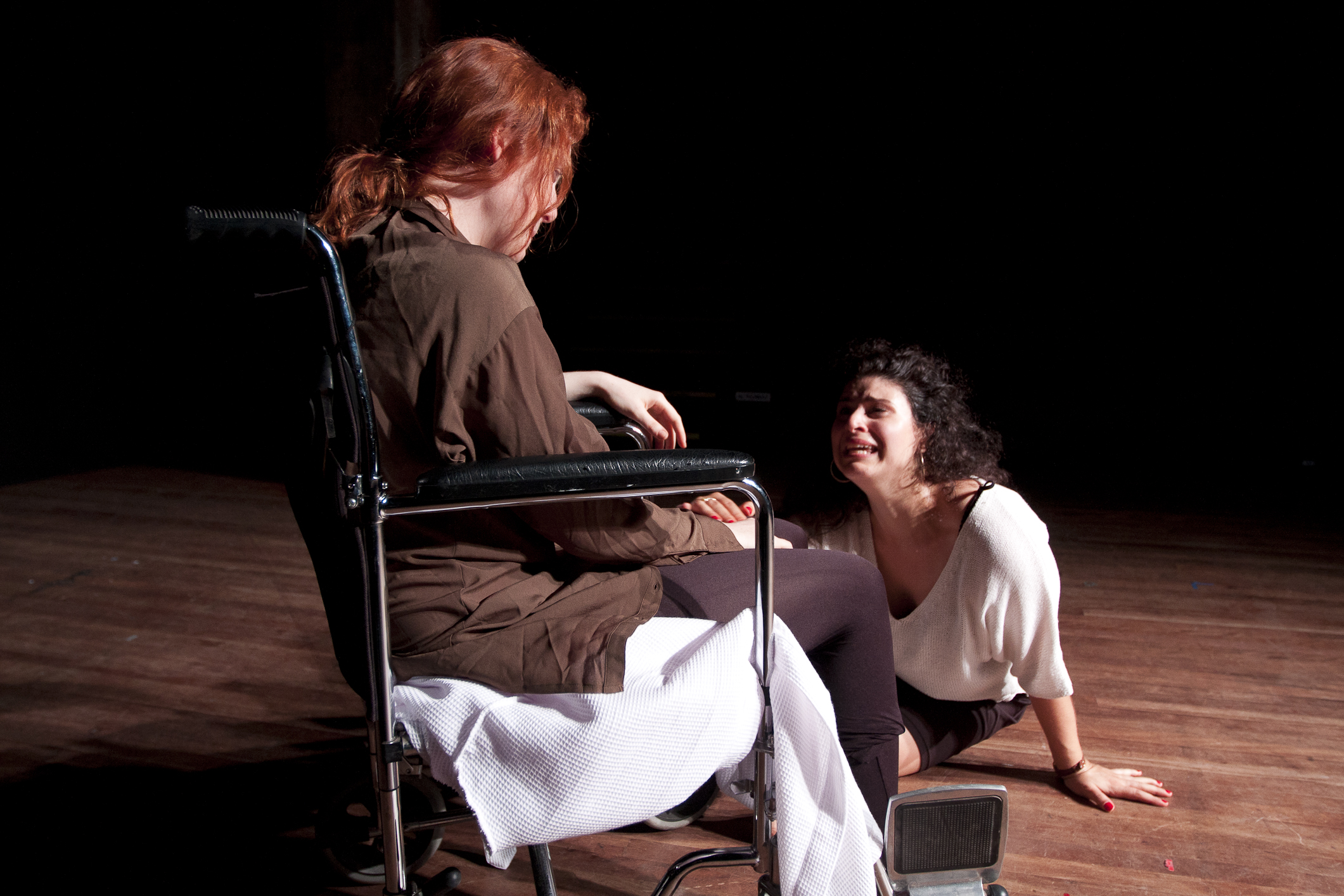
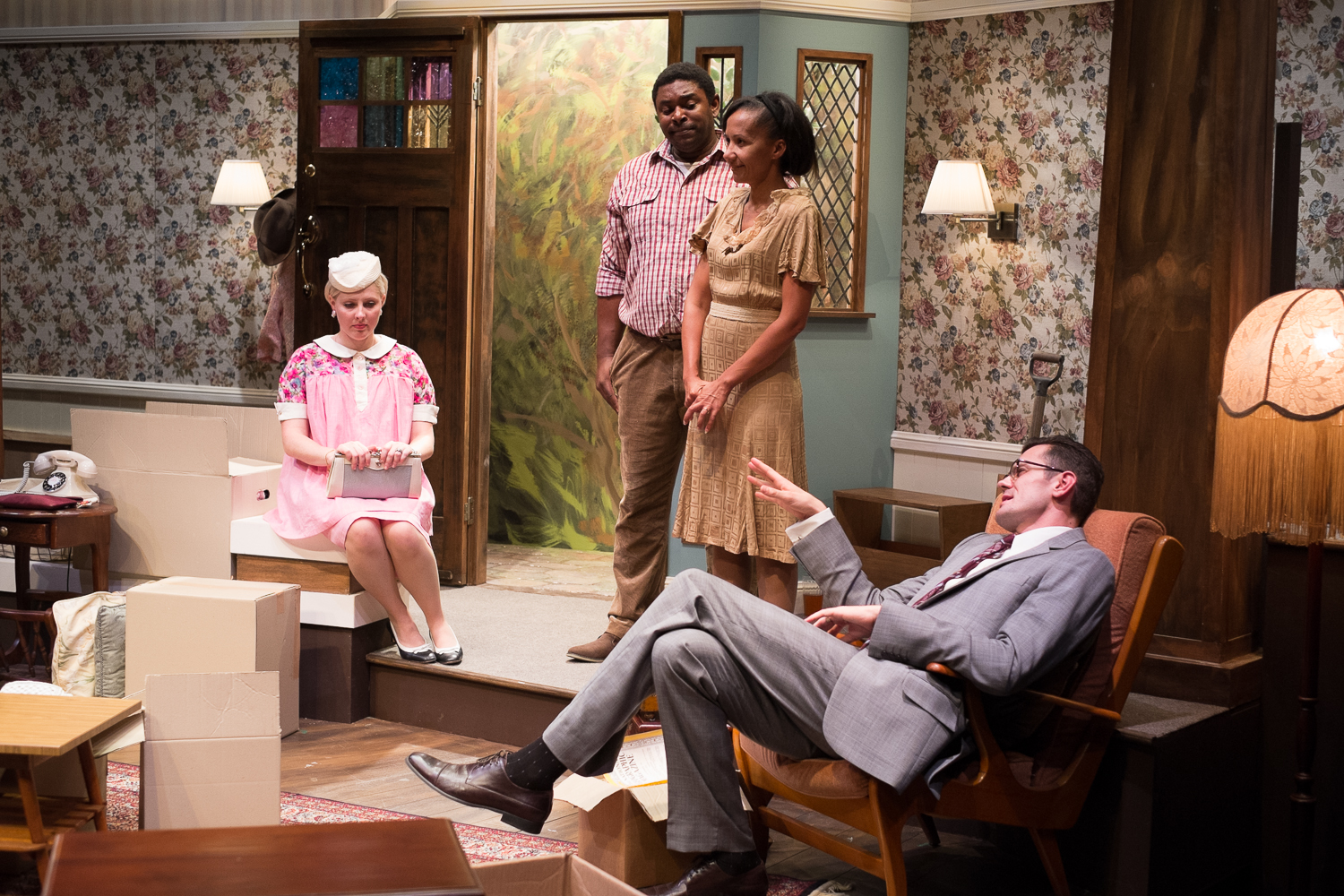
Briallen Clarke, Cleave Williams, Paula Arundell and Nathan Lovejoy. Photo: Clare Hawley

Briallen Clarke, Cleave Williams, Paula Arundell and Nathan Lovejoy. Photo: Clare Hawley

There was such interest in Clybourne Park that the Ensemble Theatre production sold out before opening so two performances in Chatswood have been added.

Written by American actor-playwright Bruce Norris, the play arrives in Sydney trailing numerous awards including the 2011 Pulitzer Prize for Drama, the 2012 Tony Award for Best Play and the 2011 Olivier Award for Best New Play. Expectations were therefore high – and the Ensemble production more than meets them.

The pithy drama straddles 50 years in a Chicago suburb. It begins in 1959. A clearly unhappy couple – the angry, taciturn Russ (Richard Sydenham) and his over-cheery wife Bev (Wendy Strehlow) – is packing up their home with the help of their black maid Francine (Paula Arundell).

Their local preacher (Thomas Campbell) arrives, clearly hoping to have a meaningful conversation with Russ, followed not long after by a neighbour called Karl (Nathan Lovejoy) with his deaf, pregnant wife Betsy (Briallen Clarke).

Politely outraged that they have sold the property to a “coloured” family at a knock-down price (for reasons revealed later), Karl tries to convince them to change their mind, his appalling bigotry expressed in the nicest way possible.

When Francine’s husband Albert (Cleave Williams) arrives to pick her up, his attempt to help Russ becomes excruciatingly awkward.

The second act is set in 2009. A white couple (Lovejoy and Clarke) has bought the run-down house in the now predominantly Afro-American suburb and wants to rebuild. This time, there are objections from a young, black woman (Arundell) who wants the history of the area to be respected.

Clybourne Park is a provocative play with some truly cringe-making moments, including several rancid jokes. But it is also very funny and sad as it tackles racism, political correctness and real estate, while weaving in grief and post-traumatic stress disorder too.

You’re aware that the play’s neat structure – which has the cast playing two different sets of characters across the two time-frames, some of them related – is well-crafted if not contrived in its balanced halves and set-piece debates. However, it’s so cleverly done and the writing so good that it works.

Tanya Goldberg directs a terrific production on a set by Tobhiyah Stone Feller that manages to make the stage look much bigger than usual (a feat that Lauren Peters has pulled off with equal flair for The Drowsy Chaperone currently playing at the tiny Hayes Theatre Co). The way the house is transformed into a graffiti-covered state of disrepair during the interval is very cleverly done.

Goldberg has elicited uniformly strong, utterly truthful performances from her excellent cast who work together as a well-oiled ensemble.

Clybourne Park could easily be set in Sydney, where right now there are plans for public housing in prime, inner-city locations to be sold off by the NSW State Government, despite the long-standing history of the area.

It’s a thought-provoking play that has you squirming at times and underlines with discomforting power that attitudes haven’t changed anywhere near as much as we’d like to think.

Clybourne Park runs at the Ensemble Theatre until April 19 and then at The Concourse Chatswood on April 23 & 24. Bookings: 9929 0644

Stop Kiss

ATYP Studio, March 13

Gabrielle Scawthorn and Olivia Stambouliah. Photo: Gez Xavier Mansfield Photography

Gabrielle Scawthorn and Olivia Stambouliah. Photo: Gez Xavier Mansfield Photography

Diana Son’s gentle drama Stop Kiss was first staged in New York in 1998 at a time when homophobia and gay hate crimes were very much in the news.

Pivoting on a random act of violence perpetrated against two women, the production resonates freshly in Sydney given the current debate about alcohol fuelled violence and coward punches.

Callie (Olivia Stambouliah) is a stylish, breezy New Yorker who eats at all the right restaurants yet “swerves” through life avoiding commitment. She isn’t fulfilled by her job as a helicopter traffic reporter, while her boyfriend George is a more of a friend with benefits.

Sara (Gabrielle Scawthorn), on the other hand, who has just moved to the Big Apple from St Louis against the wishes of her family, has a quiet determination about her. Excited to be in New York, and comfortable in herself, she is idealistically committed to her job as a teacher at a disadvantaged school in the Bronx.

Their friendship begins awkwardly but gradually a mutual attraction between them blossoms into something more.

The play moves back and forth in time with scenes leading up to the violent act at its core, and its aftermath. Structured so that we slowly discover what happened at the same time as we watch their deepening relationship, it’s heartbreaking knowing what is coming as their love blossoms.

Directed by Anthony Skuse for Unlikely Productions (in association with the Sydney Gay and Lesbian Mardi Gras), Skuse shows once again what a sensitive director he is. Staged on Gez Xavier Mansfield’s minimal set, the play unfolds with an unforced fluency that draws you in to the story. Skuse knows just when to add something (music, a song) and when to put the focus tightly on the actors. Where the play could become sentimental, he instead gives us unadorned, heartfelt truth.

Stambouliah and Scawthorn are both excellent, each creating entirely believable characters and mining the frissons, false starts, misunderstandings and tenderness in their relationship beautifully. The rapport between them fairly crackles and the outcome of their relationship strikes at the heart.

Aaron Tsindos and Ben McIvor are also impressive as the men in their lives.

Stop Kiss has a clear political message but delivers it gently, without didactic raging, in a sweet, funny, sad play – the subtlety of which is matched by Skuse’s production. Well worth a look.

Stop Kiss runs until March 22. Bookings: www.atyp.com.au or 02 9270 2400 

Noises Off

Drama Theatre, Sydney Opera House, February 21

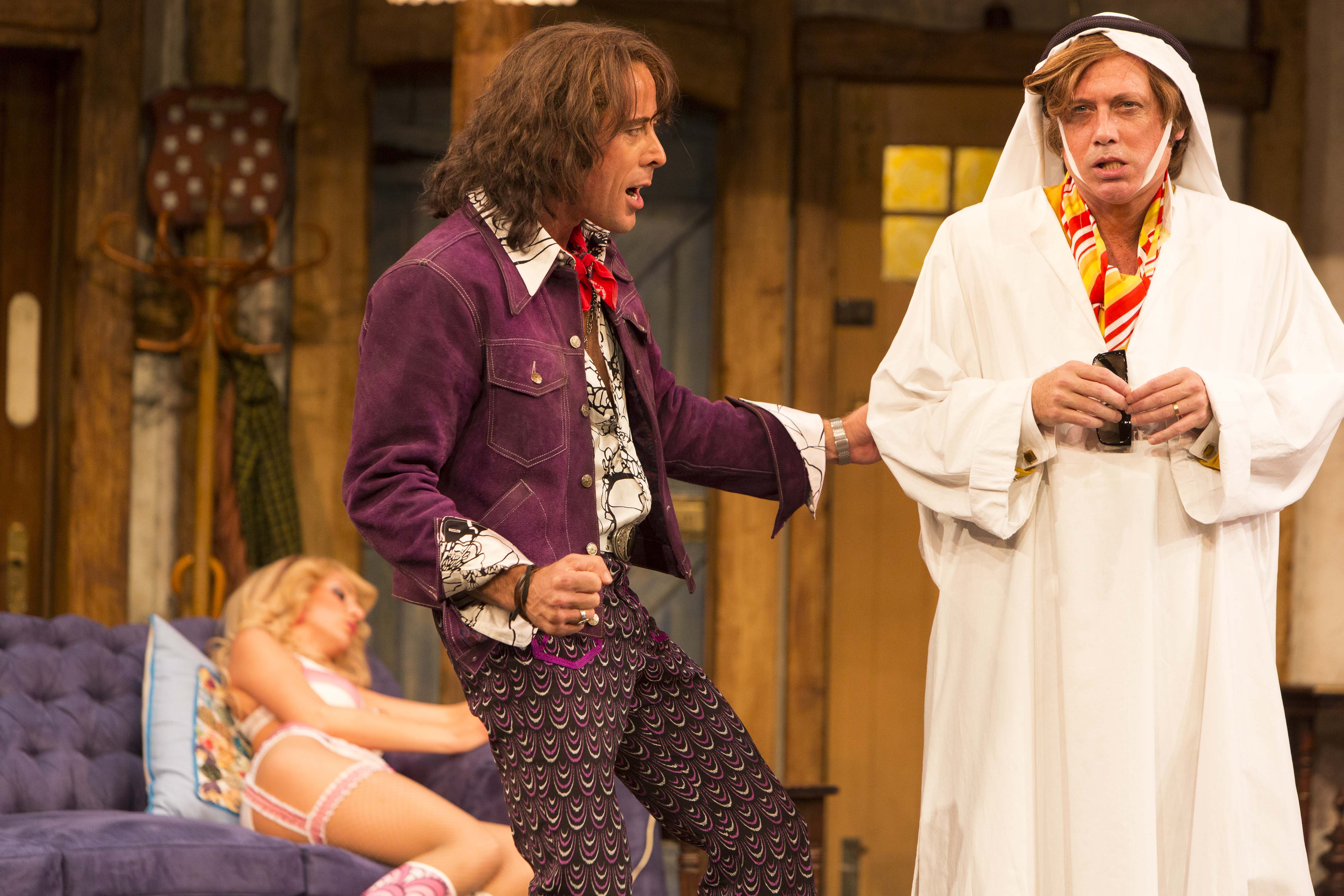
Marcus Graham and Alan Dukes. Photo: Brett Boardman

Marcus Graham and Alan Dukes. Photo: Brett Boardman

Waves of laughter swept through the opening night audience at Sydney Theatre Company’s riotously funny production of Noises Off.

Michael Frayn’s 1982 comic masterpiece is a mind-bogglingly clever feat of construction. Add to that Julie Lynch’s gloriously OTT, psychedelic 70s costumes (which drew applause of their own) and some superb comic performances, and you have a night of laugh-out-loud mayhem.

The farce-within-a farce (which comes with a very funny program-within-a-program) follows a third-rate company of actors as they tour the English provinces with a lame bedroom farce called Nothing On.

Frayn has peopled Noises Off with a rum bunch. There’s the show’s backer Dotty Otley (Genevieve Lemon), a one-time “name” who is playing the housekeeper Mrs Clackett and having an affair with Nothing On’s temperamental leading man, the younger Garry Lejeune (Josh McConville); the somewhat vacant Brooke Ashton (Ash Ricardo), a blonde bombshell who keeps losing her contact lenses and who is having a fling with the philandering director Lloyd Dallas (Marcus Graham); Belinda Blair (Tracy Mann) who tries to keep things on an even keel but loves a good gossip; an elderly dipsomaniac (Ron Haddrick); and the morose, anxious Frederick Fellowes (Alan Dukes) who needs to be given acting motivations for every move his character makes.

Getting/keeping the show on the road are the timid but conscientious assistant stage manager Poppy Norton-Taylor (Danielle King) who is also involved with the director Lloyd, and the sleep-deprived stage manager/general dog’s body Tim Allgood (Lindsay Farris).

Over the course of three acts, we watch the same section of Nothing On as the production gradually disintegrates.

In Act I we see the disastrous dress rehearsal. Act II takes place at a matinee a month later when things are beginning to go wrong – the twist being that it’s shown from backstage. Act III takes place at the end of the tour when hostilities between the actors are spilling onto the stage and everything that could go wrong does.

Act I feels a little slow as Frayn sets everything up but from there on the play is like a runaway train.

The unfolding chaos requires absolute precision – which it gets in Jonathan Biggins’ very fine production, staged on Mark Thompson’s handsome, suitably old-fashioned set complete with the requisite eight doors. The set then spins to show the Spartan backstage area.

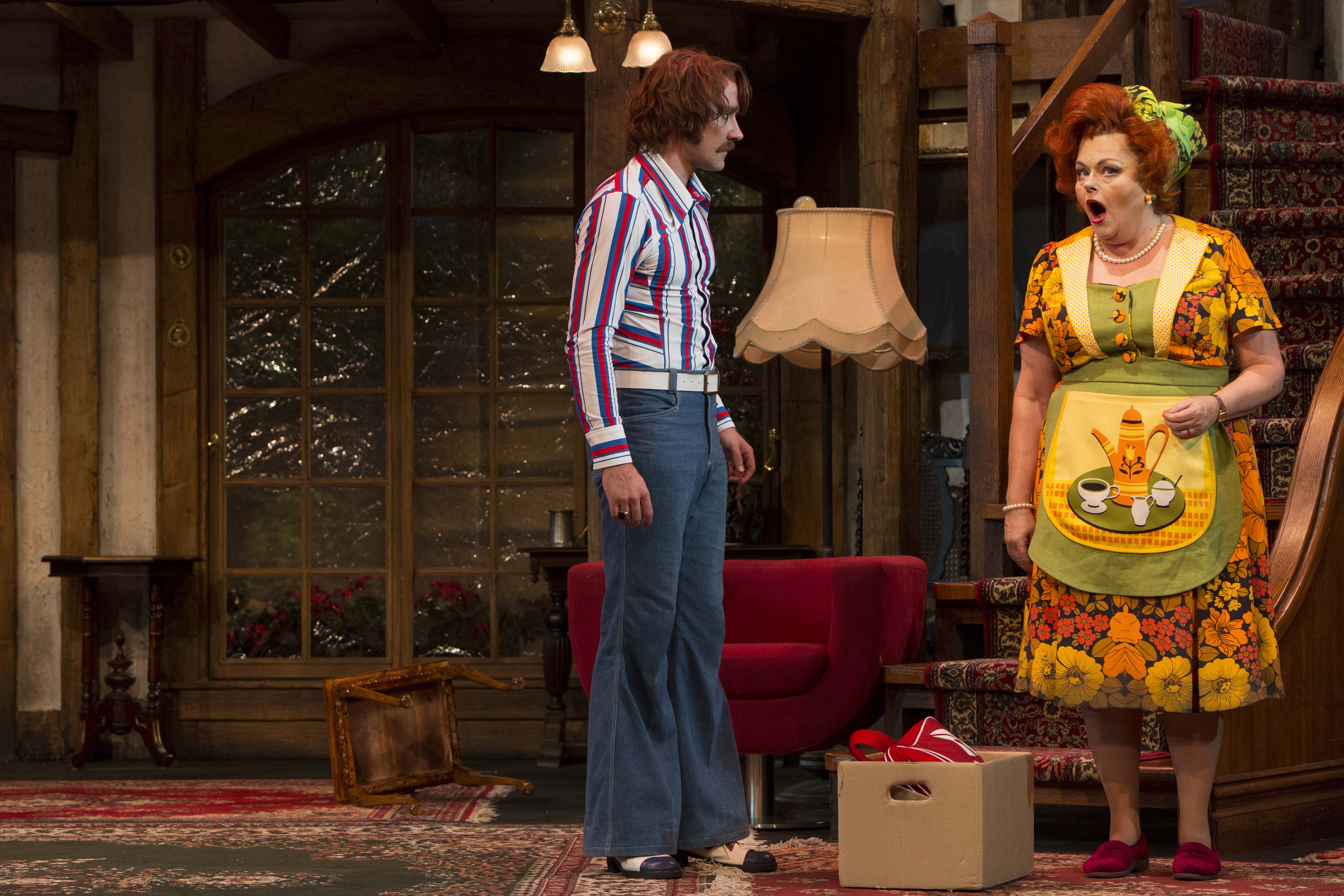
Lynch’s costumes are a delight: patchwork bell bottom jeans, patterned flares, clinging polyester shirts, frocks with bold geometric designs and platform boots among other wonderfully colourful outfits.

Josh McConville and Genevieve Lemon. Photo: Brett Boardman

Josh McConville and Genevieve Lemon. Photo: Brett Boardman

Biggins’ has elicited priceless comic performances across the board from his excellent cast but McConville is an absolute standout as Lejeune, his daredevil physicality drawing gasps. Lemon is also a hoot, while Graham is “faded charm” to a tee as the droll, exasperated director.

Beneath all the hilarity there is a dark sense of the absurd and the creeping terror of things spiraling beyond our control. We laugh uproariously but we can’t help but feel for the characters, trapped in an existential theatrical nightmare, much of it of their own making.

Noises Off runs until April 5. Bookings: http://www.sydneytheatre.com.au or 02 9250 1777

A version of this review appeared in the Sunday Telegraph on March 2

The Winter’s Tale

Playhouse, Sydney Opera House, March 5

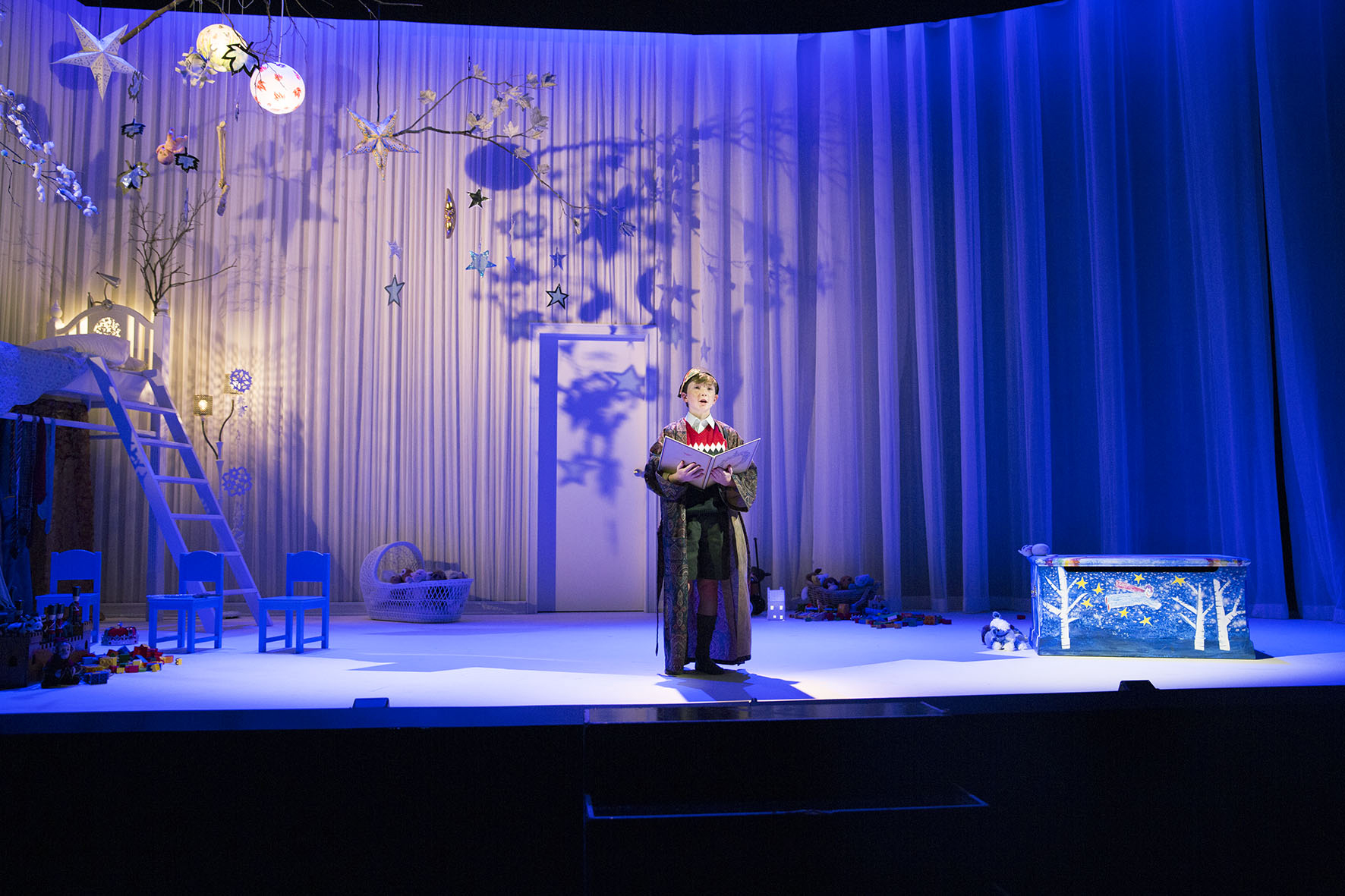
Rory Potter as Mamillius. Photo: Michele Mossop

Rory Potter as Mamillius. Photo: Michele Mossop

Shakespeare’s rarely performed play The Winter’s Tale is tragic and terrible in the first half, fantastical in the second, moving in fairytale fashion from jealousy and cruelty to love and forgiveness. Because of the stylistic disparity, it’s often considered one of his “problem” plays.

Out of the blue, for the flimsiest of reasons, a suddenly jealous King Leontes of Sicily (Myles Pollard) wrongly accuses his wife Hermione (Helen Thomson) of adultery with his best friend King Polixenes of Bohemia (Dorian Nkono).

Leontes imprisons Hermione and orders that their newborn daughter Perdita be abandoned. His young son Prince Mamillius (Rory Potter) and Hermione both die of heartbreak.

In the second half, set sixteen years later, order is magically restored and the characters are reconciled.

In this new production for Bell Shakespeare Company, director John Bell focuses his interpretation around Mamillius, presenting the play from the boy’s perspective. So, the first half is what really happens and the second half is what the boy – now a spiritual observer – wishes had happened and conjures with magic wand in hand.

It’s an interesting, intelligent idea, which Bell is able to explore without altering the text. He merely reallocates a few lines to Mamillius (the reading of the Delphic oracle and the description of Perdita’s reunion with Leontes, told using hand puppets).

However, the production doesn’t totally work, somewhat diminishing the horror of Leontes’ actions at the beginning and detracting a little from the moving reconciliation at the end.

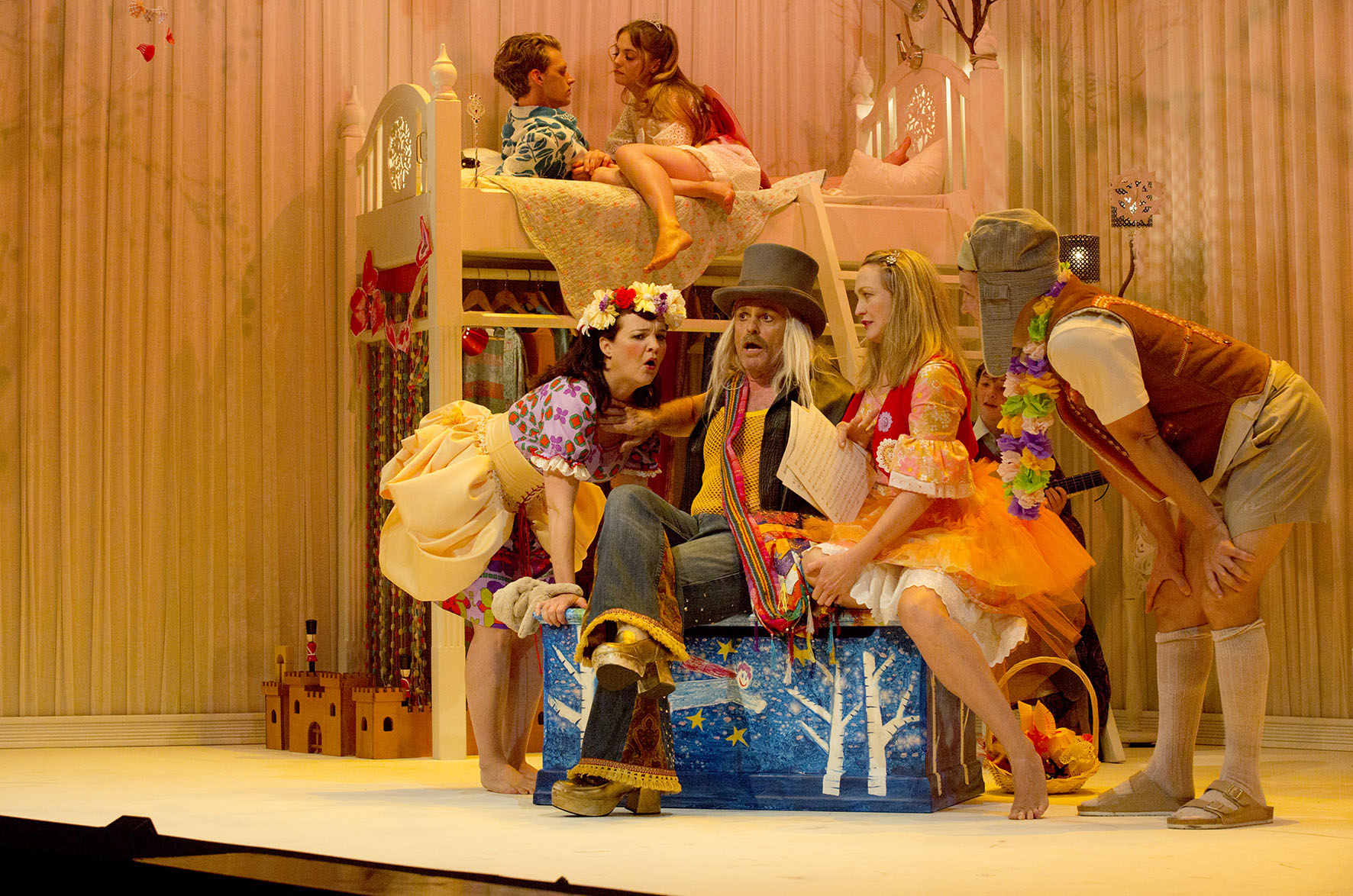
The entire play is set in a child’s bedroom – though Stephen Curtis’s set looks more like a pretty nursery than a boy’s room with diaphanous white curtains, a wicker basinet for the impending baby, a white bunk bed on stilts, and a large mobile with stars and other pretty knick-knacks as well as a few macabre ones (a naked baby doll, a skeletal forearm) foreshadowing things to come. There are also a few boys’ toys (castle, lego, dinosaur, teddy bear) and a dress-up box.

Many scenes in the first act sit oddly in such a setting. Some of the audience laughed on opening night when Leontes sat on a toddler’s chair holding a toy sword as he pronounced his awful judgment on Hermione. It did make him seem somewhat crazed – which works on one level – but we should have been shuddering not laughing. Pollard was not able to cut through and bring quite enough menace to the situation.

Most of the second half is set in Bohemia, which is here given a kind of 60s hippy-trippy vibe, with the plot, colourful costumes and special effects emerging as if from Mamillius’s imagination and dress-up box.

Michelle Doake, Terry Serio, Helen Thomson and Justin Smith. In the background, Felix Jozeps and Liana Cornell. Photo: Michele Mossop

Michelle Doake, Terry Serio, Helen Thomson and Justin Smith. In the background, Felix Jozeps and Liana Cornell. Photo: Michele Mossop

There are some lovely moments. The famous stage direction “Exit, pursued by a bear” is cleverly done – one of several neat effects using shadows – and Matthew Marshall’s many-hued lighting also adds lots of colour, emphasising mood swings.

There are a few changes to the mobile and some vibrantly bright costumes – but the idea of moving from cold, hard reality to Mamillius’s dream-world might have been more effective if the transformation in the set had been a little more dramatic perhaps.

Though the second half exudes a sense of joyousness, it labours under too much comedy that no longer strikes a chord today and does start to drag. (The production runs for three hours).

The acting is a little mixed. Pollard’s light voice and Aussie inflections don’t bring sufficient weight to the difficult role of Leontes and he isn’t totally convincing in either his fury or his anguish.

Thomson is moving as Hermione and Michelle Doake is in commanding form as Hermione’s fiercely loyal friend Paulina, delivering the language with great clarity. Both are also very funny as shepherdesses.

Meanwhile, at the heart of the production 13-year old Potter (who shares the role with Otis Pavlovich) gives yet another wonderfully subtle, touching performance as Mamillius, remarkable for one so young.

The Winter’s Tale runs until March 29. Bookings: www.sydneyoperahouse.com or 02 9250 7777

A version of this review ran in the Sunday Telegraph on March 9

Once in Royal David’s City

Belvoir St Theatre, February 12

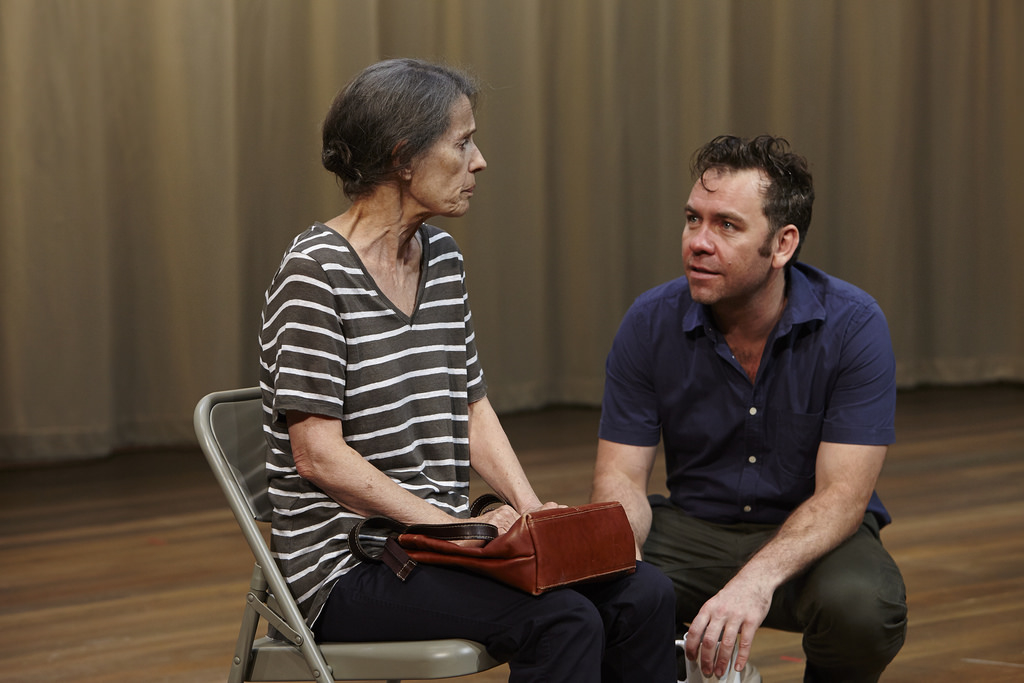
Helen Morse and Brendan Cowell. Photo: Ellis Parrinder

Helen Morse and Brendan Cowell. Photo: Ellis Parrinder

Michael Gow’s new play Once in Royal David’s City is full of big ideas yet intimate at the same time, a piece that plays with form, and throbs with love and anger.

Theatre director Will Drummond (Brendan Cowell) is feeling somewhat adrift and in search of meaning after the death of his father (Anthony Phelan). Pulling out of a production of The Importance of Being Earnest, he plans to spend Christmas with his mother Jeannie (Helen Morse) at a friend’s beachside house.

When she suddenly collapses, Will dupes himself into believing that it’s not that serious. In fact, she is dying of pancreatic cancer. Faced with the awful truth, Will sits by her hospital bed talking to her.

Locating the play right from the start as taking place in a theatre, Will sometimes addresses the audience directly and introduces scenes in Brechtian fashion.

Through his interactions with an eclectic range of characters – a school teacher who wants him to lecture on Brecht, his mother’s best friend, a woman consumed by grief and a Bible-basher who both visit his mother in hospital, a teenage boy fleeing family arguments over the Christmas Dinner table – Gow takes on a host of weighty subjects: Brecht and political theatre, Marxism, rampant consumerism, capitalist exploitation, the power of church music, mortality, grief and love among them.

Eamon Flack directs a clean, clear, eloquent production on Nick Schlieper’s pristine, open set that makes the Belvoir stage look bigger than I’ve ever seen it. A circular, white curtain around the space covers quick scene changes, while the cast performs harmonised Christmas carols (music by Alan John).

Flack draws excellent performances from his impressive cast, which also includes Helen Buday, Maggie Dence, Harry Greenwood, Lech Mackiewicz and Tara Morice.

Will is a huge role and Cowell pulls it off magnificently with a raw, compelling performance that captures Will’s pain and his rage at the world. Morse is radiant as Jeannie, seeming to fade into bird-like frailty before our eyes when illness hits.

I’m not sure that all the different elements of the play come together completely. A couple of scenes seem to add little, while Will’s final school lecture feels like an all-too-obvious device for Gow to vent without really shocking us into fresh insight – though he makes his points.

However, much of it is extremely moving (there is plenty of robust humour too), particularly the scenes between Cowell and Morse. The encounter between Will and the teenage skateboarder (Greenwood) is also unexpectedly poignant, while Phelan is terribly touching as an awkward, gentle godbotherer with a surprising insight into the gospels.

Once in Royal David’s City runs at Belvoir St until March 23. Bookings: www.belvoir.com.au or 02 9699 3444

An edited version of this review ran in the Sunday Telegraph on February 16

Privates on Parade

New Theatre, Newtown, February 15

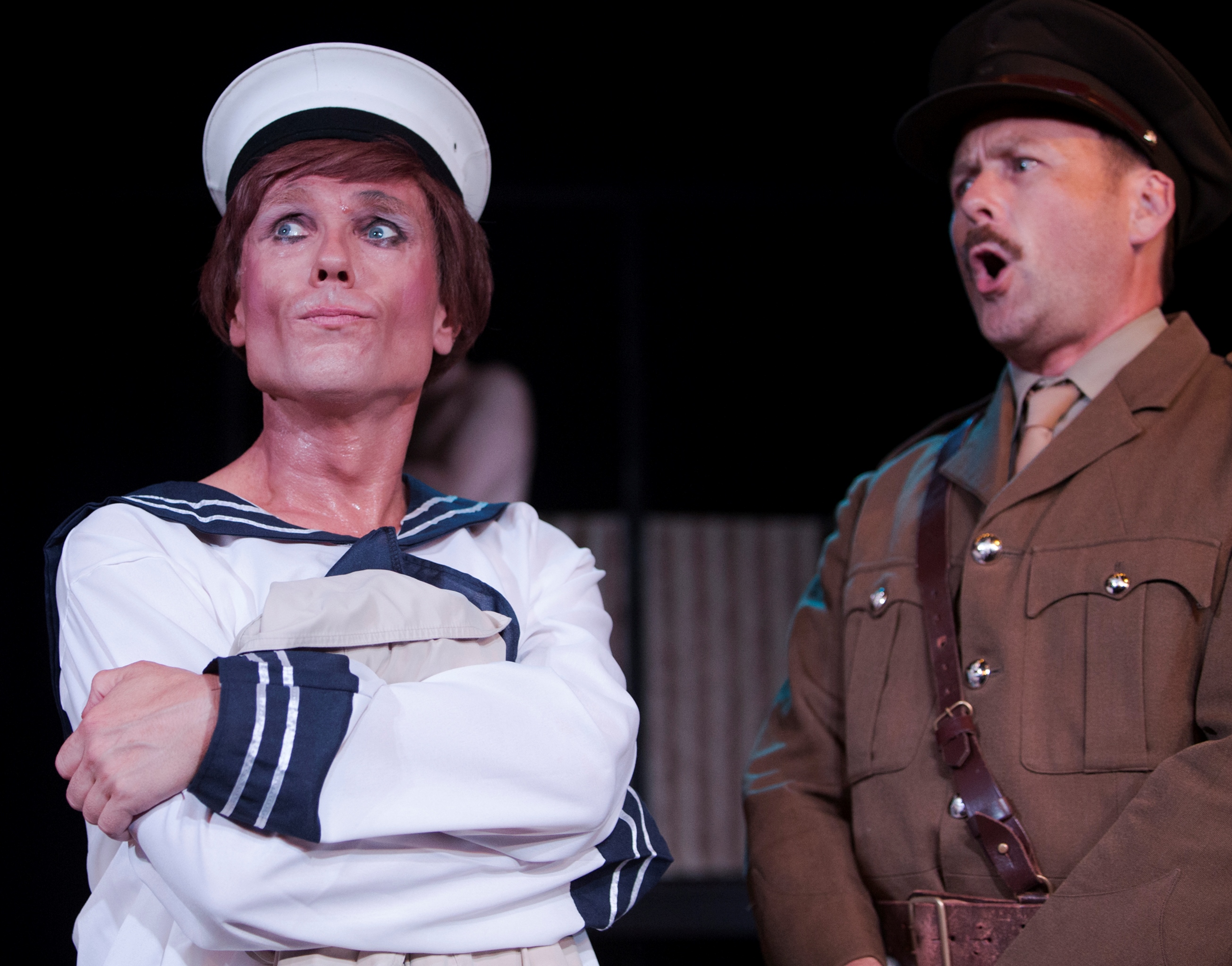
James Lee and Peter Eyers. Photo: Bob Seary

James Lee and Peter Eyers. Photo: Bob Seary

Peter Nichols’ Privates on Parade is a fruity, somewhat dated affair, old love – but beneath the camp humour it has serious things to say about sexual politics, racism and colonialism, which still strike a chord.

The 1977 play with music was based on Nichols’ own personal experience of doing National Service in Calcutta and then Singapore as part of the Combined Services Entertainment alongside the likes of Kenneth Williams and Stanley Baxter.

Set in Malaya in 1948, it follows the naïve Private Steven Flowers (David Hooley) who is sent to investigate corrupt goings-on at the Song and Dance Unit South East Asia, a rag-tag bunch of misfits (both straight and gay) whose job it is to entertain the British troops fighting Communist Insurgents.

There, Flowers meets Acting Captain Terri Dennis (James Lee), a flamboyant drag queen who directs and stars in the unit’s shows, and becomes romantically involved with a local Welsh-Indian beauty called Sylvia Morgan (Diana Perini) who longs to leave for London.

Staged by the New Theatre as part of Mardi Gras, Alice Livingstone directs an exuberant production that gives full vent to the show’s camp humour and production numbers, including a ballet, a tap routine and some truly terrible jokes. Trent Kidd’s choreography suits the piece perfectly and has some nice humour built into it. There’s also a tastefully handled shower scene in which some of the privates’ privates are briefly on parade.

But alongside the frivolity there are darker elements including the arrogant ordering around of the Asian servants, Flowers’ cavalier treatment of Sylvia, the behaviour of the abusive, corrupt, homophobic Sergeant Major Reg Dummond (Matt Butcher) and the sudden eruption of war-time violence.

Lee drives the show as the camper-than-Chloe Terri, all jutting cheekbones and arching eyebrows as he relishes each and every double entendre. His impersonations of Marlene Dietrich, Vera Lynn and Carmen Miranda are played to the hilt, but he then reins in his Noel Coward number beautifully.

As well as Terri’s flamboyance, Lee captures his loneliness, loyalty and generous spirit, particularly in his care of Sylvia. It’s a lovely performance.

Hooley is very good as the essentially decent Flowers, Peter Eyres is commanding as Major Flack, an unbending military man with a Christian fervour, and Perini is affecting as Sylvia, proving herself a genuine triple threat.

They are generally well supported by the rest of the cast: Morgan Junor-Larwood, Henry Moss, Jamie Collette, David Ouch and Gerwin Widjaja.

If the production is a bit rough around the edges at times, somehow it seems to suit the piece with its knockabout energy.

Livingstone’s decision to have Moss, Ouch and Widjaja as The Boogie Woogie Bugle Boys in satin cheongsams singing in the foyer and then on stage before the show is a nice touch. Not only does it set the mood but it allows Ouch and Widjaja to strut their stuff, since they get to say nothing in the play as servants.

All in all, an enjoyable evening.

Privates on Parade plays at the New Theatre, Newtown until March 8. Bookings: http://www.newtheatre.org.au

The Long Way Home review

Sydney Theatre, February 8

Odile Le Clezio, Tim Loch and David Cantley. Photo: Lisa Tomasetti

Odile Le Clezio, Tim Loch and David Cantley. Photo: Lisa Tomasetti

When Sydney Theatre Company announced that it was co-producing a new work with the Australian Defence Force about returning servicemen and women, it sounded like a wonderful initiative – though quite how it would play out on stage, given that the majority of the cast were to be soldiers, was anyone’s guess.

Well, not only is The Long Way Home a wonderful initiative but an important, moving piece of theatre with the power to make an impact on several levels. As well as offering the general public a glimpse into the experiences of our military personnel, it will hopefully aid the recovery of the participants, and help other returned soldiers suffering post-traumatic stress disorder (PTSD) who see it – many of whom are in denial – to realise that they are far from alone and seek help.

The production was initiated by General David Hurley, Chief of the Defence Force, after he saw a production in London called The Two Worlds of Charlie F based on the experiences of British soldiers. Stephen Rayne, who directed that production, was enlisted by the STC to direct here.

Melbourne playwright Daniel Keene crafted the script after spending a five-week workshop with 15 volunteer soldiers, who had seen active service in Afghanistan, Iraq or East Timor. Twelve of them appear in the play: Will Bailey, David Cantley, James Duncan, Wayne Goodman, Craig Hancock, Kyle Harris, Patrick Hayes, Tim Loch, Emma Palmer, Sarah Webster, James Whitney and Gary Wilson.

They perform alongside five professional actors: Martin Harper, Emma Jackson, Odile Le Clezio, Tahki Saul and Warwick Young. Both Harper and Young have served in the Regular Army and the Army Reserve.

Keene and Rayne decided not to create a piece of verbatim theatre, preferring the dramatic flexibility of a play with characters and several interweaving narratives.

But as Keene writes in the theatre program: “Is The Long Way Home fictional? Yes, and no. Every situation that it presents and every line of dialogue is born out of the experiences of the soldiers who perform in the play. They will play themselves re-imagined. They are bringing their reality into contact with that of their audience.”

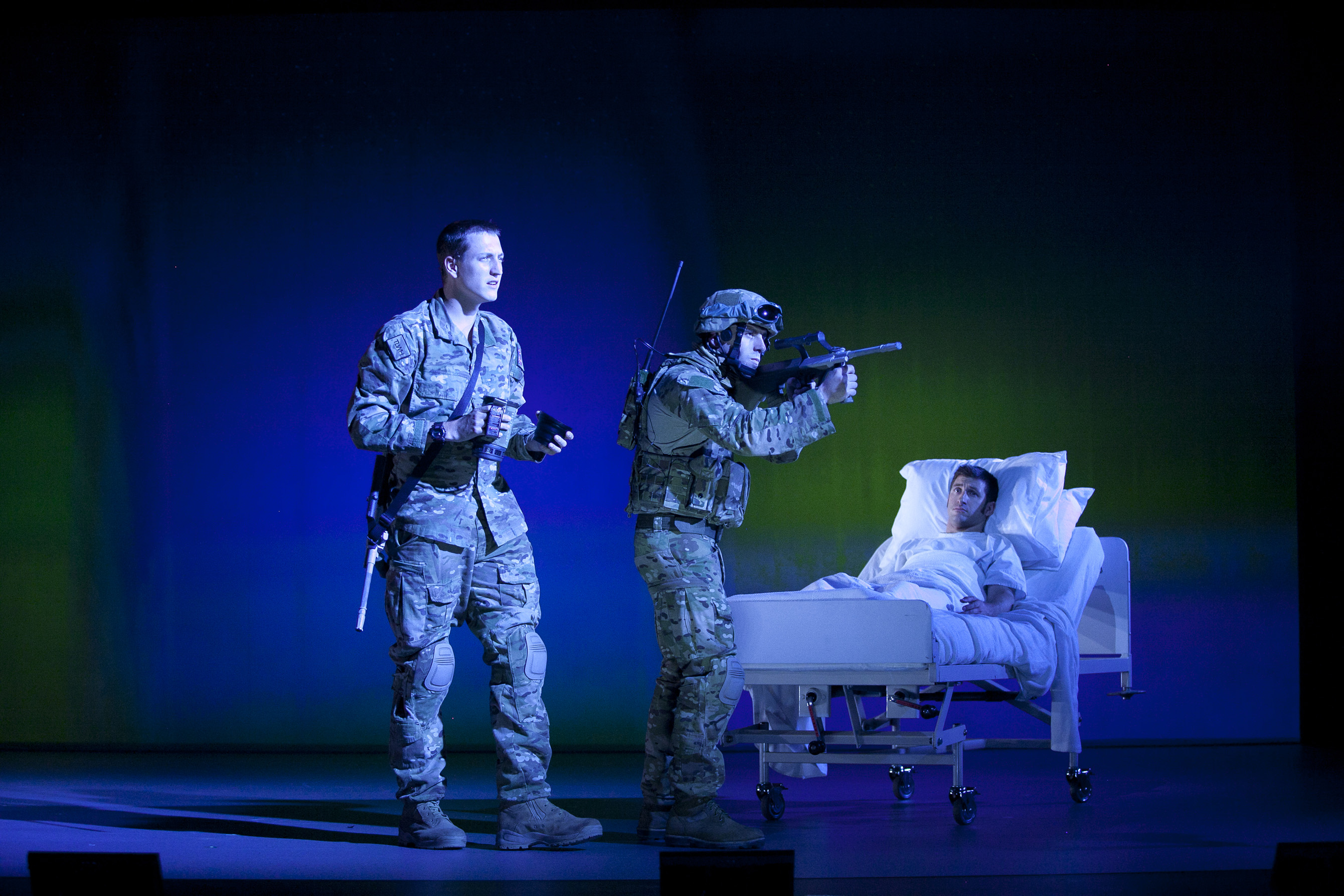
What emerges is a tapestry of scenes in Afghanistan and Australia through which we gain an insight into the life of the soldiers during active service – the camaraderie, the terror, the adrenaline, the thrill, the horrific injuries – and then the struggle to readjust to civilian life when they return home with physical and/or psychological injuries.

Linking the scenes are various narrative arcs, the strongest of which follow two soldiers with PTSD, both battling a gnawing sense of loss and uselessness now that they can no longer be soldiers. We have known about PTSD for decades, of course, but The Long Way Home gives it a human face, taking us into the two soldiers’ minds and homes.

One of them, played by Loch, compulsively irons, cleans the house and mows the lawn to give himself something to do when sleep eludes him and hallucinations crowd in on him. The other played by Hancock finds himself becoming increasingly short-tempered and aggressive with his wife.

With professional actors Le Clezio and Jackson as their wives providing a strong emotional anchor in their scenes, both Loch and Hancock are superb, performing with a raw honesty.

As you’d expect, some of the soldiers are more relaxed and convincing on stage than others but overall they do exceptionally well and their physicality when in military mode is naturally utterly authentic.

James Duncan, Patrick Hayes and Gary Wilson. Photo: Lisa Tomasetti

James Duncan, Patrick Hayes and Gary Wilson. Photo: Lisa Tomasetti

Among many strong performances, Wilson plays a mostly comatose soldier with severe physical injuries including brain damage, who occasionally whispers lines from The Odyssey from his hospital bed. His final monologue had many in the opening night audience in tears – civilians and uniformed men alike.

Whitney is also terrific as a soldier giving stand-up comedy a go, with some cringe-makingly awful jokes.

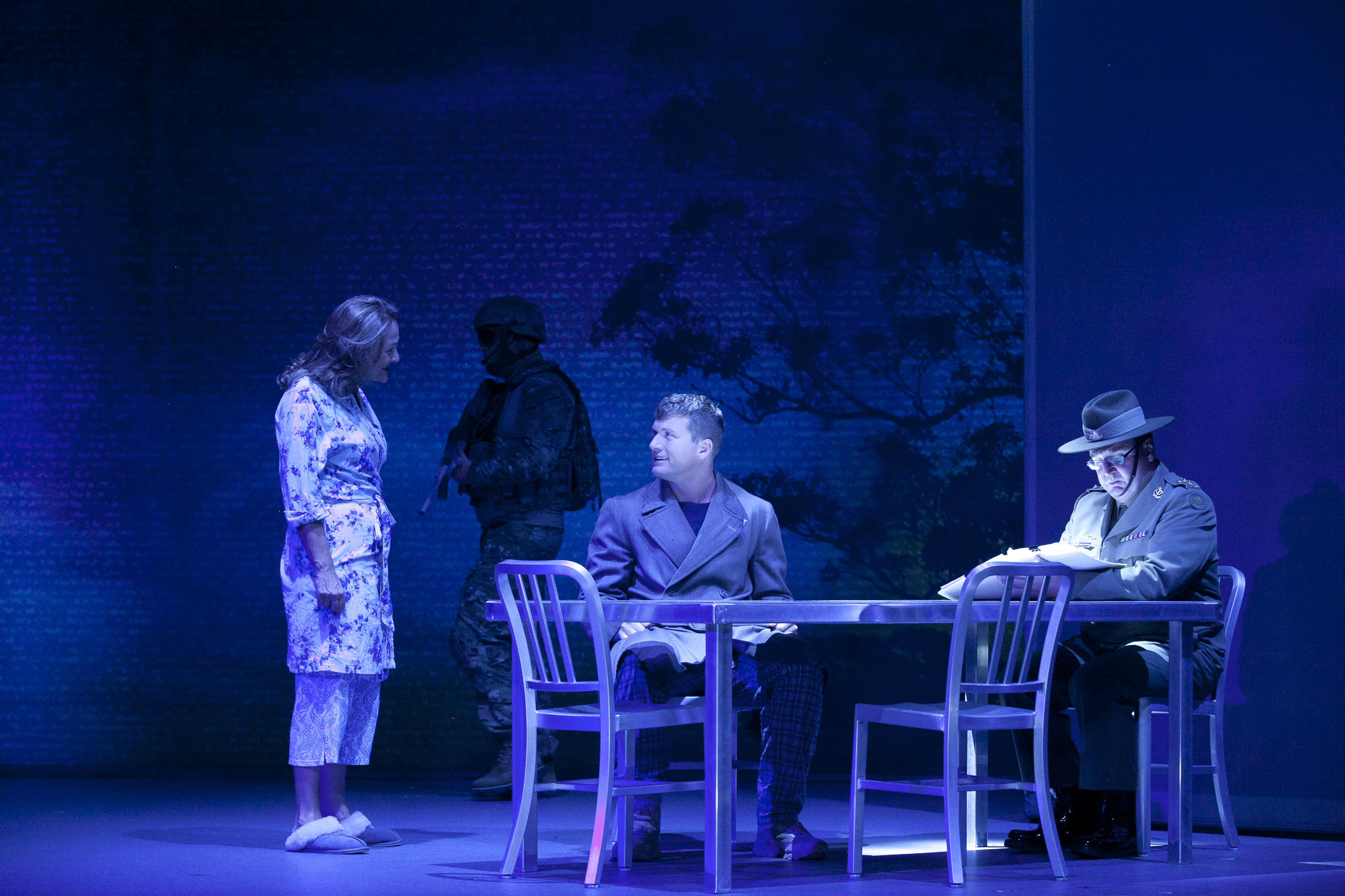
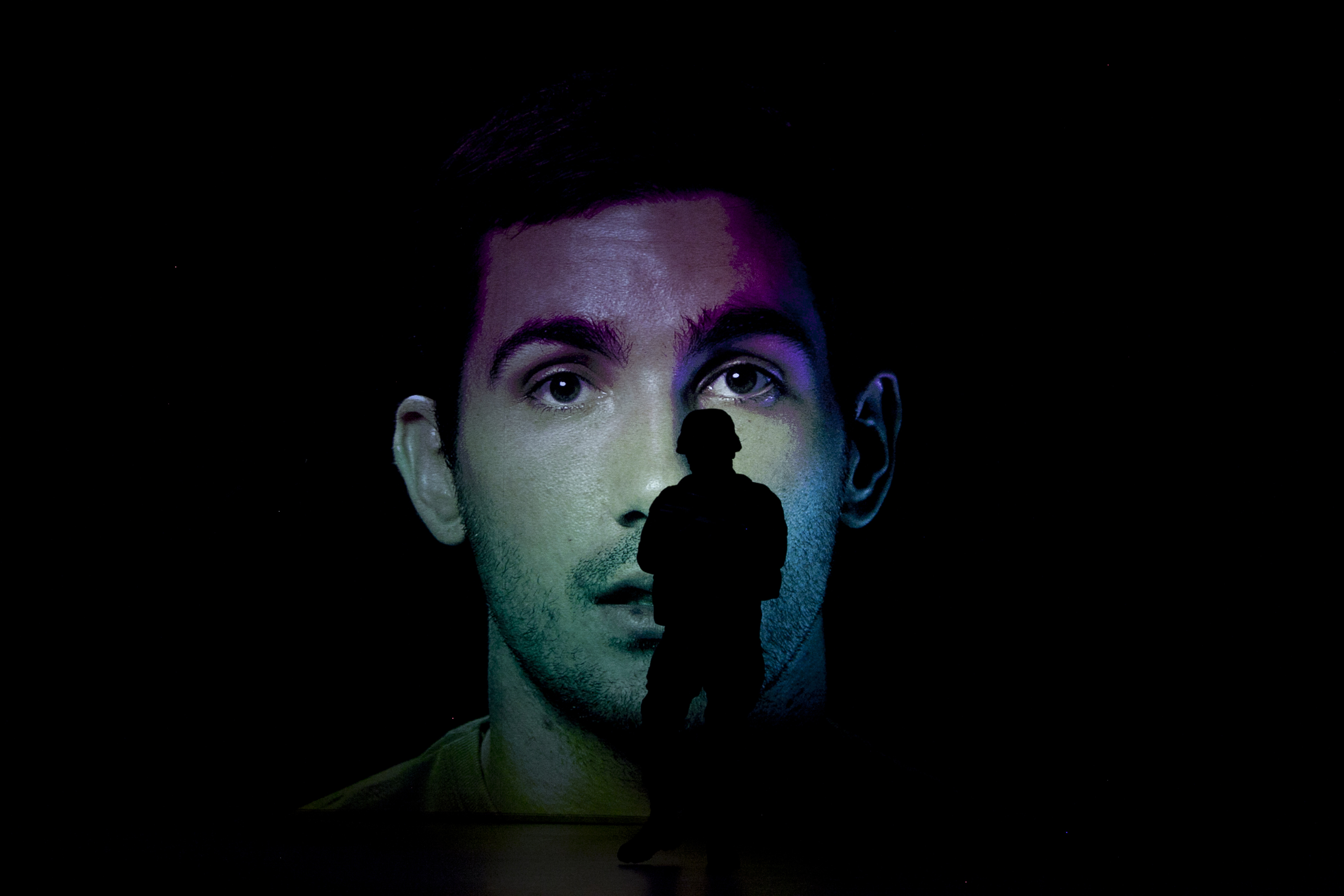
Rayne directs a tight, brilliantly staged production. Renee Mulder’s flexible set with sliding screens and a huge screen at the back, onto which is projected video imagery by David Bergman as well as text and interviews with the soldiers, is highly effective. The recurring image of armed soldiers in combat camouflage silhouetted against the back screen becomes like a leit motif, both familiar and also somewhat sinister.

Will Bailey. Photo: Lisa Tomasetti

Will Bailey. Photo: Lisa Tomasetti

Damien Cooper’s masterly lighting and Steve Francis’ crashing, rock-like soundscape also play a huge role in creating a highly charged, atmospheric space.

Keene’s script is funny, poetic and moving. It captures the robust, droll, F-bombing humour of the soldiers, which has the audience roaring with laughter. The next minute we are holding our breath at the brutal honesty of some of the confessions – from the mistaken killing of civilian women and children to the emotional breakdown of a weeping, traumatised ex-soldier.

Two sketch-like scenes in which a comedy character called Lieutenant Neville Stiffy (Tahki) dissects the “yes” and “no” parts of a soldier’s brain, and the way commands from the top brass filter down to the lower ranks, sit a bit oddly. There are also a few things that don’t quite ring true (would the doctor really talk like that about a patient, in front of him, even if he does appear to be comatose?).

But overall, even if there are no profound insights, The Long Way Home (which runs around two hours and ten minutes including interval) is a remarkable achievement.

The participating soldiers, some of whom had never even been in a theatre before, deserve high praise for opening themselves up in this way and for their commendable performances. Hopefully they will gain something from the experience. (Apparently Wilson’s speech – which was affected by his horrific injuries after a helicopter crash – has developed markedly after working with vocal coach Charmian Gradwell).

Audiences will certainly be enlightened and moved by the play. And if returned military personnel, particularly those suffering with PTSD, do see it – as hopefully they will – one can only imagine how it might speak to them.

The Long Way Home plays at Sydney Theatre until February 15 then tours to Darwin (February 22), Brisbane (February 27 – March 1), Wollongong (March 5 – 8), Townsville (March 14 – 15), Canberrra (March 19 – 22), Melbourne (March 27 – 29), Adelaide (April 1 – 5) and Perth (April 11 – 12). Booking details: www.sydneytheatre.com.au

An interview with Corporal Tim Loch and playwright Daniel Keene can be found here: https://jolitson.com/2014/01/28/the-long-way-home/

Travelling North

Wharf 1, Sydney, January 18

Bryan Brown and Alison Whyte. Photo: Brett Boardman

Bryan Brown and Alison Whyte. Photo: Brett Boardman

It’s a big year for David Williamson with eight of his plays to be staged in Sydney. It’s a shame then that the first of them – Sydney Theatre Company’s production of Travelling North – is a disappointment.

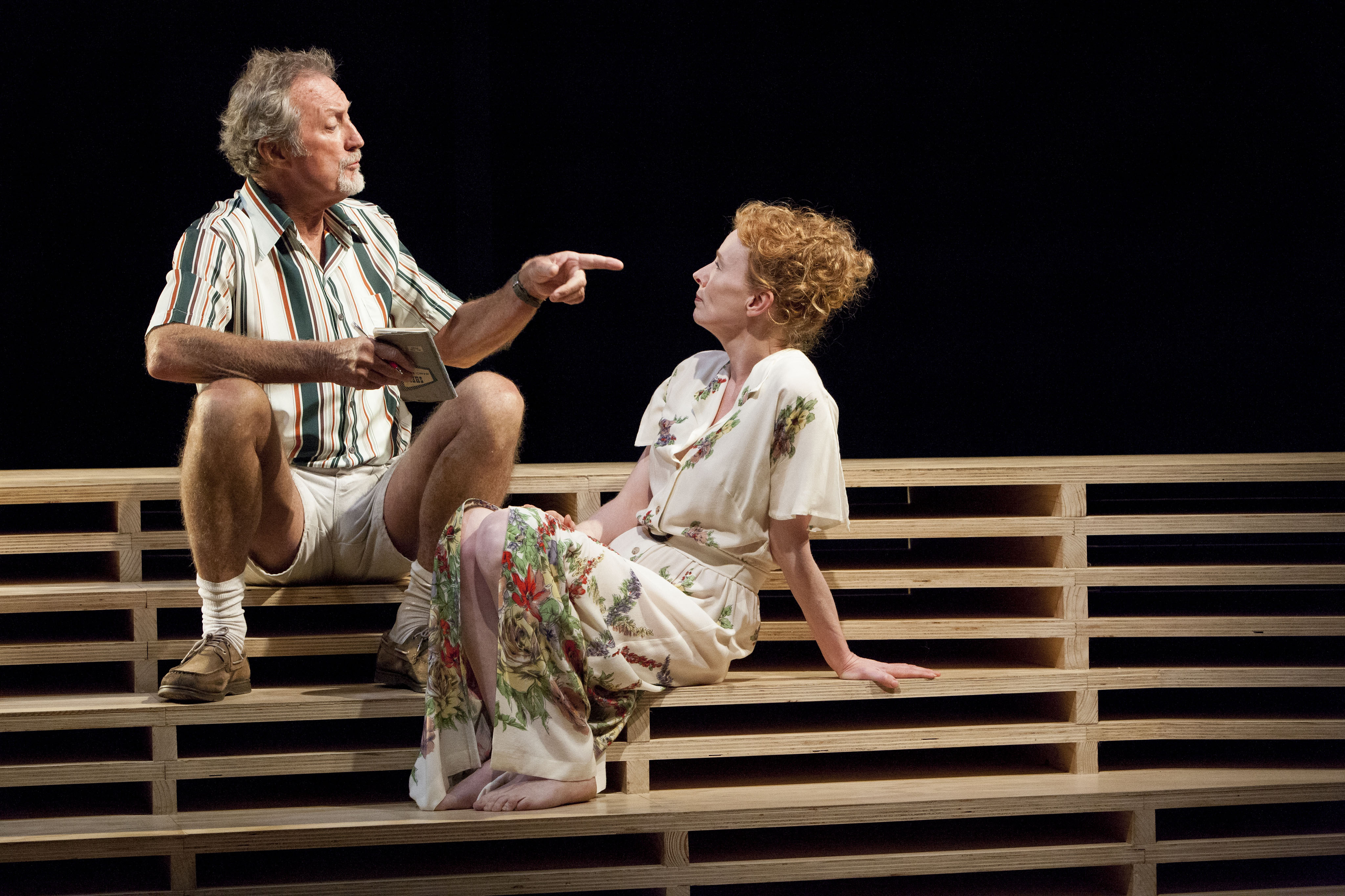
Written in 1979, Travelling North is a gentle, elegiac comedy about an autumnal romance between Frances (Alison Whyte, replacing the injured Greta Scacchi) and the grouchy, older Frank (Bryan Brown).

To the chagrin of Frances’s unhappily married daughters (Harriet Dyer and Sara West), she and Frank decide to head north together – but when Frank’s health fails there is trouble in paradise.

Directed by Andrew Upton, the production is hampered by David Fleischer’s stark, unattractive set. Performed on a large, slatted wooden platform backed by dark walls, with virtually no props, there is no sense of place, which the play needs. Instead, it is left to Nick Schlieper’s lighting to convey the shifts between chilly Melbourne and tropical Queensland.

It also seems odd that though the play stretches over a year or more, Whyte wears the same dress throughout while other actors have costume changes.

Brown brings little emotional depth or nuance to the role of Frank. He is at his most believable when angrily demanding information from his doctor (Russell Kiefel) but mostly looks slightly awkward as if uncomfortable on stage and captures little of Frank’s irascible charm.

Whyte is an elegant, dignified, warm-hearted Frances. Despite her late addition to the cast, hers is the most convincing performance, though Andrew Tighe gives the production an engaging shot in the arm with a very funny, sweet performance as the interfering but well-meaning neighbour in short shorts, socks and sandals.

It seemed to me that the problem is not in the writing. Williamson writes believable dialogue laced with a wry, gentle humour and canvases pertinent issues: older love, the generation divide and the way grown-up children so often demand that their parents remain at their beck and call – something we see a lot these days as more and more grandparents find themselves co-opted as child carers. We should care about the characters a whole lot more than we do here.

Instead, it feels as if none of the different elements of the production have really gelled. The emotional heart of the play is missing in this rather one-dimensional production, which doesn’t do Williamson justice.

Travelling North runs at Wharf I until March 22. Bookings: www.sydneytheatre.com.au or 02 9250 1777
An edited version of this review ran in the Sunday Telegraph on February 2

Magda turns wicked; Bonnie searches for Snow White

Magda Szubanski. Photo: supplied

Magda Szubanski. Photo: supplied

When Magda Szubanski agreed to feature in Snow White – Winter Family Musical, Bonnie Lythgoe couldn’t contain her excitement as another part of her “dream team” fell into place.

“I was waiting with bated breath to find out if she’d do it. I can’t tell you how happy I am,” says Lythgoe, who was a judge on the first three series of So You Think You Can Dance Australia.

As revealed exclusively in yesterday’s Sunday Telegraph, Szubanski will play the Wicked Queen in Lythgoe’s contemporary pantomime spectacular (co-produced with David and Lisa Campbell’s Luckiest Productions), which has a short season at Sydney’s State Theatre in July.

“I haven’t done a panto before but I’ve always thought it would be terrific fun,” says Szubanski. “I did do A Funny Thing Happened on the Way to the Forum with Geoffrey Rush. That was rather like a panto and that was tremendous fun.”

“We haven’t really done a lot of (pantos) here but the tradition they have in Britain is so popular that I thought it would be a hoot to do. I don’t think you can underestimate how joyous these things are.”

Szubanski is looking forward to playing the villain. “One of the dwarves was the role I was after – but I think I’m too short to play a dwarf,” quips the much-loved actor/comedian.

Szubanski joins a celebrity-studded cast that includes the unlikely pairing of Kyle Sandilands and Sir Cliff Richard as the two (pre-recorded) faces of the Wicked Queen’s magic mirror. Naturally Sandilands is the nasty Mirror Disgruntled while Richard is the kindly Mirror Enchanted.

Jimmy Giggle (aka James Rees) from the ABC-TV children’s show Giggle and Hoot will play Snow White’s best friend Muddles and TV host Peter Everett, recently seen on Celebrity Apprentice, is her guardian Chambers.

The huntsman is played by Josh Adamson, an Australian performer currently living in the US, who performed in Lythgoe’s panto Aladdin and his Winter’s Wish at the Pasadena Playhouse in December. The role of the Prince is still to be announced – but is likely to be another name.

However, Lythgoe is offering a complete unknown the chance to land the starring role. Later this month, she and a team of celebrity judges will embark on a nationwide search for an actress, aged 16 to 26, to play Snow White. Pant O-Z Factor: The Search for Snow White, will be filmed and covered by the media.

The auditions will take place at Westfield shopping centres around the country (see details below), where the various judging panels will include people like Sonia Kruger, David Campbell, Matt Lee and Prinnie Stevens among others.

Bonnie Lythgoe auditioning for one of her pantos in the US. Photo: supplied

Bonnie Lythgoe auditioning for one of her pantos in the US. Photo: supplied

Lythgoe has been staging pantos in the US with great success for several years now and has already produced Snow White there with Neil Patrick Harris as the Magic Mirror. The shows combine the British panto tradition (“he’s behind you!”) with contemporary pop songs.

For the Sydney production she says she is looking for a leading lady who is “a little bit more feisty” than the Disney heroine “but a lovely, warm, friendly person.

“I’m looking for raw talent. I don’t want somebody who has been working for five years,” says Lythgoe. “She needs to sing well, to believe in the character she’s playing and be real. She also needs to move well but she doesn’t need to be a fantastic dancer.”

As well as playing the Wicked Queen, Szubanski has been enlisted as a co-writer to ensure the comedy speaks to Australian audiences and promises there will be “fun jokes for all the family”.

“It’s like the stuff we did with Fast Forward where there’s the colour and movement for the kids and then slightly more sophisticated (or not!) elements for the adults, so I think it will be really fun” says Szubanski. “My Mum who is 89 is saying, ‘Oh! I’ll pop up to Sydney to see that.’”

Pant O-Z Factor: The Search for Snow White auditions will be held at:

Saturday February 22, Westfield Marion, Adelaide

Saturday March 8 at Westfield Chermside, Brisbane

Sunday March 9 at Westfield Chermside, Brisbane

Saturday March 15, Westfield Southland, Melbourne

Sunday March 16, Westfield Knox, Melbourne

Saturday March 22, Westfield Parramatta, Sydney

Sunday March 23, Westfield Hurstville, Sydney

Auditions will be held from 9am to 5pm each day. People wanting to audition should arrive at 8am on the day to register. More information about the show can be found at Bonnie Lythgoe’s website http://www.bonnielythgoe.com

Snow White – Winter Family Musical plays at the State Theatre in Sydney, July 4 – 13. Bookings: http://www.tickemaster.com.au or 1300 139 588 

The Long Way Home

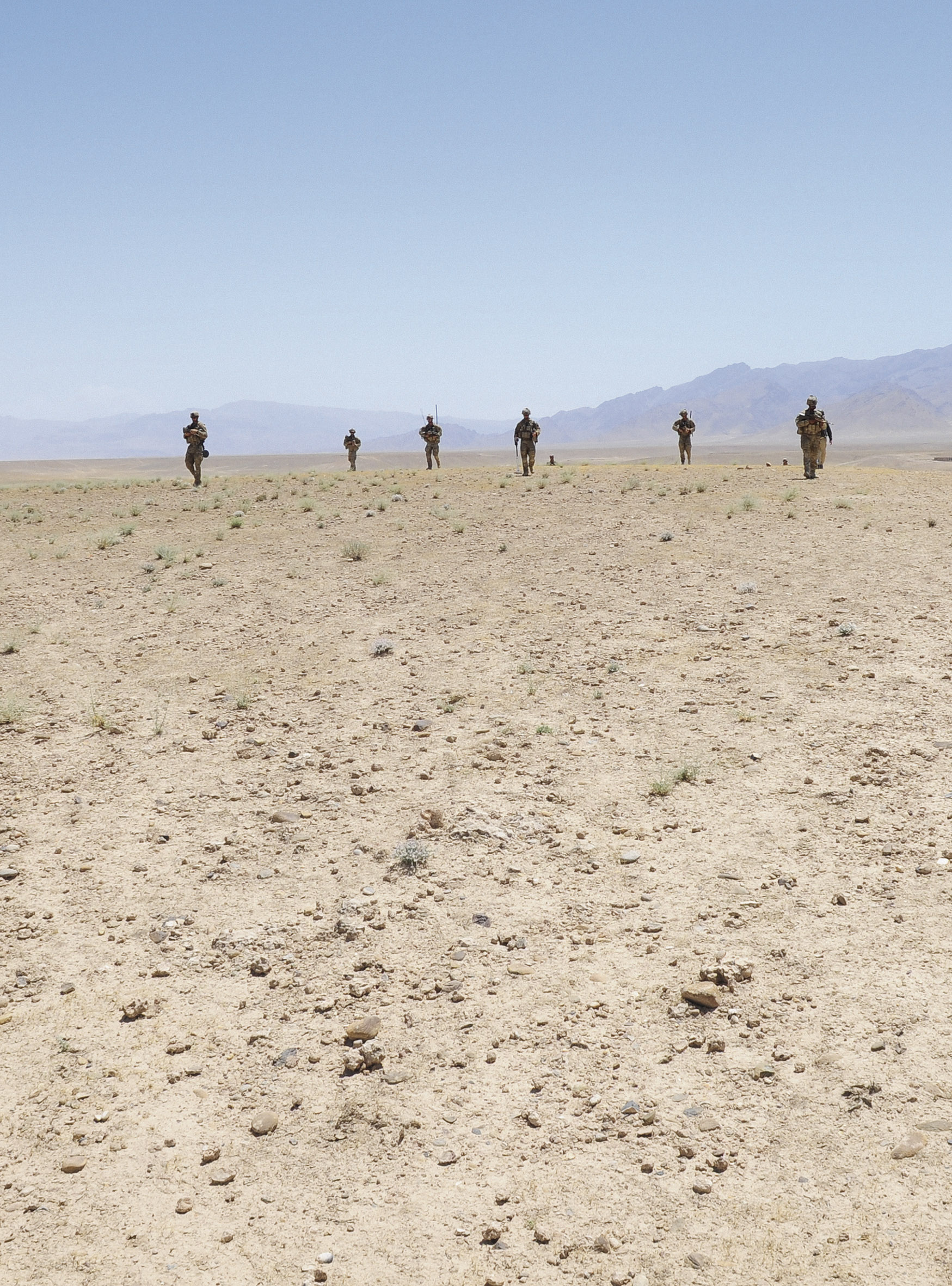
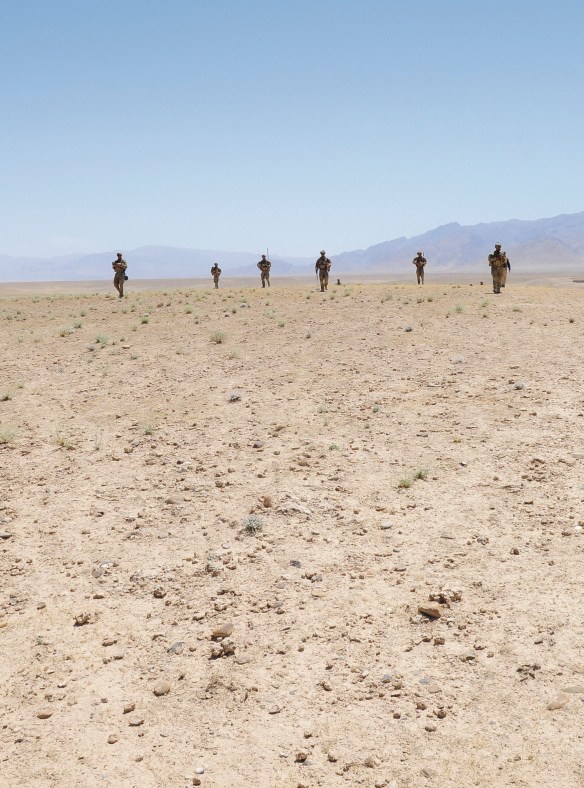
Members of Mentoring Team One, part of Mentoring Task Force - Four, move across the the 'Dasht' (desert) during a mentored patrol with members of the Afghanistan National Army in Uruzgan. Photo courtesy of the Australian Defence Force

Members of Mentoring Team One, part of Mentoring Task Force – Four, move across the the ‘Dasht’ (desert) during a mentored patrol with members of the Afghanistan National Army in Uruzgan. Photo courtesy of the Australian Defence Force

In 2009, Corporal Tim Loch was deployed in Afghanistan where his work as a combat engineer involved detecting improvised explosive devices (IEDs) that threatened the movement of Australian troops.

While a searching a road one day, their “means were defeated” as he puts it.

“I was crew commander that day. I was standing up in the little manhole in the top of the vehicle and we were crumped (blown up). ‘Crumped’ – because that’s what it sounds like,” he explains.

“My right heel was crushed, my right femur was snapped. The machine gun in front was hewn off its bolts and hit me in the face. I can remember being conscious for a few minutes and seeing my leg at a 45 degree angle and I can remember claret (blood) all over my jacket and then I passed out.”

As he floated in and out of consciousness he was taken to hospitals in Tarin Kowt and Khandahar (he thinks) and then flown to Germany where his leg was properly set. He was then brought back to Brisbane where, he says, “they put a Meccano set in my right foot – and that felt like someone had parked a truck on it.”

His weight dropped from around 90kg to 57kg and it took him two years to learn to walk without a walking stick and run again and to bulk up after his . “I still can’t pack march, there are still a few things I can’t do, but then you look at other guys and think, ‘hey, I’m still alive and I’ve still got a leg so I guess I’m lucky,’” he says.

His tone is neutral as he talks matter-of-factly about his experience, neither dramatising nor underplaying it (though he has a vivid turn of phrase), emphasising several times that everyone who has been injured in active service has “a sob story”.

Corporal Loch is one of 13 servicemen and women performing alongside four professional actors in The Long Way Home, a new play co-produced by Sydney Theatre Company and the Australian Defence Force (ADF), which opens in Sydney next month and then tours nationally.

The project was initiated by General David Hurley, Chief of the Defence Force, with the aim of aiding the recovery of the participants and giving audiences an insight into what our armed forces have to cope with both during active service and when they return. Hurley was inspired by a play he saw in London in 2012 called The Two Worlds of Charlie F, directed by British director Stephen Rayne, in which wounded British soldiers told their stories on stage. Rayne is directing the Australian production.

The Long Way Home was written by Melbourne playwright Daniel Keene after a five-week workshop during which 15 soldiers – all of whom suffered physical or psychological injury in Afghanistan, Iraq or East Timor – talked openly and honestly about their experiences.

“It’s been an extraordinary experience emotionally and artistically. ‘Intense’ is the word,” says Keene.

The soldiers opened up to him and the other theatre-makers “with various degrees of difficulty”, says Keene. “At the very beginning people didn’t know what to expect from us and we didn’t know what to expect from them so it was tentative, but ultimately everyone was very open and very honest and very direct and courageous, actually, in what they were telling us.”

Neither Rayne nor Keene wanted to produce a piece of verbatim documentary theatre, but a drama.

“The whole notion of creating something rather than (the soldiers) just repeating their experience was very important for us,” says Keene. “We wanted them to create a piece of work. They all play characters so they have a mask if you like. They re not playing themselves, they are playing someone else so in a way that’s a freedom for them.

“It’s a complex piece of work. There are five different narratives that run through the play, it’s not just one story. Everything that any character says is based on something we’ve been told, so all the stories, all the little narratives that unfold are drawn from the core material we had from the ADF members.”

Loch describes it as “a fiction based on reality. I play a character called Tom. I won’t give too much away. He’s returned from overseas and he’s having a difficult time adjusting back to life in Australia. The hoops he has to jump through are some of the things I’ve had to do and things that some of the other participants have had to deal with.”

Though the play moves between Australia and Afghanistan, Keene says that the essential focus is on the difficult transition between being deployed in a dangerous war zone, where your life depends daily on the decisions you make, and then returning to life in Australia.

“That’s a huge problem for returning soldiers,” says Keene. “That’s why it’s called The Long Way Home because it’s about the emotional and spiritual cost of that return.”

Like most of the participating soldiers, Loch knew little about theatre at the start of the project. The only show he has seen was The Pirates of Penzance with Jon English, which he was taken to see as “a wee tacker” in Rockhampton.

He has only been inside a theatre once since then – and that was to search a Townsville venue for bombs during a training exercise.

“I can tell you where the best spots are to hide things in a theatre but how to project your voice from the stage is a new territory,” he says.

Loch admits that when he was first approached about participating in The Long Way Home (“because I’ve got a little bit of a name for being a character and because I was working in Afghanistan”), he was hesitant.

“It’s nothing against the theatre, it’s just going from being a combat engineer, which is something considered very alpha male, a beef-eating type, to something in the theatre, which is not what a strong silent type does (is a big step),” says Loch who grew up “on a cattle station with the cowboy mentality of suffer in silence.”

However, once his Regiment Sergeant Major explained the project to him in depth, he decided to do it not just to explain to audiences what soldiers go through but also in the hope that it may help soldiers suffering post-traumatic stress disorder (PTSD) admit they have a problem and seek help.

“I see a lot of guys in the military who are having a hard time and they just don’t want to communicate or they feel uncomfortable about it,” he says. “They can’t stick up their hand and say, ‘I have a mental injury, I need to do something about it.’

“I personally don’t have PTSD but some of the other cast members do so I guess it’s like, ‘hey, we have this, but we are able to stand up in front of several people hopefully at a time and we are able to be open about it and there is no reason why you can’t either,’ and essentially if that’s what we can achieve that will be great. If we can get together and make an entertaining show that’s great too – but if we get the first priority done I’m happy regardless.”

Though Loch may not have PTSD he admits to having experienced some difficult times during his recovery, particularly while in hospital in Brisbane.

“I spent God knows how many months in that place. That’s when I started to get angry and that irrational it wasn’t fun,” he says. “I lost a relationship out of it. I was dumped on Facebook. That was good fun. But everyone’s got a sob story.”

Loch admits he also struggled with guilt that he was back here while his mates were still in Afghanistan – though he takes some comfort from the fact that he was the worst injured when they were crumped, praising their section commander who realised such an attack was likely and took precautions to minimise injuries in the event of it happening.

Loch is still a member of the ADF (which he joined in 2004) and currently teaches at the School of Military Engineering – at his own request.

“When I was injured in 2009, I had to learn to walk again and I wasn’t able to run and I asked my regiment, ‘can you send me to the School of Engineering’ and they said, ‘why?’” he explains. “I said, ‘well, even if I have a walking stick I can still give a PowerPoint presentation. At least I’ve got something to do’ – and I found that was a very big part of my individual recovery process.

“However, the recovery process needs to be individually structured. What works for one guy may be the worst thing you can do for another guy and that’s where it gets very tricky. If you talk to other guys about their recovery process you rarely get the same story twice.”

For all the challenges of being deployed in Afghanistan, Loch admits he’d “go back in a heartbeat. I’ll be honest, as hot as it is, as much as it sucks, as much as everything annoys you, there’s nothing I’d rather be doing.

“The main thing is everything feels real. You are getting stressed about how close you are to a rocket range, or (that) we may not have enough ammunition or we are starting to run low on radio battery and if we have no communication we are buggered. That’s what you get stressed out about. But then you come back to Australia and everyone is stressed out about them playing the same song on radio all the time or ‘I don’t like this television show’. It’s like, really? Get some real problems.”

Loch believes that it will be hard to get returned servicemen and women suffering from PTSD, most of whom would rarely, if ever, go to the theatre, to come to see The Long Way Home.

“When guys are going through depression, PTSD and alcoholism you tend to go into a shell, you lock yourself in a room and you don’t want to come out,” he says. “Everyone’s got their own favourite little hiding spots. When I was going through a tough time, mine was the backyard with an outdoor table setting and I’d sit there with a bottle of rum and a packet of cigarettes and I’d go through the whole lot. I’d run out, I’d drive to the shop, get some more and come back. That went for a couple of weeks until someone clipped me around the ears and told me to wake up to myself.

“But what I’m hoping is a lot of the family members will come and look at the show whether it be soldier’s mothers, grandmothers, fathers, grandfathers, uncles and aunties. That’s one thing. But what we’re really hoping is a lot of the people who have these symptoms, hopefully their partners will see the advertisements and say, ‘hey, maybe we should go along to this and have a look.’”

After opening in Sydney, The Long Way Home tours to Darwin, Brisbane, Wollongong, Townsville, Canberra, Melbourne, Adelaide and Perth. (Full details of the tour are available on the Sydney Theatre Company website).

“The main garrison cities if you like are Darwin and Townsville,” says Loch. “And even Wollongong, there are a lot of navy guys down there. But Townsville and Darwin are definitely going to be the biggest shows simply because that’s where a lot of us come from. That’s why I am most looking forward to the Townsville show because that’s where my old regiment was. Hopefully, I don’t embarrass them too much.”

The Long Way Home plays at Sydney Theatre, February 7 – 15, and then tours nationally. Bookings and tour information: www.sydneytheatre.com.au or 02 9250 1777