After Dinner

Wharf 1, January 20

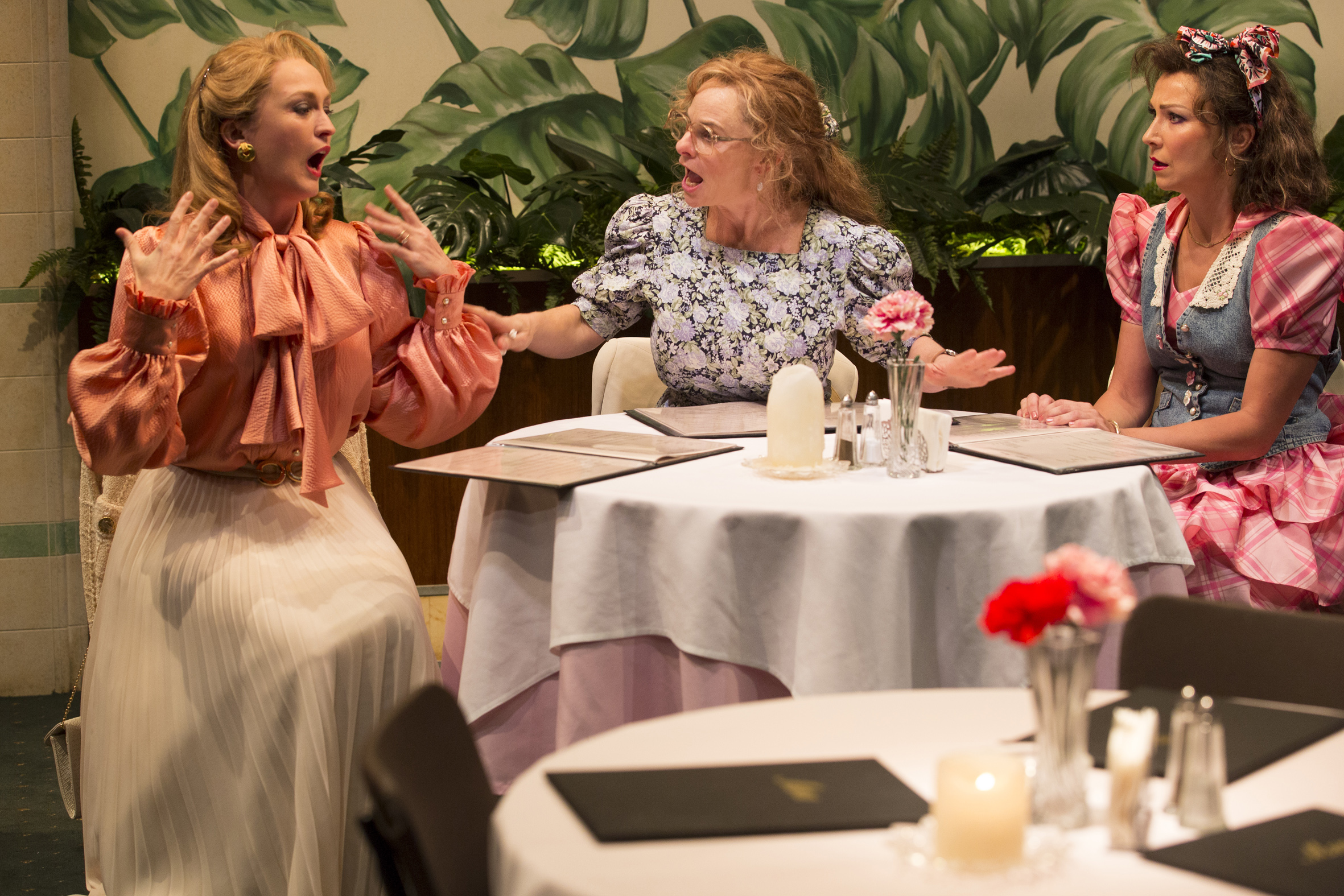
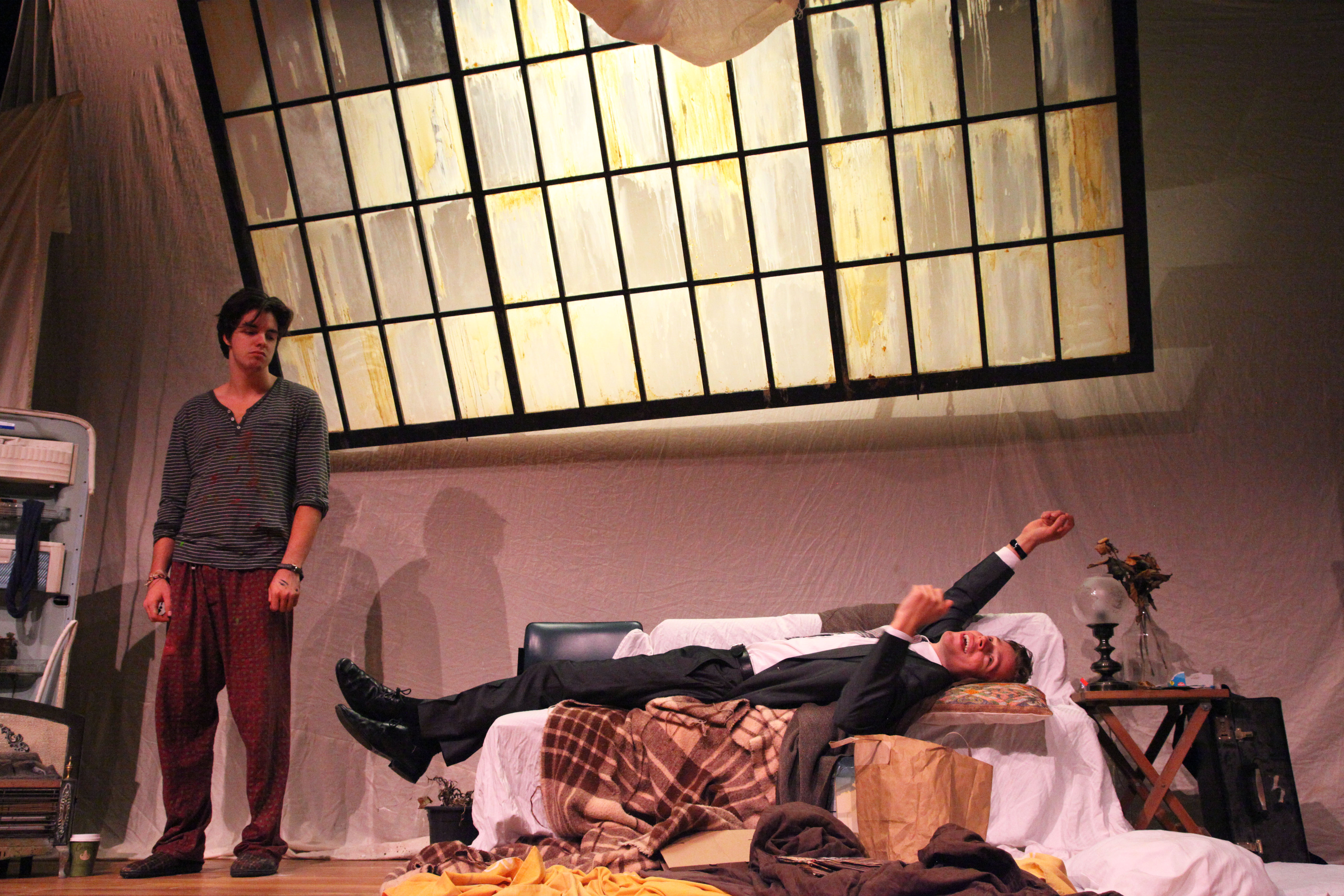
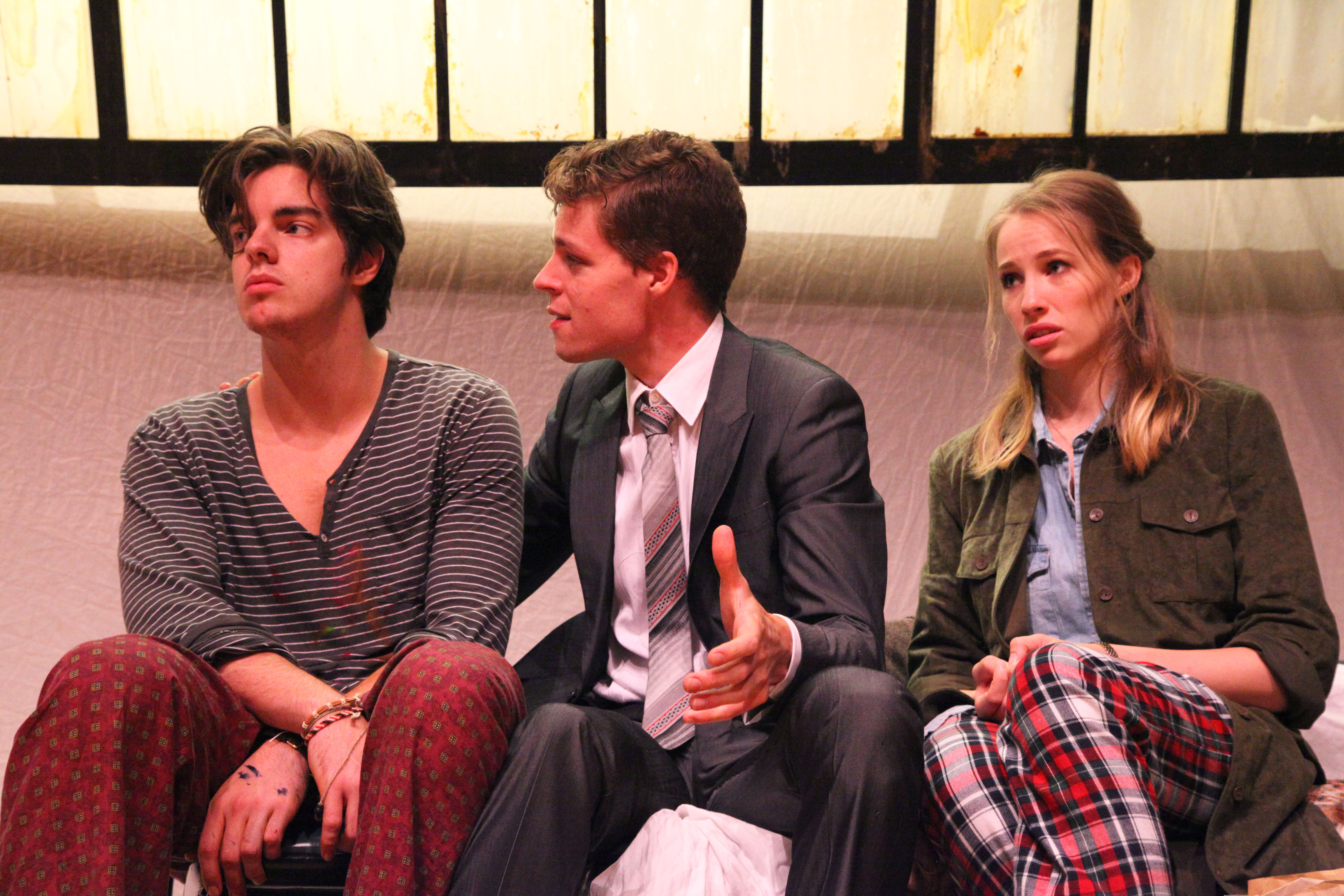
Helen Thomson, Rebecca Massey and Anita Hegh. Photo: Brett Boardman

Helen Thomson, Rebecca Massey and Anita Hegh. Photo: Brett Boardman

After Dinner is an excruciatingly funny yet surprisingly tender comedy of manners that pretty well everyone will relate to in some way or other.

Written by Andrew Bovell (The Secret River, Lantana) in 1988, it was his first play – but shows an extraordinary level of technical assurance and human insight for one so young and inexperienced.

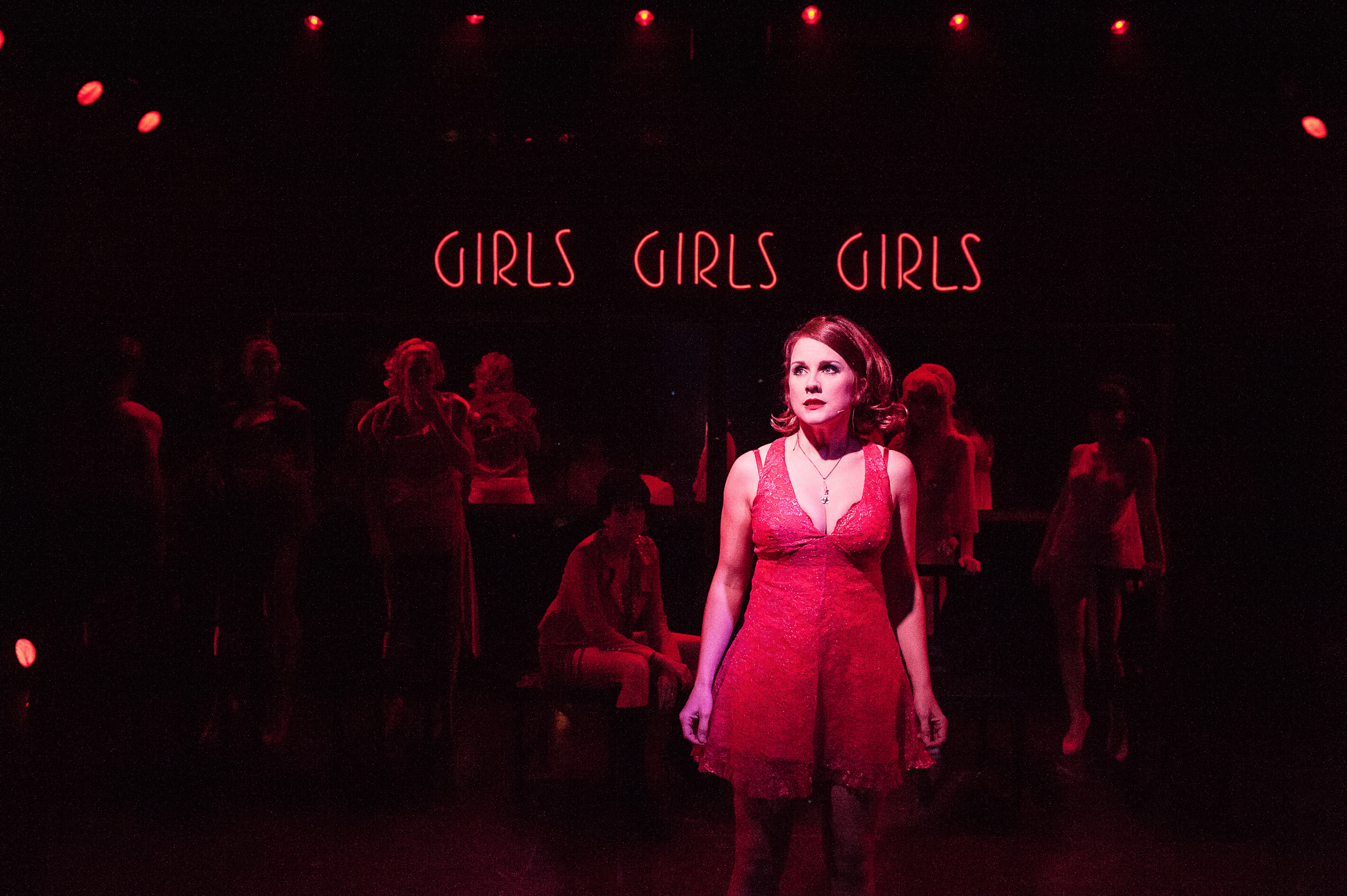
Set in the 1980s in a pub bistro, After Dinner features five desperately lonely, sexually frustrated singletons on a Friday night out.

There’s the fun-loving, good-natured Paula (Anita Hegh) and her bossy friend Dympie (Rebecca Massey), who go there every week. In order to get a table, they have to eat. Paula would like to be close to the band and would happily stand but Dympie isn’t having any of it. At the back, well away from the press of sweaty bodies, is where they will stay.

Tonight they have invited Monika (Helen Thomson) a recently widowed work colleague to join them. At a nearby table is Gordon (Glenn Hazeldine) whose wife has left him and who needs to talk, and the seemingly cocksure Stephen (Josh McConville) who is only interested in chasing a bit of skirt. Naturally, they will end up interacting and there will be tears before bedtime.

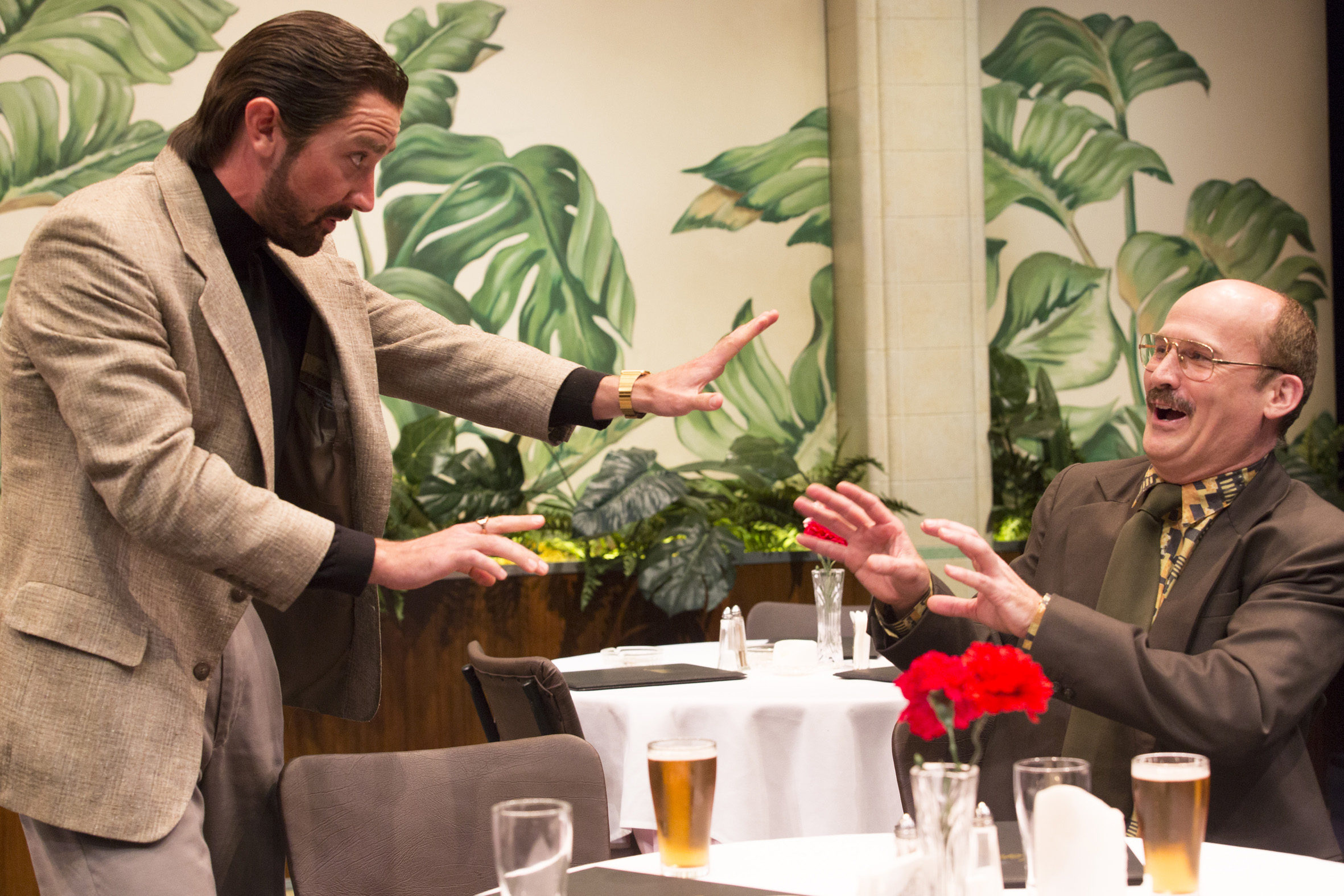
Josh McConville and Glenn Hazeldine. Photo: Brett Boardman

Josh McConville and Glenn Hazeldine. Photo: Brett Boardman

Alicia Clements has designed an instantly recognisable set with icky carpet, plant mural on the walls and yellowing tiles, while her costumes are hilariously 80s-awful. Imara Savage directs a pitch-perfect production with riotously funny yet beautifully observed, painfully truthful performances from the cast. All the actors are superb, though the magnificent Thomson is the first among equals, delivering a drunken monologue about her adventures in the pub after escaping the toilet and a sexually graphic rant about her husband that is comic gold.

Massey, looking almost unrecognisable with long hair, large glasses and a deeply unflattering dress, is wonderfully sour as the passive-aggressive Dympie. Hegh captures Paula’s long-suffering kindness and desperation to have a good time, while looking faintly ridiculous in a dress with a hood.

Hazeldine is perfectly cast as the mild, conventional Gordon, who is smarting from his wife leaving him, while McConville – ever the chameleon – is hilarious as Stephen with slightly padded paunch and slicked-back hair, giving him a cheesy, sleazy swagger.

After Dinner will have you laughing like a drain but at the same time feeling great compassion for its sad characters.

After Dinner runs at Wharf 1 until March 7

A version of this review ran in the Sunday Telegraph on January 25

Cock

Old Fitzroy Theatre, February 8

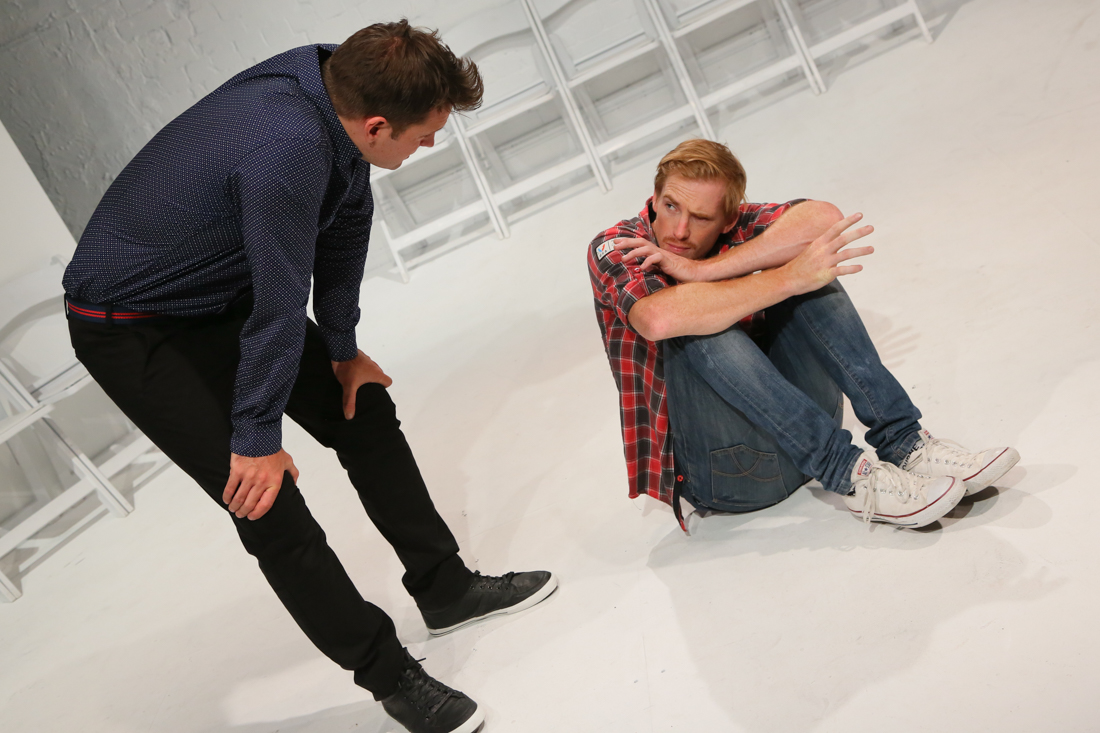
Matt Minto and Michael Whalley. Photo: Tim Levy

Matt Minto and Michael Whalley. Photo: Tim Levy

Finally, Sydney has the chance to see the acclaimed, provocatively titled Cock by British playwright Mike Bartlett – and this terrific production from Red Line Productions (the new caretakers of the Old Fitz), presented as part of the Mardi Gras Festival, shows why the play has generated such a buzz on both sides of the Atlantic.

After premiering in 2009 in London in the Royal Court’s tiny Upstairs Theatre, the play had an Off-Broadway season (where the New York Times reviewed it as the Cockfight Play while many other publications included an asterisk or two in the title).

Cock explores a love triangle between two men and a woman. Only one of them is named – the indecisive John, who is torn between two lovers. The others are simply referred to in the script as M and W (for man and woman).

John (Michael Whalley) has been in a relationship with M (Matt Minto) since coming out. They’ve now hit something of a seven-year itch and for John, anyway, the relationship is not what it was. Then to his surprise, he finds himself drawn to W (Matilda Ridgway), a lonely 28-year old divorcee who he meets at the bus stop on his way to work and ends up in bed with.

John doesn’t have a strongly developed sense of himself. Where the dominant M constantly puts him down, chipping away at his sense of self-worth, John finds a more positive reflection of himself in W’s eyes. She is gentle and nurturing and confident that they would be good for each other. She makes John feel that he could amount to something and she offers him the chance to have a family. Unexpectedly, the sex is pretty good too.

M is angry, outraged, seeing the affair not just as a personal betrayal but as an inexplicable affront to their identity and lifestyle as gay men.

John dithers. He doesn’t know who and what he wants. He’d prefer not to have to decide. But M and W are both prepared to fight for him. M gets John to invite W to a dinner party and ropes in his father (Brian Meegan) to help plead his cause. It’s an excruciating affair for all concerned. But John is cornered and is forced to make a decision.

Cock is a tight, tense piece running for 80 minutes. In many ways it’s like a dance that becomes an emotional tug-of-war before escalating into an all-out fight.

Bartlett’s writing is wittily astringent, full of staccato phrases and unfinished sentences along with short, sharp scenes.

The original production was staged in the round as if in a wooden cockfighting ring. It’s impossible to replicate that in the tiny Old Fitz but director Shane Bosher has managed to create a similar vibe by having a row of chairs along the back wall and down the two sides of the stage, which has been painted a gleaming white. The rest of the audience sits in the usual banks of seating.

I saw the play from a seat on the stage and at such close proximity, under Michele Bauer’s bright lighting, you felt voyeuristically close to the action, quite literally in the room with the characters. You were also very aware of the audience watching on from the darkness as they would have been of you sitting right there in the light.

Bosher directs and choreographs his actors with a wonderful sense of spatial awareness. The way he positions them on stage seems to heighten the tensions between them. He keeps things moving at a nifty pace, using short, snap blackouts to punctuate the scenes.

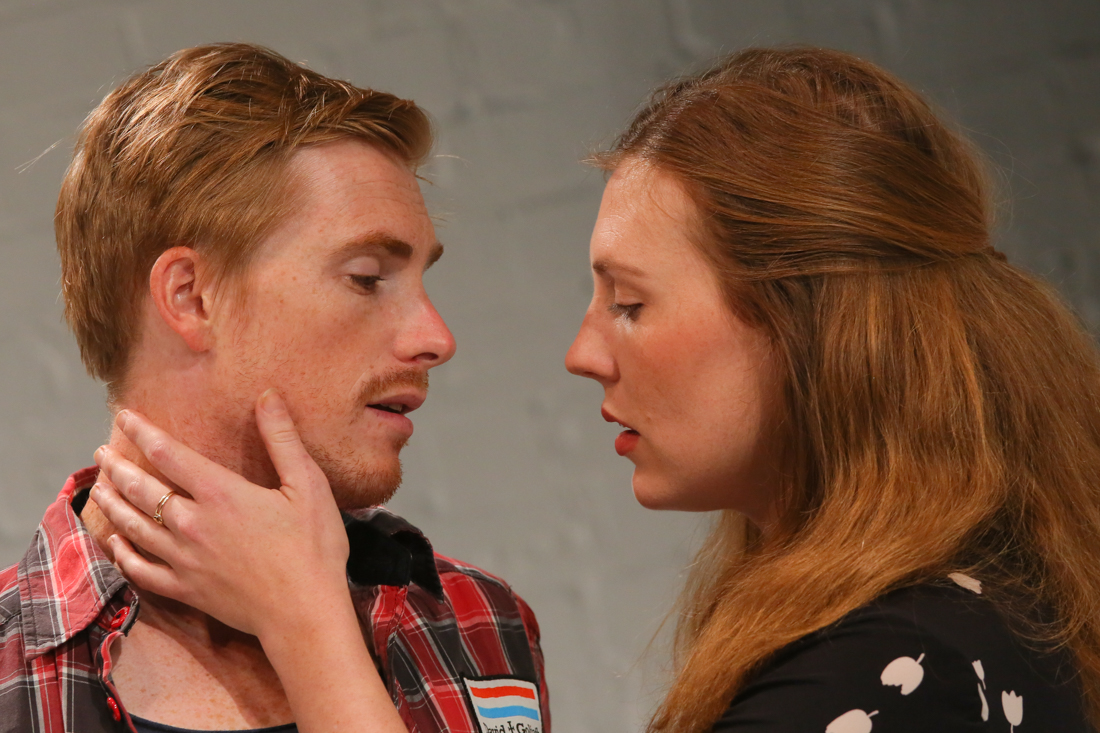
Michael Whalley and Matilda Ridgway. Photo: Tim Levy

Michael Whalley and Matilda Ridgway. Photo: Tim Levy

As in the original production, there are no props. A sex scene between John and W is performed fully clothed with Whalley and Ridgway standing close to each but without touching. Instead they circle other and gaze into each other’s eyes, their bodies and expressive faces speaking reams. It feels sexy and real.

Both are perfectly cast. Looking at the Whippet-thin Whalley, you know exactly what W means when she describes him as being like a pencil drawing that hasn’t been coloured in. And though John’s indecision should have you wanting to shake him, Whalley somehow manages to keep him sympathetic.

Ridgway is a wonderful mixture of vulnerability and determination. Though it’s not really clear what W sees in John beyond recognising a similar loneliness in him, Ridgway convinces you to accept W’s attraction and need.

Minto also gives a strong performance as M, all blustering anger and up-tight, savage invective delivered with a sure sense of comedy. Occasionally his performance feels a little overdone but he complements the other two extremely well.

Meegan stepped into the breach at the very last minute (when an indisposed Nick Eadie withdrew after a couple of previews) and so still had script in hand when I saw the production, but he hardly referred to it and was already giving a finely judged performance.

Cock in an engrossing play that has you thinking about identity, about knowing and defining yourself, about sexuality, about clear-cut sexual definitions and something more fluid, about desire, possession and power. It’s a cracker of a play and a great little indie production. Definitely worth checking out.

Cock runs at the Old Fitz until March 6

The Credeaux Canvas

Reginald Theatre, Seymour Centre, February 3

James Wright and Felix Johnson. Photo: supplied

James Wright and Felix Johnson. Photo: supplied

In his program notes, Les Solomon recalls producing the Australian premiere of Keith Bunin’s 2001 play The Credeaux Canvas at the Stables Theatre 14 years ago, having seen it not long before in New York.

Apparently the production (which I didn’t see) was a huge hit, breaking box office records. That doubtless emboldened him to produce the play again now, this time with Bryce Hallett, though there seems no compelling reason to do so.

The play has an entertaining enough plot – though it does rather peter out towards the end. But it doesn’t have the emotional depth for its characters and themes to make a terribly strong impact.

Set in a grotty attic apartment on New York’s Eastside, the play focuses on three struggling young people.

Winston (James Wright) is an artist finishing his MA. He is clearly passionate about art – and about obscure French artist Jean-Paul Credeaux, in particular – though whether he has what it takes to become a significant artist himself is questionable. At this point anyway, his work is derivative, with “come back in five years” the common response from those in the know.

Winston shares the flat with Jamie (Felix Johnson), who has fallen foul of his well-off art dealer father and is working in real estate, which he hates. Also there on a regular basis is Amelia, Jamie’s girlfriend (Emilie Cocquerel), who has come to New York with dreams of being a singer but who finds herself waiting tables and performing at ever more crummy, far-flung venues.

Jamie has just attended the reading of his father’s will and is livid to learn he has been left nothing. On the way home, however, he bumped into Tess (Carmen Duncan), a very wealthy art collector, who was a client of his father’s and a scam suggested itself to him.

Jamie has told Tess that his father left him a lost Credeaux from the artist’s moonlit nude series. Winston will paint a fake work in the style of Credeaux with Amelia as his subject. Tess, who he disses as having more money than art sense, will be taken in and pay them a fortune.

Winston and Amelia eventually agree. To put Amelia at her ease, Winston disrobes as well, leading to a sexual triangle. (There is also a brief hint that Winston may be attracted to Jamie.) What unfolds will sorely test all of them.

James Wright, Felix Johnson and Emilie Cocquerel. Photo: supplied

James Wright, Felix Johnson and Emilie Cocquerel. Photo: supplied

Bunin doubtless means to explore the nature of fraud and fakery as it relates to the characters as well as the canvas in question. Do any of them have the talent to achieve their dreams? Are they deluding themselves? What is the true nature of the various relationships between them? But though the dialogue zips along, there isn’t enough in the writing to convincingly examine this in any depth and the production doesn’t bring the kind of nuance that might expand on it and further illuminate the subtext.

It should be noted that there were setbacks during rehearsals. Director Ross McGregor (who directed Solomon’s earlier production) came in at fairly late notice, as did Duncan.

Performances aside, some of the play is overwritten, particularly the swathes of talk about art (which comes across mainly as the writer showing that he knows what he’s talking about).

There’s a terrific design from Emma Vine and strong moments from all the performers – Cocquerel is particularly impressive – but overall not enough subtext, nuance and emotional depth for the play to really fire.

The Lysicrates Prize

Verbrugghen Hall, Sydney Conservatorium of Music and Royal Botanic Garden, January 30

In front of the Choragic Monument of Lysicrates at the Royal Botanic Garden, Sydney after Premier Mike Baird announced the winner of the first Lysicrates Prize.From left:  Lee Lewis, Artistic Director Griffin Theatre Company, Finance Minister Dominic Perrottet, Environment Minister Rob Stokes, Patricia Azarias, Kim Ellis, Executive Director, Botanic Gardens and Centennial Parklands, John Azarias. Photo: Jessica Lindsay

In front of the Choragic Monument of Lysicrates at the Royal Botanic Garden. From left: Lee Lewis, Artistic Director Griffin Theatre Company, Finance Minister Dominic Perrottet, Environment Minister Rob Stokes, Patricia Azarias, Kim Ellis, Executive Director, Botanic Gardens and Centennial Parklands, NSW Premier Mike Baird, and John Azarias. Photo: Jessica Lindsay

The inaugural Lysicrates Prize for new Australian playwriting was to have taken place in Sydney’s Royal Botanic Garden on the Band Lawn near the replica of the original Choragic Monument of Lysicrates that gives the competition its name.

It would have been a lovely spot for such an event. However, torrential rain earlier in the week left the grass too wet for the seating stand, so the play readings took place in Verbrugghen Hall. Guests then walked down to the lawn for the announcement of the prizewinner by NSW Premier Mike Baird.

The Lysicrates Prize calls for Australian playwrights to submit the first act of a new play. The three short-listed submissions are given a rehearsed play-reading in front of an invited audience. What sets this Prize apart from any other Australian playwriting award is that the audience decides the winner – as happened in Ancient Greece. The prize is a $12,500 commission from Griffin Theatre Company, with the runners-up receiving $1000 each.

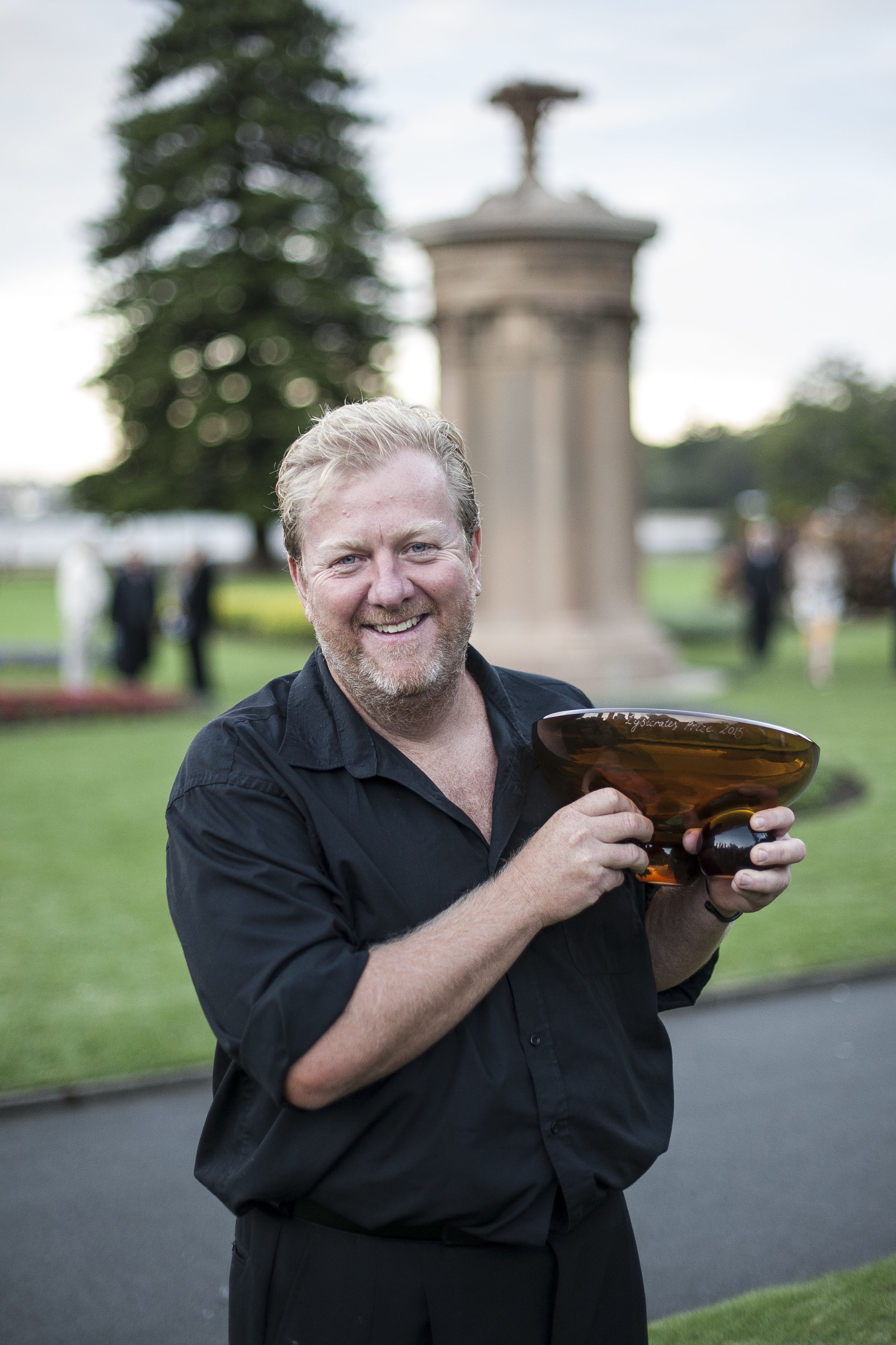
The three finalists for the inaugural 2015 Lysicrates Prize were Steve Rodgers, Lally Katz and Justin Fleming, with Rodgers awarded the prize for his play Jesus Wants Me For a Sunbeam.

It all began early in 2014 when John and Patricia Azarias, the founders of the Prize, took a walk through the Botanic Garden.

John Azarias loves Hellenic culture and had seen the original monument in Athens. On that particular day, as he and his wife approached the sandstone replica (commissioned in 1870 by Sir James Martin), they were struck by how eroded it was becoming. He decided then and there to raise the funds for its restoration in readiness for the Botanic Garden’s bicentenary in 2016.

The original monument was built by a rich sponsor (or choregoi) called Lysicrates to celebrate the winning play at the Dionysia Festival in Athens in 334 BC, as was the tradition during the 4th and 5th centuries BC. The monument has a frieze featuring Dionysus, the god of theatre. In a nice little link, the name ‘Sydney’ is an English version of the French ‘St Denis’, which in turn is a Gallic version of ‘St Dionysius’ – as John explained in his welcoming speech.

Patricia suggested that they also establish a theatre competition associated with the monument as a way to celebrate its restoration. They approached Lee Lewis at Griffin Theatre Company, which is dedicated to the performance of Australian plays, who agreed to run the competition. With some assistance from the NSW Government, along with additional funds raised by John, and the support of the Royal Botanic Garden, they were off.

For the first Lysicrates Prize, an audience made up of Griffin supporters and subscribers, politicians and theatre industry folk gathered at the Conservatorium to watch readings (rehearsed over three days) of the three short-listed plays.

Entering the auditorium, audience members were each given a gold coin with which to cast our vote in large pottery urns.

Rodgers’ Jesus Wants Me For a Sunbeam is adapted from Peter Goldsworthy’s novella and is a haunting story of suffocating love, grief and loss, and a family so close that the parents made an extreme decision when their young daughter is diagnosed with leukemia; a decision their son will struggle to understand.

Darren Yap – who approached Rodgers in the first place about a stage adaptation – directed the extract, which was performed by Jennifer Hagan, Anthony Harkin, Natalie O’Donnell, Rodgers himself and Govinda Röser-Finch.

The emotional scenario and complex moral dilemma posed clearly struck a chord with the audience.

Prize winner Steve Rodgers. Photo: Jessica Lindsay

Prize winner Steve Rodgers. Photo: Jessica Lindsay

Rodgers said of his win: “Jesus Wants me For a Sunbeam isn’t a play yet. It’s just a bunch of scenes and ideas adapted from Peter Goldsworthy’s novel. But because of The Lysicrates Prize, we now get the chance to develop it into a truly important new Australian play. I’m over the moon.

“Philanthropy of this kind in Australia isn’t common, so obviously I’m more than thrilled. This play is about family and explores a kind of love that in one moment you’re completely in sympathy with, and the next, you’re reeling away from in horror. The Lysicrates Prize gives us the chance, to hopefully unleash all that familial complexity on an audience.”

The evening began with Lally Katz’s Fortune, directed by Kate Gaul and performed by Briallen Clarke, Anni Finsterer, Sean Hawkins and Russell Kiefel.

The black comedy is set in a seedy hotel in the US where the woman who owns it has asked a psychic with a crystal ball to tell her about a man who spent time in one of the rooms. The Romany fortune-teller is pregnant and she and her cowboy boyfriend desperately need money to start a new life on his father’s land. Meanwhile, two men who have just lost their Wall Street jobs in the GFC are waiting to book into the hotel: one of them has been around the block, the other is a young Australian who had only just joined the company. It’s an intriguing set-up, the characters are all fascinating and I can’t wait to see how it unfolds.

The night wound up with Justin Fleming’s The Savvy Women, another of his rollicking, contemporary Australian adaptations of Molière, following his success with Tartuffe and The School for Wives.

Directed by Gale Edwards, and performed by Andrea Demetriades, Morgan Powell, Fiona Press and Christopher Stollery, it began with two sisters vying for one man, their parents arguing over which daughter should prevail, and the mother’s sacking of the maid for her massacre of the English language. Fleming’s clever, witty rhymes drew much laughter, especially the maid’s bogan utterings.

Having the audience choose is a different way of commissioning a play these days. The proof will be in the production. But you’d have to say it was an impressive, well-chosen short list. All three extracts were entertaining and showed significant potential; hopefully we will get to see productions of them all in the fullness of time.

Puncture

Riverside Theatre, Parramatta, January 23 at 2pm

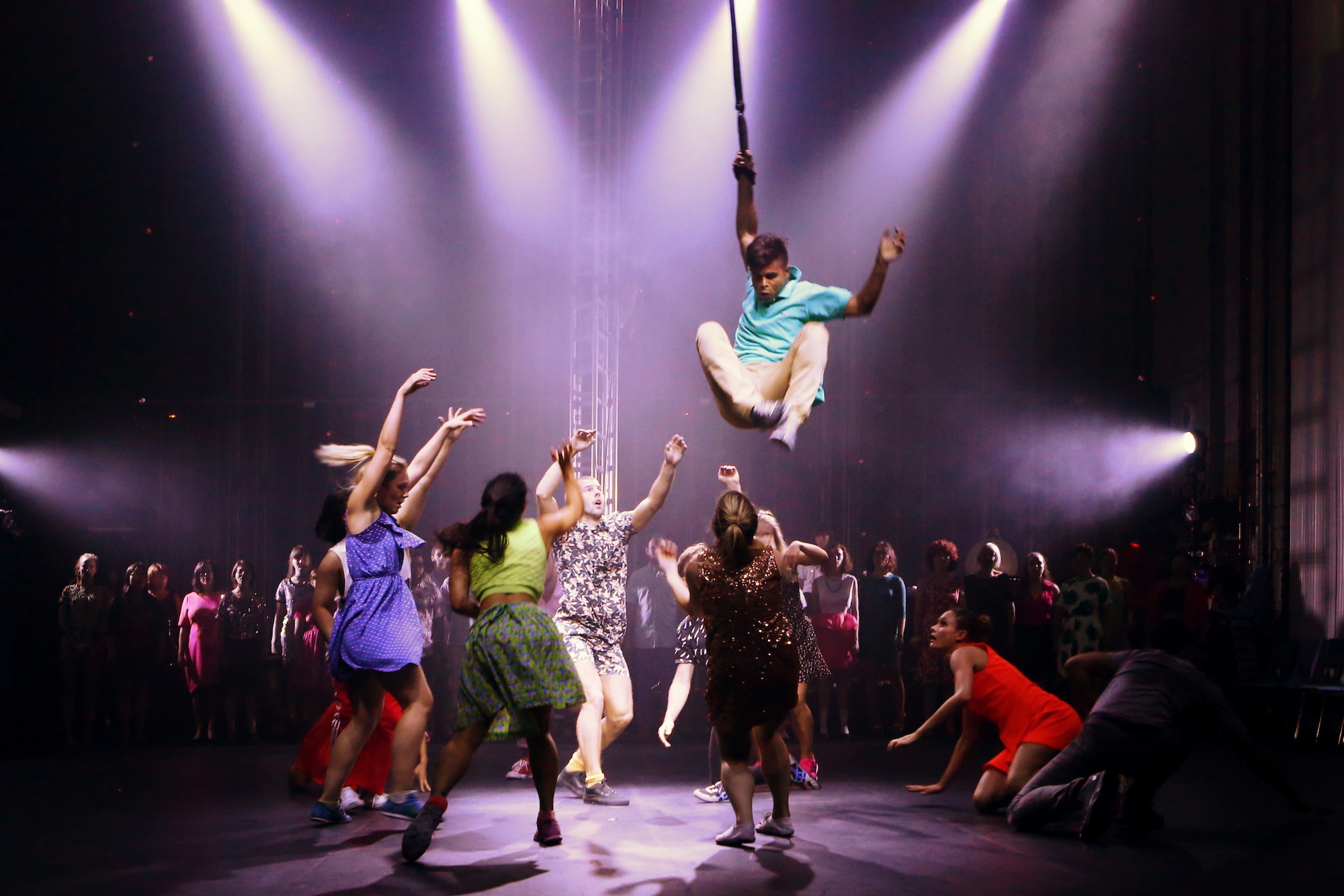
A scene from Puncture. Photo: Prudence Upton

A scene from Puncture. Photo: Prudence Upton

Given a brief season as part of the 2015 Sydney Festival, Puncture is such a lovely show that it begs to be brought back and seen more widely.

Directed by Patrick Nolan with choreography by Kathryn Puie and musical direction by Elizabeth Scott, it is the result of a fruitful collaboration between Legs on the Wall, Form Dance Projects (which fosters dance culture in Western Sydney) and Vox, a vocal ensemble from Sydney Philharmonia Choirs.

For the Festival, it was performed on the stage of Parramatta’s Riverside Theatre with the fire curtain down, a bank of seating at one end and percussionist Bree Van Reyk and pianist Luke Byrne at the other.

The show starts almost subliminally. Faint, shadowy images of dancing figures appear on the two sidewalls of the space (video design by Mic Gruchy). A young woman (Kristina Chan) wanders onto the stage, joined not long after by a young man (Joshua Thomson). Their eyes meet, he moves over to her, then another young man intervenes and drags her away.

The space fills up with young people while choral voices singing the word “Hello” fill the air. Couples form and reform, attractions, arguments and passions flare, as the performers move through various dance forms: courtly, folksy, line dancing, the waltz and the tango, leading eventually to a mosh pit-like frenzy.

There is also aerial work with performers flying through the air, and asoprano (Charlotte Campbell) sings while sitting on an aerial hoop. Not only does she look as relaxed as all get-out, but she then throws in a few confident ‘hoop moves’ on her descent.

The gorgeous choral music by composer Stefan Gregory is seductively eclectic ranging from the baroque to a version of Madonna’s Like a Virgin and is beautifully sung by the choir who are mostly positioned near the musicians but now and again move through the dancers and interact with them.

Chan and Thomson – both acclaimed contemporary dancers – are compelling as the young lovers at the heart of the piece. They lead a strong company that also includes Jay Bailey, Cloé Fournier, Anna Healey, Kei Iishi, Billy Keohavong, Rob McCredie, Hayley Raw, Michael Smith, Stephen Williams and Jessica Wong.

All of them perform with enormous energy and an exciting, high-octane physicality, the sweat literally dripping from them, while managing to project individual personalities at the same time.

Praise too to Mel Page for her colourful costuming and Damien Cooper for his lighting.

The piece (which runs for 60 minutes) ends with the choir singing “I love you” as the dancers move towards the audience, inviting some of them up to dance. I, like many, am terrified of the thought of getting up on stage, and I can’t dance, but I was one of the ones invited and have to say it was a lovely moment (thanks Billy!) and a heart-warming, uplifting conclusion.

Puncture is described as embracing “the risk and ritual of intimacy on a dance floor”. It is a beautiful, moving work about human connection and all the emotions that swirl around that. Let’s hope it returns.

Puncture has its final performance at Riverside Theatre, Parramatta at 2pm today.

The Very Hungry Caterpillar Show

Riverside Theatre, Parramatta, January 13 at 12 noon

The Very Hungry Caterpillar Show. Photo: supplied

The Very Hungry Caterpillar Show. Photo: supplied

The Very Hungry Caterpillar Show is a gorgeous little stage production for children aged one to seven that captivates with its clear storytelling, its fresh, bright design and its simple but inventive staging.

Based on four pictures books by Eric Carle, including his iconic bestseller The Very Hungry Caterpillar, the show has been three years in the making.

Australian Jonathan Worsley, who is the creator and co-producer, approached Carle “several years ago, several times”, visiting the American author and illustrator at his Massachusetts studio with a series of sketches to convince him that he would put a faithful version of Carle’s books on stage.

The Very Hungry Caterpillar is the popular hook for audiences but it is too short to stage without expanding it so Worsley instead suggested using three of Carle’s other books as well: The Artist Who Painted a Blue Horse, Mister Seahorse and The Very Lonely Firefly. Having won Carle’s approval, Worsley approached New York’s Puppet Kitchen to bring the sketches to three-dimensional life.

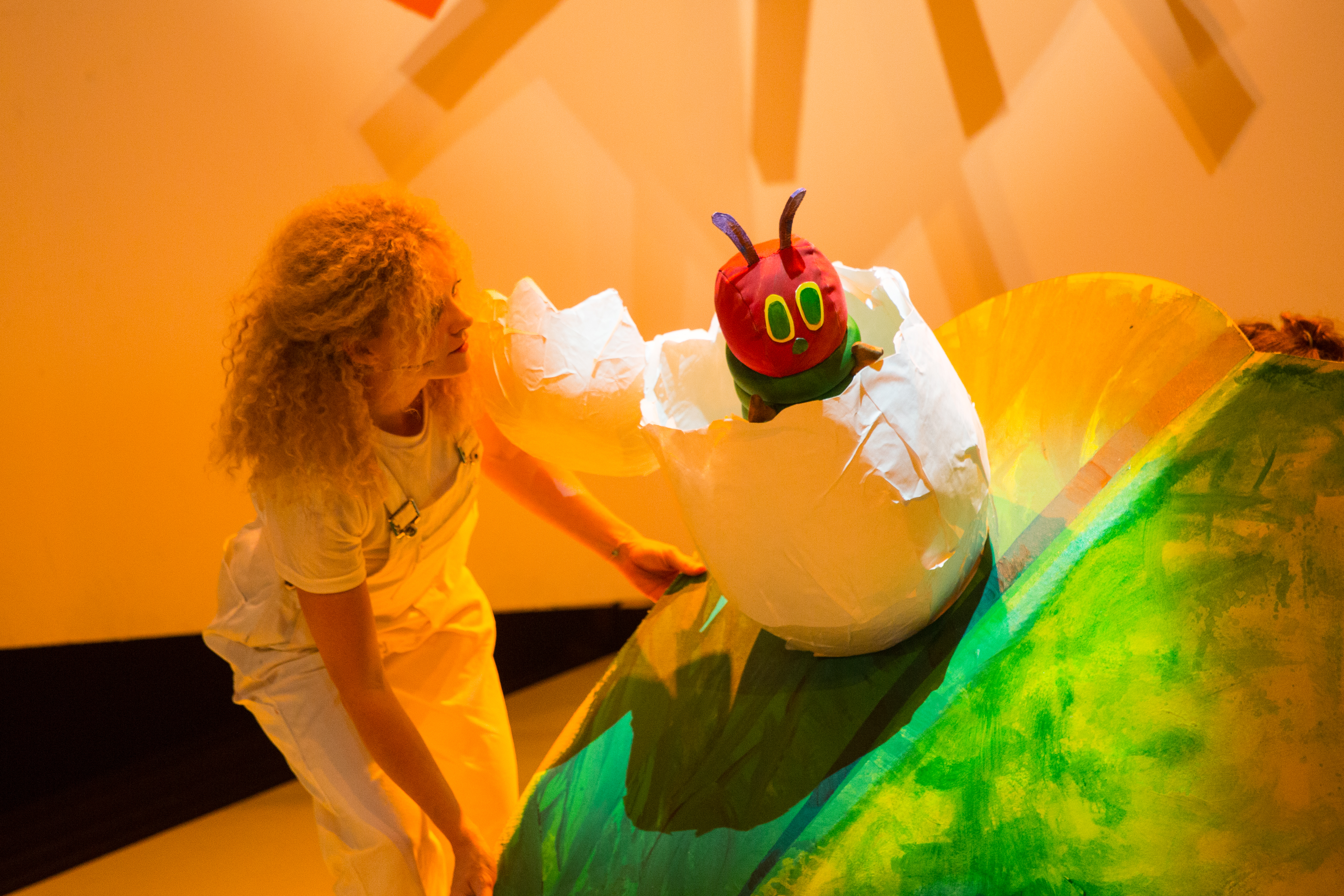
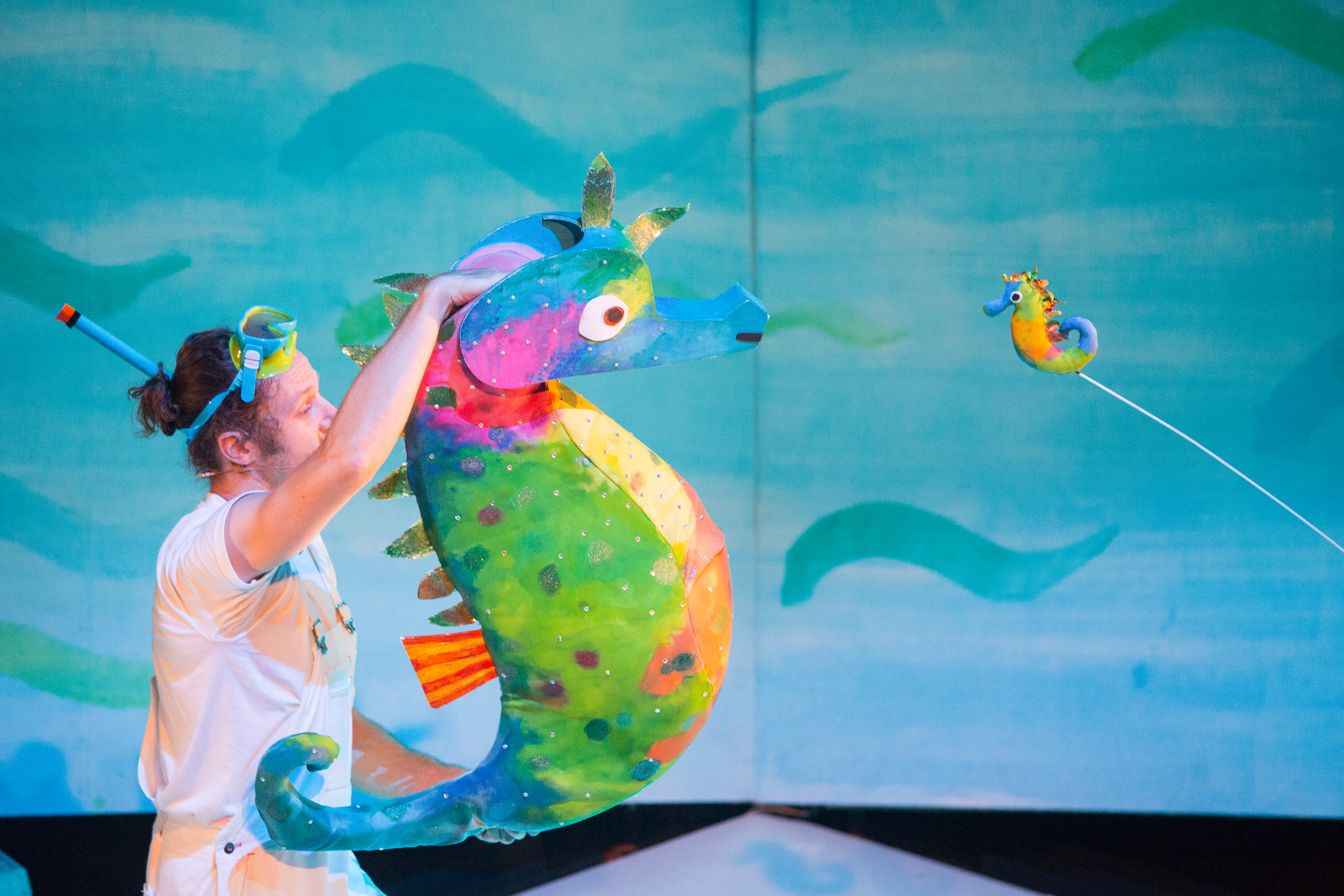
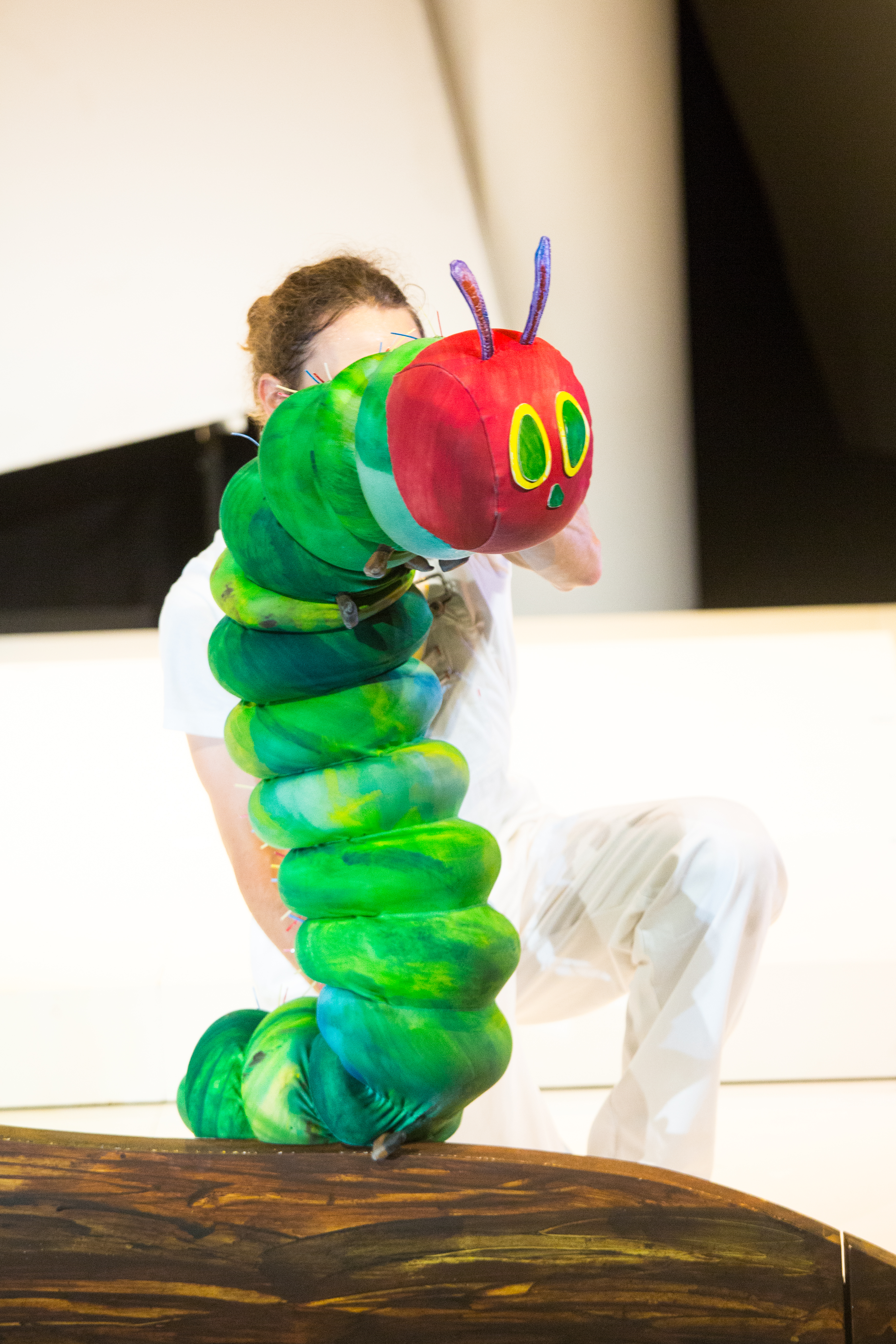
The Puppet Kitchen has done a sensational job in creating 75 puppets, using similar materials and techniques to Carle so that they really do look like his distinctive, hand-painted collage illustrations, and move well on stage.

On top of that, children can see the puppeteers and how the puppets are manipulated, which adds to the joyous sense of creativity that the show engenders.

The Very Hungry Caterpillar Show had its world premiere at the Riverside Theatres in Parramatta as part of the Sydney Festival and from here tours to Melbourne, Brisbane, Penrith, Queanbeyan and Newcastle.

Director Naomi Edwards builds the show beautifully, creating an arc that leads organically to the highly anticipated caterpillar. James Browne has designed a white set that looks as if it is made up of several giant, blank books on which the various stories can be “written”. It’s the perfect backdrop for the stories to burst into colourful life via the puppets and their manipulators, with the help of a few simple projections, a couple of props and one or two little pieces of scenery.

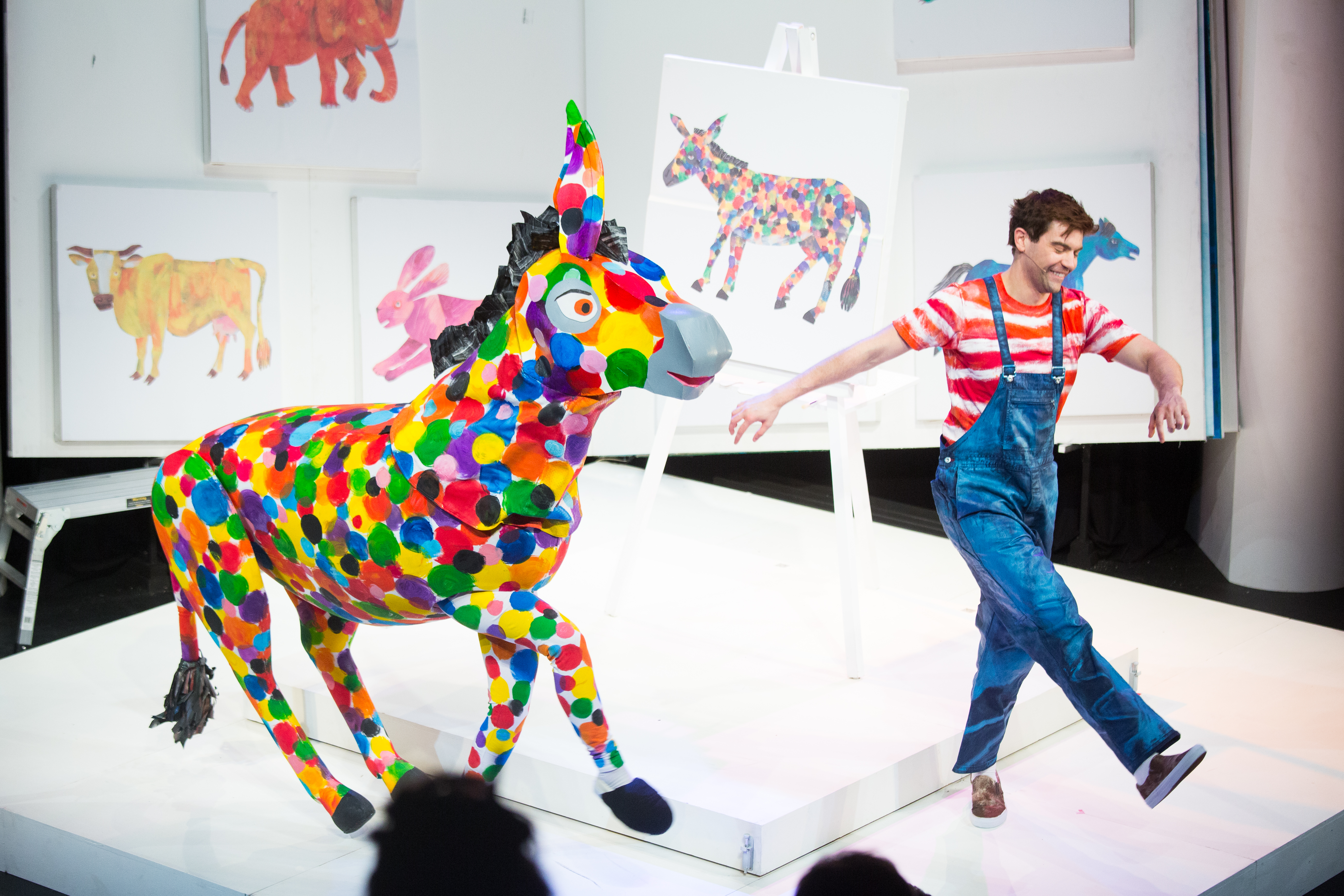
Costume designer Andrea Espinoza has the four puppeteers (Gavin Clarke, Dannielle Jackson, Justine Warner and Drew Wilson) in white dungarees and tee shirts to throw the focus on the puppets, while The Artist wears an outfit to match the book. The puppets, meanwhile, are a pure delight, with lovely work from movement director Samantha Chester in choreographing their manipulation. The music by Nate Edmondson and Stephen Baker, and Nicholas Rayment’s lighting are also pitch-perfect.

A scene from The Artist Who Painted a Blue Horse in The Very Hungry Caterpillar Show. Photo: supplied

A scene from The Artist Who Painted a Blue Horse in The Very Hungry Caterpillar Show. Photo: supplied

Each of the four stories makes clever use of simple repetition. The show begins with The Artist who ”paints” several colourful animals including a blue horse, a yellow cow, an orange elephant and a poker-dotted donkey. A white canvas on a white easel is quickly spun around and the painting appears as if by magic.

“How did they do that?” asked the little boy next to me, mouth open. After watching intently as The Artist did a similar thing several times, he shouted: “that’s how they did it” and proceeded to explain excitedly to his mother. Bless.

We then go underwater for Mister Seahorse in which a rainbow-coloured, sparkly seahorse takes care of his wife’s eggs, until they hatch, meeting other male fish along the way who do the same – a sweet tale about role and responsibility.

Mister Seahorse. Photo: supplied

Mister Seahorse. Photo: supplied

From there we head into the dark of the night for the story of The Very Lonely Firefly who mistakes various lights for fellow fireflies until he finally finds his tribe (a tale of belonging). This leads naturally to the appearance of the moon and the story of the caterpillar, who eats and eats and eats before making a cocoon from which he emerges as a beautiful butterfly.

Children in the audience were clearly waiting for the caterpillar but it’s testament to the show that it kept their attention in the lead-up to his appearance.

The Very Hungry Caterpillar puppet. Photo: supplied

The Very Hungry Caterpillar puppet. Photo: supplied

It was an inspired idea to adapt the book, given its massive popularity around the world, and Worsley’s production does it justice. The show will doubtless tour here, there and everywhere for many years to come.

The Very Hungry Caterpillar Show plays in Parramatta until January 18 then tours to Melbourne’s Chapel off Chapel, March 23 – April 2; Brisbane’s Round House Theatre, July 13 – 19; The Q Theatre, Penrith, September 24 – 26; Queanbeyan Performing Arts Centre, September 30 – October 4; Newcastle’s Civic Theatre, October 9 – 10.

Full details: www.hungrycaterpillarshow.com

Masquerade

Drama Theatre, Sydney Opera House, January 9

Louis Fontaine, Helen Dallimore and Nathan O'Keefe. Photo: Brett Boardman

Louis Fontaine, Helen Dallimore and Nathan O’Keefe. Photo: Brett Boardman

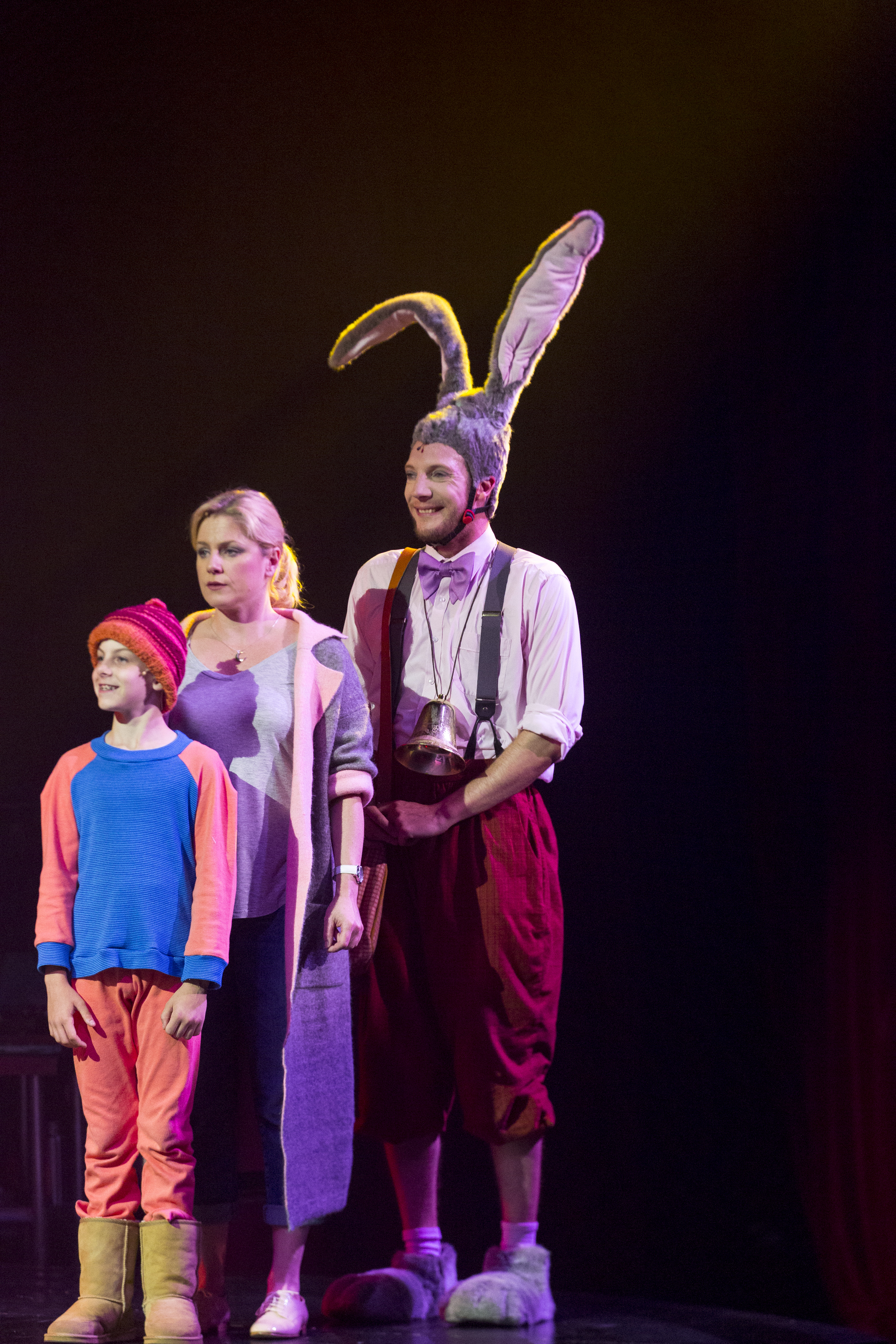
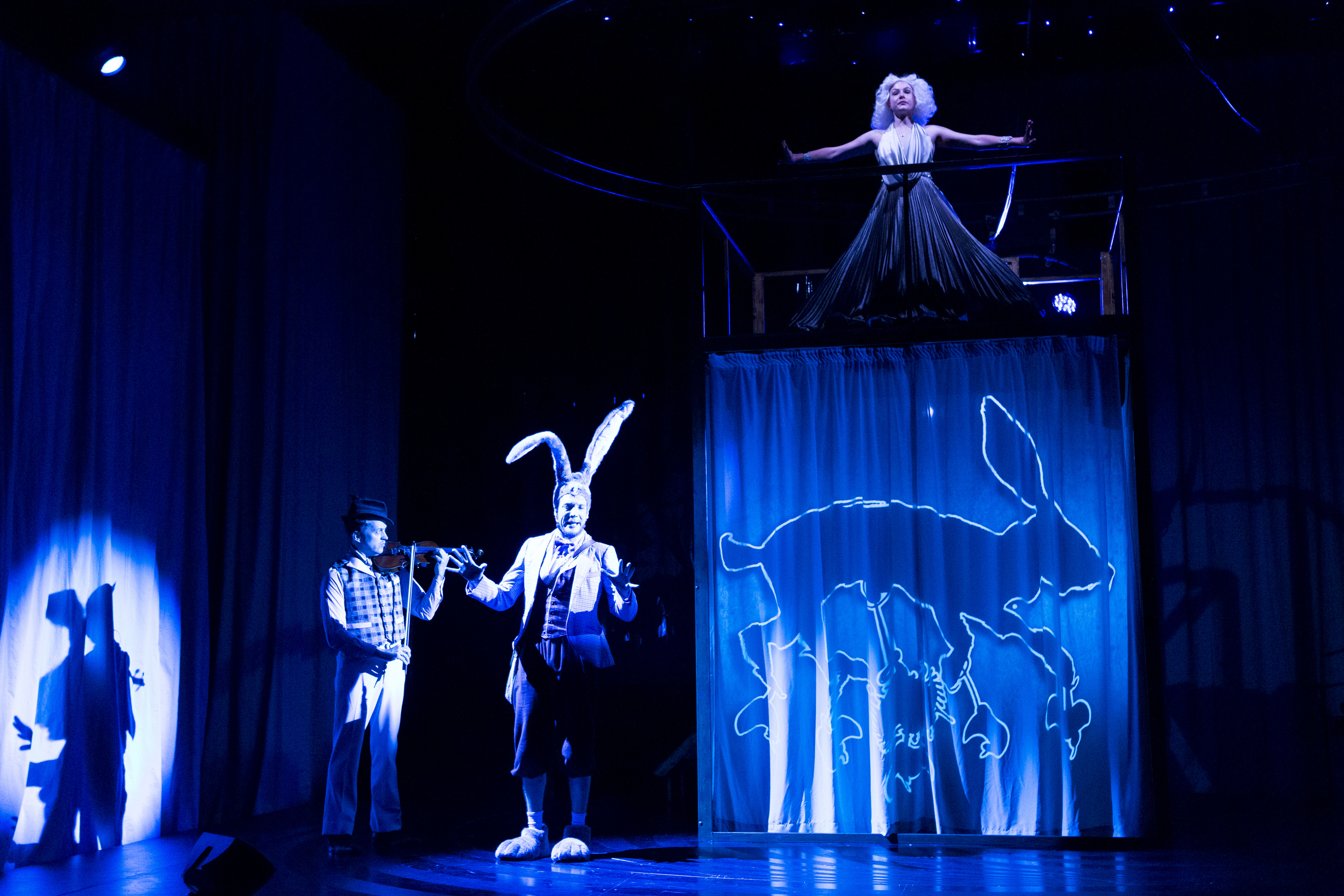
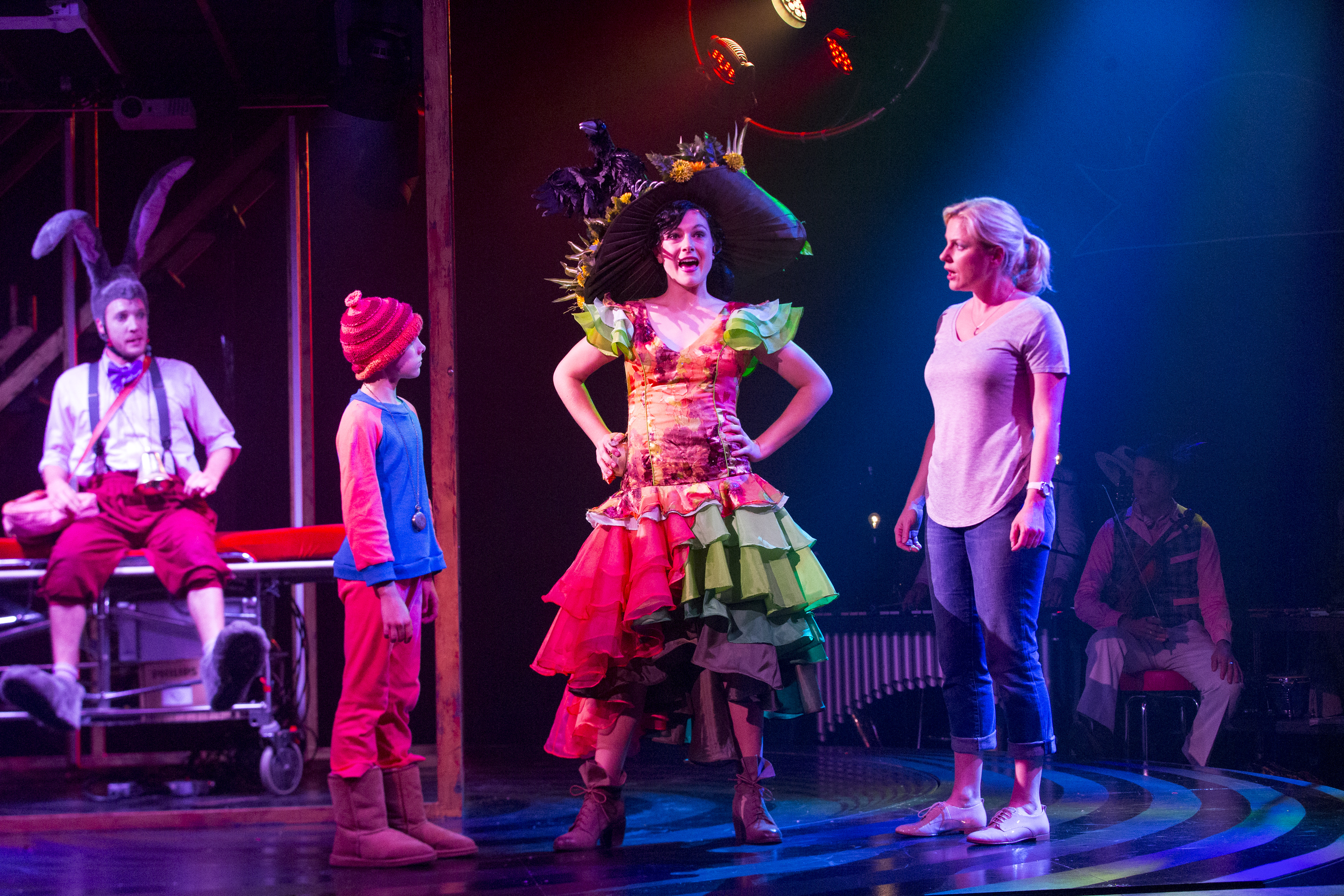
Laid low with cancer as a child, Kate Mulvany fell in love with Kit Williams’ classic picture book Masquerade while in hospital. She has now adapted it for the stage, interweaving the moving story of a very sick child and his mother.

Co-produced by Griffin Theatre Company and the State Theatre Company of South Australia, and playing as part of the Sydney Festival, Masquerade is a delightful family show that captures the style, tone and quirky magic of the quixotic book.

Masquerade tells a strange, fantastical, riddle-filled story. The Moon is full of longing for the Sun and so sends the bumbling Jack Hare to deliver him a message of love along with a golden, bejeweled, hare-shaped amulet. Given the laws of nature, Jack has just 12 hours to complete his mission between sunrise and sunset.

Along the way he meets all kinds of crazy characters from Tara Treetops and The Man Who Plays the Music That Makes the World Go Round to Sir Isaac Newton. But when he reaches the Sun Jack finds he has lost the amulet and forgotten the precise wording of the message.

Published in 1979, the book became a phenomenon not just for its story but for the wonderfully detailed paintings (also by Williams) that illustrated it. In each picture was hidden a hare. On top of that, the book contained clues to a real golden amulet that Williams had hidden somewhere in England (which was discovered in 1982).

Williams is now something of a recluse but Mulvany managed to make contact with him through his wife Eleyn (a jeweler) and visited them at their home in Gloucestershire. Touched by the story of her own connection to the book, Williams gave Mulvany permission to adapt it for the stage on two conditions: that she include her own story and that the production be a family play for anyone aged nine to 90.

Mulvany’s adaptation begins in a hospital where a single mother called Tessa (Helen Dallimore) starts reading the book to her son Joe (Jack Andrew at the opening performance, a role he shares with Louis Fontaine) to help cheer him after chemotherapy. As she reads, the story unfolds around Joe’s curtained hospital bed.

Mulvany adds a second act in which Tessa and Joe enter the world of the story and try to help Jack Hare (Nathan O’Keefe) find the amulet.

Directed by Lee Lewis and Sam Strong, the production features a vibrant, clever design by Anna Cordingley that references the look of the book while creating an aesthetic of its own.

Pip Brandon, Nathan O'Keefe and Kate Cheel. Photo: Brett Boardman

Pip Brandon, Nathan O’Keefe and Kate Cheel. Photo: Brett Boardman

A band of letters frames the stage (as it does the drawings in the book) and is used to spell out the answers to the riddles. Joe’s hospital bed sits centrestage on a revolve, with images projected onto the curtains when they are drawn. The bed is replaced by another structure for the second act.

Cordingley’s wonderful costumes are colourful and inventive, though the text cries out for a more dazzlingly gold suit for the Sun (Mikelangelo) than the rather subtly shiny one he wears.

Geoff Cobham’s lighting also brings colour and magic to the stage, though some performers occasionally got caught in half-light on opening night. The silvery light for the Moon (Kate Cheel) could be a little more luminously otherworldly, but there are lots of nice lighting effects.

The production also features original music and songs composed by Pip Branson and Mikelangelo and performed live by Balkan cabaret band Mikelangelo and the Black Sea Gentlemen, which work a treat.

Running two hours including interval, the first act unfolds a little slowly and could be tightened. Some people who didn’t know the book were also slightly bemused by some of the characters.

In Act Two, however, the play finds its rhythm. Mulvany has included lots of fun word play with jokes for adults and children. Jack’s lusting for carrots, in particular, caused much laughter from the young children near me.

The emotional dimension of the play also really kicks in after interval (though it has been building towards the end of the first act). Mulvany hasn’t shied away from darker themes of mortality, pain and grief (as well as the power of love) ­­– though the way she uses the explanation of death from The Man Who Plays the Music That Makes the World Go Round is movingly and gently applied.

Louis Fontaine, Kate Cheel and Helen Dallimore. Photo: Brett Boardman

Nathan O’Keefe, Louis Fontaine, Kate Cheel and Helen Dallimore. Photo: Brett Boardman

There are terrific performances across the board. O’Keefe is outstanding as Jack Hare, bringing oodles of endearing charm and sweet, goofy comedy to the pivotal role.

Dallimore and Andrew work beautifully together as the deeply worried but loving, stalwart Tessa and the terminally ill Joe, both giving authentic, moving performances that never tip into sentimentality.

Cheel is lovely as the ethereal Moon and ebullient Tara Treetops, while Zindzi Okenyo – who juggles the roles of a Fat Nurse, a dancing Fat Pig, the mean Penny Pockets, the yoga-practicing Dawn and a friendly fish – does a great job of creating very different, clearly delineated, quirky characters.

The musicians also take on roles with Mikelangelo as The Sun and The Practical Man, Branson as The Man Who Plays the Music That Makes the World Go Round and Sir Isaac Newton, and Guy Freer, Sam Martin and Phil Moriarty as a tone-deaf Barber’s Quartet reduced to a trio.

The production will doubtless be finessed as it develops but already Masquerade is a gently charming, moving show made with a lot of love.

Masquerade plays at the Sydney Opera House until January 17. Bookings: www.sydneyfestival.org.au/masquerade or 1300 856 876 or 02 9250 7777

A version of this review ran in the Sunday Telegraph on January 11

2014: The Year That Was in Sydney Theatre

Looking back over 2014, it was a solid rather than a spectacular year in Sydney theatre. There were some impressive productions and performances but overall not a huge amount that will linger forever in my mind as unforgettable.

Verity Hunt-Ballard as Charity. Photo: supplied

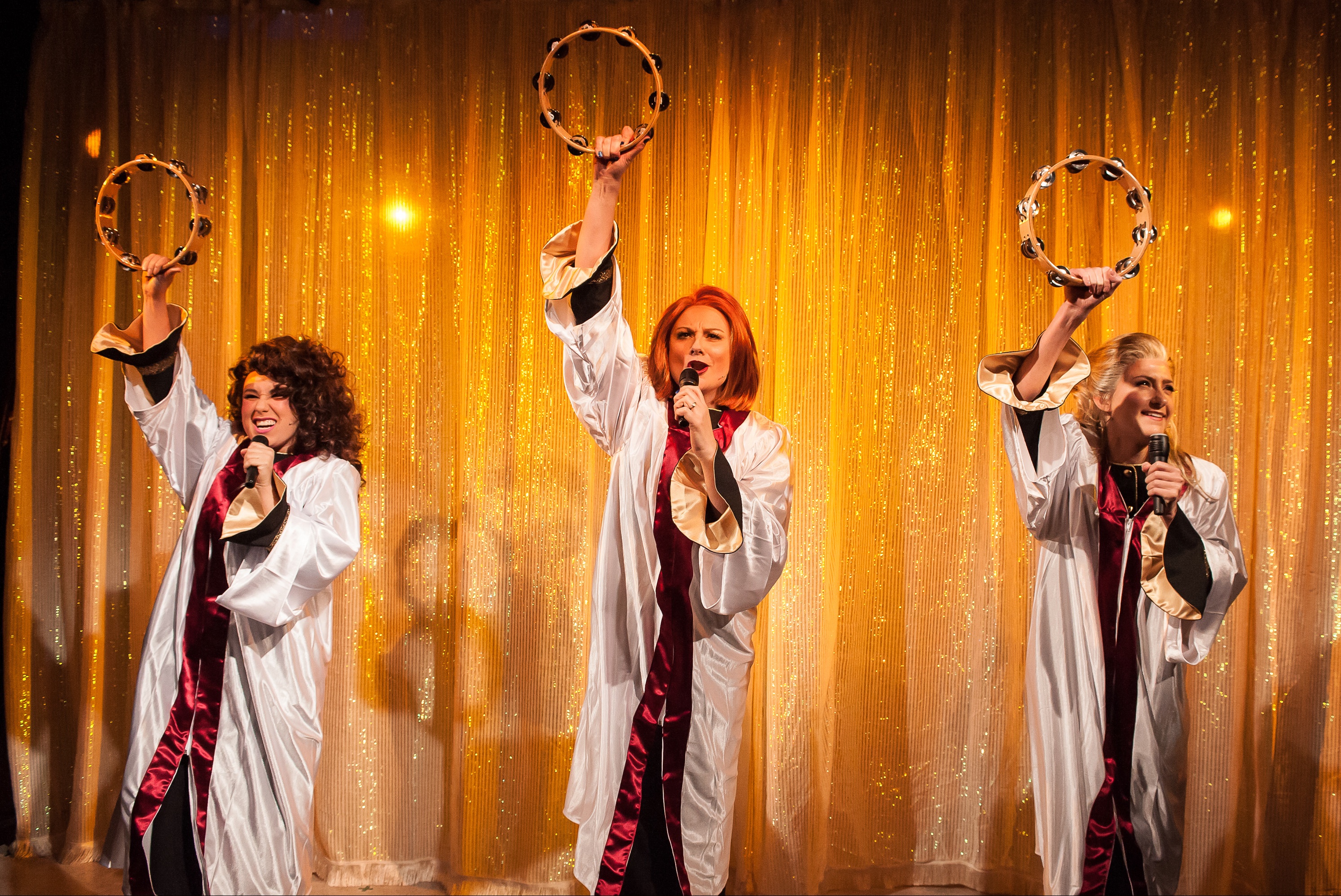
Verity Hunt-Ballard in Sweet Charity for the Hayes Theatre Co. Photo: supplied

By far the most exciting thing was the advent of the Hayes Theatre Co. A group of producers under the banner of Independent Music Theatre (IMT) took over the 115-seat theatre in Potts Point, previously the home of the Darlinghurst Theatre Company, and turned it into a venue for independent musical theatre and cabaret. Named after musical theatre legend Nancye Hayes, the Hayes Theatre Co opened with a bang in February with superb productions of Sweet Charity followed by The Drowsy Chaperone: two of my highlights for 2014.

For the rest of the year, the venue constantly generated excitement even if some of the productions were less successful than others. But it was great to see them producing two new musicals as well as a terrific cabaret festival, which confirmed how many exciting young cabaret performers are emerging in Australia and how rich and varied the genre now is, with other artists performing at the theatre during the year as part of its Month of Sundays cabaret program.

Elsewhere in Sydney theatre, it was good to see female directors and playwrights really making their mark and – as others have noted – queer theatre and indigenous stories gaining a higher profile in the mainstream. The number of powerful new Australian plays was also notable.

I saw 182 productions. These are my highlights for the year.

MUSICAL THEATRE

Sweet Charity

As I say, the Hayes Theatre Co gets my vote for the most exciting venue and initiative of the year. It could hardly have found a better way to begin. Sweet Charity sold out within three days (fortunately I had already bought tickets into the run so saw it twice). Director Dean Bryant and his creative team brought a dirtier, grittier edge to the musical and staged it ingeniously in the tiny space. Verity Hunt-Ballard was gorgeous in the title role, heading a strong cast that also included Martin Crewes as Charlie, Vittorio and Oscar, and Debora Krizak as Nickie and Ursula. The production tours next year. It will be interesting to see how Bryant expands it for the larger venues.

The Drowsy Chaperone

Sweet Charity set the benchmark high but The Drowsy Chaperone matched it. Staged at the Hayes by Squabbalogic (which began the year as part of IMT but parted ways, presenting the rest of its productions at the Seymour Centre’s Reginald Theatre), Jay James-Moody directed a deliciously inventive production of the delightful, tongue-in-cheek, meta-theatrical show. James-Moody also played the Man in Chair and gave a very funny but sweetly poignant performance. The entire ensemble cast was spot-on and the feel-good show sold out like Sweet Charity before it, leaving many lamenting they were unable to see it. One to revive in 2015 perchance?

Miracle City
Josie Lane, Marika Aubrey and Esther Hannaford. Photo: Kurt Sneddon

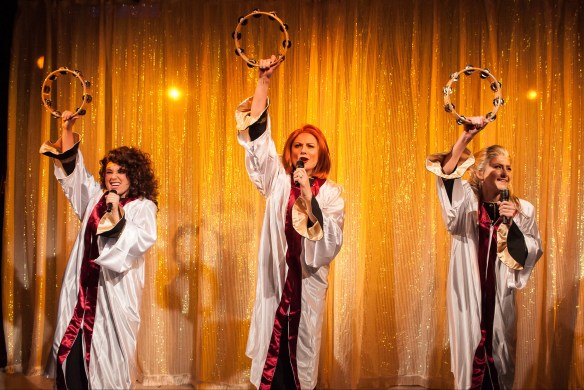
Josie Lane, Marika Aubrey and Esther Hannaford in Miracle City. Photo: Kurt Sneddon

The Hayes also staged a long-awaited revival of Max Lambert and Nick Enright’s legendary Australian musical Miracle City, not seen in Sydney since Sydney Theatre Company gave it a development production in 1996. With Lambert as musical director, the show about a US televangelist family raised the roof with its gospel-country songs and struck a strong chord with its dark story. Blazey Best was sensational as the unravelling Lora-Lee Truswell and Esther Hannaford broke your heart with her exquisite rendition of the show’s best-known song I’ll Hold On.

Truth, Beauty and a Picture of You, Beyond Desire

All power to the Hayes for staging two new musicals, even though neither were an unqualified success. Both were strong musically but need further work on the book. But there were some wonderful performances in both shows, notably Ian Stenlake and Scott Irwin in Truth, Beauty and Picture of You (featuring the music of Tim Freedman and a book by Alex Broun) and Nancye HayesChristy Sullivan and Blake Bowden in Beyond Desire (by Neil Rutherford).

OTHER MUSICAL THEATRE

Ruthless! The Musical

Elsewhere in independent musical theatre, a new indie company called The Theatre Division staged Marvin Laird and Joel Paley’s 1992 off-Broadway show Ruthless! at the Reginald Theatre. A send-up of showbiz and the pursuit of fame, it’s a very lightweight little piece but lots of fun. The production was stylishly designed and well performed by a strong female cast led by the ever-reliable Katrina Retallick, with Geraldine Turner as an acid-tongued theatre critic.

Strictly Ballroom

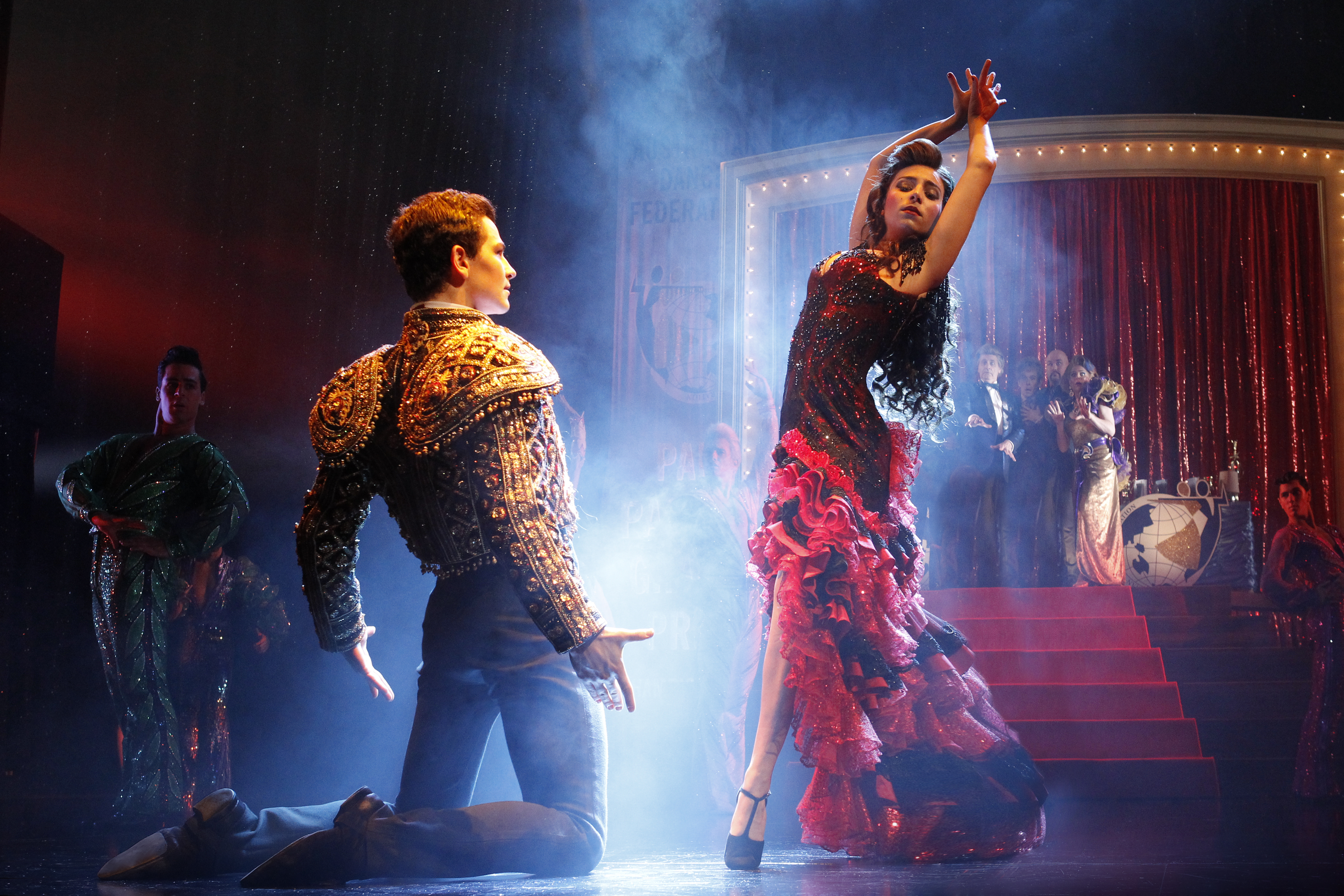
Thomas Lacey and Phoebe Panaretos. Photo: Jeff Busby

Thomas Lacey and Phoebe Panaretos in Strictly Ballroom. Photo: Jeff Busby

 As in 2013, commercial musical theatre was decidedly patchy in 2014. Baz Luhrmann’s hotly anticipated musical based on his film Strictly Ballroom had its moments but didn’t fully fire. The score was a bit of a mish-mash, some of the choreography felt flat when it needed to soar, and the production was often over busy. Catherine Martin’s costumes were sensational though.

Phoebe Panaretos made an impressive debut as Fran, with standout performances from Robert Grubb as the conniving Barry Fife and Heather Mitchell as Scott’s pushy mother. Luhrmann has already improved the show since opening and is reworking it further for its Melbourne opening. I will be fascinated to see it again there.

The King and I

Lisa McCune shone even brighter than Roger Kirk’s glorious costumes, giving a radiant performance as Anna in the Opera Australia/John Frost revival of Frost’s 1991 production. There was some controversy about the handling of the racial elements in the musical, particularly the casting of the non-Asian Teddy Tahu Rhodes as the King. Politics aside, the production was beautifully staged and I found Tahu-Rhodes moving as the King. The Asian characters were also sympathetically performed within the context of a 1950s musical.

Besides that, Sydney saw the return of Wicked, with Jemma Rix in fine form as Elphaba and Reg Livermore bringing a winning showmanship and humanity to the role of the Wizard, as well as a rather ordinary production of Dirty Dancing that has nonetheless been delighting audiences, with Kirby Burgess stealing the show as Baby – her first leading role.

Les Miserables

The barricades in Les Mis. Photo: Matt Murphy

The barricades in Les Miserables. Photo: Matt Murphy

The hugely popular musical is back to storm the barricades afresh in a 25th anniversary production featuring new staging and new orchestrations – and stunning it is too. Beginning its tour in Melbourne, there are superb performances from Simon Gleeson as Valjean and Hayden Tee as Javert, who head a generally excellent cast. I thought I’d miss the revolving stage. I doubted I’d be as moved as in the past but I was bowled over and emotionally undone. Can’t wait to see it again in Sydney in 2015.

Once

Staged in Melbourne, with no plans to tour apparently, Once is a bittersweet, wistful little musical, based on the film. The lo-tech staging is so clever and so right for the show, the music is infectious, and the performances lovely. Totally charming.

THEATRE

Henry V, Bell Shakespeare

Can Damien Ryan do no wrong? His idea of staging Henry V (for Bell Shakespeare) as if performed by a group of school students taking refuge in a shelter during the 1940 London Blitz proved inspired. Performed by a marvellous ensemble, Ryan brought his customary clarity to the dense play and left us in no doubt as to the ugliness of war.

Ryan also directed riveting, intelligent, moving productions of All’s Well That Ends Well and The Crucible for his own company Sport for Jove – arguably the most exciting indie theatre company in Sydney.

Tartuffe, Bell Shakespeare

Another terrific Bell Shakespeare production directed by Peter Evans. Featuring a hilariously funny contemporary adaptation by Justin Fleming, the rollicking production was a complete hoot with Kate Mulvany a knockout as the sassy, cheeky maid Dorine.

Pete the Sheep, Monkey Baa Theatre Company
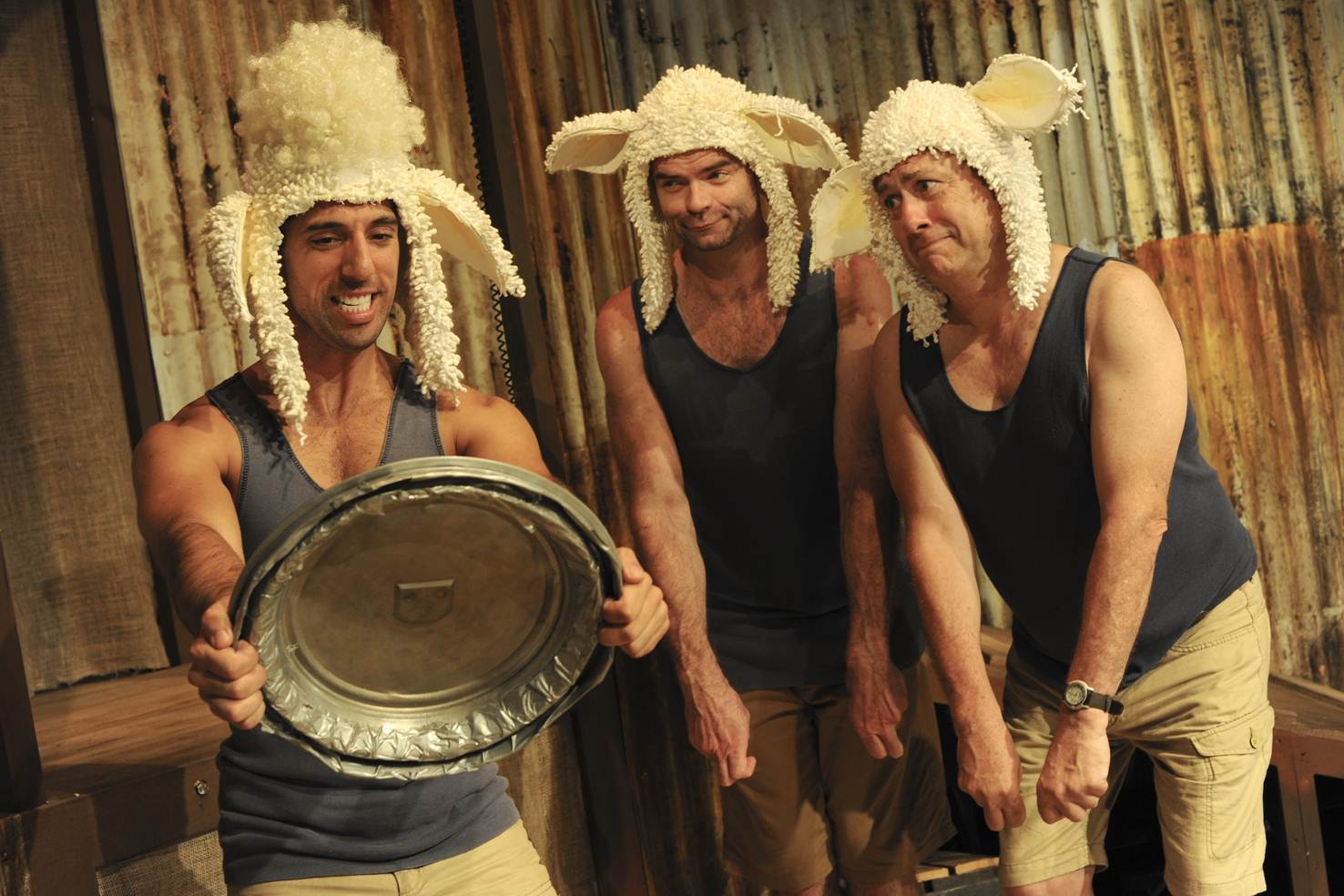
Nat Jobe (as Pete), Todd Keys and Andrew James. Photo: Heidrun Lohr

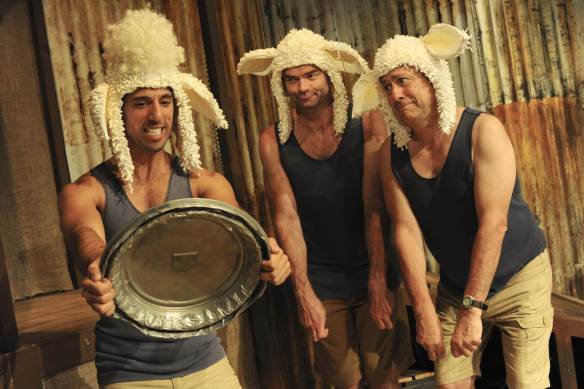
Nat Jobe (as Pete), Todd Keys and Andrew James. Photo: Heidrun Lohr

A gorgeous show for children, adapted for the stage by Eva di Cesare, Tim McGarry and Sandra Eldridge from the picture book by Jackie French and Bruce Whatley about a sheep shearer who has a sheep called Pete rather than a sheepdog. Directed by Jonathan Biggins, with songs by Phil Scott, the production tickled adults as much as children, with everyone laughing uproariously while still being touched by the message about difference and acceptance. A real beaut.

A Christmas Carol, Belvoir

Another delightful adaptation, directed by Anne-Louise Sarks, that while not shying away from the darker corners of Dickens’ novella, filled the stage with joyousness and snow. The entire cast were perfect but Miranda Tapsell’s smile as Tiny Tim and Kate Box’s playfulness as the Ghost of Christmas Present, sparkling in a glorious costume made from gold tinsel (by Mel Page), would have melted the hardest hearts.

The Glass Menagerie, Belvoir

After several disappointing adaptations of classics, Belvoir made up for it with Eamon Flack’s production of Tennessee Williams’ semi-autobiographical play. Flack’s use of two large screens on either side of the stage showing black and white footage emphasised that what we are seeing are Tom’s memories and gave the production a dream-like quality and sense of the past. Luke Mullins was marvellous as Tom and Pamela Rabe was a tough Amanda. My only reservation – there were sightline issues for anyone sitting on the side.

Eight Gigabytes of Hardcore Pornography, Griffin Theatre Company and Perth Theatre Company

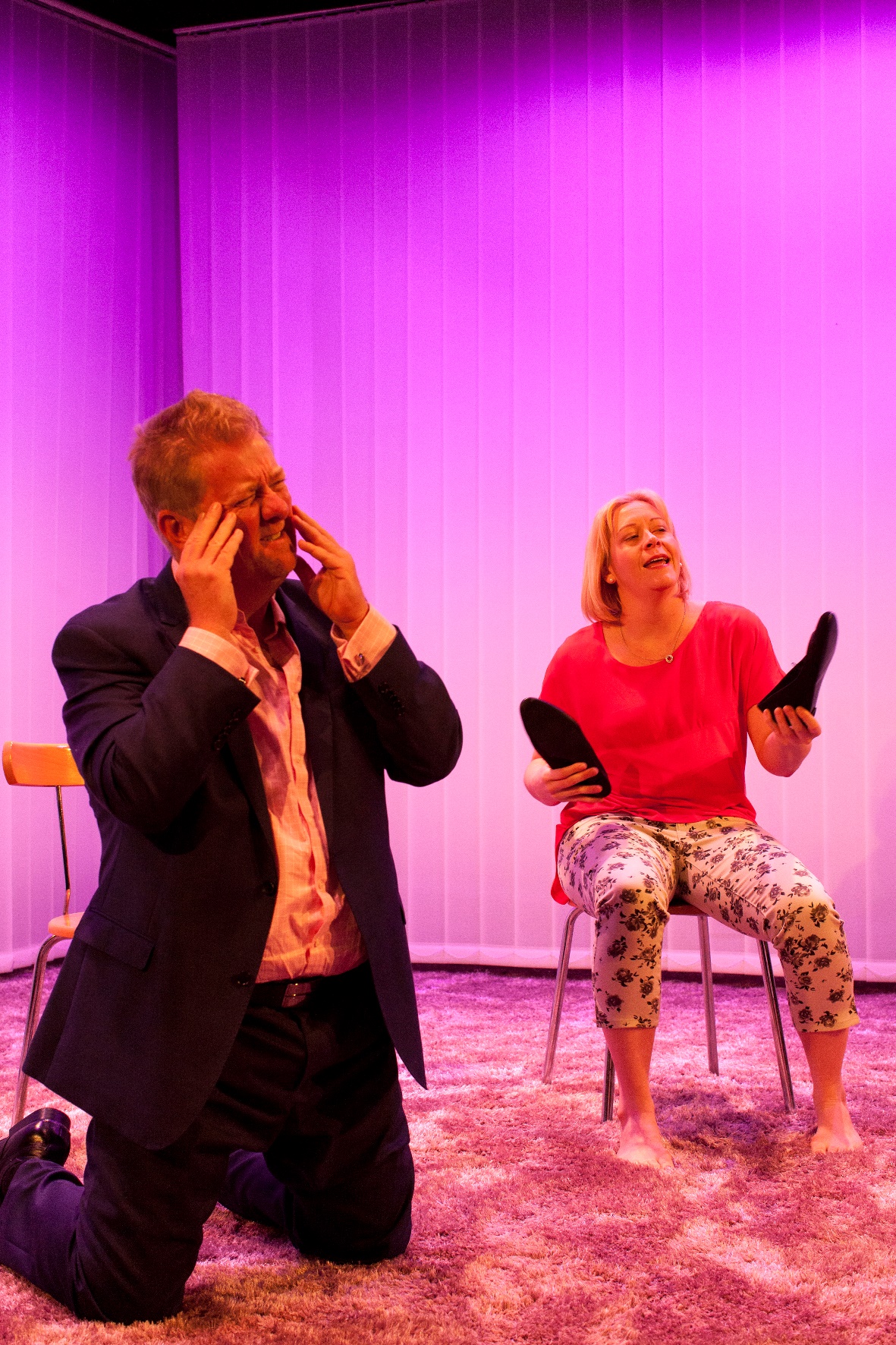
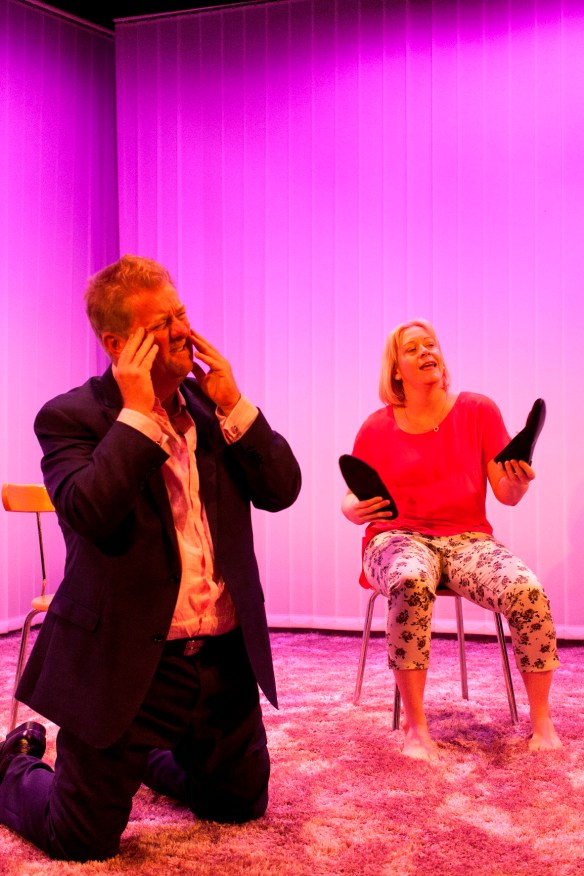
A new Australian play by Declan Greene, set in the Internet era, that is emotionally hardcore rather than pornographic. Written with a spiky economy, it features two desperately lonely, middle-aged people full of self-loathing. Steve Rodgers and Andrea Gibbs bared themselves emotionally in extraordinary performances. Directed by Lee Lewis, the production was insightful and painfully sad.

Switzerland, Sydney Theatre Company

Sarah Peirse and Eamon Farren. Photo: Brett Boardman

Sarah Peirse and Eamon Farren. Photo: Brett Boardman

A thrilling new play inspired by the life and writing of Patricia Highsmith in which playwright Joanna Murray-Smith weaves a psychological thriller set in Switzerland at the end of Highsmith’s life. Adroitly directed by Sarah Goodes, Sarah Peirse fully inhabited the role of Highsmith in a magnificent performance, with Eamon Farren also compelling as an emissary from her publisher sent to cajole her into writing another Tom Ripley novel, subtly and convincingly conveying his character’s gradual evolution. Brilliantly constructed, witty and gripping, the play will soon be seen at the Geffen Playhouse in Los Angeles.

Cyrano de Bergerac, Sydney Theatre Company

It was interesting to see Cyrano de Bergerac again, having been bowled over by Sport for Jove’s production at the end of last year. The STC production, featuring an adaptation by Andrew Upton, is very different, retaining the original 17th century setting. Truth be told I preferred Sport for Jove’s production but Richard Roxburgh gave a sublime performance as Cyrano, underpinned at every turn by a deep, dark, painful melancholy. Yalin Ozucelik (who was also wonderful as a more exuberant Cyrano for Sport for Jove) was the perfect foil to Roxburgh, giving a beautifully measured performance as Cyrano’s loyal friend Le Bret. Eryn Jean Norvill was lovely as Roxane.

Children of the Sun, Sydney Theatre Company

Andrew Upton’s adaptation of Maxim Gorky’s play was given an elegant, eloquent production by director Kip Williams. Set in the 1860s, with revolution in the air, it concerns an upper middle class Russian family whose lives are about to change forever. Featuring a fine cast, including Jacqueline McKenzie as the only one who senses what is coming, it was deeply moving.

Clybourne Park, Ensemble Theatre

Tanya Goldberg directed the highly anticipated production of Bruce Norris’s award-winning play for the Ensemble and did a fine job. The first act is set in 1959 in a predominantly white suburb of Chicago, the second in 2009 when the suburb is now mainly home to Afro-Americans. An excellent ensemble had us wincing at some of the attitudes in the provocative, discomforting play. All the cast were terrific but Nathan Lovejoy was outstanding as the bigoted neighbour in Act I and a new, white home buyer in Act II.

A Doll’s House, Sport for Jove

Adam Cook’s beautifully paced, richly nuanced, period production kept you on the edge of your seat. A young woman behind me who didn’t know the play was hysterical with excitement at the end. Matilda Ridgway gave us a multi-faceted Nora in a production that added yet another feather to Sport for Jove’s already well-covered cap.

Howie the Rookie, Red Line Productions and SITCo

One of the best indie theatre productions of the year. Directed by Toby Schmitz at the Old Fitzroy Theatre, Andrew Henry and Sean Hawkins gave exceptional performances as two working class Dubliners telling a blood-and-guts yarn through Mark O’Rowe’s two intersecting monologues. Lisa Mimmocchi designed the perfect minimal space. A dark little gem.

Is This Thing On?, Belvoir Downstairs

A riotous new play by Australian writer/performer Zoe Coombs Marr about a lesbian stand-up comedienne at five stages of her life and career, swirling around the night when it all imploded. Kit Brookman directed on a set by Ralph Myers that captured the feel of a grotty pub. Susan Prior’s no-holds-barred, manic performance was at the heart of the show.

NEW AUSTRALIAN PLAYS
Steve Rodgers and Andrea Gibbs. Photo: Brett Boardman

Steve Rodgers and Andrea Gibbs in Eight Gigabytes of Hardcore Pornography. Photo: Brett Boardman

Besides Eight Gigabytes of Hardcore Pornography, Switzerland and Is This Thing On? there were many strong new Australian plays in 2014 including:

Black Diggers by Tom Wright about Indigenous soldiers who fought during World War I and their appalling treatment when they returned to Australia. Premiered by Queensland Theatre Company and Sydney Festival.

Jump for Jordan by Donna Abela for Griffin Theatre Company, about a young woman born in Australia to Jordanian parents struggling to negotiate the gap between their culture and expectations, and her world.

Krytonite by Sue Smith in which she traced Australia-China relations through a personal relationship between two people who meet at university. Ursula Mills gave a sensational performance as Chinese woman Lian for STC.

Sugarland by Rachael Coopes and Wayne Blair, commissioned by atyp and written after a series of workshops with young people in the Top End town of Katherine. A moving piece about troubled teenagers, both indigenous and non-indigenous, in remote communities, with touching performances by a cast including Hunter Page-Lochard, Dubs Yunupingu and Elena Foreman.

Brothers Wreck by Jada Alberts A heartfelt Indigenous story about a young man called Ruben (Hunter Page-Lochard) struggling to cope with his cousin’s suicide, and his family’s struggle to care for him and keep him safe. A dark but humane, optimistic play, premiered by Belvoir.

M.Rock by Lachlan Philpott about a grandmother (Valerie Bader) who heads to Europe to find her missing granddaughter and becomes a famous DJ, staged by STC and atyp.

The Long Way Home by Daniel Keene, commissioned by STC and the Australian Defence Force and written from first-hand accounts of returned servicemen and women, many suffering post-traumatic stress disorder. The play was performed by returned soldiers alongside four professional actors. A powerful production and a wonderfully enlightened ADF initiative.

Once in Royal David’s City by Michael Gow. A theatre director already searching for meaning spends Christmas with his dying mother. Gow explores numerous themes including political theatre, consumerism, mortality and love. Brendan Cowell gave a searing, raw performance, with Helen Morse as his frail mother in the Belvoir production.

Unholy Ghosts by Campion Decent, premiered by Griffin Theatre Company. Decent’s touching autobiographical play about a playwright torn between his divorced but still warring parents – a grouchy father and diva-like mother – both facing death.

A FEW OTHER HIGHLIGHTS

Handa Opera on Sydney Habour: Madama Butterfly, Opera Australia A stunning, grittily contemporary production directed by Alex Ollé (of La Fura dels Baus) with a heart-breaking performance by Hiromi Omura. And what a location.

Louder Than Words, Sydney Dance Company An exhilarating double bill of works by Rafael Bonachela and Greek choreographer Andonis Fondiakis. I particularly liked Bonachela’s exquisite Scattered Rhymes. And the dancing! Never has the company looked better.
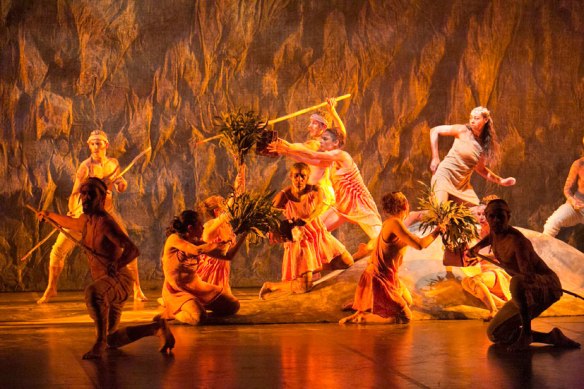
The Bangarra ensemble in Patyegarang. Photo: Jess Bialek

The Bangarra ensemble in Patyegarang. Photo: Jess Bialek

Patyegarang, Bangarra Dance Theatre A luminous production, choreographed by Stephen Page, telling the fascinating “first contact” story of Lieutenant William Dawes and Patyegarang, a young woman of the Eora nation. Told through 13 almost dreamlike scenes and ravishingly staged (set by Jacob Nash, costumes by Jennifer Irwin, lighting by Nick Schlieper, music by David Page), it could have been a little bit more dramatic at times but it was just beautiful.

The Arrangement A collaboration between Australian Dance Artists (veteran dancers Susan Barling, Anca Frankenhaeuser, Patrick Harding-Irmer and Ross Philip), eminent sculptor Ken Unsworth, The Song Company and composer Jonathan Cooper, staged at Unsworth’s studio. A tumult of ever-suprising visual images combined with glorious music and fascinating movement that reverberated with a profound sense of humanity to create a unique and wondrous piece of work.

Skylight in London I was lucky enough to catch Stephen Daldry’s superb production of David Hare’s 1995 play in the West End on a brief visit to London. Featuring the kind of intelligent writing you long to encounter more often, it explores the political through the personal, with nothing cut-and-dried or black-and-white as your sympathies swing back and forth. Bill Nighy and Carey Mulligan were both wonderful.

Limbo, Strut & Fret and Underbelly Productions A dark, sexy, enthralling circus-cabaret show, staged in the Spiegeltent as part of the Sydney Festival that combined jaw-dropping acts with a coherent, netherworld-like aesthetic and a strong sense of drama. It was exhilarating and it sold out fast. If you missed out it’s back at the 2015 Sydney Festival so get booking. I’ll be going back to see it again.

And that’s it. Here’s to a chilled New Year and to many theatrical delights in 2015.

The Crucible

Bella Vista Farm, Baulkham Hills, December 13

Julian Garner (centre) as John Proctor. Photo: Seiya Taguchi

Julian Garner (centre) as John Proctor. Photo: Seiya Taguchi

The historic barn at Bella Vista Farm makes an atmospheric, rustic setting for Sport for Jove’s powerful production of Arthur Miller’s classic play.

Set in the repressive, Puritan community of Salem, Massachusetts during the 1692 witch-hunt, the play was Miller’s horrified response to Senator McCarthy’s anti-communist crusade in 1950s America.

A number of young women have been spotted dancing naked in the woods. In order to protect themselves from certain punishment, they point the finger at others, suggesting witchcraft at work. As accusations lead to more and more hangings, other motives come into play including jealousy and revenge.

Damien Ryan keeps the play in the 17th century but under his clear, beautifully measured direction the themes of fear-mongering, hysteria, sexual repression and a community turning on itself strike strong chords in today’s world.

Ryan and designer Anna Gardiner create a pressure-cooker environment with the audience close to the action, seated on three sides around a dimly lit central wooden stage lined with hundreds of candles in jam jars (lighting by Sian James-Holland). A hanging platform is cleverly used as a bed, dining table and courtroom seating. Gardiner’s dark costuming is also very effective.

Julian Garner leads a solid ensemble cast of 20 as flawed hero John Proctor, conveying an intelligent, decent man who frequently flares with fiery impatience, while also struggling with the guilt that wracks him having had a fling with Abigail while his wife Elizabeth was sick.

Georgia Adamson is compelling and touching as the deeply honest Elizabeth, imbuing her with more warmth than she is frequently portrayed. Lizzie Schebesta plays Abigail, the ringleader of the girls, as a wilful, calculating flirt, lapping up the sudden attention and power.

There are also standout performances from Matilda Ridgway as Mary Warren, who now works for the Proctors in the wake of Abigail’s dismissal and, while becoming quite a little Madam, finds herself caught between strong opposing forces, Philip Dodd as the pompous, hard-line Judge Danforth and Anthony Gooley as the more reasonable, well-meaning Reverend Hale.

The decision to lead the audience out of the barn for the final scenes dissipates the tension somewhat, but overall Ryan helms a beautifully wrought, thought-provoking and harrowing production.

Bella Vista Farm, Baulkham Hills until December 30, Everglades Gardens, Leura, January 11 – 25. Information and bookings: www.sportforjove.com.au

A version of this review ran in the Sunday Telegraph on December 21

The Tiger Who Came to Tea

Playhouse Theatre, Sydney Opera House, December 10

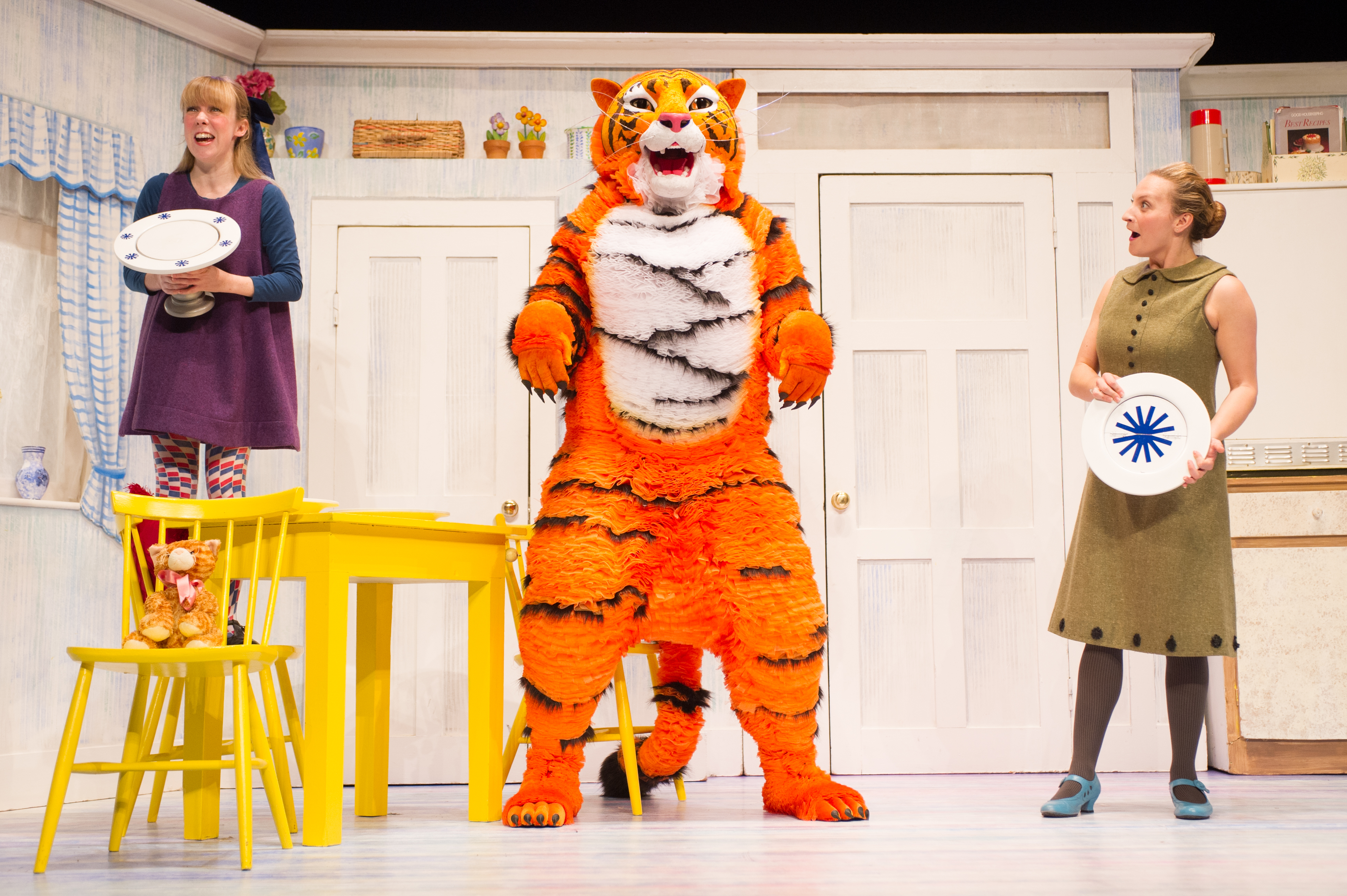
Abbey Norman as Sophie and Jenanne Redman as Mummy with the Tiger. Photo: supplied

Abbey Norman as Sophie and Jenanne Redman as Mummy with the Tiger. Photo: supplied

David Wood’s stage adaptation of Judith Kerr’s much-loved picture book The Tiger Who Came to Tea is a fairly straightforward but enjoyable piece of children’s theatre (recommended for ages 3+).

It doesn’t have the wit or inventiveness of some of the best children’s theatre seen in Sydney over the past year – notably Monkey Baa Theatre Company’s Pete the Sheep and My Darling Patricia’s The Piper presented with Sydney Festival – but it has plenty of warmth and energy.

It tells the fairly simple story of a tiger who arrives just as young Sophie and her Mummy are sitting down for afternoon tea. While displaying exceptionally polite manners, the tiger devours every scrap of food in the house including “all the water in the tap”.

Wood has expanded the action with the addition of some songs and audience participation, including counting as the clock turns. Staged on a picture book-looking set, there’s also some cute magic used to have the food disappear as the tiger eats it.

Naturally it is the tiger – in a rather splendid orange, furry costume – that creates the most excitement, with shrieks of laughter at his pantomime-style entrance when only the audience can see him (“he’s behind you!”).

The children also enjoyed seeing Daddy getting tangled up in his jacket and putting a tea cosy on his head instead of a hat.

The British production, which arrives here after a West End season, runs for just under an hour. It does start to drag a little after the tiger has departed and the family goes out to eat at a café, particularly when a song about “yummy sausages” and “scrummy chips” is sung several times too often.

But overall, it’s a pleasant little show and the children around me seemed to have fun.

The Tiger Who Came to Tea plays at the Playhouse Theatre, Sydney Opera House until December 28 with morning and afternoon performances