The Removalists; Happiness reviews

There are two David Williamson plays running in Sydney at the moment – The Removalists from early in his career and a new play, Happiness, which has just premiered at the Ensemble Theatre.

They make a study in contrasts. The Removalists is a reminder of what a tough, terrific playwright Williamson has been in his time and why this particular play is considered a classic of Australian theatre. In recent years, however, his plays have become somewhat formulaic: pick a topical subject, find the characters to debate it on stage, and stir in some laughs. Happiness is all this – and one of Williamson’s least convincing plays.

The Removalists

Bondi Pavilion, May 29
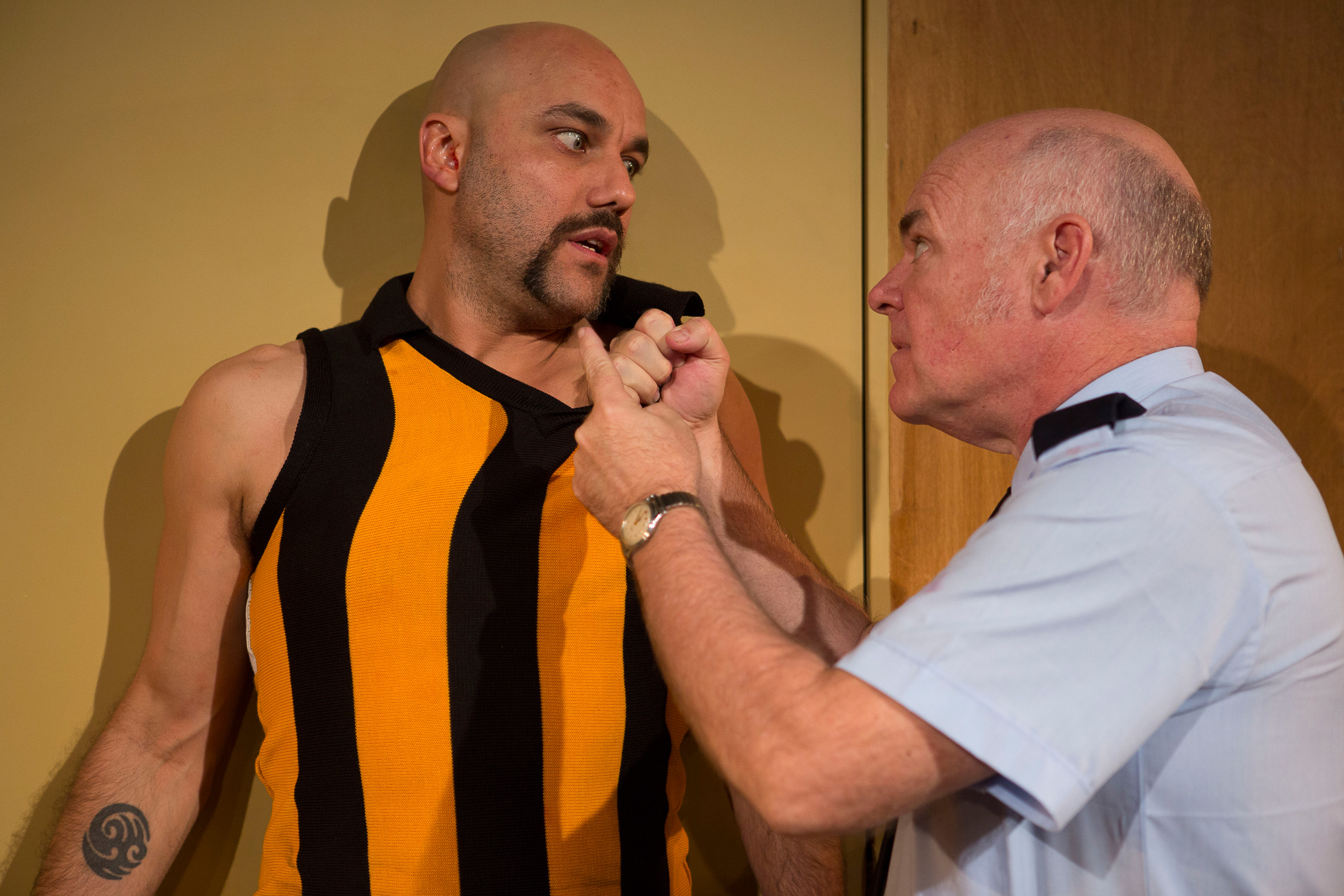
Justin Stewart Cotta and Laurence Coy. Photo: Zak Kaczmarek

Justin Stewart Cotta and Laurence Coy. Photo: Zak Kaczmarek

Written in 1971, The Removalists launched David Williamson’s career, sending a shock of recognition through audiences with its stark, savage portrayal of the ugly side of Australian culture: the open, rampant sexism, in particular.

Forty-two years on, Leland Kean’s terrific production for Rock Surfers Theatre Company still packs a real punch. Blatant sexism certainly isn’t as rife in public life as it was back then, but it ain’t disappeared.

Meanwhile, the themes of police corruption and brutality, abuse of authority, and domestic violence feel just as relevant.

On his first day in the police force, rookie Constable Ross (Sam O’Sullivan) finds himself under the command of Sergeant Simmonds (Laurence Coy), a lazy, manipulative, sexist bully who prides himself on having never made an arrest in 23 years despite the high crime-rate in his area.

When the confident, well-heeled Kate (Caroline Brazier) and her quieter sister Fiona (Sophie Hensser) report that Fiona’s husband Kenny (Justin Stewart Cotta) has been beating her up, the lecherous Simmonds decides they will help her move out while Kenny is at his usual Friday night drinking session. But Kenny returns home early.

Kean has wisely decided to keep the play in its original period, using blasts of 70s Oz rock and Ally Mansell’s drab, dung-coloured set with cheap furniture to create the perfect setting.

With excellent performances from the entire cast, which includes Sam Atwell in the comic role of the removalist, Kean’s production feels tough, raw and very real.

Coy’s Simmonds is a man both odious and deeply ordinary. A school group attending the performance I saw remained attentive throughout, while the boys, in particular, seemed shocked by his behaviour, wincing visibly at his sexist remarks and sleazy bottom-patting.

O’Sullivan captures Ross’s naivety and nails the moment he suddenly snaps, Stewart Cotta is a convincingly brutish Kenny yet manages to make us feel something like sympathy when the tables are turned on him, while Brazier and Hensser deliver beautifully detailed, in-depth performances.

Kean’s production strikes just the right balance between humour, menace and violence as it builds tension. We laugh but we also cringe and shudder at a classic Australian play that still rings horribly true.

Bondi Pavilion until June 16.

An edited version of this review ran in the Sunday Telegraph on June 2.

Happiness

Ensemble Theatre, May 17
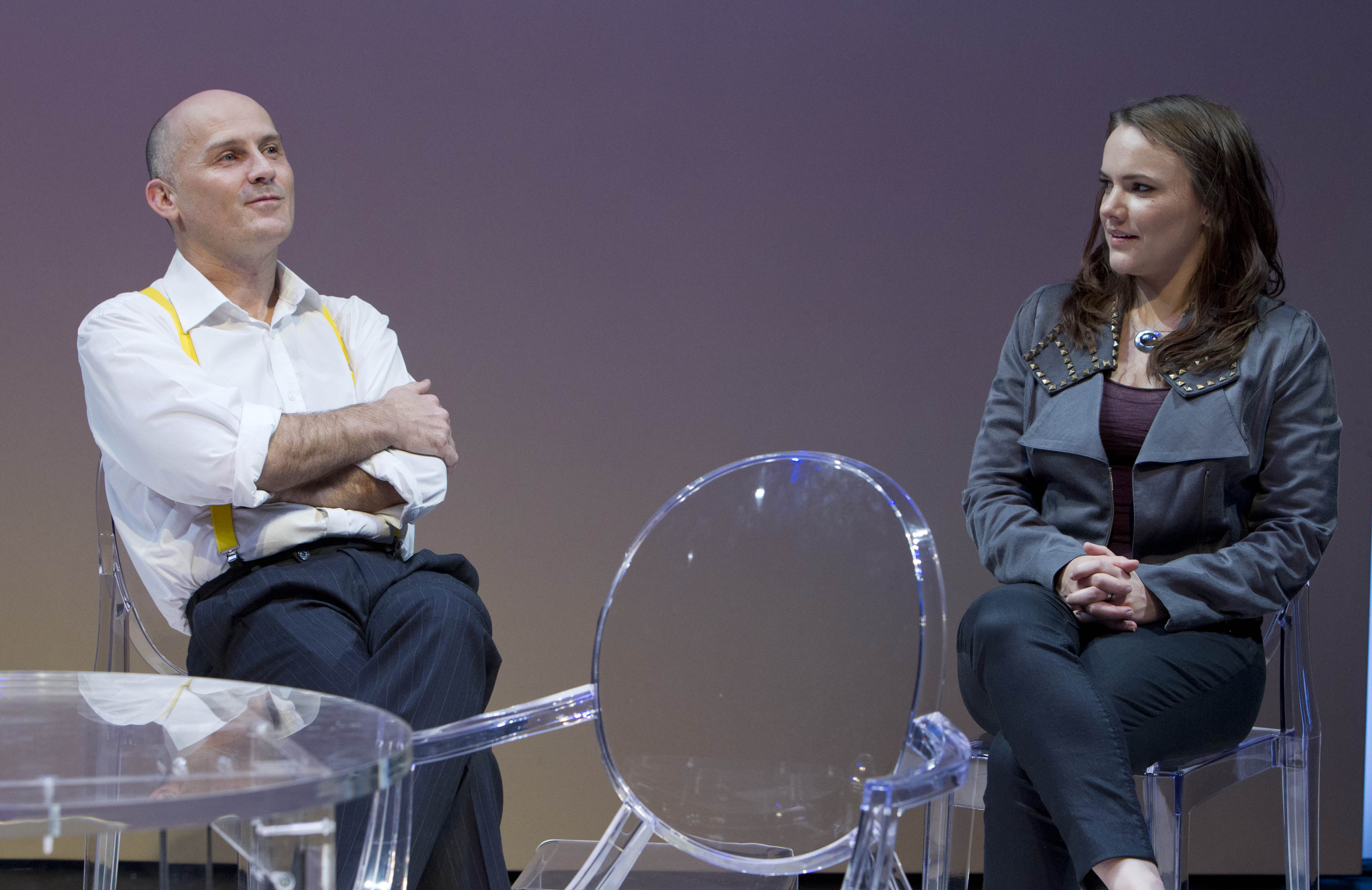
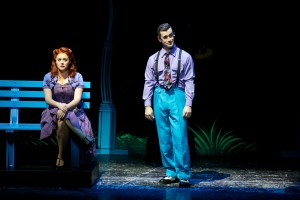
Glenn Hazeldine and Erica Lovell. Photo: Steve Lunam

Glenn Hazeldine and Erica Lovell. Photo: Steve Lunam

In Happiness, David Williamson takes on an interesting, pertinent question: why are Australians seemingly so dissatisfied and unhappy when we have never had it so good? However, the play barely scratches the surface of the idea.

It begins with a lecture by Roland Makepeace (Mark Lee), a professor of psychology who specialises in happiness – or “human wellbeing” as he prefers to put it – which sets up Williamson’s theme.

However, Roland’s own life isn’t exactly overflowing with wellbeing. His hard-drinking wife Hanna (Anne Tenney) is bitter and forever snapping at him, while his daughter Zelda (Erica Lovell) claims to feel suicidal on occasions.

When Roland tries to help Zelda with advice to go out and forgive someone, apologise to someone and do an anonymous good deed, there are all kinds of unintended consequences.

Rounding out the cast are Peter Kowitz as a rich, former lover of Hanna’s, Glenn Hazeldine as the editor of a right-wing newspaper where Zelda is an environmental reporter, and Adriano Cappelletta as two of Zelda’s love interests.

It’s all pretty unconvincing, while Williamson’s trademark ability to deliver cracking one-liners has also deserted him. Some of the audience laughed along now and then but I hardly cracked a smile.

Sandra Bates directs a pedestrian production in which the actors, by and large, do what they can. Hazeldine, Kowitz and Lee deliver the most believable characters, though they are all pretty sketchily written and we don’t particularly care about any of them. It feels very under-developed with more work needed on both the script and the production.

That said, as I left the theatre an elderly gent in front of me, who had clearly enjoyed it said, “Good old Williamson”. What’s more, the production is apparently almost sold out – which goes to show how many fans Williamson still has. It’s just a shame he hasn’t given them something better.

Ensemble Theatre until July 6. Noosa Long Weekend Festival, June 18 & 19.
Hunter Page-Lochard interview

Hunter Page-Lochard made his first appearance for Bangarra Dance Theatre in Praying Mantis Dreaming at six months of age, when his father Stephen Page, the company’s artistic director, played a bit of a trick at one performance by substituting him for the baby doll usually used.

“The story was that he comes on stage and hands me to another dancer and the light fades on them. He didn’t tell the other dancer and apparently as the lights were fading I reached my hand up to touch his face so it got a real reaction,” says Page-Lochard.

Now 20, Page-Lochard is making a guest appearance in Bangarra’s new work Blak. In the interim he has appeared in their productions of Skin at age seven and Boomerang at age 12.

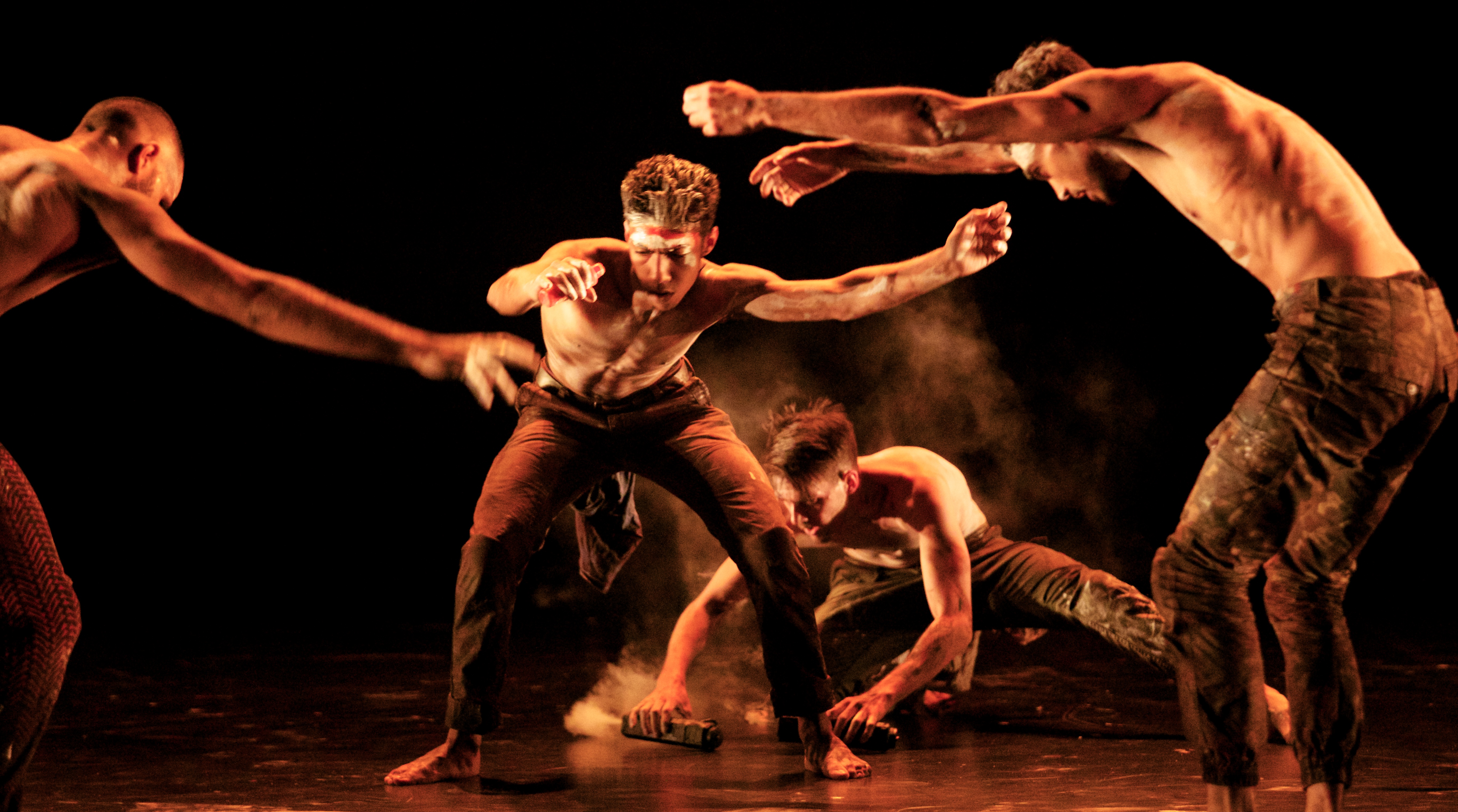
Hunter Page-Lochard (centre) with Leonard Mickelo, Luke Currie-Richardson and Daniel Riley McKinley in Blak. Photo: Greg Barrett

Hunter Page-Lochard (centre) with Leonard Mickelo, Luke Currie-Richardson and Daniel Riley McKinley in Blak. Photo: Greg Barrett

His professional career began in an episode of Water Rats when he was five. “Ever since then I’ve loved performing,” he says.

His other credits include, among others, Bloodland for Sydney Theatre Company, Wayne Blair’s award-winning short film The Djarn Djarns, and the feature films Bran Nue Day and The Sapphires.

Later this year he will seen in a new film called Around the Block by writer/director Sarah Spillane in which he stars alongside Christina Ricci and Jack Thompson, playing a troubled Aboriginal teenager who is helped by his American drama teacher.

“It’s like a Billy Elliot (meets) Hamlet but instead of dancing he’s a drama student that has one foot in crime because of his older brother,” says Page-Lochard. “It’s a nice little film. It’s not too dark and it’s not too fun-loving.”

Page-Lochard grew up “with the smell of theatre backstage. I was always around it,” he says.

Like his father, his American mother, Cynthia Lochard, was also a dancer, performing with New York City Ballet and Sydney Dance Company and is now one of the leading Pilates instructors in the southern hemisphere. But despite his heritage, Page-Lochard acts more than he dances.

“Michael Jackson and Justin Timberlake are my teachers. I never had technical training. Mum and Dad tried and tried to get me into ballet classes when I was little and dance classes but I just didn’t want to dance. I wanted to act and create things,” he says.

“So being with these guys (Bangarra) for the last four months has been quite tough because I’ve had to do ballet and I’ve had to do contemporary. I can’t deny that it’s in my blood but it’s still really tough. I’m sure my mum can still do a better arabesque than I can.”

Blak has three sections: Scar, choreographed by Daniel Riley McKinley with the male dancers, which explores young men’s rite of passage to manhood and initiation from an urban perspective; Yearning, choreographed by Page with the female dancers, which explores domestic violence, youth suicide and the connection of the female spirit to the land; and finally Keepers in which the dancers pay homage to the land and the legacy of their elders.

The company spent a week and a half on Bremer Island in North East Arnhem Land before the start of rehearsals where they workshopped ideas.

“The girls went off and did some women’s business like weaving and the boys took the time to get together and (discuss) just normal questions – what is a man to you? What is your version of initiation in the modern world? Is it sharing a beer with your Dad for the first time? Or having sex? It’s a lot different to the traditional males (initiation) up there,” says Page-Lochard.

Page-Lochard, who is featured in Scar, says that his character embodies the six other men. “He is their flaws and traits. He makes up all of them and carries them through whenever they need to be carried. He’s always there. In a sense he’s kind of that spirit character who was in Skin and Boomerang.”

Page-Lochard is aiming for a future in film. He did a one-year screenwriting course at the Australian Film, Television and Radio School (AFTRS) and hopes to study screenwriting at the New York Film Academy. He has already written numerous screenplays that he’s keen to develop.

“I definitely want to make a film,” he says. “I have just as many (creative) visions as Dad does but not for the stage – it’s more film.”

Blak, Sydney Opera House, June 7 – 22; Canberra Theatre Centre, July 11 – 13; Queensland Performing Arts Centre, July 18 – 27.

An edited version of this story appeared in the Sunday Telegraph on June 2.

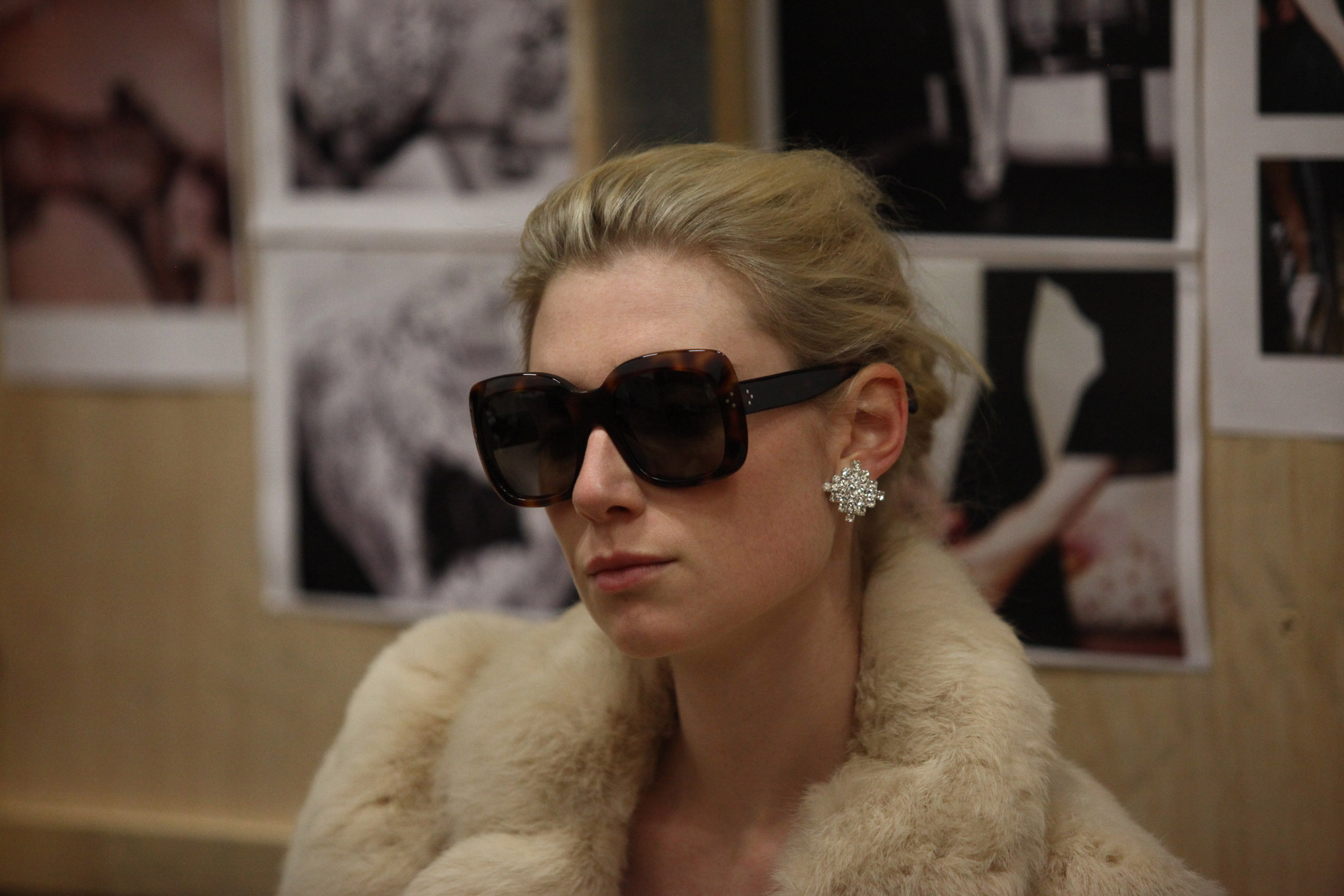
Elizabeth Debicki interview


Elizabeth Debicki

Elizabeth Debicki

The last few weeks have been a complete whirlwind for Elizabeth Debicki, the 22- year old Australian actor who is being hailed as the breakout star of Baz Luhrmann’s much-anticipated, much-scrutinised film The Great Gatsby.

She’s walked the red carpet for the movie’s gala opening at the Cannes Film Festival and at the lavish Sydney premiere. She’s wined and dined with the rich and famous at several exclusive events including a Prada dinner hosted by US Vogue editor Anna Wintour.

In between all that she’s been rehearsing a production of Jean Genet’s The Maids for Sydney Theatre Company with Cate Blanchett and French film star Isabelle Huppert.

It’s enough to go to a girl’s head, but Debicki seems unaffected by all the glitz, glamour and media attention.

“Someone asked me, ‘how do you stay grounded?’ Well, it’s a bit bizarre but I feel very normal. I just feel busy and tired. And happy,” she says.

“I’m happy that the film has come out and is doing so well and I’m happy to be working at STC on this play. I think that’s one of the best things to keep you grounded after a whirlwind press junket ­– waking up and coming to a theatre rehearsal and standing at the foot of (the play) and saying, ‘I’m not sure how to do this.’ That will keep you grounded,” she says.

“Someone asked me if I’ve been recognised (on the street). The answer is no. I don’t look anything like myself in this film. So life is pretty normal. I’m just working here everyday.”

“Here” is the Wharf Theatre where she is rehearsing Genet’s dark, elliptical play about two maids who act out a ritual fantasy of murdering their mistress.

We meet during a break in rehearsals. She’s dressed in ripped jeans and striped T-shirt without a skerrick of makeup but she still looks glowingly elegant. Much has been made of her creamy, luminous beauty, which has a similar quality to Cate Blanchett’s, with inevitable comparisons being made between the two actresses.

Debicki shrugs the idea off as if flicking at a fly. “Oh, it’s very flattering but I think people just have to have something to liken you to,” she says amiably.

Genet’s 1947 play was inspired by the notorious, true-life story of French servants Christine and Lea Papin, two quiet sisters who in 1933 brutally murdered their mistress and her daughter, attacking them with a kitchen knife and a hammer and gouging their eyes out.

The Sydney Theatre Company production will use a new translation by Benedict Andrews, who also directs, and Andrew Upton.

Elizabeth Debicki during rehearsals for The Maids. Photo: Lisa Tomasetti

Elizabeth Debicki during rehearsals for The Maids. Photo: Lisa Tomasetti

Debicki plays the mistress. Starting rehearsals with Blanchett and Huppert was, she says, “daunting and thrilling. ‘Surreal’ is my buzzword in my life (at the moment). It’s an accurate way to describe it. It’s very strange when you meet somebody that you’re admired for so long you are a bit in awe of that person.

“I definitely was, and I still am everyday as I watch them work. And I did spend the first few days feeling quite – not out of my depth because nobody made me feel that – but I was sitting there pinching myself. I kept looking at Cate and Isabelle because I’d watched their films forever. I’d met Cate in person before when I came to talk about the play with her and Andrew. That was surreal. We had a cup of coffee and it was like, ‘I’m having coffee with Cate Blanchett.’

“But I’d never met Isabelle and I’ve loved her work for so long so to be actually working with her is kind of electric. I still can’t believe it when we are playing the scene together that I have the honour of working with someone with that talent.”

Andrews has no doubt she belongs in their company and predicts that her “brave, thrilling turn” as the mistress will be “an unforgettable Sydney debut of a serious new actress.

“Elizabeth is an astonishing talent. The real deal,” he says. “It’s a treat to watch her share the stage with Cate and Isabelle – two of the greatest living stage actresses. I love watching her soak it all in and learning on her feet. She’s commanding, seemingly fearless, hyper-inventive, deliciously playful and fiercely intelligent.”

For her part, Debicki describes Andrews’ direction as “wonderful and relentless – which is a good combination. It keeps me on my toes. I remember something Cate said: that his rehearsal room was really muscular, and it is. It’s incredibly physical. It’s relentless (but) not in a bad way. The play is like that too, it demands a lot of the actors. There are so many things happening on so many layers and levels and they are firing off all at once.

“One day in rehearsal you could be working on one level and then you think, ‘oh good, I’ve got that’, then you come in the next day and there’s another whole level. It’s just an every-expanding monster.

“It’s all about roles, the maids playing the role of the mistress and (one of them) playing the other maid. But the mistress is playing the role of mistress as well as playing the abandoned mother and devoted woman so there is so much role-playing. When we first started work on it I found it so dense I didn’t know where to place things but I think I’ve almost let myself not know now.”

Debicki was born in Paris to a Polish father and Australian mother, both of them classically trained dancers. They moved to Melbourne when she was five, where her mother still runs a dancing school.

She trained as a dancer but by age 16 was too tall to become a ballerina – she is a statuesque 1.9 metres – so turned her attention to acting. She graduated from the Victorian College of the Arts in 2010 and a few months later was cast in The Gift by Joanna Murray-Smith at Melbourne Theatre Company. She also landed a bit part in Stephan Elliott’s film A Few Best Men.

During The Gift, she put down an audition tape for the role of Jordan Baker in The Great Gatsby. “I think by then they had been trying to cast Jordan for a while,” she says.

The LA casting agent was impressed and Debicki was flown to Los Angeles to audition for Luhrmann during a crazy four-day trip.

Jordan Baker is a professional golfer, who lives a reckless, glamorous lifestyle. “It was the most fun I’ve ever had playing a character – though Mistress is getting pretty close,” says Debicki. “I think Jordan is a fabulous role. She just a party girl. To be perfectly honest I just had a really good time. There’s something really liberating about playing someone who is so reckless, with real commitment issues. She’s so careless. I’ve said it before but I just inhabited her bold ‘whateverness’. That was how I survived such a massive shoot. But she was great. I got amazing costumes, amazing jewellery, great wig. I kind of just had a great time.”

Debicki, who admits she’s never been sporty, had a golfing instructor for the role.

“There’s one (golf) swing in the whole movie. It was probably my most nervous day of shooting,” she says. “I had the instructor on the side of the camera telling me how to do it. I was so determined to get it perfect. This was a massive character trait – she’s a professional golfer and there are so many people around the world who play golf so if they watch the movie and go, ‘that’s a terrible swing’, I’d be mortified. So I tried really hard but I don’t think I’d ever play golf again. It’s so dull ­­– though conceptually I understand that it’s a beautiful game.”

Reviews for The Great Gatsby may be mixed but Debicki, who has landed raves, has nothing but praise for Luhrmann and the film. “I think it’s beautiful. I’m so proud of it,” she says.

Having moved to Sydney for the filming, Debicki been based there off and on for the past 18 months but says she’ll go where the work is.

“I’m actually really good at doing that,” she says. “It just suits my personality. I get bored when I’m in the same place. I like building a nest somewhere then dismantling it and moving on. I’m too much of a traveller I guess. I like to be in new places.”

Doubtless she has been inundated with works offers but right now she has her sights set firmly on The Maids.

“I’ve got really wonderful agents in America already that I’ve had since I signed up to the movie,” she says. “Certainly a movie like this does help (your profile) obviously, but I’m really focussing on getting through this play. It’s quite consuming at the moment. Then I can take the blinkers off and see what the future holds.”

The Maids, Sydney Theatre, June 4 – July 20. 

An edited version of this story appeared in The Sunday Telegraph on June 2.

Fairland Ferguson interview

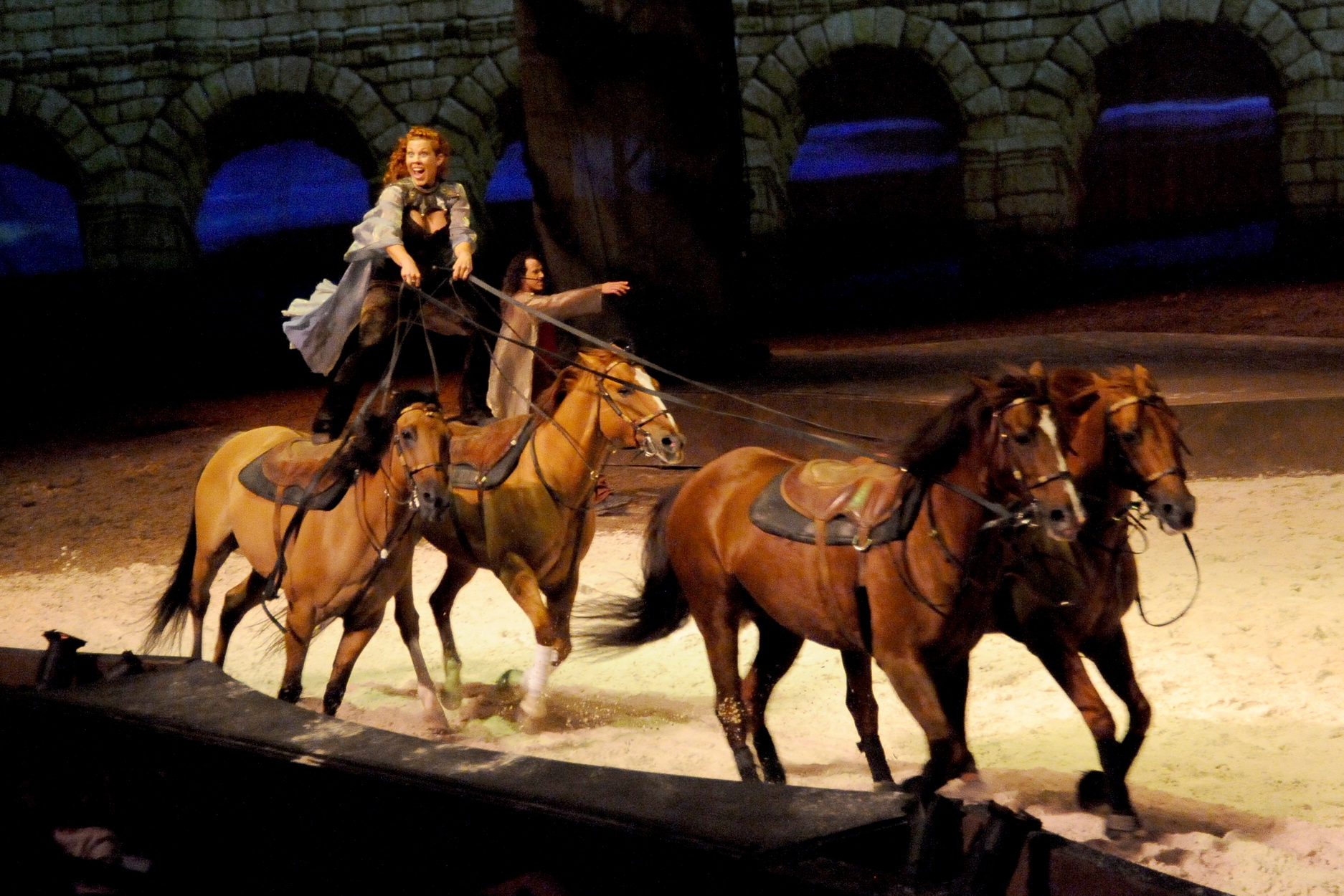
After a near-fatal fall from a cliff ten years ago you might think Fairland Ferguson would play it safe; instead she is now a trick rider in Cavalia, the spectacular show celebrating the bond between horse and human, created by Normand Latourelle, one of the co-founders of Cirque du Soleil.

Fairland Ferguson leads the Roman riding in Cavalia

Fairland Ferguson leads the Roman riding in Cavalia

Fairland Ferguson was being a bit of a daredevil when on August 3, 2003 she tried to jump from the top of a 21-metre rocky cliff into the water below.

“There’s a big lake called Smith Mountain Lake about an hour and a half from my hometown of Staunton, Virginia and you can hike up the cliffs and jump out to water,” says the American horse rider.

“You can jump out at 10 feet, 20 feet, 30 feet. Well I was like, ‘if I’m jumping I’m going all the way to the top.’ It’s about 70 feet high.’ You really have to jump out to clear the rocks at the bottom so it wasn’t the smartest jump to begin with.”

Realising she didn’t have the momentum to clear the rocks she tried to stop but slipped and fell, breaking 46 bones.

Her left leg was so badly crushed, doctors told her she might never walk again, and that if she did she would need a walking stick. They also feared she might lose the sight in her left eye.

Ten years later, you wouldn’t know it apart from a tiny scar on the bridge of her nose, some marks on her arms and some serious scarring on her leg.

You might think that after a near-fatal accident she’d play things safe. Instead, Ferguson is still being a daredevil as one of the fearless trick riders in Cavalia. One of her tricks is galloping across the stage at breakneck speed blindfolded. And she really can’t see.

She did it for fun one day during rehearsals and next thing it was in the show. “It’s the scarf we use in the show and the funny thing is I honestly can’t see a thing,” she says. “You would think that now it’s a permanent part of the show that I would switch to some fabric I could see a little bit through. Everyday I think, ‘I’ve got to remember to do that’ and everyday I forget.”

She is also the star of the Roman riding routine, in which she controls six horses while standing astride two of them.

“A lot of people get injured and think, ‘Oh, I need to take it easy,’” she says. “I think the exact opposite. Yes, there is a time you need to heal but I think later there is a time you need to push through the pain and getting involved in working professionally with horses really helped me. Even now I wake up and my ankle can be really stiff and painful but having an active job really helps me keep everything going.”

After the accident, Ferguson spent six months in hospital where she had 13 surgeries. But throughout it all she remained defiantly optimistic.

“I just didn’t take no for an answer,” she says. “There was never any doubt in my mind that I would get back to where I was before the accident. I don’t know why but it was just the way my brain processed the whole situation.”

Ferguson grew up riding horses. When her accident put paid to a promising basketball career, she joined a horse-riding dinner theatre where she learned to do trick riding and Roman riding. In 2009, she auditioned successfully for Cavalia with her partner Chad Dyson who is also in the show.

Cavalia features more than 30 beautiful horses from a stable of 47 as well as acrobats and musicians. Ferguson rides and cares for three of the equine stars: Criollo and Amaretto in the Roman riding and Henry, her trick horse, who likes nothing better than to gallop as fast as he can.

When Ferguson leaves Cavalia, she says she will be done with performing.

“Because of everything, I feel super comfortable in a hospital so I want to go back and be an emergency room nurse,” she says.

“I just remember how I felt very, very clearly like it was yesterday. I remember what maybe I’d wished I’d had in hospital or what I wish somebody had said to me.  So I think I’m in a good position now to be that person for somebody else.

“It’s not that the nurses did anything wrong but I felt like I was just a routine. They were the only interaction you had sometimes and I remember thinking I wish they would be more chatty and even softer when they touch you. One would be rough when she gave me a shot (injection) or roll you over.

“On top of that I’m a very strong Christian so I think for myself if somebody had been there to say, ‘this is all part of God’s plan’, even if the person isn’t a Christian (it helps) to share their positivity. I sometimes felt that I was the only one being positive.”

Cavalia plays in the White Big Top, Entertainment Quarter, Sydney until June 16 then premieres at The Docklands, Melbourne on August 7.

An edited version of this story ran in the Daily Telegraph on May 30.


Noel and Gertie review

Glen Street Theatre May 22

Noel and Gertie is a delicious, frothy confection of a show that has the sparkle of fine bubbly and a similarly intoxicating effect.

It was devised in 1982 by Sheridan Morley who used the words and music of Noel Coward to tell the story of Coward’s legendary, tempestuous friendship with actor Gertrude Lawrence – his sometime muse for whom he wrote Private Lives.

The show doesn’t break any ground dramatically. Morley tells their story chronologically using a montage of songs and extracts from Coward’s plays, diaries and letters. But when performed as well as it is here by James Millar and Lucy Maunder, it’s a delight.


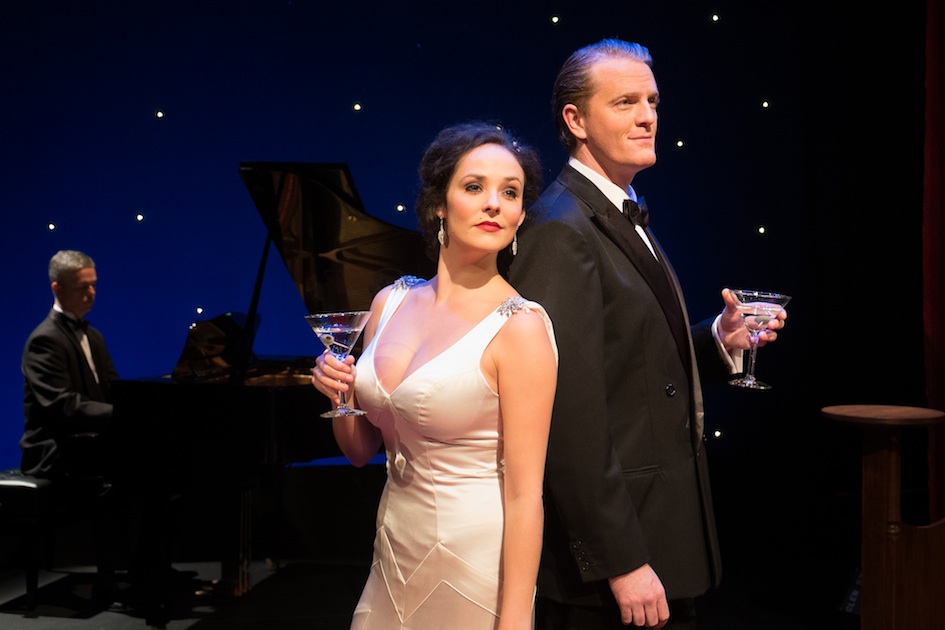
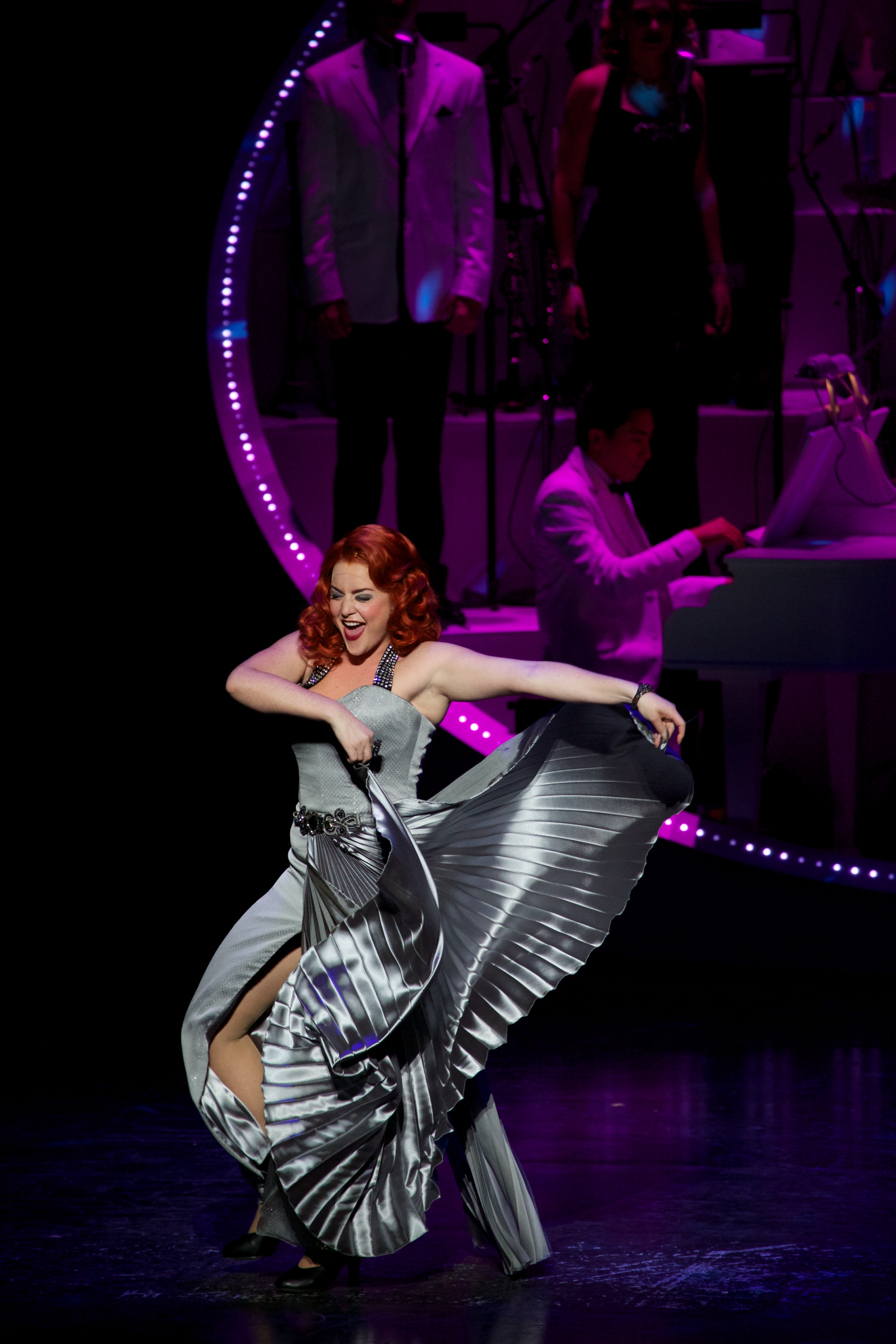
Lucy Maunder and James Millar. Photo by Nicholas Higgins

Lucy Maunder and James Millar. Photo by Nicholas Higgins

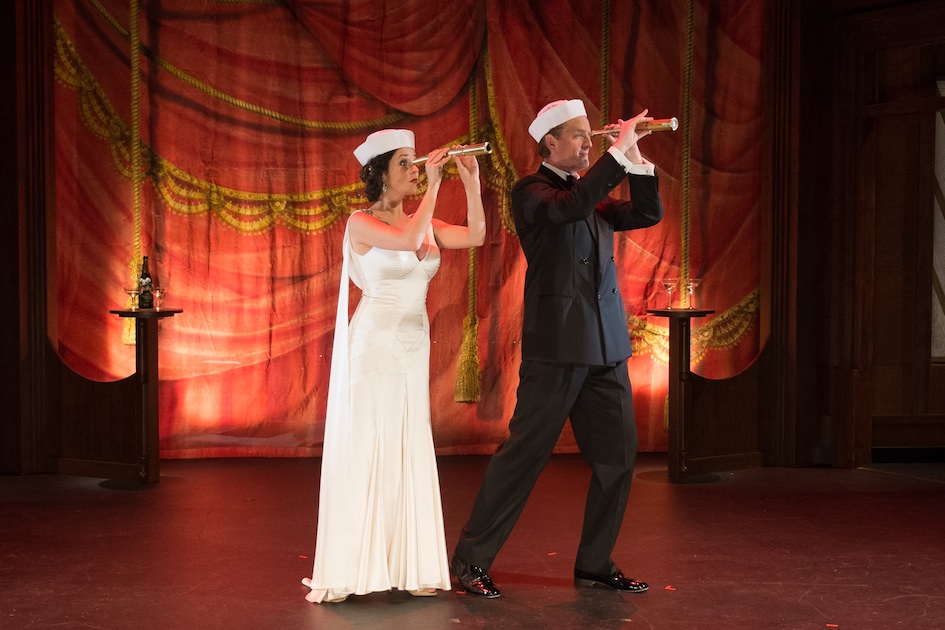
The production, deftly directed by Nancye Hayes, has an elegant simplicity. Graham Maclean has designed a simple, Art Deco-inspired set and a gorgeous, slinky, white satin, Molyneux-like gown for Maunder, while Millar wears black tie.

Millar is cut out to play Coward. He looks the part and tosses off Coward’s witticisms effortlessly in a precise, clipped, English accent as if born to it, bringing the house down with his rendition of Don’t Put Your Daughter on the Stage, Mrs Worthington.

Maunder also gives a lovely performance. Like Millar she is attuned to the sophistication and rhythms of Coward’s writing and sings more beautifully than Lawrence in numbers including Sail Away and Parisian Pierrot.

Together, they have a scintillating chemistry and capture the mischievous, bantering relationship between the two stars.


Lucy Maunder and James Millar.  Photo by Nicholas Higgins

Lucy Maunder and James Millar. Photo by Nicholas Higgins

It’s not easy to perform Coward – and even harder when you’re performing extracts out of context. But the scenes from plays including Private Lives and Blithe Spirit work a treat, while the one from Still Life (which became the film Brief Encounter) is touching. There is still a little more emotional depth and nuance to be found but this will doubtless develop as the show settles in.

Musical director Vincent Colagiuri provides sensitive accompaniment on a grand piano sitting unobtrusively at the back of the stage.

Morley tells us almost nothing about Coward’s private life. There is one passing reference to Graham Payn performing in Tonight at 8.30pm but no mention of the fact that he was Coward’s partner for 30 years. Nor does Morley include the more colourful incidents from Lawrence’s. Watching it you feel you’d like to know more about them.

Nonetheless, in the hands of Millar and Maunder, Noel and Gertie is a stylish, delightful entertainment.

Noel and Gertie plays at Glen Street Theatre until June I then tours nationally to the Joan Sutherland Performing Arts Centre, Penrith, June 5 – 8; Riverside Theatres, Parramatta, June 11 – 15; Frankston Arts Centre, June 20; Whitehorse Centre, Nunawading, June 21 – 22; The Concourse, Chatswood, June 26 – 29; The Q, Queanbeyan Performing Arts Centre, July 2 – 7; Dubbo Regional Theatre, July 10; Orange Civic Theatre, July 12 – 13; Laycock Street Theatre, Gosford, July 16 – 18; Manning Entertainment Centre, Taree, July 20; Adelaide Festival Centre, July 23 – 27.

An edited version of this review appeared in the Sunday Telegraph on May 16.


The Hills are Alive with the Sound of Sarah-Louise Young

Sarah-Louise Young discusses her new cabaret show Julie Madly Deeply

Sarah-Louise Young

Sarah-Louise Young

Over the years, people have often said to Sarah-Louise Young that they can see a bit of Julie Andrews in her.

“It’s probably just because we’re both very well spoken,” says the British musical theatre and cabaret performer in her crisp, beautifully enunciated English accent.

Modesty aside, Young also has a great singing voice and though she wouldn’t consider comparing herself to Andrews – “that would be scandalous” – she is excited about performing the Andrews songbook in a new cabaret show called Julie Madly Deeply.

The songs will be intertwined with stories and anecdotes from Andrews’ life along with “a selection of witty and insightful elaborations” as the press release puts it, promising a show in which “Miss Squeaky-Clean finally comes clean.”

But Andrews fans can rest assured that though Julie Madly Deeply may be a little mischievous at times, it comes from a place of love.

“It’s always been our benchmark that if she ever came to see the show she would love it. We are describing it as a cheeky and affectionate love letter,” says Young.

Julie Madly Deeply starts its Australian tour at the Noosa Long Weekend Festival on June 16 then goes to the Adelaide Cabaret Festival followed by dates in Victoria, New South Wales and the Northern Territory.

It follows in the wake of Dame Julie herself, who tours Australia for the first time this month. However, Andrews doesn’t sing anymore after her four-octave voice was damaged during a throat operation in 1997, leaving it to Young to turn on the pure but killer vocals in songs from Mary Poppins, The Sound of Music and My Fair Lady as well as less well known Andrews numbers.

Young’s cabaret career is riding high. She won Best Musical Variety Act at the 2013 London Cabaret Awards and in 2011 was named one of Time Out London’s Top Ten Cabaret Artists.

In 2010, David and Lisa Campbell brought her show Cabaret Whore to the Adelaide Cabaret Festival then toured it around Australia the following year. During this time, Young met Richard Carroll, who works at the Campbells’ production company Luckiest Productions. They hit it off and co-conceived Julie Madly Deeply, which Carroll is producing.

Sarah-Louise Young will play a Julie Andrews impersonator in Julie Madly Deeply

Sarah-Louise Young will play a Julie Andrews impersonator in Julie Madly Deeply

Young has been a fan of Andrews since childhood. “When I was a little kid my parents got divorced and I thought if Julie Andrews came in, married my Dad and made a dress from curtains then everything would be all right,” she says.

When it came to putting a show together about her, Young says they wanted to avoid doing something that comes across like “Wikipedia live. You can’t tell anybody’s life in 55 minutes, it’s just not long enough,” she says. Nor did she want to pretend to be Andrews.

“My producer Richard and I felt very strongly that nobody can sing like Julie Andrews. You can’t impersonate that voice. There is so much love and respect for her that we didn’t want to put words into her mouth.

“Obviously we’ve read her autobiography and watched hours and hours of documentaries and we thought very, very carefully about the best framing device. It would be easy to do an hour of her songs and chat about them but the device we use is that I play a Julie Andrews impersonator doing a tribute act,” says Young.

“That person can investigate other people’s relationships with Julie Andrews so I play Audrey Hepburn, Richard Burton, Carol Channing, Liza Minnelli – little bits of all of these. So there will be times when I do my best to sound like her but it’s also a lovely excuse to explore the other relationships in her life.

“We’ll sing the hits from her shows and also a few unexpected songs that you don’t associate with her. There’s such an amazing back catalogue of songs so we’re going to do a medley at the end because we just couldn’t fit in all the songs that we wanted to.”

Young believes that although Andrews tried to change her sweet, wholesome image later in her career with some interesting choices including working with Hitchcock and famously going topless in the film S.O.B. directed by her husband Blake Edwards, “it was really tough for her. People wanted to see her in that maternal role because it made us feel safe.

“She was obviously a lovely woman but it was well known that she swore like a trooper and was a great practical joker. She worked with Hitchcock, she did some really unusual and interesting stuff but people didn’t want her to break the mould.”

Young hopes that people who see Julie Madly Deeply “will fall in love with the songs again and go home and watch the movies, and question their own relationship with her.”

Noosa Long Weekend Festival, June 16; Adelaide Cabaret Festival, June 19 – 20; Chapel off Chapel, Melbourne, June 21 – 22; Karralyka Centre, Ringwood, June 25; The Q, Queanbeyan, June 26; Araluen Arts Centre, Alice Springs, June 29; Seymour Centre, Sydney, July 4 – 6; Riverside Theatres, Parramatta, July 7; Glen Street Theatre, Belrose, July 9.

An edited version of this story appeared in the Sunday Telegraph on April 7.


The Baulkham Hills African Ladies Troupe: review

Riverside Theatres, Parramatta, May 10

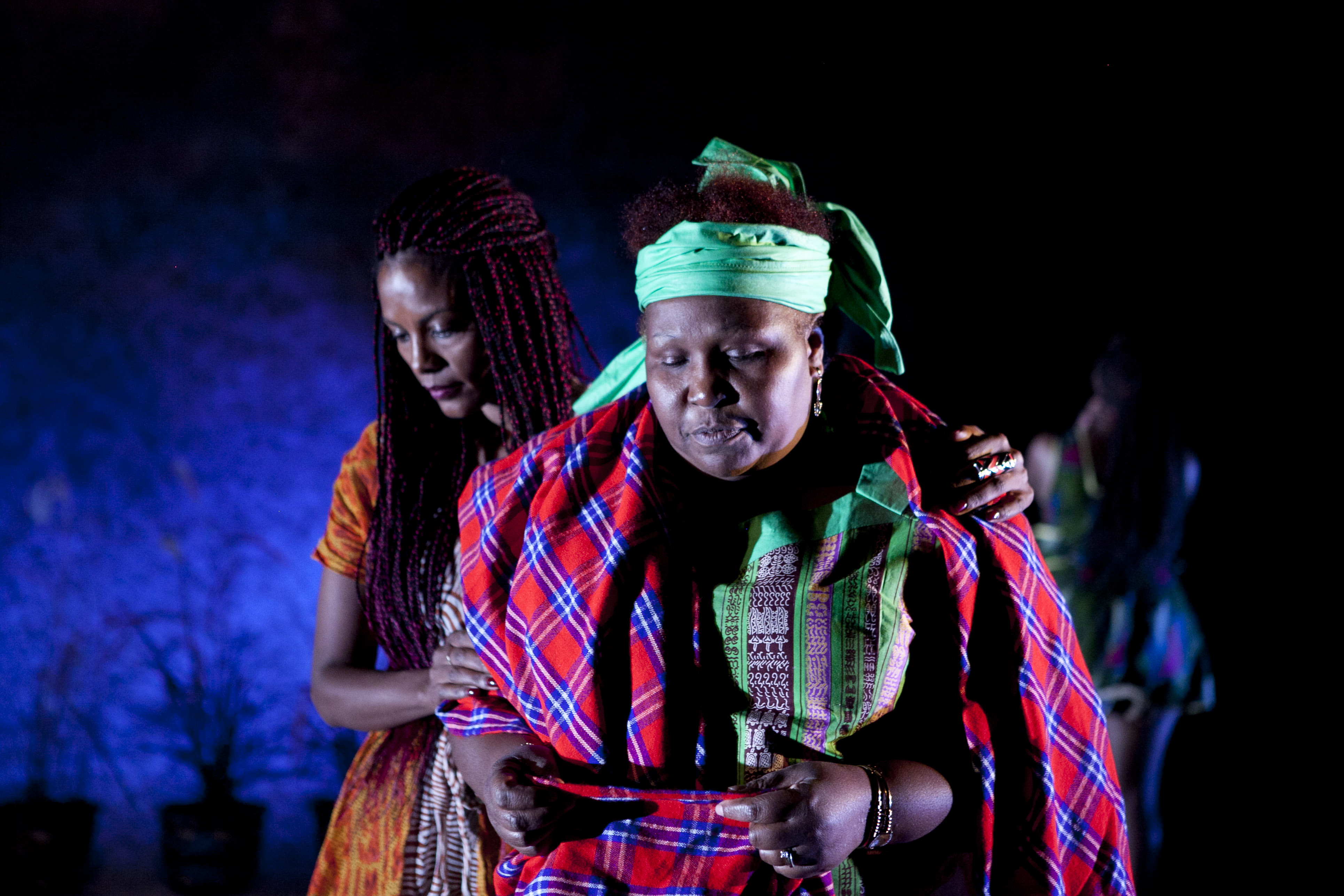
It must have taken an enormous amount of courage for Yarrie Bangura, Aminata Conteh-Biger, Yordanos Haile-Michael and Rosemary Kariuki-Fyfe to discuss their harrowing life stories with writer/director Ros Horin.

To then relive them on stage can’t be easy either – but the experiences of these four women are at the heart of a shocking, moving but joyous new production called The Baulkham Hills African Ladies Troupe.

Yordanos Haile-Michael and Rosemary Kariuki-Fyfe. Photo: Lisa Tomasetti

Yordanos Haile-Michael and Rosemary Kariuki-Fyfe. Photo: Lisa Tomasetti

It is almost three years since Horin began researching the project and as she says in the theatre program the journey has been “intense, emotional, at times extremely disturbing. Full of tears, full of laughter, warmth, sharing, drumming, singing, dancing and mostly enriching, uplifting, inspiring.”

Bangura grew up in a refugee camp in Guinea having witnessed shocking barbarity during the civil war in neighbouring Sierra Leone. Conteh-Biger, the daughter of a wealthy Muslim businessman, was kidnapped and abused by rebels when they invaded the Sierra Leonean capital of Freetown. She was the first refugee to arrive in Australia from Sierra Leone in 2000.

Haile-Michael was abandoned by her father (who killed her mother) at age three and was then kidnapped, abused and forced to fight as a child soldier for the Eritrean People’s Liberation Front, before escaping to a Sudanese refugee camp. Kuriuki-Fyfe fled domestic violence in Kenya.

All four now live happy, productive lives in Sydney where they have variously learned to read, love, form friendships and (as told in a hilariously sweet story) ride an escalator. Each in their own way is working to help others.

Though untrained as performers the four women – each of them such different personalities – all have a strong stage presence.

In telling their stories they are joined on stage by professional actors Nancy Denis, Tariro Mavondo and Effie Nkrumah, singer/songwriter Aminata Doumbia, and dancers Eden Dessalegn and Lisa Viola.

Horin’s production uses a patchwork of storytelling, music, dance, video projections and humour. Sometimes the women call on other performers to talk for them at particularly difficult parts of their story, while they watch quietly.

Their experiences are intercut with other lighter-hearted scenes such as a quiz about the geography of Africa, a demonstration of the various different African dance styles and a gathering in a hairdressing salon.

Dan Potra’s set – a large hanging carpet with pot plants and wooden stools – is an evocative backdrop (lit by Nicholas Rayment), which is matched by the women’s wonderfully colourful clothes.

Running 100 minutes without interval, a little tightening wouldn’t go astray but The Baulkham Hills African Ladies Troupe is a powerful, uplifting and humbling experience.

As well as a shocking insight into the horrific, systemic violence against women taking place in parts of Africa, it is a celebration of the resilience and spirit of these four remarkable women as well as a powerful plea for refugee support programs.

Riverside Theatres until May 18; Belvoir St Theatre, August 15 – September 15

The Bull, the Moon and the Coronet of Stars: review

Griffin Theatre Company, Hothouse Theatre and Merrigong Theatre Company, Stables Theatre, May 8

In her new play The Bull, the Moon and the Coronet of Stars, Australian playwright Van Badham takes a contemporary love story and gives it a mythic dimension by entwining it with the Greek legend of Ariadne and Theseus.

It’s worth knowing the basics of Ariadne’s tale. (Briefly, she helps Theseus defeat the Minotaur, they elope, he deserts her and she marries the god Dionysus.)

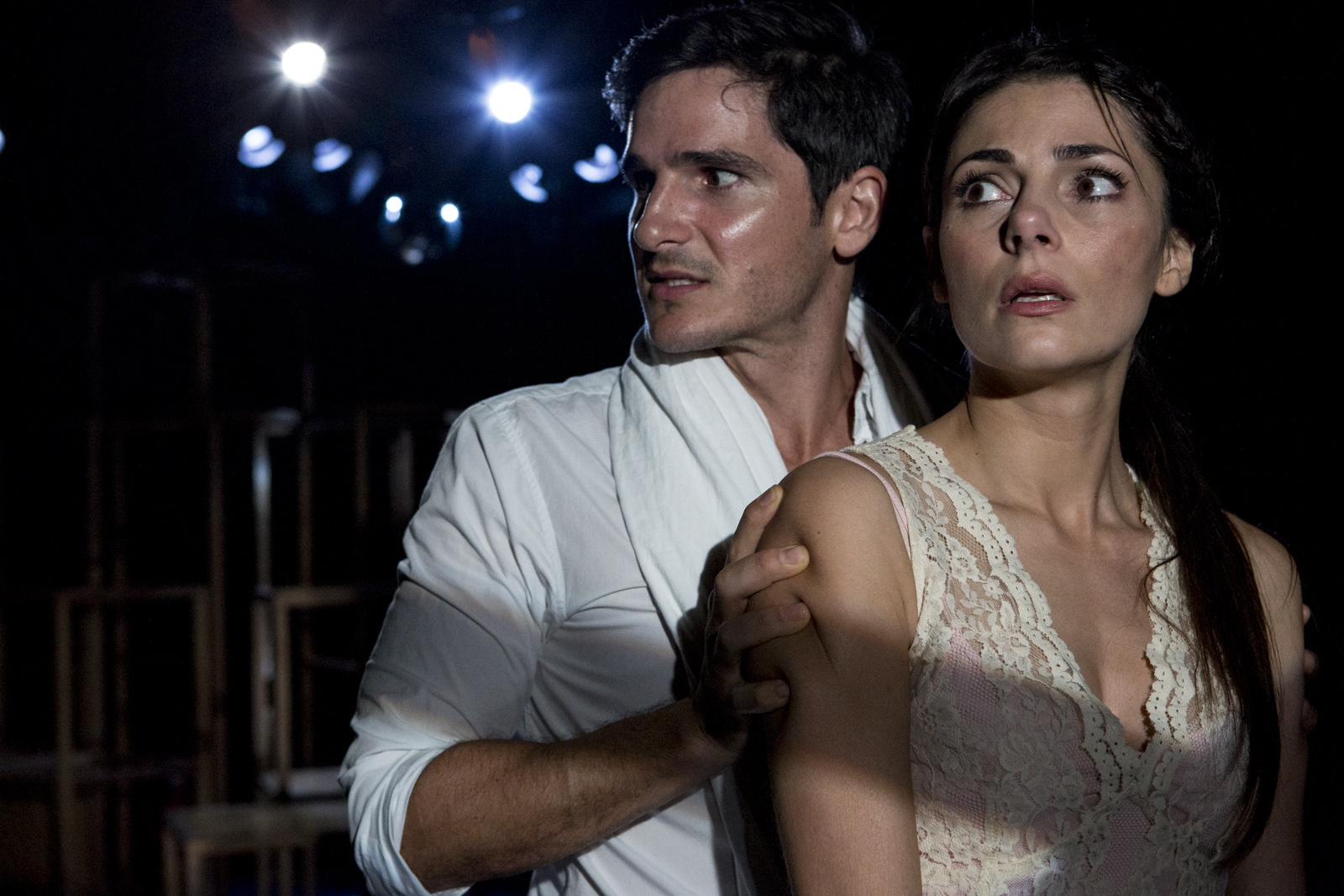
Here, Marion (Silvia Colloca) is an artist-in-residence at a museum where she falls for the married publications officer Michael (Matt Zeremes). After a night of passion in the museum he dumps her. Heartbroken, she flees and, while teaching art classes to a group of raunchy septuagenarians, meets Mark (also Zeremes), a sommelier with an eye for the ladies.

Matt Zeremes and Silvia Colloca  Photo: Brett Boardman

Matt Zeremes and Silvia Colloca Photo: Brett Boardman

On one level it’s a small, intimate play: a two-hander running 80 minutes. But Badham’s lush, poetic language and mythical references tap into the epic, overwhelming emotions we feel when in the grip of love or heartbreak.

Simply staged on Anna Tregloan’s set, which uses rectangular wooden frames in various formations for different scenes, the focus is very much on the words.

The text slips between third person narration, interior thoughts and dreams, and dialogue, which occasionally overlaps. Written with an innate musicality, it needs to be precisely performed – as it is by Colloca and Zeremes, who give lovely performances under Lee Lewis’s direction.

It’s a passionate play but for some reason it doesn’t really connect emotionally. It’s perhaps the size of the venue. As the two actors tune into the mythical aspect their performances sometimes seem too large for the tiny venue so rather than being drawn into their emotional world, it feels like the play is coming at us.

Also, because there’s more dramatised narrative than dialogue, we are told rather than shown things so that at times it feels almost like a short story rather than a fully-fledged drama and the characters don’t emerge in quite the emotional depth that they might.

But it’s still an ambitious, potent piece of writing that is sexy and funny with a beautiful, romantic ending.

Stables Theatre until June 8, Hothouse Theatre, Albury-Wodonga, June 13 – 22.

An edited version of this review appeared in the Sunday Telegraph on May 12

Hot Shoe Shuffle review

David Atkins Enterprises, Lyric Theatre, Queensland Performing Arts Centre, May 4

Before The Boy From Oz and Priscilla, Queen of the Desert – The Musical, there was Hot Shoe Shuffle: the little musical that could.

It was the first Australian musical to play in London’s West End, where it won an Olivier Award for best choreography, and subsequently toured the UK, Japan, Canada and the US, as well as returning for two Australian tours.

Now, 21 years since it premiered and 11 years since it was last seen here, Hot Shoe Shuffle is back ­– and feeling fresh as a daisy in an exuberant production that had the Brisbane opening night audience on its feet cheering.

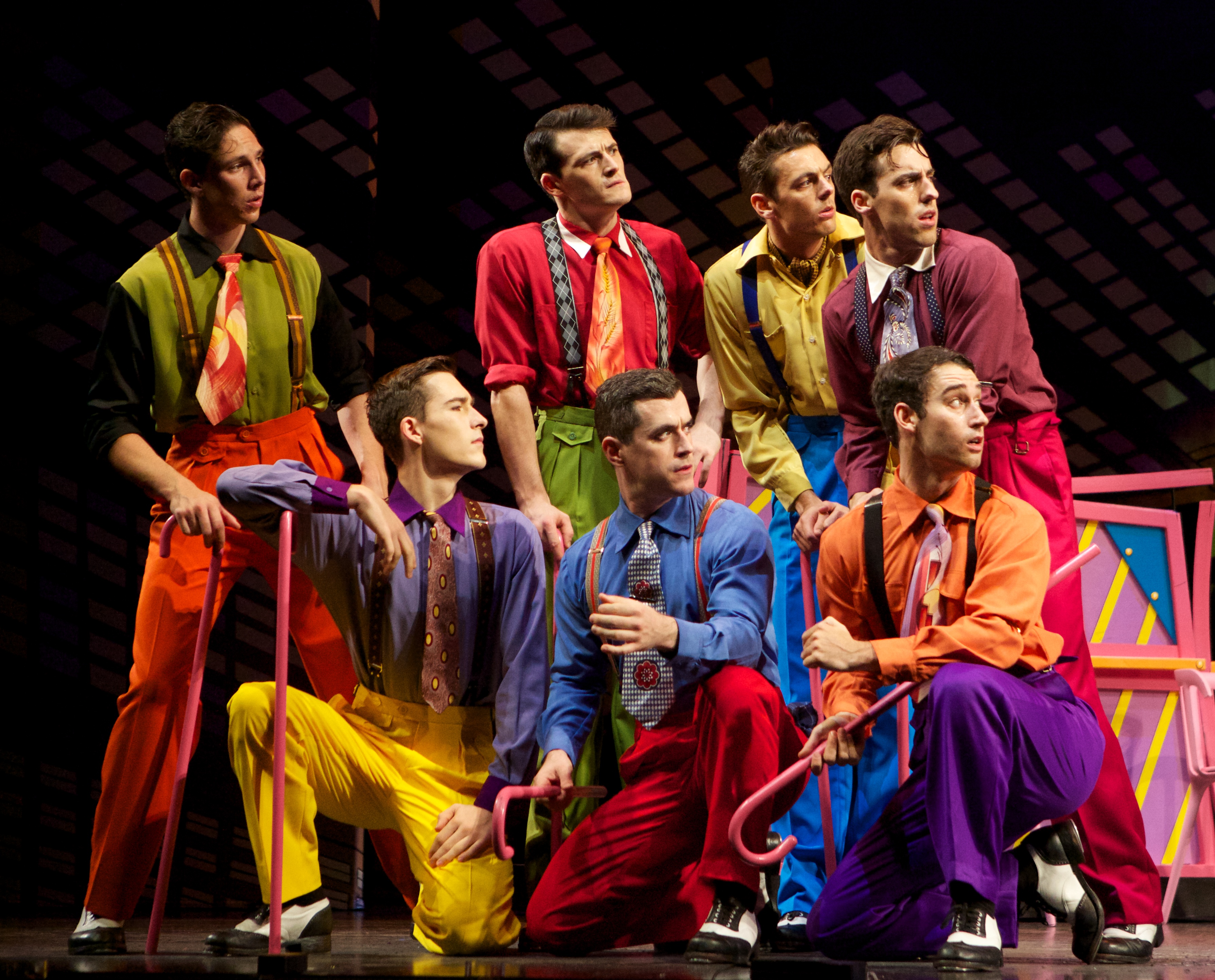
The paper-thin story is pretty silly. The seven Tap Brothers discover that they stand to inherit over $2 million from their father – but only if they can recreate his famous tap-dancing act, the Hot Shoe Shuffle. What’s more they must include April, the sister they didn’t know they had, who has two left feet.

Tap Brothers

The Tap Brothers: Morgan Junor-Larwood, Mason Schaube, Rob Mallett, Bobby Fox, Mitchell Hicks, Max Patterson, Alexander Kermond.

Though the plot has been rewritten slightly, with April telling the boys right near the top of the show that she isn’t actually their sister but the daughter of their father’s leading lady, it’s still just an excuse on which to hang some standards from the 1940s big band era (I Get Along Without You Very Well, Puttin’ on the Ritz, Shall We Dance and Ac-cent-tchu-ate The Positive among others) and some spectacular tap dancing.

However, the song and dance numbers are good enough, and the show warm-hearted enough, for the flimsiness of the plot not to really matter.

Hot Shoe Shuffle was co-choreographed by David Atkins and Dein Perry (who went on to create Tap Dogs). Atkins also directed and played Spring, the eldest of the Tap brothers and leader of the pack.

Playing opposite him as April was Rhonda Burchmore (Jackie Love and Debra Byrne took on the role in later seasons). In the original incarnation Spring and April were twins and the huge height difference between Atkins and Burchmore was a running gag in the show.

Atkins now plays the senior role of Dexter Tap and his various alter-egos, while Bobby Fox steps into the role of Spring and Jaz Flowers plays April.

Bobby_Jaz park

Jaz Flowers and Bobby Fox.

Fox and Flowers both bring their own personalities to the roles and make them their own. The height difference is no longer there but the chemistry between them sparkles.

Sporting a red wig, Flowers looks fabulous in the 1940s-style cotton frock and gorgeous gowns. Her April is a little less goofy and klutzy, and more of a feisty girl who longs to perform but lacks confidence. Flowers is in fine voice, singing the numbers with power but subtlety, and she holds her own as a dancer.

Fox brings his twinkling charisma to the role of Spring. Less hard-boiled than Atkins’ Spring, he is more of an eye-rolling cynic and perfectionist, who keeps his distance while his brothers flock to April like moths to a flame. His dancing has a lovely ease (with a cheeky nod to his Irish dancing background) and he sings well, proving himself a genuine leading man.

Atkins is a great anchor as the older Dexter, while the six other Tap Brothers – played by Morgan Junor-Larwood, Rob Mallett, Mitchell Hicks, Alexander Kermond, Max Patterson and Mason Schaube – all emerge as distinctive personalities.

The choreography, which was created as a tribute to the tap dancing legends who inspired Atkins, combines the elegant style of the 1930s and 40s with an exciting, contemporary energy and sense of fun. Overall, the dancing does it justice, while Patterson makes the most of a solo, which he nails.

How Lucky - Jaz

Jaz Flowers.

The cartoony-looking production, with set by Eamon D’Arcy and costumes by Janet Hine, feels brighter than ever. Hine’s costumes, though similar to the originals, have been redesigned with even more vibrant colours for the boys and some stunning new outfits for April, while LED lights add extra razzle-dazzle to the final tap routine.

The 11-piece band, meanwhile, under musical director David Stratton performs with panache.

Hot Shoe Shuffle is an unashamedly old-fashioned, feel-good show. This 21st anniversary production is as impressive as any that have gone before and a fun, uplifting night of theatre.

QPAC until May 25; Lyric Theatre, Sydney, July 5 – 21; Her Majesty’s Theatre, Melbourne, August 9 – 25.

Henry 4 review

Henry 4 review

Bell Shakespeare Company, Drama Theatre, Sydney Opera House

John Bell’s DNA is all over Bell Shakespeare’s new production of Henry 4. He co-directs with Damien Ryan, using the adaptation he did for the company in 1998 with a few small revisions, on top of which he turns in a marvellous performance as Falstaff.

Distilling Shakespeare’s two plays Henry IV Parts 1 and 2 into one play, Bell removes a lot of the politics and sub-plots to focus on the triangular relationship between Henry IV and his dissipated son Prince Hal, and between Hal and his surrogate father Falstaff, the old reprobate who is leading him astray.

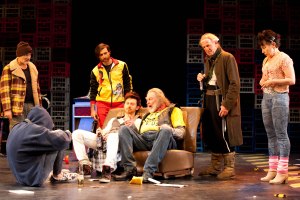
Henry4_Arky-Felix-Yalin-Matthew-John-Terry-Wendy_©Lisa Tomasetti-8839.jpg

Arky Michael, Yalin Ozucelik, Matthew Moore, John Bell, Terry Bader, Wendy Strehlow. Photo: Lisa Tomasetti

The contemporary production is staged on Stephen Curtis’ gritty, industrial set with a shipping container, jukebox and a wall of milk crates, which is partially destroyed in a riotous prelude to the play.

The colourful, streetwise vibe is reflected in the costumes (jeans, beanies and hoodies for the characters in the tavern scenes; suits for the court) along with other touches like tasers, prissy German tourists, a hapless football team, a bike courier and a mad Scotsman whose aggressive drum playing is reminiscent of Animal in The Muppets. Some of these feel like a bit of a cheap laugh but had the audience chortling delightedly.

The score meanwhile includes Queen’s We Are the Champions and London’s Calling by The Clash.

The production is robustly physical, snappily paced and very clear in its storytelling even if the musicality of the language suffers a little now and then. The comic scenes featuring Falstaff and his motley, lowlife crew are more successful than the serious scenes at court and on the battlefield, though David Whitney is in commanding form as the fiercely sharp-tempered Henry IV, who is all too aware of his fragile hold on the crown. His portrayal of the King’s descent into illness is also beautifully judged.

Bell’s Falstaff is a joy. Sporting a fat suit, ruddy cheeks and straggly, grey hair, and dressed as an aging bikie, he revels in the portly knight’s drunken vulgarity, masterfully delivering his slippery wit in a hilarious performance that also has its moments of poignancy.

Hal is not a particularly likeable character but Matthew Moore manages to make him relatively sympathetic. However, his delivery of the language is a little one-note, which works against Hal’s transformation to heroic prince.

Among a solid ensemble Sean O’Shea is extremely funny as Justice Shallow, playing him as a doddery harry high pants, and Tony Llewellyn-Jones is a wonderfully suave Westmoreland.

All in all, Henry 4 is a very entertaining version of Shakespeare’s history plays.

Ends May 26.

An edited version of this review appeared in the Sunday Telegraph on April 28.