The Unknown Soldier

Lend Lease Darling Quarter Theatre, May 16

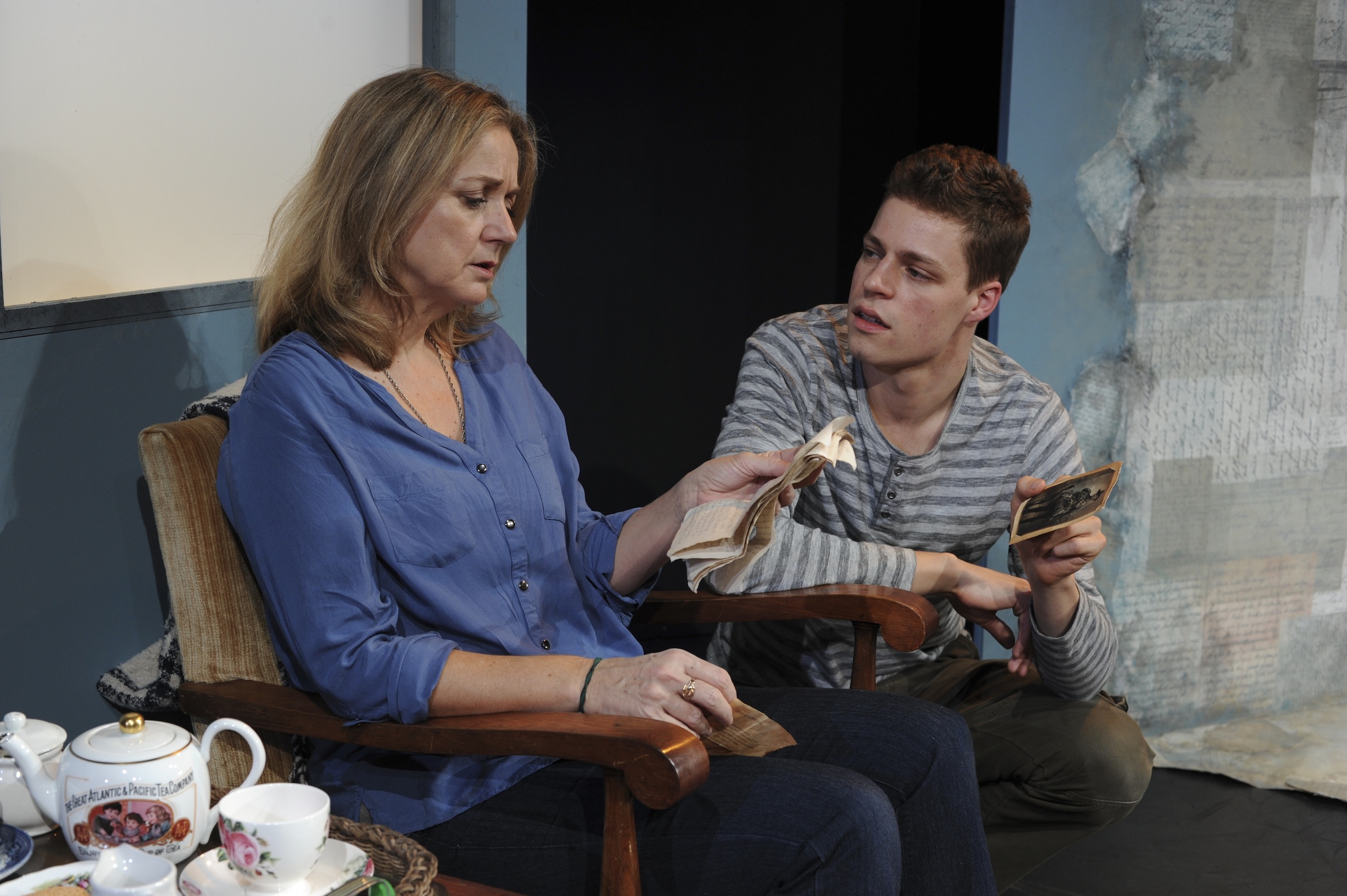
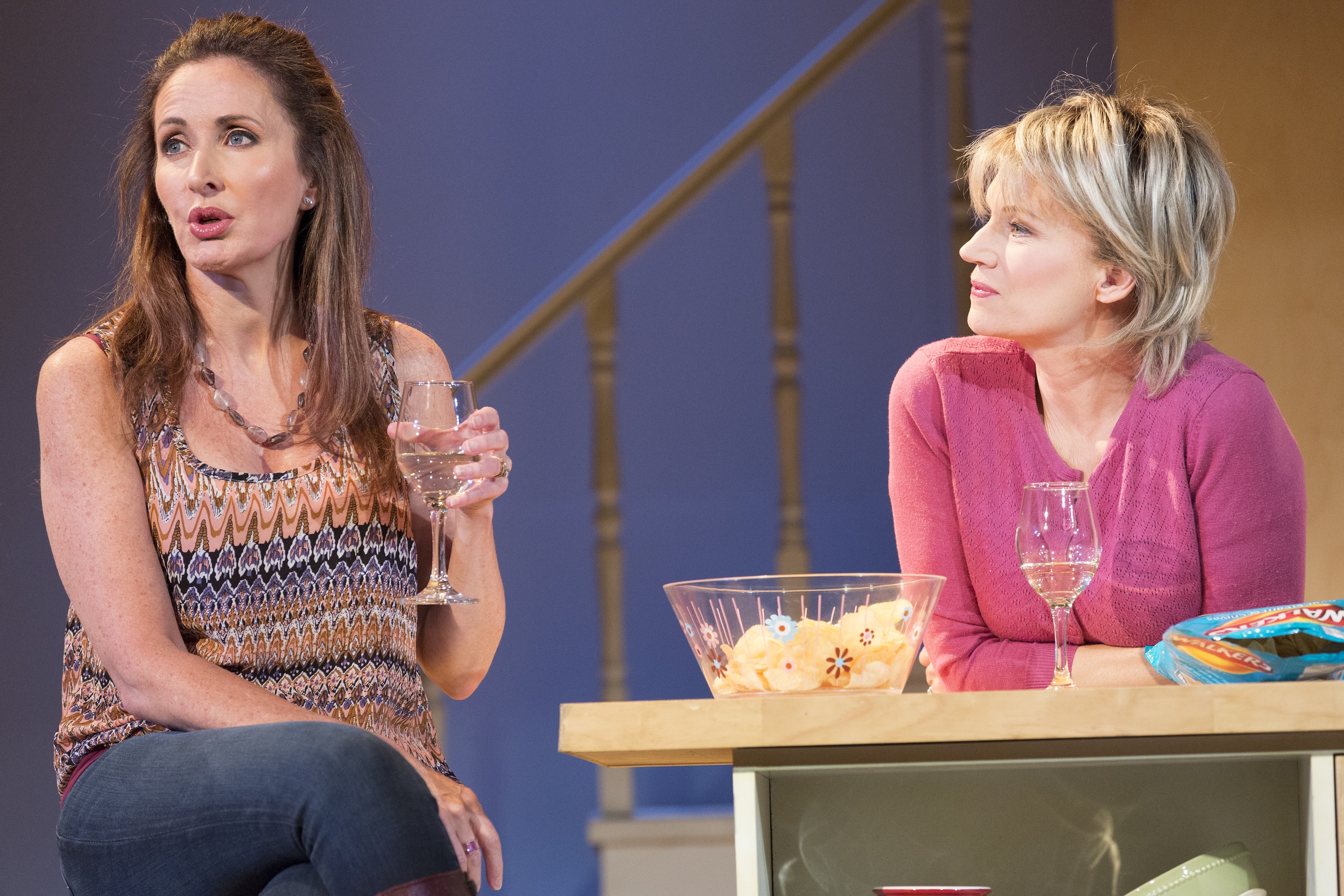
Sandra Eldridge and Felix Johnson. Photo: Heidrun Lohr

Sandra Eldridge and Felix Johnson. Photo: Heidrun Lohr

Monkey Baa Theatre Company has made its reputation with delightful stage adaptations of well-known books and stories for children and young people (aged three to 18).

The Unknown Soldier is its first brand new play, written by the company’s co-creative director Sandra Eldridge to honour the centenary of World War I.

Aimed at young people aged 10+, it’s a moving two-hander, examining dark themes including the horror of war and the devastating impact of Post Traumatic Stress Disorder without shying away from their seriousness but handling them with a light touch.

The play uses a simple device to move between two eras and stories. Thirteen-year old Charlie is staying with his pacifist Aunt Angela because, as we learn during the course of the play, his soldier father has returned from Afghanistan with PTSD and needs help.

To try to distract the bored teenager from doing little but play a computer war game, his aunt produces an old suitcase she has bought without inspecting its contents. Looking through it, they discover letters from a young Australian soldier called Albert, who fought in France in the Battle of Fromelles, written to his mother.

Felix Johnson plays both Charlie and Albert. Fascinated by what he reads in the letters, Charlie starts doing research on the Internet to find out more about Albert and his fate.

Eldridge plays Aunt Angela and Grace, a volunteer nurse who goes to France in search of her son, who is missing in action, and tends to the wounded Albert.

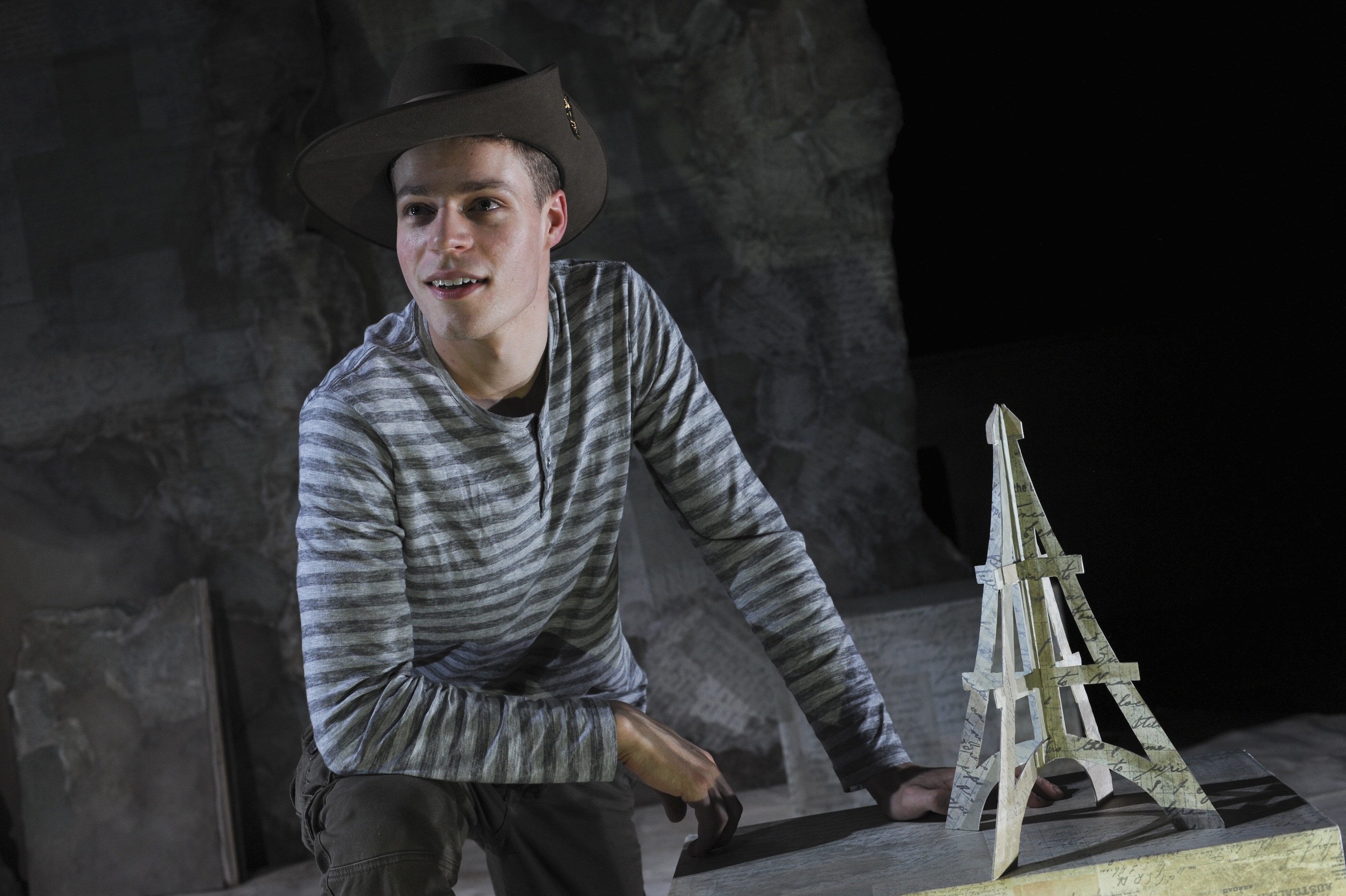
Felix Johnson. Photo: Heidrun Lohr

Felix Johnson. Photo: Heidrun Lohr

Eldridge researched the piece by examining war archives, diary extracts, books and poetry. Without the play ever feeling like a lecture, she conveys historical information about the Australian involvement in France in World War I and the horror of war both then and now.

She explains what PTSD is and how it can affect soldiers and their families. She introduces the Unknown Soldier and explains a little about who he is and what he represents. She also includes a brief section about the Australian War Memorial and touches on the meaning of ANZAC Day.

Her great achievement is to include all this within the context of an involving drama in which the information emerges naturally from the parallel stories she has created, and to convey it simply and clearly.

She has also leavened the play by folding in some gentle humour, with laughter on opening night at Charlie’s boredom, his frustration with his aunt’s slow Internet and his dislike of her organic, vegetarian cooking.

Matt Edgerton directs with great clarity on an impressive set by Anna Gardiner: a lounge room backed by a wall with jagged edges as if it has been damaged in a bomb blast, with little sections of the wall used to reveal various lighting effects. Matt Cox’s atmospheric lighting design and David Stalley’s sound help us imagine the scenes in the trenches, even though the home furniture is still used. It’s simply but effectively done.

Johnson moves convincingly between 13-year old Charlie and Albert (merely adding a slouch hat) and his revelation of Charlie’s fears for his PTSD-affected father is very touching. Eldridge is a warm, reassuring presence as both Angela and Grace.

My only quibble would be that Charlie articulates and understands ideas that might be a bit sophisticated for a 13-year old. A friend suggested it would perhaps be more convincing if the character were 15. But that’s a minor qualm.

There weren’t a huge number of young people in the opening night audience, and quite a few of those who were there were younger than 10, so it’s hard to gauge what the target audience would make of it. I imagine they would respond very positively to a thoughtful play that handles difficult themes with a great deal of integrity and care, and which seems to me to be well pitched for young people.

The Unknown Soldier plays at Lend Lease Darling Quarter Theatre until May 22. Bookings: www.monkeybaa.com.au or 02 8264 9340

Dogfight

Hayes Theatre Co, May 6

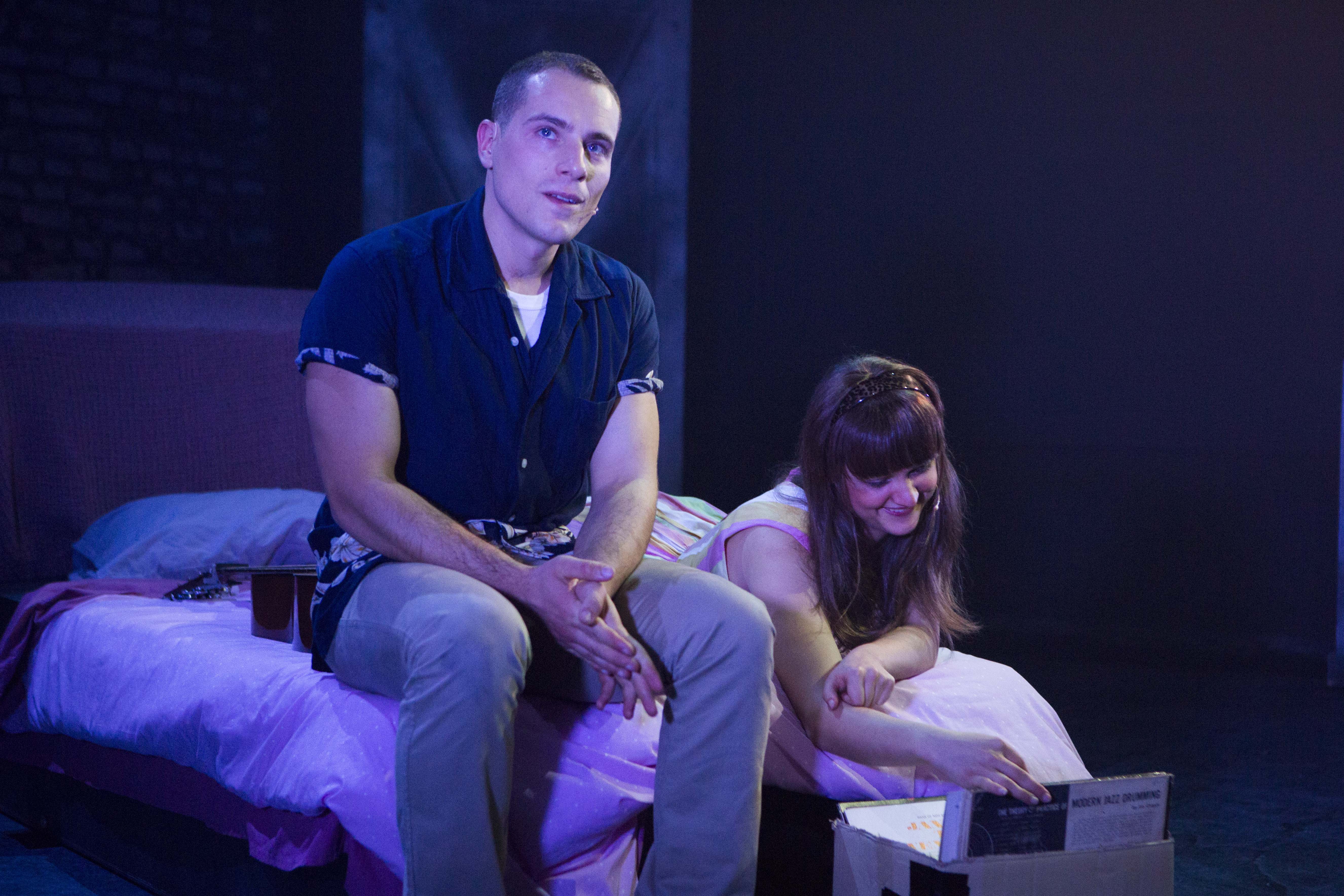
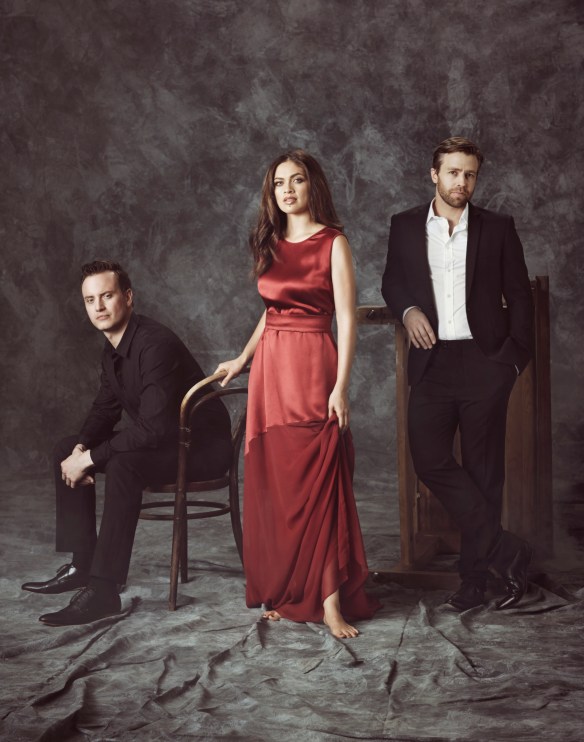
Luigi Lucente and Hilary Cole. Photo: Noni Carroll

Luigi Lucente and Hilary Cole. Photo: Noni Carroll

The musical Dogfight begins with a nasty, humiliating prank but turns into a sweet, tender show where redemptive love trumps misogyny.

Written by Benj Pasek and Justin Paul (music and lyrics) together with Peter Duchan (book), Dogfight premiered off-Broadway in 2012. It now makes its Australian premiere with a stunning production directed and produced by Neil Gooding in association with Hayes Theatre Co.

Based on a little-known 1991 film starring River Phoenix, with screenplay by Bob Comfort, Dogfight begins in 1967 with a blank-faced, clearly traumatised young marine called Eddie Birdlace (Luigi Lucente) on a Greyhound bus headed for San Francisco.

His memories take us back to 1963 when he and his two best mates – Boland (Toby Francis) and Bernstein (Rowan Witt) – spent a rowdy night on the town in San Francisco before being shipped out to Vietnam the following morning.

Swaggeringly macho, with just 13 weeks training under their belt, they naively believe they are going to storm into battle and return heroes. Their attitude to women is as aggressive as their attitude to war.

They decide to celebrate their last night on home soil with a “dogfight”, a vile “Jarhead” tradition whereby they compete to see who can bring the ugliest woman to a party. Each puts money into a pot; the winner takes all.

At the heart of the show are Eddie and Rose Fenny (Hilary Cole), the shy, awkward, guitar-playing waitress he picks up at a diner and takes to the party, then unexpectedly falls for.

Duchan has created a strong narrative structure from which the songs emerge naturally. Ranging from testosterone-powered rock numbers to lilting, wistful melodies, it’s an appealing, catchy score. Some of the songs have a folksy feel, with Rose foreshadowing the hippie era, while her number “Nothing Short of Wonderful” has something of a Sondheim influence.

James Browne and Georgia Hopkins have designed an economical set backed by a gauzy “brick wall” scrim featuring an enormous image of Cole’s face through which we glimpse the terrific six-piece band led by musical director Isaac Hayward. Four large diner seats are moved around into various configurations for the different locations. Effectively lit by Ross Graham and Alex Berlage, it’s a flexible space in which Gooding keeps the tightly choreographed action flowing freely: yet another clever design solution for the tiny 111-seat venue.

Cole is beguiling as Rose. She is naturally very pretty but manages to convince us of Rose’s vulnerability and gaucheness (helped by Elizabeth Franklin’s excellent costuming) as well as her strength, spirit and humour, while her pure, shining voice suits the character’s innocence perfectly.

Lucente is equally impressive as Eddie, conveying the turmoil of emotion coiled beneath the tough, terse exterior in a beautifully understated performance that moves from bravado to brokenness. There is great chemistry between the two of them, and both moved me to tears.

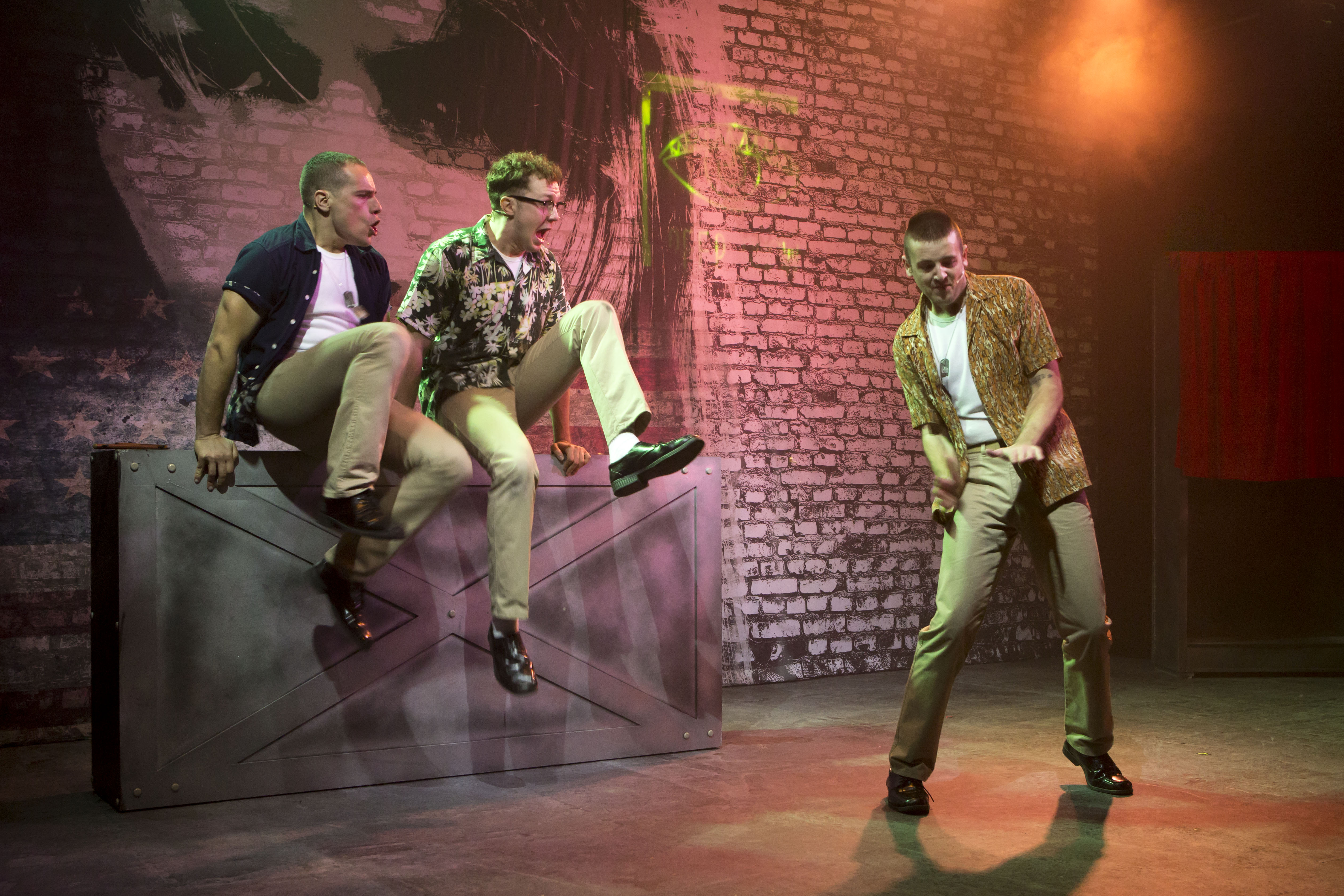
Luigi Lucente, Rowan Witt and Toby Francis. Photo: Noni Carroll

Luigi Lucente, Rowan Witt and Toby Francis. Photo: Noni Carroll

Among the strong ensemble cast of 11, Francis radiates Boland’s pumped-up, bone-headed machismo, while Witt gives a very convincing portrayal of the geeky Bernstein, who gets high on the general macho posturing and snaps at one point in a surprisingly brutal moment.

Johanna Allen brings powerhouse vocals to the role of the brassy hooker Marcy, another of the so-called “dogs”, while Mark Simpson takes on a number of very different roles with chameleon ease.

Dogfight portrays abhorrent macho behaviour, which the writers neither condone nor judge, but they make it clear that this is the culture that the young marines have grown up in and been shaped by: a culture, which dehumanises women as much as the enemy they are off to fight, but also knocks the soul out of the young men themselves.

When the musical played in London last year, some slammed it for its ugly misogyny, but the writers undercut this with the central love story, which is sweet, sad and genuinely moving. Our sympathies, meanwhile, are clearly with the women in the show, who are strong, funny and forgiving.

This production captures all that nuance most touchingly. Once again, the Hayes Theatre proves to be a leading light in Sydney’s musical theatre scene.

Dogfight plays at the Hayes Theatre Co until May 31. Bookings: www.hayestheatre.com.au or 02 8065 7337

A version of this review ran in the Sunday Telegraph on May 10

Anh Do interview

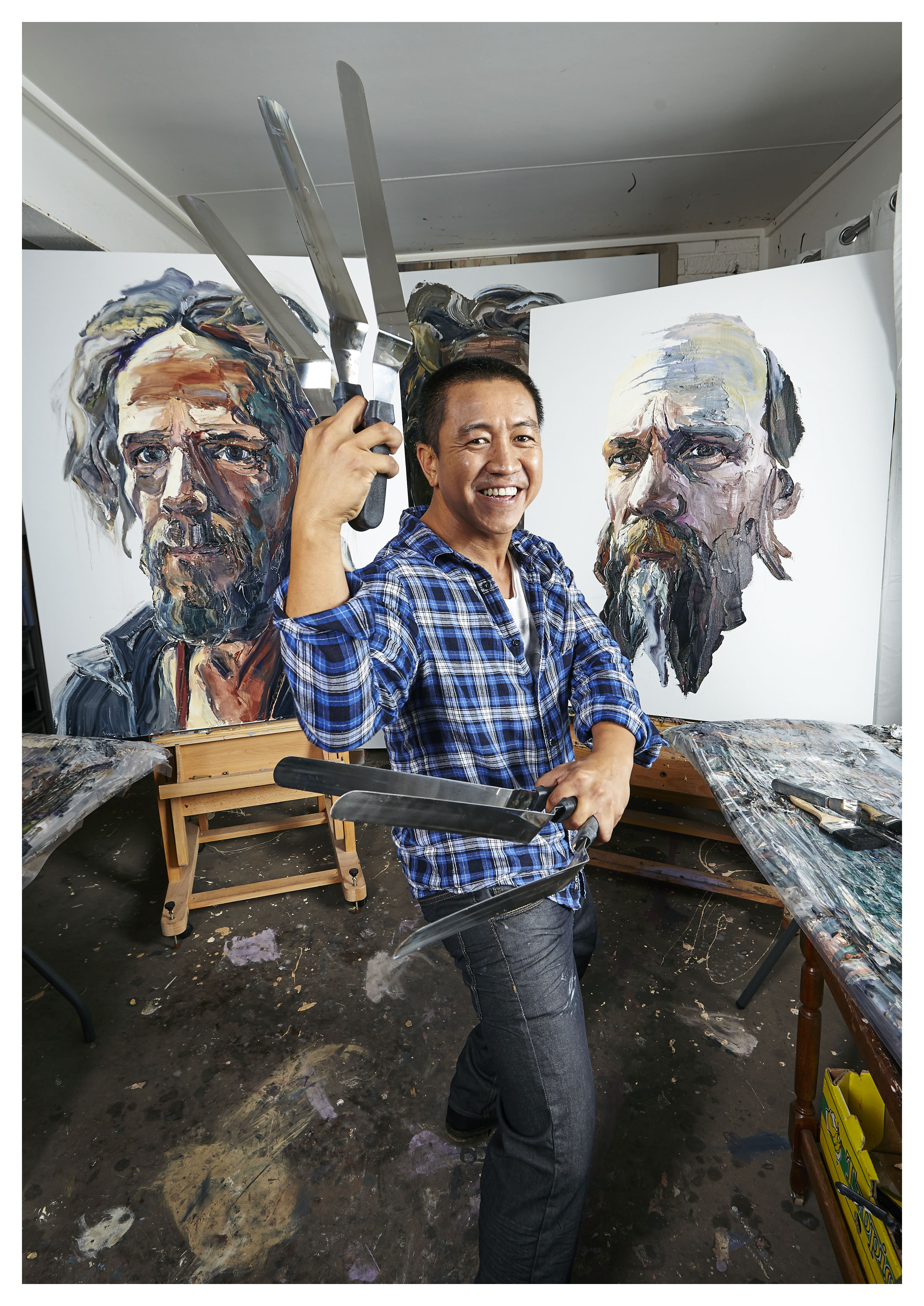
Anh Do in his studio. Photo: Eamonn McLoughlin

Anh Do in his studio with two of the portraits in his first solo exhibition Man. Photo: Eamonn McLoughlin

When the finalists for last year’s Archibald Prize were announced, many were surprised to see that comedian Anh Do was represented with a portrait of his father.

Do himself was utterly thrilled: “Just to walk into the Art Gallery of NSW and see what was sitting in your garage a few weeks earlier hanging up there was wonderful,” he says.

“The woman who hung the exhibition said, ‘I hope you like the spot, Anh.’ I said, ‘I’m just so thankful. I’d be happy to be hung anywhere in the Archibald. I’d take cubicle three of the men’s.”

It was no flash in the pan either. Do won the 2014 Kogarah Art Prize with another portrait and currently has his first solo exhibition at Olsen Irwin in Woollahra, one of Sydney’s leading commercial art galleries.

Do famously arrived in Australia at age three as a refugee when his family fled strife-torn Vietnam in a leaky boat. Drawing on his life story in his stand-up shows, he has become one of Australia’s best-loved comedians, filling venues and popping up on TV programs such as Thank God You’re Here and Dancing With the Stars on which he was the runner-up in 2007.

Russell Crowe is going to direct a film based on Do’s award-winning autobiography The Happiest Refugee for which Do has been working on the screenplay and will play his own father.

Anh Do's portrait of his father. Photo: Eamonn McLoughlin

Anh Do’s portrait of his father. Photo: Eamonn McLoughlin

In between all that, he now spends much of his time painting in a large garage at his home on the Illawarra coast where he lives with his wife Suzie and their four children.

The solitary hours spent applying thick oils to canvas suits his temperament.

“People who know me will tell you that I’m more of an introvert than people think. Actually, a lot of comedians are and it surprises people,” he says, chatting at his home with its view of the ocean.

“I love being on stage and connecting with 2000 people but you don’t really see me that often at the Logies and all that red carpet stuff. I’d rather just have dinner with my wife and kids.”

Do has always loved art but has come to it relatively late – partly because his father, who was an alcoholic, walked out on the family when Do was 13. He didn’t see his father again until he was 21, though they are now very close.

“As a kid I loved art, loved it,” he says. “But somewhere along the line in school I stopped taking art classes because people told me if you want to get high marks in the school certificate don’t do art.

“My mum raised three kids on her own on sweatshop wages of about six bucks an hour so there was a lot of late rent and landlords knocking on the door,” recalls Do.

“When I was about 10 I remember thinking, ‘one day I’m going to buy a big house we can all live in together and we’ll never have to be hassled by landlords again’. So I went to school and asked around and said, ‘guys what’s the job that pays the most money?’ and someone said, ‘lawyers get loads’ and so I thought ‘that’s what I’m going to be’.”

Do got into Law at university. “But I couldn’t help myself. I signed up to study art at TAFE simultaneously. You can’t really do both so I ended up skipping all the law classes because they were really boring and going to all the art classes. Then, of course, comedy came along and wiped both out,” he says.

“But about four or five years ago, a comedian mate called Dave Grant passed away and a cousin of mine passed away in his late 20s. I always thought I’d paint one day after I retire, buts something made me go, ‘you know what, I’ve got to do it now’. So I went back to TAFE.”

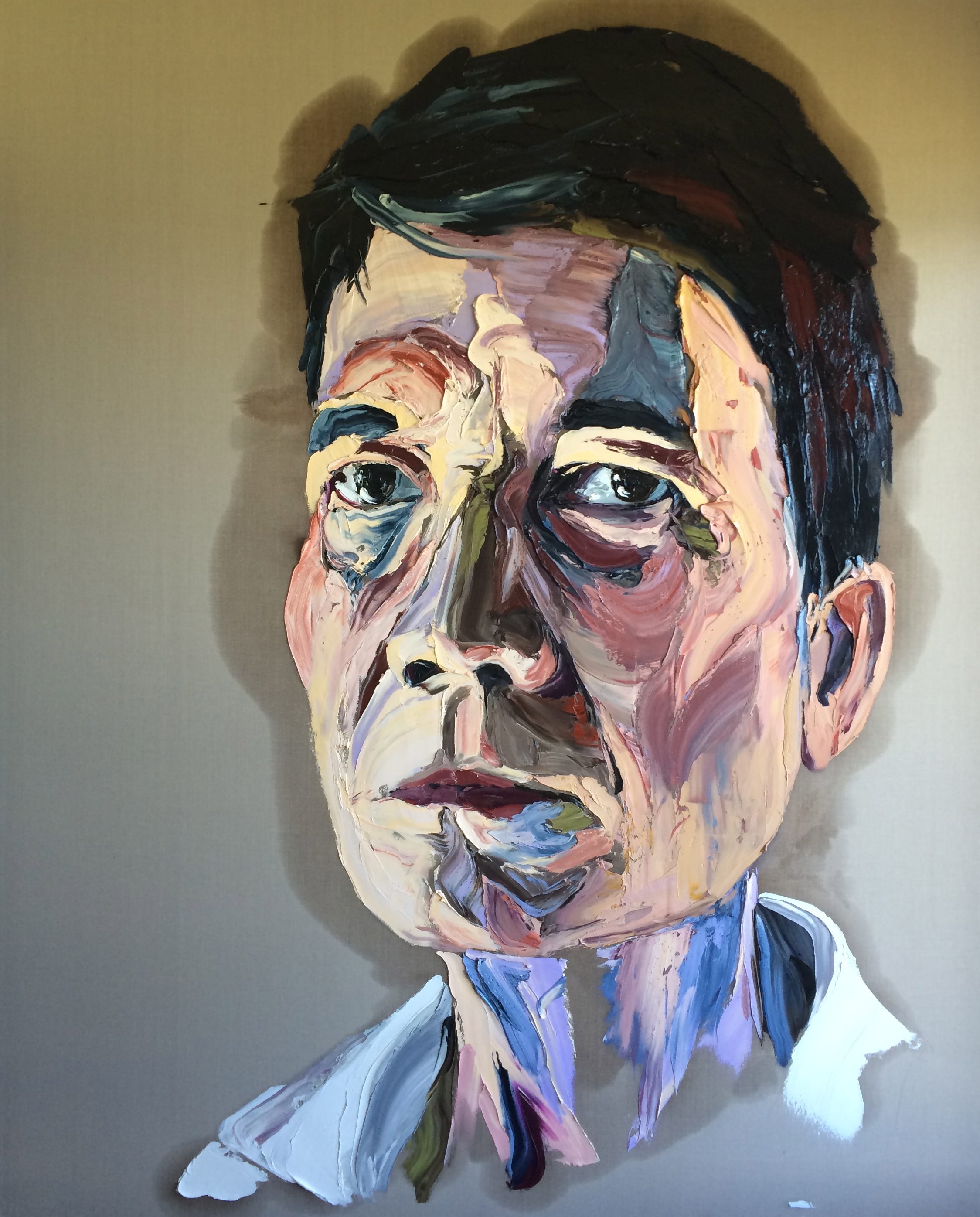
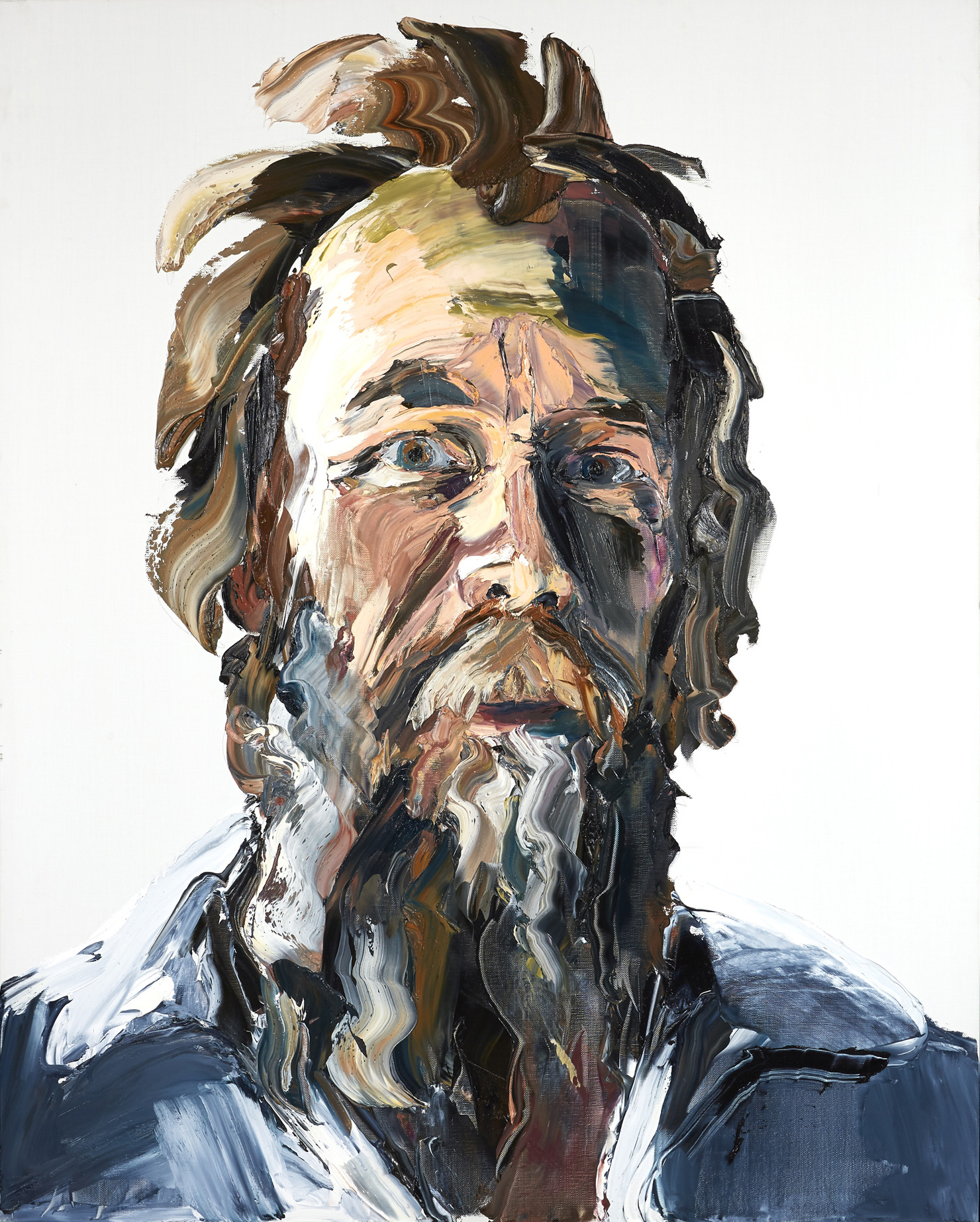
One of the portraits in Anh Do's solo exhibition Man. Photo: Eamonn McLoughlin

One of the portraits in Anh Do’s solo exhibition Man. Photo: Eamonn McLoughlin

His solo show, entitled Man, features a series of portraits, many of them with a haunting gaze similar to that of his father in his Archibald painting.

“These guys that I’ve painted, they’re lived a full life and they’ve had their ups and downs and it shows in their eyes. That’s what interests me,” says Do.

“A lot of being a comedian is about observing people. When I’m on stage I look at people in the audience. It might be 2000 people in the State Theatre but I’ll look at a few people and make eye contact with them. It’s an incredibly powerful connection for two people who have never really met properly.

“I’m interested in everything about people. Not just, ‘what do you do for a living?’ but I want to know about their fears and their sadnesses and listen to their regrets and all of that, both sides of it, the happy and the sad. A lot of my work is driven by what makes people human.

“Years ago my comedy used to just be funny gags strung together with dodgy segues but recently I’ve been delving into my childhood so some stories make people laugh and other make people cry. My comedy shows these days are so much richer for the fact that there’s laughter and tears in the audience.”

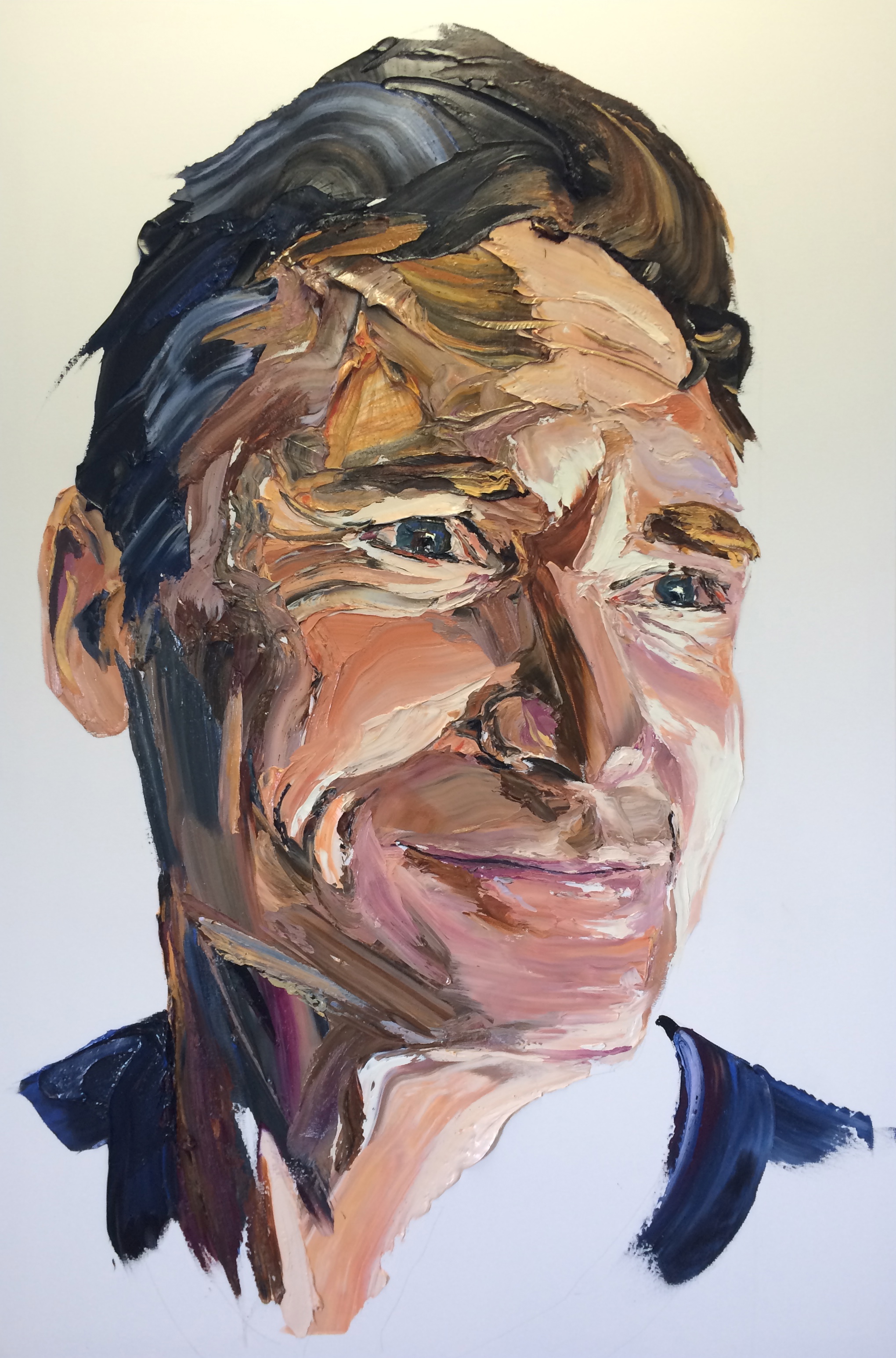
Anh Do's portrait of comedian Dave Hughes. Photo: Eaonn McLoughlin

Anh Do’s portrait of comedian Dave Hughes. Photo: Eaonn McLoughlin

Do credits fellow comedian Dave Hughes with encouraging him to draw on his own experience.

“A couple of years ago me and Hughesy had just finished filming Thank God You’re Here. We were just hanging out and I started telling him real life stories and he goes, ‘mate, this stuff is fascinating, you should tell it on stage,” recalls Do.

“I said to Hughesy, ‘I want to make people laugh not cry’ and he said, ‘Anh, make ‘em laugh and cry.’ That’s probably why I started mixing in all that real life story so I have Hughesy to thank for my show becoming richer and deeper.”

Hughes was one of the first people Do painted. He entered the portrait into the Swan Portrait Prize in Perth and was selected as a finalist.

Do says that now that he paints regularly, he notices things he never did before.

“I used to look at a rusty old tap and it’s just a rusty old tap but now I see 15 shades of brown and orange and there’s even a lot of green and a couple of shades of purple. Before, it was a rusty old tap, now it’s a beautiful array of colour. These days, I can tell you the eye colours of most of my good friends. Before that I’d be stumped.”

Do has been performing his comedy show The Happiest Refugee Live for three years now but there is so much demand for it that he will take it on another national tour in May and June.

“It’s not just stand-up. There are videos and pictures and props on stage. It’s almost a theatre show,” he says.

It’s certainly an inspiring story – as is Do’s positive outlook on life.

“When we were at sea (en route to Australia) we ran out of food and water and we could easily have died,” he says. “My mum always taught us as kids that we are lucky just to be alive so you may as well make your life worth something, throw something into the hat and contribute.”

Do’s exhibition Man runs at Olsen Irwin Gallery in Woollahra, Sydney until May 10

A version of this story ran in the Sunday Telegraph on April 19

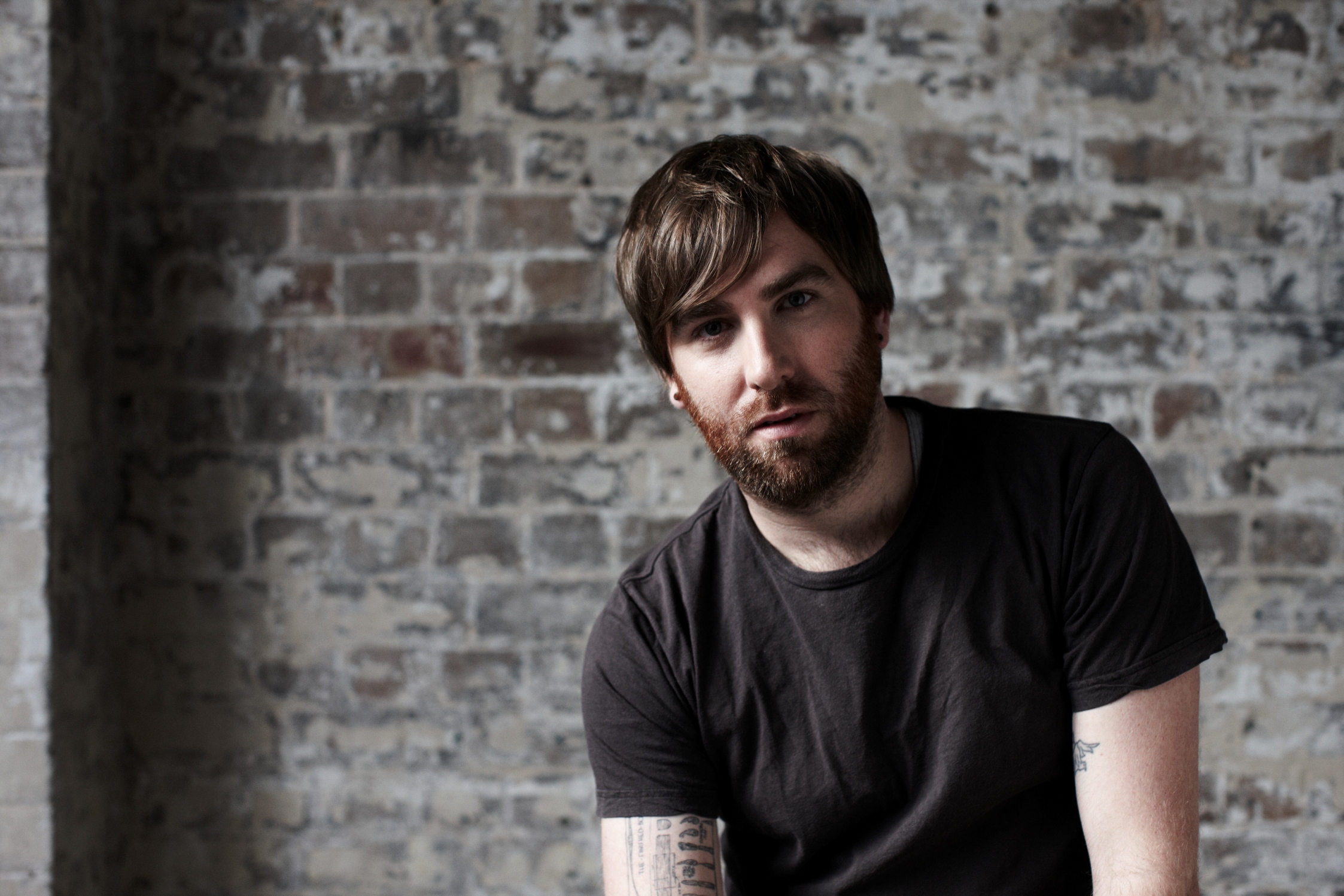
Josh Pyke makes his orchestral debut: interview

Performing live with the Sydney Symphony Orchestra is a dream come true for Australian indie musician Josh Pyke.

Josh Pyke. Photo: supplied

Josh Pyke. Photo: supplied

“Hearing intimate music that’s been played out in your head in your bedroom, with a vast orchestral sound behind it is something that’s been a dream of mine for a long time – well before I had any reason to think that it might happen.

“I’m extremely excited and very nervous as well. I think it’s going to be a pretty wild experience for me,” says the ARIA Award-winning singer-songwriter.

Pyke selected the songs with input from his fans: “I posted something on Facebook and said, ‘what would you like to hear?’

“We did a poll and I was really pleased to see that some of the most popular ones were actually B-sides and album tracks, they weren’t necessarily the singles. That was kind of what I was hoping. I didn’t want to just do Make You Happy and Middle of the Hill. I love those songs but in an orchestral context I was wanting to push the limits of the audience as well as the songs,” says Pyke.

“There are some singles but there are also some glaring omissions. Make You Happy isn’t there or No One Wants a Lover: those songs, which were more like big pop songs. I’m sure there would have been a way to make them work but I wanted to hear songs like Fill You In, which is one of my favourite tracks, definitely one I feel emotionally connected to.”

The SSO commissioned 10 emerging composers from across Australia to orchestrate the music, with Pyke discussing each song with them but giving them a free rein to interpret the material pretty much as they wanted.

The Lighthouse Song, which is quite a laid-back folk song, has taken on a slightly more Sufjan Stevens, joyous feel, which is interesting. Memories & Dust, which is kind of upbeat on the record, has taken on a more melancholy vibe,” he says.

“I really subscribe to the idea that a recorded version of a song is just a specific moment in time. After years and years of playing the songs live, they take on a different life. And I don’t listen to my records. The version of my own songs that I have in my head is actually pretty different to the recorded version.

“When I play them live with the band they take on a life of their own and when I play them solo they change dramatically so I really wanted the arrangers and composers to take their own kind of attitude towards it. The songs are a framework; not necessarily something rigid.”

Perth-based composer Lachlan Skipworth was excited to be offered the opportunity to orchestrate Leeward Side for the concert.

“I love his music. For me, I wanted to be faithful to the original song,” says Skipworth.

“It’s got this relentless rhythm that keeps driving forward through the whole song. At the same time, it’s a quietly melancholy song. I took a model from Ravel’s Bolero, (which) is kind of the same thing.

“I have underpinned the song with two snare drums – except for one bit where Josh and I decided to make a change from the recorded version and slow it down.”

“It’s been a really interesting process,” says Pyke. “Some of the songs have remained fairly faithful to the original and some of them have diverged pretty dramatically. But I feel like every arrangement has served the song.”

Josh Pyke Live with the SSO, SOH, April 29 & 30. Bookings:www.sydneyoperahouse.com or 02 9250 7777

A version of this story ran in the Sunday Telegraph on April 19


The Rocky Horror Show

Lyric Theatre, April 15

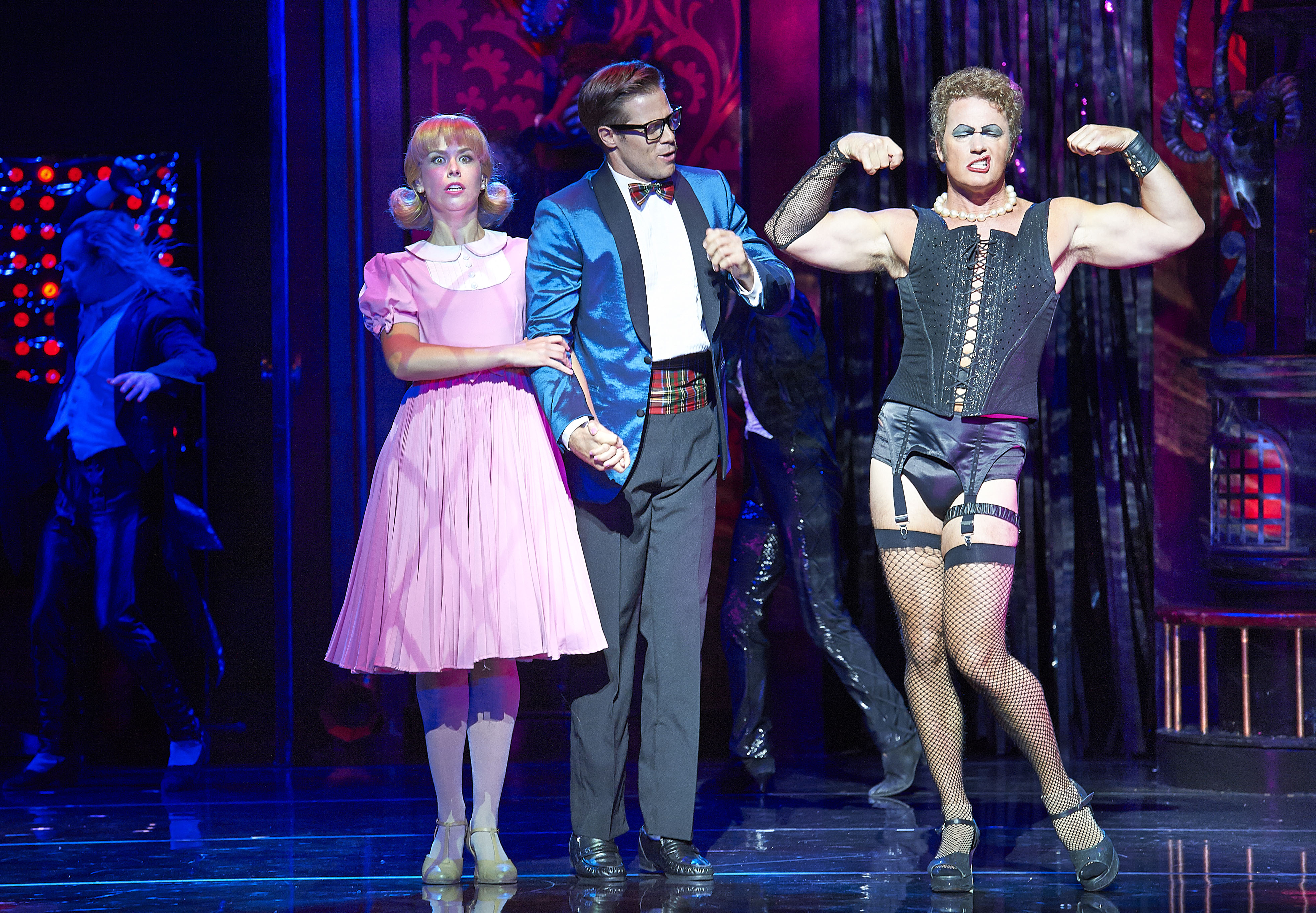
Amy Lehpamer, Stephen Mahy and Craig McLachlan. Photo: Brian Geach

Amy Lehpamer, Stephen Mahy and Craig McLachlan. Photo: Brian Geach

It was great when it all began….. The Rocky Horror Show started life as a small, gritty production whose outrageous parody of 1940s to 1970s B-grade sci-fi and horror films felt genuinely subversive, shocking and theatrically groundbreaking.

Australian director Jim Sharman and designer Brian Thomson had a great deal of input in helping Richard O’Brien (who wrote book, music and lyrics) create the aesthetic. They were also instrumental in expanding, developing and guiding the show from an experimental production Upstairs at London’s Royal Court Theatre in 1973 to the Chelsea Classic Cinema on the Kings Road and from there to world, taking it to the screen too as The Rocky Horror Picture Show.

Over the years, the musical has become lighter, brighter and tamer: an anodyne parody of itself. These days it’s called Richard O’Brien’s Rocky Horror Show and so much of the edgy strangeness that made it a cult in the first place has been lost along the way.

While it is never going to shock in the way that it originally did, I’m sure there is a stripped-back, darker, dirtier, sexier production, closer to its roots, just longing to do the timewarp in Australia. Gale Edwards tried in 2008 with a (fairly glossy) production starring iOTA, but though it had a lot of going for it, it still didn’t manage to capture the danger of the original. (Apparently O’Brien and the British producers disliked some of what she had done and insisted on last minute changes).

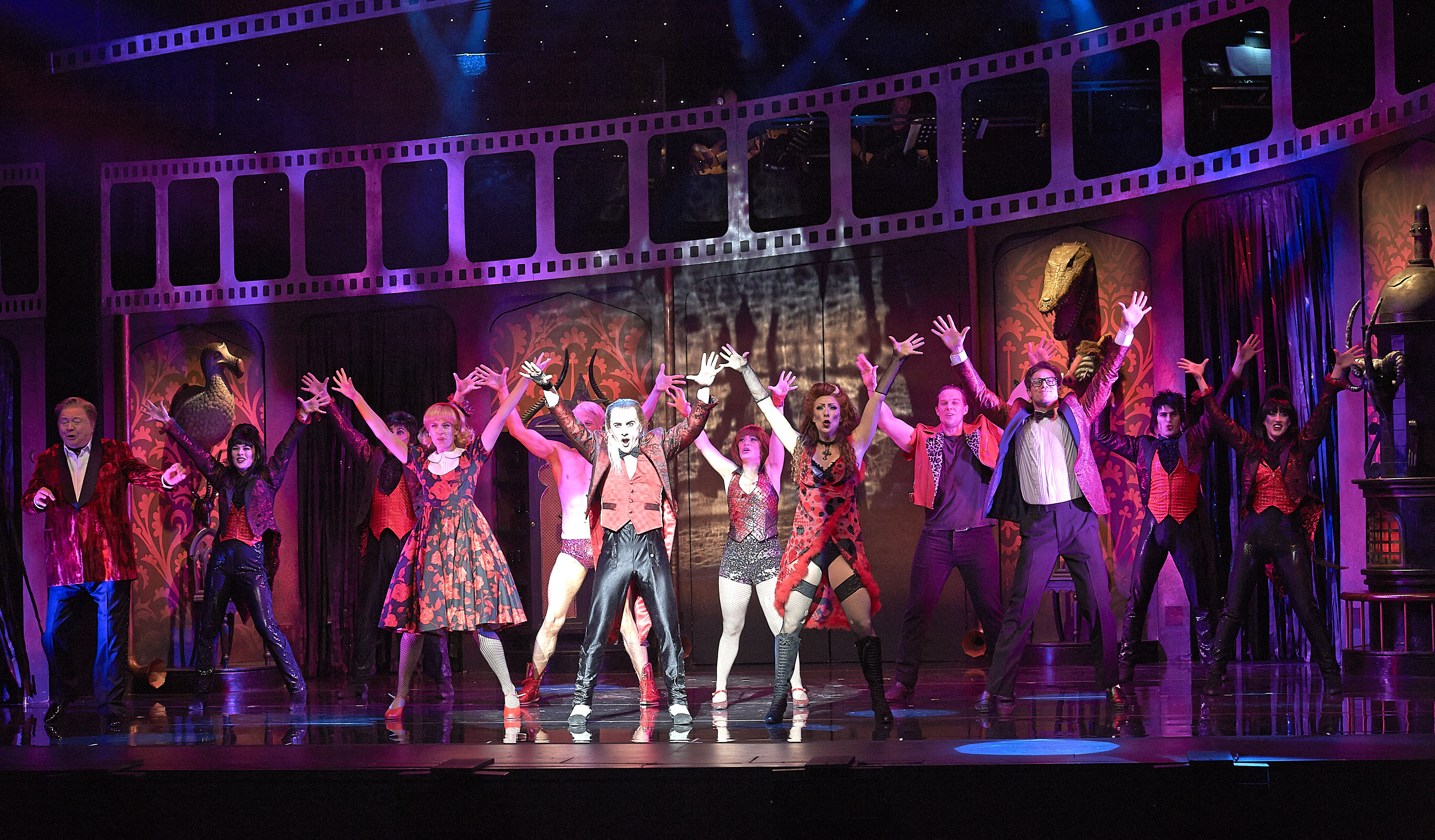
For this 40th anniversary production, which originated as a UK tour, Christopher Luscombe directs one of the loudest, most colourful, glib productions yet. Gliding across the surface of the show, it’s a cartoon-like, bubblegum, party version verging on pantomime.

Hugh Durrant has designed a flexible set framed by rolls of film. The bottom right corner of the ruched front curtain is slightly torn, but that’s about it for any kind of grubbiness. Instead, the perky aesthetic is established right up front with a cartoon car for Brad and Janet and a cartoon castle, with comical Phantoms poking their heads out from behind it. There’s a fairly opulent interior for “the Frankenstein place” and some sci-fi looking gizmos for the science lab.

Sue Blane has reworked her original costumes to make them brighter, cleaner and sparklier, which work well within the world created.

The cast of Rocky Horror. Photo: Brian Geach

The cast of Rocky Horror. Photo: Brian Geach

Craig McLachlan is a forceful presence as Frank-N-Furter, a role for which he first donned the fishnets in 1992 – but not in the way Frank should be. He goes for broke, strutting his stuff to the max but all too often his shameless mugging goes a step too far.

He frequently breaks the fourth wall. Most Frank-N-Furthers interact with the audience but not to the degree that McLachlan does. So many of his winks, leers and suggestive gestures are overdone that it becomes hammy and his comical antics during the seduction of Brad and Janet are plain tacky.

Frank should be irresistibly sexy, crazed and dangerous. McLachlan’s Frank is none of these things. Instead he plays the role for laughs.

As the squeaky clean Brad and Janet, Amy Lehpamer and Stephen Mahy give nicely centred performances that help keep things real amid the frenzy. Lehpamer’s Janet evolves dramatically and vocally over the course of the show, to match the character’s growth, and both sing strongly.

Angelique Cassimatis is a spunky dynamo as Columbia, shining in the role. Jayde Westaby gets the show off to a great start as the usherette, Kristian Lavercombe brings a soaring rock voice to a rather manic Riff Raff, and Bert Newton as the Narrator is, well, Bert Newton.

The production has little heart or teeth, and if you didn’t know the story – such as it is – some of it could well be lost in the frenetic carry-on, with the ending coming somewhat out of nowhere. Nonetheless, the show has been selling out around the country and many in the Sydney opening night audience embraced as it as pure fun. It is fun  – but there is so much more to Rocky Horror than that.

The Rocky Horror Show plays at the Lyric Theatre until June 7. Bookings: www.ticketmaster.com.au or 136 100

A version of this review ran in the Sunday Telegraph on April 19


Hayden Tee interview

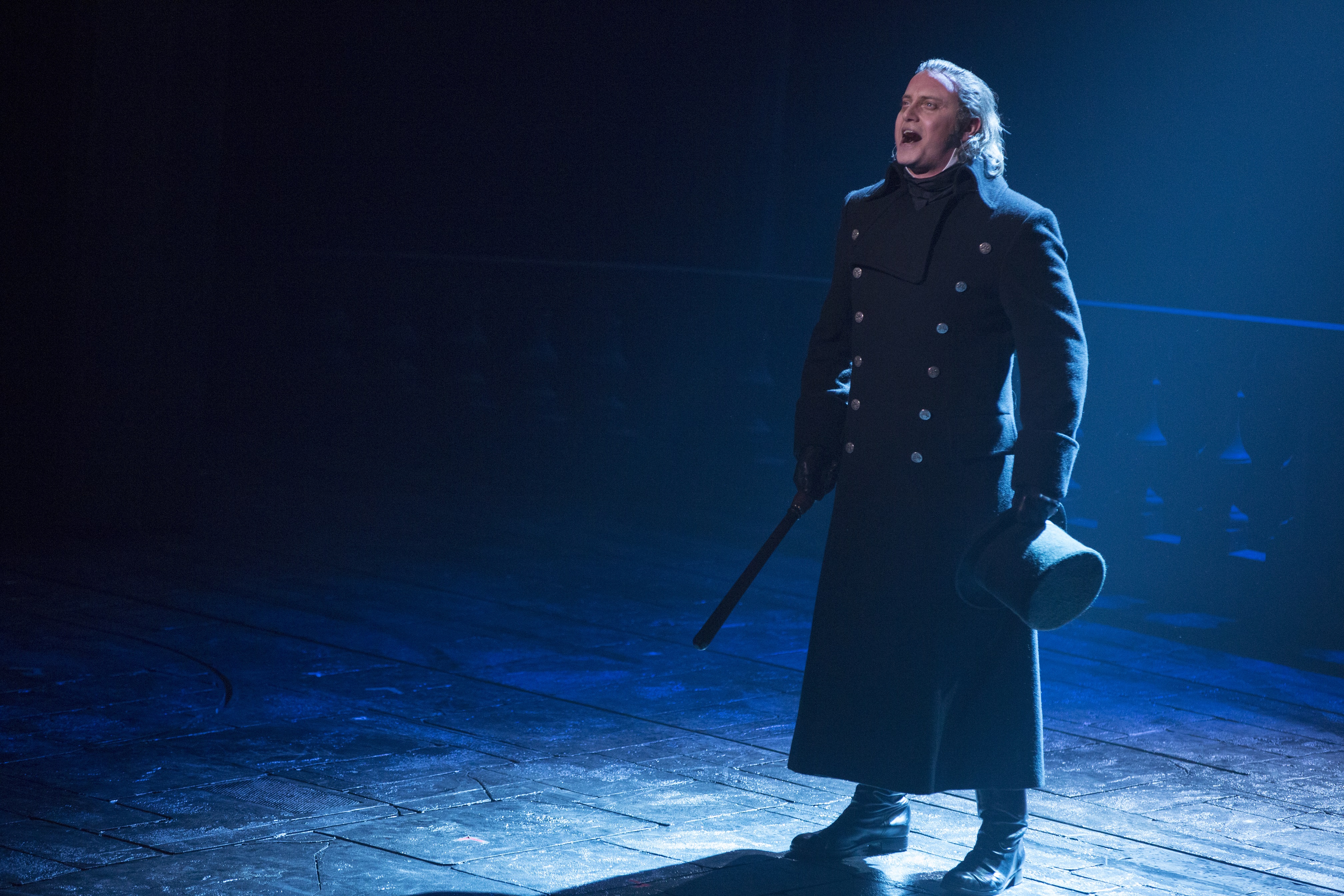
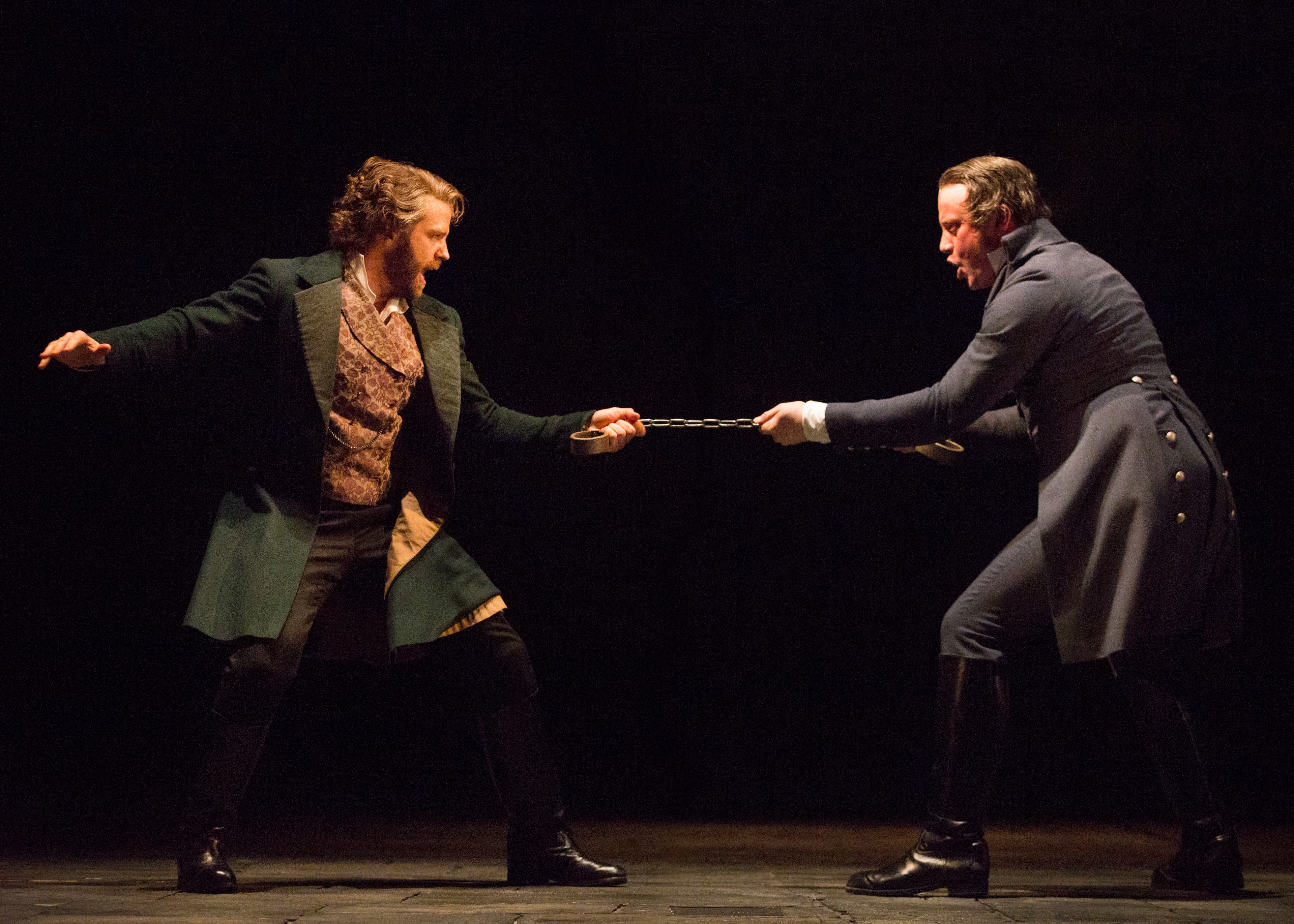
Hayden Tee (left) with fellow Les Mis cast members Patrice Tapoki (Fantine) and Simon Gleeson (Valjean). Photo: supplied

Hayden Tee (seated) with fellow Les Mis cast members Patrice Tipoki (Fantine) and Simon Gleeson (Valjean). Photo: supplied

In early 2013, Hayden Tee was in Pittsburgh performing in a musical called 1776, playing a strutting landowner with a chilling song extolling the slave trade. The US tour of Cameron Macintosh’s new production of Les Misérables happened to be in town at the same time and unbeknown to Tee someone from the company saw his performance.

Out of the blue, Macintosh’s London office asked him to record videos of him singing Stars from Les Mis and his song from 1776. Several auditions later, both online and in person in Australia, Tee landed the prize role of Javert in the Australian production, for which he has won rave reviews.

After six months in Melbourne and two in Perth, the production is currently playing in Sydney. Chatting in his dressing room at the Capitol Theatre, Tee is great company. He’s never been happier, he says, and he certainly exudes a tangible feeling of excitement, bonhomie and wellbeing.

He has done his dressing room up as a kind of home away from home for the next few months with a pink wall, red sofas, coffee table, lamp, photographs and several soft toys from fans including a Jabear (a small bear dressed as Javert) and a penguin.

New Zealand-born Tee began his career in Australia after studying at NIDA but moved to the US five years ago where his credits include the Wolf/Cinderella’s Prince in Into the Woods in Atlanta, Freddy in My Fair Lady in Boston, Arthur in Camelot and Rutledge in 1776 in Pittsburgh and, most recently, Jack in a new musical called Being Earnest in San Francisco.

However, he leapt at the opportunity to return to Australia to play Javert, the implacable policeman who hunts reformed convict Jean Valjean (played by Simon Gleeson) across the years.

“I moved to America because I wanted to do new musicals and be the first to sing a song. But I got there are realised that in order to do that you’ve actually got to do a lot of crap, you know what I mean,” he says with a chuckle.

“The good ones come along very seldomly. In workshops it’s an amazing process but it takes time to hone something so it’s really nice to come here now for Les Mis. I think it’s absolutely my favourite role that I’ve ever played. I’ve wanted to do it for a long time,” says Tee, who in 2005 played the young, love-struck student Marius in London’s West End.
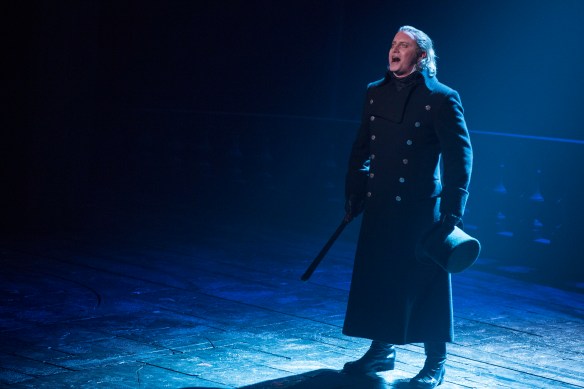
Hayden Tee as Javert. Photo: Matt Murphy

Hayden Tee as Javert. Photo: Matt Murphy

Tee sees Javert as more of “an antagonist” than a villain. “I’ve grown up with these characters, Marius at 25 and now Javert at 35. I love Javert. He’s not a villain. He’s written in such a way that he’s just a man doing what he thinks is right. I have to walk out there every night firmly believing that he’s the hero and he is trying to get Valjean off the streets to protect people,” he says.

“Javert doesn’t get to see that Jean Valjean meets the Bishop and has a real life change. He doesn’t get to see that Jean Valjean finds a new reason to live in this girl he looks after. When he finally sees an element of that in the sewers where he’s got Marius and he says, ‘let me go, the boy’s done nothing wrong’, that’s when the whole thing starts to fall apart for him.

“(The character) is so well written, it’s so multi-layered. I’m openly gay and very different to Javert so it’s personally rewarding to prove to myself and others that I can inhabit the particular type of masculinity required for a role like this,” adds Tee.

Born in a small New Zealand town called Maungaturoto (population around 800), Tee (who turns 35 in June) began acting in his teens.

“There was a very strong theatre group in the village where I grew up. My stepfather and mother and little brother are now involved. That’s where I started. I remember I was very shy growing up and my Nana thought it would be a good idea to boost my confidence by sending me along to the Otamatea repertory theatre – and it did.”

Mind you, he never suspected then that it could become a career. “People including myself didn’t think it was possible that you could get paid for doing that. My Dad now can’t quite get his head around the fact that it’s professional theatre. I think he still thinks I have a job and it’s kind of what I do on the side.”

He does, in fact, have another job that he has done between acting gigs and, for a while, alongside his theatre career: fashion make-up – though one suspects there won’t be much time for that in the coming years.

“I love fashion,” says Tee. “In New York I spend so much money on clothes. I feel a little bit guilty but I’ll just have to wear them now. That’s the world I got into in New York more because I’m a make-up artist as well. I designed 14 shows for fashion week in New York in February last year. For years I tried to keep them very separate and would never talk about the make-up stuff if I was acting and vice versa. I guess as I’m getting older, I think, ‘who cares?’”

Tee was first introduced to Les Misérables by his stepfather. “He was courting my mother and to get in my good books he bought me the video of the 10th anniversary production of Les Mis and I watched that on repeat until it fell apart. I didn’t know the show. I watched it and went, ‘oh my god, this is amazing.’ I just loved it.”

The original production famously used a revolving stage. This 25th anniversary production has replaced that with a stunning new staging, which includes projections inspired by the paintings of Victor Hugo himself.

Tee, who knew the original staging intimately after his stint as Marius, describes it as “new and fresh. It’s almost like an homage to the original but at the same time it’s very different. I thought it might be a bit more scaled down but I think it’s actually more epic.

“I think getting rid of the revolve has really exploded the whole thing out in many directions. I love the new lighting and the new orchestrations. I think it’s much more epic in general. The new projections are beautiful. I think you really feel you are stepping into Victor Hugo’s version of Les Mis, the way he envisaged it.”

Tee has read Hugo’s epic 1862 novel on which the musical is based three times now – the first time when he played Marius and twice in preparation for this current production – and says that Hugo uses a lot of animal imagery, describing Javert as a tiger.

“I initially thought he’s a bit of a wolf. He’s very dark but wolves hunt in packs. After I read that I went and watched a few tiger documentaries. They are very still but when they go, they are decisive, and they are lone hunters. They are very solitary animals, which is absolutely what Javert is,” says Tee.
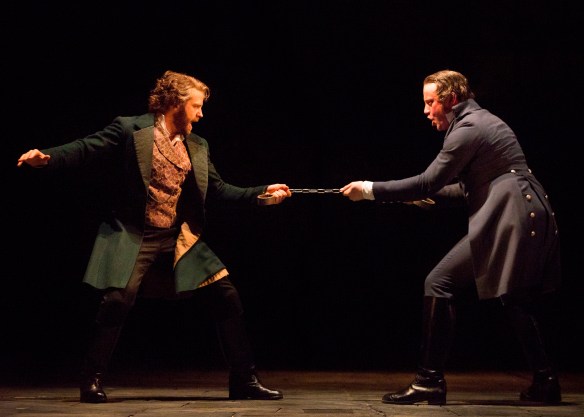
Simon Gleeson and Hayden Tee.

Simon Gleeson and Hayden Tee. Photo: Matt Murphy

“I don’t think anyone knows him. He keeps up an absolutely façade. He was born to a gypsy prostitute mother and a convict father and I think he’s trying to hide that so people don’t know where he comes from. He has this kind of posh upper-class exterior but there are certain moments when he lets that animal inside him out, and the only that really triggers that in his life is this dude called Jean Valejan.

“I’m so lucky to have Gleeson. He’s such a generous beautiful man. And he’s so present (as a performer). He’s an absolute gift to work with.”

Some people have said to Tee that he’s too young for the role. “But Philip Quast was 29 when he started. I’m actually older than Philip was,” he says.

A “huge fanboy” of Quast, who played the role in the original Australian production, Tee had to pinch himself when he was asked to sing Lily’s Eyes from The Secret Garden with Quast at a fund-raising concert for the Hayes Theatre Co.

“He’s such an amazing man and such an amazing performer. I feel the pressure of his legacy and the way he did the role. I don’t want to copy him. We spent the whole day together (rehearsing at the Hayes). Philip brought in this truncheon for me to look at that he made himself (for Javert) and gave me lots of little tips that I came back and shared with my two understudies as well.”

As for Russell Crowe’s widely maligned performed in the film: Tee isn’t one to put the boot in.

“I honestly do think that Russell Crowe brought something new to the role I hadn’t seen before, a certain vulnerability. Whether or not that vulnerability was (him thinking) ‘I don’t know if I can hit those notes or not’, there were moments where it really did work, I think, like leading up to the suicide. I liked that part of the film. I could do without his voice but he is amazing actor. And he’s a Kiwi.”

Tee says that the show is attracting hordes of fans, many of whom gather at the stage door after the show, some of them in costume.

“The amount of middle-aged women I have coming dressed as Javert…. I love and adore them but it’s like, what’s with that? This one woman has every costume I have in every scene. It’s just one of those musicals. But they are very, very supportive, I must say.

“We had the same thing when I did it in London 10 years ago now. We had these fans, mostly women, who came like two or three times a week and they always came to the stage door. They had their favourites. There was one in London – Fred her name was – and she hated me. When I left, she bought me a suitcase and said, ‘pack it up’. Others loved me and they would get into fights. Very bizarre.”

Whatever Fred may have thought of Tee’s Marius, it’s hard to believe she wouldn’t be blown away by his Javert. He is superb: a commanding, dark presence, who stalks the stage with a contained yet ferocious power and his spine tingling rendition of Stars is one of the highlights of the show.

Asked whether there has been any interest in him playing the role elsewhere, he pauses. “Maybe…” he says with laugh.

You get the impression that he’d be happy to play the role for some time to come.

“I’m happier than I have ever been in my life at the moment,” he says. “I love playing Javert. I love it so much. I feel very lucky. It’s a real pleasure to come to work.”

Les Misérables runs at the Capitol Theatre until July 12. Bookings: Ticketmaster 1300 558 878

A version of this interview ran in the Sunday Telegraph on March 22

Everybody’ Talkin’ ’bout me

Hayes Theatre, April 14

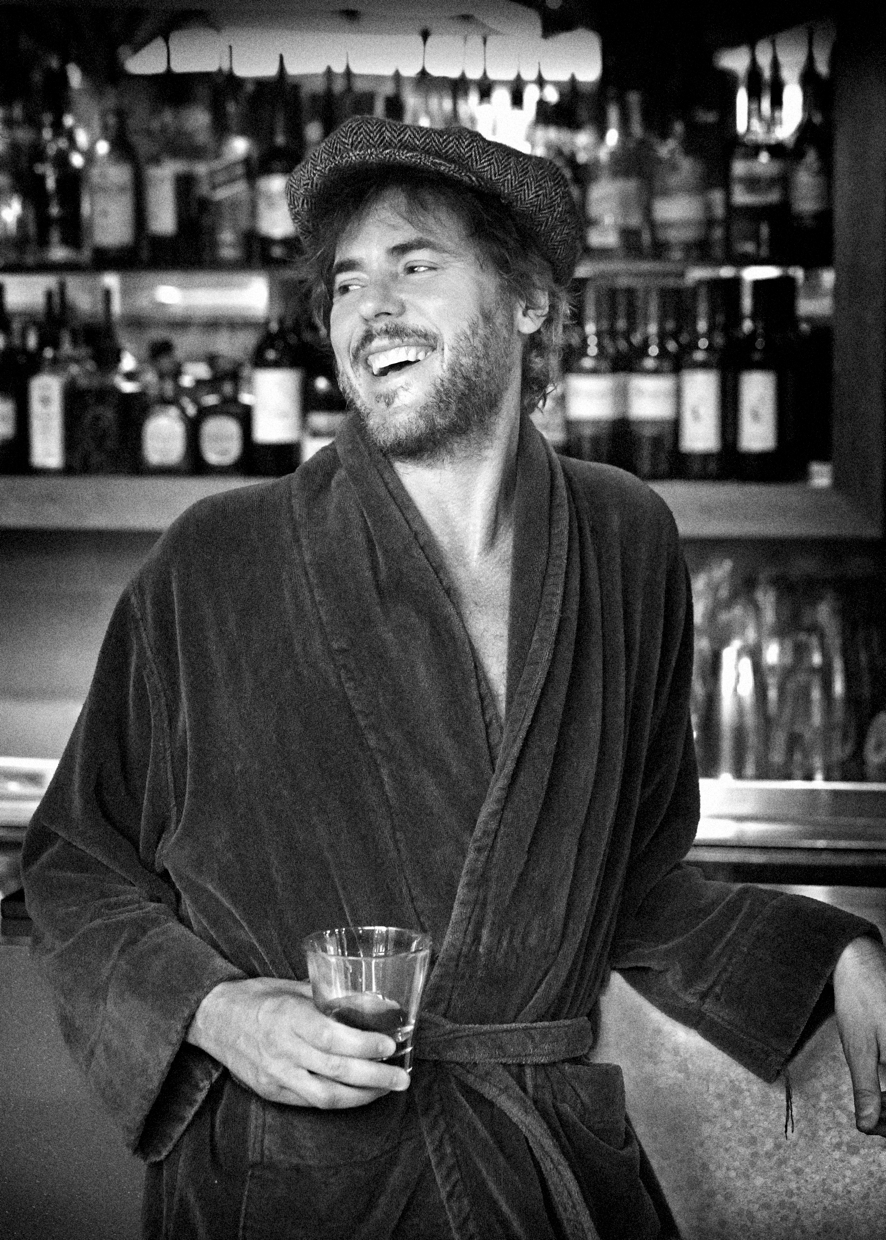
Tim Freedman as Harry Nilsson. Photo: supplied

Tim Freedman as Harry Nilsson. Photo: supplied

Tim Freedman’s show Everybody’s Talkin’ ‘bout me, about Harry Nilsson, is one of the best bio-cabarets I’ve seen in a long time.

Looking shaggily shambolic in beard, dressing gown (like the one Nilsson wore on the cover of his 1971 album Nilsson Schmilsson) and flat-cap, with a glass of cognac at the ready, Freedman takes us into the mind and musical world of the man he considers “a mercurial songwriter and a sublime singer”.

Nilsson, who was famously described by John Lennon and Paul McCartney as their “favourite American group”, was something of an enigma. Despite his huge success as a recording artist, Nilsson never toured and hardly ever played live. In the studio, however, he was prolific, making 18 albums between 1966 and 1980 until his hard-living took its toll. After that, he recorded virtually nothing until his death in 1994 from heart failure, aged just 52.

In Everybody’s Talkin’ ‘bout me, we find Nilsson in his songwriting den late at night. He’s 50, with two years left to live. His third wife and children are asleep upstairs and he’s trying to ration his alcohol intake with the help of an alarm clock.

Rather than trotting out an animated Wikipedia entry, the script – co-written by Freedman and David Mitchell – feels convincingly conversational. It’s full of fascinating reminiscences, reflections and anecdotes out of which the songs emerge organically without feeling shoe-horned, while the segues also flow with natural ease.

There are lots of great stories: his Brooklyn upbringing, his mathematical brain, his self-destructive streak, his hell-raising with Lennon and Keith Moon and the recording of Nilsson sings Newman among them.

Freedman – an acclaimed singer-songwriter with a lovely voice himself, best known as the  frontman of The Whitlams – inhabits the character, capturing his weathered demeanour and manner. Deploying his own quiet, effortless charisma, he gives a laconic, gently wry performance that has you leaning in to hear Nilsson’s story.

Accompanying himself at a small baby grand, Freedman performs a wide ranging selection of Nilsson’s hit songs, some that he wrote for himself or others, some that he recorded but didn’t write, among them:  Everybody’s Talkin’ from the film Midnight Cowboy (which he didn’t write), his Grammy Award-winning hit Without You, the semi-autobiographical 1941, Coconut, One (Is The Loneliest Number) recorded by Three Dog Night, Cuddly Toy recorded by The Monkees and How About You from the 1991 film The Fisher King.

All in all, it’s a fascinating, gentle, beautifully sung look at an intriguing character. Recommended.

Everybody’s Talkin’‘bout me is at the Hayes Theatre, Sydney until April 19. Bookings: www.hayestheatre.com.au or 02 8065 7337

Endgame

Roslyn Packer (formerly Sydney) Theatre, April 7

Tom Budge and Hugo Weaving. Photo: Lisa Tomasetti

Tom Budge and Hugo Weaving. Photo: Lisa Tomasetti

In 2013, Andrew Upton stepped into the breach when Tamas Ascher withdrew from directing Samuel Beckett’s Waiting for Godot for Sydney Theatre Company.

In his place, but working with Ascher’s assistant Anna Lengyel and using Zsolt Khell’s set designed for Ascher, Upton helmed a superb production with Hugo Weaving as Vladimir, which goes to London in June.

Upton and Weaving have now collaborated on an equally impressive production of Beckett’s Endgame – often considered a companion piece to Godot – with Weaving both performing and involved as associate director.

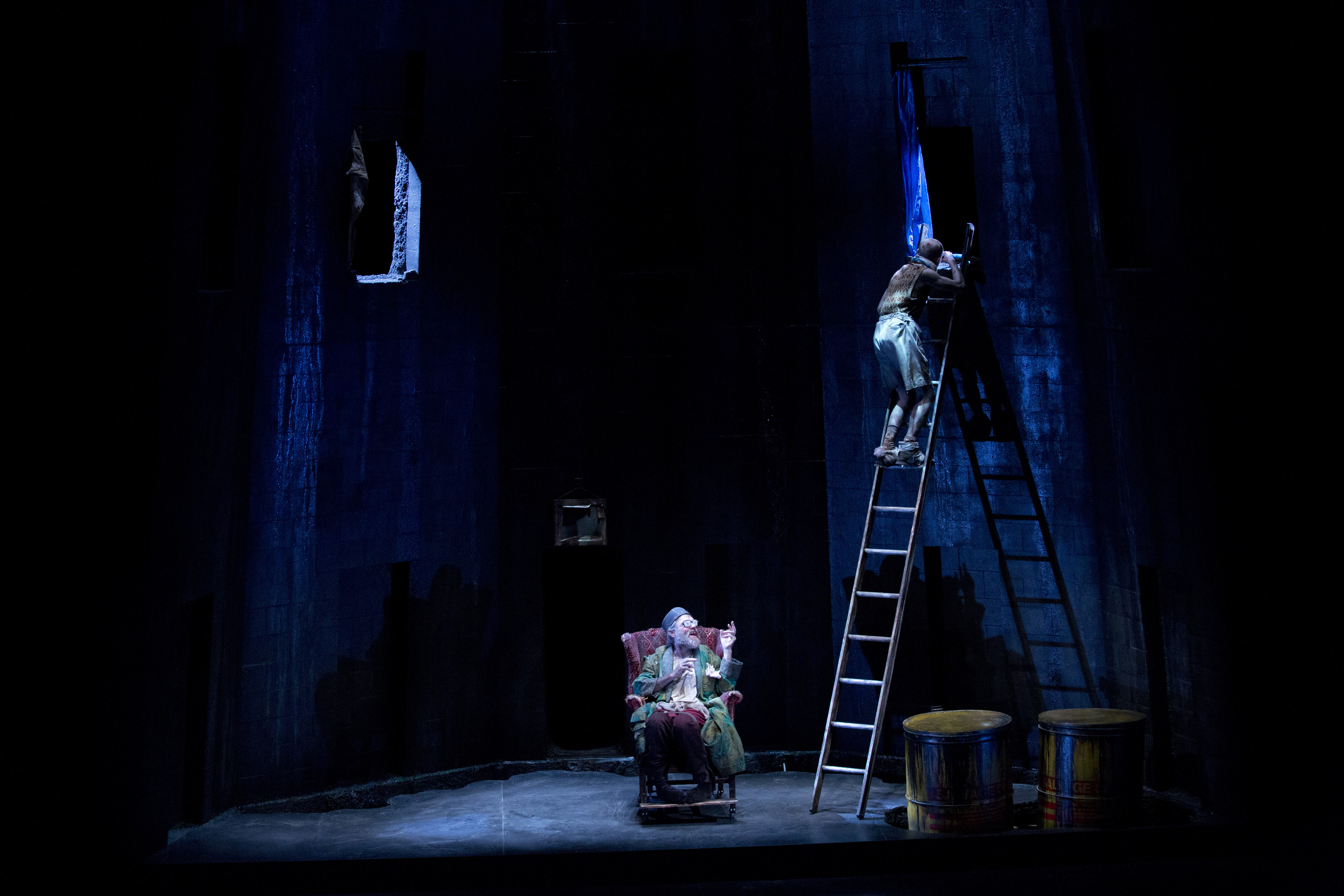
The post-apocalyptic, absurdist drama has four characters trapped in a room waiting for death essentially. The controlling Hamm (Weaving) is blind and confined to a wheelchair. His mistreated servant-son Clov (Tom Budge), who is crippled and can’t sit down, scurries around looking after him, while threatening to leave.

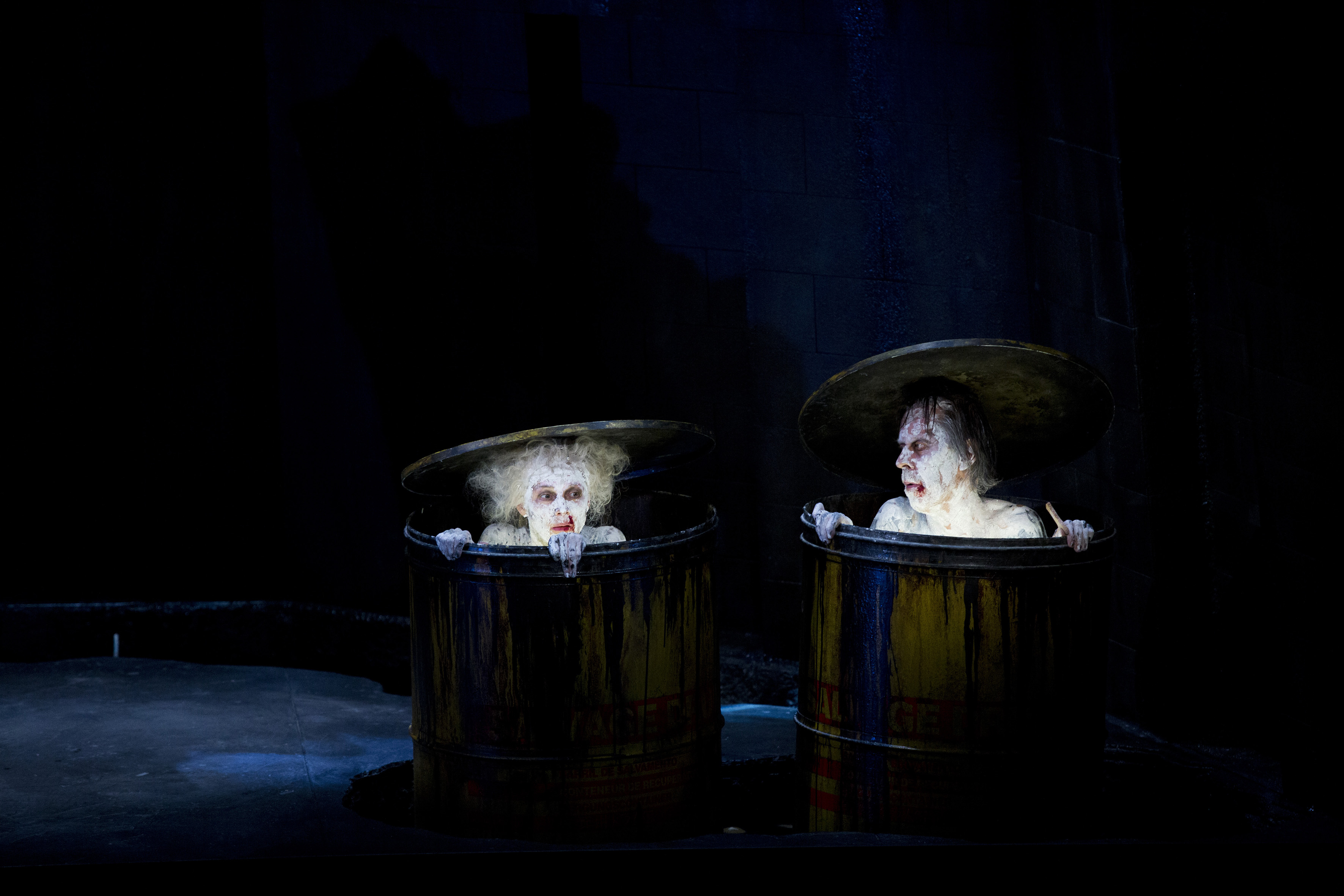
Hamm’s amputee parents Nagg (Bruce Spence) and Nell (Sarah Peirse) live in two dustbins – here dirty old oilcans, suggesting environmental disaster.

Clov periodically climbs a ladder to peer through two windows at the nothingness on land and sea outside, while there are glimpses of a normal life in times past through Nagg and Nell’s memories of boating and cycling.

It’s bleak but the writing is brilliant, laced with unexpected humour and devastating insights as Beckett looks deep into the agony of being human.

The Beckett Estate is famously rigid, requiring productions to stick to the letter of Beckett’s very specific stage directions. Upton and set designer Nick Schlieper have come up with an imposing, monumental staging that abides more or less faithfully with Beckett’s requirements but makes for a far more threatening space than a bare, grey-lit room.

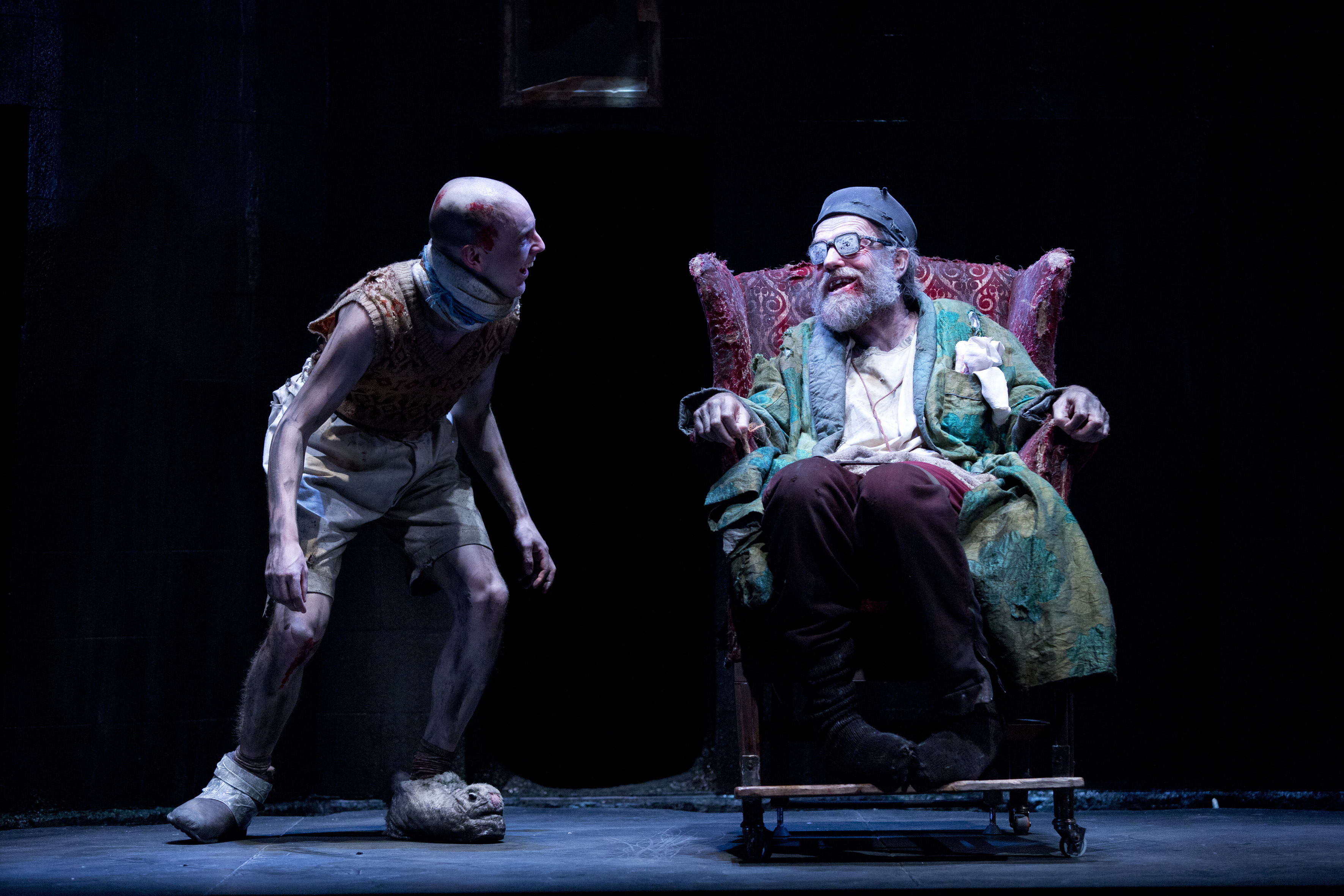
Hugo Weaving and Tom Budge. Photo: Lisa Tomasetti

Hugo Weaving and Tom Budge. Photo: Lisa Tomasetti

Schlieper cleverly reduces the width of the stage to create a more intimate focus, while a towering, dark grey wall looms forebodingly over them. It looks like a fortified stone lighthouse, in which various windows and doors have been filled in, while the thickness of the wall is visible when the curtains are opened at the two remaining windows.

Because the wall is so high, disappearing from sight, Clov requires a long ladder to reach the windows, rather than the usual “small stepladder”, which adds to the comedy of his daily ritual.

Renee Mulder’s gloriously grubby, shabby costumes are full of wonderful little details. Clov wears boots most of the time but at one point he has a grungy rabbit slipper on one foot, as just one example. It’s all beautifully lit by Schlieper, with reflections dappling the wall, while dripping water (sound by Max Lyandvert) can he heard.

Weaving is in masterful form as Hamm. Legs tied and wearing opaque glasses, his face and arms, and even his tongue at one point, are wonderfully expressive but it’s his extraordinarily eloquent voice that mesmerises, so full of different textures, tones and sounds: velvety one minute, snarling the next. His Hamm is a tyrant but with a jaunty, fruity presence and a wry sense of humour. It’s a compelling performance.

Budge’s performance is all about body language. Bent-over, he performs with a robustly comical physicality. The way he removes the sheet covering Hamm, or climbs the ladder, or interacts with Hamm, suggests well-oiled routines he has developed over time to fill the endless, empty days, while his attempt to get rid of a flea in his pants is priceless.

Sarah Peirse and Bruce Spence. Photo: Lisa Tomasetti

Sarah Peirse and Bruce Spence. Photo: Lisa Tomasetti

The appearance of Spence’s elongated face, caked in white make-up, is a hilarious sight when his head emerges from the oilcan and he and Peirse tug at the heart as Nagg and Nell.

Endgame is almost unbearably bleak but at the same time surprisingly funny. Upton and his fine cast find that balance perfectly in an engrossing, lively, moving production.

Endgame plays at the Roslyn Packer Theatre until May 9. Bookings: www.sydneytheatre.com.au or 02 9250 1777

A version of this review appeared in the Sunday Telegraph on April 12

Jumpy

Drama Theatre, Sydney Opera House, March 28

Brenna Harding and Jane Turner. Photo: Brett Boardman

Brenna Harding and Jane Turner. Photo: Brett Boardman

Written by British playwright April De Angelis, Jumpy was a hit in the UK, where it opened at the Royal Court in 2011 then transferred to the West End.

It’s certainly refreshing to see a play where the central protagonist is a 50-year old woman – played here by Kath & Kim’s Jane Turner – and where the themes are mainly women’s issues.

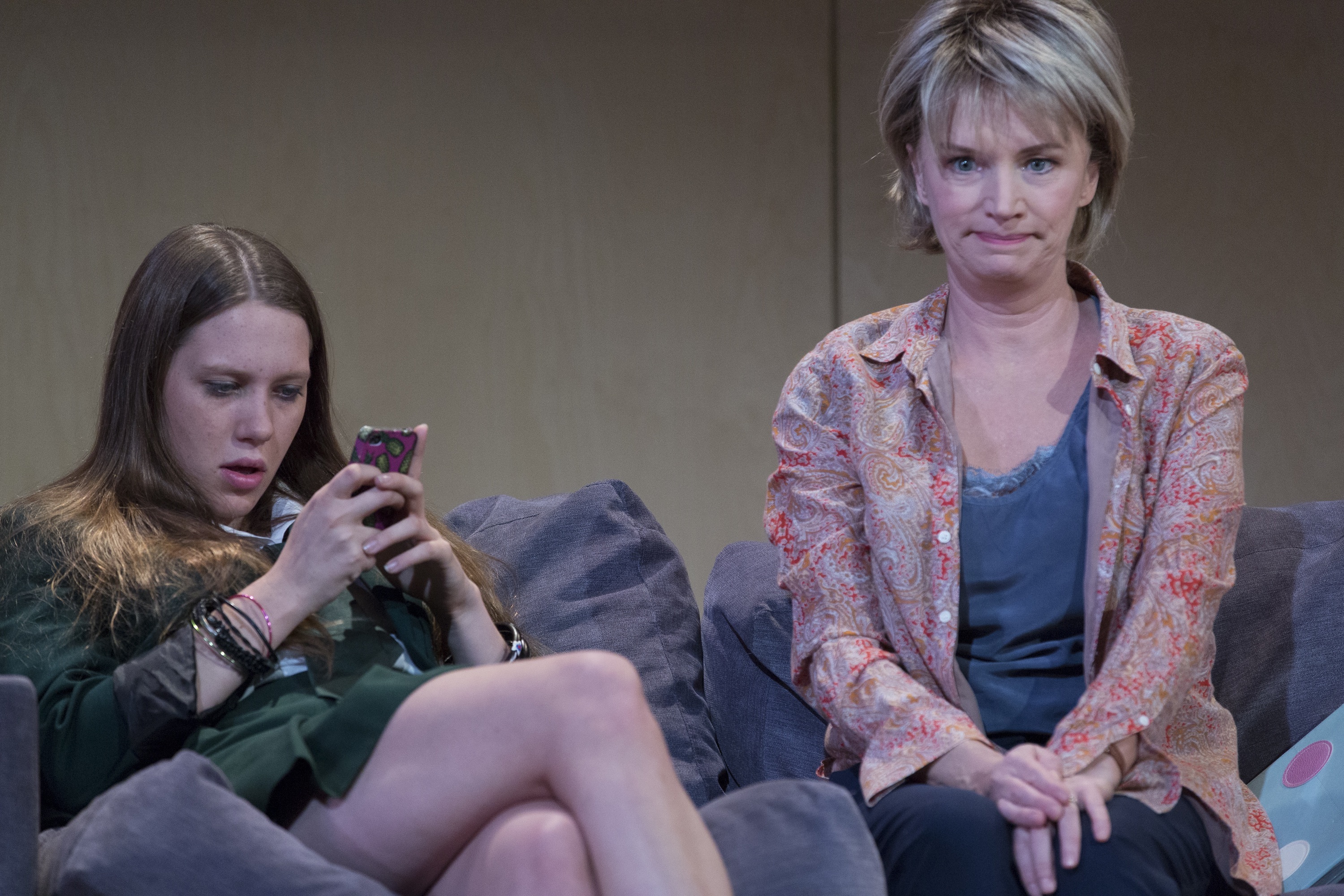
Hilary (Turner) is being buffeted by life. Her job in childhood literacy is on the line due to funding cuts, her marriage is stale, her political idealism seems a thing of the past, and her surly, sexually precocious, 15-year old daughter Tilly (Brenna Harding) is an antagonistic nightmare. Hell, even the furniture seems out to get her during the scene changes in Pamela Rabe’s Melbourne Theatre Company production, now being presented in Sydney by Sydney Theatre Company.

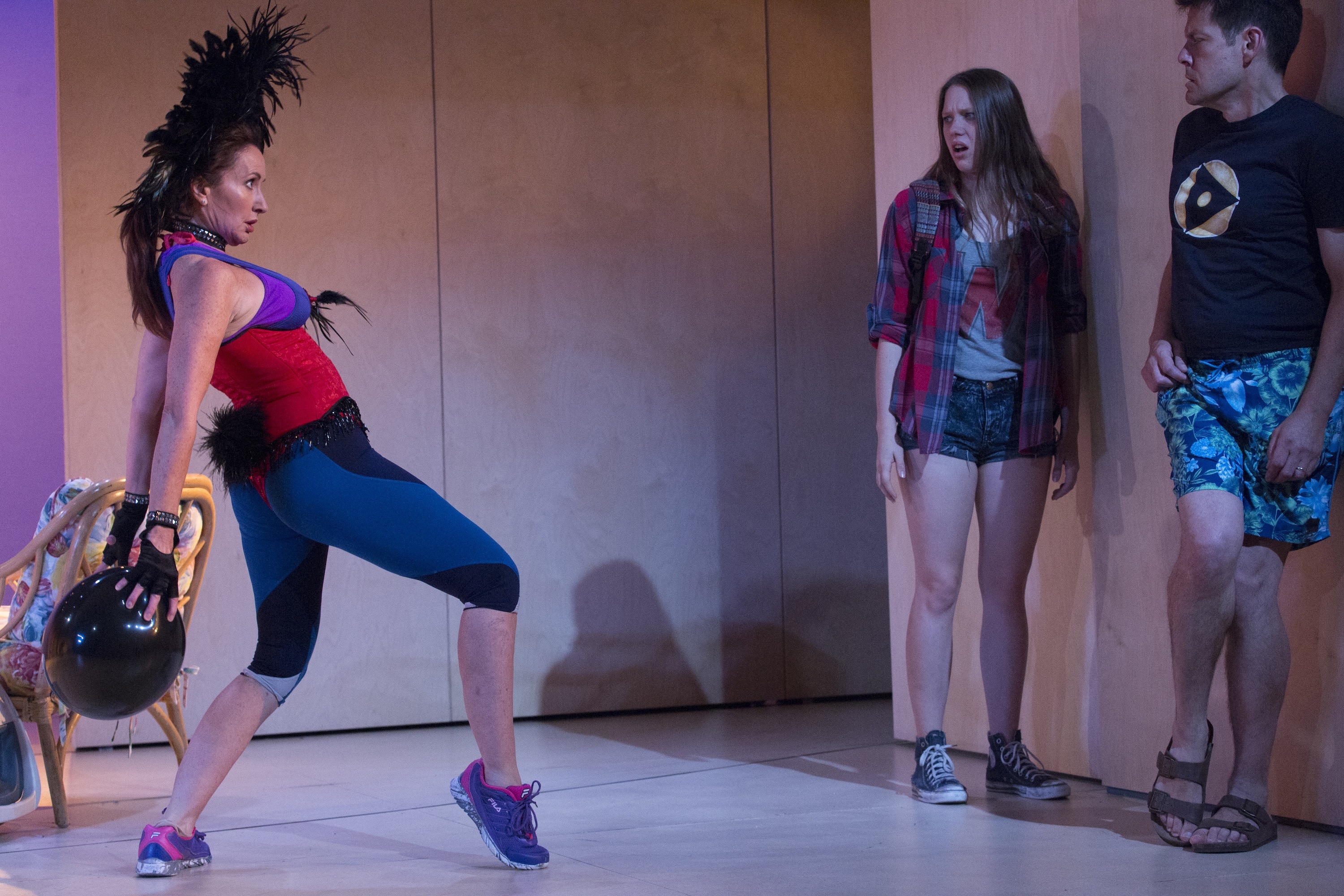
Hilary and her best friend Frances (Marina Prior) take regular solace in a glass or three of savvy blanc, while the single, sex-starved Frances also works up a saucy burlesque act, which she describes it as “post-feminist irony” but which feels pretty desperate (and cringe-making).

Marina Prior, Brenna Harding and David Tredinnick.  Photo: Brett Boardman

Marina Prior, Brenna Harding and David Tredinnick. Photo: Brett Boardman

When Tilly begins sleeping with her boyfriend Josh (Laurence Boxhall), Hilary goes to meet Josh’s steely mother Bea (Caroline Brazier) and more amiable actor father Roland (John Lloyd Fillingham) whose take on the situation is very different. Their marriage is also on the rocks.

Jumpy is a lively, well-written comedy though it makes its themes (marriage, parenting, feminism, the sexualisation of young women and the invisibility of their older counterparts) fairly obvious.

Rabe directs an elegant production on Michael Hankin’s pale wooden, low-ceilinged set, which has the furniture glide on and off as if on a conveyor belt. It’s witty and with so many short, snappy scenes it’s a clever solution. As for having Hilary jump to avoid the scenery in the set changes, I can understand the logic, and many in the audience clearly loved the idea, but I found it a bit of a cheap laugh, making Hilary something of a buffoon, which she absolutely isn’t.

Teresa Negroponte’s costumes are spot-on and it’s all well lit by Matt Scott.

Turner gives a lovely, subtle performance, finding the humour, confusion and poignancy in Hilary’s situation. Harding glowers convincingly as Tilly, though the role is pretty one-dimensional, while Prior is very funny as Frances, as is Brazier as the cold, witheringly brusque Bea.

Tariro Mavondo shines as Tilly’s cheery, working class friend Lyndsey, who finds herself pregnant at 16, but where Tilly is a thunderous dark cloud, Lyndsey exudes sunny optimism despite having so much to contend with.

There are also strong performances from Lloyd Fillingham as the genial but awkward Roland, David Tredinnick as Hilary’s rather ineffectual husband who constantly gives in to Tilly in his anxiety to avoid conflict, Boxhall as Tilly’s monosyllabic boyfriend Josh, and Dylan Watson as Cam, another boy Tilly brings home with unexpected results.

Jumpy is somewhat reminiscent of Alan Ayckbourn or David Williamson in style. It resists tying things up too neatly, with a second act that is darker than the first, but several events feel unlikely, not least the late appearance of a gun, while De Angelis cops out a bit with a soft solution to Tilly’s later situation.

Marina Prior and Jane Turner.  Photo: Brett Boardman

Marina Prior and Jane Turner. Photo: Brett Boardman

However, the challenges Hilary and Frances face and the banter between them ring true, and many will relate to the way the two women feel about aging and our changing society.

In the end Jumpy is a lightweight play but it’s enjoyable and well staged. The chance to see Turner and Prior flex their comic muscles on stage is a particular delight.

Jumpy runs at the Drama Theatre, Sydney Opera House until May 16. Bookings: 02 9250 1777 or www.sydneytheatre.com.au

A version of this review ran in the Sunday Telegraph on April 5

Lucy Maunder in Irving Berlin: Songs in the Key of Black

Hayes Theatre, April 8

Lucy Maunder in Irving Berlin: Songs in the Key of Black. Photo: supplied

Lucy Maunder in Irving Berlin: Songs in the Key of Black. Photo: supplied

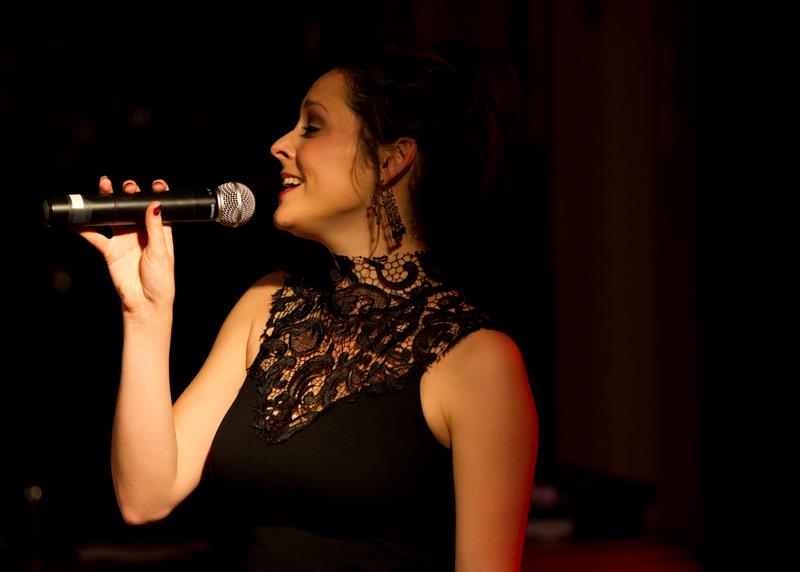
We hear her voice first, a lovely sweet sound in the darkness, then the lights come up on Lucy Maunder perched on a stool looking effortlessly gorgeous in a little black dress.

One of the younger leading ladies of Australian musical theatre, Maunder is back in Sydney with her cabaret show spun around the Irving Berlin songbook.

Given Berlin’s prodigious output there are umpteen classic songs to choose from and Maunder gives us a wonderful selection ranging from ragtime to ballads to comedy numbers. Among others, she performs Puttin’ On the Ritz, Blue Skies, Alexander’s Ragtime Band, Cheek to Cheek, Steppin’ Out With My Baby, Let’s Face the Music and Dance, and What’ll I Do along with other less well-known songs such as Yiddisha Nightingale and Mr Monotony. It’s a great reminder of what an superb songwriter Berlin was.

With her musical director Isaac Hayward providing skillful, sensitive accompaniment at a Baby Grand, Maunder’s interpretations are respectful, fairly straightforward yet fresh, and beautifully sung.

Getting the biggest applause of the night is a gloriously funny take on I Love a Piano, in which Hayward gets carries away, launching with gusto into an outpouring of classic piano pieces, sidelining Maunder who responds with mock indignation as she waits for him to return to the song.

Nicholas Christo has written the book – and it’s here that the show could arguably benefit from further development. Rather than provide a potted history of Berlin’s life, Christo gives us short, mood grabs, almost word poems at times, which depict the 1920s New York milieu with its speakeasies, honky-tonk palaces and Bowery saloons where Berlin began his career. Maunder also reads out an article by an outraged lady about the moral perils of ragtime, which adds another fun element.

I think it’s great that Christo, Maunder and director Neil Gooding have avoided the much-travelled route of trotting out snatches of biographical information to link the songs. But that said, I found myself wanting to hear something more about the Russian-born, American-Jewish composer/lyricist and the background to his songs, a few more anecdotes, and maybe a bit extra about Maunder’s own connection or thoughts about them to personalise the show more.

Though many have loved the show just as it is, a stronger framework around the songs would make it even better.

Nonetheless, Maunder has a lovely poise and a nice rapport with the audience. She sings beautifully, with versatility and clarity, connecting with the spirit of each song, and she delivers the patter, such as it is, with a light, lively touch.

Lucy Maunder in Irving Berlin: Songs in the Key of Black is at the Hayes Theatre Co in Sydney’s Potts Point until April 12