Defying Gravity

Theatre Royal, February 13
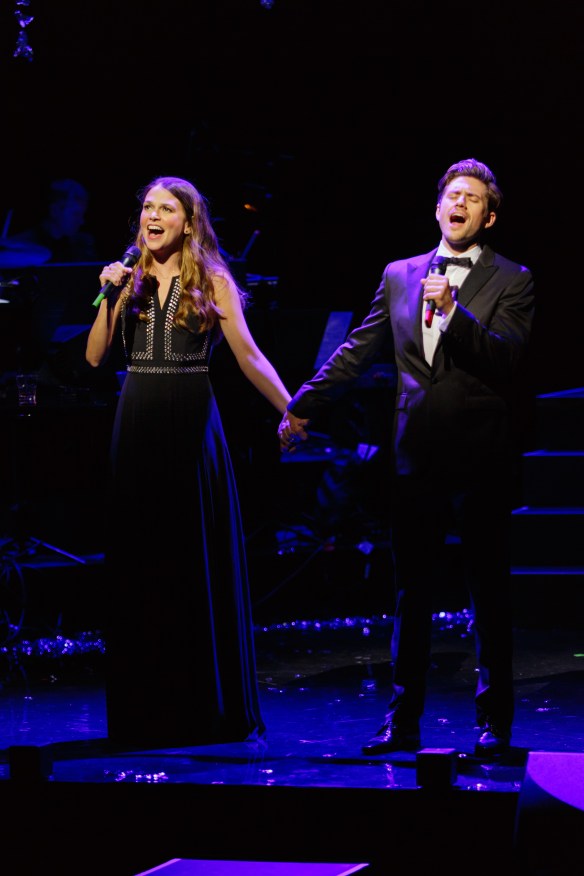
DefyingG1

Sutton Foster and Aaaron Tveit in Defying Gravity. Photo: Robert Catto


It sounded pretty special on paper but high expectations were far exceeded in Defying Gravity, an electrifying concert featuring the songs of Stephen Schwartz that sent me home walking on air.

Produced by Enda Markey, the show was beautifully crafted in every respect and the love that swelled from the audience was well and truly deserved.

For starters there was the stellar cast: two of Broadway’s hottest stars Sutton Foster and Aaron Tveit, West End star Joanna Ampil, Australia’s own David Harris and Helen Dallimore, as well as Broadway legend Betty Buckley making a guest appearance in the second act. They were all wonderful but Foster and Tveit completely blew me away. The chance to see them on the Sydney stage was a gift.

The meaty program was extremely well put-together featuring songs both very well known and less familiar including numbers from Schwartz’s musicals Pippin, Godspell, The Magic Show, Children of Eden, The Baker’s Wife and, of course, Wicked, along with numbers from Disney animated films such as Pocahontas, Enchanted and The Hunchback of Notre Dame on which he collaborated as lyricist with composer Alan Menken.

There was a good mixture of solos, duets and group numbers and lovely changes of pace from roof-raising numbers performed with the magnificent 15-piece band under conductor Guy Simpson to moments of quiet restraint such as Foster’s spellbinding rendition of When You Believe from The Prince of Egypt with solo guitar (Daniel Maher) and Cold Enough to Snow from the movie Life With Mikey movingly sung by Tveit accompanied on piano by Michael Tyack.

The choice of songs clearly illustrated Schwartz’s skill as a songwriter: a fine lyricist able to tell a story succinctly in song and convey a strong sense of character, emotion and empathy, as well as a catchy tunesmith.

Trent Suidgeest’s stage design was simple but had enough sparkle for the occasion with hanging strings of silver flakes as well as silver dusting the stage. Smoothly directed by Andrew Pole, the choreography of the performers on and off stage (as well as in several songs) was deft, as was their linking material, while the inclusion of comments from Schwartz on screen added insight to his career and process including his songwriting mantra: “Just tell the truth and make it rhyme”.

It was fascinating to see how the number The Wizard and I from Wicked gradually evolved from a song initially entitled Making Good.

The band was excellent and the sound was terrific (System Sound, Julian Spink and David Tonion).
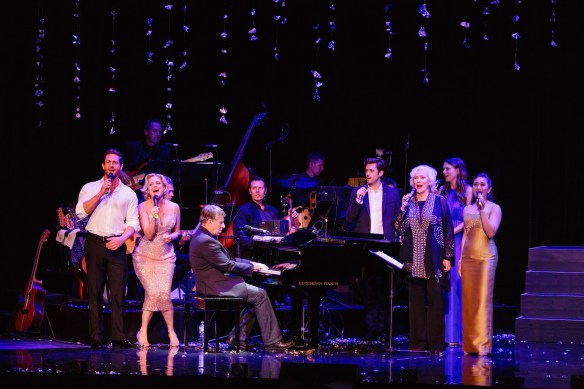
Defying Gravity: The Songs Of Stephen Schwartz

David Harris, Helen Dallimore, Stephen Schwartz, Aaron Tveit, Betty Buckley, Sutton Foster and Joanna Ampil in Defying Gravity. Photo: Robert Catto

And then there were the performers. Sutton Foster, whose many Broadway credits include Millie Dilmount in Thoroughly Modern Millie, Broadway starlet Janet van de Graaf in The Drowsy Chaperone, Reno Sweeney in Anything Goes and the title role in Violet, has a voice to die for: bright, clear, silvery and soaring. She can belt to the heavens as she showed with Defying Gravity, which had the audience on their feet screaming, or rein it right back in heartbreaking fashion as with I’m Not That Girl.

Tveit was also sensational. Star of Broadway shows Catch Me If You Can and Next to Normal, he played Enjolras in the 2012 movie of Les Miserables and Danny Zuko in the recent Fox Grease: Live. His lovely, light tenor soars effortlessly, he charms with a cheeky smile and twinkle in the eye, and he has a great sense of comedy. He knocked it out of the park with Proud Lady from The Baker’s Wife and hammed it up delightfully in All From the Best from Godspell with David Harris.

Harris was also in fine voice. Known here for his performances in shows including Miss Saigon and Legally Blonde, he is now based in New York. Exuding a natural ease on stage, he gave a beautiful rendition of Corner of the Sky from Pippin and got a huge response from the audience with the sexy duet Endless Delights, performed with Helen Dallimore.

Dallimore, who originated the role of Glinda in the London production of Wicked and whose credits in Australia include Blood Brothers and Legally Blonde, showed her comic chops with Endless Delights, Popular from Wicked and It’s An Art, a song by a waitress from the musical Working.

Joanna Ampil, who has a lovely soprano voice, charmed with songs including Lion Tamer from The Magic Show, That’s How You Know from Enchanted and, most particularly, Colours of the Wind from Pocahontas.

Betty Buckley performed three songs in the second act: No Time At All from Pippin, in which she starred for several years, as well as Chanson and the gorgeous Meadowlark from The Baker’s Wife, bringing the audience to their feet. Schwartz actually wrote The Baker’s Wife with Buckley in mind but despite six auditions she didn’t land the role – a disappointment so devastating it consumed her for years as she explains with wry humour.

The show ended with Schwartz taking to the stage to perform Day By Day with the full company – an uplifting and touching end to an incredibly special event, which once again had the audience on their feet.

Earlier in the day, I saw Schwartz in conversation with Leigh Sales, a terrific interview about his career and craft, which only added to my appreciation of the concert.

All in all, a big thanks to Enda Markey for producing Defying Gravity. It was a little slice of musical theatre heaven. Pure bliss!
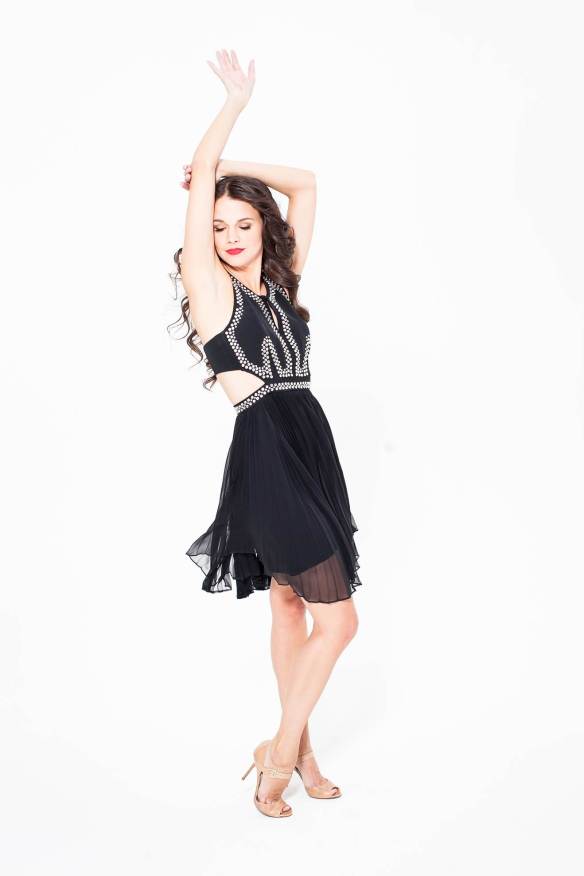
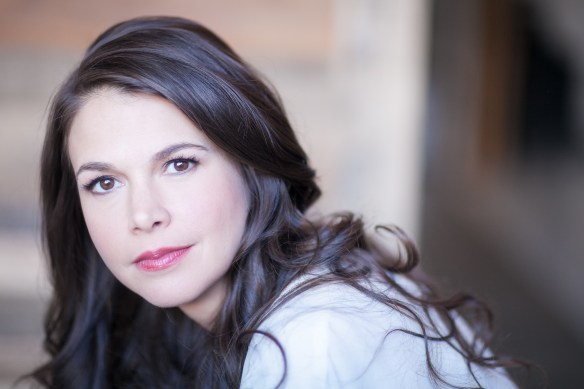
Sutton Foster Defies Gravity in Sydney

Sutton Foster discusses coming to Sydney for the Stephen Schwartz concert Defying Gravity, the scars she drew on for her Tony Award-nominated performance in Violet, musicals Hamilton and Fun Home, dream roles and playing younger in Younger

image001

Broadway star Sutton Foster. Photo: Laura Marie Duncan


When producer Enda Markey approached Broadway star Sutton Foster about performing in Sydney, his timing couldn’t have been better. Foster had just agreed to teach musical theatre masterclasses at a summer school in New Zealand.

“So basically the reason I’m going (to Sydney) is because I was already going to be here,” she says on the phone from Christchurch. “I’ve never been to Australia and I’m so super-excited.”

The two-time Tony Award winner (for her performances as Millie Dilmount in Thoroughly Modern Millie in 2002 and Reno Sweeney in Anything Goes in 2011) will headline a concert called Defying Gravity, featuring the songs of composer/lyricist Stephen Schwartz whose credits include the musicals Wicked, Godspell and Pippin among others, as well as lyrics for the Disney films Pocahontas, The Hunchback of Notre Dame and Enchanted.

The impressive line-up also features Broadway legend Betty Buckley (Sunset Boulevard), Aaron Tveit (Enjolras in the 2012 Les Miserables movie and Danny Zuko in Fox’s Grease Live), West End star Joanna Ampil (Miss Saigon) and Australians David Harris (Miss Saigon, Legally Blonde) and Helen Dallimore (Legally Blonde, Glinda in the West End production of Wicked).

“Aaron and I have never worked together, we just know each other through the business, the same with Betty. We know each other through mutual friends so I’m looking forward to working with both of them on this,” says Foster.

Schwartz meanwhile is a good friend but Foster has never been in one of his shows, though she has performed songs of his including Defying Gravity in concert. “I’ve worked on some of his material but some of the songs that I’m going to be singing are songs I’ve never sung before so it’s brand new material (for me) so I’m super-excited. I’ve been working on the material while I’ve been here in Christchurch. I’ve been looking back into his catalogue and it’s really exciting,” she says.

Schwartz will attend the three concerts at Sydney’s Theatre Royal this Friday and Saturday and also do an onstage “in conversation” interview with Leigh Sales at midday on Saturday.

“That adds another level of pressure,” says Foster with a laugh, “but it will be fun to have him there. I think it’s going to be a great evening.”

Performing in concert is “a different sort of expression” to performing in a musical, says Foster.

“I don’t have to paint myself green! And you are allowed to take songs a little out of context and personalise things a little bit, which I enjoy. As an audience member, you hope to see a little bit of the character but you also get to learn a little bit about me as well, hopefully. I can bring a little bit more of myself to the songs. I try to do that anyway but in a concert setting I like to take things a little bit out of the expected from what you might see on stage.”

Sutton Foster - photo credit Laura Marie Duncan

Sutton Foster. Photo: Laura Marie Duncan

Foster was born in Statesboro, Georgia and raised in Troy, Michigan. She began dance classes at age four and at ten was “dragged” (as she has put it in previous interviews) by her mother to audition for a local production of Annie, landing the title role.

She made her Broadway debut as an understudy for Sandy in Grease in 1996. Her big break came in one of those fabulous showbiz twists of fate. Offered a role in Les Misérables on Broadway (she had been understudying Eponine) or an ensemble track in a new musical adapted from the 1967 movie Thoroughly Modern Millie, she chose the latter in which she would also understudy the title role of Millie Dilmount.

When the show was struggling during its try-out season at La Jolla Playhouse in San Diego, Foster was plucked from the ensemble to replace the leading lady. She subsequently played the role on Broadway, won a Tony Award and a star was born.

Foster has now performed in 11 Broadway shows, won two Tonys and also received Tony nominations for her performances as Jo March in Little Women, Broadway starlet Janet van de Graaf in The Drowsy Chaperone, Princess Fiona in Shrek The Musical and, most recently in 2014, the title role in Violet.

The New York Times described her portrayal of Violet as “a career-defining performance”.

Known for her bright, silvery voice, her sunny smile, her goofy comic skills and red-hot tap dancing, Violet showed a different side of Foster.

Written by composer Jeanine Tesori (Fun Home, Shrek The Musical, Thoroughly Modern Millie) and writer Brian Crawley, Violet is based on a short story by Doris Bett called The Ugliest Pilgrim about a young woman who takes a Greyhound bus from North Carolina to Oklahoma, hoping that a televangelist can heal a disfiguring scar on her face, gained 12 years earlier when the blade flew from her father’s axe.

“It was definitely the most emotional thing I’ve ever done and the most vulnerable and exposed character I’ve ever played,” says Foster.

“It’s fascinating to see friends and colleagues and audience members who would come backstage who were so moved by it. Everyone can relate to her story. We all have scars: some you can see, some you can’t. I related to her. I don’t have physical scars but I definitely have scars from my upbringing and (the show is about) how we overcome them and how we learn to love ourselves scars and all. The show for me became incredibly healing. I was able to overcome personal things – that’s when theatre and the arts is at its best when it can change you. I felt changed by playing that character.”

While not wanting to go into too much detail, Foster says: “I had a rough relationship with my mom. It was hard and it was something I had to face as an adult and something that I needed to come to terms with and forgive her. It’s all complicated. In a weird way with Violet, her father hits her with an axe and it’s pretty cut and dry – he doesn’t do it on purpose, it was an accident.

“My mom only knew what she knew. She did the best she could raising my brother (performer Hunter Foster) and I, and we all had to come to terms with it and allowing it to be OK. I always joke it’s a bottle of bourbon and a whole day to go into all the details of it but all that stuff was very useful (in playing the role).”

(In 2014, Foster told The Los Angeles Times: “For a long time, my career and what I wanted to be as an actor was fueled by her – to please her and make her proud of me.”)

Foster may just be being polite but she sounds genuinely thrilled to hear that Sydney audiences recently had the chance to see a small-scale production of Violet because performer Samantha Dodemaide was so blown away by the show and Foster’s performance in it when she saw it on Broadway that she returned to Australia wanting to play the role.

The production, by Blue Saint Productions in association with the Hayes Theatre Co, played at the Hayes in December and won Best Independent Production of a Musical at the 2015 Sydney Theatre Awards. It now has a season at Melbourne’s Chapel Off Chapel (March 3 – 20).

Asked about the buzz that Hamilton – Lin Manuel Miranda’s hip-hop musical about Founding American Father Alexander Hamilton featuring a racially diverse cast – is generating on Broadway, Foster says: “It’s worthy of all the buzz. I’ve seen it twice. I saw it off-Broadway before it opened and then I saw it right before it opened on Broadway and it’s exciting. It’s one of the most exciting things I’ve seen for a long time.

“I will say personally that two of the most exciting pieces of music that I’ve experienced are running simultaneously, which are Fun Home – which won the Tony Award last year – and Hamilton. I think they are both groundbreakers.”

(Fun Home is a musical adaptation by Lisa Kron and Jeanine Tesori of Alison Bechdel’s memoir about a young lesbian woman discovering her sexuality, and about her relationship with her gay father).

“There’s a song in Hamilton about how lucky we are to be alive right now and I feel that way about how lucky I am to be alive right now when so many exciting things are happening in musical theatre: exciting voices and risks, which are groundbreaking (in terms of) race and sexuality, really making statements that I think are so important. It’s really awesome,” says Foster.

As for dream roles, she says: “I’m a huge fan of new work so I would say that hopefully the dream role hasn’t even been written yet. But there are certain iconic roles. Some day I’d love to play Mama Rose in Gypsy. It doesn’t matter where it is, it doesn’t have to be on Broadway, it could be anywhere, it’s just a role I’d love to do. Also, Charity in Sweet Charity or the Baker’s Wife in Into the Woods. Those are probably my top three, I guess.”

In recent years, Foster has made a move into television appearing in Bunheads and now the US series Younger, in which she plays a 40-year old single mother, desperate for work, who pretends to be 26 in order to land a job with a publisher. She begins shooting series three in June.

“It’s a really nice change of pace,” she says of working in television. “I’ve been amazingly lucky – I say that as I knock on wood – to have worked in the theatre for 23 years, which is awesome. It’s all I ever wanted to do. So to learn something new and explore a whole new way of communicating and telling stories, and learning how to be on a television set as an older person – I’ll be 41 in March – is exciting. To be in the midst of my life and trying new things is exciting.”

Foster herself is married to screenwriter Ted Griffin (Ocean’s Eleven) having previously been married to Christian Borle (Smash, Something Rotten!).

Asked how she feels about aging, she says she hadn’t really thought about it until doing press for Younger when everyone asked her about it.

“I completely understand because the show is about ageism and navigating that in the work place. Being a performer I haven’t experienced that yet. Maybe that will happen but I feel more content and happier now than I’ve ever been. I’ve no desire to go backwards. I’m very much looking forward to what’s ahead.”

So no botox or plastic surgery? “Never say never but I guess I feel right now I want to age gracefully and naturally. I’m a pretty natural gal so I can’t imagine (it). I don’t like the idea of anything fake. I try to live a pretty authentic life and I think that goes for my face as well. So for now, I’m embracing the wrinkles and everything else that’s happening and hopefully I can remain youthful from within.”

Defying Gravity, Theatre Royal, February 12 at 8pm & February 13 at 3pm and 8pm. Bookings: Ticketmaster 136 100

 A version of this story appeared in the Daily Telegraph on February 11

The Pride

Eternity Playhouse, February 9

Matt Minto, Geraldine Hakewill, Simon London (c) Helen White

Matt Minto, Geraldine Hakewill and Simon London. Photo: Helen White

Terrible repression in Britain in the 1950s when homosexuality was still a crime punishable by up to 10 years in prison leading many men to live a life of denial, secrets and guilt; hard won sexual liberation in the present that makes relationships between gay men infinitely easier but not necessarily without complications.

Alexi Kaye Campbell’s award-winning play The Pride, which premiered at London’s Royal Court Theatre in 2008, moves between the two eras to explore the huge shift in attitudes to homosexuality over the last 50 years.

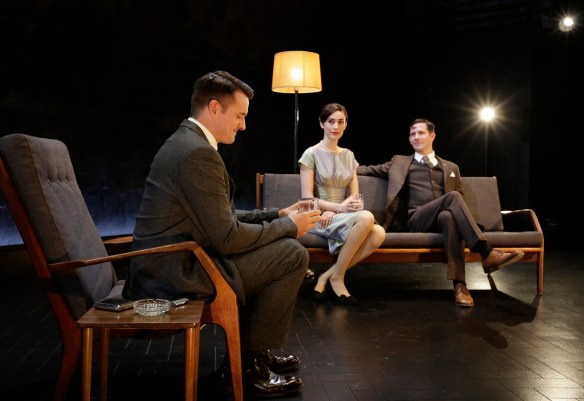
Set in London, the play opens in 1958 with a scene that could come straight out of a drawing room comedy where so much is unspoken or merely hinted at, with shades of Terence Rattigan or Noel Coward (drinks trolley and all).

Sylvia (Geraldine Hakewill), a former actress, has invited children’s author Oliver (Matt Minto) whose book she is illustrating to meet her strait-laced real estate husband Phillip (Simon London). Over drinks before the three of them go out for dinner, the conversation is polite and stilted with tension crackling beneath the surface. Sylvia cajoles an embarrassed Oliver into telling an epiphany he had in Greece that suggests he is gay. Philip meanwhile seems struggling with an attraction to him.

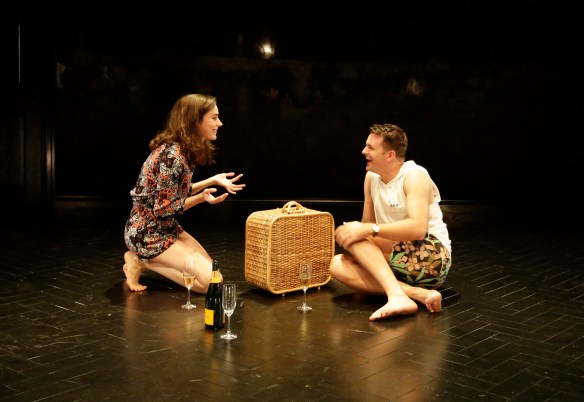
The play then jumps to the present with Oliver entertaining a costumed rent-boy. The names of the three central characters are the same but they are completely different people. Oliver is a freelance journalist with an addiction to anonymous sex, which his partner Phillip can no longer cope with. Miserable at losing him, Oliver constantly turns to his loyal best friend Sylvia for comfort.

Moving back and forth between the two timeframes, The Pride is a very well written and constructed drama in which Kaye Campbell balances the tortuous angst, guilt and dark, intense elements of the play with wit and humour.

Occasionally, it feels a little over-written: for example, a present day scene between Oliver and the editor of a lad’s mag who wants an article about gay sex that will appeal to straight men feels too long, if not unnecessary. And the 1950s scenes are more powerful than the present day ones but overall it’s a provocative, brave, compassionate play.

Directing it for Darlinghurst Theatre Company, as part of the Sydney Gay and Lesbian Mardi Gras Festival, Shane Bosher helms a riveting production on Lucilla Smith’s stark set with grey back wall, onto which the cast carry minimal furniture and props in quick flowing scene changes.

Bosher directs with sensitivity, finding both the humour and the deep, intense pain inherent in the piece. He stages one particularly brutal moment with a frank authenticity but without it feeling salacious. Above all, he draws excellent performances from a fine cast.

Geraldine Hakewill, Matt Minto (c) Helen White

Geraldine Hakewill and Matt Minto. Photo: Helen White

London and Minto are exceptional. Both of them create two characters across the eras that are so totally different (their physicality, accents, vocal rhythms and mannerisms) they could almost be different actors – supported by Lisa Mimmocchi’s excellent costuming.

London is so stitched up and humourless as the 1950s Phillip it’s as if he has every muscle in his body clenched, while his present day character has a physical ease about him. Minto’s 1950s Oliver is fumbling, awkward, embarrassed and clearly lonely yet witty and endearing, while his modern persona is louche, funny and confident in his own skin.

Hakewill is also terrific as the rather delicate, sensitive Sylvia married to Phillip, who intuitively knows what is going on, and as the sassy, open-minded contemporary Sylvia.

Kayle Kazmarzik lends strong support as the rent-boy (showing a sure comic timing), magazine editor and a doctor to whom the 1950s guilt-ridden Phillip turns to.

The Pride asks tough questions about gay life today as well as in the past, questions about fidelity, promiscuity, the pursuit of happiness, and being true both to yourself and others. Recommended.

The Pride plays at the Eternity Playhouse until March 6. Bookings: www.darlinghursttheatre.com or 02 8356 9987

The Barber of Seville

Joan Sutherland Theatre, Sydney Opera House, January 28

Opera AustraliaThe Barber of Seville

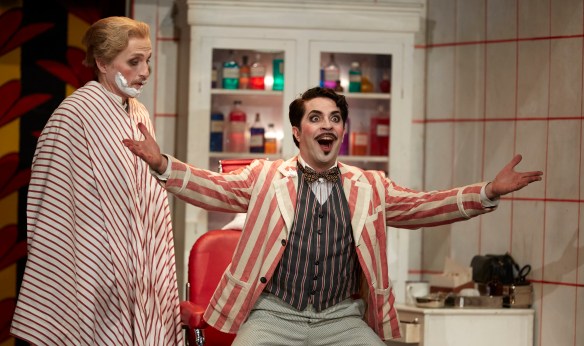
Left to right: Warwick Fyfe as Dr Bartolo and Paolo Bordogna as Figaro. Photo: Keith Saunders

Rossini’s comic opera The Barber of Seville, written in 1816 when he was just 24, is a wonderfully silly romp with the anarchic spirit of the narrative fun and games encapsulated in the sparkling score, which is full of catchy but complex melodies.

It’s hard to imagine a production that captures all the hilarity better than this one from Elijah Moshinsky. I’ve seen it several times now and it’s always a laugh-out loud delight. If you need a tonic, give this a go.

First staged by Opera Australia in 1995, and revived here by Hugh Halliday, you’d never believe that the production is 21 years old. Instead, it feels fresh as a daisy.

Adapted from Beaumarchais’ play, the plot revolves around Count Almaviva’s attempts to win the delectable Rosina from under the nose of her aging, rather odious guardian, Dr Bartolo, who wants her for himself. Aided and abetted by the barber Figaro – the go-to man if you need anything sorted – Almaviva enters Dr Bartolo’s house in various disguises and comic mayhem ensues.

Moshinsky has updated the action to the 1920s with boaters, bicycles and Buster Keaton-style shenanigans inspired by the silent movies – an era and style of comedy that suits the opera brilliantly.

The garish, cartoon-bright set by Michael Yeargan and costumes by Dana Granata are a hoot in their own right. Yeargan puts an open house on stage so that you can see into various rooms, upstairs and downstairs, at the same time from Dr Bartolo’s surgery to Rosina’s bedroom and the drawing room. Loudly patterned wallpaper makes an eye-watering statement, while Granata’s equally bright costumes add to the visual fun.

Delicious comic moments abound: a miniature terrace of houses from which small-scale, motorised figures of Bartolo and Rosina emerge as from a cuckoo clock; the barber shop scene with customers (and two theatre ushers) shrieking beneath steaming hot towels only to emerge beautifully coiffured; a bicycle ride through a storm staged like a segment in a silent film; Bartolo’s hapless patients who leave his surgery in worse shape than they arrived; and the police traipsing through Bartolo’s house and squashing into his surgery in Keystone Kops fashion.

There’s so much going on visually it could dwarf a mediocre cast, but the performers assembled here not only have the goods vocally but the acting and comic chops to pull it off brilliantly.

From the second Paolo Bordogna bounds onto stage from the auditorium as Figaro, he charms with his puppyish energy and wonderfully rich baritone. He plays the role to the hilt, always completely in the moment. His facial expressions are priceless, he has the measure of the broad comic style to a tee, and his lithe physicality is matched by his agile voice. He really is a charmer and the ideal Figaro.

Opera AustraliaThe Barber of Seville

Anna Dowsley and Kenneth Tarver. Photo: Keith Saunders

Anna Dowsley, who has established herself playing pants roles such as Cherubino in The Marriage of Figaro, Siebel in Faust and Tebaldo in Don Carlos, shows that she has the sparkle and charm to be a leading lady. She captures Rosina’s pertness and clear-eyed determination to get what she wants, and sings beautifully, her shining mezzo secure yet flexible.

American tenor Kenneth Tarver has a lovely, smooth voice and a warm stage presence, while Warwick Fyfe is a knockout as the creepy Bartolo (returning to the role, which he played when the production was last staged in 2011). He is a fine comic actor and sings superbly.

There are also impressive performances from David Parkin as Don Basilio, Jane Ede as Bartolo’s housekeeper and Samuel Dundas as Almaviva’s servant Fiorella. Dundas also gets huge laughs as Ambrogio, Bartolo’s silent servant, who shuffles around zombie-like in filthy uniform, a fag hanging from his mouth.

With Maestro Andrea Molina conducting the orchestra at a suitably sprightly pace, you’d be hard pressed to have more fun at the opera. A complete delight.

The Barber of Seville plays at the Sydney Opera House until March 22. Bookings: www.sydneyoperahouse.com or 02 9250 7777

Brooke Satchwell is Back on the Boards

Brooke Satchwell

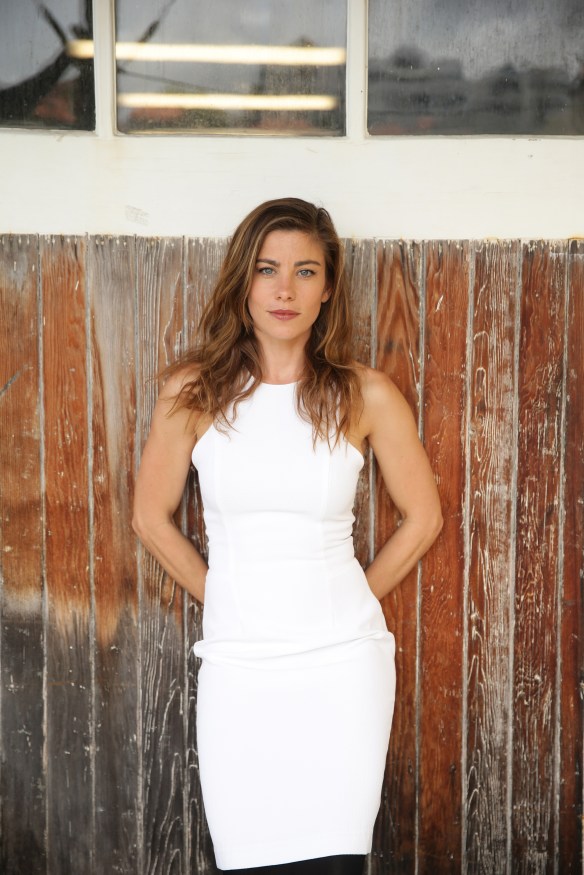
Brooke Satchwell during a break in rehearsals for David Williamson’s Jack of Hearts at the Ensemble Theatre, wearing a dress by Melbourne fashion label LIFEwithBIRD. Photo: Brett Costello

Brooke Satchwell has grown up in the public eye. Cast in Neighbours just before she turned 16, snaring the Logie for Most Popular New Talent, she celebrated 20 years as an actor last year.

The bulk of her work has been in television with credits such as Water Rats, Packed to the Rafters and Wonderland in which she played uptight lawyer Grace Barnes.

“I’m still hearing from people who are disappointed that Wonderland isn’t returning (this year). It was their guilty pleasure,” says Satchwell.

She’s hoping, “fingers crossed”, that Dirty Laundry Live, the comedy quiz show about popular culture on which she is a regular celebrity panelist, will return to the ABC this year. And she will definitely pop up again in the ABC’s comedy sketch show Black Comedy, reprising her jaw-dropping turn as “black white woman” Tiffany.

However, in a change of pace, Satchwell starts 2016 on stage in David Williamson’s new play Jack of Hearts at the Ensemble Theatre. Having done comparatively little theatre over the years, she is excited to be treading the boards again.

“When I finished Neighbours, I moved to Sydney and I did a version of The Tempest in the Botanic Gardens. That was an incredible experience, which led to The Graduate with Wendy Hughes and Mark Priestley (in 2001). Then I had a run of about eight years straight in commercial television,” says Satchwell.

The last time she performed on stage was in 2010, when she appeared in a comedy called Clean House for Perth’s Black Swan State Theatre Company and Queensland Theatre Company.

“Every time I step on stage people are quite surprised and say, ‘oh, you can do that.’ And I’m like, ‘yeah, I really quite enjoy it, the liberty of a performance that’s purely in the moment.’ And they say, ‘oh we’ll have to get you to do more’ and then time passes, different projects occur and it just hasn’t happened. But the timing of this at the Ensemble was fabulous,” says Satchwell.

Chatting during a break in rehearsals, Satchwell is smart, funny, articulate and down-to-earth. Asked by the publicist if she’d like a coffee of some description she says she’ll have whatever’s going “as long as it’s caffeine and milk”.

Jack of Hearts, which is directed by Williamson himself, also features Craig Reucassel and Chris Taylor from The Chaser. Taylor plays Jack, a loveable loser whose partner Emma dumps him for the smooth, arrogant, successful Carl despite her best friend’s warning. Jack sets out to get her back.

Satchwell plays Denise who is married to the philandering Stu (Reucassel) but sticks by him, partly because of the material security he provides and partly because she desperately wants children and has invested a lot in the relationship.

“It’s looking at the dynamics of relationships. Increasingly these days choice is more widely available across the board and that means we are a little more indecisive in what we’re committing to – and that (includes) partners,” says Satchwell.

“David pointed out that quite often if we are too picky in looking for a coupling we might miss the boat. So this play, in a very hilarious way, looks at that. It’s quite farcical with elements of high camp and drama as the couples enter the warring stage and are forced to deal with each other.”

Satchwell famously went out with actor Matthew Newton but their five-year relationship ended in 2006 when he was charged with assault. She is now very happily engaged to Sydney film editor David Gross.

Satchwell met him when she spent four years working as a production and camera assistant. That’s how, in 2008, she was caught up in a terrorist attack at a Mumbai hotel and was very lucky that she had just gone to some toilets away from the main lobby and pool.

Asked how that has affected her, particularly with so much terrorism in the world today, she admits that she probably has “a raised awareness in terms of security or just being very aware of my surroundings having seen first-hand the horror of that kind of experience.

“However, because bad news sells, I find the saturation of negative stories and the coverage is quite often disproportionate to the reality. Not to undermine the horror of those experiences for those involved but I don’t believe it is as all-encompassing as we quite often feel, given that (news coverage) is coming at us from every corner,” she says.

“I think if anything it does inspire me to concentrate on living in a more good and principled way in the hope that you inspire that in other people. I do believe that the natural reaction to destructive behaviour is for people to respond with greater generosity in the way they operate within society and I can’t help but think that will have a greater velocity.”

Jack of Hearts plays at the Ensemble Theatre, January 29 – April 2. Bookings: www.ensemble.com.au or 02 9929 0644

 A version of this story ran in the Sunday Telegraph on January24

The Tribe

A backyard near Belvoir St Theatre, January 20

TheTribe

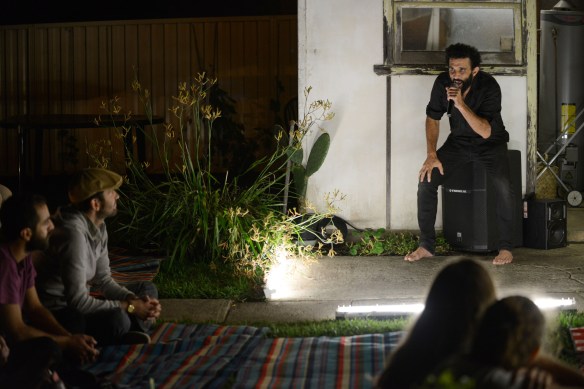
Hazem Shammas in The Tribe. Photo: Catherine Cranston

In the theatre program for The Tribe, Michael Mohammed Ahmad writes: “This is my attempt to counteract the limited and simplistic representation that the Arab-Australian Muslim communities of Western Sydney have received to date, and to offer a broader, more intimate understanding. It is also an act of self-determination – a declaration of the right to reclaim and tell our own stories in our own way.”

Performed by Hazem Shammas and accompanied by Oonagh Sherrard on cello and a few percussion instruments, The Tribe is a beguiling piece of storytelling, staged in a Surry Hills backyard where the audience sits on an assortment of picnic rugs, milk crates and chairs.

The performance I saw was staged at a home just across the road from the theatre. There are three different venues, with the furthest one a 10-minute walk away.

Adapted from Ahmad’s novel of the same name by Ahmad and Janice Muller, and directed by Muller, The Tribe is told by Bani, a young boy living in Sydney with his extended Shiite Muslim family who fled Lebanon. He takes us into his family home and school, conjuring vivid little pictures of his relations and friends, particularly his beloved grandmother to whom he is extremely close.

The production, from Urban Theatre Projects, premiered at last year’s Sydney Festival and is now presented by Belvoir.

Shammas is a mesmerising storyteller, sliding effortlessly between different characters and voices. Sherrard’s music, with Arabic influences, underscores the performance beautifully, while delightful little interactions between her and Shammas’s storytelling add to the understated humour.

The Tribe feels like an intimate yarn, offering an authentic glimpse into a family and a culture: a genuine slice of life delivered with real love.

The Tribe plays until February 7. Bookings: www.belvoir.com.au or 02 9699 3444

The Golden Age

Wharf Theatre, January 19

2S4A8687

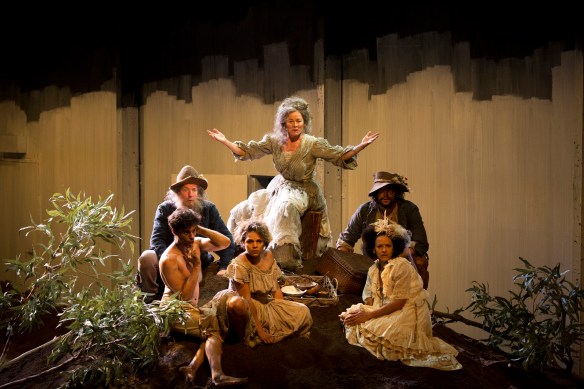
Back: Robert Menzies, Sarah Peirse, Anthony Taufa. Front: Liam Nunan, Rarriwuy Hick and Zindzi Okenyo. Photo: Lisa Tomasetti

Louis Nowra’s epic play The Golden Age hasn’t been staged professionally in Sydney since 1987, following its Melbourne premiere two years earlier. This stunning Sydney Theatre Company production, directed by Kip Williams, confirms that it is an Australian classic and as relevant as ever.

Thrillingly ambitious in its scope and imagination, the play roams from Hobart to the Tasmanian wilderness to Berlin at the end of World War II.

It begins in 1939. Two young men – Francis (Brandon McClelland), an engineer from a working class background, and his friend Peter (Remy Hii) from a well-to-do Hobart family – hike into the Tasmanian wilderness and discover a lost tribe descended from a motley group of European convicts and settlers, including one actor.

Isolated for 80 years, they have developed their own language and culture but have serious physical and mental disorders because of inbreeding. Realising that “the circle is burst” and they have no future, their leader Queenie Ayre (Sarah Peirse) decides they will return to civilisation with Francis and Peter.

However, the government is concerned that their genetic problems will be used as proof of Nazi propaganda and insists on putting them in an asylum until the end of the war.

Nowra vividly evokes the world of the tribe, inventing a muscular language drawn from Cockney, Irish, 1840s convict slang and bawdy verses. At first we have little idea what they’re saying but as some of it is explained and our ear attunes, we begin to decipher meaning. He also folds Greek drama and Shakespeare into the mix of the play.

The Golden Age takes an unflinching look at Australia’s colonial past and culture of ‘she’ll be right’ indifference, articulated in a particularly passionate speech by Francis. Themes include the destruction of one culture by another, what constitutes civilisation, war, class and the search for love, identity and belonging.

At its heart is the touching love story between Francis and Betsheb (Rarriwuy Hick), a young woman from the tribe, who are separated during the war years when Francis and Peter enlist and are sent to Europe, but who offer a glimpse of optimism amid the tragedy.

Williams’ production unfolds with cinematic fluidity on David Fleischer’s set, dominated by a huge mound of earth. It’s not particularly attractive and works better in some scenes than others. Initially, it seems like a rather drab, arid rendering of the Tasmanian wilderness, even with the odd leafy branch thrown onto it. It also looks odd to have an elegant dinner party scene in Hobart next to it. But it gradually seems to accrue meaning, symbolising the harshness of the story and the intermingling of the characters’ fates as the earth is paddled around the stage.

Fleischer’s excellent costuming feels very authentic. The production is beautifully lit by Damien Cooper, while Max Lyandvert’s sound is richly evocative.

It’s terrific to see such colour-blind casting, with actors from a number of different backgrounds, most of which simply ‘is’. Having Indigenous actor Ursula Yovich as the aristocratic, rather cold Elizabeth Archer, who utters sentiments such as “What a pathetic group they look, like those Aboriginals in shanty towns”, meanwhile, feels deliberately provocative and heightens the discomfort of such lines.

Among a strong ensemble, Hick shines as Betsheb, capturing her inquisitive, high-spirited, wild nature. Peirse is compelling as Ayre, exuding a natural authority as well as her desperation to protect the tribe and its heritage. Liam Nunan’s physicality as the crippled Stef is superb and McClelland is a passionate Francis. Robert Menzies also excels as combative tribesman Melorne and as Peter’s father, Doctor Archer, who becomes obsessed with the tribe.

Complex, challenging and wildly theatrical, The Golden Age has a haunting, dreamlike quality yet at the same time it feels painfully, movingly real.

The Golden Age plays at Wharf I until February 20. Bookings: www.sydneytheatre.com.au or 02 9250 1777

 A version of this review ran in the Sunday Telegraph on January 24

Sticks Stones Broken Bones

Lendlease Darling Quarter Theatre, January 20 at 10.30am

TimSneddon

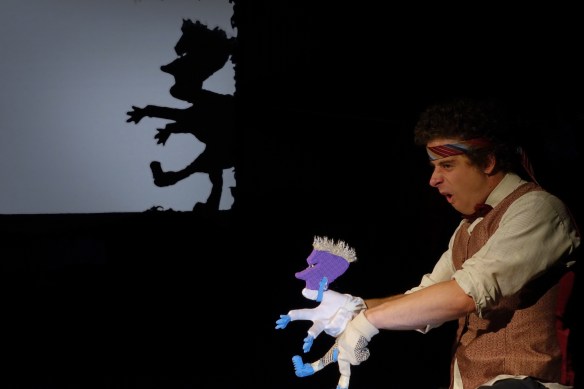
Tim Sneddon in Sticks Stones Broken Bones. Photo: supplied

Sticks Stones Broken Bones is an award-winning show from Bunk Puppets, which has toured to 15 countries, picking up gongs including Best Newcomer and Spirit of the Fringe at the Edinburgh Festival Fringe in 2010 and Best Puppet Show at the Adelaide Fringe in 2011.

The production is currently in Sydney for the first time, presented by Monkey Baa Theatre Company.

Created and directed by Jeff Achtem and performed by Tim Sneddon, it celebrates shadow puppetry and the art of creative play.

Drawing on his background in clowning, puppetry and physical theatre, Sneddon is an engaging, comical figure, who uses all kinds of bits and bobs including a shoe, teddy bear, cardboard, tinsel, socks, balloon, curly wig and lots of sticky tape to create objects that look nothing in real life but which are then transformed on screen.

The fun of the show is wondering what these random looking objects will become as shadow puppets, and the clever way Sneddon interacts with them to create on-screen vignettes.

A few segments including a comical brain transplant and a chess game didn’t really connect with the children around me but others drew lots of laughter.

A man breaking out various dance moves is pretty funny, while a hilarious Ninja routine is a show highlight. At the performance I saw, a very fit and game father from the audience threw himself into playing a Ninja who fights a monster (created on screen by Sneddon), delighting adults and kids alike.

Running around an hour and recommended for ages 5+, Sticks Stones Broken Bones ends with the observation that “you are never too old to play”, a sentiment that captures the spirit of the show.

Sticks Stones Broken Bones plays at the Lendlease Darling Quarter Theatre until January 22. Bookings: www. monkeybaa.com.au or 02 8624 9340

Meow Meow’s Little Mermaid

The Magic Mirrors Spiegeltent, Hyde Park North, January 8

MeowMeow

Meow Meow in her Little Mermaid cabaret. Photo: Prudence Upton

This show is about happiness, says cabaret diva Meow Meow, perched on a rock singing Black’s Wonderful Life while fighting back sobs.

In fact, Meow Meow’s Little Mermaid (which follows her Little Match Girl cabaret) is more about the fraught search for happiness and love.

Meow Meow is the alter ego of Melissa Madden Gray: a postmodern, Weimar-infused, “kamikaze” cabaret artist with bombshell looks, a whirlwind stage presence, sultry vocals and a saucy sense of humour.

As you’d expect, this is no straightforward telling of Hans Christian Andersen’s dark tale about the mermaid who endures agonising pain in her new feet in order to be with the Prince she saved from the sea, only for him to marry someone else.

Playing as part of the Sydney Festival, it’s no Disney version either but something idiosyncratically Meow Meow’s.

Many of her trademark tropes are there: the hilarious, throwaway one-liners, the need for adoration, the crowd surfing and the passive aggressive dealings with the audience. Here, however, she seems gentler than in the past. Just don’t get in her light.

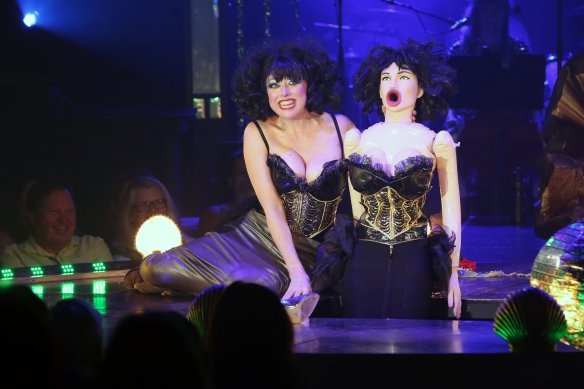
Add a sex doll dressed like her, plastic body parts representing previous relationships who might make the ideal partner when combined, flippers, bubbles and a Prince from her subconscious (actor Chris Ryan in sparkly outfit with scallop shell codpiece) and you have some idea of the comic mayhem.

Ryan also makes a surprise entry in more blokey attire and gives a beautiful rendition of Schubert’s Am Meer (By the Sea).

Underpinning it all are piercing riffs on love, desire, obsession, sacrifice and the state of the world with references ranging from the frivolous to the highly sophisticated.

Accompanied by The Siren Effect Orchestra under musical director Jethro Woodward, the show includes some wonderful songs, most of them originals by the likes of Iain Grandage, Megan Washington, Kate Miller-Heidke and Amanda Palmer. What’s more, Meow Meow has a gorgeous smoky voice – except perhaps when singing in dolphin – and mines the emotional depth in the lyrics.

Unobtrusively directed by Michael Kantor, with set and costumes by Anna Cordingley and lighting by Paul Jackson, the 70-minute show is outrageously entertaining with provocative themes beneath the surface, all delivered in classic Meow Meow fashion.

Meow Meow’s Little Mermaid plays until January 23. Bookings: www.sydneyfestival.org.au/meow or 1300 856 876

 A version of this review ran in the Sunday Telegraph on January 17

The Fantasticks

Hayes Theatre Co, January 13

Laurence Coy, Jonathan Hickey, Bobbie-Jean Henning, Garry Scale The Fantasticks (c) Marnya Rothe

Laurence Coy, Jonathan Hickey, Bobbie-Jean Henning and Garry Scale. Photo: Marnya Rothe

The Fantasticks is, rather remarkably, the world’s longest-running musical having played continuously off-Broadway for 42 years from 1960. On top of that, a 2006 revival is still running in New York. How much of its current appeal is to do with the caché of its lengthy run in the manner of The Mousetrap, who knows, but the musical clearly has to have something going for it.

The original London season and a 2010 West End revival didn’t do good business. Nonetheless, it’s still performed all over the world.

I have never seen it on stage but I have spoken to some who have, I’ve heard cast recordings and have read about it. It seems to me a curious choice in this day and age as the musical – a whimsically cutesy commedia dell’arte-style fable – is pretty twee and dated. Directing the show for Wooden Horse Productions in association with the Hayes Theatre Co, Helen Dallimore has taken out the commedia and given the darker elements in the show a stronger focus in order to try to make it resonate today. But in doing so, she has put the balance of the musical out of whack and lost some of the whimsical, homespun charm, which was clearly so much part of its original appeal.

Dallimore has also made a very strange – I would say ill-considered – decision to use the original version of a song about abduction, which includes the word “rape” around 40 times when an alternative version exists – more of which later.

With music by Harvey Schmidt and book and lyrics by Tom Jones (not the pop star), The Fantasticks tells a simple allegorical tale. Two single fathers living next door to each other pretend to feud. They build a wall between their houses and forbid their children (20-year old Matt and 16-year old Luisa) to see each other in the hope that reverse psychology will prevail and their offspring will fall in love and marry.

The fathers even set up a mock abduction, with Matt fighting off the supposed bandits to rescue his young love. The ruse works but the young lovers soon become bored with each other. Matt sets off like the prodigal son to see the world leaving Luisa behind to make her own discoveries. Eventually they are reunited having learned that in order to truly love and appreciate what you have, you have to have experienced some of the cruelties of the world. “Without a hurt the heart is hollow” as El Gallo, the enigmatic narrator figure who leads them on their journey to self-discovery, sings in the show’s most famous song Try to Remember.

The songs have tuneful melodies and poetic lyrics but few of them are especially memorable except Try to Remember and the romantic ballad Soon It’s Gonna Rain.

The score was originally performed by a sextet including harp and piano. Musical directors Glenn Moorhouse and Hayden Baltrop have rearranged it for electric guitar and electric keyboard to give it a rockier, grittier, more modern edge. It works for some of it but there’s no room in Dallimore’s darker, more menacing vision of El Gallo for Martin Crewes to sing the opening number Try to Remember in the usual crooning fashion. Instead, he sings it in a harsh, threatening manner, which doesn’t really suit his voice or the song. That’s no reflection on Crewes, who I thought was superb in the show.

Because Dallimore has taken a darker approach to El Gallo, but not pushed this further elsewhere in the musical, it makes for some awkward jumps in style. The two comic duets for the fathers feel really old-school in comparison. Meanwhile, the romantic ballads between the two young lovers, though well sung by newcomers Bobbie-Jean Henning and Jonathan Hickey, don’t quite soar as much as they might.

Then there’s the problematic “rape” song “It Depends on What You Pay”. The fathers enlist El Gallo to orchestrate the pretend abduction of Luisa. Though El Gallo makes clear that he is using the word “rape” in the classical context of “abduction”, it’s still a very loaded word and the original song in which El Gallo and the two fathers sing jauntily of “the Venetian Rape”, “the Gothic Rape”, “the Drunken Rape” and numerous other rapes now feels offensive, insensitive and very uncomfortable.

Aware of this, productions routinely replace the word “rape” with “abduction” or “raid” and in 1990 Schmidt and Jones wrote an alternative song called “Abductions”– so why Dallimore chose to go with the original is bemusing.

Bobbie-Jean Henning and Martin Crewes in The Fantasticks (c) Marnya Rothe

Bobbie-Jean Henning and Martin Crewes. Photo: Marnya Rothe

For all that, there are things to enjoy in the production. Crewes brings a dark menace and sexy charisma to the role of El Gallo but also manages to balance this with a sense of mystery and ineffable wisdom, suggesting a figure both devilish and god-like. A fine actor and singer, he is a strong presence throughout.

Garry Scale and Laurence Coy double as the fathers and two elderly travelling players (originally played by four actors) and both turn in strong comic performances. Scale’s portrayal of the doddery actor Henry is a particular delight. As the young lovers, Henning and Hickey sing attractively and exude a youthful innocence. But in making them a little more knowing and self-absorbed, they aren’t quite as endearingly naïve as they might be.

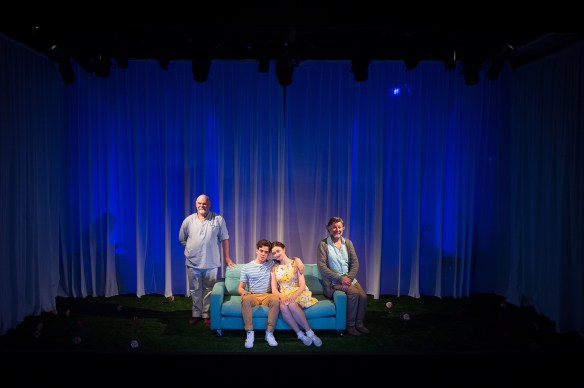
Hugh O’Connor’s set is simple but reasonably effective: a grassy lawn studded with flowers and white gauzy curtains through which we see a red Exit sign (presumably indicating the outside world, I’m not sure) though Christopher Page’s lighting does it no favours.

In the original, a mute actor played the wall. Dallimore has done away with this – and we are easily able to imagine it. But to then see the actors walking quite happily through the imaginary wall is a bit weird. There’s a terrific moment, however, with Moorhouse appearing from behind the gauze curtain to play guitar centrestage as the wall is rebuilt, which is a lovely touch.

The Hayes has become known as a venue where inventive productions have brought fresh life to well-known musicals and introduced audiences to lesser-known ones so there was much interest in how The Fantasticks would be reimagined for today. It’s great to see an emerging director like Dallimore prepared to take a risk with a show like this. Unfortunately, this time around the experiment hasn’t been that successful. This production never really finds its groove and it’s hard to see why the musical itself ever had such appeal.

The Fantasticks plays at the Hayes Theatre Co until January 31. Bookings: www.hayestheatre.com.au or 02 8065 7337