Jasper Jones

Belvoir St Theatre, January 6

JasperJones3

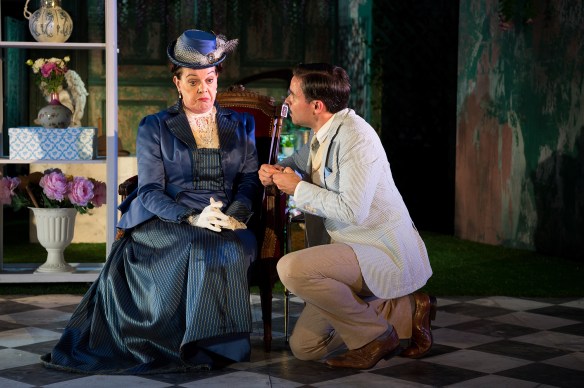
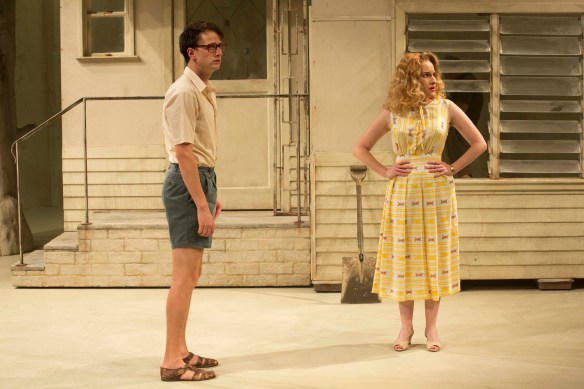
Tom Conroy and Kate Mulvany in Jasper Jones. Photo: Lisa Tomasetti

Kate Mulvany’s stage adaptation of Craig Silvey’s much-loved 2009 novel for young adults, Jasper Jones, is faithful to the world, spirit and overall plot of the original book.

Set in 1965 in the small fictional town of Corrigan in Western Australia, it begins with Charlie Bucktin (Tom Conroy), a smart but dorky 14-year old, being woken by 16-year old Jasper Jones (Guy Simon), whose part Aboriginal heritage makes him a perennial scapegoat and loner.

Jasper asks Charlie to follow him to his hide-away in the bush, where he has discovered something terrible. Knowing that he will be blamed, he begs Charlie to help him find out who is responsible.

So begins a coming-of-age story in which the innocence and high-spiritedness of youth rub up against bigotry, bullying and domestic abuse. Anyone who hasn’t read the book and plans on taking young people (it’s recommended for ages 13+) should be aware that it contains these darker themes as well as a confronting death – but overall it’s a lovely, life-affirming story full of laughter and exuberant humour as well as heartache.

While Charlie waits for Jasper to reappear, he spends time with his best mate, the cricket-mad Jeffrey Lu (Charles Wu). Though the Vietnam War seems worlds away, it still resonates in the background as more Australians are called up and Jeffrey, like Jasper, is the target of casual racism because of his Vietnamese background. And then there’s the book-loving Eliza Wishart (Matilda Ridgway), Charlie’s love interest.

Inevitably some things in the book aren’t gone into in the same depth. Charlie and Jasper’s encounter with Mad Jack Lionel – another loner avoided by the town and feared by all the children – feels a bit rushed. Charlie’s evolving relationship with his quiet, retiring father is given short shrift, though the relationship with his embittered, frustrated mother is vividly evoked, enhanced by a powerful new scene between her and Charlie as she prepares to leave.

The two attacks on the Lu family don’t have as much of an impact when simply described as they are here and nor do get the same sense of the toll they take on the hitherto irrepressibly optimistic Jeffrey – a moving moment in the novel and something Charlie is acutely aware of. But overall, Mulvany has made well-considered choices in putting the novel and its characters on stage.

Directed by Anne-Louise Sarks, the Belvoir production unfolds on an evocative set by Michael Hankin with a large gum tree plus a small wooden porch and sleep-out, which can be moved to create different locations. It’s all beautifully lit by Matt Scott, while Mel Page’s costumes capture 1960s attire in regional Australia in brilliantly funny fashion for the men (shorts with long socks, tight shirts tucked into tight pants) and more attractive cotton frocks with full skirts for the women. Steve Toulmin’s sound is also very effective in enhancing the atmosphere.

Playing some scenes while racing through the auditorium adds little and is plain clunky at times with people craning their necks, but for the most part Sarks’ lively production flows smoothly. The cricket match in which Jeffrey emerges triumphant is cleverly staged and the ending – though slightly different to the novel – brings a lump to the throat.

JasperJones2

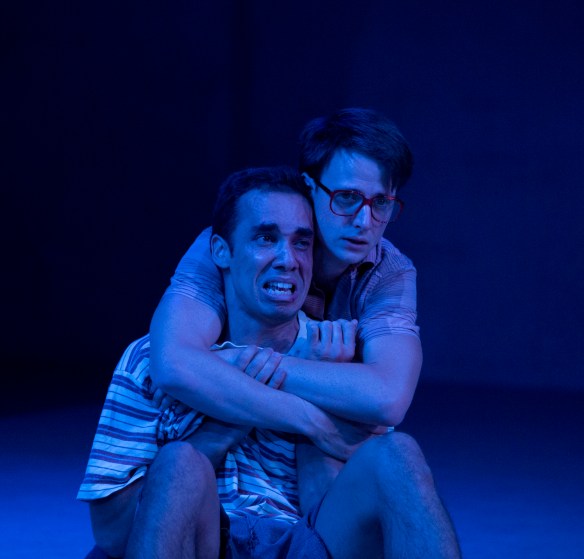
Guy Simon as Jasper and Tom Conroy as Charlie. Photo: Lisa Tomasetti

Conroy captures Charlie’s awkwardness, intelligence and sense of fairness, while the jokey banter between him and Wu’s Jeffrey is a delight. Simon is endearing as Jasper, quietly conveying the emotional weight he carries. Mulvany gives a vibrant portrayal of Charlie’s unhappy, snarky mother and a hilarious comic cameo as the local school bully Warwick. Ridgway glows as Eliza and Steve Rodgers brings weight to the underwritten characters of Charlie’s father and Mad Jack Lionel.

Though not all the moments hit home as powerfully as in the book, Mulvany has written a very funny, ultimately touching play with much to say for adults and teenagers alike.

Jasper Jones plays at Belvoir St Theatre until Feburary 7. Bookings: www.belvoir.com.au or 02 9699 3444


A version of this review ran in the Sunday Telegraph on January 10

Stick Man

Playhouse Theatre, Sydney Opera House, January 12 at 2pm

ODS_SOH_StickMan_2015_by_JacquieManning-71

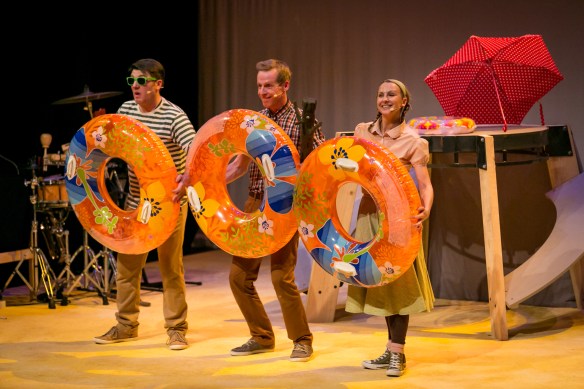
Paul Kane, William Cooper and Claire Dargo in Stick Man. Photo: Jacquie Manning

Sydney families have embraced recent stage adaptations of The Gruffalo, The Gruffalo’s Child and Room on the Broom. Now comes Stick Man, another delightful show for young children aged 3+, also based on a popular picture book by Julia Donaldson and Axel Scheffler.

Staged by UK company Scamp Theatre, the production premiered in 2010 and has since played in London’s West End and toured internationally.

Stick Man tells the story of a happy, healthy stick who leaves his family tree to go for a walk one morning and finds himself caught up in one sticky situation after another. At the mercy of a dog, a karate-kicking girl who uses him as a Pooh stick, a swan, the ocean waves, and a pair of cricket-playing, sand castle-building beach-goers, he feels “used and abused”. Finally, he is thrown on a log fire but is rescued by Santa Claus and happily reunited with his family.

Performed by three Scottish actors, the exuberant 55-minute production is imaginatively staged using puppets, catchy songs, cute dance moves, lighting effects and other clever touches such as umbrellas to represent the ocean.

There is also plenty of gentle audience participation with a chase through the audience by Stick Man, the dog and a park keeper, and children catching beach balls and huge rubber rings and returning them to the stage. One little girl wept on her mother’s shoulder when another child beat her to the beach ball, but when it came flying out into the audience again, another mother in the row behind made sure it reached her and her smiling face was a picture. The magic of theatre (and kindly theatre-goers)!

The three actors are all terrific. William Cooper plays the put-upon Stick Man, Claire Dargo is the dog, swan, martial arts-loving girl and a beach-goer, while Paul Kane plays the other characters and also supplies live music (performed to a jaunty backing track) and sound effects, playing ukulele, saxophone, penny whistle and a neat little percussion kit on the side of the stage.

The children all around me clearly had a lovely time and I heard several singing the catching Stick Man song in the foyer afterwards.

Stick Man plays at the Playhouse, Sydney Opera House until January 17. Bookings: www.sydneyoperahouse.com or 02 9250 7777

The Object Lesson

Sydney Town Hall, January 7

Sobelle

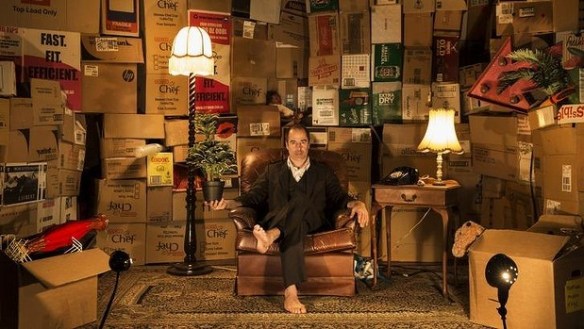
Geoff Sobelle in the Sydney Town Hall. Photo: Nic Walker, Sydney Morning Herald

Geoff Sobelle’s absurdist performance installation The Object Lesson is by turns intriguing, whimsical, gently amusing, infuriating, tedious and utterly magical.

First staged by the American actor and illusionist in Philadelphia in 2013, with direction by David Neumann, set design by Steven Dufala, lighting by Christopher Kuhl and sound by Nick Kourtides, it won the top prize at the 2014 Edinburgh Festival Fringe and had a successful New York season later that year. Now it’s here as part of the Sydney Festival.

Entering the main ballroom at the Sydney Town Hall, you find yourself in a newly created space framed by towering walls of cardboard boxes, many of them labelled, while other boxes are scattered around the room. Filled with all kinds of stuff – toys, clothes, lamps and bric-a-brac – you are invited to rifle through them as a prologue to the main act.

When Sobelle first presented The Object Lesson, he was moving house and put his own belongings into the boxes. Here, they have come from op shops and donations.

Gradually, the audience finds somewhere to sit, some choosing the stage, others perching on boxes marked “sit on me”. Then Sobelle emerges from the crowd in well-worn brown suit and bare feet and begins unpacking furniture from boxes to form a small room with carpet, big leather armchair, plant and an old-fashioned gramophone, which isn’t quite what it seems.

Using a small tape machine, he records seemingly random comments, which then become a fairly aimless two-way conversation on a phone. Scrambling up the mountain of boxes, he extracts a letter, recalling a student holiday in France, and some traffic lights, which feature in a rambling story. He shares bread and wine. He gets two audience members to go through their wallets. My friend and colleague Diana Simmonds was one of those chosen on opening night and injected some wry humour into her account. Read Diana’s review here: http://www.stagenoise.com/review/2016/sydfest-2016-the-object-lesson

While some in the audience seemed fascinated, to me it all felt fairly random, a little boring, and kind of pointless. Maybe that was the point. But I have to admit it was trying my patience.

And then Sobelle does a wonderful thing with ice skates, salad and a lady plucked from the audience. I don’t want to give too much away but from there, I was hooked.

The final sequence is magical, quite literally, as Sobelle takes us on a journey from cradle to grave, pulling all manner of things from an apparently bottomless box that looked empty when he set it on the stool.

It’s an extraordinary coup de theatre. Finally, with a mountain of life’s detritus tossed onto the floor in front of him, the lights go out and we are left to ponder the stuff we accumulate, how much of it we actually need, the memories that objects hold for us, and whether/when/how to let things go. As Sobelle says: “there’s a thin line between vintage and crap.”

The Object Lesson is almost completely sold out. However, an extra performance on Sunday January 10 at 8pm is now on sale: www.sydneyfestival.org.au/object or 1300 856 876

Rumour Has It

Drama Theatre, Sydney Opera House, January 5

3ee20cc95a0b940670abed65b603c667

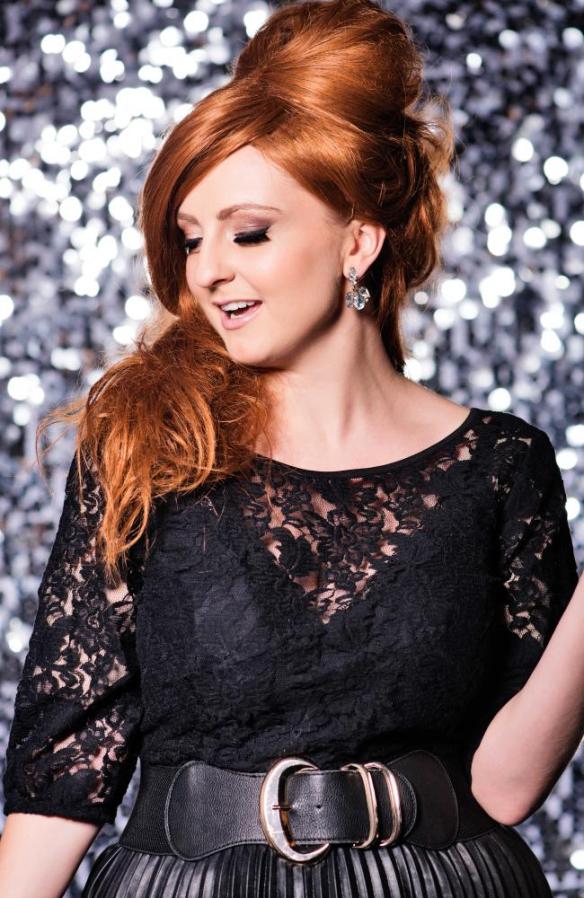
Naomi Price as Adele in Rumour Has It.

Naomi Price has been performing Rumour Has It, her cabaret show about Adele, to considerable acclaim since premiering it in Queensland in late 2012.

With the boost in profile she has enjoyed as a finalist in The Voice 2015, she has been filling the Drama Theatre at the Sydney Opera House, performing eight shows over four days (January 3 ­– 6). The chart-topping success of Adele’s recently released album 25 can’t have hurt the show’s appeal either.

Price is certainly a talented performer. She has a good range of textures to her voice and a strong vocal technique. She also has a confident ease on stage, a robust sense of humour and is quick off the mark when bantering with the audience – the majority of whom clearly loved the show.

So why was I less enthusiastic than most of those around me?

What Price doesn’t have – or doesn’t convey in Rumour Has It – is Adele’s soul. She sings the much-loved hits (Chasing Pavements, Rolling in the Deep, Someone Like You and the Academy Award-winning Skyfall among others) well, but she doesn’t touch you emotionally the way Adele does.

Adele is a hard act to follow, of course, but when you come on stage dressed like her, talking like her and as her, and singing her songs pretty much the way she does, the comparison is inevitable. And when it comes to connecting with the lyrics, Price is no Adele.

My favourite biographical cabaret shows include Christie Whelan Browne’s hilariously funny yet heartbreakingly poignant Britney Spears: The Cabaret and Michael Griffiths’ In Vogue: The Songs of Madonna and Sweet Dreams: The Songs of Annie Lennox (all three written by Dean Bryant).

Both Whelan Browne and Griffiths used the first person (though Griffiths made no attempt to impersonate Madonna or Lennox) and reinterpreted the songs using strikingly different new arrangements. Crucially, both offered a fascinating insight into the artists they were representing using their songs to comment on their life and creativity as well as themes such as celebrity.

Price – sporting a red wig and padded outfits to give her a little extra ampleness – gives us a much more straightforward representation of Adele. The show, co-written with Adam Brunes, offers a fairly bare bones synopsis of her life from working class lass in Tottenham to one of today’s biggest soul divas. Any time Price seems about to give us some genuine insight, she tends to veer off into a joke.

She’s clearly a terrific mimic (she does a hilarious send-up of Celine Dion) and she nails Adele’s accent and colourful turn-of-phrase, though makes her more consistently potty-mouthed than Adele actually is. And while Adele is famously forthright and candid, there’s a humility to her that doesn’t quite come across here. Instead, the focus is more on a brassy feistiness.

Performing with a four-piece band under the musical direction of exceptional guitarist Jason McGregor plus three backing vocalists including Price’s partner Luke Kennedy, runner up on The Voice 2013, the show is impressive musically. It looks good too, simply but stylishly staged with a galaxy of hanging lampshades.

In a tongue-in-cheek riff on reality TV shows, Price shows what good comic chops she has, and I found myself wishing she was doing her own cabaret and just including some Adele material in it.

But for me, Rumour Has It feels too much like mimicry, minus Adele’s extraordinary soulfulness. And without a great deal of insight into what makes Adele the artist she is, I was left feeling that something was missing. But for many of the audience, Price clearly gives them exactly what they want.

Rumour Has It has two final shows at the Sydney Opera House today at 5pm and 8pm.

But Wait…There’s More

The Entertainment Quarter, January 2

CircusOzEnsemble

The Circus Oz ensemble. Photo: Rob Blackburn

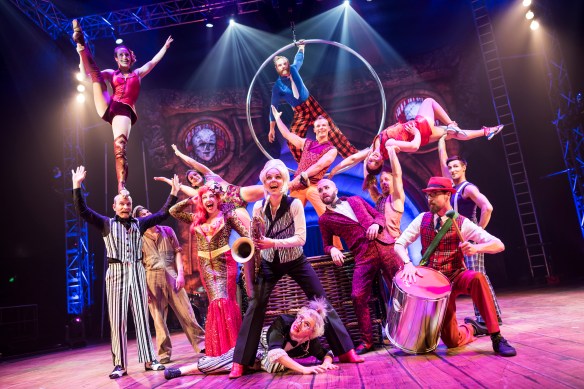
Circus Oz’s latest show But Wait….There’s More arrives in Sydney at the end of a two-year tour. It’s clearly had a few changes along the way but is in good shape.

There are plenty of strong, engaging personalities among the company but they work together as a tight ensemble. As well as performing in various acts, they all play instruments to bolster the two musicians in the band and pitch in to help with scene changes so that things keep rocking along.

Directed by Mike Finch – his final production as artistic director of the company, a role he’s held since 1997 – the show supposedly has an underpinning theme about “infobesity” and consumerism. There are various references ranging from a comic character staggering under a tower of boxed purchases to an acrobatic routine with the performers in barcode-like costumes. But overall you’d be hard pressed to recognise a consistent theme if you didn’t already know about it.

No matter. The show has that lovely raw honesty and irreverent sense of fun that characterises Circus Oz. It looks good too with impressive costuming by Laurel Frank and lighting by Paul Jackson.

Dale Woodbridge-Brown is very funny as the ringmaster introducing himself as a triple threat – gay, indigenous, adopted. He is quick with the one-liners, strikes some wonderfully tongue-in-cheek poses in his fetching red jacket, shorts and sock suspenders, and is an acrobat to boot in a hoop diving routine (with Sharon Gruenert and Nathan Kell) through a TV-like rectangle.

Kyle&April

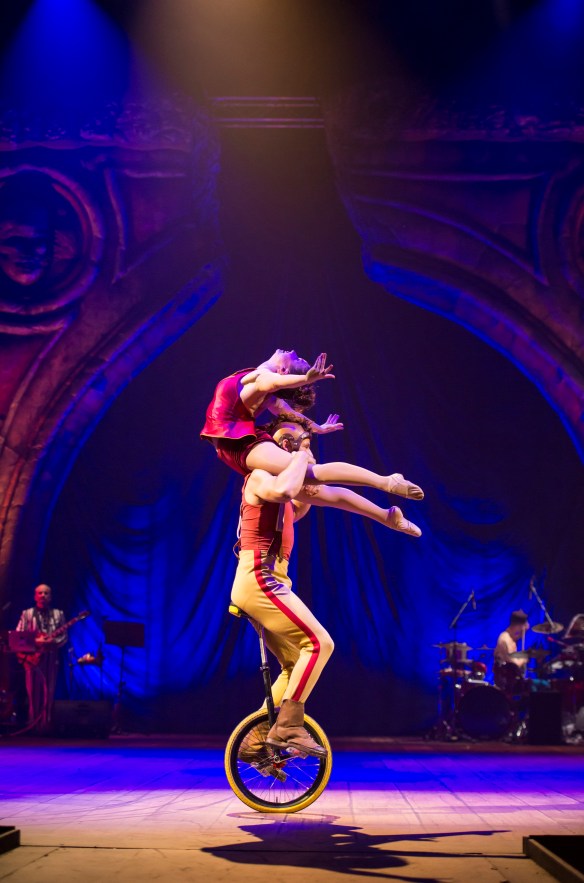
Kyle Raftery and April Dawson in their unicycle adagio. Photo: Rob Blackburn

Real-life partners Kyle Raftery and April Dawson perform a beguiling balancing routine on a unicycle (to a beautiful piece of music for piano and banjo), Olivia Porter’s juggling routine with white balls has a refreshing edginess to it, Matt Wilson’s balancing act on children’s chairs has an added twist with the chairs perched precariously on a pepper grinder, plastic skull, glass bottle and statue of the Eiffel Tower, while the exuberant flying trapeze act mixes impressive feats with slapstick comedy.

So often, the clowns aren’t funny in circus shows. Here, Wilson (a circus veteran of 25 years) and Porter are a genuinely funny double act using plenty of old-style slapstick – she as a timid, put-upon character, and he as a strong, chipper chappie.

A routine featuring the live performance of the “Lion Song” with children from the audience going up on stage to be lions sits rather oddly. It’s obviously a reference to circuses from days past when animals were paraded but for me anyway it was one of a couple of flat spots.

Overall, however, But Wait…There’s More is one of the most entertaining Circus Oz shows I’ve seen for a while with a warmth and generosity of spirit that is very endearing.

But Wait….There’s More plays in the Big Top in The Showring, Entertainment Quarter, Moore Park until January 24. Bookings: www.ticketmaster.com.au or 136 100

Love’s Labour’s Lost and The Importance of Being Earnest

Love’s Labour’s Lost

Bella Vista Farm, December 12

_DSC4589

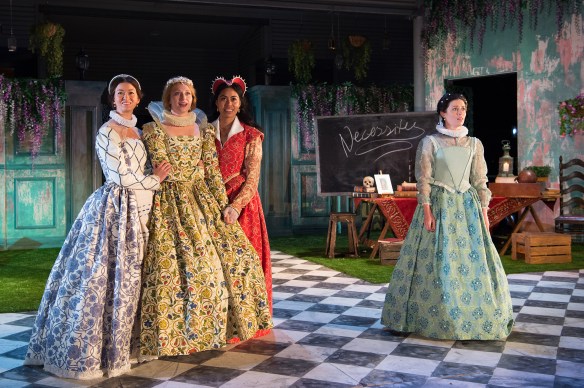
Lara Schwerdt, Emily Eskell, Sabryna Te’o and Madeleine Jones in Love’s Labour’s Lost. Photo: Maryne Rothe

Sport for Jove’s outdoor season is always something to look forward to during the Sydney summer (weather permitting) and this year’s production of Love’s Labour’s Lost is a delight.

I saw the play at Bella Vista Farm Park in the Hills Shire and have been tardy in reviewing it so that season is now over. However, you can catch the production at Everglades Gardens in Leura during January – and it’s well worth it.

At Bella Vista Farm, Sport for Jove has a new purpose-built stage. With a lighting rig and backstage area, it is better equipped for the cast and crew. Constructed at the bottom of a gently sloping hill, it also provides better sightlines for the audience who can either sit on a picnic blanket, or a little further up the hill on provided plastic chairs. The set-up may not have quite the same charm as when the company performed in a courtyard in front of the farmhouse or in the nearby shed, but it is eminently practical.

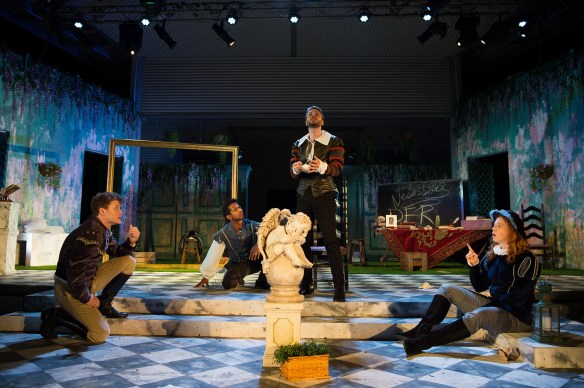
What’s more, the set (co-designed by Damien Ryan and Anna Gardiner) is vibrantly attractive in a shabby chic kind of way with wisteria-draped screens and walls and a “marble” floor: a staging that sits well and looks good in the outdoor setting under Sian James-Holland’s lighting.

Love’s Labour’s Lost is one of Shakespeare’s early, rarely performed comedies. It’s a wordy piece though it never feels cumbersomely so here. In his program notes, director Damien Ryan writes that he has removed the play’s “most impenetrable material” but admits that some of the language remains “a curiously knotted garden”. However, there’s lots of wonderful poetry and the production rollicks along with such an infectious energy that any difficult language never becomes an issue.

The plot is light and rather silly. The young King Ferdinand of Navarre (Edmund Lembke-Hogan) and his friends Lord Biron (Tim Walter), Dumain (Curtis Fernandez) and Longaville (Gabrielle Scawthorn) take a pledge to avoid woman and wine for three years and instead devote themselves to study.

But before the ink is dry, the Princess of France (Emily Eskell) and her ladies-in-waiting Rosaline (Sabryna Te’o), Maria (Lara Schwerdt) and Katherine (Madeleine Jones) arrive and test their resolve.

A second plot involves a Spanish nobleman, Don Adriano de Armado (Berynn Schwerdt) who is bent on wooing a comely country maid called Jaquenetta (Claire Lovering). A bumpkin called Costard (George Banders) is also sweet on Jaquenette but is no match for the Don and finds himself being used at the go-between for one and all.

The women in the play are highly spirited and independent, and while attracted to the men refuse to become their playthings. As a way to increase the number of roles for women, Ryan has Longaville played by a woman in masculine attire (Scawthorn) who holds her own in the privileged men’s world. By doing so, Ryan introduces the issue of marriage equality. The device works brilliantly, without feeling at all gimmicky. When the young people eventually pair off, there just happens to be one lesbian couple.

_DSC5349

Edmund Lembke-Hogan, Curtis Fernandez, Tim Walter and Gabrielle Scawthorn in Love’s Labour’s Lost. Photo: Marnya Rothe

While using Elizabethan costuming, Ryan also injects a great deal of fun by portraying the officious, bureaucratic Anthony Dull (Scott Sheridan) as a contemporary park ranger.

Speaking of costuming, Melanie Liertz has done an exceptional job on the smell of an oily rag. Apparently the women’s gowns are made from painted canvas. Amazing.

Ryan’s cast is terrific. Some handle the language better than others, but overall it’s performed with a zest that fills the air, sailing effortlessly to the top of the hill. Beryn Schwerdt is hilarious as Don Adriano, flouncing around in melodramatic fashion with a fruity, comedic Spanish accent to match.

Aaron Tsindos is also funny as the Don’s manservant Moth. Scawthorn is impressive as Longaville, Lembke-Hogan exudes confident poise as Navarre and Walter is dashing as the serious, cynical Biron. But all the cast – which also includes Wendy Strehlow and James Lugton – are on song. A fun night.

The evening begins with a short curtain raiser: Josh Lawson’s Shakespearealism, a clever, 30-minute send-up about Ralph Shakespeare, a young playwright who pioneered realism on stage but lived forever in the shadow of his brother William. Directed by Lizzie Schebesta, with Lembke-Hogan as Ralph, James Lugton as jaded theatre manager Philip Henslowe, and Scawhtorn and Tsindos as two actors, it’s a cute piece but makes for a long night.

The Importance of Being Earnest

Bella Vista Farm, December 19

Earnest Production Photo 5 - Credit Marnya Rothe

Deborah Kennedy as Lady Bracknell and Scott Sheridan as Jack Worthing. Photo: Marnya Rothe

Oscar Wilde’s The Importance of Being Earnest is one of the greatest comedies of all time, but I’m not sure that the play with its witty repartee and drawing room settings lends itself to an outdoor production in the same way that Shakespeare does. Damien Ryan directs an enjoyable enough production but it often feels a bit try-hard in the comedy stakes. The slapstick routine of Algernon (Aaron Tsindos) and his manservant Lane (James Lugton) falling off the stage doesn’t sit right in Wilde’s stylish world, nor does Cecily (Eloise Winestock) gagging on the name Algernon. What’s more, I didn’t find any of that particularly funny.

Some of the gags work well – the running joke about the servant’s bell is amusing – but the portrayals of the gun-toting Cecily and hyper Gwendolen (Claire Lovering) feel far too overplayed.

Deborah Kennedy has the style absolutely right as Lady Bracknell and nails every laugh, delivering the famous lines as if they’ve never been said before in a standout performance. Wendy Strehlow is also on the money with Miss Prism, while Tsindos has the measure of the witty, devil-may-care Algernon.

Love’s Labour’s Lost and The Importance of Being Earnest, Everglades Gardens, Leura, January 9 – 24. Bookings: http://www.sportforjove.com.au

2015: The Year That Was in Sydney Theatre

Looking back over the 167 productions (theatre, musicals, dance, opera and cabaret) I saw in 2015, there was some terrific mainstage theatre but it was in the independent sector this year that many of my real highlights occurred. There were some outstanding performances across both, including a number of unforgettable solo turns.

As for musicals, the commercial scene was generally much more impressive than last year, thanks to a couple of exceptional productions, while independent musical theatre continued to thrive led by the invaluable Hayes Theatre Co. Not only did the Hayes shine a light on many little known shows and talented, emerging performers but it also provided the opportunity for several impressive directorial debuts.

So, here goes with my personal highlights for the year.

MUSICALS

Matilda the Musical
Swings

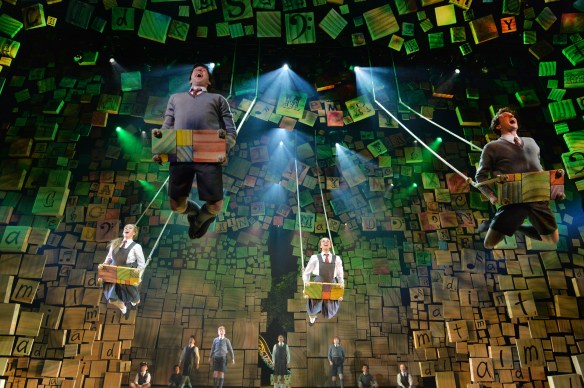
“When I Grow Up” in Matilda. Photo: James Morgan

 Tim Minchin and writer Dennis Kelly took the irreverent genius of Roald Dahl and made it sing on stage in Matilda The Musical, one of the most original and exciting new musicals in ages. The Royal Shakespeare Company production is an inspired piece of theatre and the Australian cast did it proud, thrilling adults and “maggots” alike. James Millar was a hoot as the monstrous Miss Trunchbull and Elise McCann was a quietly radiant Miss Honey, while the four young girls who played Matilda – Molly Barwick, Bella Thomas, Sasha Rose and Georgia Taplin – did a fine job, as did all the children in the cast.

Les Misérables

Cameron Mackintosh’s 25th anniversary production arrived in Sydney after its Melbourne season and stormed the barricades once more. Stellar turns by Simon Gleeson as Valjean and Hayden Tee as Javert gave the production a profound emotional power and Kerrie Anne Greenland made a powerhouse professional debut as Eponine.

The Sound of Music

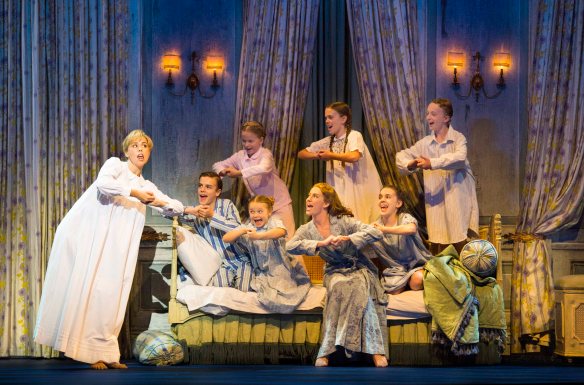
Julie Andrews’ portrayal of Maria in the film of The Sound of Music is indelibly imprinted in most people’s mind. But Amy Lehpamer made the role her own with a sensational performance that confirms she is, without question, one of the stars of Australian musical theatre.
Amy Lehpamer, Stefanie Jones and child cast in The Sound of Music (c) James Morgan

Amy Lehpamer, Stefanie Jones and the child cast in The Sound of Music. Photo: James Morgan

Lehpamer has been riding a wave for a while now, and showing what an incredibly versatile performer she is. This year alone she has played Janet in The Rocky Horror Show (one of the few good things in a horribly glib production, with Craig McLachlan giving a shamelessly indulgent performance as the hammiest, least sexy Frank N Furter I’ve ever seen), followed by the glamorous Tracy Lord in High Society and now Maria in The Sound of Music. Coming after lovely performances as Christine Colgate in the musical comedy Dirty Rotten Scoundrels and the sassy, fiddle-playing Reza in Once, Lehpamer shows she has got the lot.

This revival of The Sound of Music is a scaled-back version of one first seen at London’s Palladium in 2006 and while some of the sets look less than lavish – the hills are hardly rolling in the opening scene – it’s still a lovely production. Jacqui Dark’s humane portrayal of the Mother Abbess and soaring rendition of Climb Ev’ry Mountain is another highlight.

INDEPENDENT MUSICALS

Once again, some fabulous indie musicals emanated from the Hayes. Leader of the pack for me, by a whisker, was Violet, closely followed by Heathers, Dogfight and High Society, while Man of La Mancha was a high in a patchy year for Squabbalogic.

Violet
Blue Saint Productions - Violet - Grant Leslie Photography

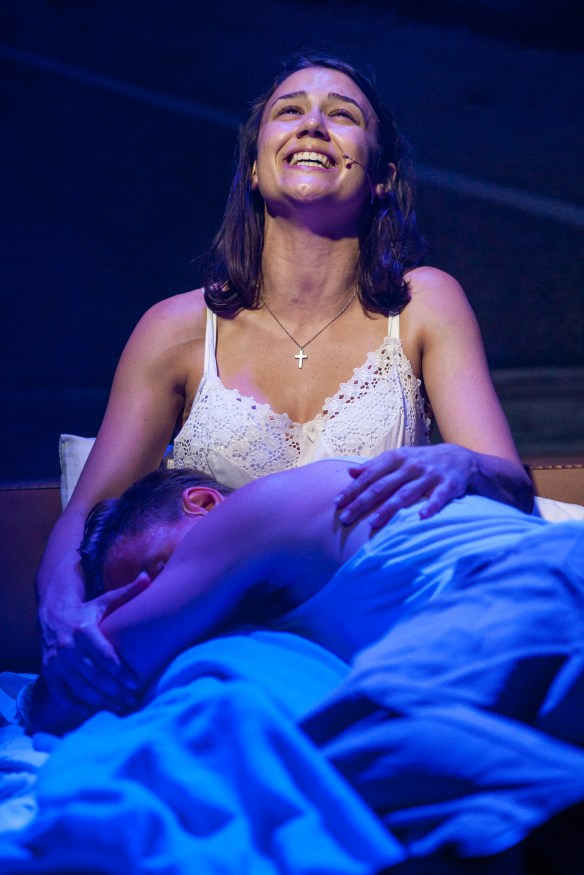
Samantha Dodemaide as Violet. Photo: Grant Leslie

Mitchell Butel made a brilliant directorial debut at the helm of Violet. He displayed a sure, sensitive touch, keeping the action flowing, the different time frames clear, and the focus where it needed to be.

He also drew truthful, beautifully delineated performances from a well-chosen cast led by Samantha Dodemaide, who glowed as Violet, a young woman who crosses the US by bus hoping that a televangelist will heal a disfiguring scar on her face. Everything about the production was spot-on ensuring that the sweet, gently charming musical knocked you for six emotionally without ever becoming corny.

Heathers the Musical

 Trevor Ashley also directed his first musical this year at the Hayes, and showed that he too has got what it takes. His high-energy production of Heathers the Musical leapt off the stage at you and he pitched the dark, camp comedy just right. Jaz Flowers brought a surprising depth to Veronica while belting the hell out of her songs, Lucy Maunder was very funny as queen bitch Heather Chandler and there were impressive debuts from Stephen Madsen as the psychopathic, James Dean-like J.D. and Lauren McKenna as the bullied Martha and loopy, New Age teacher Ms Fleming.

Dogfight

 Like Violet, Dogfight is a sweet, tender little musical though it spins around a vile prank, causing some to find the show misogynistic. Director Neil Gooding handled this sensitively, clearly showing why the young marines are so full of pumped-up machismo. Hilary Cole as the gauche young waitress Rose and Luigi Lucente as Eddie, the marine who tricks her then falls for her, moved me to tears.

High Society

High Society got a mixed response but I very much liked Helen Dallimore’s production ingeniously staged by Lauren Peters in the tiny Hayes. Daryl Wallis’s jazz quartet arrangements worked a treat, Amy Lehpamer shone as Tracy, while Virginia Gay gave one of the musical theatre performances of the year as Liz, the newspaper photographer quietly in love with her colleague Mike (Bobby Fox). Her performance was full of lovely, surprising little details, her comic timing was immaculate and she knew exactly how to deliver Cole Porter’s songs.
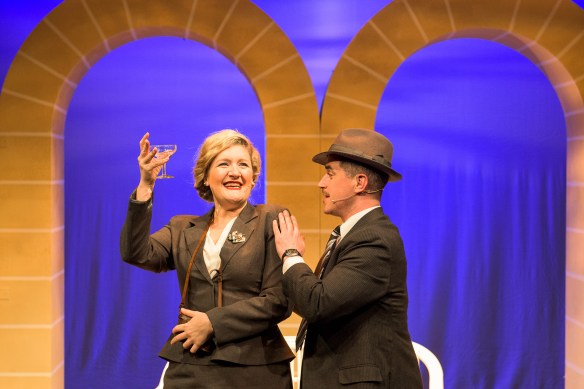
Gay

Virginia Gay and Bobby Fox in High Society. Photo: Kurt Sneddon

Man of La Mancha

Jay James-Moody’s inventive, low-tech staging of Man of La Mancha was a highlight of Squabbalogic’s 2015 season. Set entirely in a prison dungeon (set by Simon Greer, costumes by Brendan Hay), the gritting reimagining brought new life and emotion to the somewhat hoary old musical. Having the cast play various musical instruments also worked well. At the heart of the production, Tony Sheldon’s Cervantes was dignified, frail and very moving.

MUSICAL ON THE HIGH SEAS

Priscilla, Queen of the Desert

 The Norwegian Epic, a cruise liner sailing around the Mediterranean, is known for its entertainment and is currently staging terrific productions of Priscilla and Burn the Floor in its 750-seat theatre. Priscilla stars several Australians among its international cast. Rohan Seinor is sublime as Bernadette bringing enormous warmth, humanity and wit to the role, while Joe Dinn anchors the show as an endearing Tick. I must declare that I went to see my son Tom Sharah, who is a very sassy Miss Understanding. Staged by Australians (director Dean Bryant, choreographer Andrew Hallsworth, costume designer Tim Chappel) it’s a sparkling production – Priscilla, Queen of the Ocean!

MAINSTAGE THEATRE

After Dinner
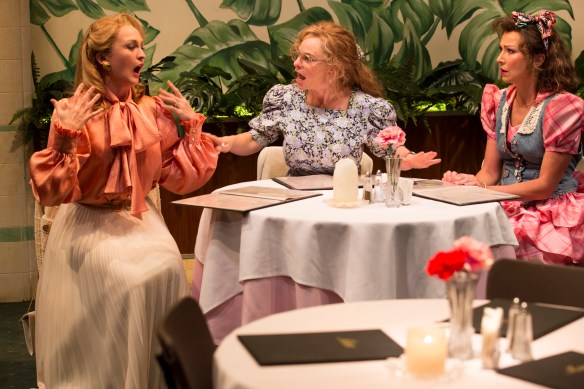
STC_AfterDinner_PhotoBrettBoardman_BP_9294

Helen Thomson, Rebecca Massey and Anita Hegh in After Dinner. Photo: Brett Boardman

Sydney Theatre Company began the year with a pitch-perfect production of Andrew Bovell’s excruciatingly funny yet tender comedy After Dinner, set in a 1980s pub bistro. Alicia Clements’ set was spot-on down to the icky carpet and yellowing tiles on the wall, while her costumes were 1980s fashion at its hilarious worst. Imara Savage directed a superb cast who had you laughing uproariously yet feeling for the sad, loner characters.

The Present

2015 was Andrew Upton’s last year as artistic director of STC (though he has programmed the 2016 season, which incoming artistic director Jonathan Church will caretake). The Present was a wonderful parting gift. Adapted by Upton from Chekhov’s early, sprawling play Platonov but set in the mid-1990s with the main protagonists now in their mid-40s rather than their 20s, the blistering production was awash with yearning, regret and frustration – as well as plenty of gun shots. Helmed by Irish director John Crowley, there were superb performances all round from the top-notch ensemble cast, which included Cate Blanchett and Richard Roxburgh giving the performance of his career.

Endgame

 Upton also directed an engrossing production of Beckett’s bleak but surprisingly funny absurdist play Endgame for STC. Staged on an imposing, monumental set by Nick Schlieper that reeked of foreboding (beautifully lit by Schlieper too), Hugo Weaving gave a masterful performance as Hamm, mesmerising with the dynamic range of his voice. Dark and difficult but thrilling stuff.

Suddenly Last Summer

Also at STC, Kip Williams directed a highly inventive production of Tennessee Williams’ Suddenly Last Summer, which synthesised live performance and video more completely than we have seen previously on the Sydney stage. Not everyone was convinced but after a slow start, I found the production worked its magic to deliver an intense telling of the surreal, dreamlike play. Among a strong cast, Eryn Jean Norvill was exquisite as Catharine who is administered the “truth drug” to reveal the details of her cousin’s terrible death.

Ivanov

Belvoir’s new artistic director Eamon Flack got the balance between comedy and despair just right when he directed his own adaptation of Chekhov’s Ivanov, set in contemporary Russia. Ewen Leslie was compelling as the self-loathing Ivanov but all the cast gave a very human account of people struggling to get by in a society obsessed with self and money. They sang with great vitality too in a production full of music.

My Zinc Bed

Mark Kilmurry, the Ensemble’s incoming artistic director, helmed an elegant production of David Hare’s My Zinc Bed, an intriguing play of ideas centring on addiction and driven by Hare’s heightened use of language. Sean Taylor was magnificent as the suave, Mephistophelian Victor, hinting at the emptiness within.

The Tempest

For his final production as artistic director of Bell Shakespeare, the company he founded 25 years ago, John Bell directed a lyrical production of The Tempest, staging the romantic tale of forgiveness and reconciliation with an eloquent simplicity and deft lightness. Matthew Backer was spellbinding as the spirit Ariel, his singing evoking the magic in the isle.

INDEPENDENT THEATRE

Of Mice and Men
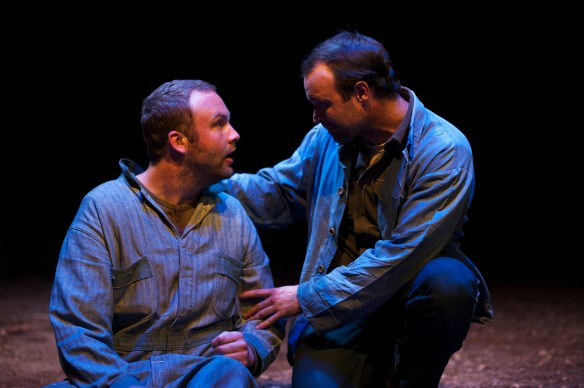
OfMice

Andrew Henry and Anthony Gooley. Photo: Marnya Rothe

 Iain Sinclair directed a beautiful, understated production of John Steinbeck’s Of Mice and Men for Sport for Jove that felt utterly truthful. Andrew Henry as the simple-minded Lennie, a gentle giant unaware of his own strength, and Anthony Gooley as his loyal friend George broke your heart. The off-stage shooting of the dog reduced some to tears too.

The Aliens

In Annie Baker’s The Aliens, about a couple of slackers in their 30s who take a younger man under their wing, not much seems to happen but plenty bubbles away beneath the surface. Craig Baldwin’s direction, Hugh O’Connor’s design and the performances by Ben Wood, Jeremy Waters and James Bell made for a deeply affecting piece of theatre.

The Aliens was just one of several memorable productions staged at the Old Fitz. It was great to see the tiny pub theatre in Woolloomooloo flying high again under Red Line Productions. There was a focus on male issues and casts in their 2015 program, which they have acknowledged and plan to address in 2016, as has Darlinghurst Theatre Company in the wake of debate about the gender imbalance in Australian theatre.

Cock

Red Line Productions presented a taut production of Mike Bartlett’s provocatively named play Cock about a love triangle between two men and a woman. Shane Bosher’s production, staged on a gleaming white stage, crackled with tension, with Michael Whalley and Matilda Ridgway turning in particularly fine performances.

The Dapto Chaser

Mary Rachel Brown’s keenly observed play The Dapto Chaser, presented as part of Griffin Independent, is an unflinching, extremely funny yet poignant look at the world of greyhound racing through the story of one struggling family. Glynn Nicholas’s production felt utterly authentic and the way the family’s dog Boy Named Sue was evoked through mime and panting noises was just brilliant.

SOLO SHOWS

2015 was notable for several excellent solo theatre shows.

Thomas Campbell gave a tour de force performance as the disturbed evangelistic Thomas Magill in Enda Walsh’s demanding play Misterman in a superb production directed by Kate Gaul at the Old Fitz.

Kate Cole was remarkable in the Red Stitch Actors Theatre production of Grounded by George Brant, playing a ‘top gun’ fighter pilot who finds herself flying drones after she has a child and struggling to deal with the schism between operating in a war zone one moment then driving home to family life. Extraordinary theatre.
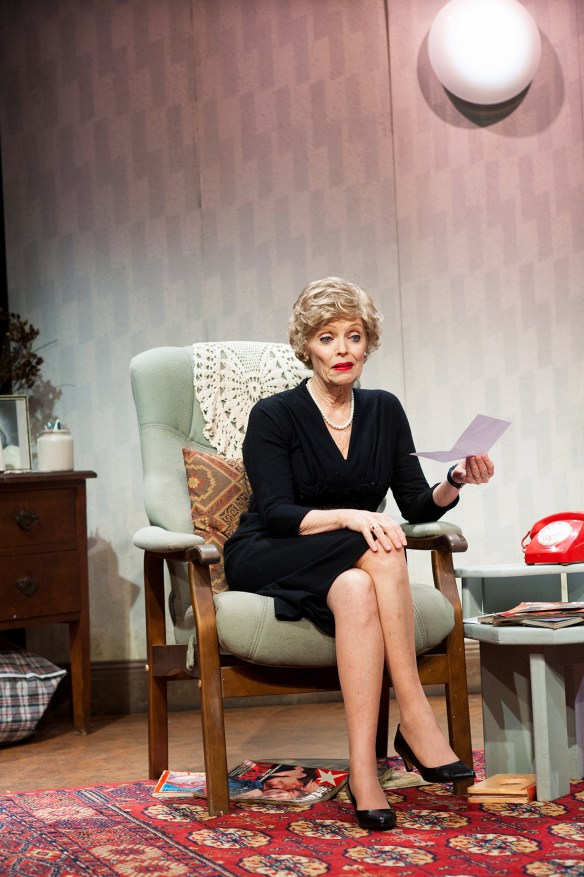
Belinda Giblin in Blonde Poison (c) Marnya Rothe

Belinda Giblin in Blonde Poison. Photo: Marnya Rothe

Belinda Giblin turned in a riveting performance as Stella Goldschlag, a blonde Jewish woman living in Berlin during World War II who worked for the Gestapo, in Gail Louw’s unsettling, provocative play Blonde Poison directed by Jennifer Hagan at the Old Fitz.

Amanda Muggleton charmed audiences at the Ensemble with an exuberant, generous, comic performance in Roger Hall’s highly entertaining play The Book Club about a bored housewife looking to spice up her life. Muggleton was in her element as she conjured all the women in the book group as well as other characters.

Ben Gerrard also slipped effortlessly between a number of characters and accents as Charlotte von Mahlsdorf, a Berlin transvestite who survived the Nazis, giving a lovely subtle performance in Doug Wright’s play I Am My Own Wife directed by Shaun Rennie at the Old Fitz.

Jeanette Cronin gave a very lively impression of Bette Davis in Queen Bette, which she devised with director/producer Peter Mountford, capturing her clipped way of speaking and fierce presence while taking us through her life at the Old 505 Theatre.

Irish actor Olwen Fouréré gave an astonishingly expressive performance, physically and vocally, in Riverrun, her adaptation of James Joyce’s fiendishly difficult Finnegan’s Wake with its own language, at Sydney Theatre Company.

CABARET

My pick of the cabaret shows I saw this year are:

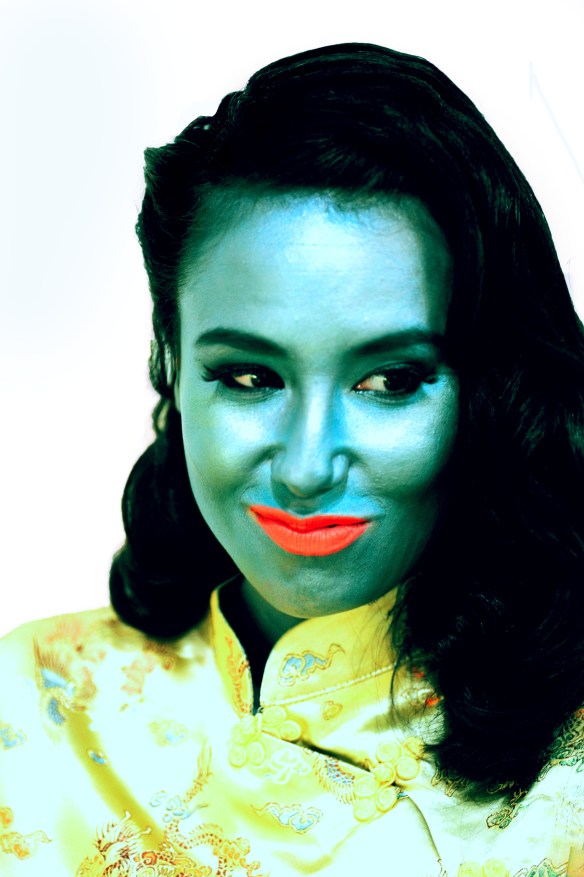
Josie Lane’s Asian Provocateur
JosieLane

Josie Lane. Photo: supplied

An outrageously funny, sweet, ballsy and, yes, provocative, piece by a little dynamo-of-a-performer who is, as she puts it, of an “Asian persuasion”. Taking us through her life and career, Lane was hysterically funny but had serious points to make about prejudice and narrow-minded casting.

Phil Scott’s Reviewing the Situation

A cleverly written and structured piece (co-written by Scott and director Terence O’Connell) taking us through the rags-to-riches-and-back-again story of British composer Lionel Bart. Scott embodied the Cockney Bart brilliantly and gee did his fingers fly across the piano keys.

Tim Freedman’s Everybody’s Talkin’ ‘bout Me

Looking suitably shambolic, Freedman took us into the mind and musical world of the enigmatic, self-destructive Harry Nilsson. Co-written by Freedman and David Mitchell, the show felt convincingly conversational in tone, while Freedman deployed his own innate charm in a winning bio-cabaret.

OPERA

 Faust
CarRhodesFaust

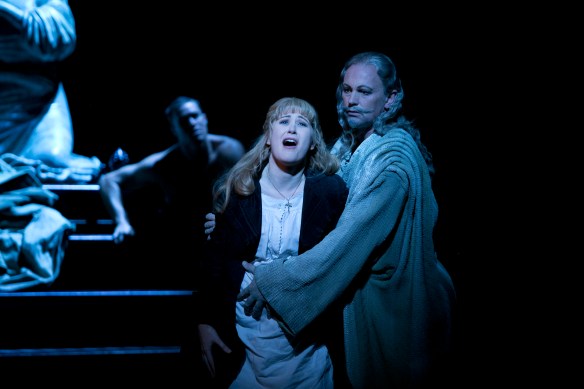
Nicole Car and Teddy Tahu Rhodes in Faust. Photo: Lisa Tomasetti

 Sir David McVicar’s production is impressive in its own right but it was the central performances by Michael Fabiano, Nicole Car and Teddy Tahu Rhodes that made the Opera Australia production so exciting.

Car – a young Australian soprano who made such an impression with her radiant performance as Tatyana in last year’s Kasper Holten’s production of Eugene Onegin for OA – confirmed her extraordinary talent. In her role debut as Marguerite, her singing had a sweet, luscious beauty and was full of emotion. She is also a strong actor, her early innocence every bit as convincing as her later anguish. Towards the end of 2015, Car made her debut at the Royal Opera House, Covent Garden as Micaela in Carmen, followed by a return to Tatyana, receiving rave reviews. A rising star indeed.

Other memorable productions in OA’s 2015 season included the revival of Elijah Moshinsky’s Don Carlos with Ferruccio Furlanetto as Philip II, Latonia Moore, Diego Torre and Jose Carbo; and McVicar’s new production of The Marriage of Figaro with Taryn Fiebig as Susanna and Nicole Car as the Countess.

DANCE

Frame of Mind

Only six companies in the world have been allowed to perform William Forsythe’s sublime contemporary dance classic Quintett – and Sydney Dance Company showed why they are one of the chosen few. Paired with a moving new work by Rafael Bonachela called Frame of Mind, this thrilling double bill was contemporary dance at its most exhilarating.

The Sleeping Beauty
Artists of The Australian Ballet in David McAllister's The Sleeping Beauty. 2015. photo Jeff Busby_0

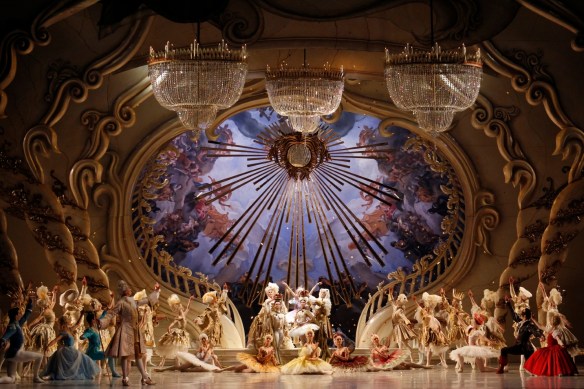
Artists of the Australian Ballet in The Sleeping Beauty. Photo: Jeff Busby

 Lavishly designed by Gabriela Tylesova, The Australian Ballet’s new production of The Sleeping Beauty is breathtakingly beautiful.

Created by artistic director David McAllister, it’s a very traditional production with McAllister retaining key passages of Marius Petipa’s original choreography and devised linking material in a similar classical style.

The storytelling is crystal clear, with elements incorporated from other versions, but the production feels a bit safe at times with room for more dramatic tension between the forces of good and evil. Visually though, it’s a triumph. Tylesova’s sumptuous sets feature baroque and rococo elements, while her costumes use an intoxicating range of colour and feature some of the prettiest tutus imaginable. Lana Jones as Aurora, Kevin Jackson as the Prince and Amber Scott as the Lilac Fairy all shone at the Sydney opening, while Chengwu Guo and Ako Kondo lit up the stage as the Bluebird and Princess Florine.

 Conform

 At Sydney Dance Company’s showcase of emerging choreographers New Breed, Kristina Chan’s Conform was an exciting highlight. A punchy piece about masculinity, it has its own distinctive choreographic voice and plenty to say. Chan is already a thrilling dancer. I can’t wait to see her next choreographic venture.

Departures
_AAA7802

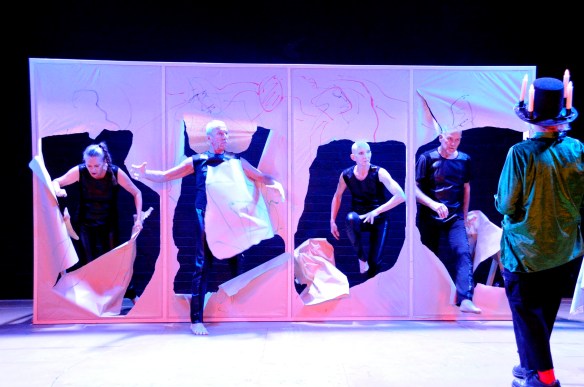
Susan Barling, Patrick Harding-Irmer, Anca Frankenhaeuser, Ross Philip and Ken Unsworth. Photo: Regis Lansac

Australian Dance Artists (Susan Barling, Anca Frankenhaeuser, Patrick Harding-Irmer, Ross Philip and Norman Hall) collaborated again with eminent sculptor and artist Ken Unsworth on a new production called Departures. Part-performance, part-installation, with live music, it was a fascinating ride into a strange world full of stunning visual imagery and evocative choreography. Magical.

RISING STARS

Amy Lehpamer (see The Sound of Music), Nicole Car (see Faust) and Kristina Chan (see above) are all rising stars with talent to burn. Add to that list Australian Ballet dancer Benedicte Bemet. Few were surprised when Bemet won the 2015 Telstra Ballet Dancer Award. Still only 21 and a coryphée, she is already dancing lead roles for the Australian Ballet like Clara in The Nutcracker. She made her debut recently as Aurora in The Sleeping Beauty and apparently the audience went wild, giving her a standing ovation after the Rose Adagio and at the final curtain. I predict a big future.

That’s it folks! There are so many other things I enjoyed during 2015 – too many to include here. Wishing you all a Happy New Year and lots of happy theatre-going in 2016.

 

Violet

Violet

Blue Saint Productions - Violet - Grant Leslie Photography

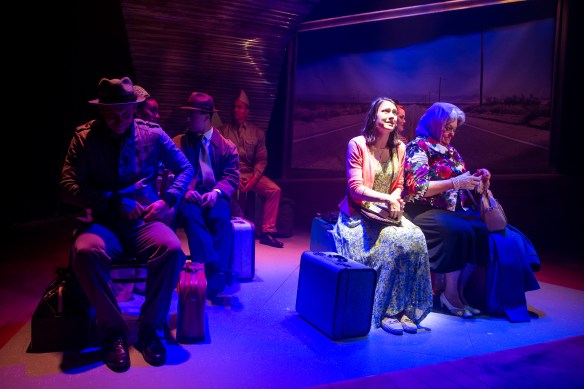
Samantha Dodemaide and the cast of Violet. Photo: Grant Leslie

Hayes Theatre Co, December 2

Violet is a lovely little musical with a gentle charm that gets under the skin. Before you know it, you’ve been knocked for six.

Written by composer Jeanine Tesori (who won Best Musical and Best Original Score for Fun Home at this year’s Tony Awards) and writer Brian Crawley, it is based on a short story by Doris Bett called The Ugliest Pilgrim.

The show premiered off-Broadway in 1997 and had a short season on Broadway last year with Sutton Foster as Violet. But it couldn’t have been given a more loving production than it gets here, produced by Blue Saint Productions in association with the Hayes, and directed by Mitchell Butel.

Set in 1964, Violet tells the story of a young woman (Samantha Dodemaide) who takes a Greyhound bus from North Carolina to Oklahoma, hoping that a televangelist can heal a disfiguring scar on her face, gained 12 years earlier when the blade flew from her father’s axe.

En route, she meets two soldiers – the cocky Monty (Steve Danielsen) and the kindly Flick (Barry Conrad) who as an African American understands what it’s like to be a misfit. The two buddies take her under their wing and fall for her.

Tesori’s music includes gospel, country, blues, soul, folk as well as ballads and soaring anthems in a more traditional musical theatre style. It’s a gorgeous score, with the songs emerging organically from the story and the characters.

Butel makes a very impressive directorial debut. For starters, his casting is excellent and he draws clearly delineated, truthful performances from the actors. He keeps the action moving fluidly at a perfect pace, and he knows exactly how to put the focus where it needs to be.

Simon Greer’s non-naturalistic set is a clever, evocative space, which Butel uses extremely well, with great support from the rest of the creative team (lighting by Ross Graham, costumes by Lucetta Stapleton and choreography by Amy Campbell).

Blue Saint Productions - Violet - Grant Leslie Photography

Samantha Dodemaide as Violet. Photo: Grant Leslie

With her expressive face and voice, Dodemaide gives a radiant performance as Violet, capturing her prickly exterior and inner vulnerability. She manages to make the character’s deluded naivety believable and has a lovely, shy smile that lights up the stage.

Luisa Scrofani and Damien Bermingham are moving in flashback scenes between the young Violet and her father. Danielsen and Conrad give warm, appealing, believable performances as Monty and Flick, Dash Kruck nails the charlatan preacher, while Genevieve Lemon is a scene-stealer as an old Lady on the bus and a Memphis lady of the night.

The rest of the ensemble – Katie Elle Reeve, Linden Furnell, Ryan Gonzalez and Elenoa Rokobaro – all play their part beautifully and between them unleash some powerhouse vocals, while Musical Director Lucy Bermingham leads a tight six-piece band.

The lyrics in the opening number are a little hard to hear with everyone singing so loudly, but after that the sound (sound design by Jeremy Silver) is as good as I’ve heard it at the Hayes.

Violet is a simple, optimistic piece about self-acceptance and forgiveness. The ending won’t surprise but it touches the heart without being sentimental or corny.

Violet is at the Hayes until December 20. Bookings: www.hayestheatre.com.au or 02 8065 7337

 A version of this review ran in the Sunday Telegraph on November 29

Rent

Hayes Theatre Co, October 13

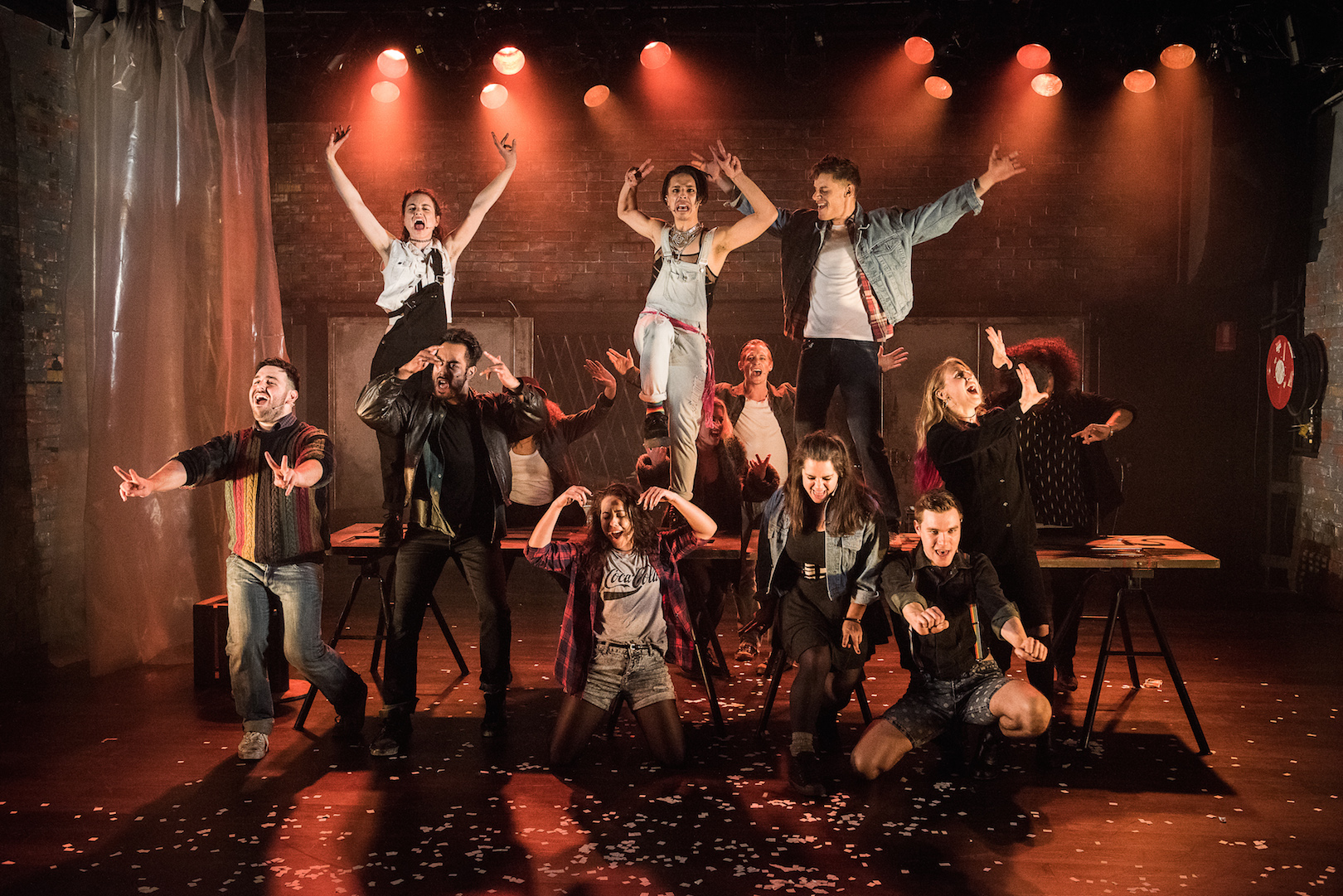
The cast of Rent. Photo: Kurt Sneddon

The cast of Rent. Photo: Kurt Sneddon

The production of Rent currently playing at the Hayes Theatre Co sold out before opening. As announced last night at the Hayes’ Coming Soon launch for the first half of 2016, the show will have a three-week return season from March 29.

The rock musical with music, book and lyrics by Jonathan Larson – who died on the eve of its 1996 off-Broadway opening – quickly gained a cult following. It won a Pulitzer Prize, moved to Broadway and then onto the world, including Sydney where a production played at the Theatre Royal in 1998.

Loosely based on Puccini’s La boheme, Rent is set in Manhattan in the early 1990s and centres on a group of impoverished young artists and misfits who are struggling to survive as gentrification makes rents unaffordable and AIDS takes its devastating toll.

The musical is an explosion of passion, anger, sorrow, frustration and defiant joy.

Produced here by Highway Run Productions (Toby Francis and Lauren Peters) in association with the Hayes, helmed by first-time director Shaun Rennie and performed by a strong cast of 14, the production certainly pulses with youthful energy but it often feels over-busy, particularly in the first act.

That’s partly to do with the musical itself, which has a rather loose, disparate structure, following a number of different characters through several interconnecting story lines.

Central to the group are Mark (Stephen Madsen), a middle-class, would-be filmmaker, his roommate Roger (Linden Furnell), a songwriter with HIV and writer’s block whose girlfriend committed suicide, and Mimi (Loren Hunter), a drug addicted club dancer, who also has HIV.

There’s also the cross-dressing, joyously queer, gently caring Angel (Christopher Scalzo) and Collins (Nana Matapule), a gay anarchist professor, who fall for each other, Mark’s former girlfriend Maureen (Laura Bunting) and her new partner Joanne (Casey Donovan), and Benny (Matthew Pearce), a former friend of Mark and Roger who is now their tough landlord.

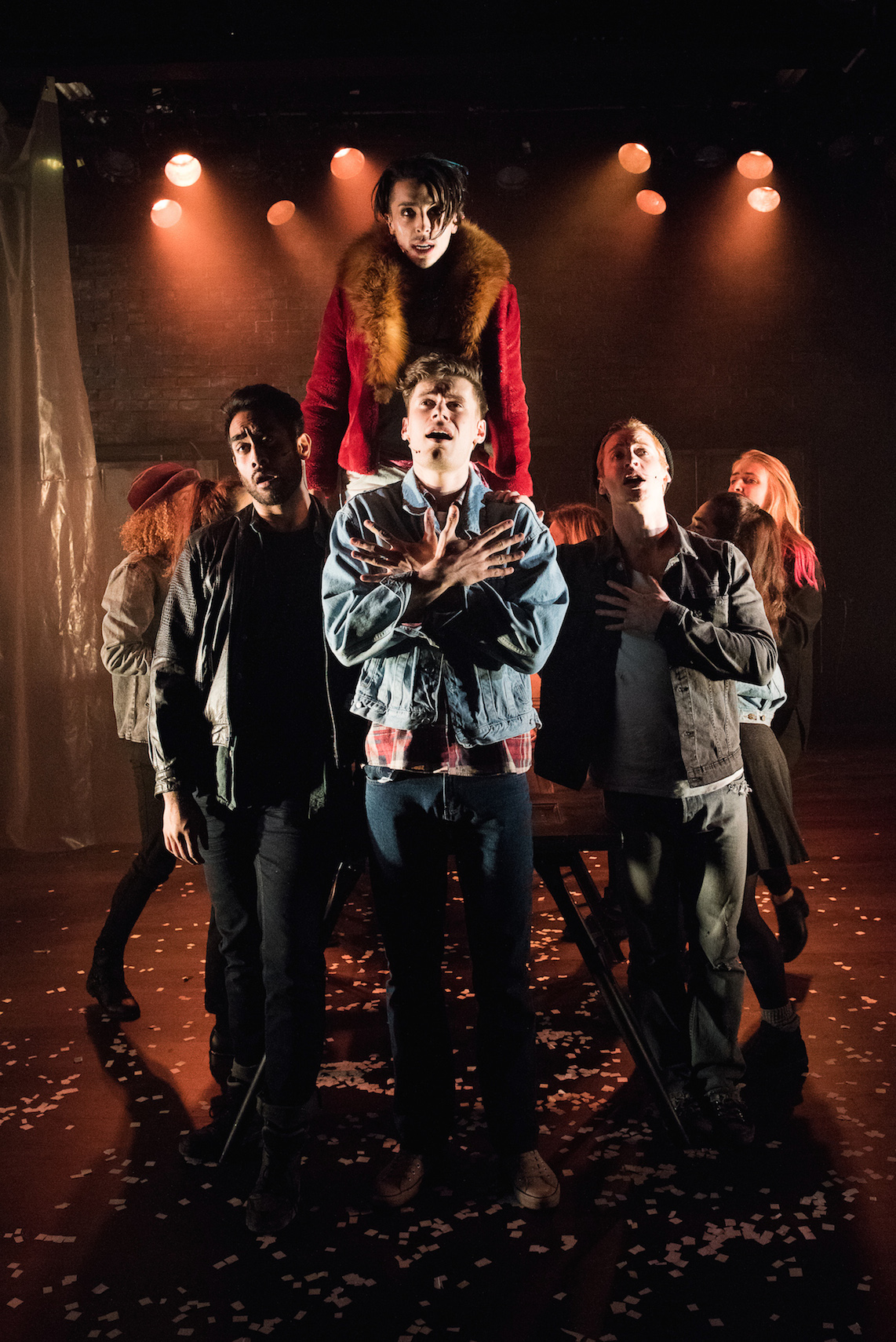
Nana Matapule, Chris Scalzo, Stephen Madsen and Linden Furnell. Photo: Kurt Sneddon

Nana Matapule, Chris Scalzo, Stephen Madsen and Linden Furnell. Photo: Kurt Sneddon

With an ensemble that also includes Denise Devlin, Josh Gardiner, Jack O’Riley, Kirsty Sturgess, Monique Sallé and Chloe Elisabeth Wilson playing various other characters, there’s a lot going on, with important pieces of information often conveyed very briefly in a line or two of song.

Depending on where you sit in the theatre, there are sound issues, with the cast belting it out of the park to be heard over the band, and lyrics often hard to decipher. Rennie doesn’t manage to control the focus completely in the first act and it all feels as if it is coming at you at a million miles an hour, while the actors struggle to create strong, clearly defined characters as they sing full-bore.

Scalzo as Angel and Matapule as Collins, are the most successful at creating truthful characters we care about and their relationship is very much the heart and soul of the first act.

The second act is much more successful across the board. For a start, the musical itself quietens a little and the storylines are given more room to breathe. Furnell really finds his groove as Roger and his relationship with Mimi gains genuine traction. Hunter gives an intense, almost aggressive Mimi but conveys little of her vulnerability until late in the piece, when the production finally becomes moving.

Even in the second act there are times when the production feels unnecessarily busy, as when Collins carries the dying Angel from one table to another during Mimi and Roger’s song Without You, for seemingly little reason, which just proves distracting.

Then there’s the sign language, which Rennie and choreographer Andy Dexterity use periodically during the production. Many people have loved this element but I couldn’t help feeling it looks like an exercise used in the rehearsal room to explore the characters’ emotions, and probably should have stayed there. For me, it feels imposed rather than organic – though others clearly experienced it differently.

However, there is also much to enjoy. Rennie starts the second act in an unexpected way – a delightful, clever touch – and there’s lots of powerful singing.

Donovan and Bunting raised the roof on opening night with Take Me or Leave Me and Matapule delivers a lovely version of I’ll Cover You but all the performers all have their moment vocally.

Lauren Peters’ sparse, stripped back set – essentially a bare room with exposed bricks, a few props, and a metal mesh gate in front of the small band (led by musical director Andrew Worboys) – creates the right kind of grungy space, while Georgia Hopkins’ costumes work well.

It’s good to see young producers and a young, first-time director being given the chance to produce work like this and you can’t fault the energy and commitment of the cast. With a little more tightening, honing and focusing the production could really hit home so it’s great that the creative team will have the chance to revisit it early next year.

Rent, Hayes Theatre Co until November 1. Sold out. Return season March 29 – April 17. Bookings: www.hayestheatre.com.au or 02 8065 7337

Little Shop of Horrors is Back for More Blood

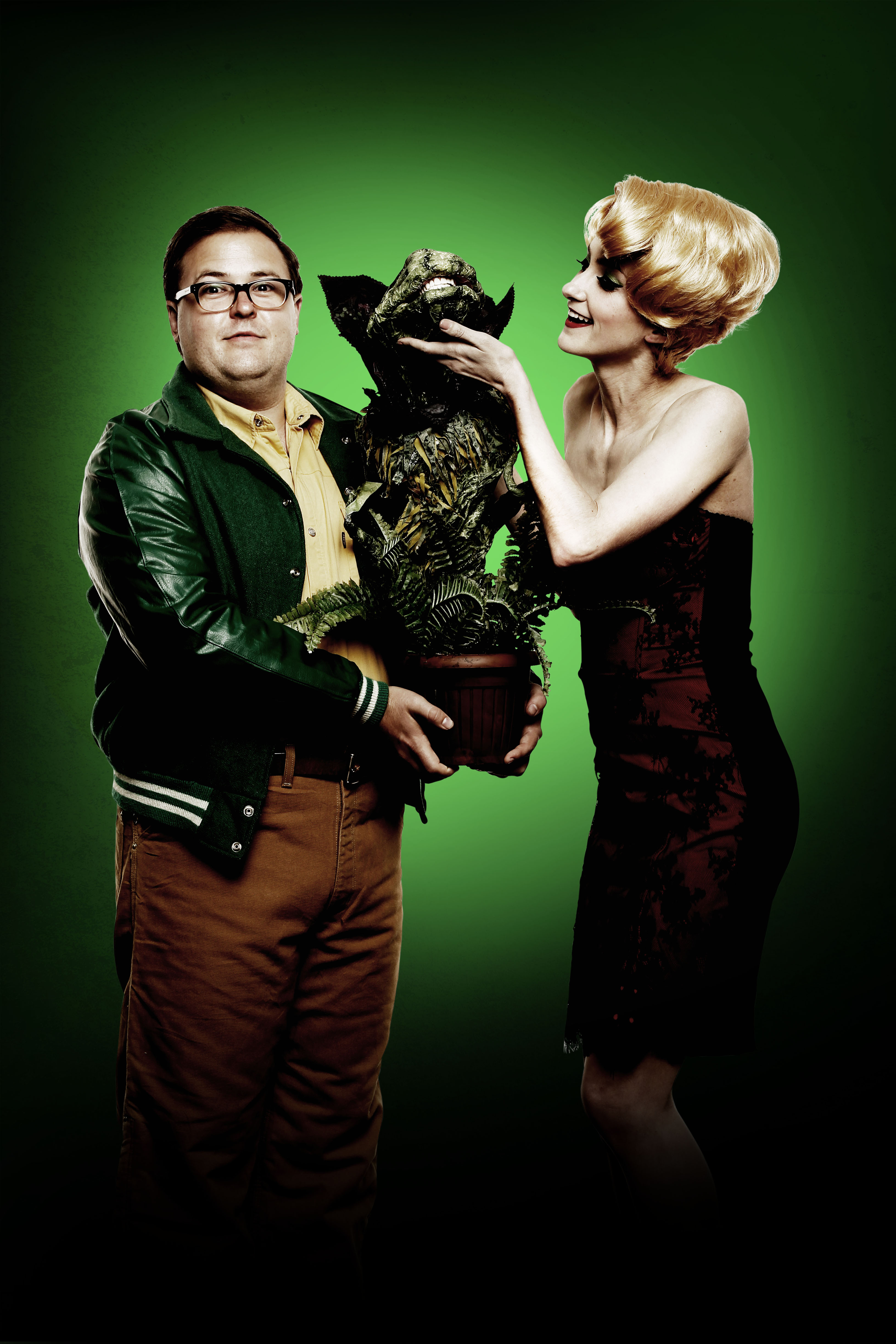
Brent Hill will play Seymour and Esther Hannaford will play Audrey in the new Hayes Theatre Co production of Little Shop of Horrors. Photo: supplied

Brent Hill will play Seymour and Esther Hannaford will play Audrey in the new Hayes Theatre Co production of Little Shop of Horrors. Photo: supplied

In February 2014, the Hayes Theatre Co burst onto Sydney’s musical theatre scene with a brilliantly re-imagined, award-winning production of Sweet Charity, which later had a return season at the Sydney Opera House and then toured.

Now, as revealed in today’s Sunday Telegraph, the same creative team is reuniting almost exactly two years later to stage a production of Little Shop of Horrors, produced by Luckiest Productions and Tinderbox Productions.

Dean Bryant will direct with musical direction by Andrew Worboys, choreography by Andrew Hallsworth, set design by Owen Phillips, costume design by Tim Chappel, lighting design by Ross Graham and sound design by Jeremy Silver.

The kooky musical about a man-eating plant will open at the Hayes in February then tour nationally.

“We had so much fun (on Sweet Charity),” says Lisa Campbell of Luckiest Productions.

“We were very fortunate that Sweet Charity got the life that it did and I’m very proud of what the creative team produced. It was a very special time. It’s not that we’re trying to rebottle that but the team worked so incredibly well together it makes sense to jump back on the bus and do another one.”

A national tour has already been locked in for logistical reasons, says Campbell: “With the amount of musicals in the market over the next year or so it would have been very difficult to wait and see how the Hayes season went and hope for a transfer and extension afterwards so we had to think about it in those terms. We also decided that if we were going to be able to do the show that we wanted, we needed to have enough venues to support it as we wanted the plant to be as spectacular as possible.”

Little Shop of Horrors was written by composer Alan Menken and lyricist Howard Ashman, who went on to co-write the songs for Disney’s animated films The Little Mermaid, Beauty and the Beast and Aladdin. (The Disney musical of Aladdin opens in Sydney next August). Little Shop premiered off-off Broadway in 1982 then ran off-Broadway for five years.

Set in the early 1960s, Seymour Krelborn is a hapless, meek florist’s assistant on Skid Row, who dreams of a better life and winning the love of his co-worker Audrey. When he discovers a strange plant, which he calls Audrey II, fame and fortune follow. But as Audrey II grows, so does its appetite for human flesh.

Based on Roger Corman’s 1960 film, Menken has described the musical as “a merry little musical romp about how greed will end the world.”

The catchy score is composed in the style of 1960s rock and roll, doo-wop and early Motown with songs including Feed Me, Suddenly Seymour and Somewhere That’s Green.

“I think the music is spectacular and I think the story is tragic and beautiful and hilarious. When we got to the Hayes, it was one of the first things that I thought deserved to be on that stage and would suit it,” says Campbell.

The new Hayes production features a top-notch cast with Brent Hill (Rock of Ages, Once) as Seymour, Esther Hannaford (King Kong, Miracle City) as Audrey, Tyler Copin (Chitty Chitty Bang Bang) as the florist Mr Mushnik and Scott Johnson (Jersey Boys) as Audrey’s sadistic dentist boyfriend, along with Angelique Cassimatis, Josie Lane, Chloe Zuel, Dash Kruck and Kuki Tipoki.

Brent Hill and Esther Hannaford with Audrey II. Photo: supplied

Brent Hill and Esther Hannaford with Audrey II. Photo: supplied

Audrey II is being created by Erth, a theatre company known for its extraordinary puppets in shows such as Dinosaur Zoo. Campbell, who had been aware of their work for several years, went to talk with them 18 months ago.

“I met with Steve Howarth, one of the founders of Erth, and I said, ‘I’m not sure if you’re aware of the musical Little Shop of Horrors but I need somebody to create a man-eating plant.’ He looked at me and said, ‘I’ve been waiting for 25 years for somebody to ask me to do this,’” says Campbell.

“We have three versions of Audrey II and within each of those there is room for the plant to grow. It’s very exciting.”

The Hayes will unveil the rest of its program for the first half of 2016 at a launch tomorrow night.

A version of this story appeared in the Sunday Telegraph on October 18

TOUR DATES

 Sydney – Hayes Theatre Co from February 18th 2016

TICKETS ON SALE NOW

hayestheatre.com.au or ticketmaster.com.au

Adelaide – Her Majesty’s Theatre from April 20th 2016

TICKETS ON SALE WEDNESDAY 28TH OCTOBER

bass.net.au

Melbourne – Comedy Theatre from May 4th 2016

TICKETS ON SALE MONDAY 30TH NOVEMBER

ticketmaster.com.au

Canberra – Canberra Theatre from May 25th 2016

TICKETS ON SALE WEDNESDAY 25TH NOVEMBER

canberratheatrecentre.com.au or ticketmaster.com.au

Brisbane – Playhouse Theatre QPAC from June 1st 2016

TICKETS ON SALE MONDAY 30TH NOVEMBER

qpac.com.au