Safety Switch

Old Fitz Theatre, May 13

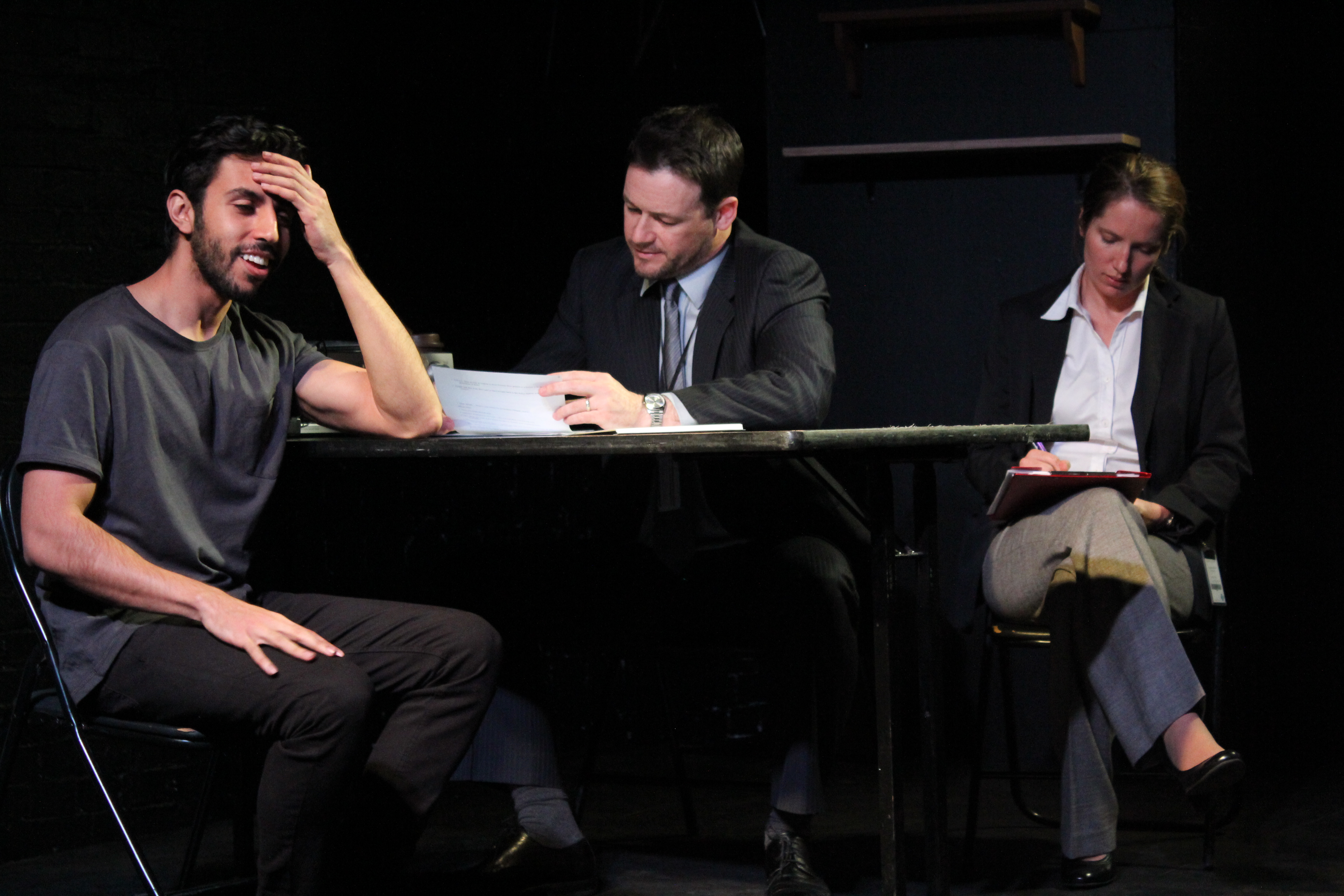
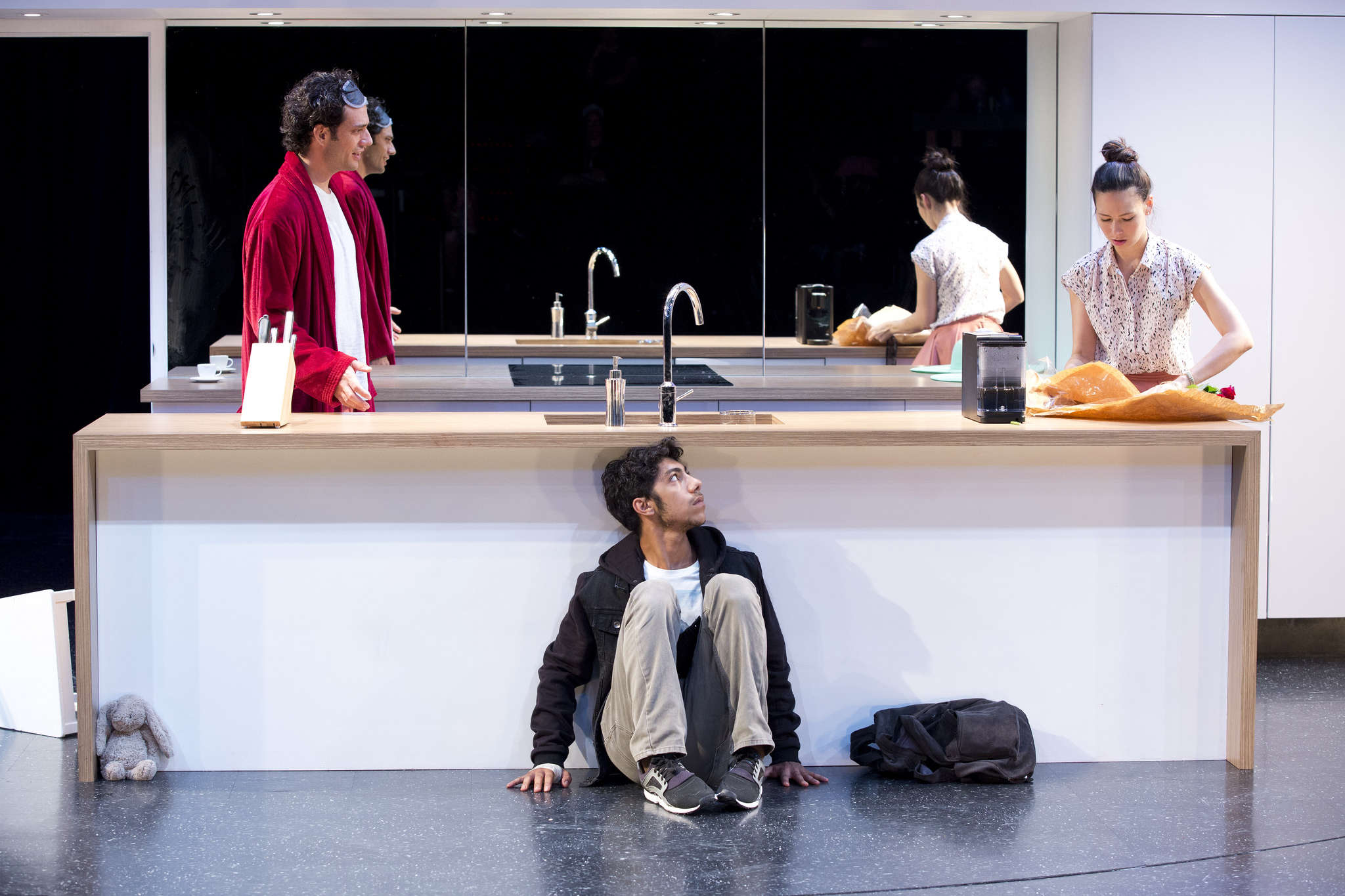
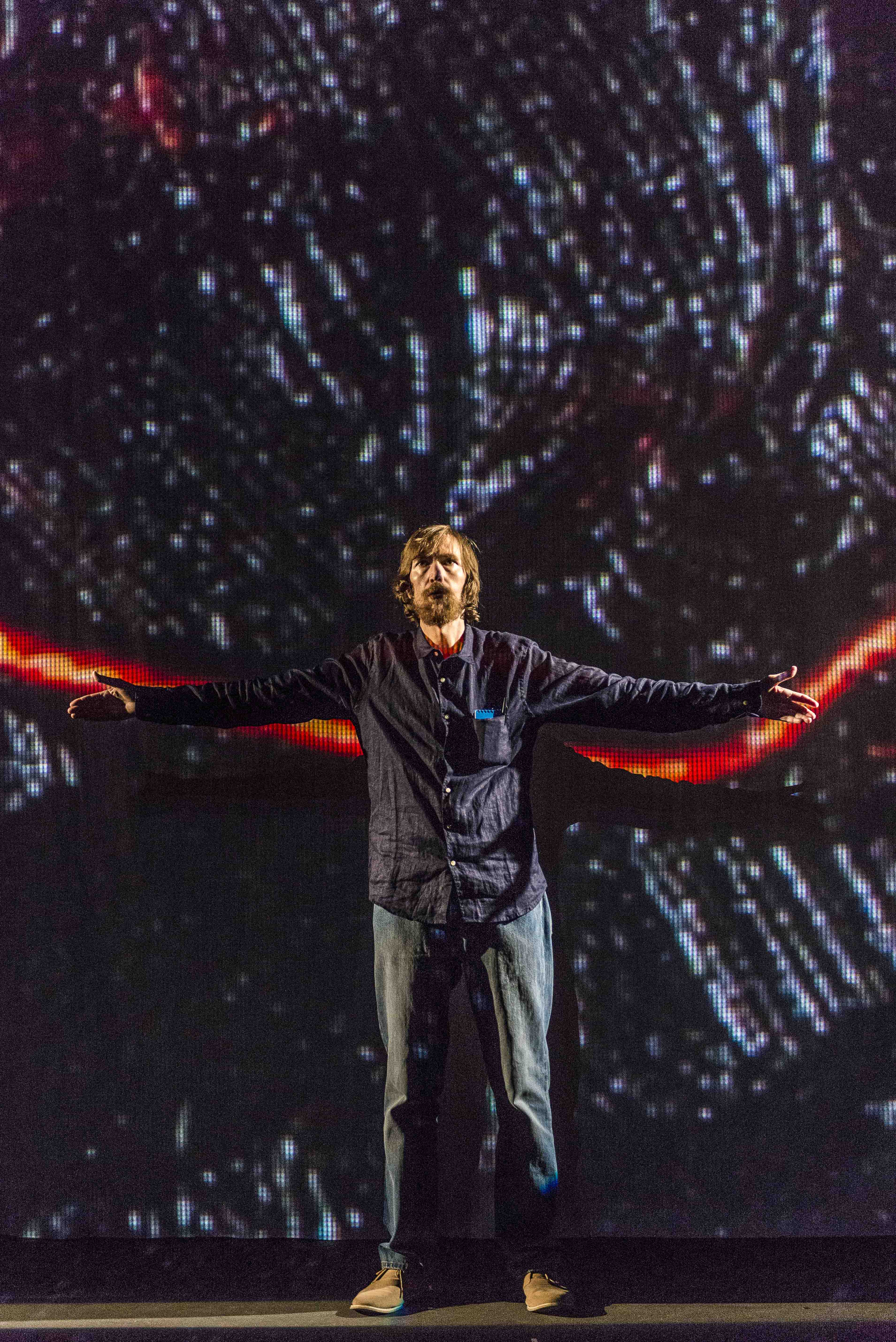
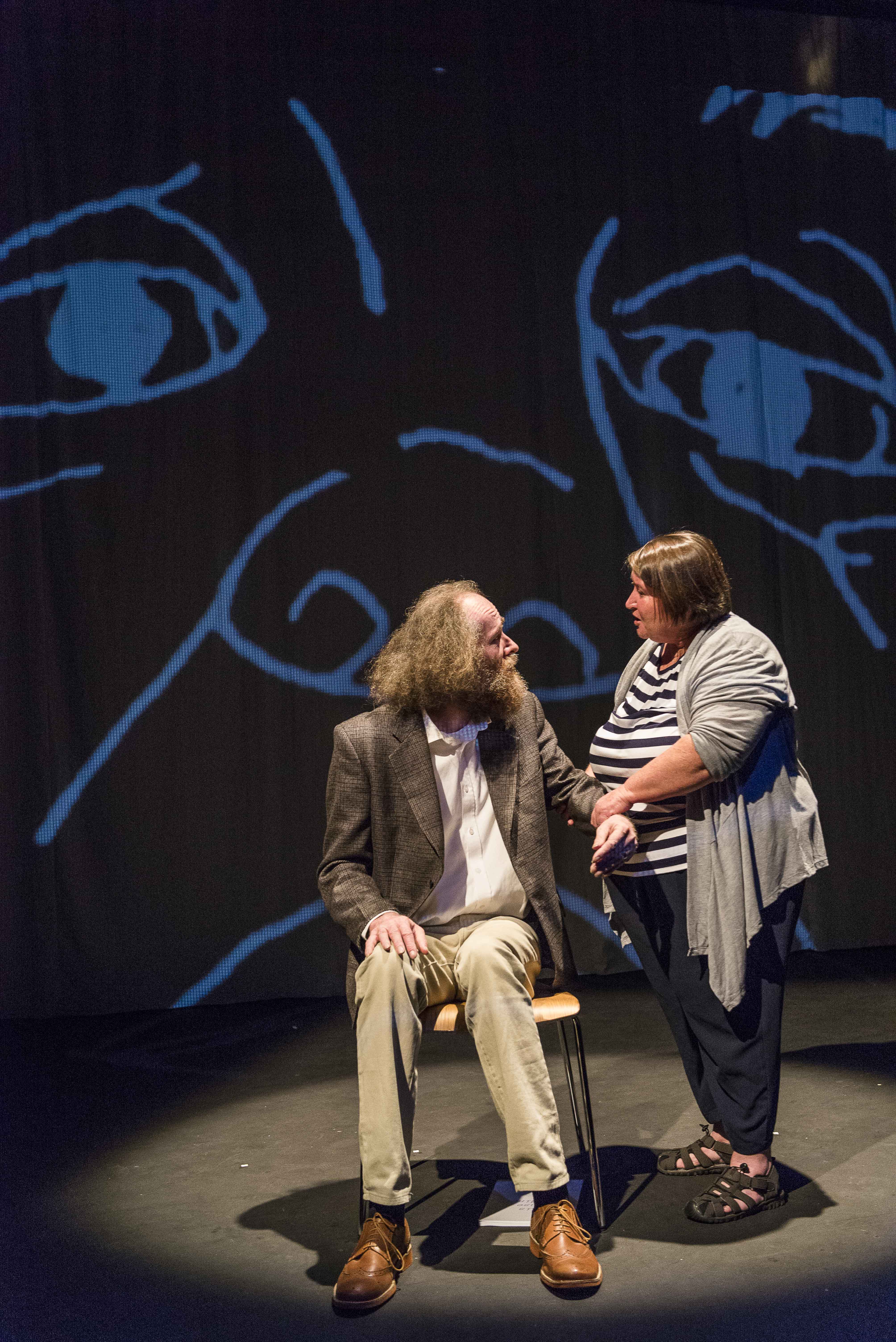
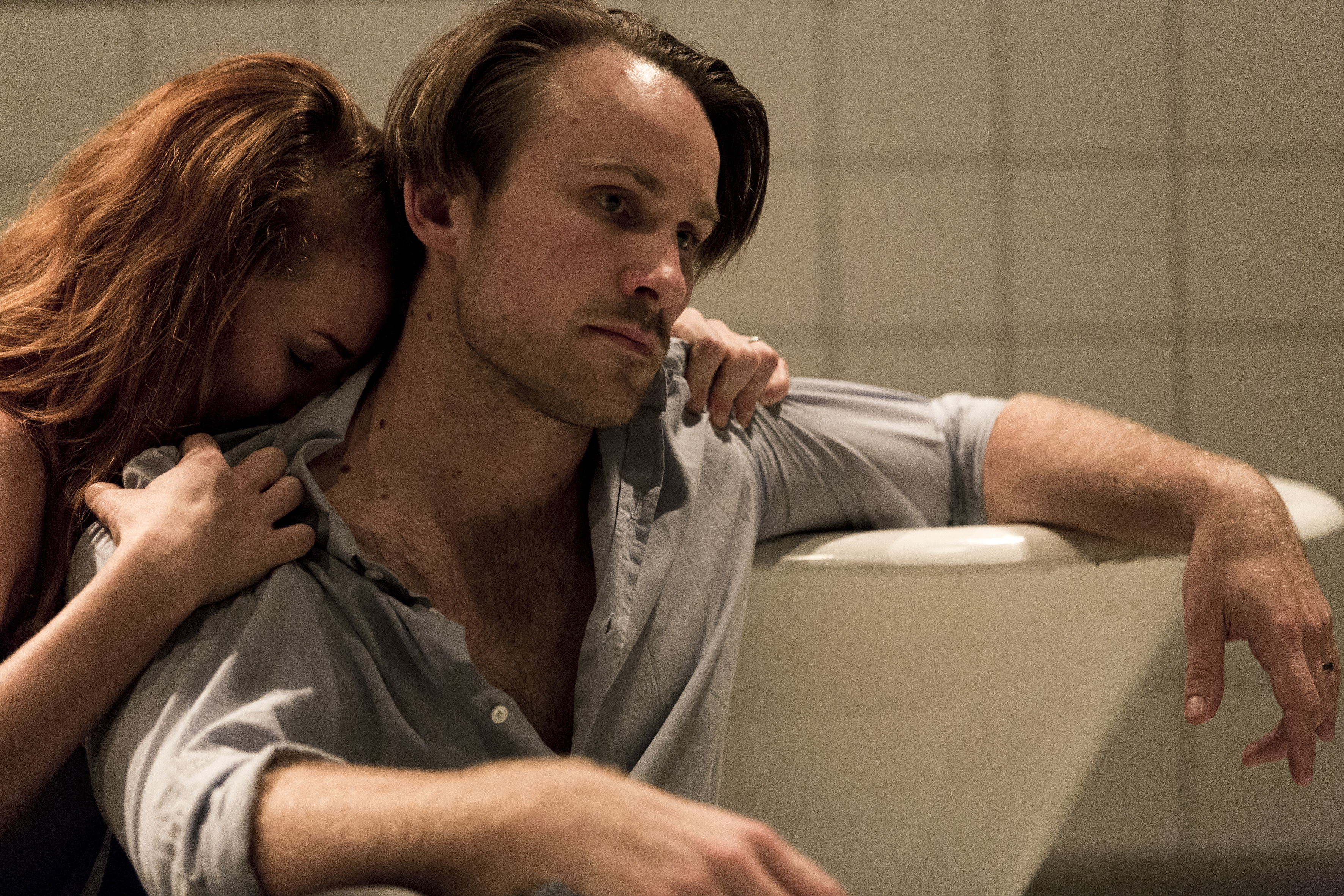
Rowan Freeman, Fiona Pepper and Warwick Allsopp. Photo: Mansoor Noor

Rowan Freeman, Fiona Pepper and Warwick Allsopp. Photo: Mansoor Noor

Rowan Freeman’s dark comedy Safety Switch was inspired by a real-life incident when he was questioned by police in 2011. In fact, some of the dialogue is taken directly from a recording of the police interview.

On the one hand, it’s hard to believe such a thing could happen; on the other it feels frighteningly plausible.

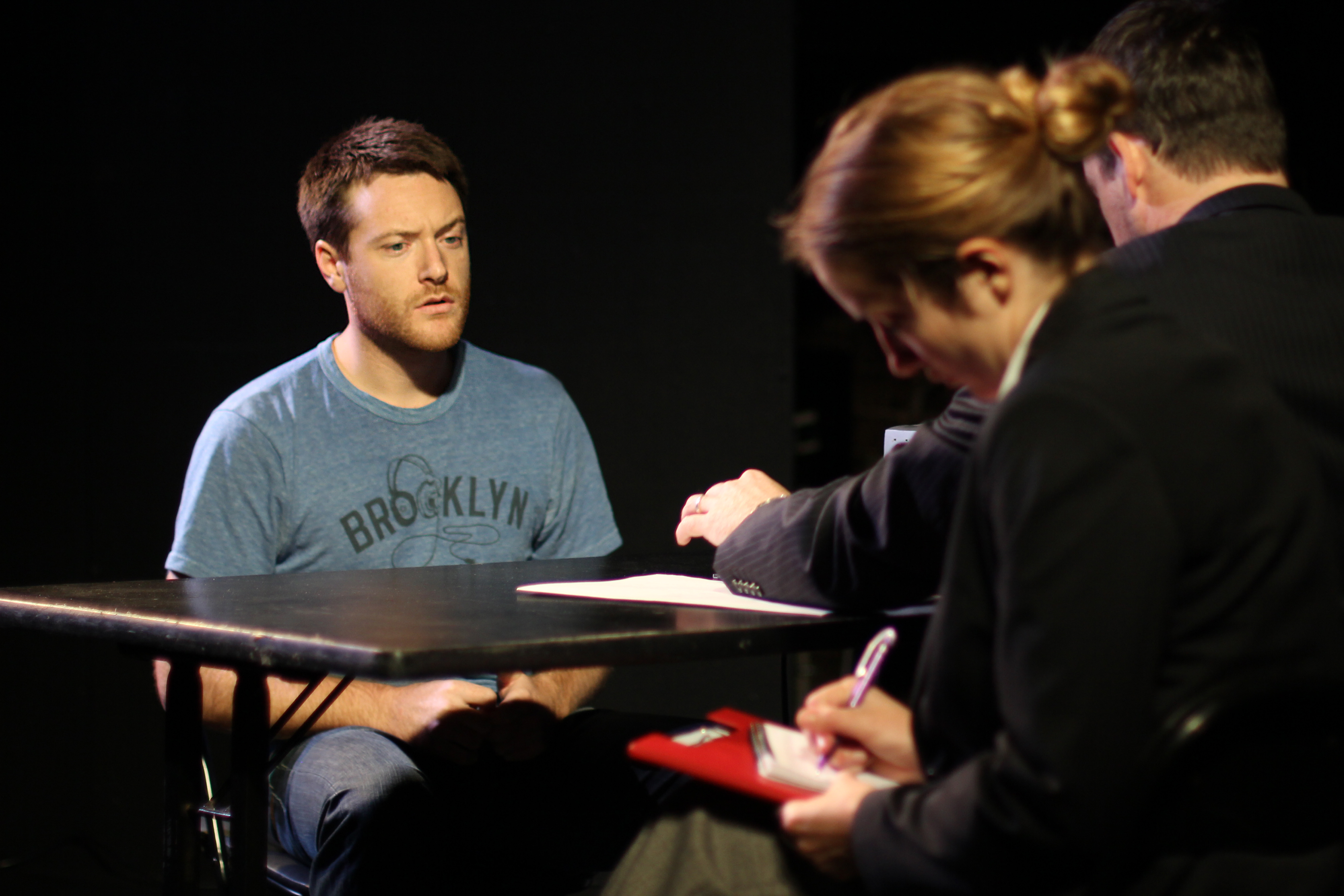
It’s late at night. Two actors (Freeman and Mansoor Noor) have been arrested for possession of assault rifles on an East Sydney street and brought in for questioning.

Interviewed individually, neither of them is terribly worried initially. After all, the guns are clearly fake – plastic props they’ve been using in a stage show, which they were just taking to their car. The paint is even peeling visibly off one of them.

But the detectives (Warwick Allsopp and Fiona Pepper), who have agendas of their own, aren’t convinced that’s all there is to it. When contradictions emerge in the actors’ stories, a silly situation starts to escalate into something serious.

Mansoor Noor, Warwick Allsopp and Fiona Pepper. Photo: Mansoor Noor

Mansoor Noor, Warwick Allsopp and Fiona Pepper. Photo: Mansoor Noor

Plugging into the current climate of fear, some of the writing could be tightened. One device used to relay important information to the audience feels unlikely, and rather than tightening the noose, the end peters out a little, but overall Safety Switch is a smart, satirical drama.

Staged on the set of the main production currently running at the Fitz – The House of Ramon Iglesia – with drapes over some of their props, it looks a bit rough and ready but it doesn’t really matter.

Presented by After David Productions, Eden Falk directs a tight, well-performed production that is thoroughly entertaining while packing a disturbing punch.

Running 50-minutes, the play – which was shortlisted by Playwriting Australia’s National Script Workshop in 2013 – sits neatly in the late night Old Fitz slot. Following the impressive Dolores starring Kate Box and Janine Watson, the late-night show is proving a great initiative.

All in all, Safety Switch is an entertaining, robust little show that plugs into the zeitgeist: a fun way to round off an evening.

Safety Switch plays at the Old Fitz until May 24. Bookings: www.oldfitztheare.com/safety-switch or 0403 995 761

The Unknown Soldier

Lend Lease Darling Quarter Theatre, May 16

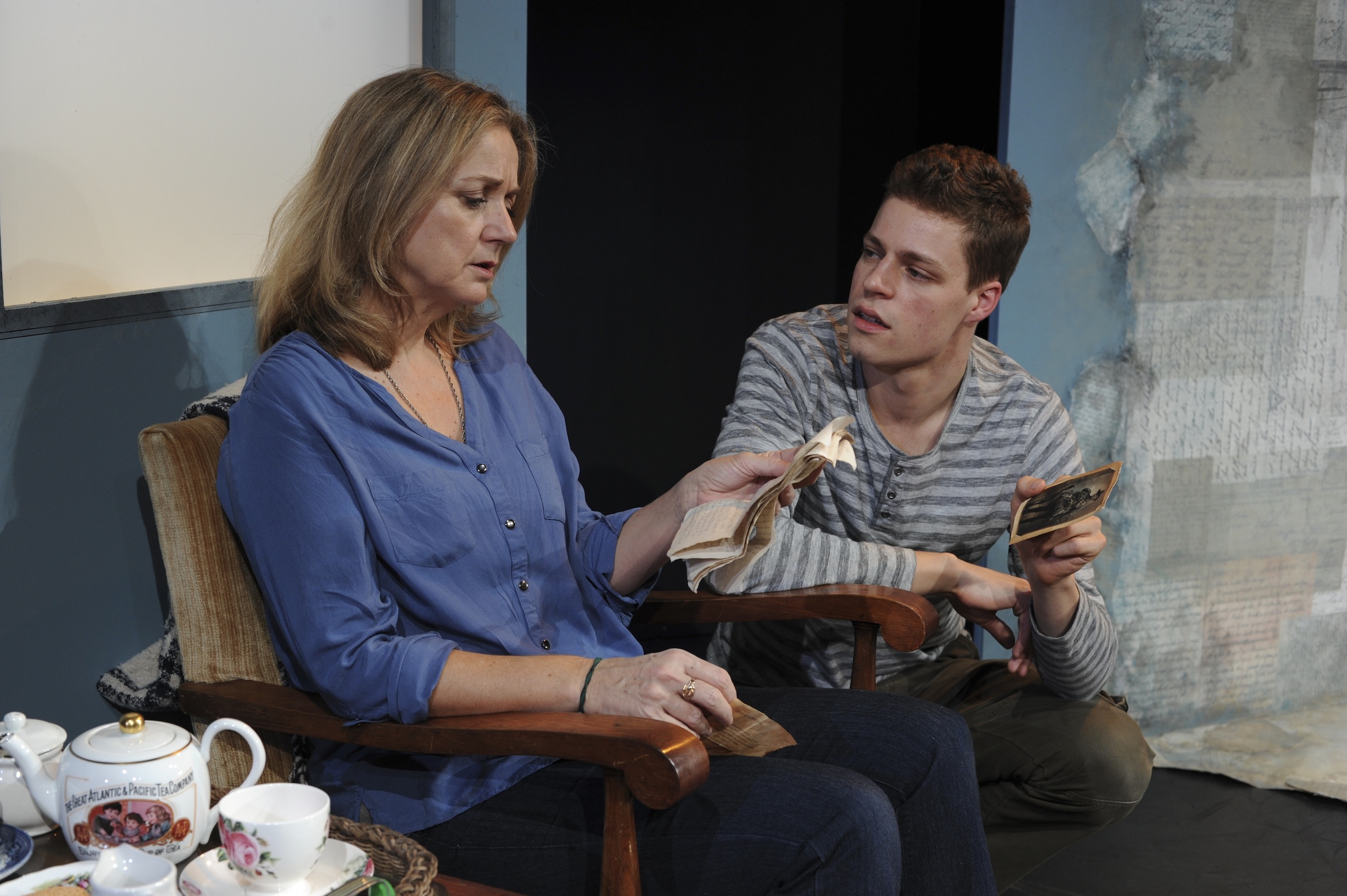
Sandra Eldridge and Felix Johnson. Photo: Heidrun Lohr

Sandra Eldridge and Felix Johnson. Photo: Heidrun Lohr

Monkey Baa Theatre Company has made its reputation with delightful stage adaptations of well-known books and stories for children and young people (aged three to 18).

The Unknown Soldier is its first brand new play, written by the company’s co-creative director Sandra Eldridge to honour the centenary of World War I.

Aimed at young people aged 10+, it’s a moving two-hander, examining dark themes including the horror of war and the devastating impact of Post Traumatic Stress Disorder without shying away from their seriousness but handling them with a light touch.

The play uses a simple device to move between two eras and stories. Thirteen-year old Charlie is staying with his pacifist Aunt Angela because, as we learn during the course of the play, his soldier father has returned from Afghanistan with PTSD and needs help.

To try to distract the bored teenager from doing little but play a computer war game, his aunt produces an old suitcase she has bought without inspecting its contents. Looking through it, they discover letters from a young Australian soldier called Albert, who fought in France in the Battle of Fromelles, written to his mother.

Felix Johnson plays both Charlie and Albert. Fascinated by what he reads in the letters, Charlie starts doing research on the Internet to find out more about Albert and his fate.

Eldridge plays Aunt Angela and Grace, a volunteer nurse who goes to France in search of her son, who is missing in action, and tends to the wounded Albert.

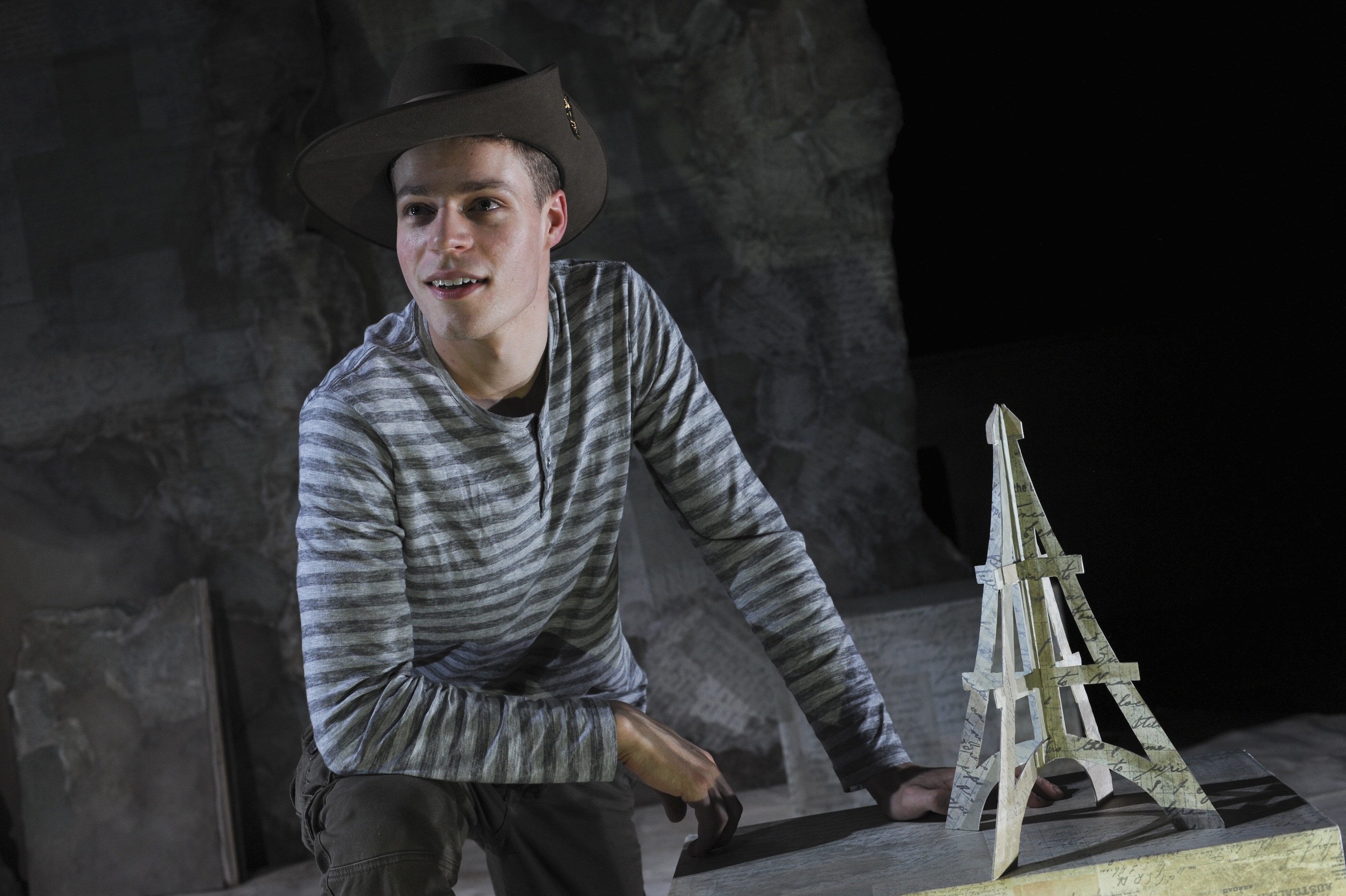
Felix Johnson. Photo: Heidrun Lohr

Felix Johnson. Photo: Heidrun Lohr

Eldridge researched the piece by examining war archives, diary extracts, books and poetry. Without the play ever feeling like a lecture, she conveys historical information about the Australian involvement in France in World War I and the horror of war both then and now.

She explains what PTSD is and how it can affect soldiers and their families. She introduces the Unknown Soldier and explains a little about who he is and what he represents. She also includes a brief section about the Australian War Memorial and touches on the meaning of ANZAC Day.

Her great achievement is to include all this within the context of an involving drama in which the information emerges naturally from the parallel stories she has created, and to convey it simply and clearly.

She has also leavened the play by folding in some gentle humour, with laughter on opening night at Charlie’s boredom, his frustration with his aunt’s slow Internet and his dislike of her organic, vegetarian cooking.

Matt Edgerton directs with great clarity on an impressive set by Anna Gardiner: a lounge room backed by a wall with jagged edges as if it has been damaged in a bomb blast, with little sections of the wall used to reveal various lighting effects. Matt Cox’s atmospheric lighting design and David Stalley’s sound help us imagine the scenes in the trenches, even though the home furniture is still used. It’s simply but effectively done.

Johnson moves convincingly between 13-year old Charlie and Albert (merely adding a slouch hat) and his revelation of Charlie’s fears for his PTSD-affected father is very touching. Eldridge is a warm, reassuring presence as both Angela and Grace.

My only quibble would be that Charlie articulates and understands ideas that might be a bit sophisticated for a 13-year old. A friend suggested it would perhaps be more convincing if the character were 15. But that’s a minor qualm.

There weren’t a huge number of young people in the opening night audience, and quite a few of those who were there were younger than 10, so it’s hard to gauge what the target audience would make of it. I imagine they would respond very positively to a thoughtful play that handles difficult themes with a great deal of integrity and care, and which seems to me to be well pitched for young people.

The Unknown Soldier plays at Lend Lease Darling Quarter Theatre until May 22. Bookings: www.monkeybaa.com.au or 02 8264 9340

Endgame

Roslyn Packer (formerly Sydney) Theatre, April 7

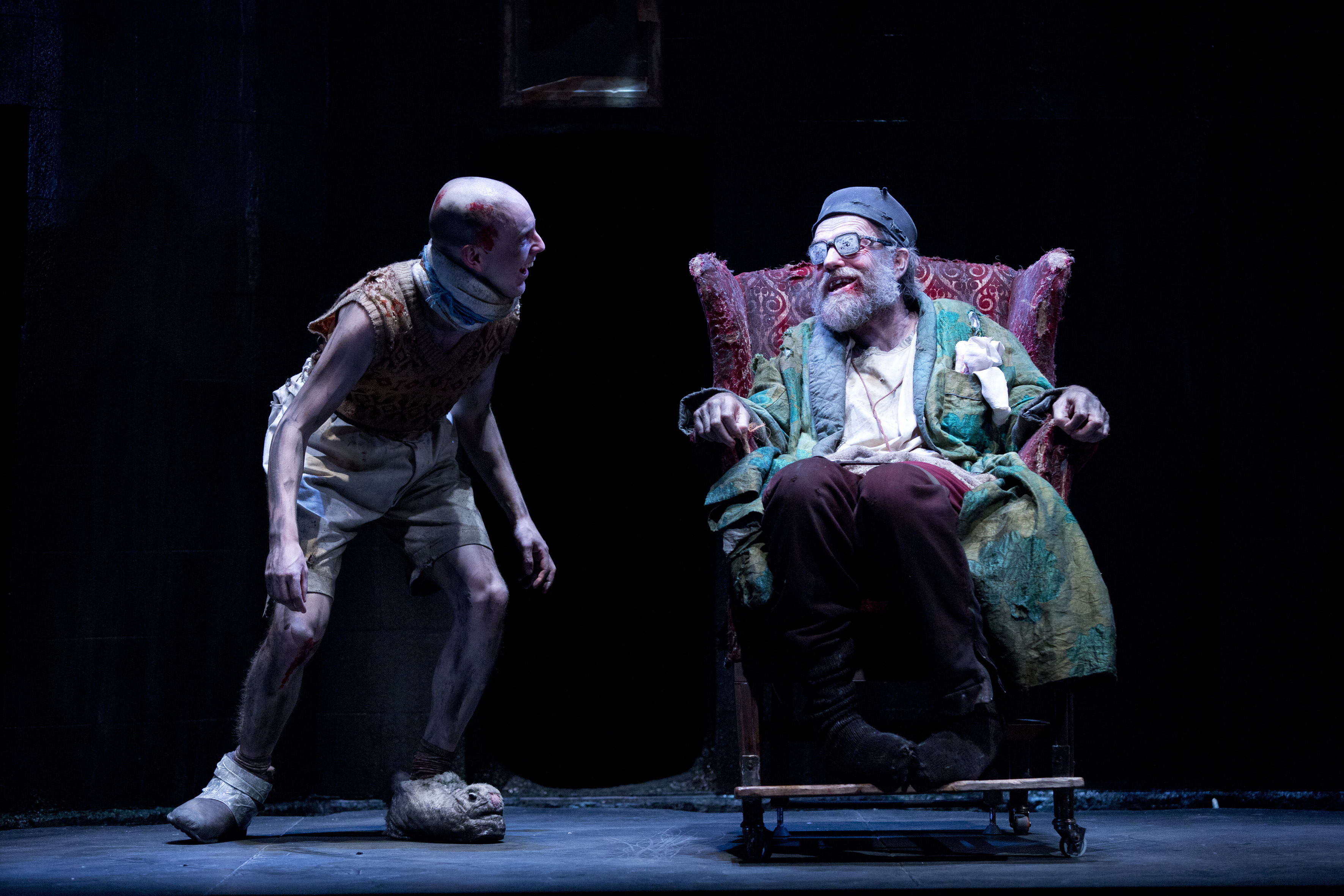
Tom Budge and Hugo Weaving. Photo: Lisa Tomasetti

Tom Budge and Hugo Weaving. Photo: Lisa Tomasetti

In 2013, Andrew Upton stepped into the breach when Tamas Ascher withdrew from directing Samuel Beckett’s Waiting for Godot for Sydney Theatre Company.

In his place, but working with Ascher’s assistant Anna Lengyel and using Zsolt Khell’s set designed for Ascher, Upton helmed a superb production with Hugo Weaving as Vladimir, which goes to London in June.

Upton and Weaving have now collaborated on an equally impressive production of Beckett’s Endgame – often considered a companion piece to Godot – with Weaving both performing and involved as associate director.

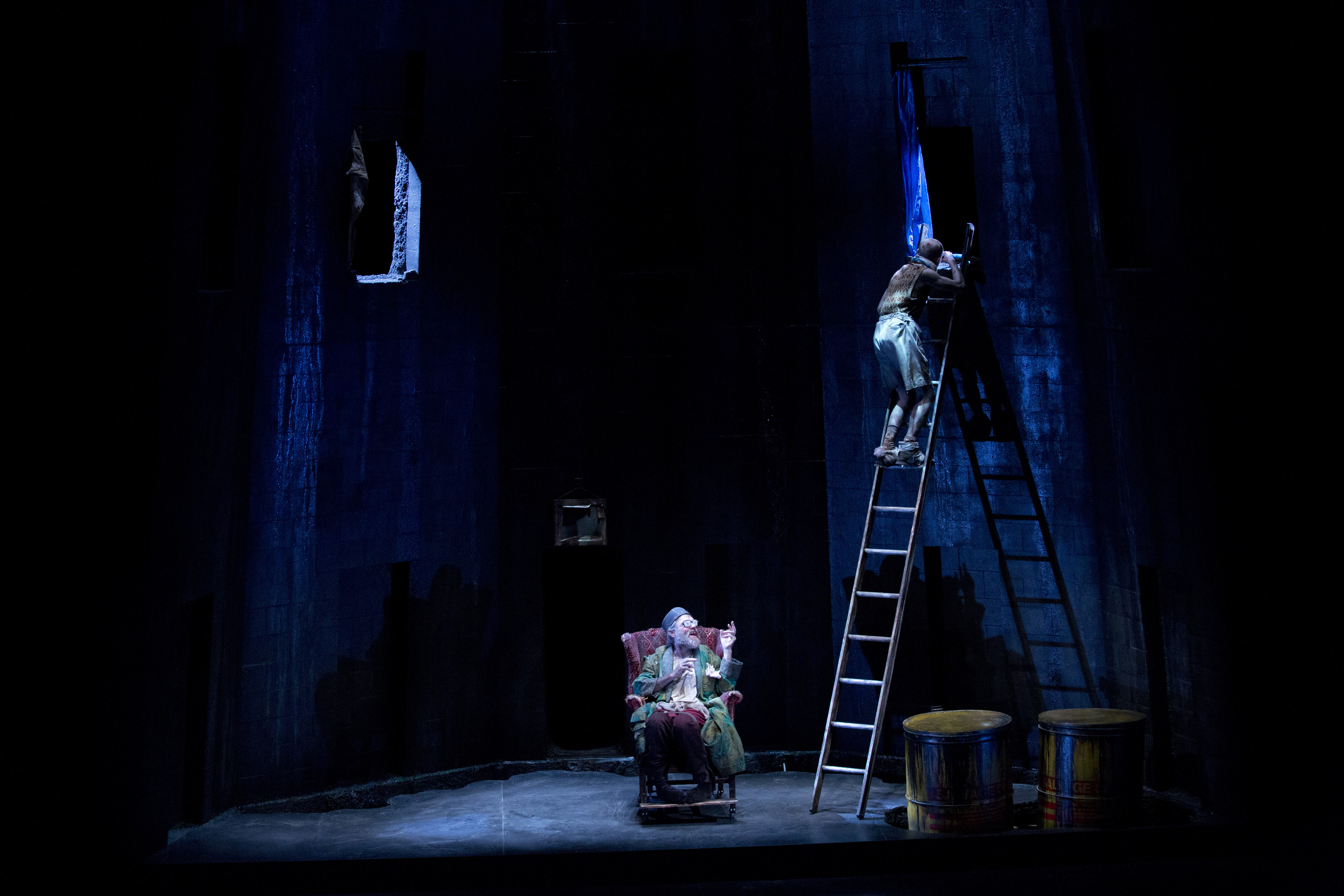
The post-apocalyptic, absurdist drama has four characters trapped in a room waiting for death essentially. The controlling Hamm (Weaving) is blind and confined to a wheelchair. His mistreated servant-son Clov (Tom Budge), who is crippled and can’t sit down, scurries around looking after him, while threatening to leave.

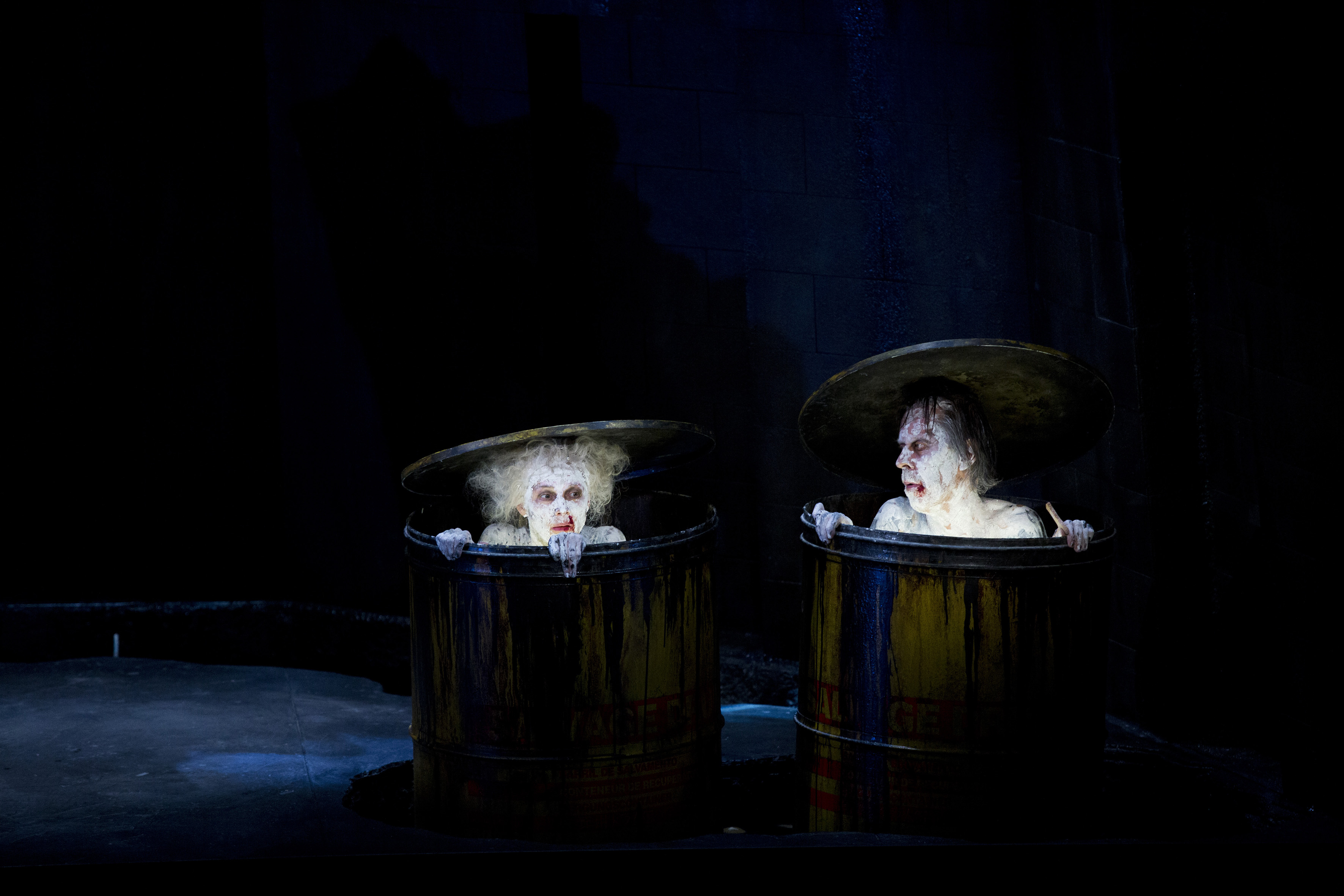
Hamm’s amputee parents Nagg (Bruce Spence) and Nell (Sarah Peirse) live in two dustbins – here dirty old oilcans, suggesting environmental disaster.

Clov periodically climbs a ladder to peer through two windows at the nothingness on land and sea outside, while there are glimpses of a normal life in times past through Nagg and Nell’s memories of boating and cycling.

It’s bleak but the writing is brilliant, laced with unexpected humour and devastating insights as Beckett looks deep into the agony of being human.

The Beckett Estate is famously rigid, requiring productions to stick to the letter of Beckett’s very specific stage directions. Upton and set designer Nick Schlieper have come up with an imposing, monumental staging that abides more or less faithfully with Beckett’s requirements but makes for a far more threatening space than a bare, grey-lit room.

Hugo Weaving and Tom Budge. Photo: Lisa Tomasetti

Hugo Weaving and Tom Budge. Photo: Lisa Tomasetti

Schlieper cleverly reduces the width of the stage to create a more intimate focus, while a towering, dark grey wall looms forebodingly over them. It looks like a fortified stone lighthouse, in which various windows and doors have been filled in, while the thickness of the wall is visible when the curtains are opened at the two remaining windows.

Because the wall is so high, disappearing from sight, Clov requires a long ladder to reach the windows, rather than the usual “small stepladder”, which adds to the comedy of his daily ritual.

Renee Mulder’s gloriously grubby, shabby costumes are full of wonderful little details. Clov wears boots most of the time but at one point he has a grungy rabbit slipper on one foot, as just one example. It’s all beautifully lit by Schlieper, with reflections dappling the wall, while dripping water (sound by Max Lyandvert) can he heard.

Weaving is in masterful form as Hamm. Legs tied and wearing opaque glasses, his face and arms, and even his tongue at one point, are wonderfully expressive but it’s his extraordinarily eloquent voice that mesmerises, so full of different textures, tones and sounds: velvety one minute, snarling the next. His Hamm is a tyrant but with a jaunty, fruity presence and a wry sense of humour. It’s a compelling performance.

Budge’s performance is all about body language. Bent-over, he performs with a robustly comical physicality. The way he removes the sheet covering Hamm, or climbs the ladder, or interacts with Hamm, suggests well-oiled routines he has developed over time to fill the endless, empty days, while his attempt to get rid of a flea in his pants is priceless.

Sarah Peirse and Bruce Spence. Photo: Lisa Tomasetti

Sarah Peirse and Bruce Spence. Photo: Lisa Tomasetti

The appearance of Spence’s elongated face, caked in white make-up, is a hilarious sight when his head emerges from the oilcan and he and Peirse tug at the heart as Nagg and Nell.

Endgame is almost unbearably bleak but at the same time surprisingly funny. Upton and his fine cast find that balance perfectly in an engrossing, lively, moving production.

Endgame plays at the Roslyn Packer Theatre until May 9. Bookings: www.sydneytheatre.com.au or 02 9250 1777

A version of this review appeared in the Sunday Telegraph on April 12

Jumpy

Drama Theatre, Sydney Opera House, March 28

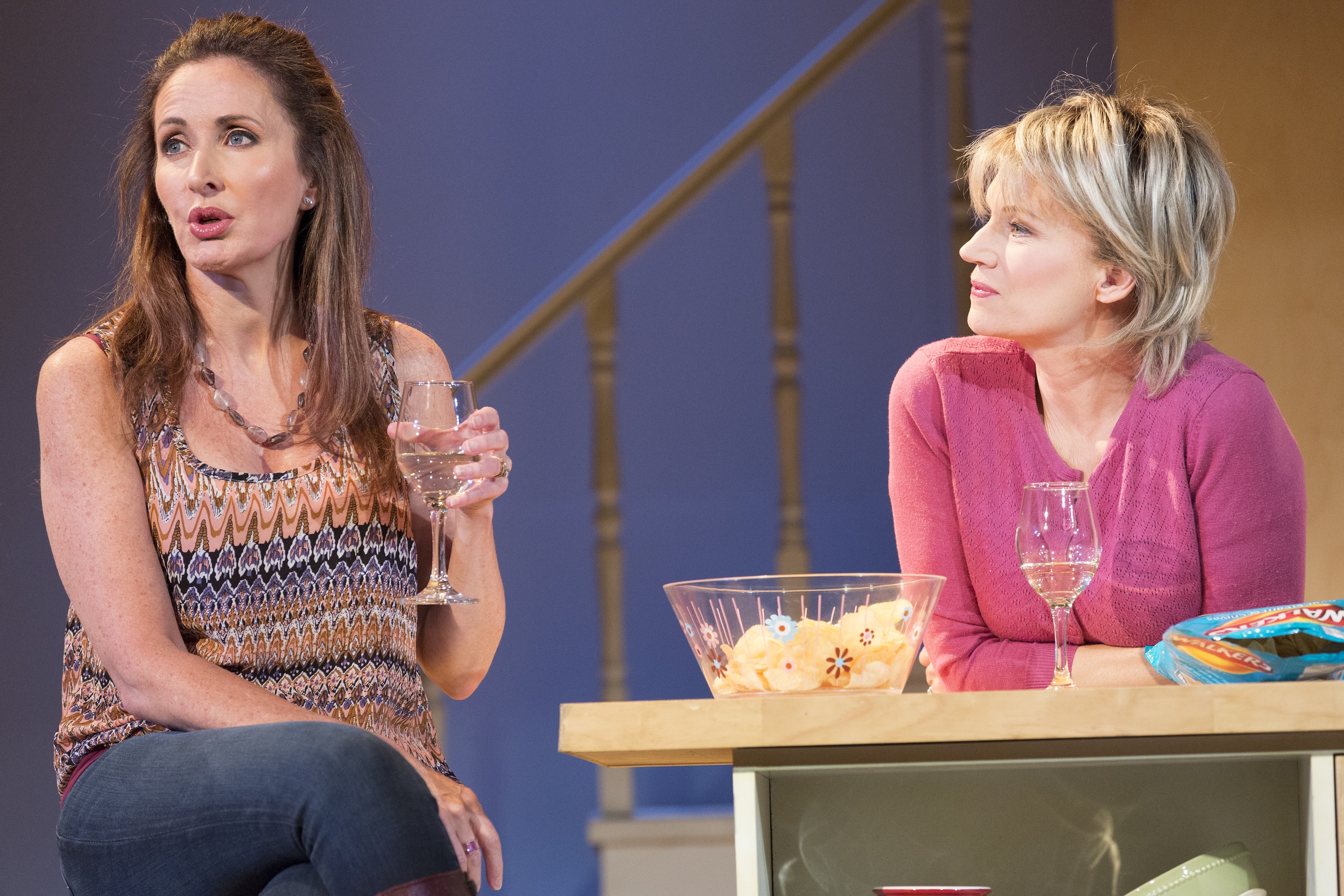
Brenna Harding and Jane Turner. Photo: Brett Boardman

Brenna Harding and Jane Turner. Photo: Brett Boardman

Written by British playwright April De Angelis, Jumpy was a hit in the UK, where it opened at the Royal Court in 2011 then transferred to the West End.

It’s certainly refreshing to see a play where the central protagonist is a 50-year old woman – played here by Kath & Kim’s Jane Turner – and where the themes are mainly women’s issues.

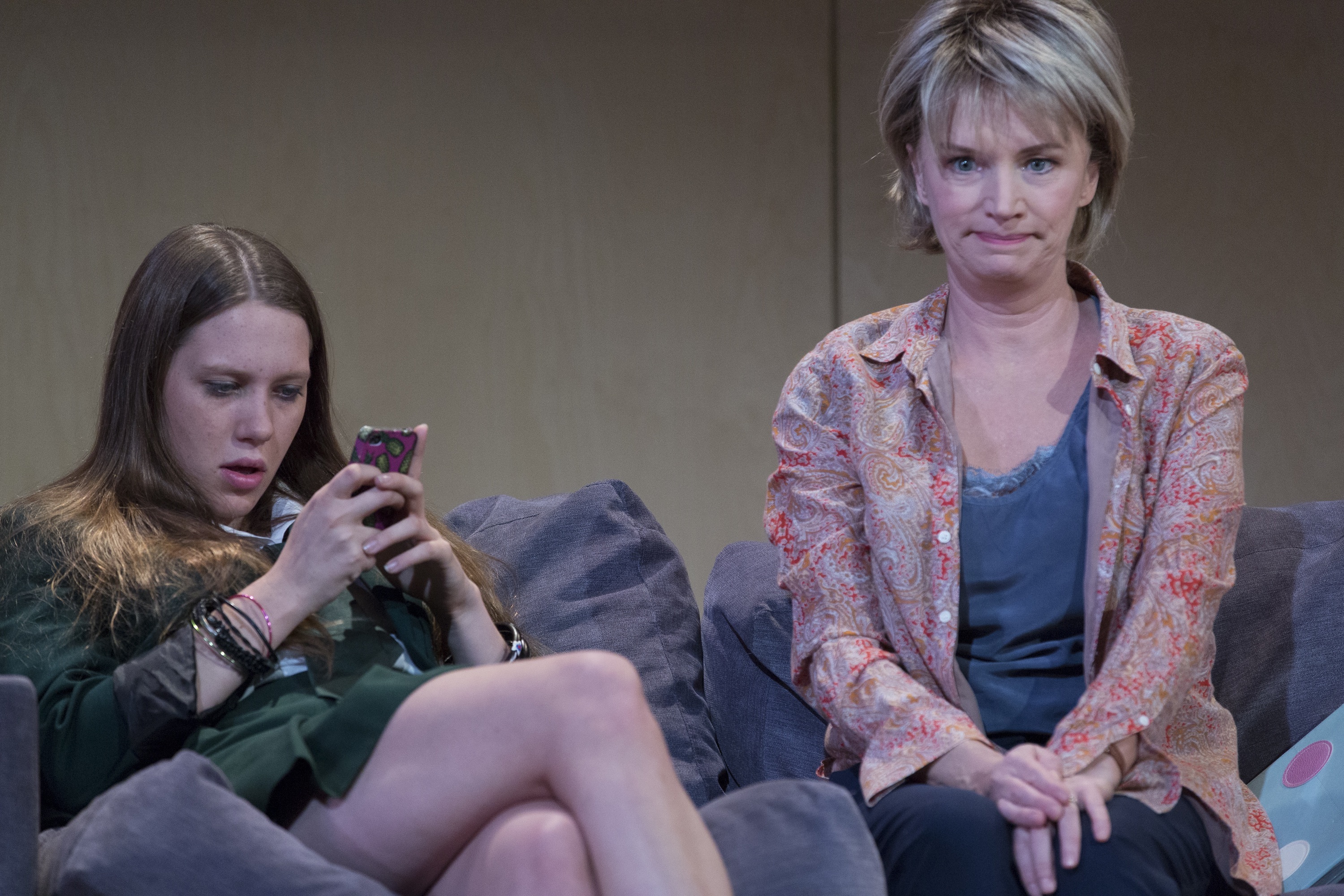
Hilary (Turner) is being buffeted by life. Her job in childhood literacy is on the line due to funding cuts, her marriage is stale, her political idealism seems a thing of the past, and her surly, sexually precocious, 15-year old daughter Tilly (Brenna Harding) is an antagonistic nightmare. Hell, even the furniture seems out to get her during the scene changes in Pamela Rabe’s Melbourne Theatre Company production, now being presented in Sydney by Sydney Theatre Company.

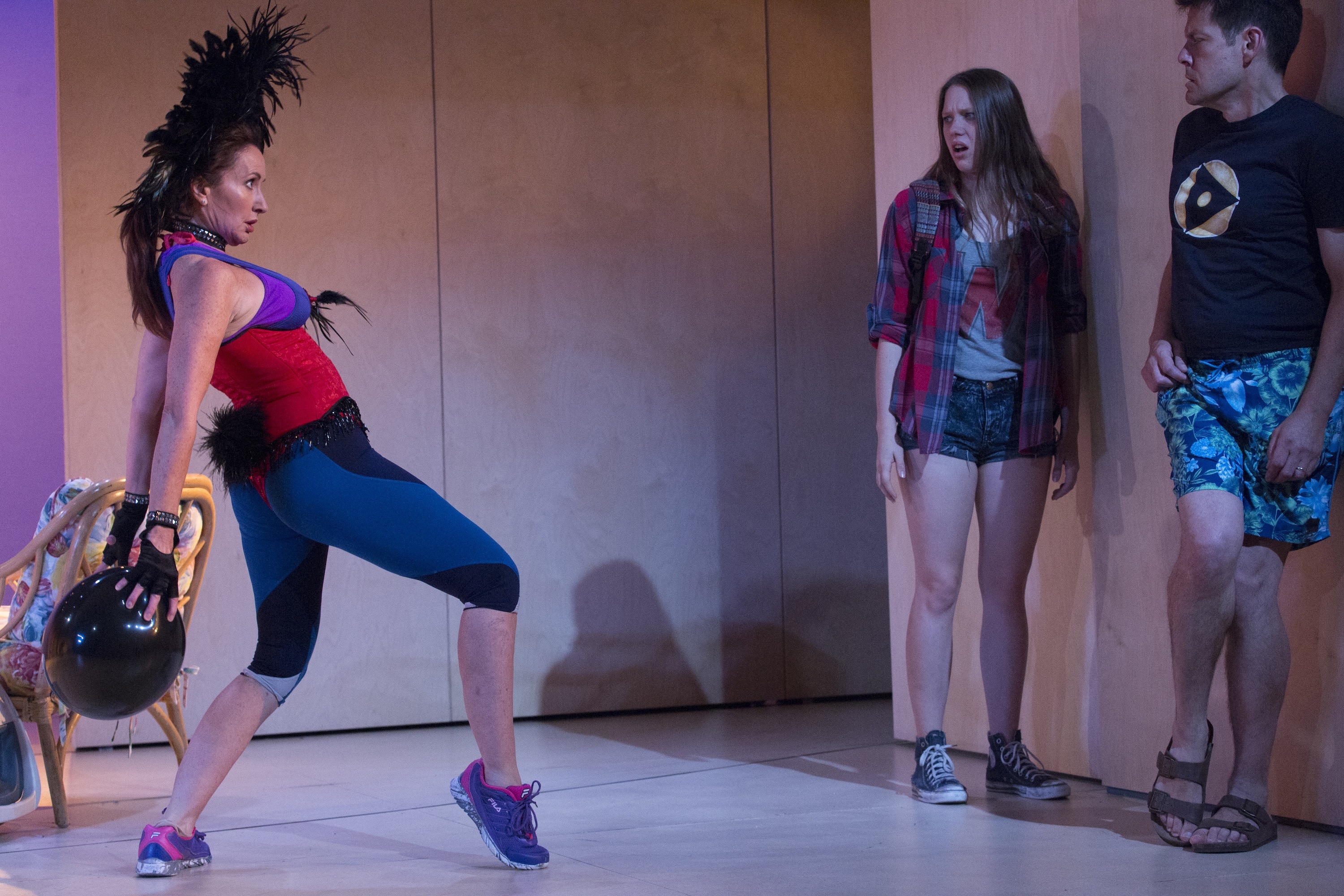
Hilary and her best friend Frances (Marina Prior) take regular solace in a glass or three of savvy blanc, while the single, sex-starved Frances also works up a saucy burlesque act, which she describes it as “post-feminist irony” but which feels pretty desperate (and cringe-making).

Marina Prior, Brenna Harding and David Tredinnick.  Photo: Brett Boardman

Marina Prior, Brenna Harding and David Tredinnick. Photo: Brett Boardman

When Tilly begins sleeping with her boyfriend Josh (Laurence Boxhall), Hilary goes to meet Josh’s steely mother Bea (Caroline Brazier) and more amiable actor father Roland (John Lloyd Fillingham) whose take on the situation is very different. Their marriage is also on the rocks.

Jumpy is a lively, well-written comedy though it makes its themes (marriage, parenting, feminism, the sexualisation of young women and the invisibility of their older counterparts) fairly obvious.

Rabe directs an elegant production on Michael Hankin’s pale wooden, low-ceilinged set, which has the furniture glide on and off as if on a conveyor belt. It’s witty and with so many short, snappy scenes it’s a clever solution. As for having Hilary jump to avoid the scenery in the set changes, I can understand the logic, and many in the audience clearly loved the idea, but I found it a bit of a cheap laugh, making Hilary something of a buffoon, which she absolutely isn’t.

Teresa Negroponte’s costumes are spot-on and it’s all well lit by Matt Scott.

Turner gives a lovely, subtle performance, finding the humour, confusion and poignancy in Hilary’s situation. Harding glowers convincingly as Tilly, though the role is pretty one-dimensional, while Prior is very funny as Frances, as is Brazier as the cold, witheringly brusque Bea.

Tariro Mavondo shines as Tilly’s cheery, working class friend Lyndsey, who finds herself pregnant at 16, but where Tilly is a thunderous dark cloud, Lyndsey exudes sunny optimism despite having so much to contend with.

There are also strong performances from Lloyd Fillingham as the genial but awkward Roland, David Tredinnick as Hilary’s rather ineffectual husband who constantly gives in to Tilly in his anxiety to avoid conflict, Boxhall as Tilly’s monosyllabic boyfriend Josh, and Dylan Watson as Cam, another boy Tilly brings home with unexpected results.

Jumpy is somewhat reminiscent of Alan Ayckbourn or David Williamson in style. It resists tying things up too neatly, with a second act that is darker than the first, but several events feel unlikely, not least the late appearance of a gun, while De Angelis cops out a bit with a soft solution to Tilly’s later situation.

Marina Prior and Jane Turner.  Photo: Brett Boardman

Marina Prior and Jane Turner. Photo: Brett Boardman

However, the challenges Hilary and Frances face and the banter between them ring true, and many will relate to the way the two women feel about aging and our changing society.

In the end Jumpy is a lightweight play but it’s enjoyable and well staged. The chance to see Turner and Prior flex their comic muscles on stage is a particular delight.

Jumpy runs at the Drama Theatre, Sydney Opera House until May 16. Bookings: 02 9250 1777 or www.sydneytheatre.com.au

A version of this review ran in the Sunday Telegraph on April 5

Elektra/Orestes

Belvoir St Theatre, March 18

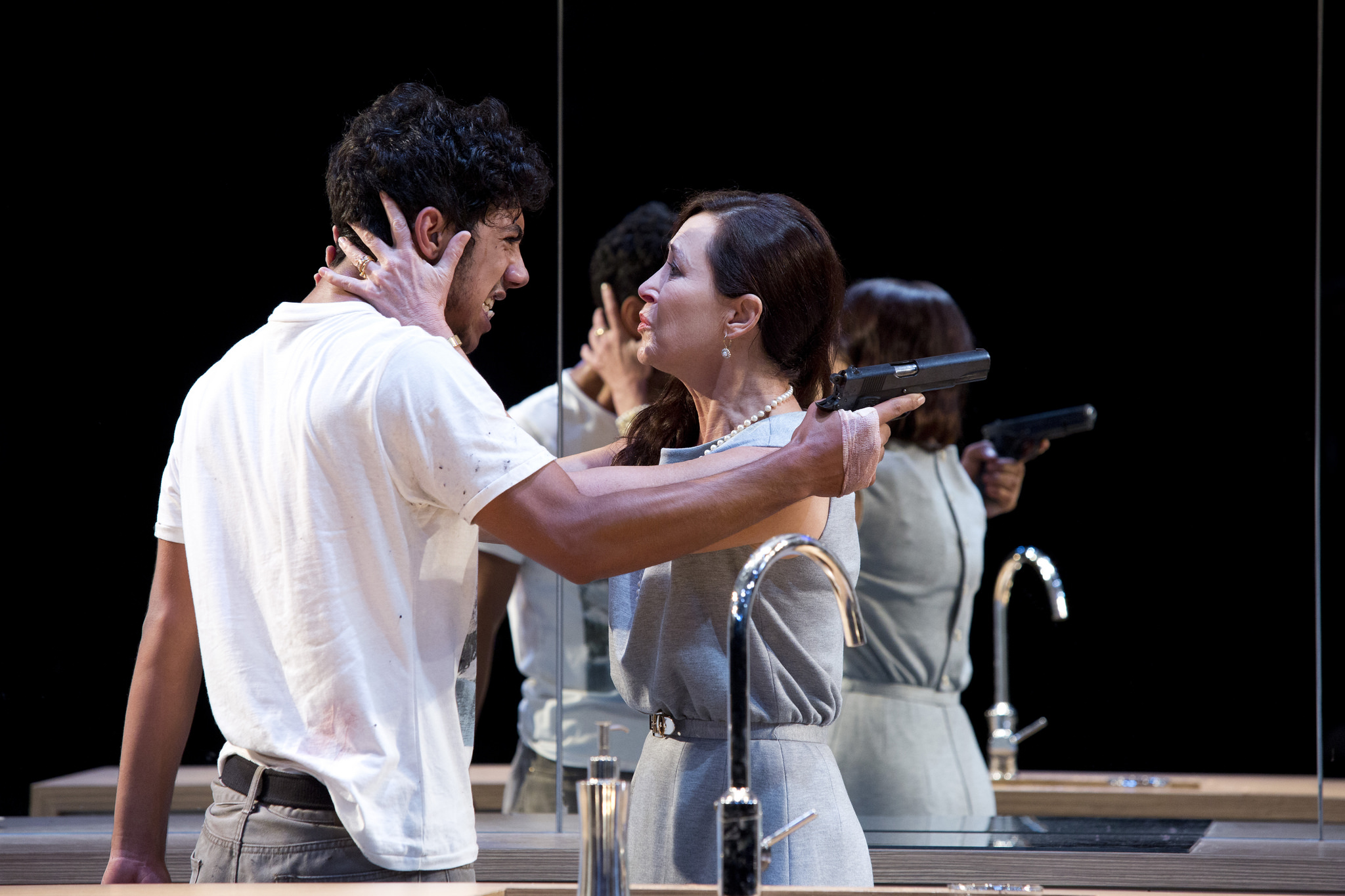
Ben Winspear, Hunter Page-Lochard and Ursula Mills. Photo: Lisa Tomasetti

Ben Winspear, Hunter Page-Lochard and Ursula Mills. Photo: Lisa Tomasetti

A crumpled, somewhat slovenly figure is slumped at a dining table in a starkly furnished modern room having presumably sat up all night. Above her, a red neon sign spells out the name Elektra.

Sure enough, it is the Elektra of Jada Alberts’ and Anne-Louise Sarks’ Elektra/Orestes: a contemporary adaptation of the Greek myth about a family steeped in violence in the name of revenge. Dressed in baggy track-pants and a T-shirt bearing the scrawled words “My Mum Killed My Dad”, her hair wild and uncombed, she is angry, antsy, anguished, zapping a remote control to turn blasting music on and off.

The mythical tragedy survives in various versions by ancient Greek dramatists Sophocles, Euripides and Aeschylus. Elektra and her brother Orestes kill their mother Klytemnestra in revenge for her murder of their father Agamemnon with the help of her lover Aegisthus. Klytemnestra was in turn avenging the death of her eldest daughter Iphigenia, sacrificed by Agamemnon to appease the goddess Artemis in return for the winds to sail his ships to the Trojan War. He returned home with Cassandra, a war trophy who had borne him twins.

Alberts and Sarks (who also directs) give their new version a modern domestic setting, with a stage design by Ralph Myers. Running a tight one-hour, the first half takes place in the dining room on the day that Orestes finally returns after years in exile to exact Elektra’s long-planned revenge. A door leads into the kitchen, through which the characters disappear then return as events unfold.

As the day begins, Elektra (Katherine Tonkin) is petulant and aggressive towards her mother (Linda Cropper), while her sister Khrysothemis (Ursula Mills) makes coffee and tries to keep the peace. Aegisthus (Ben Winspear) comes and goes, a sleazy figure in boxer shorts and untied velvety dressing gown. Then a messenger (Hunter Page-Lochard) arrives to say that Orestes is dead; but it is Orestes himself.

Halfway through the play, the stage turns and the action start over again, as we watch what was happening unseen in the kitchen during the first part (including Orestes’ climactic murder of Klytemnestra).

It’s a clever concept that makes for an intriguing structure and gripping drama. Sarks balances the production beautifully, making sure the timings work and ensuring that we hear and glimpse just enough from the other room to trace the unfolding drama from the two perspectives.

She and Alberts have also added a shocking, new twist to the family dynamic that ups the ante yet another notch.

Where the Greeks kept the violence off-stage, leaving it to the imagination, Sarks puts it on stage. It’s not easy to portray violence live in the theatre and there were a few giggles on opening night but I thought they handled it well (fight direction by Scott Witt) with enough blood but not too much. The production certainly gives you pause to ponder what a body being stabbed more than 20 times (as we have read about in the news recently) actually means, and the frenzied nature of such an attack.

Hunter Page-Lochard and Linda Cropper. Photo: Lisa Tomasetti

Hunter Page-Lochard and Linda Cropper. Photo: Lisa Tomasetti

The performances are generally excellent. Tonkin is ferociously good as Elektra, her fierce performance convincingly powered by overwhelming emotions that she can’t deal with. Instead she lashes out physically and verbally, in almost childlike fashion at times, as grief, anger and bitter resentment consume her.

Cropper is also superb as the cool, chic Klytemnestra encapsulating her tough steeliness yet also the world-weariness, regret and internal conflict she is now forced to live with. The script makes her actions understandable and the final scenes in which she explains herself have a real power.

Mills and Winspear make the most of relatively small roles with vivid performances, and Page-Lochard’s portrayal grows in strength as the play progresses.

Mel Page’s costuming, Damien Cooper’s lighting and Stefan Gregory’s sound all contribute to the taut, effective, stark staging.

The dialogue itself is believably every-day, though certain phrases sing, and there is a surprising amount of humour predominantly as a result of Elektra’s agro. But stripped of the poetry and grandeur of ancient Greek tragedy, Elektra/Orestes makes the violence real and ugly.

Elektra/Orestes doesn’t have quite the same emotional impact as Sarks’ 2012 award-winning, contemporary Medea (co-adapted with Kate Mulvany), which operated in a similar fashion, telling the story from the point of view of Medea’s murdered young sons, seen in their bedroom.

The concluding image of Orestes and Klytemnestra would be more moving if we had seen some of the conflicting emotions raging within Page-Lochard’s Orestes in the lead-up to the murder. As it is, his final reaction comes rather out of nowhere and is therefore less potent.

Nonetheless, Elektra/Orestes is a clever, provocative, pithy piece, showing that revenge only perpetuates cycles of violence and doesn’t assuage anger, grief and resentment (understandable though they may be). Only in forgiveness can we hope to find any peace – something we so often struggle to accept and achieve.

Elektra/Orestes plays at Belvoir St Theatre until April 26. Bookings: www.belvoir.com.au or 02 9699 3444

This House is Mine

Eternity Playhouse, March 13

Chris Barwick as Mack and Fabiola Meza as Clem. Photo: Patrick Boland

Chris Barwick as Mack and Fabiola Meza as Clem. Photo: Patrick Boland

For the past 15 years, Milk Crate Theatre has been working with people who have experienced homelessness and social marginalisation to create theatre that builds their confidence and helps them make positive changes in their life.

At the same time, the stories they tell, drawn from their own experiences, challenge and inform audiences by putting a human face to social issues so many of us in Australia are lucky enough to have only read about.

This House is Mine, presented by Milk Crate in association with Darlinghurst Theatre Company, began with discussions around the complex issues surrounding homelessness, with mental health emerging as a theme that participants wanted to explore. (According to the program there are more than 20,000 homeless people in Sydney on any given night).

On paper, This House of Mine sounds like a tough night at the theatre – and it certainly doesn’t pull any punches. But it’s an absorbing, poignant piece with laughter, tears and tenderness as well as darkness and brutality, and it speaks with a great sense of shared humanity.

Written by Maree Freeman, the artistic director of the company, and directed by Paige Rattray, the play weaves a web of stories performed by six people from Milk Crate’s ensemble of more than 40, along with one professional actor (young NIDA graduate Contessa Treffone).

In between scenes, other members of the Milk Crate community talk in video interviews about their experiences and perspectives on the issues raised.

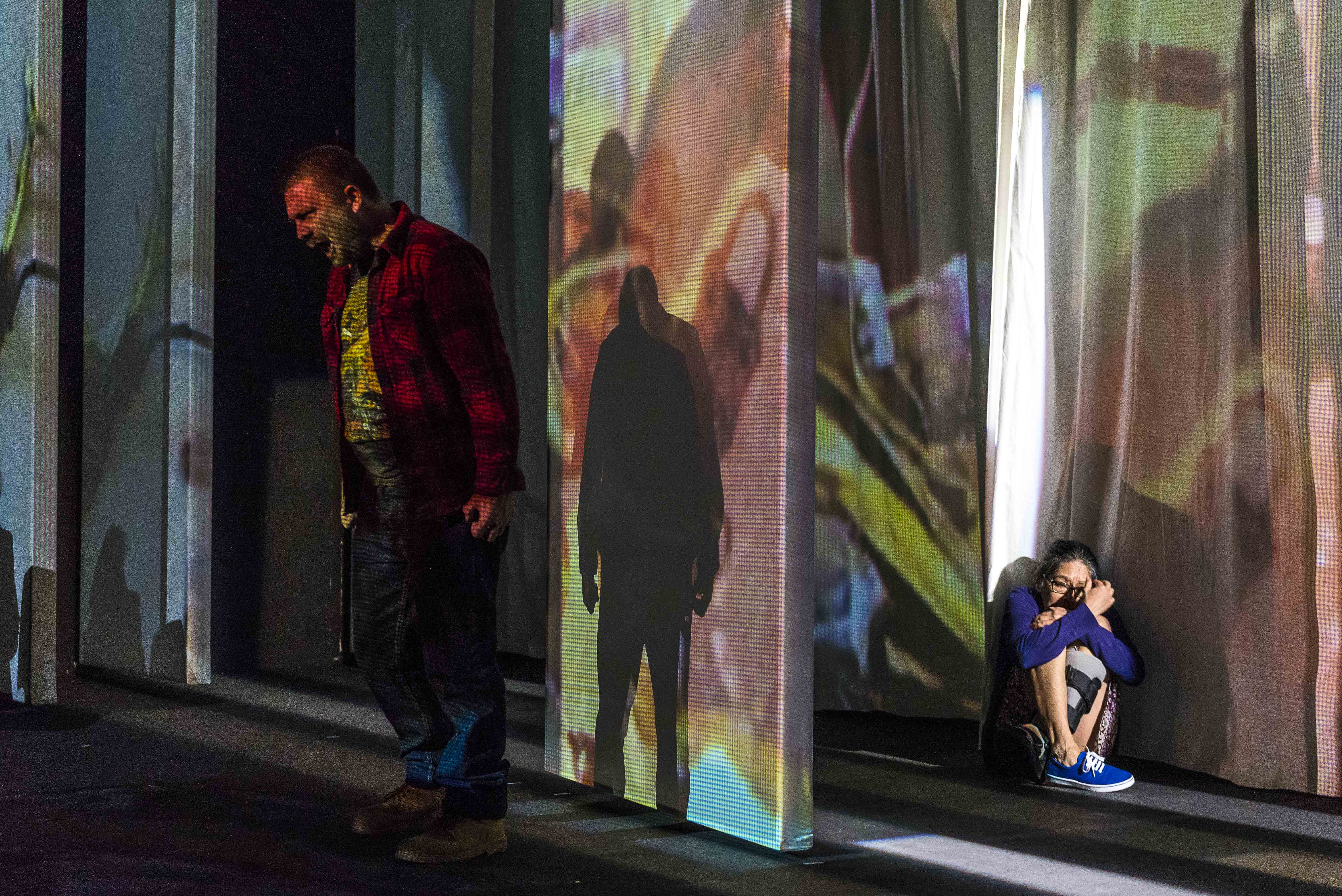
Matthias Nudl as Jason. Photo: Patrick Boland

Matthias Nudl as Jason. Photo: Patrick Boland

Entering the theatre, there’s a line of chairs on stage, a TV monitor to the right of the stage, and some sliding screens at the back (set design by Hugh O’Connor). It looks as though it might be one of those pieces of verbatim theatre, where the performers essentially sit and talk but it’s not like that at all.

Rattray’s staging is simple but effective as the stories unfold, using the screens to create different spaces, with video imagery (designed by Sarah Emery with Sean Bacon as consultant) giving us an insight into the turmoil within the minds of some of the characters.  Tom Hogan’s sound and Ross Graham’s lighting help create a strong sense of mood.

The play begins with two characters standing facing each other while their phone conversation is relayed in voice-over. Evelyn (Veronica Flynn) is worried about Jason (Matthias Nudl) who suffers from depression.

John McDonnell as Frank and Veronica Flynn as Evelyn. Photo: Patrick Boland

John McDonnell as Frank and Veronica Flynn as Evelyn. Photo: Patrick Boland

From there we meet Frank (John McDonnell), a gentle psychiatrist with a wild shock of hair who is in the early stages of dementia and will soon have lost touch with reality. The final scenes between him and the spirited, motor-mouthed Evelyn, who is his daughter, are terribly moving.

There’s also Clem (Fabiola Meza), the abused wife of Mack (Chris Barwick), whose moods swing violently, and Clem’s estranged daughter Brooke (Rach Williams) who can’t understand why her mother doesn’t leave.

Brooke, who not surprisingly finds relationships hard, is living with girlfriend Anna (Treffone), who is initially a livewire then descends into schizophrenia.

The lack of acting technique among the cast actually adds to the feeling of authenticity. All the performers are convincing, drawing us into their respective character’s stories. The scenes of domestic violence between Meza and Barwick feel particularly, chillingly believable, while Treffone handles the difficult role of Anna with subtlety.

Contessa Treffone as Anna and Rach Williams as Brooke. Photo: Patrick Boland

Contessa Treffone as Anna and Rach Williams as Brooke. Photo: Patrick Boland

This is My House is powerful and empowering theatre. Told with disarming honesty, it feels raw and real and very moving.

After the final performance on March 22, there will be a post-show panel discussion hosted by Milk Crate in partnership with the St James Ethics Centre. Entitled Breaking the Cycle: Why does homelessness still exist?, moderator Dr Simon Longstaff, Executive Director of St James Ethics Centre and panelists Katherine McKernan, CEO of Homelessness NSW, Ronni Khan, CEO of Ozharvest, Steven Persson, CEO of The Big Issue, Toby Hall Group CEO of St Vincent’s Health Australia, and Milk Crate Theatre ensemble artists will explore how they, as a community, move forward to break the cycle of intergenerational disadvantage.

This House is Mine runs at the Darlinghurst Theatre Company until March 22. Bookings: www.darlinghursttheatre.com or 02 8356 9987.

Queen Bette

Old 505 Theatre, March 6

Jeanette Cronin in Queen Bette. Photo: Richard Hedger

Jeanette Cronin in Queen Bette. Photo: Richard Hedger

“Son of a bitch”, yells Jeanette Cronin as she storms onto stage in the guise of screen legend Bette Davis.

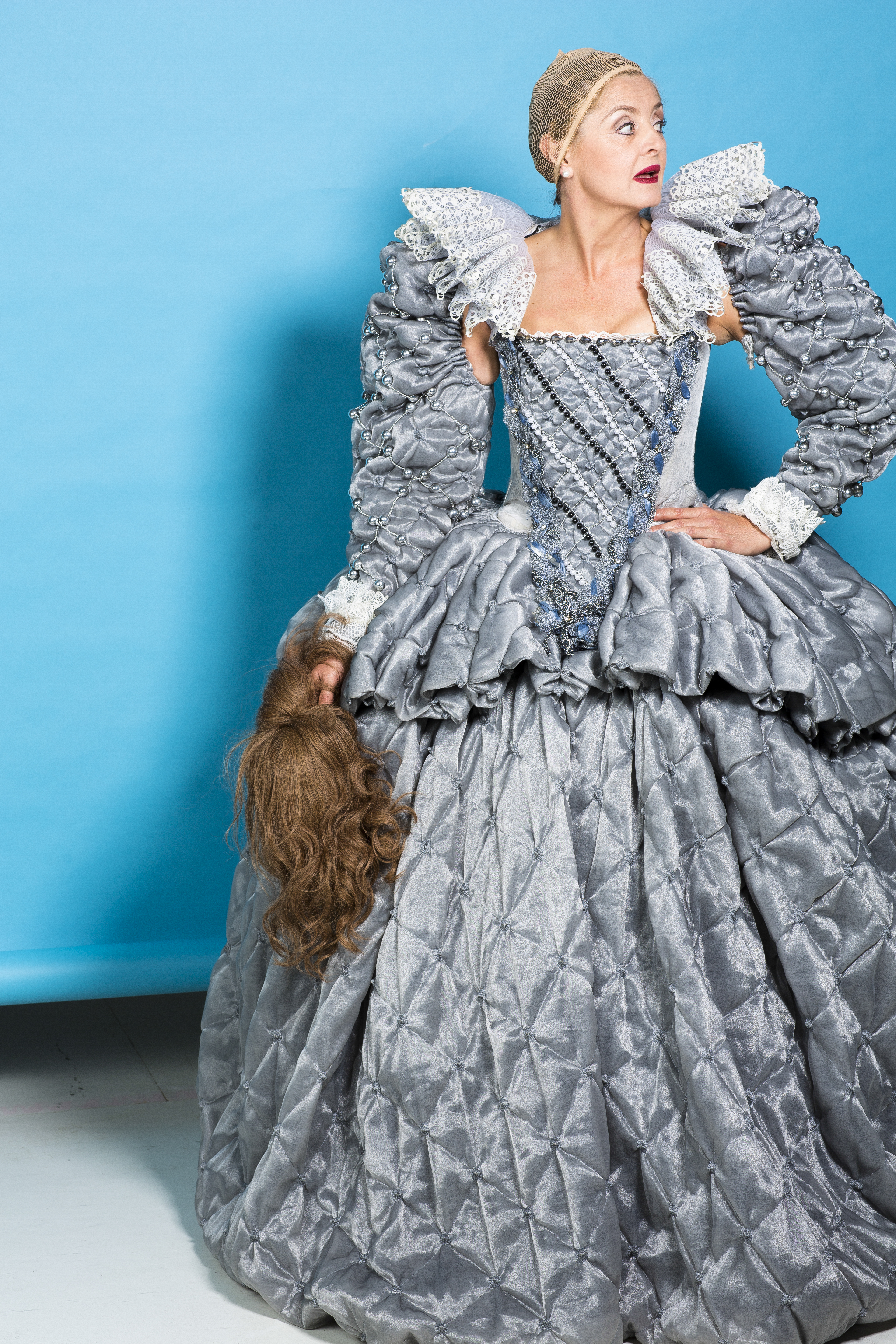
It is 1939 and Davis is playing Queen Elizabeth I in The Private Lives of Elizabeth and Essex opposite Errol Flynn. She had wanted Laurence Olivier but lost out there. However, she had her way when it came to the costumes, revealing that she had two sets made – one to placate the studio, another more extravagant collection that she actually wore.

From there, Queen Bette rewinds to the beginning to follow Davis’s career in fairly straightforward biographical fashion from New England girl to her triumphs on Broadway and onto Hollywood where she became a screen idol, starring in innumerable films including Of Human Bondage, Dangerous, All About Eve and What Ever Happened to Baby Jane?

The one-hour, one-woman docudrama was devised by Cronin and Peter Mountford, who drew on Davis’s 1962 autobiography The Lonely Life and various interviews that she did over the years. Mountford also produces and directs the show for G.Bod Theatre.

Cronin played Davis last year in John Misto’s play Dark Voyager at the Ensemble Theatre but comes into her own here as the iconic movie star. She bears more than a passing resemblance to Davis – in fact, the likeness is uncanny at times – and captures her clipped way of speaking and fierce presence.

Staged on a simple set with an old-fashioned dressing table in which the audience is reflected in the mirror, a hat stand, a portrait of Elizabeth I (who Davis played on screen twice) and a costume or two, Queen Bette doesn’t delve deeply personally or psychologically, though we do learn that she adored her struggling but ever-supportive mother. Nor does the show focus on the scuttlebutt and famous feuds.

What it gives us is a strong, lively impression of a formidable actor who was driven, combative and prepared to stand her own ground, even having a legal stoush with Warner Bros (which she lost).

It’s fascinating to hear about the importance of Martha Graham, who taught Davis dance as part of her theatre training, and who influenced the way she moved as an actor thereafter. We also see what a smart cookie she was, recognising very early on the importance of the talkies and that a different style of acting was required.

Cronin is constantly on the move, flitting, dancing, prowling and pacing around the stage. She hardly draws breath in a highly energetic performance. Apparently Davis had this kind of restless energy but as a piece of theatre it feels a bit relentless at times.

Nonetheless, Queen Bette is a very enjoyable entertainment about a fascinating woman.

Queen Bette plays at the Old Theatre 505 until March 15. Bookings: http://www.venue505.com/theatre

Caress/Ache

Griffin Theatre Company, SBW Stables Theatre, March 4
Ian Stenlake. Photo: Brett Boardman

Ian Stenlake. Photo: Brett Boardman

Caress/Ache, a new play by Australian playwright Suzie Miller, was inspired initially by the 2005 execution of young Australian drug trafficker Nguyen Tuong Van in Singapore. Under Singaporean law, his mother was not allowed to hug him before his death.

The shocking inhumanity of such a ruling set Miller thinking about the importance and power of touch. The result is Caress/Ache, a play, which went through a long period of studio development at London’s National Theatre. In her program notes, Miller also acknowledges the dramaturgy of a number of highly regarded theatre professionals. And yet, after so much work, the play – which now has its premiere at Griffin Theatre Company – still lacks the emotional depth to rise above its all-too-obvious exploration of a chosen subject and truly resonate.

Miller interweaves a number of stories. There’s Mark (Ian Stenlake), a paediatric doctor who feels like a god when he is saving children’s lives. Even the sex with his wife Libby (Helen Christinson) is better after a successful operation. However, when he loses a young patient on the operating table, he can no longer bear to touch his wife or be touched.

Mark later turns to a phone sex line, speaking to Cate (Sabryna Te’o), a single mother who is working there to support her child, asking her to touch her face and arm and describe the sensation. Cate is new to the job, taught how to handle things (as it were) by her cheery, experienced colleague Belinda (Zoe Carides), who lends the fairly heavy piece a little levity.

Then there’s the furious Saskia who confronts her poet boyfriend Cameron (Gary Clementson), after discovering he has slept with her boss. We also meet Arezu (Te’o), a young Iranian woman whose parents fled to Australia to give her a better life, naming their daughter after the word for “hope”. But Arezu is frustrated that they won’t talk about Iran. When her uncle gives her a book of Farsi poetry, she starts to wear the hijab and decides to return to her homeland to discover who she really is.

Her story is less linked to the all-pervasive theme of touch, but at the airport she meets Saskia who is flying to London. In a brief encounter, Arezu ends up giving the unhappy Saskia a hug – a moment that feels utterly contrived. There’s another tenuous connection between Cate, Cameron and Saskia via an autistic child, which comes out of nowhere and really does feel as if Miller is straining things unnecessarily.

Finally, there’s Alice (Carides) who goes to Singapore to be with her son Peter (Clementson) who is about to be hanged there for drug trafficking only to find she isn’t allowed to touch or hold him. Mark is the Australian doctor/coroner who will be at Peter’s execution and complete the paperwork afterwards.

This particular story strand leads to the powerful closing scenes and the play’s undeniably moving final image. However, it was impossible to watch this without thinking of what is happening in Indonesia. On the very day of the play’s opening, Andrew Chan and Myuran Sukumaran were transferred from Bali’s Kerobokan Prison to the island of Nusakambangan to await their execution for drug trafficking.

For some, the extraordinary timing heightened the emotion and lent the play an added power, with a number of audience members in tears at the end of the play. Others – myself included – found it extremely uncomfortable. Clearly, Miller could have had no idea when she was writing the play of how closely it would be reflecting newspaper headlines. Had the preceding scenes been dramatically stronger, it might not have mattered. As it was, I found those particular scenes uncomfortably close to emotional manipulation, giving the play a resonance it hadn’t earned.

Directed by Anthony Skuse, the Griffin production is staged on a stark white set designed by Sophie Fletcher, which begins as a hospital operating theatre and then allows for quick, simple changes for different locations.

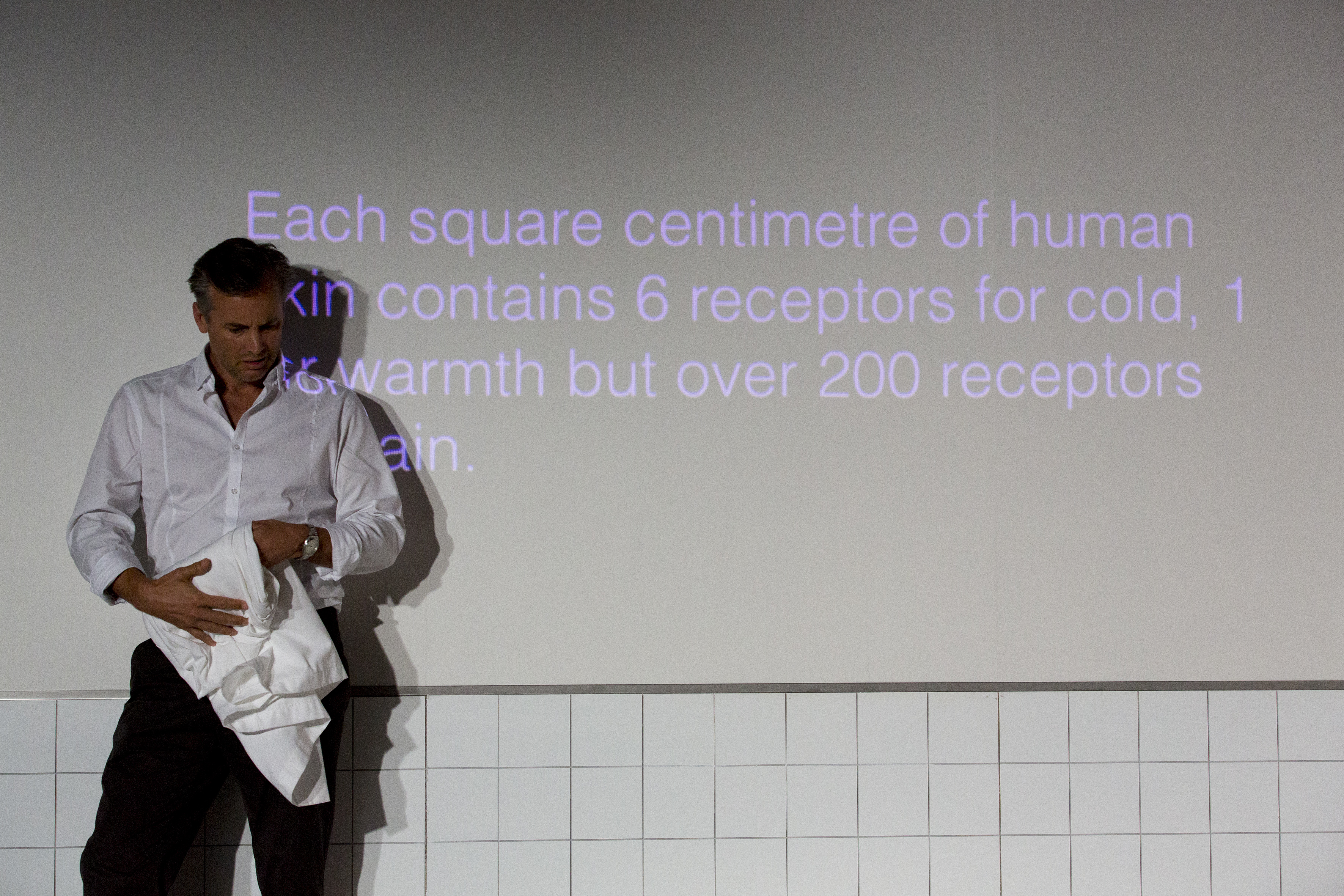
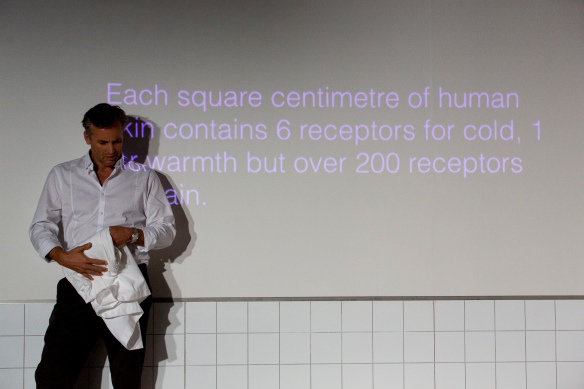
As the start of the play, a quote is projected onto the theatre walls: “Human skin and tissues contain millions of sensory receptors. Without them, there would be no capacity for people to sense the touch of another.”

Various statements and statistics relating to touch are flashed up periodically throughout the play. In the end, they just get in the way, reinforcing the feeling of a lecture. And therein lies the problem with the play. It always seems to be illustrating its chosen topic, rather than organically exploring it. The characters exist only to fit the theme. They don’t feel real, lacking a convincing emotional life beyond what they represent here in relation to touch.
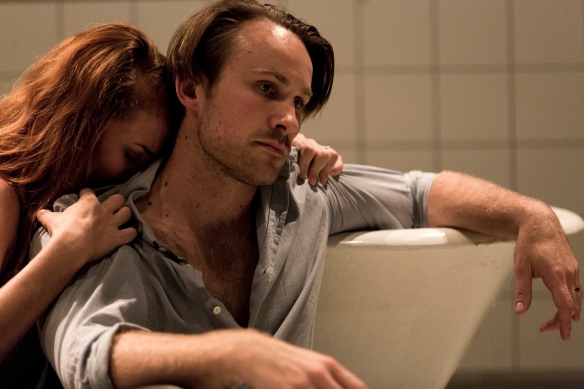
Gary Clementson and Helen Christinson as Saskia and Cameron. Photo: Brett Boardman

Gary Clementson and Helen Christinson as Saskia and Cameron. Photo: Brett Boardman

The dialogue between Saskia and Cameron feels particularly clichéd, causing some sniggers on opening night as he mutters about feeling disgusted with himself, while she can’t believe he could do this to her. (“Tell me it didn’t happen, Please just tell me you didn’t do this.”) The way she goes on and on, furiously demanding more and more graphic details about his infidelities makes her come across as a victim, wallowing in his betrayal, while he hangs his head in shame but perpetuates his lies.

The opening scene in which Mark rhapsodises about his feelings when he is operating uses a heightened, poetic language. He rolls along the top of the metal bench as in a piece of choreographed physical theatre, while music swells. But this style of performance is just as suddenly dropped, apart perhaps from a bath scene featuring Saskia and Cameron.

And why, when Mark’s marriage has obviously been a loving one, would he not at least try to explain to Libby why he now shrinks from her? Instead he silently turns his back. As for Nate Edmondson’s music, sung by the cast, it feels overblown and sits oddly stylistically.

Skuse has the actors play things at full bore. The five performers turn in strong performances, but the play resists their attempts to give it a convincing emotional life. Instead Caress/Ache speaks to us “about” a theme. What’s more, it doesn’t have anything particularly new to say in relation to it.

The fact that a mother can’t hold her son before he is executed is a truly terrible thought. You can see why it would capture Miller’s imagination. She has clearly done a huge amount of research into the subject of touch and all that it involves but she hasn’t found a way to synthesise this into a genuine drama.

Caress/Ache runs at the SBW Stables until April 11. Bookings: griffintheatre.com.au or 02 9361 3817

As You Like It

Playhouse Theatre, Sydney Opera House, February 25

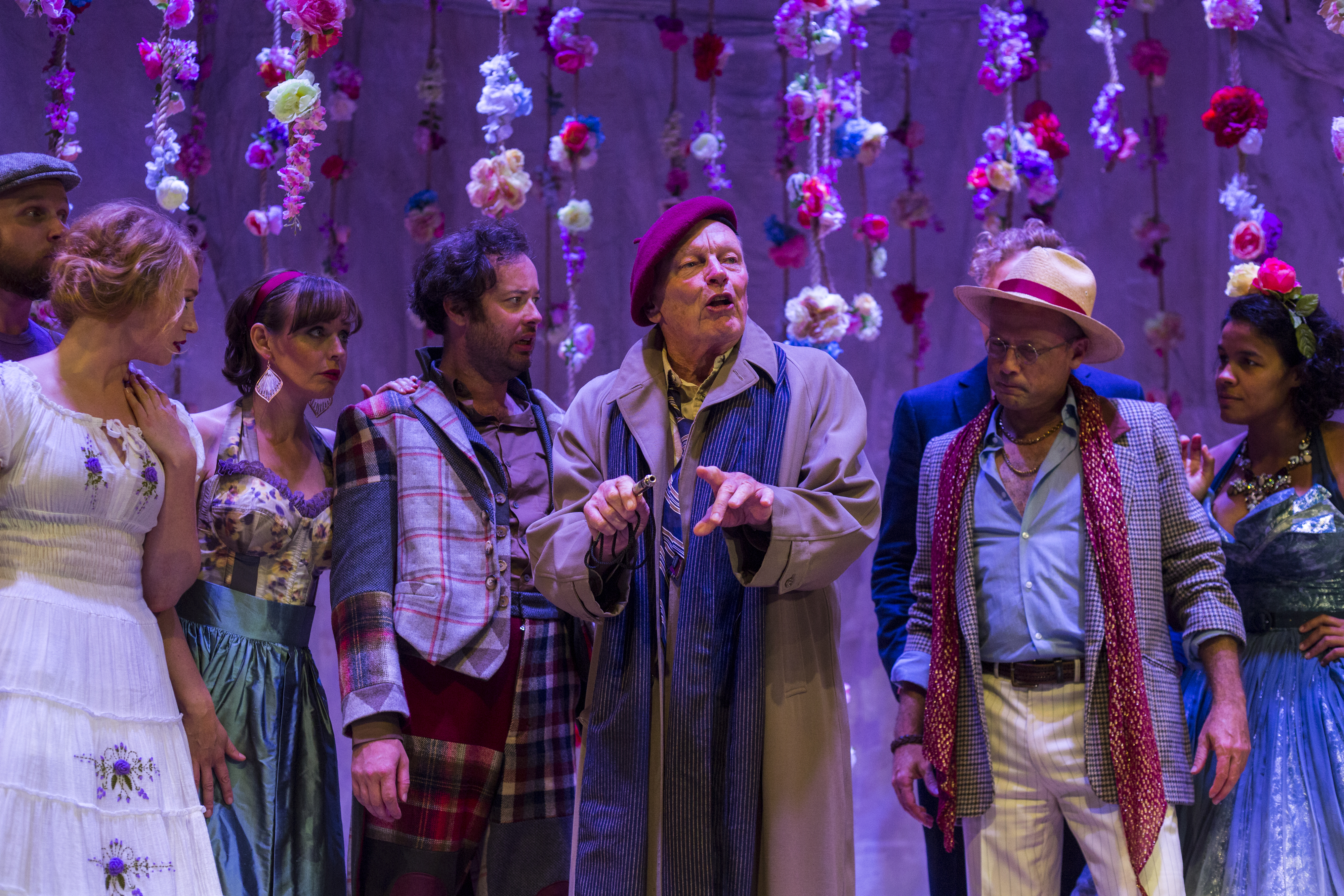
Emily Askell, Gareth Davies, John Bell, Alan Dukes, Zahra Newman. Photo: Rush

Emily Askell, Abi Tucker, Gareth Davies, John Bell, Alan Dukes, Zahra Newman. Photo: Rush

2015 marks Bell Shakespeare’s 25th anniversary so it’s a shame that their first production of the year is a disappointment.

Set in the Forest of Arden, As You Like It is a delightful comedy that pokes gleeful fun at romantic love and supposedly idyllic rustic life. It is full of humour – but hardly any of it lands in this production directed by Peter Evans.

The laughs on opening night came mainly from various bits of stage business rather than the comedy in the play itself. Few of the touching or serious moments hit home either.

Michael Hankin’s set features paper flowers on hanging ropes backed by a canvas drape, along with a costume basket and a large ladder, which looks as if it has been left behind by the technical crew (a reference presumably to “all the world’s a stage”).

The staging doesn’t quite capture the romantic nature of the forest where people are changed and relationships healed, and Evans doesn’t manage to create any real sense of a world within it, or outside it. The production instead seems to be a mish-mash with no cohesive visual or performance style, and little unifying vision.

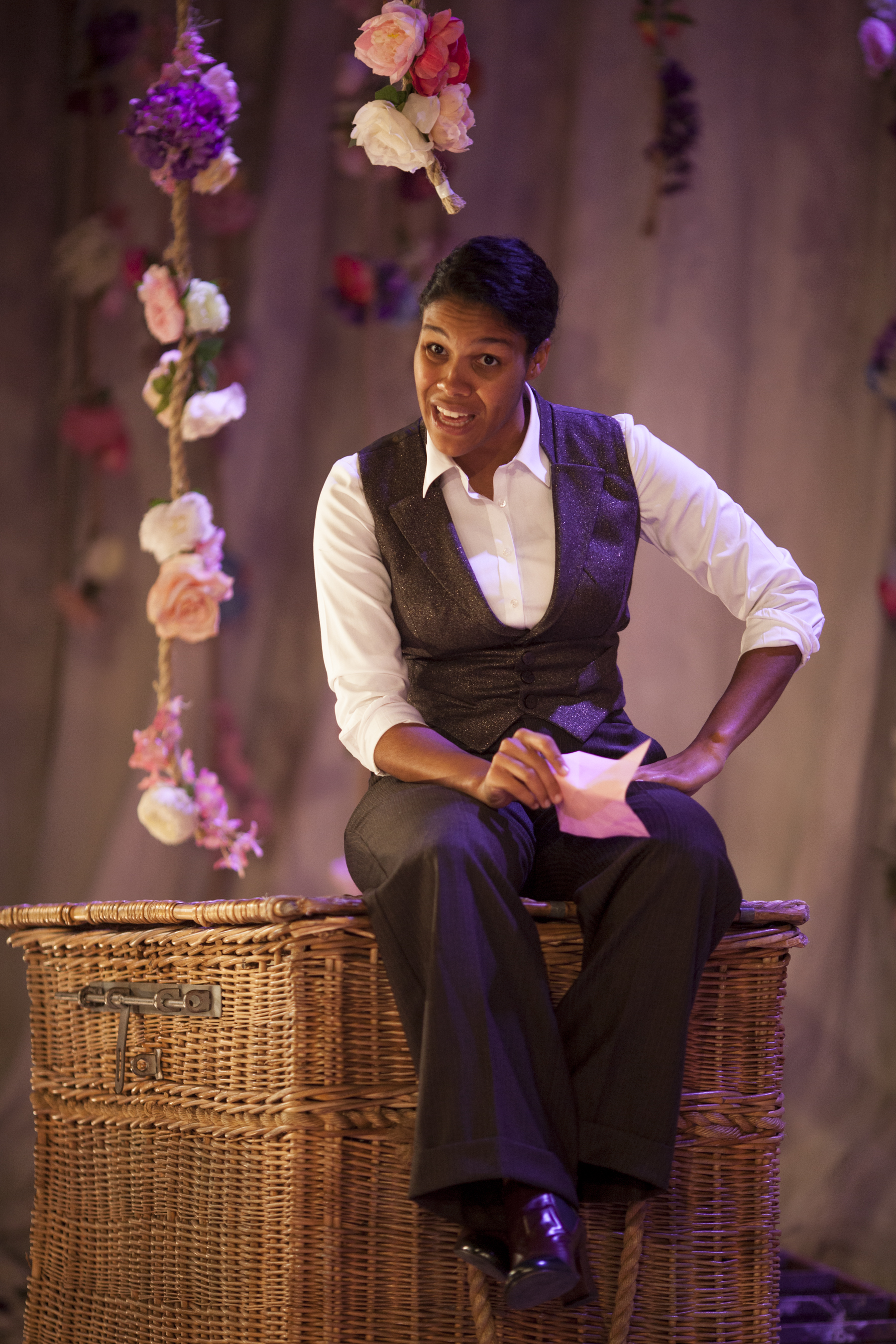
Kelly Ryall’s songs don’t feel as though they emerge organically from the production and Kate Aubrey-Dunn’s costumes, inspired by the 1930s, 50s and 60s, often sit oddly. Orlando appears on stage looking like an insurance salesman in neatly pressed trousers, shirt and brogues, while complaining about his brother keeping him “rustically at home” and having to eat “with his hinds”. Celia sports an elegant coat with fur trim and diamante buttons when she’s supposed to be disguised as a poor country maid. Worse, Rosalind’s disguise as the boy Ganymede consists of tight pants and fitted waistcoat, which actually emphasise her feminine curves.

Rosalind is one of Shakespeare’s great female characters: strong, clever, witty and resourceful. Banished from her uncle’s court, she comes up with a plan to flee to the forest disguised as the young man Ganymede with her cousin Celia pretending to be Ganymede’s sister. She then hatches a scheme to have Orlando (who has fallen for her, and who has also had to flee to the forest) use Ganymede as a way to practice wooing Rosalind.

Zahra Newman in Ganymede disguise. Photo: Rush

Zahra Newman in Ganymede disguise. Photo: Rush

Evans’ direction, however, robs the role of nuance and playfulness. Zahra Newman gives us no discernible difference between her Rosalind and Ganymede. All the gender-bending layers and much of the fun are therefore lost in the scenes between Orlando and Ganymede, when Orlando finds himself attracted to the youth.

In Shakespeare’s day, with the all-male casts, the exploration of sexual ambiguity would have been further compounded by having a boy play a girl disguised as a boy. We get none of that here.

Aside from that, Newman handles the language well and after a slightly tentative start is a lively presence.

Charlie Garber looks awkward as Orlando, giving a performance full of the jittery, emotionally detached, comic mannerisms we have seen from him so often before and misses Orlando’s honourable, romantic, dashing and tender sides. Scenes such as Orlando comforting his exhausted, elderly manservant Adam as he goes off to find him food aren’t moving, as they usually are. And there is little chemistry between Garber and Newman.

Evans has chosen not to portray the rustics as country bumpkins. But the decision to have them speak pretty much like the courtiers, without any kind of rural accent, diminishes the divide between the two worlds, and again much of the comedy is lost despite the cast’s best efforts.

As the melancholy Jaques, John Bell delivers a fresh and poignant “Seven Ages of Man” speech while, in one of the standout performances, Kelly Paterniti’s effervescent Celia has welcome heart and depth. Tony Taylor brings a droll charm to the role of Adam and Dorje Swallow impresses as Oliver.

Evans has clearly tried to avoid the tried-and-true tropes of this popular and regularly staged play but in putting them to one side, much of what makes it so delightfully entertaining has been lost.

As You Like It runs at the Playhouse, Sydney Opera House until March 28 then tours to the Canberra Theatre Centre, April 7 – 18 and Arts Centre Melbourne, April 23 – May 10

A version of this review ran in the Sunday Telegraph on March 1


Kill the Messenger

Belvoir St Theatre, February 19

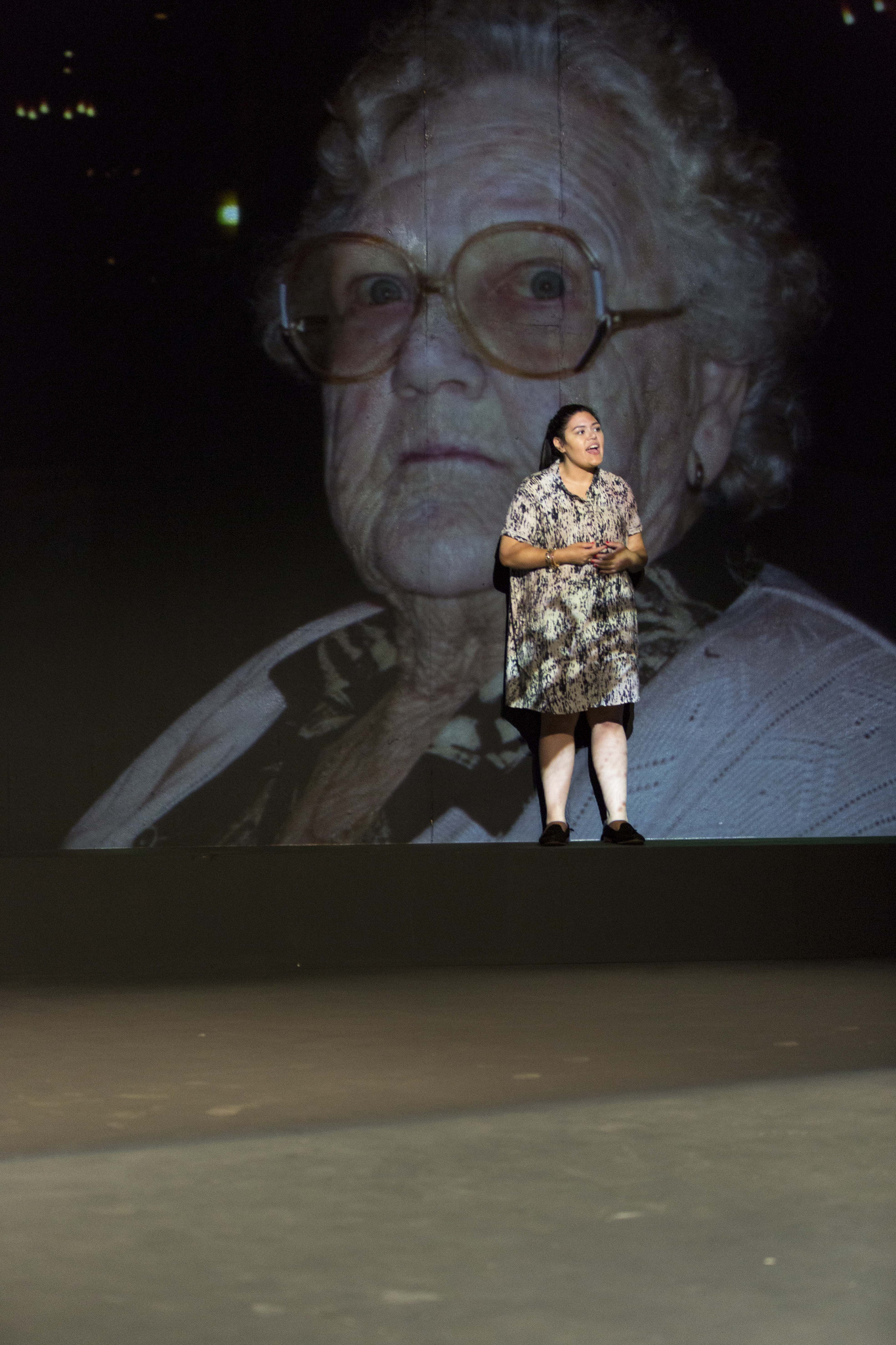
Nakkiah Lui in front of a photograph of her nana Joan. Photo: Brett Boardman

Nakkiah Lui in front of a photograph of her nana Joan. Photo: Brett Boardman

In Kill the Messenger, Australian playwright Nakkiah Lui tells two troubling stories about people dying before their time: victims of what she calls “institutionalised racism”.

The first, she heard about from her mother who is a nurse. Paul, an Aboriginal man with a drug addiction, was turned away from a hospital emergency ward. They thought he was pretending to be in agony just because he wanted drugs. In fact, he had undiagnosed stomach cancer and hanged himself later that night in a park.

The other is about her beloved nana Joan, who died after falling through the floor of her rotting, termite-infested home, despite Lui and her mother reporting the problem to the Department of Housing everyday for a year. Because it was public housing for Aboriginal people, the complaint kept being put to the bottom of the pile and nothing was done.

This kind of invisibility is all-too-common, suggests Lui, when you are black and living in a predominantly white society.

Lui, who is a Gamillaroi and Torres Strait Islander woman, includes herself as a character in the play. While she hadn’t initially intended to, she plays herself in the production as well, having had to audition for the role. The on-stage Nakkiah interacts in scenes with the other characters and talks directly to the audience at times about writing the play.

Directed by Anthea Williams on a starkly minimal set by Ralph Myers (a square of light on the stage, a couple of props, some projections), Kill the Messenger is unadorned storytelling at its most powerful: raw, passionate, angry, urgent, real and full of sadness.

Lasarus Ratuere as Paul. Photo: Brett Boardman

Lasarus Ratuere as Paul. Photo: Brett Boardman

The play slides between documentary and the imaginary as Lui tells her “tale of black oppression”. It’s a politically charged piece, yet she tells it with humour too. And while she makes no bones about the constant injustices faced by her people, she also allows the harried, overworked emergency nurse who sent Paul home a voice. She doesn’t condone what he did or the system that he works within, but she lets him explain how it happened.

We also meet Paul’s sister Harley, who tries so hard to help Paul get off drugs, and Nakkiah’s boyfriend with whom she makes love (triggering a lovely quip about how she had imagined Miranda Tapsell would be playing her) and fights.

There are strong performances from the tight ensemble cast: Lasarus Ratuere as Paul, Katie Beckett as his sister, Matthew Backer as the nurse and Sam O’Sullivan as Lui’s boyfriend. Lui herself is a strong, warm, fierce presence and drives the production.

At one point, pondering her nana’s death, Lui asks a series of ‘what ifs?’ going all the way back to “what if the Brits never came and Cook and just fucked off and people weren’t dispossessed and we never needed the Housing for Aboriginals….?’” But she knows there are no answers to that; all she can do is tell her story and hope we listen. To hear it from her own lips makes it especially powerful, while the projected photographs of herself with her nana as a young girl, and of her nana in hospital after the fall, are deeply affecting.

Lui showed great promise with her first play This Heaven, staged in Belvoir’s Downstairs Theatre in 2013. She has also been a writer and actor for the ABC’s Black Comedy and a writer on Blak Cabaret seen recently at the 2015 Sydney Festival.

Kill the Messenger (with dramaturgy by Jada Alberts) confirms what a talented, passionate, astute writer she is. The play is a powerful plea for us to take note and do something to stop this kind of casual injustice happening.

Kill the Messenger runs at Belvoir St Theatre until March 8

A version of this review ran in the Sunday Telegraph on February 22