Storm Boy: review

Wharf 1, August 18

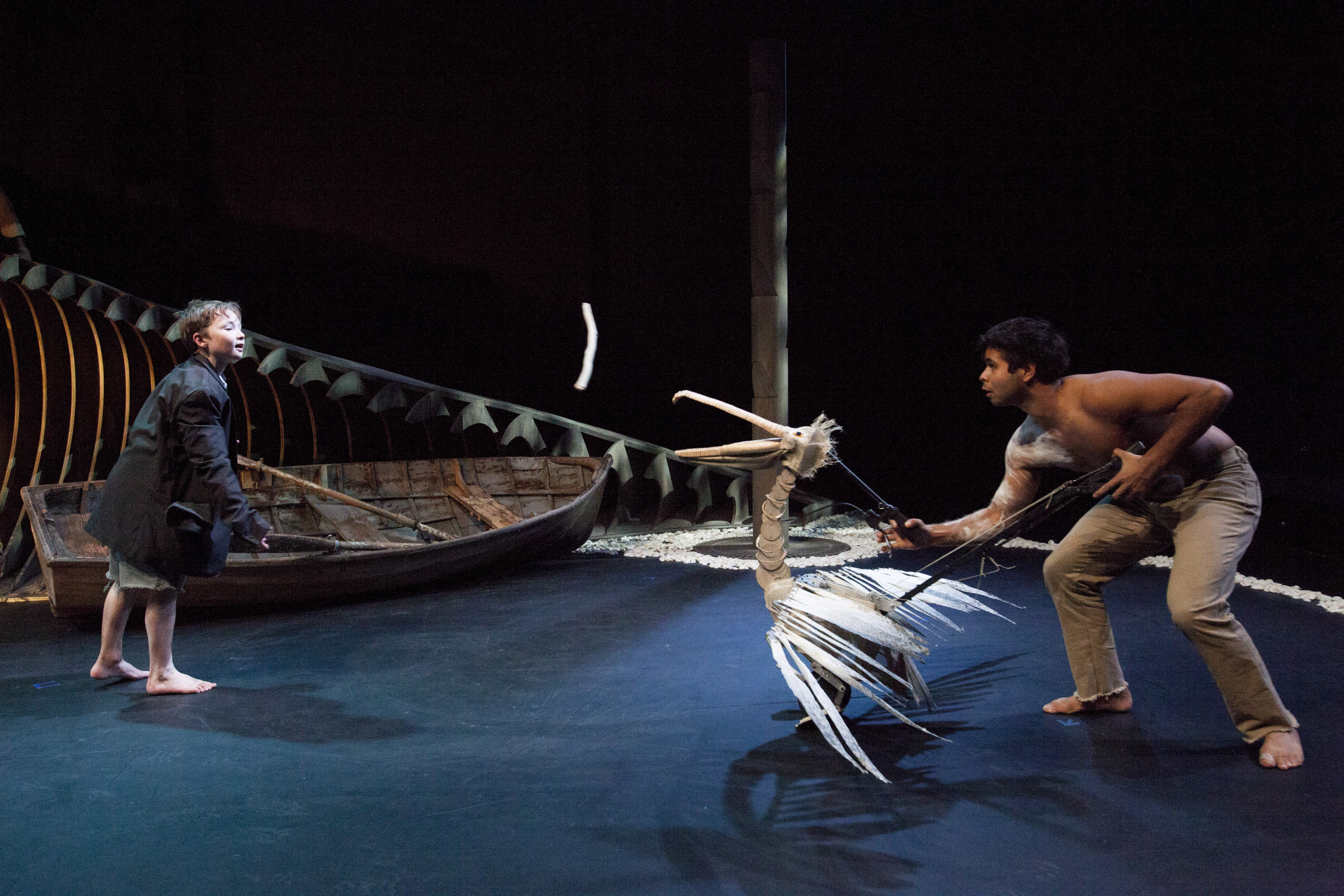
Rory Potter and Michael Smith. Photo: Brett Boardman

Rory Potter and Michael Smith. Photo: Brett Boardman

Colin Thiele’s much-loved 1963 children’s novel Storm Boy is a contemporary classic, its profile enhanced by the 1976 film. Now comes a beautiful stage adaptation by Sydney Theatre Company and Perth’s Barking Gecko Theatre Company.

Adapted by Tom Holloway and directed by John Sheedy, there is a lovely simplicity to every aspect of the production that suits the story.

Bereft widower Hideaway Tom has moved with his son to an isolated beach shack in the Coorong region of South Australia where they are living a simple life as fishermen.There, the boy befriends a local Aboriginal man named Fingerbone Bill who teaches him about the connection of all living things and the cycle of life. When they discover three motherless pelican chicks, Storm Boy raises them and forms a close bond with one he calls Mr Percival, only for hunters to eventually kill him too.

Michael Scott-Mitchell’s poetic set features a large, curving, wooden skeletal frame that suggests both a beached whale and a sand dune, with a walkway across the top of it and a door set into it for the shack. On the stage in front, is a rowing boat and fishing gear.

Kingsley Reeve’s sound design instantly transports you to beach with the sounds of rolling waves and wind, while plaintive piano music adds to the feel of melancholy.

The storm scene, in which Storm Boy and Mr Percival help save several sailors, is excitingly staged with Damien Cooper’s lighting a key element in evoking the drama.

The pelicans meanwhile are portrayed by a series of wonderful puppets designed by Peter Wilson and created by Annie Forbes and Tim Denton that exude personality. Some of them dart around on wheeled feet while others fly, operated by Shaka Cook and Michael Smith who move with the earthy physicality of Aboriginal dancers. At other times, Cook and Smith simply watch, embodying local Indigenous spirits.

As Storm Boy (a role he shares with Joshua Challenor), Rory Potter proves once again to be a natural on stage. Peter O’Brien convincingly conveys Hideaway Tom’s numbing grief and gradual thawing, while Trevor Jamieson is endearing as the wise, joke-cracking Fingerbone Bill.

The production doesn’t shy away from the themes of grief and death, but nor does it overplay them and become schmaltzy. Instead it has a gentle, melancholic tone tempered with humour. The pelicans biting Hideaway Tom’s bum had children around me laughing delightedly, before shedding tears at Mr Percival’s death.

Storm Boy plays at Wharf 1 until September 8

An edited version of this review ran in the Sunday Telegraph on August 25

Les Illuminations

Rafael Bonachela, Katie Noonan and Sydney Symphony Orchestra violinist Emma Jezek discuss their new collaborative project Les Illuminations


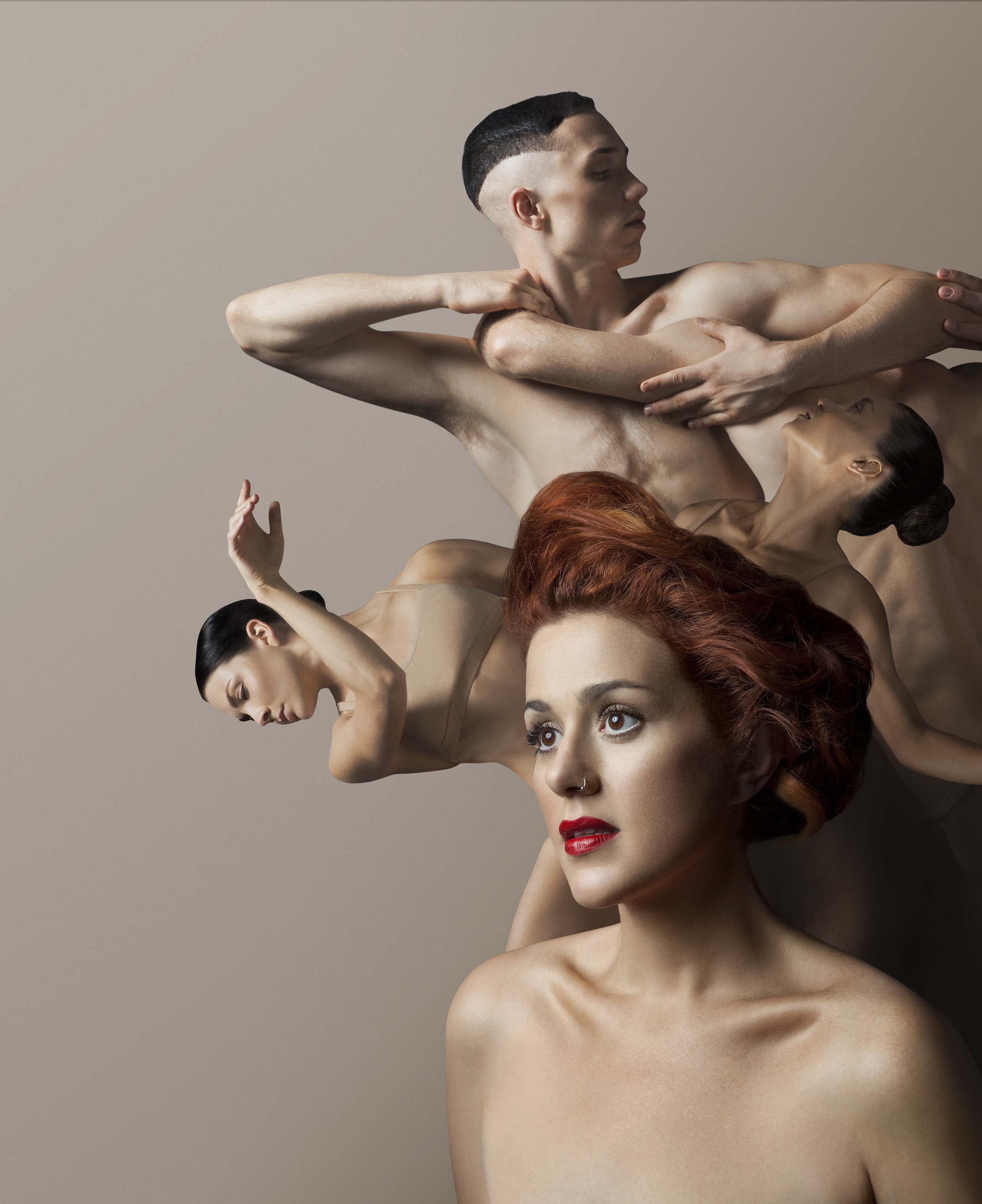
Katie Noonan with SDC dancers Jessica Thompson and Thomas Bradley. Photo: Ellis Parrinder

Katie Noonan with SDC dancers Jessica Thompson, Charmene Yap and Thomas Bradley. Photo: Ellis Parrinder

While performing with Sydney Dance Company on their 2011 production LANDforms, Katie Noonan asked artistic director Rafael Bonachela if he knew Benjamin Britten’s song cycle Les Illuminations.

“She said she’d sung some of it and would love to sing all of it one day,” recalls Bonachela.

Bonachela – who had previously choreographed a work for London’s Ballet Rambert to another Britten song cycle, Serenade for Tenor, Horn and Strings – had a listen and loved it, but didn’t think too much more about it.

“Then, later, Katie reminded me, ‘do you realise that 2013 is the centenary of the birth of Britten so it would be a beautiful thing to do,’” he says. “And that’s how it happened. It was her suggestion.”

Bonachela talked to the Sydney Opera House and the project was earmarked for the Spring Dance Festival. The SOH subsequently canned Spring Dance but Les Illuminations survived.

And so, in what promises to be a sexy collaboration, eight dancers from Sydney Dance Company are joining forces with Noonan and 16 string players from the Sydney Symphony Orchestra to perform a 45-minute work choreographed by Bonachela to two of Britten’s compositions: Les Illuminations and his Simple Symphony.

They will perform on a T-shaped stage in the intimate space of the Sydney Opera House Studio with Noonan and the musicians along the top and the dancers on a catwalk jutting into the audience.

“Be ready for some sweat!” laughs Bonachela as he and Noonan joke about needing plastic covers for the audience similar to those used for the water-spraying Bath Boy in La Soireé.

Les Illuminations was first performed in 1940 when Britten was 27. In it he sets nine poems to music, chosen from a suite of 42 by French poet Arthur Rimbaud written between 1872 and 1873 when he was aged 19 to 20.

Rimbaud was having a torrid affair with another poet Paul Verlaine at the time with whom he was leading a wild life fuelled by absinthe and hashish.

Britten’s cycle – which Bonachela describes as “dark and erotic” – was originally written for a soprano but is also performed by tenors – most famously by Britten’s own partner Peter Pears.

Simple Symphony is a simpler, more playful piece, composed when Britten was 20 using parts of a piano score he wrote as a teenager.

“It’s a really innocent, lovely little piece that is often played by school students,” says Emma Jezek, SSO’s Assistant Principal Second Violin. “Les Illuminations is completely the opposite. (The poems) are wild when you read the text and the music is absolutely beautiful.”

Though Les Illuminations is challenging musically for the performers, Jezek, Bonachela and Noonan agree that it’s not difficult for audiences.

“I think it’s one of his most accessible works. They both are,” says Noonan. “We wanted to make it very inclusive so that someone who likes my music but who has never seen an orchestra or Sydney Dance Company will feel welcome.”

Noonan has loved Britten for as long as she can remember. “Mum (singer Maggie Noonan) sang a lot of Britten,” she says.

“I’m pretty sure that if I wasn’t in utero, I was a very young children when she did (Britten’s operas) Albert Herring and Peter Grimes. I sang in the chorus of the War Requiem when I was eight or nine, which is an incredible piece.

“I did some excerpts from Les Illuminations with the Australian Chamber Orchestra five years ago and I thought, ‘these are so beautiful,’” she says. “One of the poems has words along the lines of ‘I love you so much I have stretched garlands from window to window; golden chain from star to star, and I dance. I thought it’s made for it (a collaboration with SDC).”

“There are quite a lot of dance and movement references in the poems,” agrees Bonachela.

Bonachela – who celebrates five years as Artistic Director of SDC in November – is basing his choreography around duets, using two different sets of four dancers for the two compositions. He has enjoyed creating something intimate, after choreographing a series of large-scale works for the company.

“The limitation of the space have also been an exciting challenge,” he says. “I remember asking Anne Dunn, who was our Executive Director, ‘which is the front (of the stage)?’ and she said, ‘there’s no front.’ I said, ‘there must be a front’ and she said, ‘no, everywhere is the front,’” says Bonachela laughing. “It’s made me reconsider my future choreography, even when there is a front.”

Bonachela, Jezek and Noonan all agree that they find collaborations like this incredibly exciting.

“It’s fantastic doing crossover projects. It’s so exciting,” says Jezek. “They bring a different perspective to the work I suppose. I haven’t worked with Katie for a number of years but she has done projects with us before and it’s always fantastic. She’s so innovative and talented and incredibly fun to work with.”

“Collaboration is my main passion really,” says Noonan. “I’ve always loved working with people from different walks of life. I guess the way I approach my music is all about connectivity and connection. The genre doesn’t matter – classical, opera, jazz – as long as it comes from a good place and a place of integrity.

“But I love working with artists who are equally passionate in another vernacular. So I’ve worked with Bill Henson the photographer (and the contemporary circus group Circa) and with Raf in 2011 (on LANDforms), which was so beautiful. That is kind of my main passion now, moving forward: breaking down the boundaries between genres and different mediums.”

Bonachela is also thrilled at the chance to collaborate with Noonan and the SSO. “I could use some recorded music but the ultimate pleasure for me is to perform to live music, to give audiences that gift where there are 16 individual people making that sound, and Katie singing, and then these amazing bodies dancing. For me it cannot get any more ultimate.”

With a running time of just 45 minutes, there are two performances each night. Audiences who go to the earlier one can then hot foot it to the SOH’s Drama Theatre and catch a performance of ITMOI (in the mind of igor) – a celebration of Stravinsky by the wonderful British choreographer Akram Khan.

Les Illuminations plays at the Sydney Opera House Studio, this Wednesday to Saturday.

An edited version of this story ran in the Sunday Telegraph on August 25

Jerusalem: review

New Theatre, Newtown, August 22

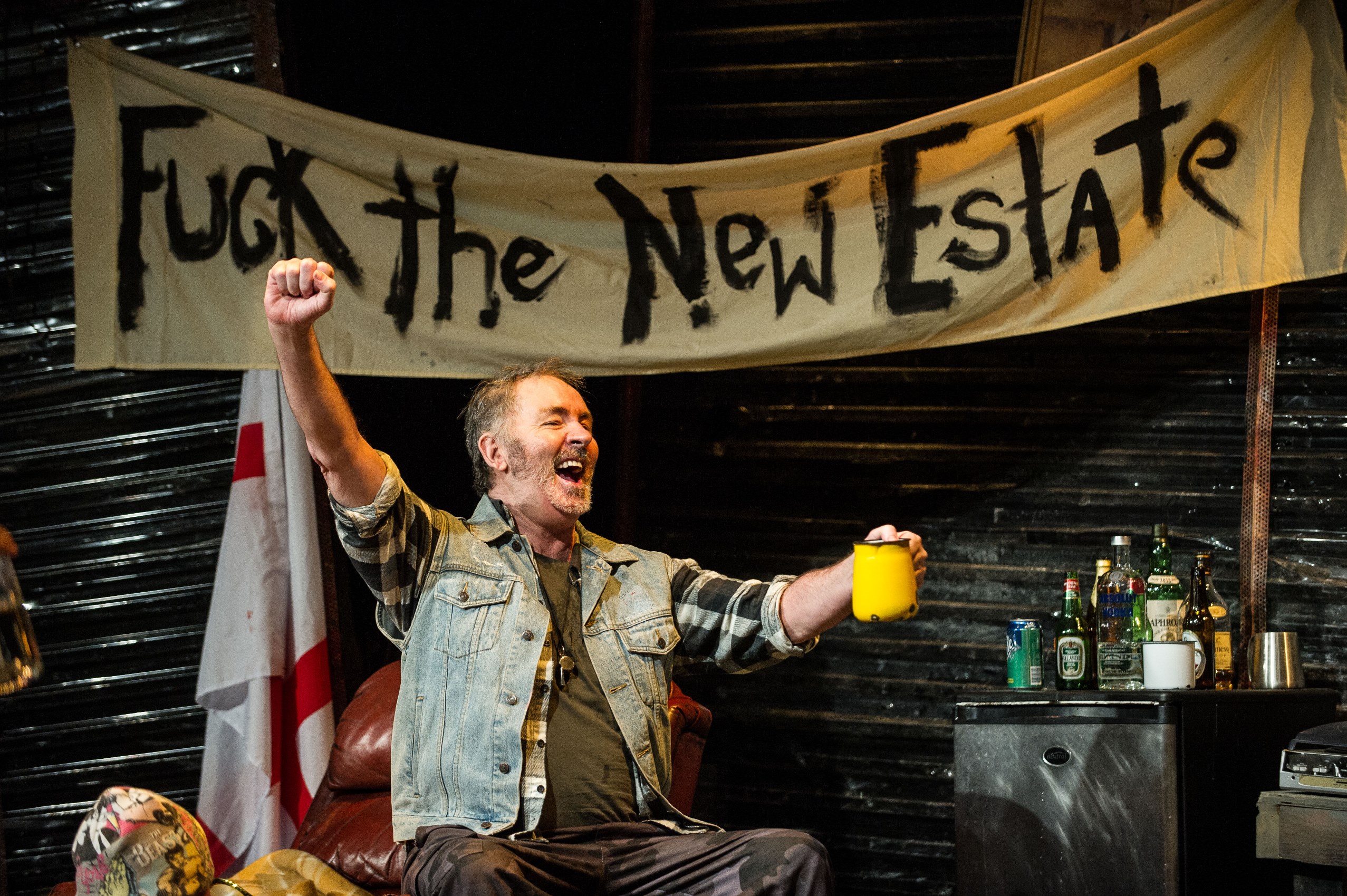
Nicholas Eadie in Jerusalem. Photo: Matthias Engesser

Nicholas Eadie in Jerusalem. Photo: Matthias Engesser

When Jez Butterworth’s ecstatically acclaimed play Jerusalem was about to close in London’s West End at the beginning of last year, people queued for up to 24 hours through the cold winter night to get tickets.

An instant hit when it opened at the Royal Court in 2009, Jerusalem is intrinsically English in both its idiom and themes – essentially the changing face of rural England as sterile, urban sprawl encroaches on its “green and pleasant land” ­ – so much so, that some wondered whether it would translate elsewhere.

But it did rip-roaring business on Broadway in 2011 where it won rave reviews and a Tony Award for its leading actor Mark Rylance to add to his Olivier – and it deserves to do the same here in this cracking production at the New Theatre directed by Helen Tonkin.

In managing to secure the rights, the New is presenting the Australian premiere – and what a gift it is to finally have the chance to see this wonderful play.

From the opening moments you know it is something quite special. Sweeping you up in its rowdy, booze-and-drug-fuelled embrace, it doesn’t set you back down again until its defiant but poignant ending.

Butterworth’s writing is exhilarating. Exuding a muscular musicality, hilariously funny, slacker dialogue rubs shoulders with fantastical stories that pulse with a sense of pagan mythology. Meanwhile the play teems with ideas about change, misfits, storytelling and small communities.

Set in Wiltshire, Johnny “Rooster” Byron is a gypsy who has lived for decades in a caravan in the woods on the outskirts of a village. Once renowned as a daredevil bike rider, his reputation these days revolves chiefly around being banned from every pub in the vicinity. But he is still a magnet for various young locals and hangers-on who gather around him for drunken parties and the drugs he deals.

The play takes place on St George’s Day, which coincides with the local country fair at which the May Queen will be crowned to celebrate the start of spring.

It opens with a girl in fairy wings fashioned from twigs, who appears on stage and starts to sing Hubert Parry’s famous English hymn Jerusalem, which sets Blake’s poem to music.

As she reaches the words “among these dark Satanic Mills”, the sounds of a wild, drunken party erupt offstage. Then as day dawns, two council officials arrive with a notice to evict Rooster from his camp following complaints from a nearby housing estate.

Once they’ve left, a bleary-eyed Rooster emerges followed by various hung-over youngsters and the middle-aged Ginger, who is infuriated that no-one told him about last night’s party.

Rooster is a magnificent, richly conceived character. On the one hand, he’s a drunken lay-about, drug dealer and irresponsible father. Portrayed by Butterworth as a latter-day lord of misrule and Falstaffian figure, he starts the day in typically English fashion by pouring milk into the bottom of a mug – but then instead of tea adds vodka and speed.

And yet he has an undeniable charisma, grandeur and defiant dignity about him, particularly when he is spinning his fantastical, spellbinding stories that can’t be true and yet somehow can’t be totally dismissed: stories about his immaculate conception via a ricocheting bullet, for example, or the Druid giant he met on the A14 who told him he built Stonehenge.

As Rooster holds court over his unruly gang, it’s like a subverted version of the Forest of Arden in As You Like It – just one of many Shakespearean resonances in the play, along with echoes of mythologies like Robin Hood and George and the Dragon.

Butterworth creates a wonderfully vivid bunch of characters around Rooster. There’s Ginger, a somewhat pathetic loser who insists he’s a DJ but is actually an unemployed plasterer who rarely spins a disc; Wesley, the local publican and a reluctant Morris dancer who arrives clad in full regalia to the merriment of all; Davey, who works at the abattoir and has never left Wiltshire, nor has any desire to do so (“I leave Wiltshire, my ears pop”); Lee, who is booked to fly to Australia the next day and so might just make his escape; the whimsical professor dressed here like a hunting and fishing country sort; and three teenage girls, including 15-year old Phaedre who has been missing for a week.

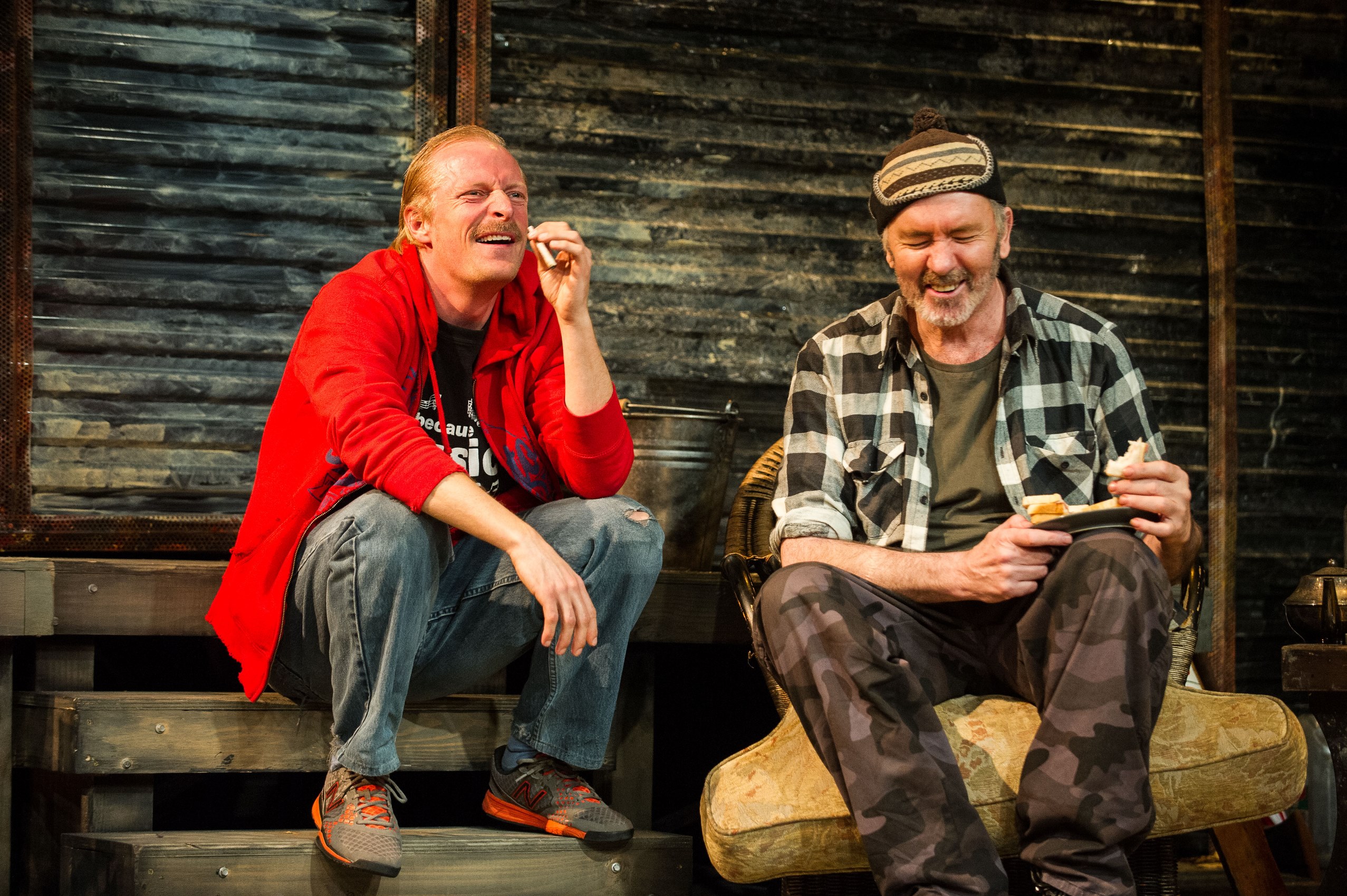
Backed by walls of corrugated plastic, Tom Bannerman’s set with its rancid carpet, battered chairs, smashed-up television, umpteen bottles and other detritus, instantly evokes the feel and stale smell of the morning after the night before in Rooster’s camp. Jennifer Ham’s costumes, Blake Garner’s lighting and Alistair Wallace’s sound complete the picture.

In this grungy space, Tonkin’s production unfolds with an anarchic energy that keeps you riveted for the entire two-hours-and-forty-minute running time (including two intervals).

Jeremy Waters and Nicholas Eadie. Photo: Matthias Engesser

Jeremy Waters and Nicholas Eadie. Photo: Matthias Engesser

Nicholas Eadie is in commanding form as Rooster, looking decidedly worse for wear with paunchy girth and grizzled grey hair but still boastful, strutting and defiant, while knowing all too well that his time is up. You understand why the people living nearby want him gone, and yet with his beguiling tales, he also manages to make you feel that he belongs there and that his uprooting is a sad sign of philistine times.

Jeremy Waters is outstanding as the weasly Ginger who longs for acceptance, while the rest of the cast (Alex Norton, Pete Nettell, Brynn Loosemore, Peter McAllum, Emma Harris, Anna Chase, Luke Carson, Tara Clark, Claire Wall, Lucy McNabb and Todd Backhouse) turn in solid, authentic performances.

Jerusalem is bold, raucous and darkly funny, erupting at one point into violence. But it is also elegiac with moments of rough poetry and surprising tenderness, notably when Rooster’s son appears.

For a non-professional, independent company like the New Theatre to tackle such a big play is hugely ambitious – but they pull it off and deserve full houses.

Jerusalem runs at the New Theatre until September 14

Rosencrantz and Guildenstern are Dead: review

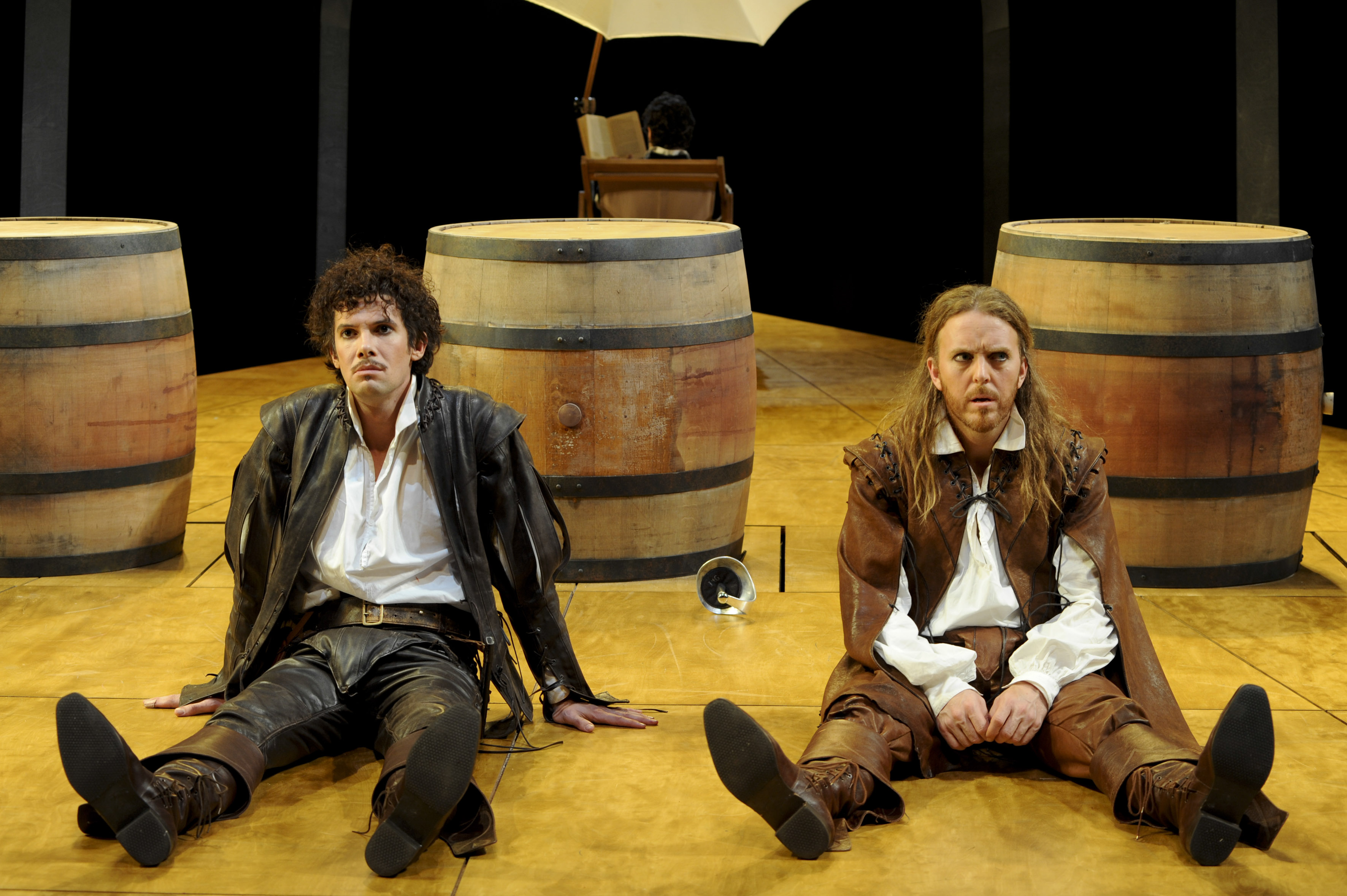
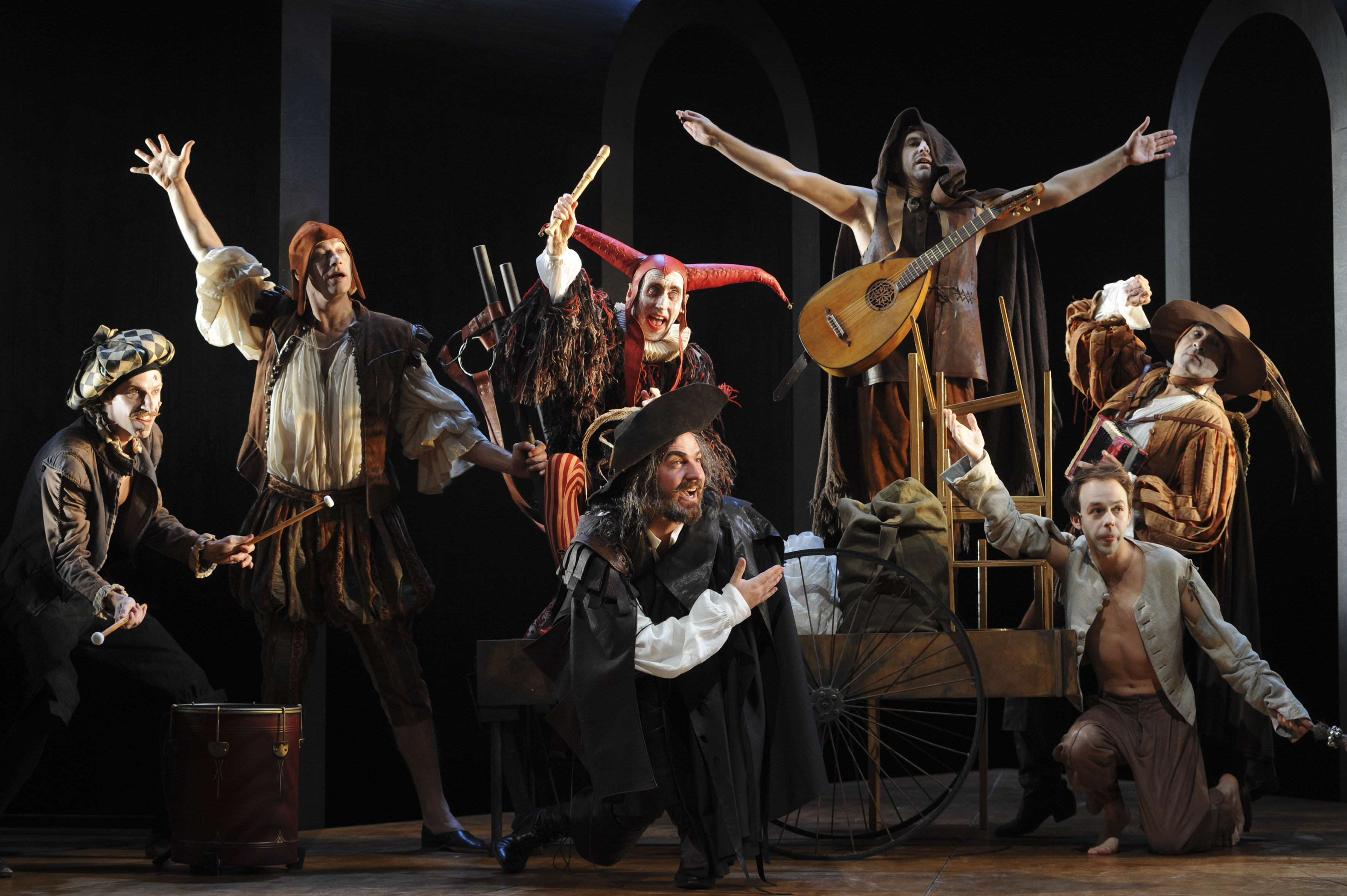
Toby Schmitz and Tim Minchin. Photo: Heidrun Lohr

Toby Schmitz and Tim Minchin. Photo: Heidrun Lohr

Watching Rosencrantz and Guildenstern are Dead you can’t help marvelling yet again that Tom Stoppard was still in his 20s when he wrote it.

The absurdist play, which made his name when it premiered at the 1966 Edinburgh Fringe, is not only an existential riff on Shakespeare’s Hamlet but also draws on Beckett’s Waiting for Godot.

As we’ve come to expect from Stoppard, it is full of dazzling verbal and intellectual gymnastics, as well as meta-theatrical musings. When Rosencrantz and Guildenstern watch their death predicted by the players it becomes a play within a play within a play within a play. I think.

With all the double entendres, puns, witticisms, word games and allusions it is a dense, cerebral piece and pays to listen closely. And yet, when it’s performed well – as it is here – it is as funny and poignant as it is clever.

In this smashing Sydney Theatre Company production, directed by Simon Phillips, Tim Minchin and Toby Schmitz play the hapless Rosencrantz and Guildenstern – two minor characters from Shakespeare’s Hamlet who find themselves centrestage trapped in a world they don’t understand, with no knowledge about where they came from or what they are there to do beyond what they’re told.

As they wait – like Godot’s Vladimir and Estragon – for something to happen, the rest of Shakespeare’s play unfolds in the wings, spilling occasionally onto stage around them as events beyond their control hurtle them towards their death.

Minchin and Schmitz make a charismatic double act. As the more authoritative, philosophical Guildenstern, who has a keener awareness of their existential plight, Schmitz has the lion’s share of the words and delivers them superbly with an increasingly desperate bravado. I’ve rarely seen him in better form. He really does disappear into the character – and not just because his trademark floppy hair is hidden by a curly wig.

Minchin’s Rosencrantz is more of an innocent: a gentle, naive, clown-like soul. Cheerfully oblivious at first to their plight, he gradually becomes increasingly exasperated and then anxious. Together they mine the comedy brilliantly but are also touchingly tragic figures as they face their fate.

Angus King, Berynn Schwerdt, Paul Cutlan, Ewen Leslie, Aaron Tsindos, George Kemp and Nicholas Papademetriou. Photo: Heidrun Lohr

Angus King, Berynn Schwerdt, Paul Cutlan, Ewen Leslie, Aaron Tsindos, George Kemp and Nicholas Papademetriou. Photo: Heidrun Lohr

They are surrounded by an exceptionally fine cast. Ewen Leslie is in swashbuckling form as The Player – the actor-manger of a rag-tag company who still loves a grand, theatrical flourish but is well aware that life is a charade.

As the players, George Kemp, Angus King, Nicholas Papademetriou, Berynn Schwerdt, Aaron Tsindos and Paul Cutlan create a wonderfully eccentric, tatty and downtrodden group.  Kemp, in particular, as young Alfred, who has to play all the female roles, does a lovely, very funny job of capturing their abject situation.

The fact that actors of the calibre of John Gaden, Heather Mitchell and Christopher Stollery were happy to play the small supporting roles of Polonius, Gertrude and Claudius says a great deal about the esteem in which they hold Minchin, Schmitz and Phillips – and the play itself.

Together with Adele Querol and Tim Walter as Hamlet, they play the court scenes from Hamlet with an outlandish theatricality, creating hilarious caricatures that emphasise the strangeness of the world in which Rosencrantz and Guildenstern find themselves.

Gabriela Tylesova’s design is a triumph. A steeply raked stage is flanked by sharply converging black walls that lead to a vanishing point in the void, while three arched tunnels down each side play tricks with perception under Nick Schlieper’s lighting. Hanging overhead is a weird funnel spouting a dead tree (a nod to Godot) that becomes a candelabra.

Into this mysterious, foreboding space, Tylesova introduces sudden explosions of colour with her whacky Elizabethan costumes for Hamlet’s court.

Phillips collaborated with Tylesova on the dazzlingly staged Australian production of Love Never Dies – and this production confirms that theirs is a very fruitful creative partnership.

All in all this Rosencrantz and Guildenstern is a stunning production, which, not surprisingly, is all but sold out. However, you can still try for one of STC’s Suncorp $20 tickets – on sale at 9am each Tuesday morning for the following week, either in person at the box office or on 9250 1929.

Rosencrantz and Guildenstern are Dead plays at Sydney Theatre until September 14

An edited version of this review ran in the Sunday Telegraph on August 18

Independent Music Theatre names venue after Nancye Hayes

As we reveal in today’s Sunday Telegraph, Independent Music Theatre is honouring Australian musical theatre legend Nancye Hayes by renaming the Darlinghurst Theatre after her.

When Hayes first got a call from David Campbell to discuss the idea she was so surprised she didn’t quite believe him.

“It’s something I’m still coming to terms with,” says Hayes. “When David rang me I thought, ‘this call isn’t happening.’ It’s not something you think will happen to you.”

Campbell is one of six producers and independent companies specialising in small-scale musicals and cabaret who have formed a consortium called Independent Music Theatre (IMT).

When the Darlinghurst Theatre Company leaves its Potts Point venue later this year to move to a new home in East Sydney, IMT will take over the theatre and turn it into a home for music theatre and cabaret.

IMT is renaming the 115-seat venue the Hayes Theatre as a tribute to one of our most loved leading ladies whose career in Australian musicals spans 50 years.

When Hayes first started performing in musicals, the leading roles automatically went to imported performers. Together with Jill Perryman and Toni Lamond, Hayes helped change this when at the age of 24 she played Charity in the 1967 J.C. Williamson production of Sweet Charity – one of the first Australian musical theatre performers to receive star billing.

The fact that she lives just around the corner from the Darlinghurst Theatre was the clincher.

“Nancye is a local so she’s the perfect fit,” says Campbell. “She’s still starring in shows like Annie and she also directs and choreographs. I think in this country we often leave it too late to honour people. We should cherish our stars and honour them while they are still living.”

Hayes says she feels “very humble, very proud and very honoured” and believes that an initiative like IMT is “long overdue. There has never been enough (small-scale musicals) for people,” she says.

When it comes to musical theatre, Sydneysiders are used to seeing a handful of big commercial shows each year but not a great deal else, besides amateur productions. Small-scale musicals are produced, but sporadically and at venues all over town.

Presenting them at one, dedicated theatre will shine a light on the work and help “develop audiences and develop the art”, says Campbell. “It will make musicals more accessible. There will be a place where you know you are going to be able to see a musical show at an affordable price.

“It’s like always going to blockbusters and never seeing an arthouse film. If you just go and see all the X-Men films and never see a Woody Allen film then you are not getting the full cinematic experience. We are trying to provide a similar thing (to arthouse films).”

Talented young performer Sheridan Harbridge, who has performed in musicals like My Fair Lady and An Officer and a Gentleman but also writes her own cabaret shows, is excited by the new venue. “Having this space is going to push a lot of artists to experiment a lot more, I think,” she says.

IMT will start producing shows at the Hayes Theatre early next year.

“You won’t come to the Hayes Theatre for great sets, it’s about the shows and the performers,” says Campbell. “But you’ll see productions that are so visceral and exciting you’ll think, ‘why do I need a big set for a show like this?’

“Things like this happen in London and New York all the time. There are places where they create new shows or stage revivals, which then move on (to bigger theatres). It’s important that Sydney has a place like this as well.”

An edited version of this story appeared in the Sunday Telegraph on August 18

Bloody Bloody Andrew Jackson: review

Formed in 2006, Squabbalogic is a nifty addition to Sydney’s musical theatre scene with its mission to present local premieres of the types of show we wouldn’t be seeing otherwise.

The fact that the company is one of the groups behind Independent Music Theatre, which is taking over the Darlinghurst Theatre and turning it into a home for music theatre and cabaret, is cause for celebration.

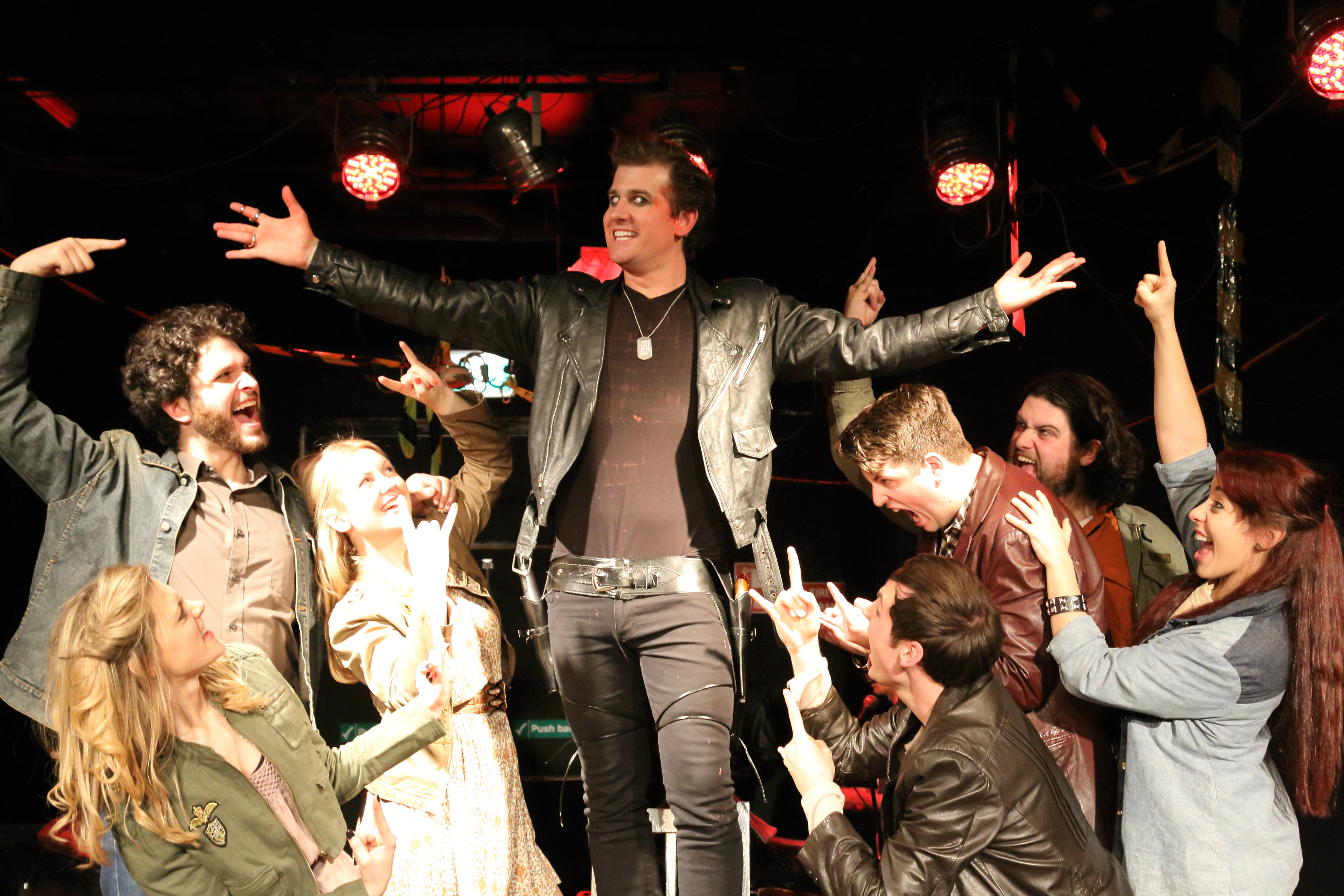
Peter Meredith (centre) and the cast of Bloody Bloody Andrew Jackson. Photo: Michael Francis

Peter Meredith (centre) and the cast of Bloody Bloody Andrew Jackson. Photo: Michael Francis

The ambitious little indie company is currently staging Bloody Bloody Andrew Jackson – a rollicking, raucous rock musical by Alex Timbers (book) and Michael Friedman (music and lyrics), which tells the tale of Andrew Jackson, the seventh President of the United States who governed for eight years from 1829.

Nicknamed Old Hickory for his aggressive, no-bullshit style, he was a divisive figure who drove the British and Spanish out of the US, forcibly relocated the Native American Indians (massacring those who refused), took on the banks and positioned himself as a man of the people, forming the Democratic Party.

In the musical – which had a short Broadway season in 2010/11 after moving from off-Broadway – Jackson is presented as a cocky emo rock star, with plenty of charisma but serious flaws. Pragmatic doesn’t begin to describe him. Was he America’s greatest president or an “American Hitler”? asks the musical. Cast your own vote.

Combining rock music, irreverent sketch comedy and political satire, the 90-minute show hurtles along poking fun at narrative storytelling and American conservatism as it puts the boot into ruthless politicking – though it starts to flag a little towards the end as it keeps circling similar terrain.

The music ranges from the catchy, rousing opening number “Populism, Yea, Yea!” to a dark take on “Ten Little Indians”.

Though the writers had the American culture and political climate in their sights, it feels surprisingly relevant to here, particularly the treatment of indigenous people (and suspicion of any outsiders) and the political pandering to polls and public opinion.

Craig Stewart’s appropriately raw, rough-and-ready production, staged in a suitably grungy space, fairly explodes onto stage given the pumped, anarchic energy of the young cast. On one side of the room, next to the auditorium seating, there is an area where the performers have set up camp, lounging around on tatty chairs when not on stage.

The space is festooned with barricade tape and fairy lights that hang from the ceiling along with the odd pair of frilly knickers (set design by Sean Minahan). Other than that the stage is pretty bare. At the back of it sit the smoking band led by musical director Mark Chamberlain.

In tight black jeans, rock god bling and dark eyeliner, Peter Meredith brings just the right charismatic, sexy swagger to the title role and has a strong rock voice. Among the rest of the cast, all of whom play various roles, Jay James-Moody (Squabbalogic’s founding artistic director) is a standout, his comic timing immaculate, while Max Newstead is also impressive.

Some of the singing is pretty patchy and there were sound problems on opening night with mics used inconsistently (or perhaps not working when they should have done). But you can’t fault the rocking conviction of the cast. Overall, it’s an exciting production and a great opportunity to see a relatively little known show. Given the impending Federal election it’s also a neat piece of programming.

Squabbalogic deserves the support of anyone interested in musicals and Bloody Bloody Andrew Jackson ­­– which should have particular appeal to a young audience – is well worth seeing.

Bloody Bloody Andrew Jackson plays at The Factory Floor, Factory Theatre until September 1

Brendan Cowell: interview

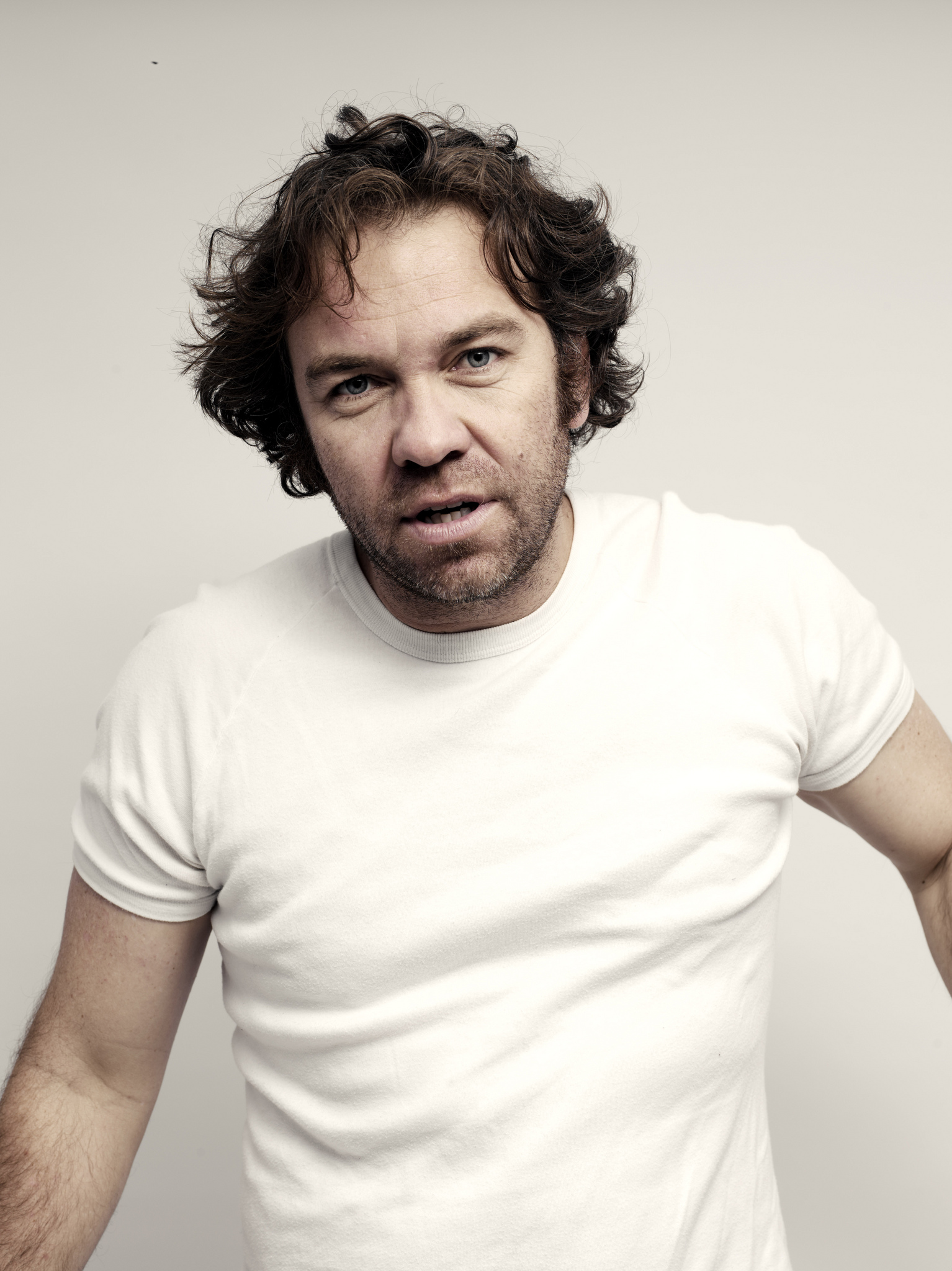
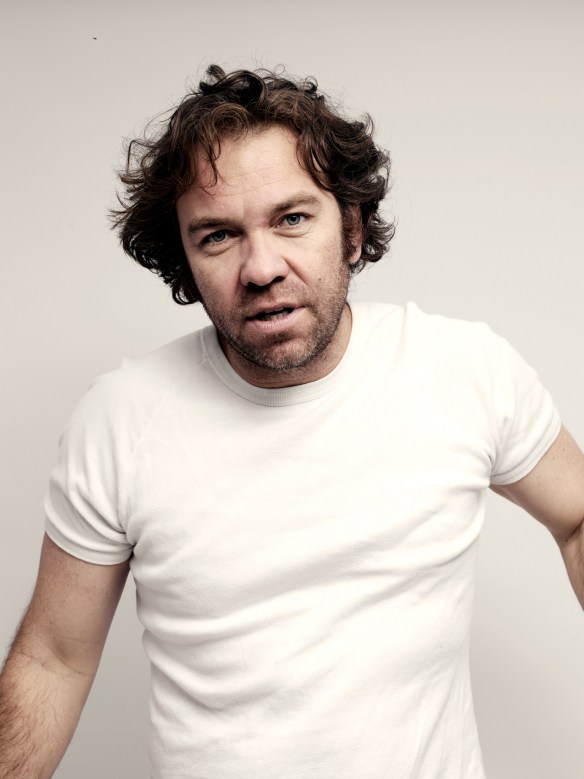
Brendan Cowell. Photo: Gary Heery

Brendan Cowell. Photo: Gary Heery

Brendan Cowell has spent much of this year living in London, where exciting opportunities are beginning to open up for him as a writer.

Cowell wrote two episodes of The Slap, the acclaimed ABC drama series based on Christos Tsiolkas’s novel, which was nominated for both a BAFTA and an Emmy Award.

“Being nominated for the BAFTA and the Emmy really helps me over there,” says Cowell. “I’ve walked into a lot of rooms, I’ve got a great agent and I can kind of go and see anyone in TV. That was definitely a great door-opener, writing for (The Slap).

“I’ve got a few balls in the air in London now, which is really exciting and that’s where I’m putting a lot of my attention,” adds Cowell, revealing that he is “in development on a show for Channel Four” – a network he says he has “always wanted to work with.”

In June, his 2001 play Happy New, about two brothers whose abusive mother kept them in a chicken coop, had a well-received season in the West End, which has also helped raise his profile in London.

Not surprisingly, Cowell will soon be returning to the UK. But he couldn’t resist coming back to Sydney to perform in Belvoir’s production of Miss Julie, newly adapted by Simon Stone from August Strindberg’s 1888 play and directed by Leticia Caceres.

Earlier this year, Cowell took over from Ewen Leslie in Stone’s award-winning adaptation of Henrik Ibsen’s The Wild Duck when it went to the Vienna and Holland Festivals – an experience he relished.

There has been much debate in recent months about the number of adaptations on Australian stages, with 28-year old auteur director Stone portrayed as the ‘face’ of adaptations.

Some worry that adaptations are being staged at the expense of original work and though the stats don’t bear this out – Alison Croggon analysed the data in an interesting article for ABC Arts Online at www.abc.net.au/arts/blog/Alison-Croggon/playwright-versus-director-130731/default.htm – there is still consternation among some playwrights at the prevalence of the practice.

Chatting during a lunch break after two weeks of rehearsal for Miss Julie, Cowell is generous with his time, prepared to have his say on a range of issues from the adaptations debate to the differences between Australian and British theatre, as well as discussing the various projects he has on the go as an actor, director and writer.

For his part, Cowell has no problem with Stone putting his own contemporary spin on classic plays like The Wild Duck, Chekhov’s The Cherry Orchard (at Melbourne Theatre Company until September 25) or Miss Julie.

“I think you have to,” he says. “If we were going to do the original it’s really hard to make it work as an actor. They all speak in these long speeches (and) the dreams and the metaphors are very obvious and grandiose. It would be hard to create the tension. And let’s think what class and gender mean now in Sydney. But (Stone) has been incredibly loyal to the structure and I think what Strindberg was really getting at. Strindberg was very angry at that time. Some could say he had deep-seated issues with women of power.

“In the last two weeks Leticia and the cast – because Simon has been in Melbourne doing The Cherry Orchard – have really mined that, especially in the second act. We have really gone into it to find out exactly what Strindberg was furious about and what he was trying to discuss and that’s been really enjoyable.”

Explaining their process, Cowell says that Stone provided a draft adaptation. “We’ve gone in and looked at the original and looked at his (version) and improvised and thrown in a lot of raw material. We’ve videoed it and he’s then come back with (a new version). He’s so clever. He’s managed to encompass everything we found but in his own way so it now has the one voice. So this funny little process is working. None of us have really worked like this but with every production you find the (right) process in the room.”

Later, he says: “we are basically developing a new Australian play as we go along.”

Miss Julie is a claustrophobic exploration of sex, gender, privilege and class. Cowell plays Jean, an ambitious servant who sleeps with his employer’s daughter and then encourages her to commit suicide to escape her predicament when she won’t flee with him and help him realise his dream of running a classy hotel.

In Strindberg’s original, Miss Julie is the daughter of a Swedish count. In Stone’s contemporary adaptation her father is a politician.

“I’m not sure how much I’m meant to give away but, yeah, I’d say he is a kind of (Tony) Abbott-ish figure and you know how many faux pas he had made about women in the past five to ten years,” says Cowell.

“Miss Julie is his daughter, a motherless daughter and a somewhat fatherless daughter, and she’s been put on a media ban because she was caught in a bit of a scandal six months ago in a car with drugs and a boy, which is not going to do him any favours. I’m her father’s driver. I probably fly his helicopter. I’m his right hand man, I’m his bodyguard, and he’s put me and my fiancée in charge of the girl and she’s not allowed out of my sight. So I’m taking her to an after party and watching her and then driving her home.”

For a contemporary Australian adaptation, class isn’t quite the same button-pusher that it was in late 19th century Sweden.

“We do have a class system in Australia but it’s a little more invisible than say in England or in Sweden in the late 19th century,” says Cowell. “I think we’ve had to look at what really is the taboo in this play. So we’ve made Julie just 16 and Jean would be 37 or 38. His fiancée is 39 and wants a baby. So the characters are still very much trapped but by that age thing, which is a big issue in Australia now I think.

“There are lots of women in their late 30s who want to move forward with their life and men their age dating women young enough to be their daughters. And you have women doing the same with much younger men and it can make people very angry. It isn’t Blackbird, it isn’t Lolita, this play, but the age is definitely the main taboo that we are looking at to make it quite potent. It will be interesting to see how men and women react when they come to see it.”

When Stone directed Arthur Miller’s Death of Salesman for Belvoir last year, he changed the ending, cutting the final scene, Requiem. Instead the play ended with Willy gassing himself in his car on stage. When word reached Miller’s estate they were not impressed and insisted that the original ending be reinstated. Stone had no option but to comply but was unrepentant, saying in an interview with The Australian that if the play were not under copyright he would restore his own ending.

Whether he changes the ending of Miss Julie remains to be seen but in a passing reference, Cowell reveals that Stone has considered it.

“The whole play is about entrapment,” says Cowell. “By the end of the play whatever happens – and our ending may or may not be different to the original – these characters remain in their endless cycle of life because of the way they are trapped by society.”

Asked about the heated debate regarding adaptations versus new plays, Cowell is characteristically forthright.

“Simon makes a couple of plays a year in Sydney. He is not Australian Theatre. And you know I think it’s great that he is doing it. Everyone should have their work and their manifesto as to what theatre should be. What Australia needs to learn is how to argue well. We need to relish argument instead of taking things personally. I think that’s why I like being in England and Europe because they can’t wait for someone to disagree with them so they can consider their own view on things whereas we end up saying: ‘f**k you, you’re wrong.’

“Even though we can tweet about xenophobia, I still think the artists and the lefties fail to be able to rigorously argue without making things personal and that was a great opportunity, I think, to discover what Australian theatre is and what it can be but instead it became mud-slinging and that’s what’s sad. We should be better than that.”

Cowell’s career continues to develop apace on several fronts as an actor, novelist, playwright, screenwriter and director.

As an actor, he is still probably best known in Australia as Tom in Love My Way but his credits range from playing Hamlet for Bell Shakespeare to True West for Sydney Theatre Company directed by Philip Seymour Hoffmann to the movies Beneath Hill 60 and Save Your Legs!, which he wrote and performed in. Recently he played a Hebrew warrior in five episodes of The Borgias.

He is now keen to get his teeth into film directing. He had a taste of it recently when he wrote and directed an 80-minute telemovie for the ABC called The Outlaw Michael Howe, to screen later this year. “It may or may not get a cinema release,” says Cowell.

“It all happened very quickly. I was offered the job five days before the shoot and then I wrote a script, cast it and then all of a sudden I was out in Tasmania. It was an incredible experience. I want to make my play Ruben Guthrie into a movie so it was great to get up there and learn what the job is in a lot of ways and to tell the untold story of this incredible man who was conveniently written out of history because he intimidated the government so much.”

Howe was a notorious bushranger who gathered a small army around him, took on the corrupt government, and terrorised Van Diemen’s Land between 1812 and 1818.

“They had an Aboriginal girl with them so they learned how to live and hide and burn the land,” says Cowell. “He also started having relations with a white woman who was a convict but ended up becoming a settler through marrying a wealthy marine officer who was the richest man in Van Diemen’s Land. So I’ve treated it as a tragic love story of a man who I guess resembles what Australia could be. He’s got this beautiful Aboriginal girl who’s teaching him the ways (of the land) and this white girl who is saying, ‘we can have it all.’ So he has the truth or the greed and, of course, he tries to have both.”

Damon Herriman plays Howe. The cast also includes Rarriwuy Hick, Mirrah Foulkes, Darren Gilshenan, Matt Day and Damon Gameau. “So I managed to get all my friends together to go and make a film and they are all brilliant in it,” says Cowell.

As for Ruben Guthrie, he has written a screenplay based on his acclaimed 2008 play – a sharp-edged black comedy about alcohol addiction and binge drinking – and says the project is now in the financing stage.

Meanwhile, he is looking forward to returning to London to continue work on the project for Channel Four. He clearly enjoys living in London and says that having his play Happy New at the Trafalgar Studios earlier this year was very exciting.

“It was fantastic,” he says. “It was quite surreal to see my second play, which is really a dirty, strange piece of theatre (all of my friends say it is my best play) in the Trafalgar Studios in the posh part of town. The director Robert Shaw really stuck by it over six years to get it in there, after it had a run at the Old Red Lion. It’s so hard to get a play on in London as an Australian playwright. There really is a wall up. They don’t want our work there, they will take work from anywhere else.”

Asked why he thinks that is, Cowell says he doesn’t know but suspects there’s “a colonial aspect to it”. However, he’s adamant that Australian playwrights offer something different to British playwrights.

“What we can give them is something they can’t create – and that’s what a lot of the reviews said about Happy New: this is an urgent, ugly, gruesome, raw, emotional piece of theatre that is so whack and uses language in a brutal way, god bless Australia.

“I see so much British theatre and I come out so impressed but so unmoved at the same time. It’s almost like watching great chess players in a park. It’s like, ‘how did you do that?” but quickly at the bar you are thinking about something else. I find Australian theatre affects me – maybe because it’s my life on stage, my country on stage, but it affects me more than anything because I think our actors and designers are a little more imaginative and little more exposed and messier. We can play complex drama brilliantly and we are ready for the full assault. It is always refreshing to come back and see the actors on stage here. It’s marvellous and I think we’ve got some great directors and designers as well.

“But I was really chuffed to walk into London and see my play on the West End. It definitely helps next time I want to present a work there.”

Miss Julie plays at Belvoir St Theatre, August 24 – October 6

An edited version of this story appeared in the Sunday Telegraph on August 11 

The Hayloft Project Relocates to Sydney

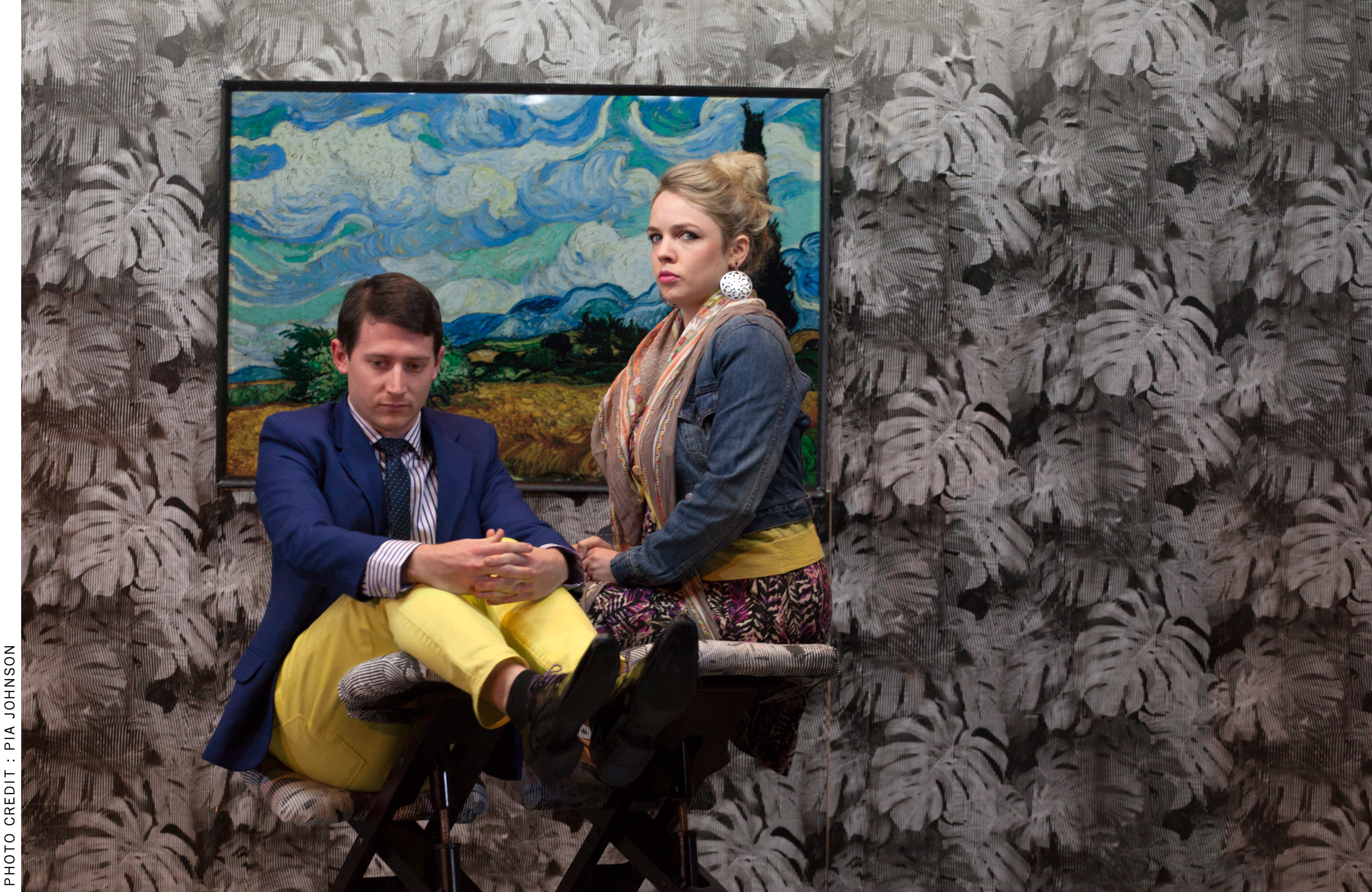
Hayloft's Delectable Shelter. Photo: Pia Johnson

Hayloft’s Delectable Shelter. Photo: Pia Johnson

Founded in 2007 by Simon Stone, The Hayloft Project has quickly established itself as one of Melbourne’s most exciting theatre companies with critics hailing it as “a shining light in Melbourne theatre” and “the hottest property in Melbourne’s indie theatre scene.”

So news that the company is relocating to Sydney in 2014 under its recently appointed artistic director Benedict Hardie is very welcome – at least to theatre lovers at the Sydney end of the Hume Highway.

The move follows in the footsteps of Stone, who left Melbourne to become resident director at Belvoir in 2011, and Anne-Louise Sarks who took over from him as artistic director of Hayloft and has now replaced him at Belvoir as one of two new resident directors.

Hardie describes the relocation as “a very exciting challenge for the company next year, to see if we can’t work up some of our Hayloft magic (in Sydney).”

He says that there was a mix of reasons for the decision, some of them personal. “It’s a bit of a homecoming for me. I’m from the Blue Mountains, I went to school in Penrith so coming back is an exciting new challenge for me and an excuse to see my Mum a bit more.

“I think Sydney is looking like an exciting prospect to a lot of theatre artists,” adds Hardie. “The independent scene in Sydney in the last five or ten years has been expanding and acquiring much more legitimacy and interest from audiences and that means, I think, that the Sydney scene is poised only to expand and get more exciting in the next few years and it’s great to be a part of that.”

As to whether he hopes to keep working with actors already associated with the company he says: “We like to establish long-term collaborative relationships with actors and designers so those who can work in Sydney, then absolutely I would jump at the chance to have them working (with us) but that will be on a case by case basis.

“Many actors that we have worked with before have already relocated to Sydney, some of whom you see regularly on the Belvoir stages, so I am looking forward to reconnecting with some of those actors.”

Actors performing in Sydney who have worked with Hayloft include Gareth Davies, Ashley Zuckerman, Shelley Lauman and Eryn Jean Norvill.

Sydney has already seen several Hayloft productions including Stone’s memorable Thyestes, his version of Spring Awakening and The Only Child, which he adapted from Ibsen’s Little Eyolf.

This week the company will perform its post-apocalyptic, black comedy Delectable Shelter at the Seymour Centre as part of a national tour.

Written and directed by Hardie, the play (which premiered in 2011) is set in a bunker where the last five surviving humans plan a utopian future. The production features an eye-popping design, elaborate, five-part, Bach-style, a cappella arrangements of 1980s love songs (arranged by Benny Davis from The Axis of Awesome) and a range of comedy styles.

“My intention was to write a comedy where I could shine a harsh light on some of the prejudices and fears that people harbour but don’t talk about,” says Hardie. “Then it all became bonkers and I ended up creating this very elaborate play set in a bunker underground and spanning 350 years with choral arrangements of 1980s pop ballads.

“But it’s a lot of fun. Silliness and fun were the guiding principles for a lot of it. It leaves no comedy style unturned.”

Delectable Shelter, Seymour Centre, August 13 – 17

An edited version of this story ran in the Sunday Telegraph on August 11
Fireface: review

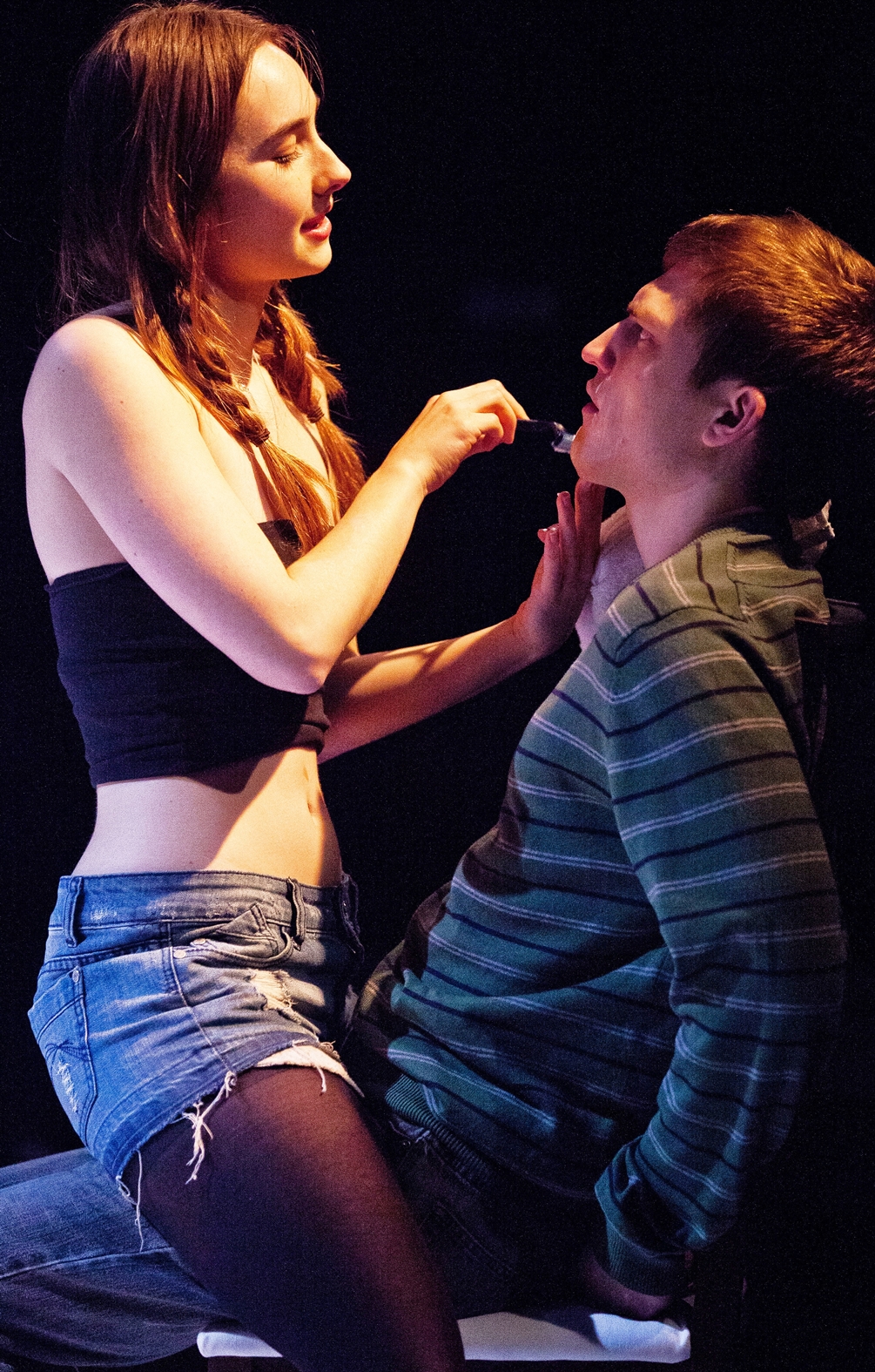
Darcie Irwin-Simpson and Darcy Brown. Photo: Phyllis Wong

Darcie Irwin-Simpson and Darcy Brown. Photo: Phyllis Wong

Stories Like These and atyp Under The Wharf

ATYP Studio 1, August 4

Adolescence can be a confusing, angst-ridden time – particularly if your parents are everything you don’t want to become as an adult. But how much does ineffectual (as opposed to abusive) parenting shape a troubled teenager?

In his 1997 play Fireface (first seen in Sydney when the Sydney Theatre Company presented it in 2001) German writer Marius Von Mayenburg presents us with a middle-class family where communication has broken down.

The parents aren’t talking. The father (James Lugton) would rather read newspaper reports about murdered prostitutes than communicate with his wife (Lucy Miller), while she flaunts herself around the home in various states of undress.

Their alienated children, meanwhile, are exhibiting worrying behavioural traits. The burnt blackbird that the mother discovers wrapped in newspaper behind the garage is surely a warning sign but the father is in denial, dismissing it as nothing serious.

In this emotionally arid world, provocative teenager Olga (Darcie Irwin-Simpson) starts using her burgeoning sexuality as a form of power, solace and a means of escape, first seducing her equally alienated younger brother Kurt (Darcy Brown) and then Paul (Ryan Bennett) who catches her eye because of his motorbike.

Jealous at Paul’s arrival, Kurt’s fascination with flames escalates and he really starts playing with fire. There’s no doubt it will end badly – with no prizes for guessing how.

Von Mayenburg structures his taut 100-minute play using 94 short, snappy scenes.

Directing the play for Stories Like These and atyp Under The Wharf, Luke Rogers punctuates the myriad scenes with sharp blackouts and a surge of sound not unlike the explosive crackle of fire (sound design by Nate Edmondson). At times the momentum falters with so many scene breaks but on the whole Rogers manages to keep the tension building.

Simply staged around a table and chairs (set and costume design by Lucilla Smith), Rogers puts the focus firmly on the performances.

The cast of five are all convincing, with Brown in particular capturing Kurt’s weird, psychotic nature, his face looking increasingly blank and his eyes ever more dead as the play unfolds, while Lugton and Miller give just the right weight to the black comedy, as the parents sidestep responsibility and console themselves with the thought that it won’t be long before their troublesome offspring leave home.

Though we may know where it’s going, Fireface is a dark, disturbing play. Rogers could perhaps ramp up the sense of menace a little more but his production is certainly unsettling and sends you home pondering what you’ve just seen.

Fireface is at the ATYP Studio 1, The Wharf, until August 17

Beached: review

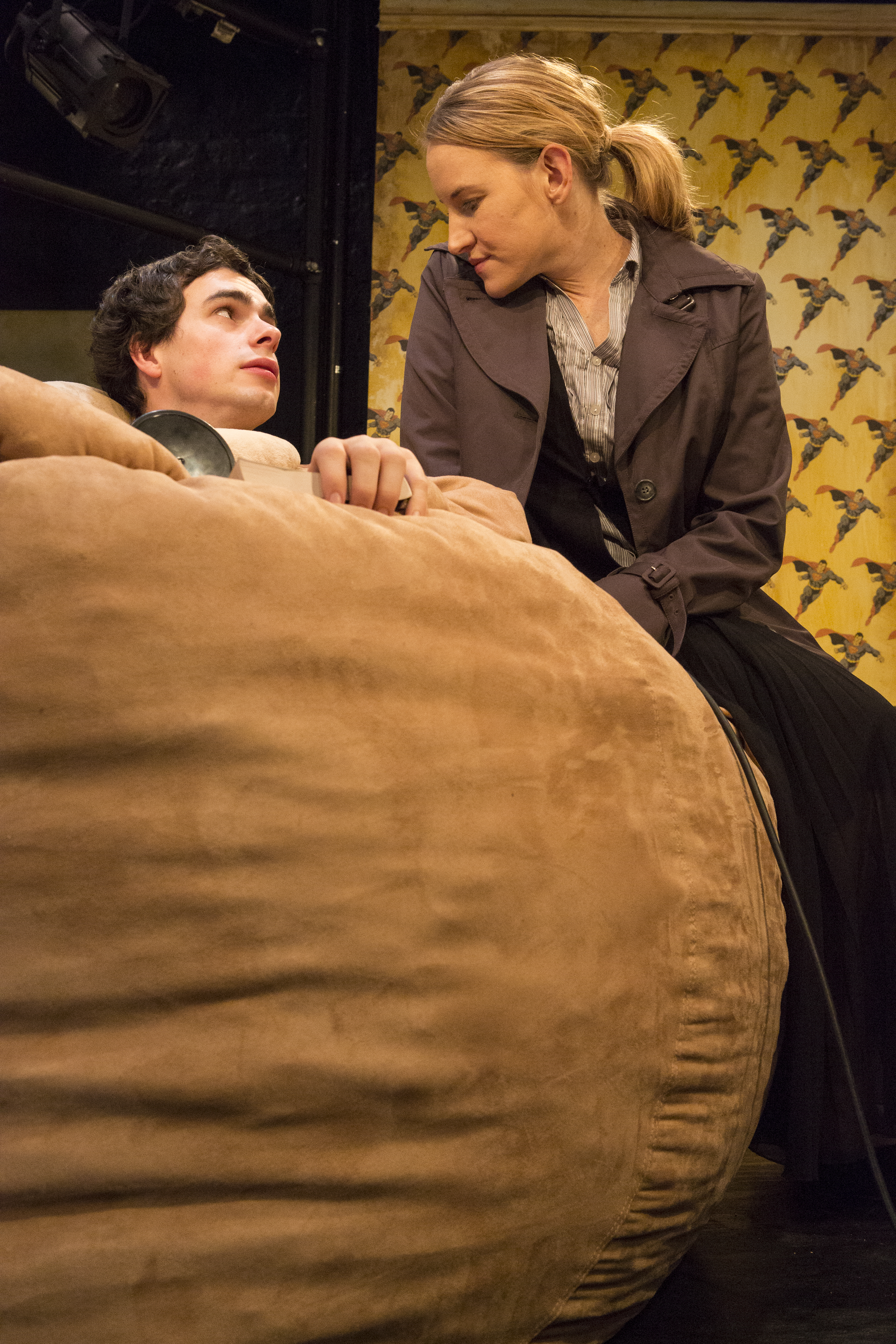
Blake Davis and Kate Mulvany. Photo: Brett Boardman

Blake Davis and Kate Mulvany. Photo: Brett Boardman

Arty (Blake Davis) is a sweet but morbidly obese teenager who dreams of being an explorer or a handsome movie star. In reality, he is marooned like a beached whale at home with his bogan mother JoJo (Gia Carides) who keeps him well fed as a result of her own personal issues.

In order to pay for life-saving gastric surgery, they agree to go on a reality TV show called Shocking Fat Stories where Arty’s struggle to lose enough weight to be able to undergo the operation is charted over 235 days.

And so into their home comes a ruthless, parasitic TV producer (Arka Das) and a stitched-up Pathways to Work CentreLink officer called Louise (Kate Mulvany) whose idea of a bright future for Arty is an office job and a tax file number.

With obesity on the rise and reality TV dominating the ratings, Melissa Bubnic’s black comedy Beached is a timely piece but it doesn’t get to grips with the issues it raises in any serious, in-depth way.

Though the play won the 2010 Patrick White Playwrights’ Award, it still needs work if it is to really hit home. As it is, the characters are one-dimensional and the plot superficial.

The script is full of gags (many of them cheap, some downright gross) but the satire isn’t sharp or clever enough to really shock so the play – particularly the reality TV aspect – comes across as a rather glib parody.

The co-dependent relationship between Arty and his mother could be fascinating but the reason given for JoJo’s compulsive feeding of her son is simplistic in the extreme.

Shannon Murphy directs an ambitious production for Griffin Theatre Company using cameras operated by the hard-working cast of four so that they are seen “live” and on screen.

Mulvany delivers a richly detailed and very funny performance as Louise: an uptight, daggy character whom she evokes with an array of nervous tics and lank hair. But it stretches believability that someone with so many insecurities and personal issues of their own would be employed in such a job – or that she would start a relationship with Arty.

Carides also gives a strong, layered performance as the loving but manipulative JoJo, doing all she can to make her real, while Davis exudes a lovely boyish innocence as Arty – though he is so sprightly and skinny it seems slightly odd for a character who supposedly tips the scales at 400 kg.

Of course, no-one is expecting naturalism here. Murphy and designer James Browne portray Arty as part of the brown, fleshy chair on which he sprawls, inserting Davis into it. It’s a nice idea but doesn’t look terribly effective in practice.

As for the TV producer, he is so crudely and predictably drawn that Das has little to work with but he brings a hard-edged energy to the role.

And so, despite the best efforts of the cast, Beached feels just that. Bubnic certainly raises some interesting, hefty (excuse the pun) ideas and the acting is enjoyable – particularly from Mulvany and Carides – but ultimately Beached feels lightweight.

Beached runs at the SBW Stables Theatre until August 31.

An edited version of this review ran in the Sunday Telegraph on August 4.