Handa Opera on Sydney Harbour: Aida

Fleet Steps, Mrs Macquarie’s Point, March 27
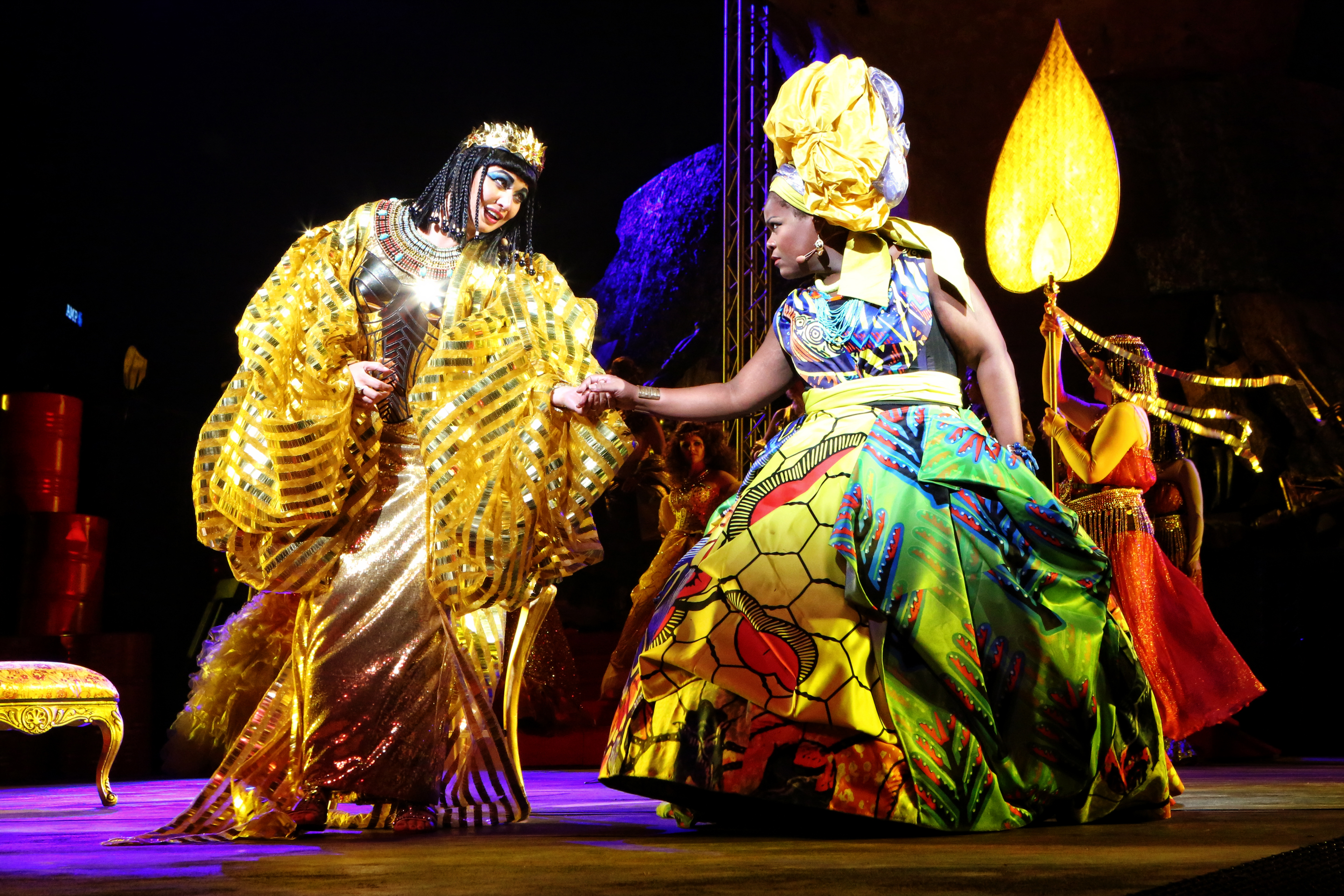
Milijana Nikolic and Latonia Moore. Photo: Prudence Upton

Milijana Nikolic and Latonia Moore. Photo: Prudence Upton

The giant, crumbling head of Queen Nefertiti dominating the stage for this year’s Handa Opera on Sydney Harbour: Aida looks genuinely spectacular in its stunning location and is used to great effect, with a particularly striking image at the end of the production. But with the rest of the spectacle feeling decidedly ad hoc, the opening night of Aida well and truly belonged to American soprano Latonia Moore in the title role.

For its fourth harbour outing, Opera Australia has chosen Verdi’s Aida, which combines lavish spectacle with an intimate love triangle between Egyptian military commander Radames, Ethiopian slave Aida (later revealed to be a Princess) and the jealous Princess Amneris, daughter of the Pharoah.

In the first part, it’s spectacle all the way as director Gale Edwards and designer Mark Thompson fill the stage with ceremonial pomp and bucket-loads of glitz.

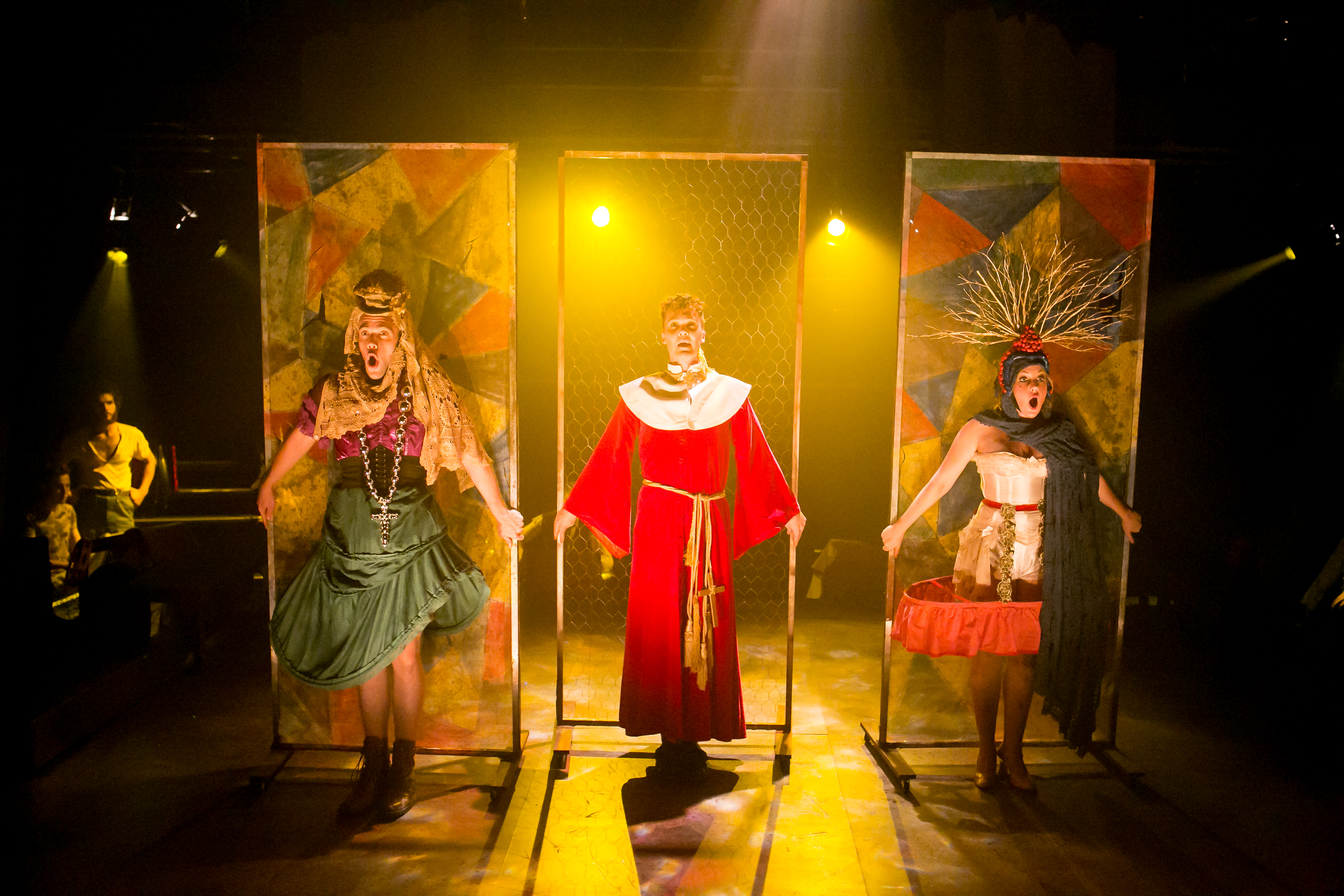
The costuming mixes styles and eras (“a world caught between times” says the program): men in contemporary suits and others in Fascist military uniforms, ornately clad priests looking straight out of ancient Egypt, OTT golden gowns for the Egyptian women (dubbed the Kardashian chorus by the cast) in which the singers look rather awkward, and vibrantly coloured, boldly patterned fabrics for the Ethiopians.

There doesn’t seem to be any coherent vision behind it; instead it just looks like a lot of disparate visual elements. Worse, the camp costumes for the dancers look oddly out of place, even crass. There are space age storm troopers in Latex (or some such fabric) with helmets and jackboots who would be right at home in the Mardi Gras parade, can-can girls (yes, really) and ceremonial male dancers whose tight black outfits with chains shout bondage. Apparently they’re jackals, though I couldn’t pick that from my seat near the back. Dancing with golden-clad ballet dancers, it is a low point of the production. Lucas Jervies’ clichéd choreography doesn’t help.

The Aida stage is dominated by a giant head of Queen Nefertiti. Photo: Hamilton Lund

The Aida stage is dominated by a giant head of Queen Nefertiti. Photo: Hamilton Lund

It’s true that the positioning of the priests and soldiers around the stage frequently looks dazzling under Matt Scott’s highly dramatic, coloured lighting, but then a distracting gaudy or camp element will intrude, undercutting the effect.

Oil drums stacked at the back of the stage suggest wealth built on petrol – though this isn’t true of Egypt – but nothing more is done with them. Edwards also includes rows of black coffins, which are set out on stage, each with a single lily on them, in the famous Triumphal March. It’s a powerful image alongside the spoils of war and the spectacle of four camels and fireworks, but the politics of the piece don’t reverberate anywhere near as strongly as promised in pre-publicity.

At the same time, any sense of genuine human intimacy is lost in the first half of the production with Amneris, Aida and Radames frequently singing to each other across acres of stage.

After interval, when things quieten and human emotion is allowed to shine through, the production is much more successful. A stronger, clearer focus on the leading characters, positioned close together centrestage, opens the way for us to engage emotionally.

Even then there is a strange piece of staging when a metal mesh frame rises from the front of the stage (creating sight line issues) and then lowers again later. I think it was meant to suggest the opening and closing of the vault in which Radames is buried alive. However, there is no sense whatsoever of he and Aida being sealed in a dark tomb.

Fortunately Latonia Moore is superb. Singing with great beauty and warmth across her range from a rich, strong bottom register to a glowing top, her gorgeous voice outshines the spectacle. Acting with great conviction, she brings real heart to the production.

As Amneris, Serbian-born mezzo-soprano Milijana Nikolic gives a compelling, passionate performance, convincingly moving from imperiousness to heartfelt, bitter regret.

Walter Fraccaro is less persuasive as Radames. He sings with power but little expressiveness, while his voice showed a tendency to wobble on opening night. Acting-wise he has little charisma and next to no chemistry with Moore.

Among the rest of the cast, Michael Honeyman as Amonasro and David Parkin as Ramphis are particularly impressive.

There are two alternating casts with Daria Masiero, Arnold Rawls, Jacqueline Dark and Warwick Fyfe leading the other.
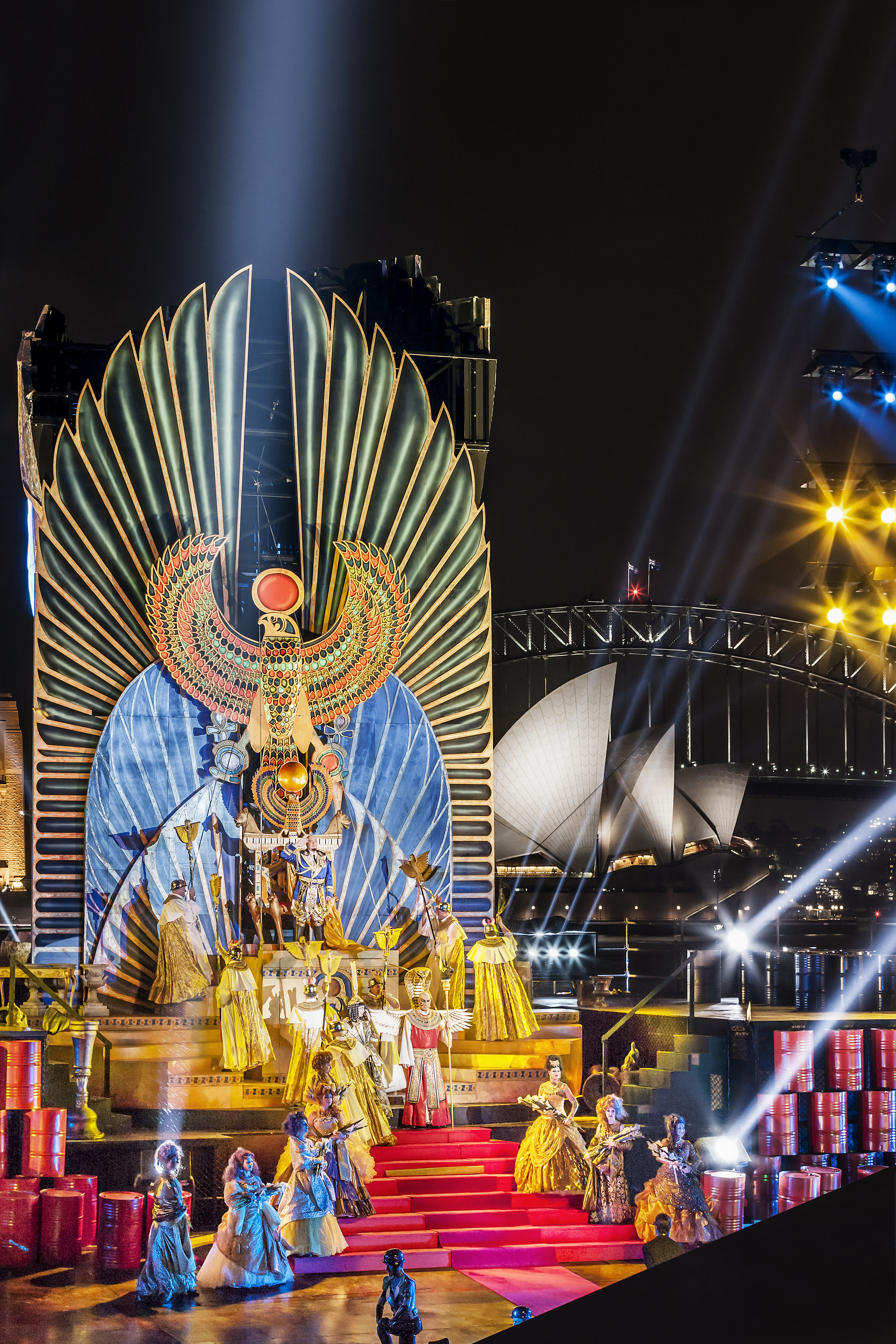
The spectacle of Aida. Photo: Hamilton Lund

The spectacle of Aida. Photo: Hamilton Lund

Verdi’s music is glorious, of course, and the orchestra led by Brian Castles-Onion does it justice, while the sound, though muddy at times, is overall reasonably good.

The production is worth seeing if just for Latonia Moore and the Queen Nefertiti set piece. Some of the staging is undeniably spectacular, but compared to last year’s brilliant, hard-hitting, contemporary production of Madama Butterfly, staged by members of Spanish theatre company La Fura dels Baus, Aida is rather disappointing.

Aida runs until April 26

A version of this review ran in the Sunday Telegraph on March 29
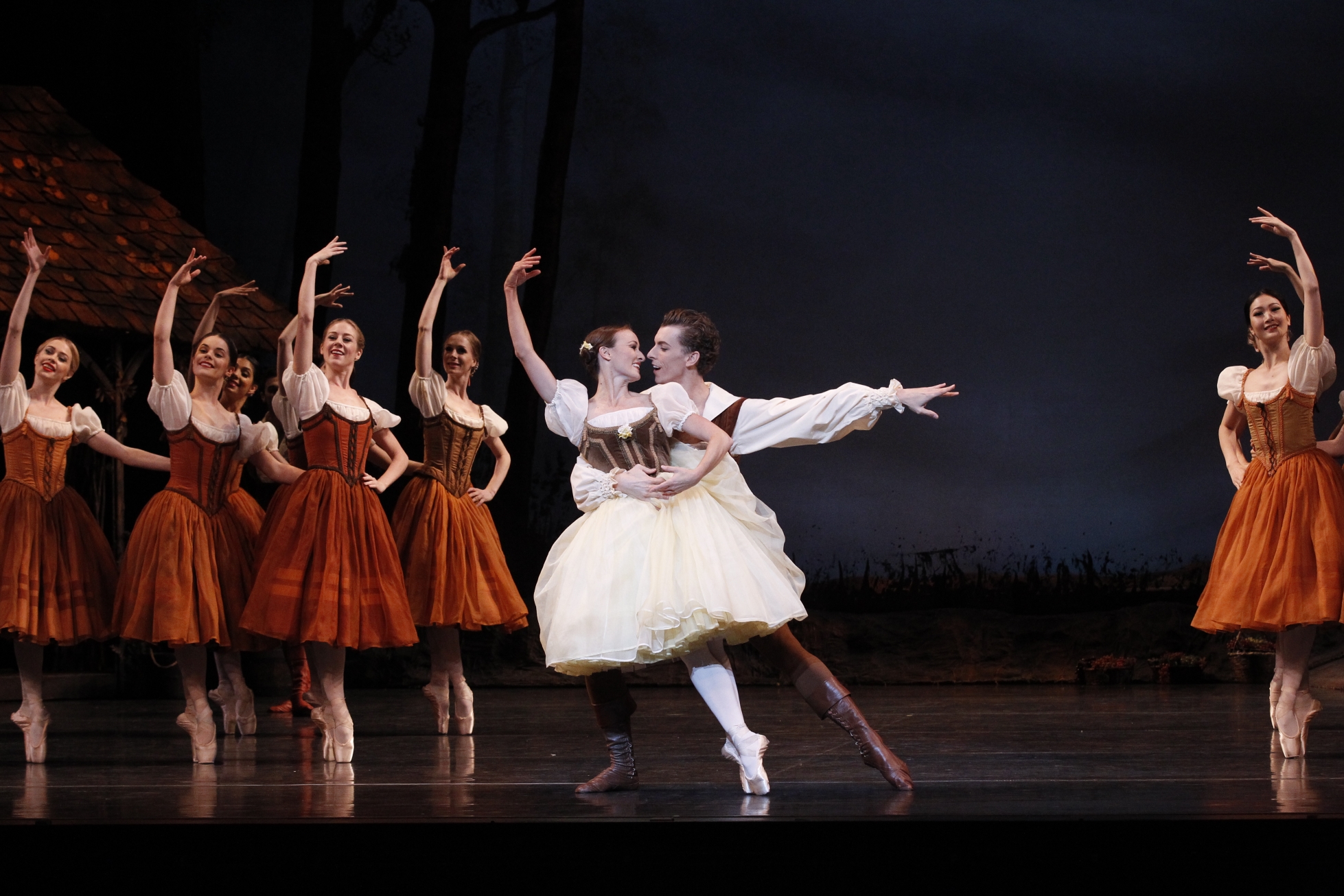
Giselle

Joan Sutherland Theatre, Sydney Opera House, April 2

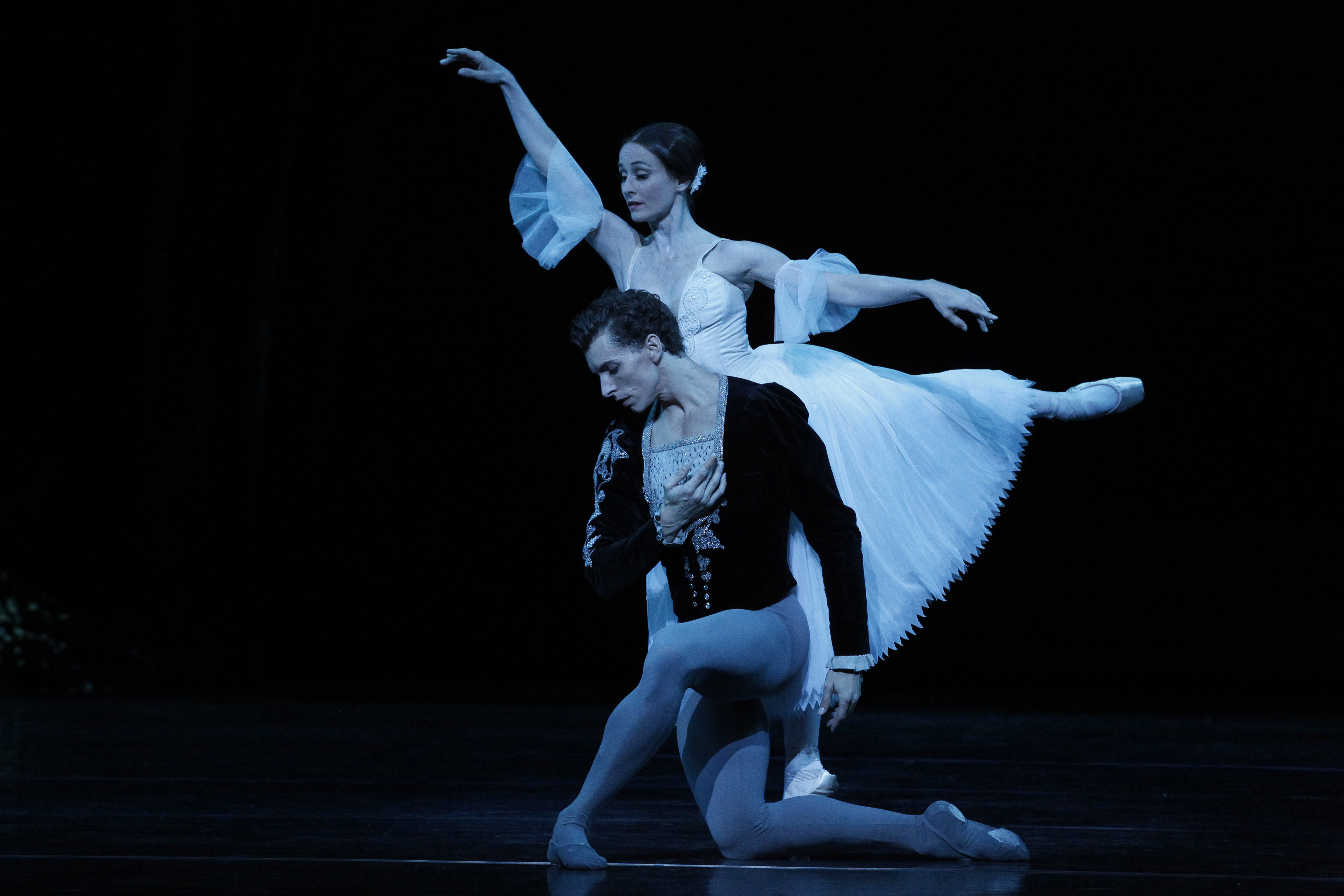
Madeleine Eastoe and Kevin Jackson. Photo: Jeff Busby

Madeleine Eastoe and Kevin Jackson. Photo: Jeff Busby

The ideal way to retire, they say, is to leave the audience wanting more – and Madeleine Eastoe will certainly do that when she hangs up her ballet shoes after her final performance as Giselle in Adelaide in July.

It feels like a fitting choice of ballet with which to say farewell. Eastoe was promoted to principal artist in 2006 after her debut in the role, and she is utterly exquisite in it. In fact, her performance at the opening of the Australian Ballet’s 2015 season was so heartrendingly beautiful it’s hard to believe that the time has really come for her to end her dancing career.

Giselle is one of the great, classical story ballets: a tragic tale of love, betrayal, madness, death and salvation from the Romantic era of ballet.

The Australian Ballet is again performing Maina Gielgud’s traditional but lovely 1986 production, using the 19th century choreography of Marius Petipa, Jean Coralli and Jules Perrot. Gielgud herself has been in Australia to revive the production, which has set and costumes by Peter Farmer, beautifully lit by Francis Croese (based on William Akers’ original design).

Though she is now 36, Eastoe looks convincingly young as Giselle, the innocent peasant girl who falls giddily in love with a dashing suitor. Flying around the stage she radiates a joy, which she is shy to admit but that cannot be contained. When she discovers that he is a nobleman (Count Albrecht) disguised as a peasant, and already betrothed to a Duke’s daughter, her weak heart breaks, sending her mad and then to her grave.

In the ethereal second act, a distraught Albrecht goes to Giselle’s grave in the forest where he encounters the Wilis, spirits of jilted women who dance men to their death. Still in love with him, Giselle pleads for Albrecht to be spared and manages to keep him alive through the night so that as day dawns he is saved.

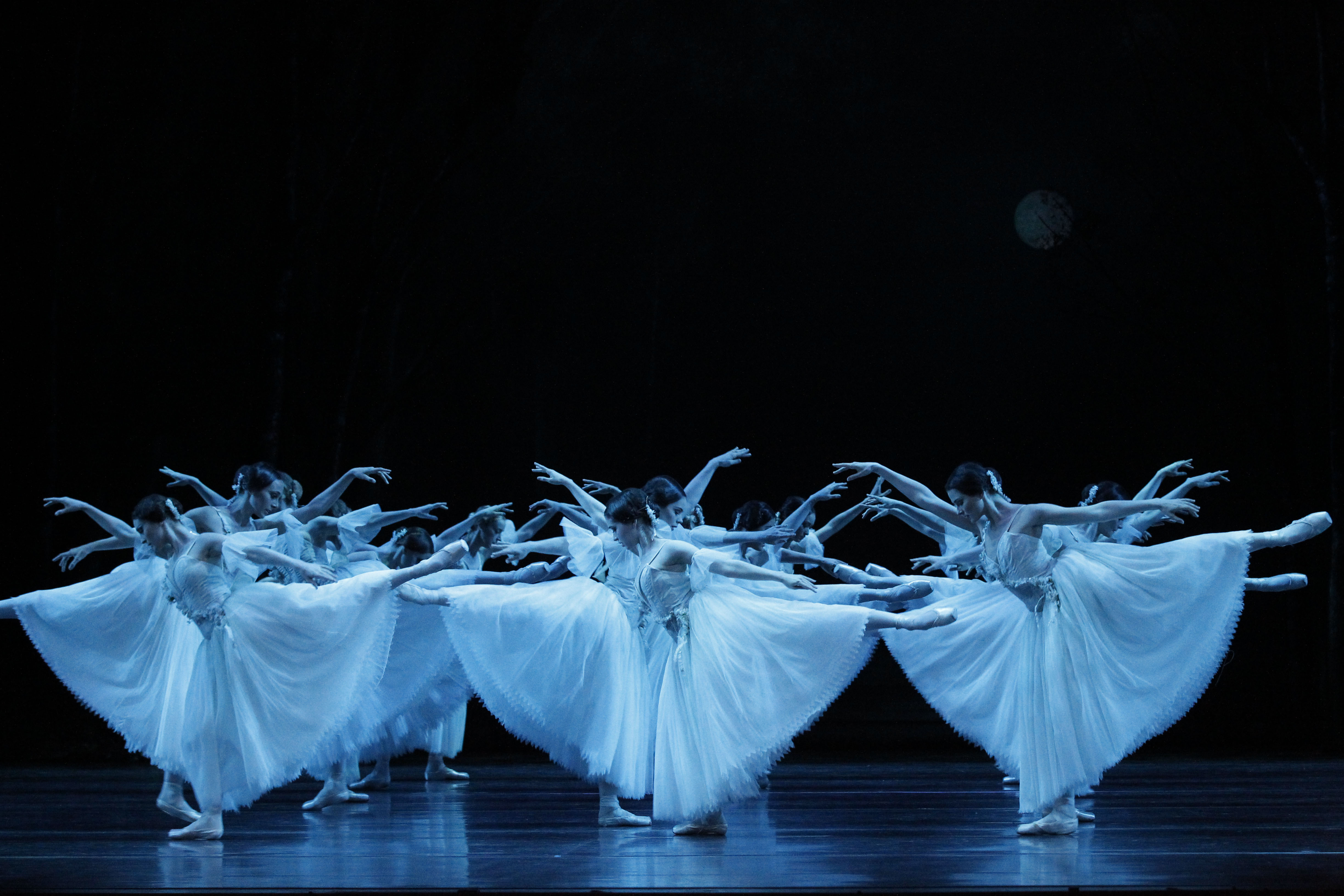
Members of the Australian Ballet. Photo: Jeff Busby

Members of the Australian Ballet as the spirit Wilis. Photo: Jeff Busby

Eastoe is such an expressive dancer that she conveys every emotion along the way, while seeming to float across the stage, whether in joy, grief or transcendent love. There’s something about the incredible lightness with which she moves that suggests the air around her is more rarified, with less gravity, than anywhere else on stage. It’s a divine performance: unforgettable, in fact.

Hugely popular with audiences, the Sydney opening crowd went wild. The emotion of her final performance in Adelaide promises to be off the Richter scale.

Kevin Jackson gets better and better. Always a strong dancer, he now has the emotional expressiveness to match the physicality. He is in commanding form as Albrecht. His jumps are exciting, his partnering is sensitive and his performance has a depth of emotion. Despite Albrecht’s duplicity, Jackson convinces us of his love for Giselle in the first act so that he doesn’t appear quite as callous as he sometimes does. And his remorse in Act II is very moving.

Their pas de deux are lovely, developing from shy, joyfulness in Act I to something far more mature and deeply felt in Act II.

Madeleine Eastoe and Kevin Jackson. Photo: Jeff Busby

Madeleine Eastoe and Kevin Jackson. Photo: Jeff Busby

Chengwu Guo and Ako Kondo are a delight in the exuberant peasant pas de deux. (They will dance together as Giselle and Albrecht at some performances). Dimity Azoury is a strong, steely presence as Myrtha, Queen of the Wilis, Andrew Killian gives a sympathetic portrayal of Hilarion, the gamekeeper in love with Giselle, and Olga Tamara exudes great warmth as Giselle’s mother.

The corps de ballet is in fine form and the scenes featuring the Wilis are intoxicating, while the Australian Opera and Ballet Orchestra, conducted by Nicolette Fraillon, gives a lyrical performance of Adolphe Adam’s music.

This Giselle is a beautiful and beautifully performed production, at the heart of which is Eastoe’s blissful performance. She is going to be greatly missed.

Giselle runs at the Sydney Opera House until April 22; Canberra Theatre Centre, May 21 – 26; Adelaide Festival Centre, July 2 – 6.

The Nick Enright Songbook

Eternity Playhouse, March 29

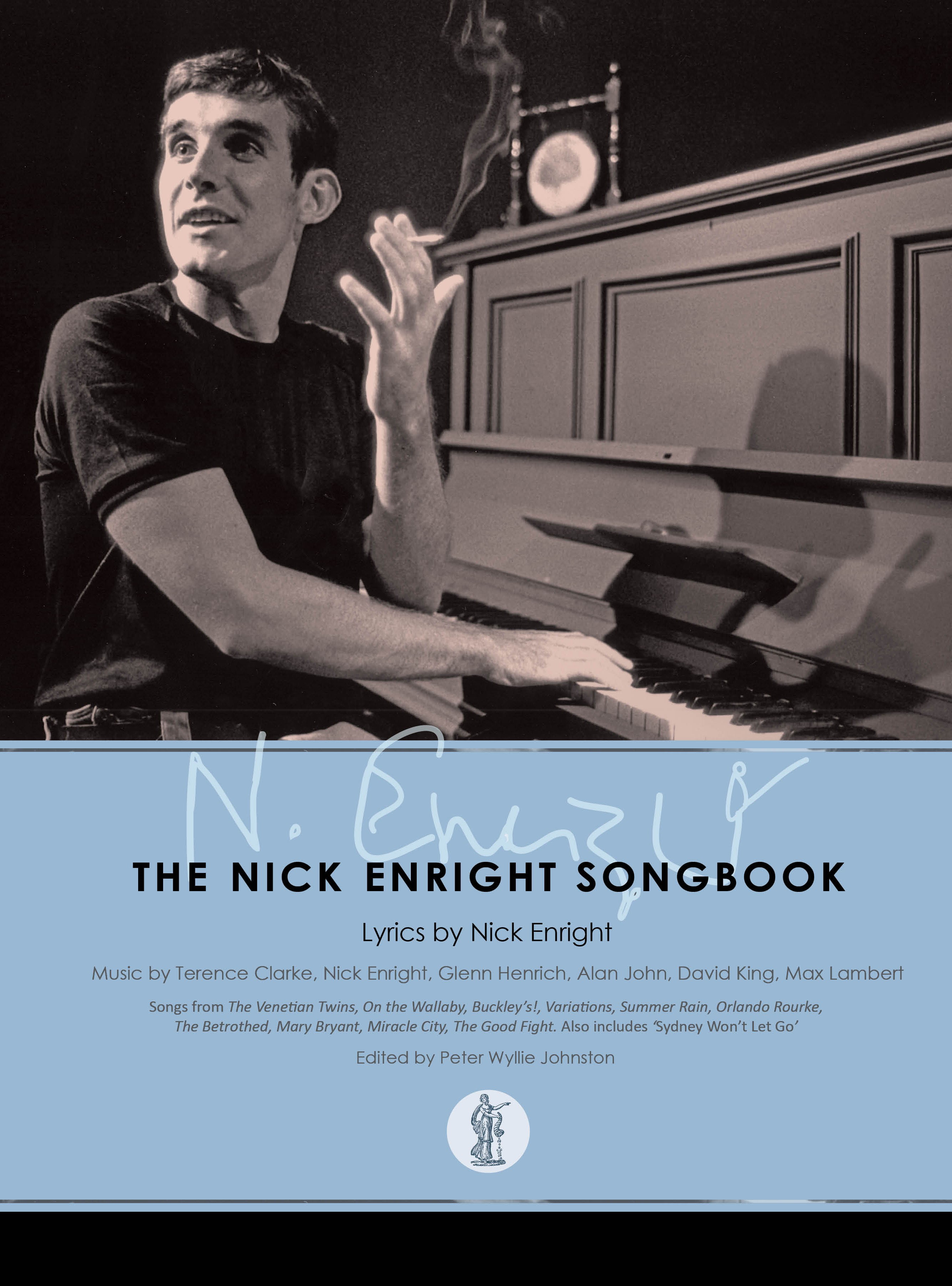
The Nick Enright Songbook published by Currency Press

The Nick Enright Songbook published by Currency Press

Last night, I tore myself away from the Cricket World Cup Final (tough call) to attend the launch of The Nick Enright Songbook published by Currency Press. Hosted by Darlinghurst Theatre Company at the Eternity Playhouse, it was a lovely, warm event with performances and fond reminiscences from several of his collaborators and former students, among other artists.

As well as a playwright and screenwriter, Enright ­– who died 12 years ago today – collaborated on many Australian musicals. The best known is The Boy From Oz for which he wrote the book but he was also a gifted lyricist.

The publication brings together 50 of the best songs from ten musicals for which he wrote the lyrics, with music by five composers. These include The Venetian Twins, Variations and Summer Rain written with composer Terence Clarke, Buckley’s! with Glenn Henrich, Orlando Rourke with Alan John, The Betrothed, Mary Bryant and The Good Fight with David King, and Miracle City with Max Lambert.

Miracle City was produced last year by the Hayes Theatre Co, winning two Sydney Theatre Awards: Best Performance by a Female Actor in a musical for Blazey Best and Best Musical Direction for Lambert. A cast recording is on the way and Currency Press is publishing the show’s book.

The Nick Enright Songbook also includes two numbers from On the Wallaby – Enright’s play with music – one of which has music by Enright himself, and a cabaret song written with Lambert. Composer and academic Peter Wyllie Johnson edited the book and wrote the commemorative foreword.

Ian Enright introduced last night’s launch, recalling that his brother wrote 13 musicals and 250 songs.

Clarke, Lambert and Henrich were on hand to chat about their different ways of working with Enright and to play several of their songs, while performers including Jay James-Moody, Genevieve Lemon, Margi de Ferranti and Anthony Harkin among others sang a selection of them.

Lemon said that she had recently been to a school concert and hoped that school libraries will acquire or be given the book so that the school children are able to discover and sing some of his songs at such events.

The Sydney Gay and Lesbian Choir performed a beautifully arranged version of Sail Away from Mary Bryant, which was very moving, and Eddie Perfect, who was taught by Enright at WAAPA, sang a number he wrote (in 15 minutes between lectures) called Someone Like You as a tribute to Enright immediately after being told of his death.

The evening was a reminder of what an intelligent, skilled, sensitive and witty lyricist Enright was.

The foyer bar at the Eternity Playhouse is called Nick’s, named after Enright. The Enright Family is supporting Darlinghurst Theatre Company to stage three Enright plays over three years. The partnership began last year with a production of Daylight Saving and continues this year with Good Works.

Ian Enright said last night that he’d like to see one of Enright’s musicals being staged there. Let’s hope.

The Nick Enright Songbook (RRP $49.94) retails from all good bookstores and online at www.currency.com.au

Everybody Loves Lucy

Hayes Theatre Co, March 22

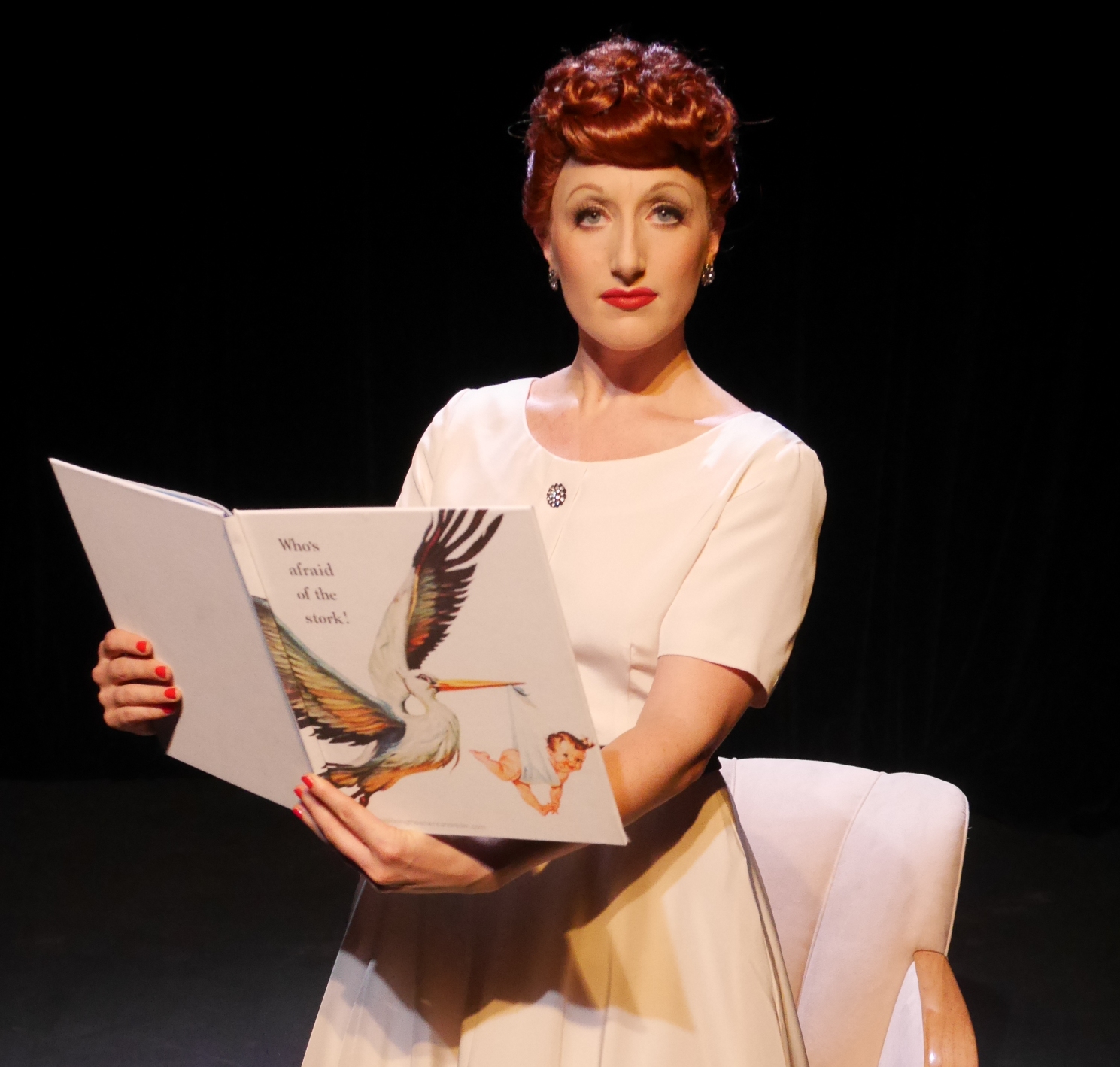
Elise McCann.  Photo: supplied

Elise McCann. Photo: supplied

Elise McCann is a real delight in Everybody Loves Lucy, her cabaret show about Lucille Ball, giving a beautifully pitched, thoroughly engaging performance, which sees her shining brighter than the show itself.

Ball began her career on Broadway, played some small roles in Hollywood during the 1930s and 40s and then, together with her Cuban musician husband Desi Arnaz (with whom she eloped in 1940), changed the face of television comedy with her seminal sitcom I Love Lucy.

Running for six years from 1951 and then a further three years in various incarnations under titles including The Lucy-Desi Comedy Hour, I Love Lucy was the most popular TV show in the US at one point.

An astute businesswoman behind the scenes, Ball became the first woman to run a major television studio in 1962. Meanwhile, early in her career, the House Un-American Activities Committee investigated her links to communism.

It’s too big a life to fit into a one-hour cabaret so McCann and co-writer Richard Carroll have sensibly focused on the I Love Lucy years.

Set in the TV studio, Everybody Loves Lucy avoids using a narrative voice to tell us about her career (a common device in cabaret and often a clunky one). Instead the show traces the development of the pioneering sitcom through various vignettes and a series of comedy sketches.

In one scene, we see Ball negotiate her way to becoming the first woman to appear on screen pregnant – or “expecting” as conservative television executives preferred to put it.

The show also goes behind-the-scenes where the pressures on Ball’s marriage and family life (she and Arnaz had two children she saw little of) were such that as soon as the sitcoms with Arnaz ended in 1960, she filed for divorce.

Without actually impersonating Ball, McCann captures a vivid sense of the famously ditzy, redheaded housewife Ball portrayed on screen, nailing her zany brand of vaudevillian comedy with its clown-like physicality. She also conveys a strong sense of the era.

Her comic timing is spot-on throughout. Some of the skits are funnier than others – mainly because much of the humour is now so dated – but she is hilarious in a sketch promoting a health tonic with a mouthful-of-a-name, which becomes increasingly unpronounceable as she takes swigs of the alcohol-laced concoction.

McCann also plays a housewife, in frilly apron, who is a huge fan of I Love Lucy. It’s a clever way to indicate the huge following the show had, as well as its impact, particularly on women, with the housewife beginning to think that maybe she too could take on some part-time work.

Musical director Nigel Ubrihien (sporting a dreadful black wig) does a good job of characterising Arnaz and also voices other characters including the studio executives from the piano.

Ball was no singer and there are few songs associated with her, so McCann and Ubrihien have chosen a series of numbers from the era to relate to moments in the show including Be a Clown at the beginning and Make Someone Happy, which is used as something of a theme through the show. Though McCann sings beautifully, the songs aren’t terribly memorable on the whole or particularly moving.

The show itself breezes along but often feels rather cursory, touching on topics, ticking off moments, but without really mining the drama in them. So much is dealt with so quickly that there’s not a great deal of insight into Ball as a person and emotional moments don’t land as strongly as they might.

The show assumes some knowledge of Ball; if you didn’t know anything about her, or had never seen I Love Lucy, I’m not sure that you would fully appreciate her impact as a comedienne.

Director Helen Dallimore stages the show well, using a dressing table on one side for the backstage scenes, and an armchair, table and lamp on the other for the housewife’s. Tim Chappel has designed a dress that transforms itself in an instant with a flap that drops to become an apron, and Christopher Horsey’s choreography suits the style and era.

Though Everybody Loves Lucy feels underwritten at times, McCann is a wonderful draw-card, giving a very enjoyable performance that confirms her considerable talent. I can’t wait to see her as Miss Honey in Tim Minchin’s musical Matilda, opening in Sydney in August.

Everybody Loves Lucy runs at the Hayes Theatre Co until March 28. Bookings: www.hayestheatre.com.au or 02 8065 7337

Le Noir

Lyric Theatre, March 20

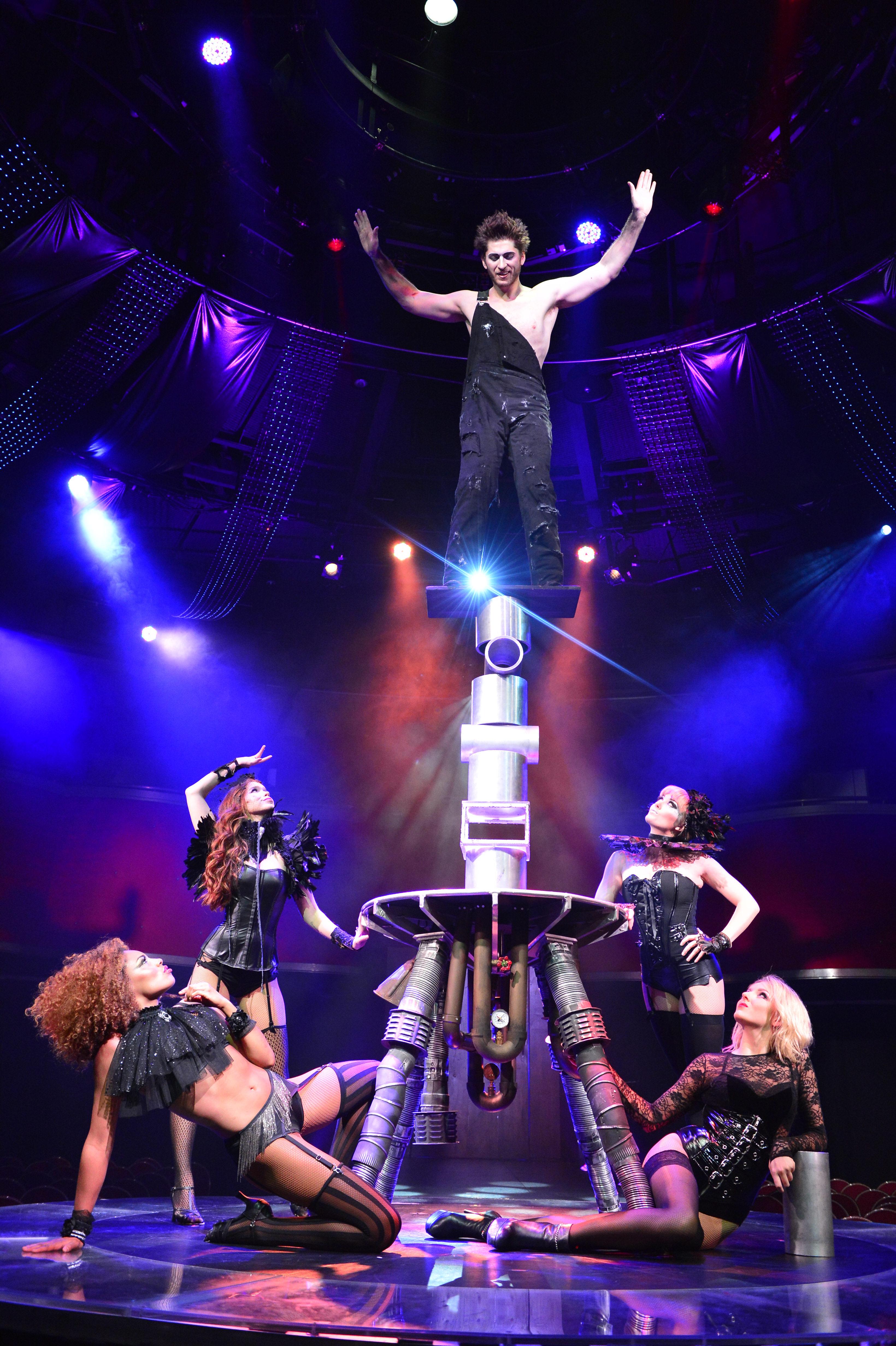
The cast of Le Noir. Photo: supplied

The cast of Le Noir. Photo: supplied

Le Noir is billed as “the dark side of cirque”. It certainly goes all out with its sexy costuming and lascivious posing by the cast between routines but essentially it offers a fairly traditional series of breath-taking, top-notch circus acts.

Produced by Tim Lawson and Simon Painter, and directed and choreographed by Neil Dorward, Le Noir doesn’t bother with a quasi-narrative theme or a spectacular set like Cirque du Soleil nor does it have the whacky humour of La Soirée. (The clown/Emcee Salvador Salangsang disappearing inside a balloon is the closest it gets, and the funniest of his routines). Instead it puts the focus on some seriously talented performers doing extraordinary things to pulsing music and dramatic lighting.

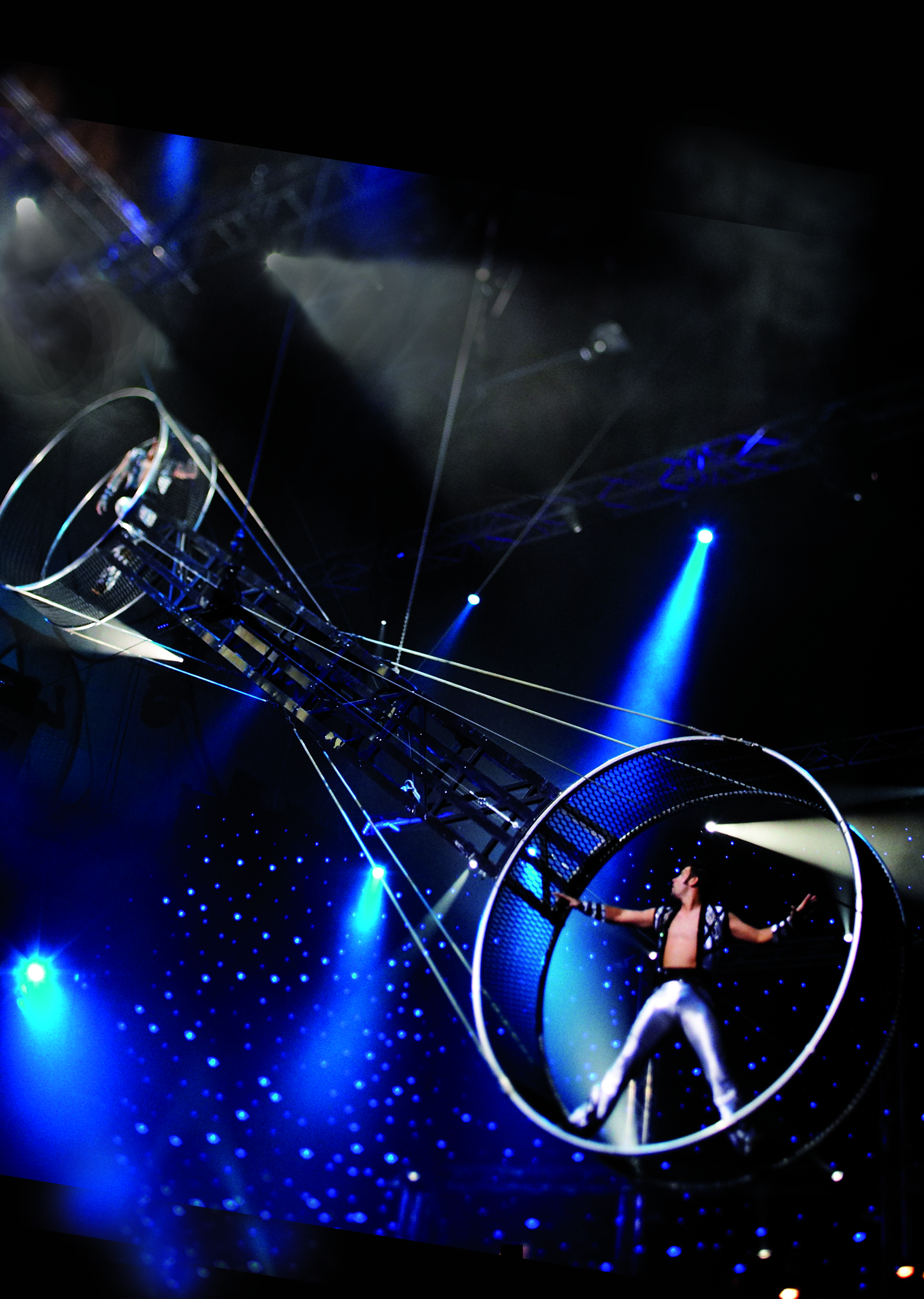
The Wheel of Death. Photo: supplied

The Wheel of Death. Photo: supplied

The Lyric Theatre has been reconfigured somewhat so that a couple of the most risky acts – the Wheel of Death and an amazing duo trapeze with a twist, in which a man replaces the trapeze bar – are performed at the front of the stalls. And if you want to get really close you can sit on stage at little tables or in seating banks that surround the action.

The show unfolds in colour-coded sections with white, red and then black costuming (designed by Angela Aaron). It begins gently with beautiful, graceful aerial hoop (Elena Gatilova), hand balance (Anna Ostepenko) and duo silk (Dasha Shelest and Vadym Pankevych) routines.

Valeri Tsvetkov and Yani Stoyanov Photo: supplied

Valeri Tsvetkov and Yani Stoyanov Photo: supplied

Things rev up in the red section with breakneck, spinning roller-skating (Queenslander Jessica Ritchie and Jeronimo Ernesto) and a strongman act by two hunky musclemen (Valeri Tsvetkov and Yani Stoyanov), who were impressive, even though their most difficult balance eluded them at the performance I saw.

The most dangerous acts happen in the final black section including the trapeze (Marie-Christine Fournier and Louis-David Simoneau), which closes the first act, the Rolla Bolla (Gediminas Pavlovicius) and the daredevil Wheel of Death.

Gediminas Pavlovicius performs the Rolla Bolla. Photo: supplied

Gediminas Pavlovicius performs the Rolla Bolla. Photo: supplied

If my memory serves me right, the massive, spinning Wheel of Death structure with two large hoops at either end, in which and – even more terrifyingly on which – the two men (Carlos Macias and Angelo Rodriguez) perform isn’t as large as the one we saw in Le Grand Cirque – Adrenaline in 2011. No matter. It makes for a show-stopping finale, which you watch with your heart in your mouth.

It does feel as if there is one acrobatic duo too many, when something very different would add more variety. But that’s a minor quibble in a highly entertaining show that frequently has you on the edge of your seat.

Le Noir plays at the Lyric Theatre until April 4. Bookings: Ticketmaster

A version of this review ran in the Sunday Telegraph on March 22

Elektra/Orestes

Belvoir St Theatre, March 18

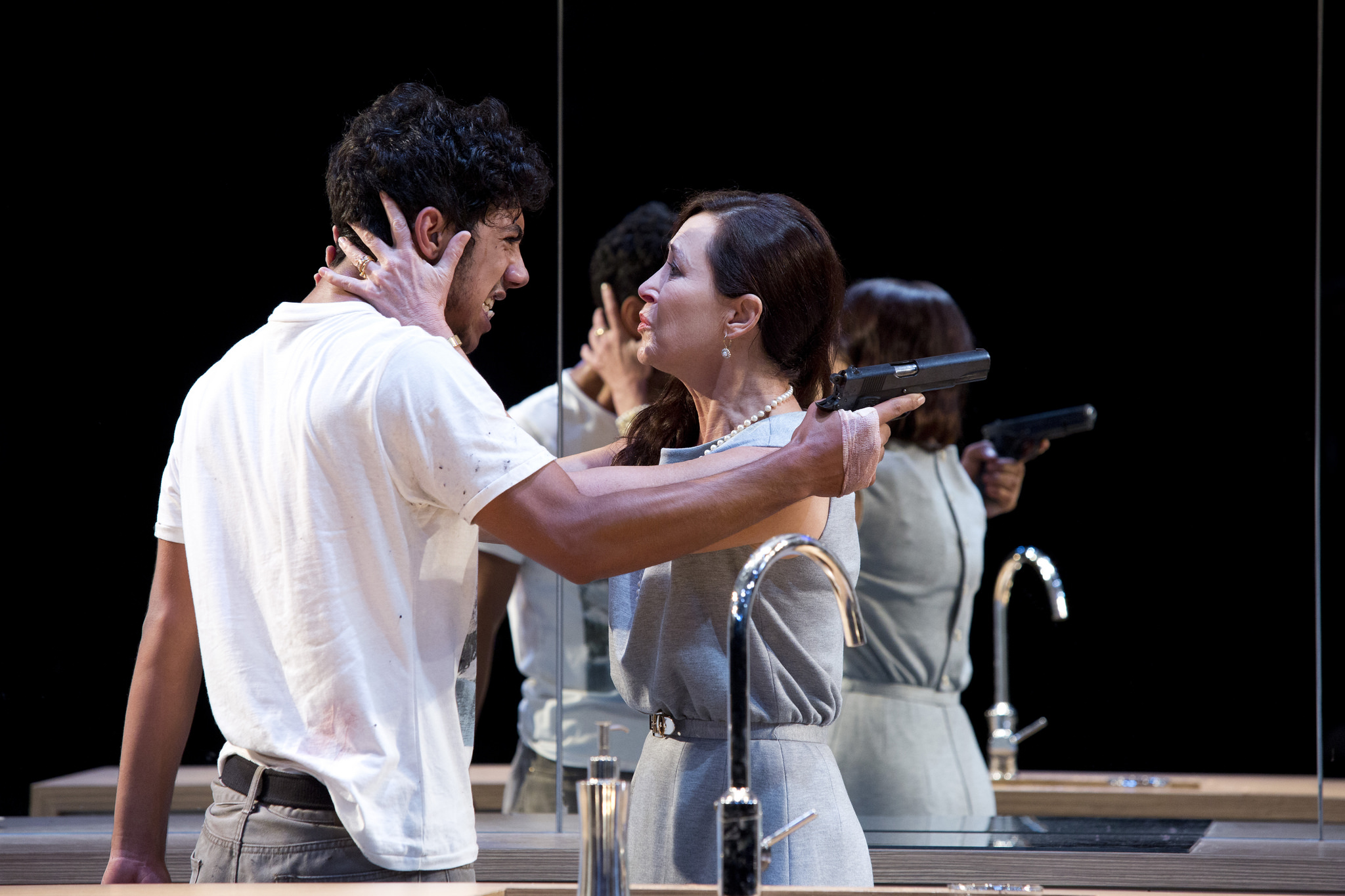
Ben Winspear, Hunter Page-Lochard and Ursula Mills. Photo: Lisa Tomasetti

Ben Winspear, Hunter Page-Lochard and Ursula Mills. Photo: Lisa Tomasetti

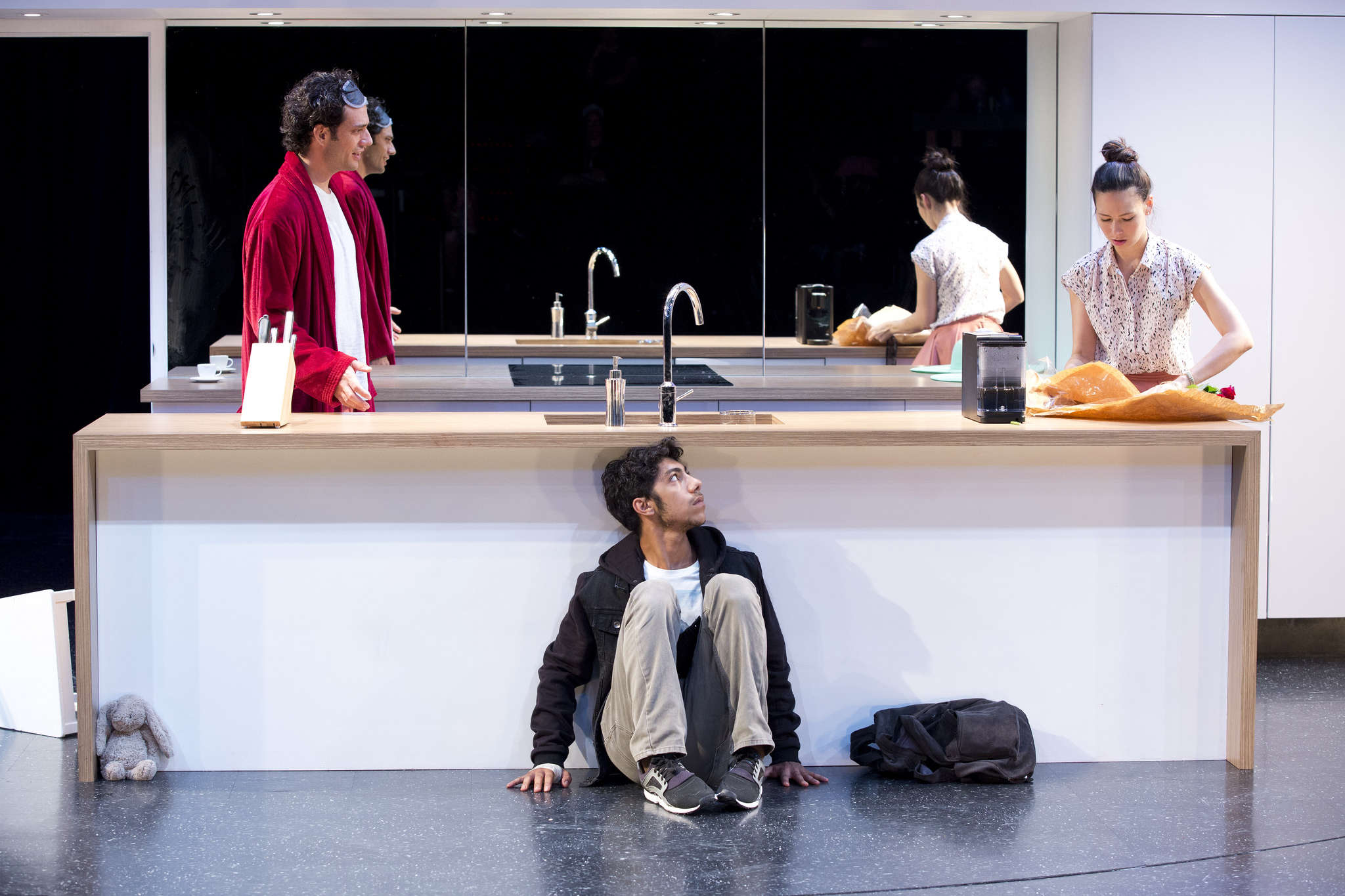
A crumpled, somewhat slovenly figure is slumped at a dining table in a starkly furnished modern room having presumably sat up all night. Above her, a red neon sign spells out the name Elektra.

Sure enough, it is the Elektra of Jada Alberts’ and Anne-Louise Sarks’ Elektra/Orestes: a contemporary adaptation of the Greek myth about a family steeped in violence in the name of revenge. Dressed in baggy track-pants and a T-shirt bearing the scrawled words “My Mum Killed My Dad”, her hair wild and uncombed, she is angry, antsy, anguished, zapping a remote control to turn blasting music on and off.

The mythical tragedy survives in various versions by ancient Greek dramatists Sophocles, Euripides and Aeschylus. Elektra and her brother Orestes kill their mother Klytemnestra in revenge for her murder of their father Agamemnon with the help of her lover Aegisthus. Klytemnestra was in turn avenging the death of her eldest daughter Iphigenia, sacrificed by Agamemnon to appease the goddess Artemis in return for the winds to sail his ships to the Trojan War. He returned home with Cassandra, a war trophy who had borne him twins.

Alberts and Sarks (who also directs) give their new version a modern domestic setting, with a stage design by Ralph Myers. Running a tight one-hour, the first half takes place in the dining room on the day that Orestes finally returns after years in exile to exact Elektra’s long-planned revenge. A door leads into the kitchen, through which the characters disappear then return as events unfold.

As the day begins, Elektra (Katherine Tonkin) is petulant and aggressive towards her mother (Linda Cropper), while her sister Khrysothemis (Ursula Mills) makes coffee and tries to keep the peace. Aegisthus (Ben Winspear) comes and goes, a sleazy figure in boxer shorts and untied velvety dressing gown. Then a messenger (Hunter Page-Lochard) arrives to say that Orestes is dead; but it is Orestes himself.

Halfway through the play, the stage turns and the action start over again, as we watch what was happening unseen in the kitchen during the first part (including Orestes’ climactic murder of Klytemnestra).

It’s a clever concept that makes for an intriguing structure and gripping drama. Sarks balances the production beautifully, making sure the timings work and ensuring that we hear and glimpse just enough from the other room to trace the unfolding drama from the two perspectives.

She and Alberts have also added a shocking, new twist to the family dynamic that ups the ante yet another notch.

Where the Greeks kept the violence off-stage, leaving it to the imagination, Sarks puts it on stage. It’s not easy to portray violence live in the theatre and there were a few giggles on opening night but I thought they handled it well (fight direction by Scott Witt) with enough blood but not too much. The production certainly gives you pause to ponder what a body being stabbed more than 20 times (as we have read about in the news recently) actually means, and the frenzied nature of such an attack.

Hunter Page-Lochard and Linda Cropper. Photo: Lisa Tomasetti

Hunter Page-Lochard and Linda Cropper. Photo: Lisa Tomasetti

The performances are generally excellent. Tonkin is ferociously good as Elektra, her fierce performance convincingly powered by overwhelming emotions that she can’t deal with. Instead she lashes out physically and verbally, in almost childlike fashion at times, as grief, anger and bitter resentment consume her.

Cropper is also superb as the cool, chic Klytemnestra encapsulating her tough steeliness yet also the world-weariness, regret and internal conflict she is now forced to live with. The script makes her actions understandable and the final scenes in which she explains herself have a real power.

Mills and Winspear make the most of relatively small roles with vivid performances, and Page-Lochard’s portrayal grows in strength as the play progresses.

Mel Page’s costuming, Damien Cooper’s lighting and Stefan Gregory’s sound all contribute to the taut, effective, stark staging.

The dialogue itself is believably every-day, though certain phrases sing, and there is a surprising amount of humour predominantly as a result of Elektra’s agro. But stripped of the poetry and grandeur of ancient Greek tragedy, Elektra/Orestes makes the violence real and ugly.

Elektra/Orestes doesn’t have quite the same emotional impact as Sarks’ 2012 award-winning, contemporary Medea (co-adapted with Kate Mulvany), which operated in a similar fashion, telling the story from the point of view of Medea’s murdered young sons, seen in their bedroom.

The concluding image of Orestes and Klytemnestra would be more moving if we had seen some of the conflicting emotions raging within Page-Lochard’s Orestes in the lead-up to the murder. As it is, his final reaction comes rather out of nowhere and is therefore less potent.

Nonetheless, Elektra/Orestes is a clever, provocative, pithy piece, showing that revenge only perpetuates cycles of violence and doesn’t assuage anger, grief and resentment (understandable though they may be). Only in forgiveness can we hope to find any peace – something we so often struggle to accept and achieve.

Elektra/Orestes plays at Belvoir St Theatre until April 26. Bookings: www.belvoir.com.au or 02 9699 3444

Frame of Mind

Sydney Theatre, March 9

Chloe Leong and David Mack in Quintett. Photo: Peter Greig

Chloe Leong and David Mack in Quintett. Photo: Peter Greig

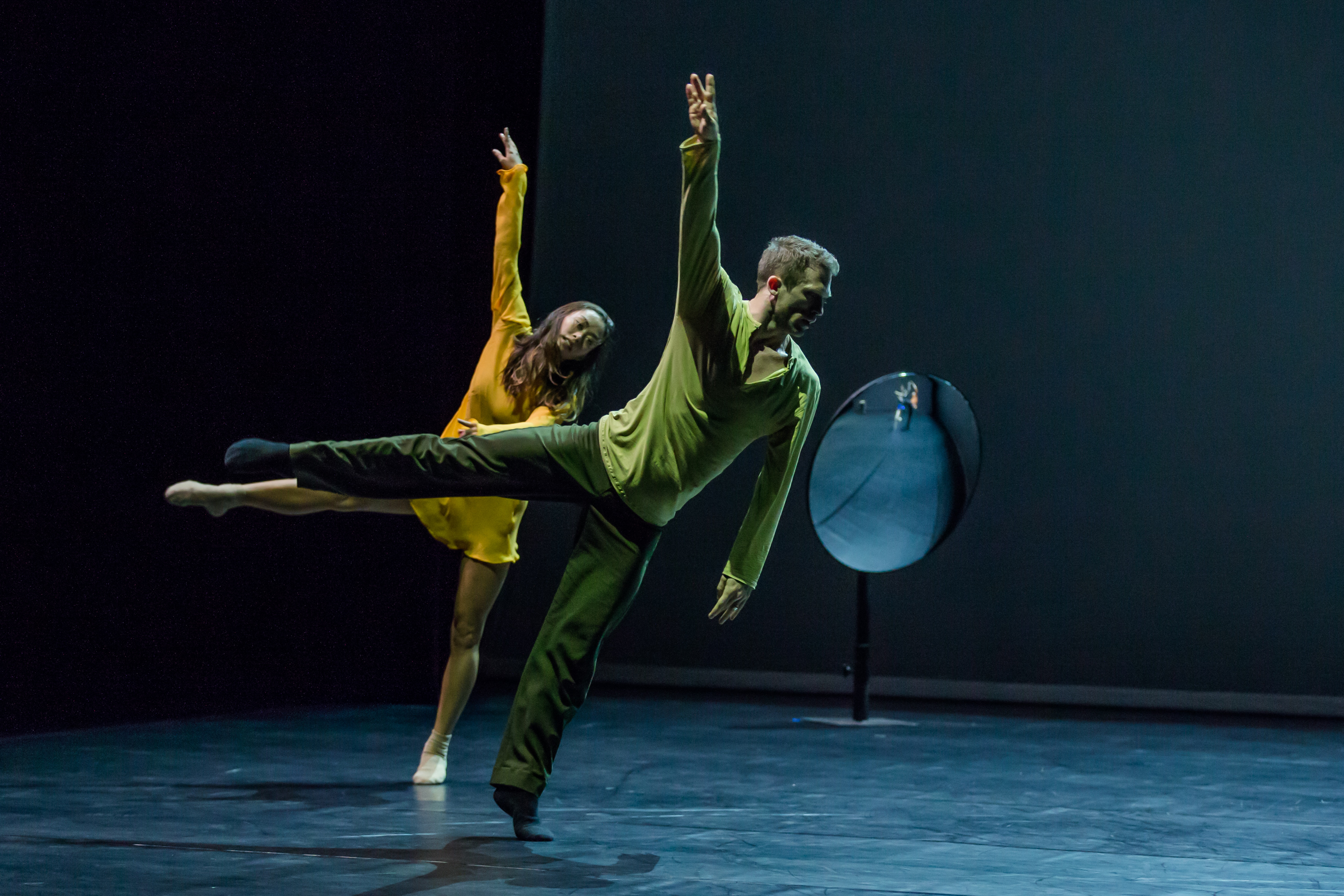
It’s a big deal for Sydney Dance Company to have been granted the rights to William Forsythe’s Quintett. Only six companies in the world have been allowed to perform it – and SDC’s exhilarating performance shows why they are one of them.

Created by Forsythe in 1993 as a tribute to his wife, dancer Tracy-Kai Maier, who died of cancer at age 32 without being well enough to see it, Quintett is a contemporary classic for five dancers.

Choreographed to Gavin Bryars’ hypnotic Jesus’ Blood Never Failed Me Yet, it is performed on an open set with a spotlight pointed at a round mirror standing on stage.

Forsythe blends balletic and contemporary movements in constantly surprising combinations that take the breath away. Traditional ballet steps are deconstructed and twisted off their axis. The dancers whip and whirl around each other then fall, slide and crawl. Sharp, precise movements melt into organic shapes, with some playful floor work.

Intensely physical and technically demanding, the opening night cast featured Chloe Leong, Jesse Scales, David Mack, Cass Mortimer Eipper and Sam Young-Wright – all of them sensational.

Quintett radiates the sheer joy of movement but is also tender, fleetingly angry and sad. It’s sublime.

Cass Mortimer Eipper in Frame of Mind. Photo: Peter Greig

Cass Mortimer Eipper in Frame of Mind. Photo: Peter Greig

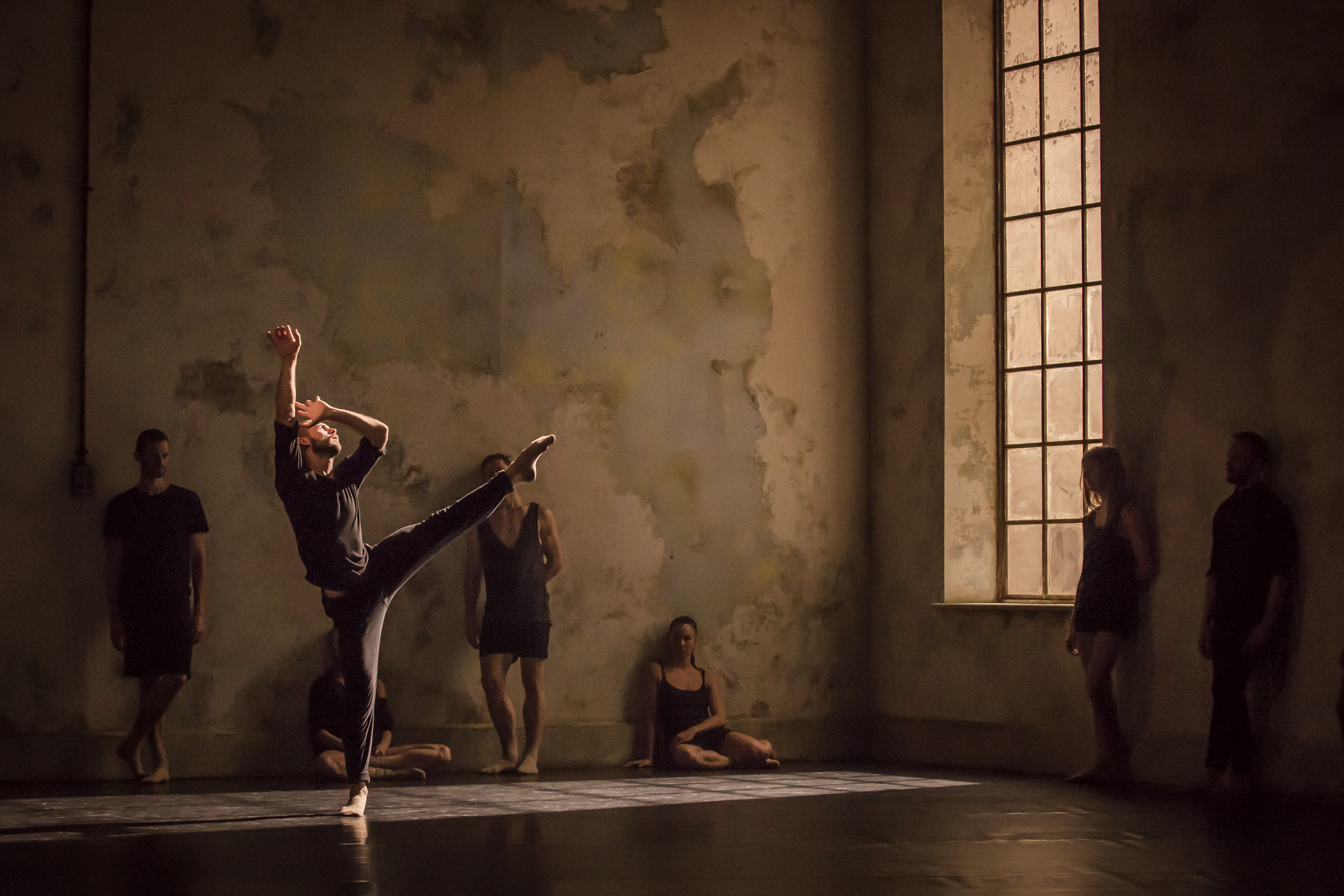
Quintett features alongside a new work for the full company by SDC artistic director Rafael Bonachela called Frame of Mind, which lends its name to the double bill. It too excites with the visceral thrill of extreme physicality, and is also one of Bonachela’s most moving pieces.

The work was inspired by the emotional turmoil Bonachela felt when his mother was hospitalised in Spain and he was unable to be with her. At the same time, he was without the support of his partner who was in New York.

Frame of Mind features a beautiful set design by Ralph Myers: a “memory room” with peeling walls and a large, grimy window, through which Ben Cisterne’s evocative lighting suggests the passing of time. Dancers occasionally gaze through the window, perch on the sill, or loll against the wall watching the surging movement of other performers. At times, the patterning on the wall seems to hint at a world map: far-flung places beyond the confines of the space. Myers also designed the all-black costumes.

Bonachela uses a wonderful, pulsing score by Bryce Dessner featuring three compositions written for the world-renowned Kronos Quartet. Matching the energy of the music, Frame of Mind comprises a series of solos, duets, trios, quartets and full ensembles where the movement coalesces into moments of powerful unison.

Frame of Mind is all about relationships: our need to love and be loved, to support one another and be supported. Highlights include a duet between Jesse Scales and Richard Cilli full of conflicting emotions in which they confront and comfort each other, and the concluding, emotionally-wracked solo by Eipper.

Frame of Mind runs at Sydney Theatre until March 21 then plays in Canberra, April 30-May 2 and Melbourne, May 6-16

A version of this review ran in the Sunday Telegraph on March 15

This House is Mine

Eternity Playhouse, March 13

Chris Barwick as Mack and Fabiola Meza as Clem. Photo: Patrick Boland

Chris Barwick as Mack and Fabiola Meza as Clem. Photo: Patrick Boland

For the past 15 years, Milk Crate Theatre has been working with people who have experienced homelessness and social marginalisation to create theatre that builds their confidence and helps them make positive changes in their life.

At the same time, the stories they tell, drawn from their own experiences, challenge and inform audiences by putting a human face to social issues so many of us in Australia are lucky enough to have only read about.

This House is Mine, presented by Milk Crate in association with Darlinghurst Theatre Company, began with discussions around the complex issues surrounding homelessness, with mental health emerging as a theme that participants wanted to explore. (According to the program there are more than 20,000 homeless people in Sydney on any given night).

On paper, This House of Mine sounds like a tough night at the theatre – and it certainly doesn’t pull any punches. But it’s an absorbing, poignant piece with laughter, tears and tenderness as well as darkness and brutality, and it speaks with a great sense of shared humanity.

Written by Maree Freeman, the artistic director of the company, and directed by Paige Rattray, the play weaves a web of stories performed by six people from Milk Crate’s ensemble of more than 40, along with one professional actor (young NIDA graduate Contessa Treffone).

In between scenes, other members of the Milk Crate community talk in video interviews about their experiences and perspectives on the issues raised.

Matthias Nudl as Jason. Photo: Patrick Boland

Matthias Nudl as Jason. Photo: Patrick Boland

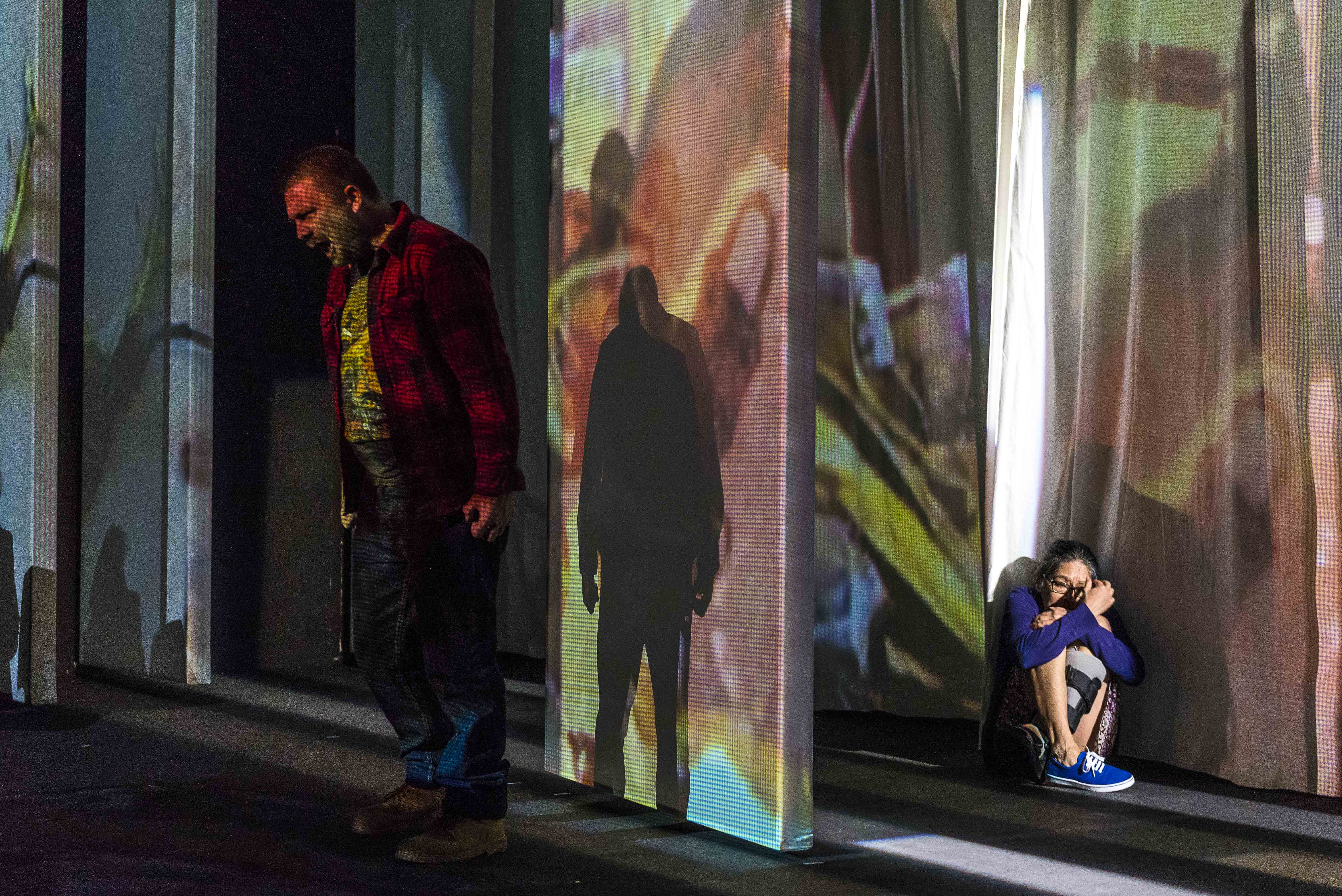
Entering the theatre, there’s a line of chairs on stage, a TV monitor to the right of the stage, and some sliding screens at the back (set design by Hugh O’Connor). It looks as though it might be one of those pieces of verbatim theatre, where the performers essentially sit and talk but it’s not like that at all.

Rattray’s staging is simple but effective as the stories unfold, using the screens to create different spaces, with video imagery (designed by Sarah Emery with Sean Bacon as consultant) giving us an insight into the turmoil within the minds of some of the characters.  Tom Hogan’s sound and Ross Graham’s lighting help create a strong sense of mood.

The play begins with two characters standing facing each other while their phone conversation is relayed in voice-over. Evelyn (Veronica Flynn) is worried about Jason (Matthias Nudl) who suffers from depression.

John McDonnell as Frank and Veronica Flynn as Evelyn. Photo: Patrick Boland

John McDonnell as Frank and Veronica Flynn as Evelyn. Photo: Patrick Boland

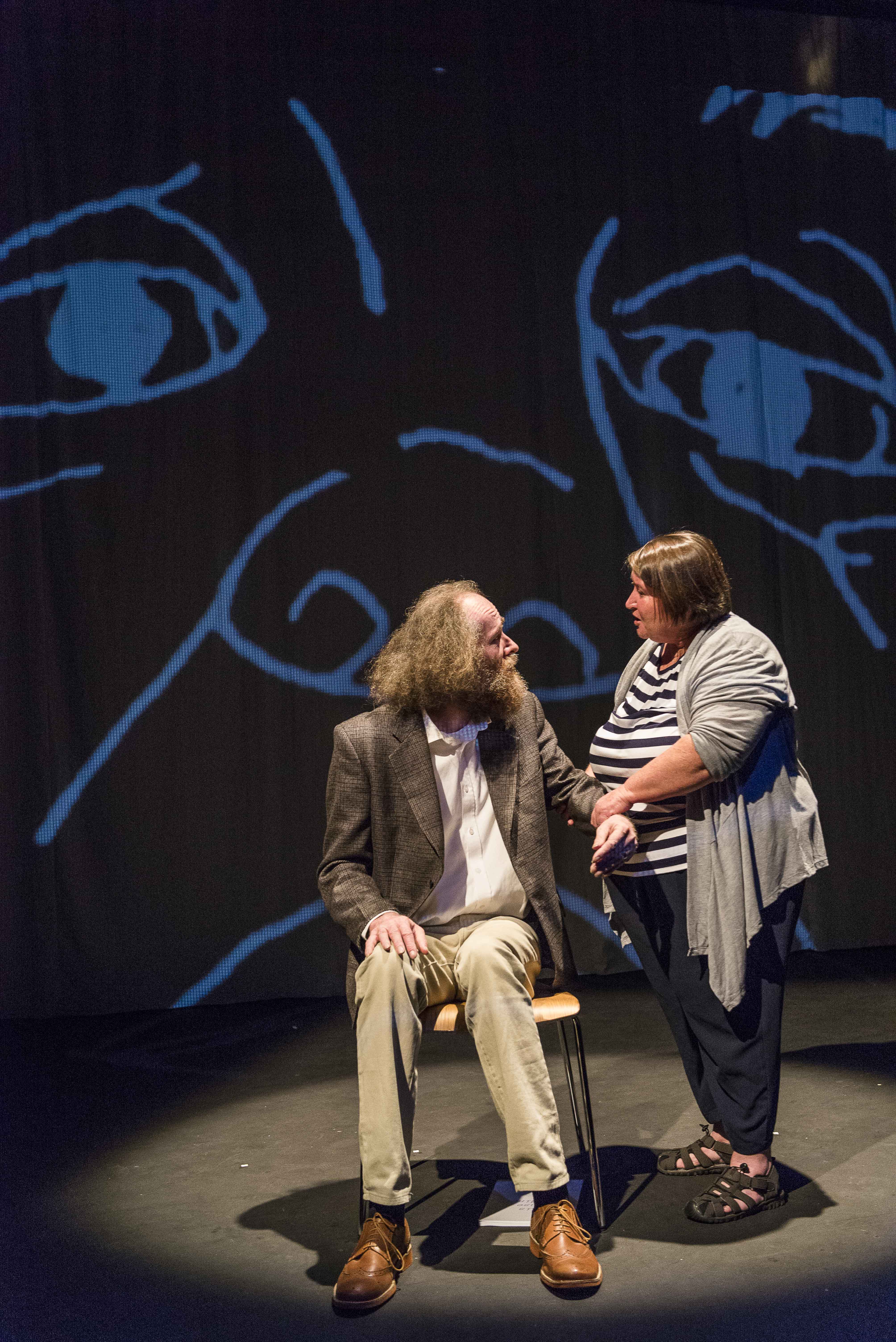
From there we meet Frank (John McDonnell), a gentle psychiatrist with a wild shock of hair who is in the early stages of dementia and will soon have lost touch with reality. The final scenes between him and the spirited, motor-mouthed Evelyn, who is his daughter, are terribly moving.

There’s also Clem (Fabiola Meza), the abused wife of Mack (Chris Barwick), whose moods swing violently, and Clem’s estranged daughter Brooke (Rach Williams) who can’t understand why her mother doesn’t leave.

Brooke, who not surprisingly finds relationships hard, is living with girlfriend Anna (Treffone), who is initially a livewire then descends into schizophrenia.

The lack of acting technique among the cast actually adds to the feeling of authenticity. All the performers are convincing, drawing us into their respective character’s stories. The scenes of domestic violence between Meza and Barwick feel particularly, chillingly believable, while Treffone handles the difficult role of Anna with subtlety.

Contessa Treffone as Anna and Rach Williams as Brooke. Photo: Patrick Boland

Contessa Treffone as Anna and Rach Williams as Brooke. Photo: Patrick Boland

This is My House is powerful and empowering theatre. Told with disarming honesty, it feels raw and real and very moving.

After the final performance on March 22, there will be a post-show panel discussion hosted by Milk Crate in partnership with the St James Ethics Centre. Entitled Breaking the Cycle: Why does homelessness still exist?, moderator Dr Simon Longstaff, Executive Director of St James Ethics Centre and panelists Katherine McKernan, CEO of Homelessness NSW, Ronni Khan, CEO of Ozharvest, Steven Persson, CEO of The Big Issue, Toby Hall Group CEO of St Vincent’s Health Australia, and Milk Crate Theatre ensemble artists will explore how they, as a community, move forward to break the cycle of intergenerational disadvantage.

This House is Mine runs at the Darlinghurst Theatre Company until March 22. Bookings: www.darlinghursttheatre.com or 02 8356 9987.

Man of La Mancha

Reginald Theatre, Seymour Centre, February 28

Tony Sheldon and Ross Chisari. Photo: Michael Francis

Tony Sheldon and Ross Chisari. Photo: Michael Francis

Independent company Squabbalogic is known for its inventive productions of little seen, contemporary musicals. It now presents a brilliantly re-imagined staging of a hoary, 50-year old classic: Man of La Mancha.

Written as a play-within-a play, author/actor/tax collector Miguel de Cervantes is imprisoned by the Spanish Inquisition. When his fellow inmates subject him to a mock trial of their own, Cervantes tells them the story of Alonso Quijana, a crazed gentleman who believes he is Don Quixote, a knight-errant on a quest to better the world.

Director Jay James-Moody and his terrific design team (set by Simon Greer, costumes by Brendan Hay, lighting by Benjamin Brockman, sound by Jessica James-Moody) set their gritty production entirely in a dark, dingy prison dungeon (as the first production was originally staged before being expanded and romanticised).

We never forget that this is Cervantes mustering the prisoners to help tell his tale, but the performances are so beautifully delineated that we experience and embrace both layers of the storytelling at the same time. The prisoners are as well characterised as the roles they then take on in Don Quixote’s world.

Tony Sheldon and company. Photo: Michael Francis

Tony Sheldon and company. Photo: Michael Francis

The lo-fi staging is simple, with a few benches rearranged for different scenes, yet it’s also beautifully detailed from the horse costumes to the kinks in Don Quixote’s sword after his tilting at windmills. The staging makes clever use of the intimate theatre, including the balcony around it, to engender an oppressive atmosphere (heightened by the sound of clanking and screams) but allies that with a rudely vigorous performance style.

Hay’s costuming is a convincing combination of the grubbily makeshift and the more colourful outfits that Cervantes might well have had in his theatre trunk, adding an element of sexiness among the squalor.

Also heightening the DIY feel is the decision to have the actors play the score on a range of instruments, led by musical director Paul Geddes on piano.

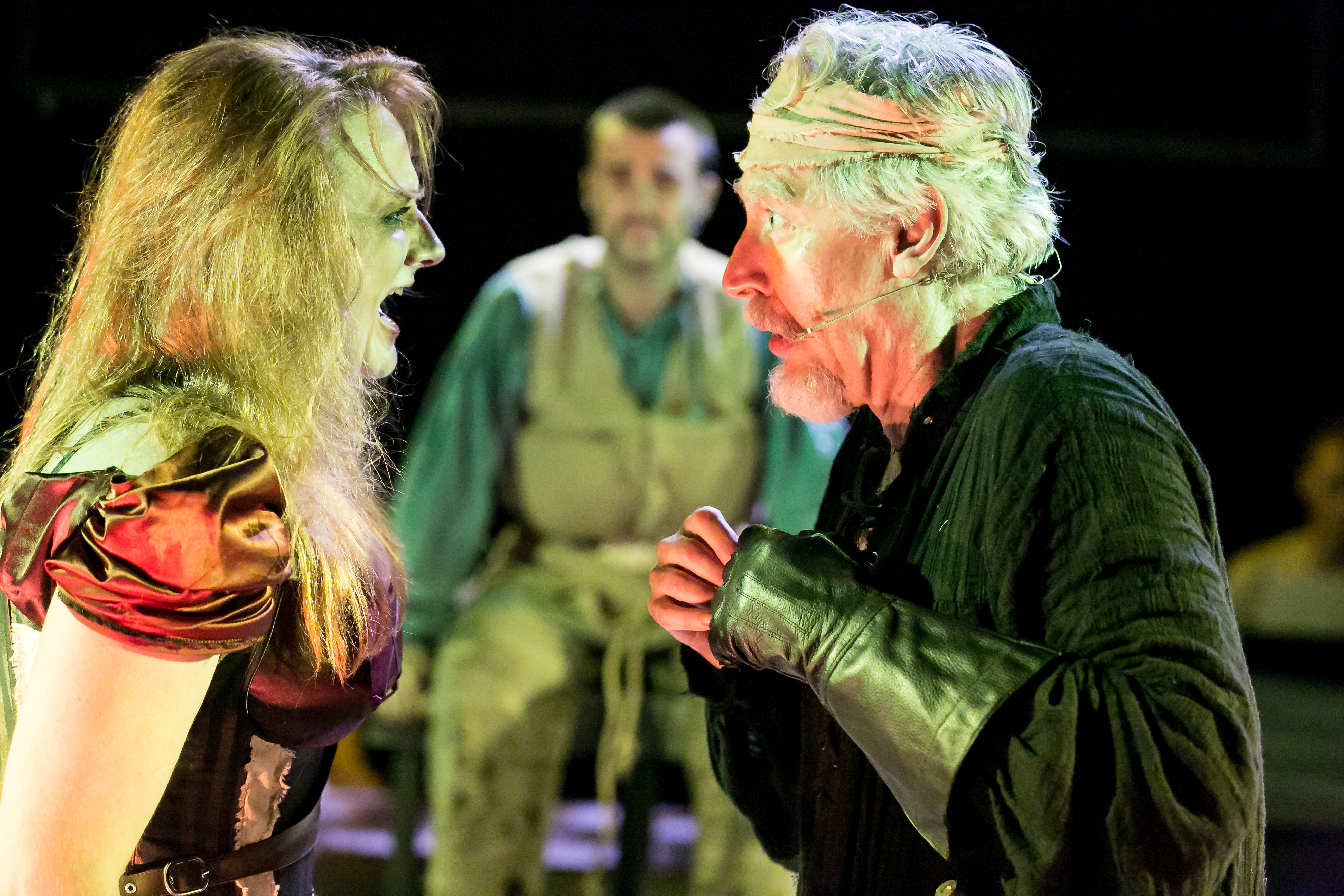
At the heart of an excellent ensemble, Tony Sheldon gives a stellar performance. He is suave as Cervantes and dignified, gentle and frail as Quixote, his rendition of The Impossible Dream speaking to us afresh and tearing at the heartstrings. It’s a revelation after umpteen bombastic versions sung out of context with little sense of the song’s true meaning.

Marika Aubrey, Ross Chisari and Tony Sheldon. Photo: Michael Francis

Marika Aubrey, Ross Chisari and Tony Sheldon. Photo: Michael Francis

Marika Aubrey is a spunky Aldonza, the abused barmaid and part-time tart in whom Quixote sees beauty as his honoured Lady Dulcinea. Aubrey brilliantly captures the tough, cynical carapace Aldonza has built for self-protection and then touchingly conveys the new hope she gradually, briefly allows herself to feel in Quixote’s eyes. The final scene between her and Sheldon is incredibly moving and inexpressibly sad. Aubrey is also impressive vocally and raises the roof with the song Aldonza.

Ross Chisari is endearing as Quixote’s chirpy sidekick Sancho Panza and his choreography suits the production’s aesthetic. Glenn Hill is in fine voice as the padre, as is Stephen Anderson as Alonso’s housekeeper. Joanna Weinberg lends weight to the antagonistic roles of the prison prosecutor and Dr Carrasco, who wants to marry Alonso’s niece but is worried about being associated with a madman, while James-Moody turns in a memorable comic cameo as the barber.

Stephen Anderson, Glenn Hill and Courtney Glass. Photo: Michael Francis

Stephen Anderson, Glenn Hill and Courtney Glass. Photo: Michael Francis

However, credit is due to all the performers: Hayden Barltrop (who is there primarily as a musician on clarinet, keys and bassoon), Reece Budin, Laurence Coy, Courtney Glass, Hay (who performs as well designing the costumes), Rob Johnson, Shondelle Pratt, Kyle Sapsford and Richard Woodhouse (whose guitar playing is gorgeous on Little Bird).

There’s no disguising Man of La Mancha’s creakiness. The book (Dale Wasserman) and lyrics (Joe Darion) are clunky at times, while Mitch Leigh’s Spanish-influenced music can feel samey and rather dirge-like. Despite all of that, Squabbalogic gives us an exciting, inspiring and genuinely moving piece of theatre. Recommended.

Man of La Mancha plays at the Seymour Centre until March 21. Bookings: www.seymourcentre.com or 02 9351 7944

A version of this review ran in the Sunday Telegraph on March 8

Queen Bette

Old 505 Theatre, March 6

Jeanette Cronin in Queen Bette. Photo: Richard Hedger

Jeanette Cronin in Queen Bette. Photo: Richard Hedger

“Son of a bitch”, yells Jeanette Cronin as she storms onto stage in the guise of screen legend Bette Davis.

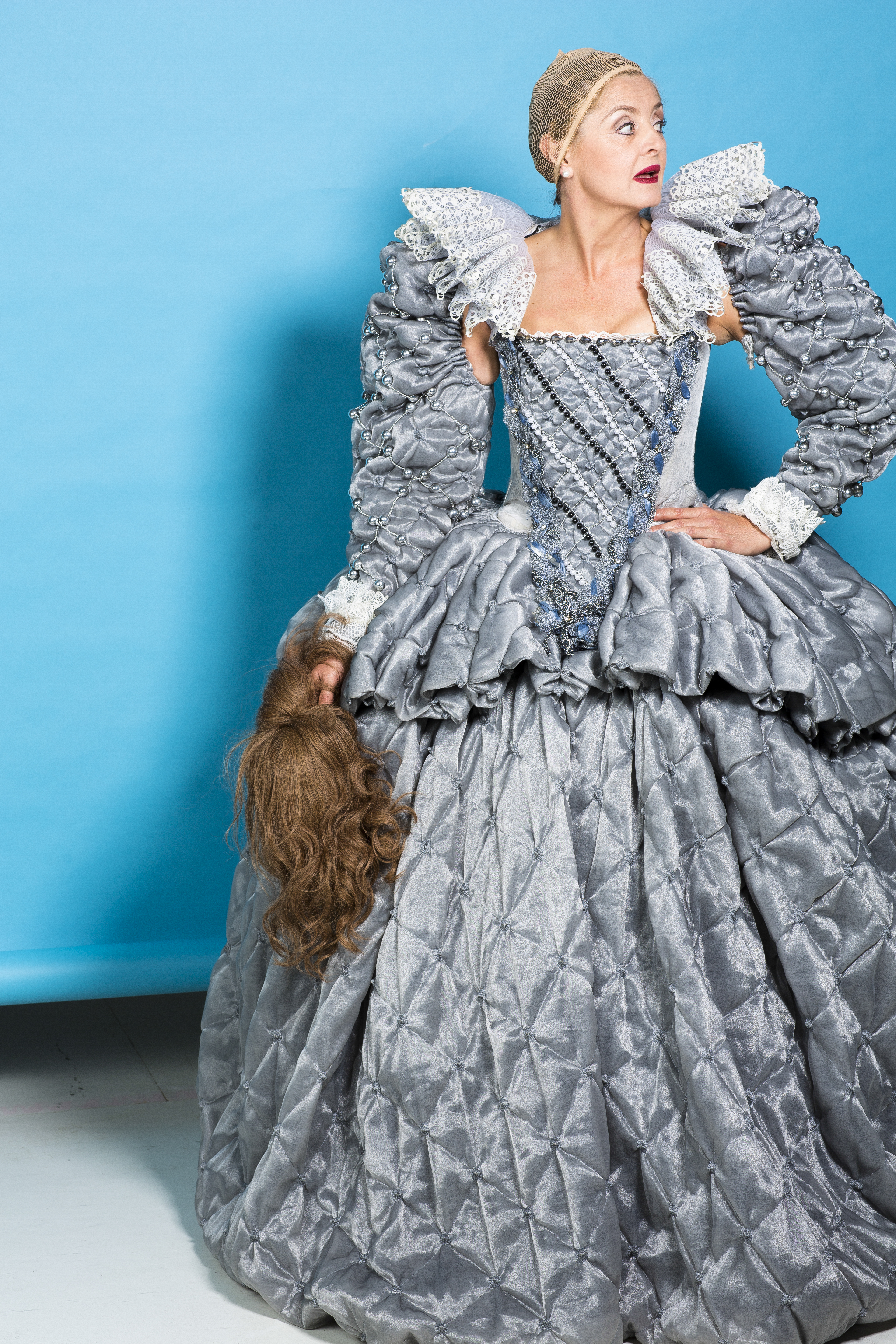
It is 1939 and Davis is playing Queen Elizabeth I in The Private Lives of Elizabeth and Essex opposite Errol Flynn. She had wanted Laurence Olivier but lost out there. However, she had her way when it came to the costumes, revealing that she had two sets made – one to placate the studio, another more extravagant collection that she actually wore.

From there, Queen Bette rewinds to the beginning to follow Davis’s career in fairly straightforward biographical fashion from New England girl to her triumphs on Broadway and onto Hollywood where she became a screen idol, starring in innumerable films including Of Human Bondage, Dangerous, All About Eve and What Ever Happened to Baby Jane?

The one-hour, one-woman docudrama was devised by Cronin and Peter Mountford, who drew on Davis’s 1962 autobiography The Lonely Life and various interviews that she did over the years. Mountford also produces and directs the show for G.Bod Theatre.

Cronin played Davis last year in John Misto’s play Dark Voyager at the Ensemble Theatre but comes into her own here as the iconic movie star. She bears more than a passing resemblance to Davis – in fact, the likeness is uncanny at times – and captures her clipped way of speaking and fierce presence.

Staged on a simple set with an old-fashioned dressing table in which the audience is reflected in the mirror, a hat stand, a portrait of Elizabeth I (who Davis played on screen twice) and a costume or two, Queen Bette doesn’t delve deeply personally or psychologically, though we do learn that she adored her struggling but ever-supportive mother. Nor does the show focus on the scuttlebutt and famous feuds.

What it gives us is a strong, lively impression of a formidable actor who was driven, combative and prepared to stand her own ground, even having a legal stoush with Warner Bros (which she lost).

It’s fascinating to hear about the importance of Martha Graham, who taught Davis dance as part of her theatre training, and who influenced the way she moved as an actor thereafter. We also see what a smart cookie she was, recognising very early on the importance of the talkies and that a different style of acting was required.

Cronin is constantly on the move, flitting, dancing, prowling and pacing around the stage. She hardly draws breath in a highly energetic performance. Apparently Davis had this kind of restless energy but as a piece of theatre it feels a bit relentless at times.

Nonetheless, Queen Bette is a very enjoyable entertainment about a fascinating woman.

Queen Bette plays at the Old Theatre 505 until March 15. Bookings: http://www.venue505.com/theatre