Cock

Old Fitzroy Theatre, February 8

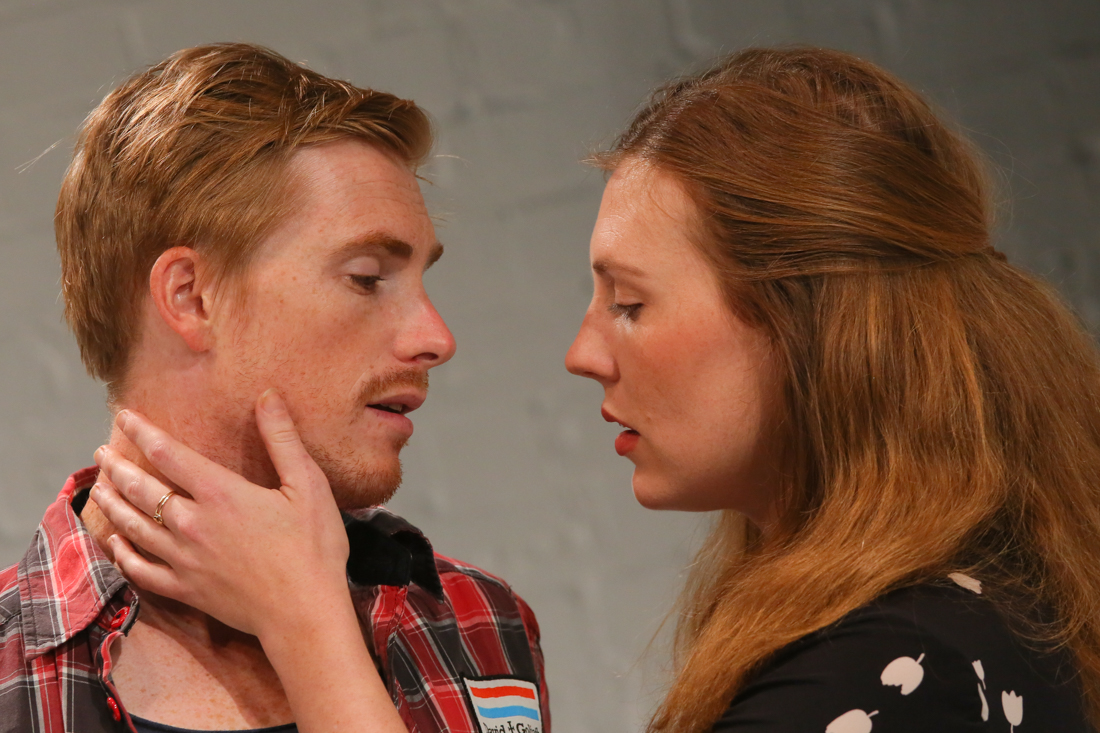
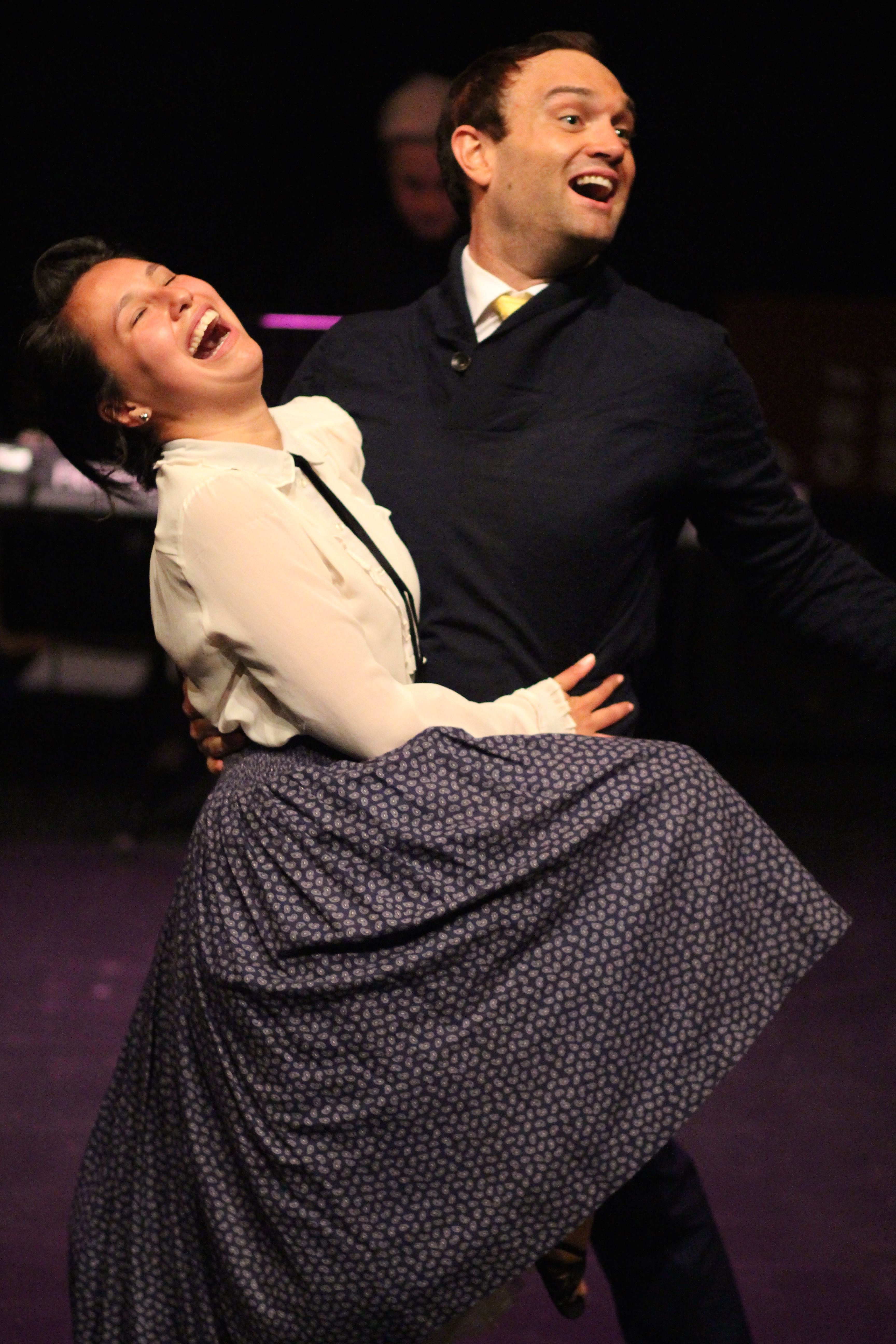
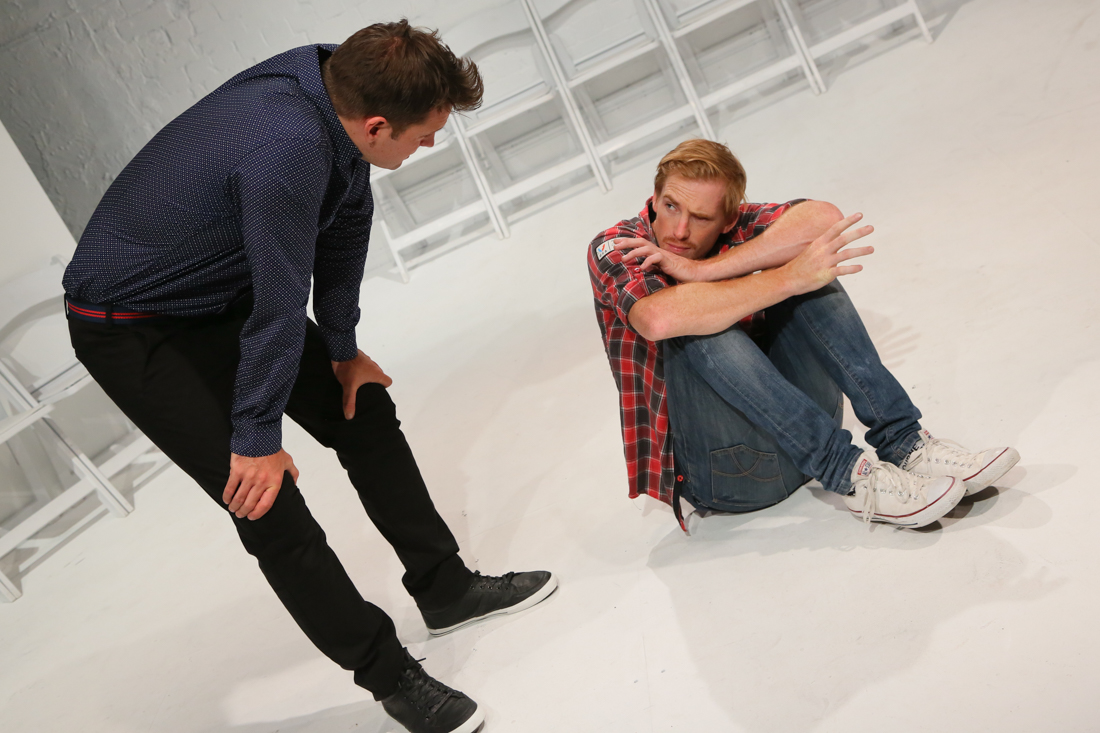
Matt Minto and Michael Whalley. Photo: Tim Levy

Matt Minto and Michael Whalley. Photo: Tim Levy

Finally, Sydney has the chance to see the acclaimed, provocatively titled Cock by British playwright Mike Bartlett – and this terrific production from Red Line Productions (the new caretakers of the Old Fitz), presented as part of the Mardi Gras Festival, shows why the play has generated such a buzz on both sides of the Atlantic.

After premiering in 2009 in London in the Royal Court’s tiny Upstairs Theatre, the play had an Off-Broadway season (where the New York Times reviewed it as the Cockfight Play while many other publications included an asterisk or two in the title).

Cock explores a love triangle between two men and a woman. Only one of them is named – the indecisive John, who is torn between two lovers. The others are simply referred to in the script as M and W (for man and woman).

John (Michael Whalley) has been in a relationship with M (Matt Minto) since coming out. They’ve now hit something of a seven-year itch and for John, anyway, the relationship is not what it was. Then to his surprise, he finds himself drawn to W (Matilda Ridgway), a lonely 28-year old divorcee who he meets at the bus stop on his way to work and ends up in bed with.

John doesn’t have a strongly developed sense of himself. Where the dominant M constantly puts him down, chipping away at his sense of self-worth, John finds a more positive reflection of himself in W’s eyes. She is gentle and nurturing and confident that they would be good for each other. She makes John feel that he could amount to something and she offers him the chance to have a family. Unexpectedly, the sex is pretty good too.

M is angry, outraged, seeing the affair not just as a personal betrayal but as an inexplicable affront to their identity and lifestyle as gay men.

John dithers. He doesn’t know who and what he wants. He’d prefer not to have to decide. But M and W are both prepared to fight for him. M gets John to invite W to a dinner party and ropes in his father (Brian Meegan) to help plead his cause. It’s an excruciating affair for all concerned. But John is cornered and is forced to make a decision.

Cock is a tight, tense piece running for 80 minutes. In many ways it’s like a dance that becomes an emotional tug-of-war before escalating into an all-out fight.

Bartlett’s writing is wittily astringent, full of staccato phrases and unfinished sentences along with short, sharp scenes.

The original production was staged in the round as if in a wooden cockfighting ring. It’s impossible to replicate that in the tiny Old Fitz but director Shane Bosher has managed to create a similar vibe by having a row of chairs along the back wall and down the two sides of the stage, which has been painted a gleaming white. The rest of the audience sits in the usual banks of seating.

I saw the play from a seat on the stage and at such close proximity, under Michele Bauer’s bright lighting, you felt voyeuristically close to the action, quite literally in the room with the characters. You were also very aware of the audience watching on from the darkness as they would have been of you sitting right there in the light.

Bosher directs and choreographs his actors with a wonderful sense of spatial awareness. The way he positions them on stage seems to heighten the tensions between them. He keeps things moving at a nifty pace, using short, snap blackouts to punctuate the scenes.

Michael Whalley and Matilda Ridgway. Photo: Tim Levy

Michael Whalley and Matilda Ridgway. Photo: Tim Levy

As in the original production, there are no props. A sex scene between John and W is performed fully clothed with Whalley and Ridgway standing close to each but without touching. Instead they circle other and gaze into each other’s eyes, their bodies and expressive faces speaking reams. It feels sexy and real.

Both are perfectly cast. Looking at the Whippet-thin Whalley, you know exactly what W means when she describes him as being like a pencil drawing that hasn’t been coloured in. And though John’s indecision should have you wanting to shake him, Whalley somehow manages to keep him sympathetic.

Ridgway is a wonderful mixture of vulnerability and determination. Though it’s not really clear what W sees in John beyond recognising a similar loneliness in him, Ridgway convinces you to accept W’s attraction and need.

Minto also gives a strong performance as M, all blustering anger and up-tight, savage invective delivered with a sure sense of comedy. Occasionally his performance feels a little overdone but he complements the other two extremely well.

Meegan stepped into the breach at the very last minute (when an indisposed Nick Eadie withdrew after a couple of previews) and so still had script in hand when I saw the production, but he hardly referred to it and was already giving a finely judged performance.

Cock in an engrossing play that has you thinking about identity, about knowing and defining yourself, about sexuality, about clear-cut sexual definitions and something more fluid, about desire, possession and power. It’s a cracker of a play and a great little indie production. Definitely worth checking out.

Cock runs at the Old Fitz until March 6

The Credeaux Canvas

Reginald Theatre, Seymour Centre, February 3

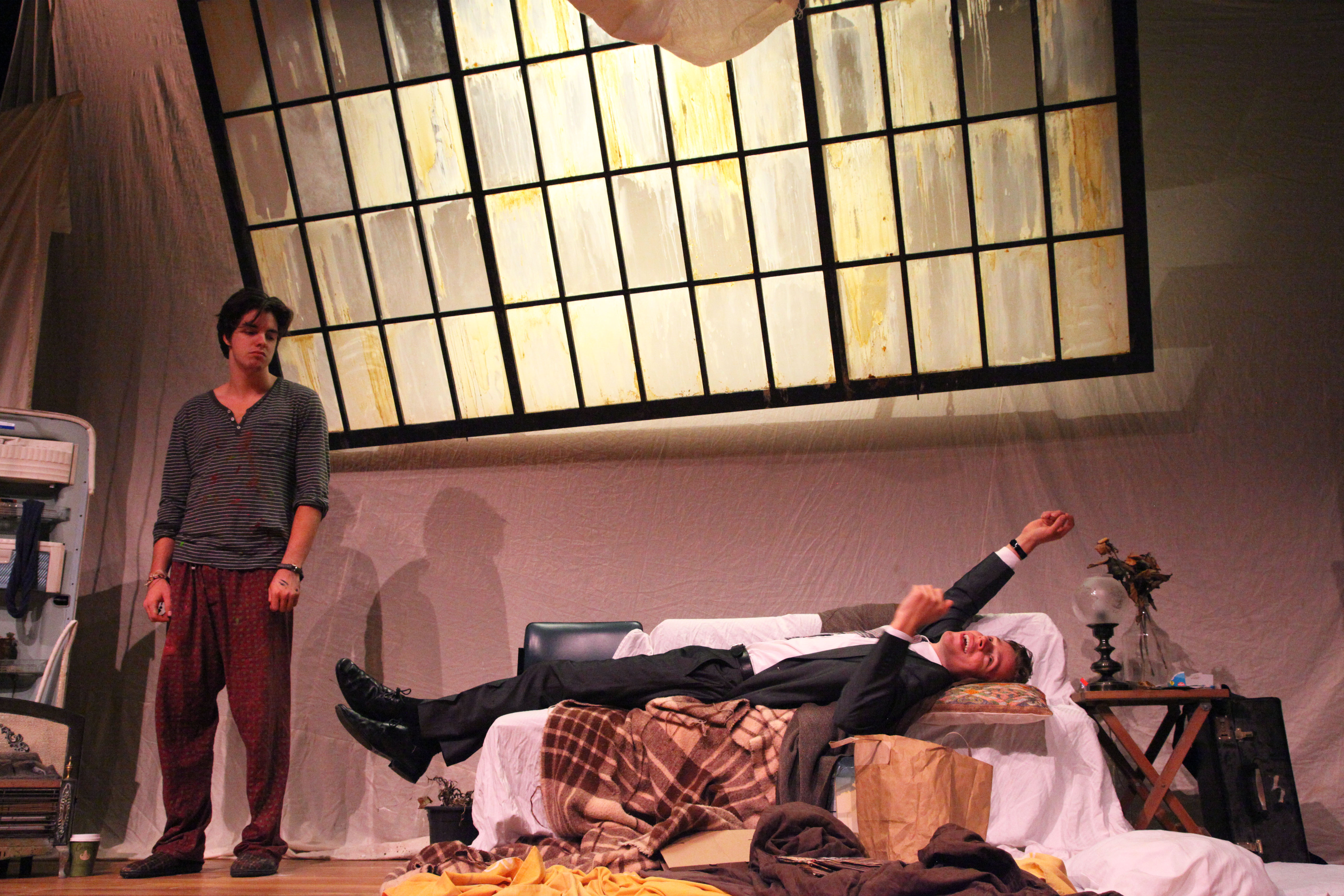
James Wright and Felix Johnson. Photo: supplied

James Wright and Felix Johnson. Photo: supplied

In his program notes, Les Solomon recalls producing the Australian premiere of Keith Bunin’s 2001 play The Credeaux Canvas at the Stables Theatre 14 years ago, having seen it not long before in New York.

Apparently the production (which I didn’t see) was a huge hit, breaking box office records. That doubtless emboldened him to produce the play again now, this time with Bryce Hallett, though there seems no compelling reason to do so.

The play has an entertaining enough plot – though it does rather peter out towards the end. But it doesn’t have the emotional depth for its characters and themes to make a terribly strong impact.

Set in a grotty attic apartment on New York’s Eastside, the play focuses on three struggling young people.

Winston (James Wright) is an artist finishing his MA. He is clearly passionate about art – and about obscure French artist Jean-Paul Credeaux, in particular – though whether he has what it takes to become a significant artist himself is questionable. At this point anyway, his work is derivative, with “come back in five years” the common response from those in the know.

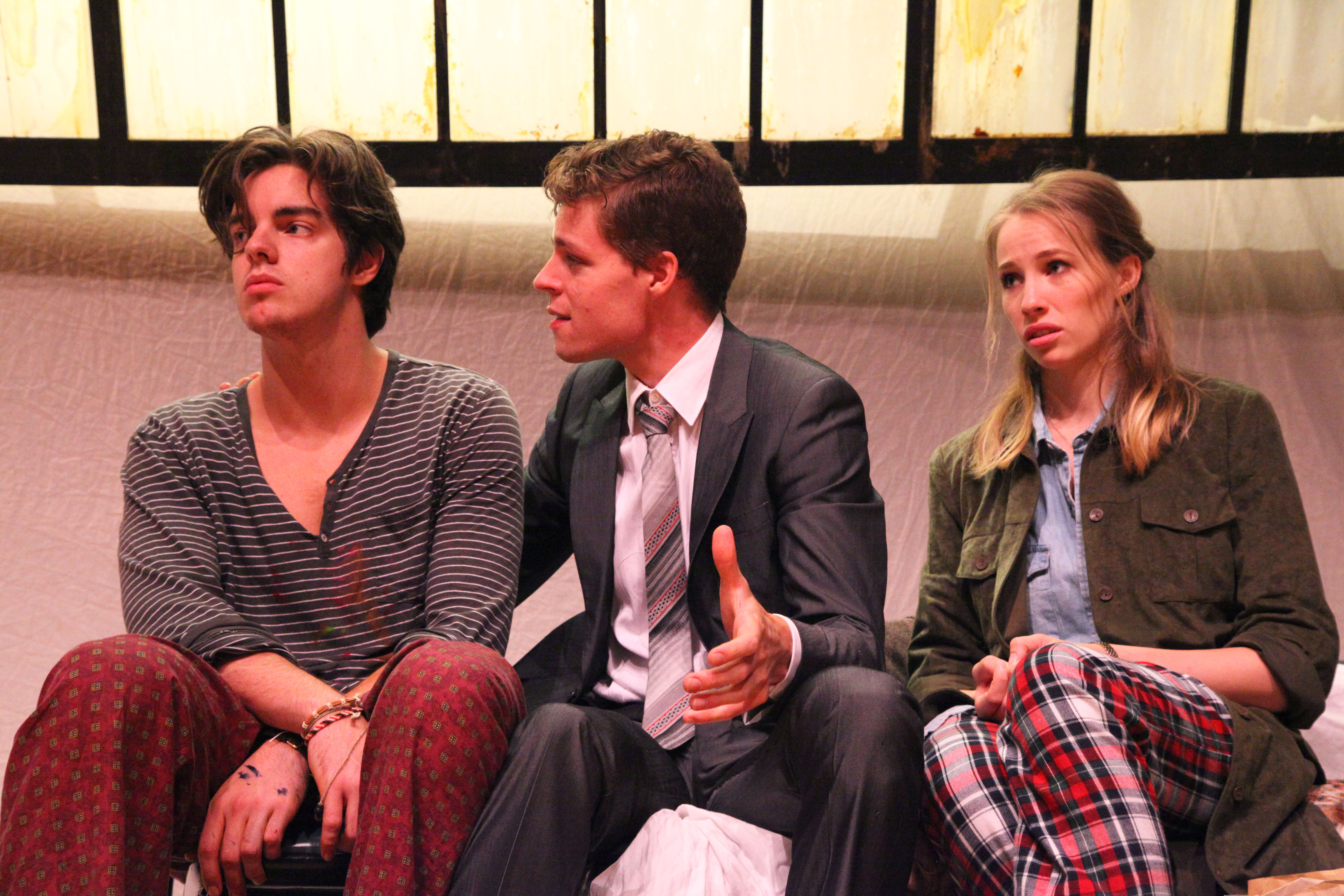
Winston shares the flat with Jamie (Felix Johnson), who has fallen foul of his well-off art dealer father and is working in real estate, which he hates. Also there on a regular basis is Amelia, Jamie’s girlfriend (Emilie Cocquerel), who has come to New York with dreams of being a singer but who finds herself waiting tables and performing at ever more crummy, far-flung venues.

Jamie has just attended the reading of his father’s will and is livid to learn he has been left nothing. On the way home, however, he bumped into Tess (Carmen Duncan), a very wealthy art collector, who was a client of his father’s and a scam suggested itself to him.

Jamie has told Tess that his father left him a lost Credeaux from the artist’s moonlit nude series. Winston will paint a fake work in the style of Credeaux with Amelia as his subject. Tess, who he disses as having more money than art sense, will be taken in and pay them a fortune.

Winston and Amelia eventually agree. To put Amelia at her ease, Winston disrobes as well, leading to a sexual triangle. (There is also a brief hint that Winston may be attracted to Jamie.) What unfolds will sorely test all of them.

James Wright, Felix Johnson and Emilie Cocquerel. Photo: supplied

James Wright, Felix Johnson and Emilie Cocquerel. Photo: supplied

Bunin doubtless means to explore the nature of fraud and fakery as it relates to the characters as well as the canvas in question. Do any of them have the talent to achieve their dreams? Are they deluding themselves? What is the true nature of the various relationships between them? But though the dialogue zips along, there isn’t enough in the writing to convincingly examine this in any depth and the production doesn’t bring the kind of nuance that might expand on it and further illuminate the subtext.

It should be noted that there were setbacks during rehearsals. Director Ross McGregor (who directed Solomon’s earlier production) came in at fairly late notice, as did Duncan.

Performances aside, some of the play is overwritten, particularly the swathes of talk about art (which comes across mainly as the writer showing that he knows what he’s talking about).

There’s a terrific design from Emma Vine and strong moments from all the performers – Cocquerel is particularly impressive – but overall not enough subtext, nuance and emotional depth for the play to really fire.

Matthew Mitcham interview

When it comes to slashie careers, Olympic diver/cabaret artist is one of the more unusual ones. For Matthew Mitcham, the leap from the diving board to the stage began with the ukulele.
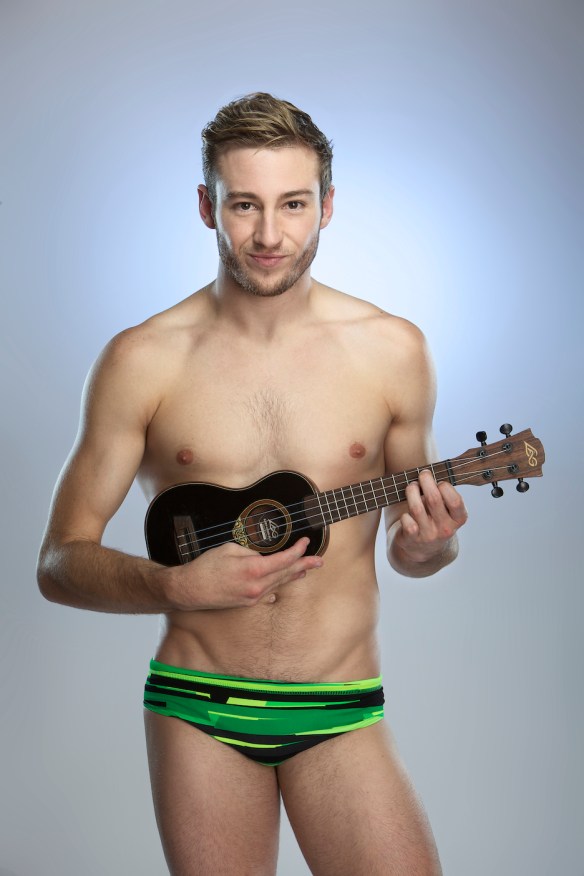
Matthew Mitcham. Photo: John McRae

Matthew Mitcham. Photo: John McRae

“I had to take three months of bed rest because I had stress fractures in my spine,” says Mitcham, who famously won gold with an unprecedented perfect score at the 2008 Beijing Olympics.

“That was in 2010. Because I was going stir crazy I bought a toy ukulele for $24 and started teaching myself how to play it by watching YouTube videos. And from there, that ignited a hunger for more information so I went on these little learning adventures and taught myself music theory, chord theory and jazz theory. It was insatiable, I was like a sponge and couldn’t stop learning.”

Ever the perfectionist, Mitcham spent hours fine-tuning his playing and during the 2012 London Olympics posted video clips on YouTube of him playing Beyonce’s Single Ladies and the Family Guy theme tune from his room in the Olympic Village.

To his surprise they went viral. Musical director Jeremy Brennan saw them and invited him to play in a couple of cabaret nights at Sydney’s Slide Cabaret.

“From there the Melbourne Cabaret Festival invited me to MC and perform at their closing gala in 2013 and the producers were so impressed that they asked me if I would consider turning the book (his revealing 2012 autobiography Twists and Turns) into a cabaret show,” says Mitcham.

They put him in touch with Rhys Morgan (aka cabaret artist Spanky) to help write the show and director Nigel Turner-Carroll, while Mitcham approached Brennan to be involved as musical director.

The resulting show Twists & Turns premiered at the 2014 Perth Fringe World Festival where it won Best Cabaret and has since toured widely. Mitcham is back on the road with it again now. After selling-out in Melbourne, he plays Brisbane and Perth before winding up in Sydney at the end of this month to perform as part of the Mardi Gras Festival.

Mitcham, who turns 27 next month, has quite a story to tell. Behind his Olympic triumphs, the openly gay diver – who was brought up in Brisbane by an alcoholic single mother – was struggling with low self-esteem, depression and drug abuse, including crystal meth addiction.

As he did in his autobiography, he discusses all this in his show with an unflinching, winning honesty. He is equally forthcoming in an interview situation, replying openly and straightforwardly when questioned but without it ever feeling like he is grandstanding or dramatising. Nor does he seem remotely bitter.

“I’ve had really good experiences with being very candid in the public spotlight with the coming-out just before Beijing,” he says. “That was received so well by the public and handled so well by the media, (I received) just unanimous support. That was really heart-warming and gave me the confidence that I could be vulnerable with the public and the media and that I would be held and supported. So when it came to writing the book, I was a bit more comfortable to be as candid as I was,” he says.

“There were some pretty serious topics that I spoke about but I kind of thought there’s no point writing a biography if you are going to skim over things. So I went into quite a lot of detail because I felt if the potential benefit to others outweighs the potential detriment to myself then I really ought to share it, and so I just shared everything.”

Mitcham admits that at the last minute he got cold feet and almost deleted the darker, more confronting material but finally decided to go ahead.

“I’m so glad that I did it, because it opens up a dialogue and it gives people permission to be able to share their stories. I’ve had a lot of people share their stuff with me after the show,” he says.

“I think there is a positive outcome to my story and I guess that means it’s easier to share the harder stuff because there is light at the end of the tunnel. I think it is a positive story and an encouraging story.”

Matthew Mitcham. Photo: John McRae

Matthew Mitcham. Photo: John McRae

Mitcham certainly seems to be happy. Despite a decidedly unconventional upbringing and some seriously troubled years, he now appears centred and levelheaded – though he admits to a pathological need to be loved. He is still diving, having won silver and gold medals at the 2014 Commonwealth Games, and he is in a settled eight-year relationship with Lachlan Fletcher who tours with him on Twists & Turns, looking after “logistics” and merchandise.

– “I think I’ve always been a performer, a show pony. If you were going to psychoanalyse it, it would be searching for validation and positive reinforcement” – 

In putting the show together, Morgan wrote a first draft, which he and Mitcham discussed. “We got up to about four or five drafts before we knew the show well enough to stop using it,” says Mitcham.

“We wanted to keep the story-telling more natural. I’m not an actor so it’s better for it not to be a set script because I don’t have the practice to deliver a script naturally. Now it’s just me telling the story.”

Morgan – in his trash-drag Spanky guise – also features in the show, personifying Mitcham’s childhood invisible friend and his inner demons, as well as singing backing vocals. The show also includes a trampoline (Mitcham was a trampoline gymnast before he began diving, winning an event at the 2001 World Junior Championships), an eclectic selection of songs, and some pre-recorded voiceovers by his mother Vivienne (who he describes as “nuttier than a bag of trailmix”).

One of the stories Mitcham tells is spending six months without electricity as a five-year old when his mother had an argument with the electricity supplier. During this time, she bought a wind-up gramophone on which they used to listen to old records.

His mother was certainly eccentric, I suggest. “That’s the diplomatic way of putting it,” says Mitcham with a laugh. “But she has given me some fantastic anecdotes to tell in the show.

“Recording the voiceovers was so painful. She’s not done anything like that before. I had my laptop and my microphone and she was just bouncing all around the living room doing them over and over again. Nigel (the director) had to stand in the other room to try and keep a straight face. It was like a puppy with the worst ADHD you’ve ever seen. It was hilarious.”

Mitcham says that his mother likes the show. “She was even quite supportive of everything I put in the book because it is my story and she’s at peace with all that stuff from my childhood. She knows she could have done things better but we both know she did the best she could at the time. She’s done a lot of work on herself since, in the last seven years or so. She’s gotten sober as well and done a lot of personal development. She’s been diagnosed with Asperger’s and stuff so she’s working on those kinds of behavioural things as well.

“Before the book came out I gave her the manuscript because I was kind of worried about how she might feel about it all and after she read it she said, ‘Oh God! I thought you were going to be so much harsher than that, you could have been, I wouldn’t have blamed you.’ I think she’s a lot harder on herself but she is forgiving herself,” says Mitcham.

The songs in the show are well-chosen and include Irving Berlin’s Blue Skies, Pink Martini’s Sympathique (one of his mother’s favourites), Nick Cave’s Water Song, the Spice Girls’ Too Much and New Order’s True Faith among others. Brennan also uses some Erik Satie and Philip Glass as underscoring.

Another telling song choice is Alanis Morrisette’s Perfect. “I felt there was no way we couldn’t have that in the show because it is perfect. It basically tells my story,” says Mitcham.

As for his singing, it has developed steadily since he began performing due to “hours and hours of practice” with Brennan.

The quest for perfectionism again? “Yes exactly,” says Mitcham. “I think it’s a pathological need for people to love me. It’s the perfectionist in me. I don’t like to do anything half-hearted.”

Having contemplated retirement after the London Olympics, and again after the recent Commonwealth Games, Mitcham is still diving – for now.

“I’ve been on reduced training since the Commonwealth Games because I have been trying to rehabilitate an injury,” he says.

“I tore a tendon in my elbow. I was dealing with that all last year. I got to the point where I had achieved everything I wanted to achieve in sport (having won a gold medal) at the Commonwealth Games so I’m just about ready to let the sport go but I’ve been talked into staying until (the Olympic Games in) Rio, which I’m OK with. But my condition was that I want to be injury free before I begin ramping up the training again.

“So I did this fairly new procedure where they harvested some tendon cells from the wrist and they injected those cells into the tear in my elbow tendon and hope that fills in the gap and repairs the injury.”

In the meantime, he has been training in the day while performing at night. “Diving Australia has been really wonderful. They have facilitated that I can train at any sports institute wherever I go with the show,” he says. “I don’t think I have totally integrated into the cabaret life, which involves a lot of late nights and alcohol. Everyone else goes out drinking (after the show) and I go back to the hotel and go to sleep so I can get up in the morning for training.”

The move from diving into cabaret wasn’t actually such a big leap, says Mitcham.

“I think I’ve always been a performer, a show pony. If you were going to psychoanalyse it, it would be searching for validation and positive reinforcement. They way I was discovered diving was because I was at the Chandler Aquatic Centre in Brisbane – which is one of the national diving centres but used to be open to the public – and everyone was doing bomb dives.

“I was doing double flips into bomb dives and showing off and one of the national coaches happened to be walking along the pool deck and called me over and said, ‘how do you know how to do that?’ So I started diving the next week. And that’s because I was showing off and performing. I’ve always felt that diving is a kind of performance art.”

Twists & Turns plays at the Brisbane Powerhouse on February 5 & 6, at the Perth Fringe World, February 10 – 16, and at Sydney’s Seymour Centre, February 26 – 28

The Lysicrates Prize

Verbrugghen Hall, Sydney Conservatorium of Music and Royal Botanic Garden, January 30

In front of the Choragic Monument of Lysicrates at the Royal Botanic Garden, Sydney after Premier Mike Baird announced the winner of the first Lysicrates Prize.From left:  Lee Lewis, Artistic Director Griffin Theatre Company, Finance Minister Dominic Perrottet, Environment Minister Rob Stokes, Patricia Azarias, Kim Ellis, Executive Director, Botanic Gardens and Centennial Parklands, John Azarias. Photo: Jessica Lindsay

In front of the Choragic Monument of Lysicrates at the Royal Botanic Garden. From left: Lee Lewis, Artistic Director Griffin Theatre Company, Finance Minister Dominic Perrottet, Environment Minister Rob Stokes, Patricia Azarias, Kim Ellis, Executive Director, Botanic Gardens and Centennial Parklands, NSW Premier Mike Baird, and John Azarias. Photo: Jessica Lindsay

The inaugural Lysicrates Prize for new Australian playwriting was to have taken place in Sydney’s Royal Botanic Garden on the Band Lawn near the replica of the original Choragic Monument of Lysicrates that gives the competition its name.

It would have been a lovely spot for such an event. However, torrential rain earlier in the week left the grass too wet for the seating stand, so the play readings took place in Verbrugghen Hall. Guests then walked down to the lawn for the announcement of the prizewinner by NSW Premier Mike Baird.

The Lysicrates Prize calls for Australian playwrights to submit the first act of a new play. The three short-listed submissions are given a rehearsed play-reading in front of an invited audience. What sets this Prize apart from any other Australian playwriting award is that the audience decides the winner – as happened in Ancient Greece. The prize is a $12,500 commission from Griffin Theatre Company, with the runners-up receiving $1000 each.

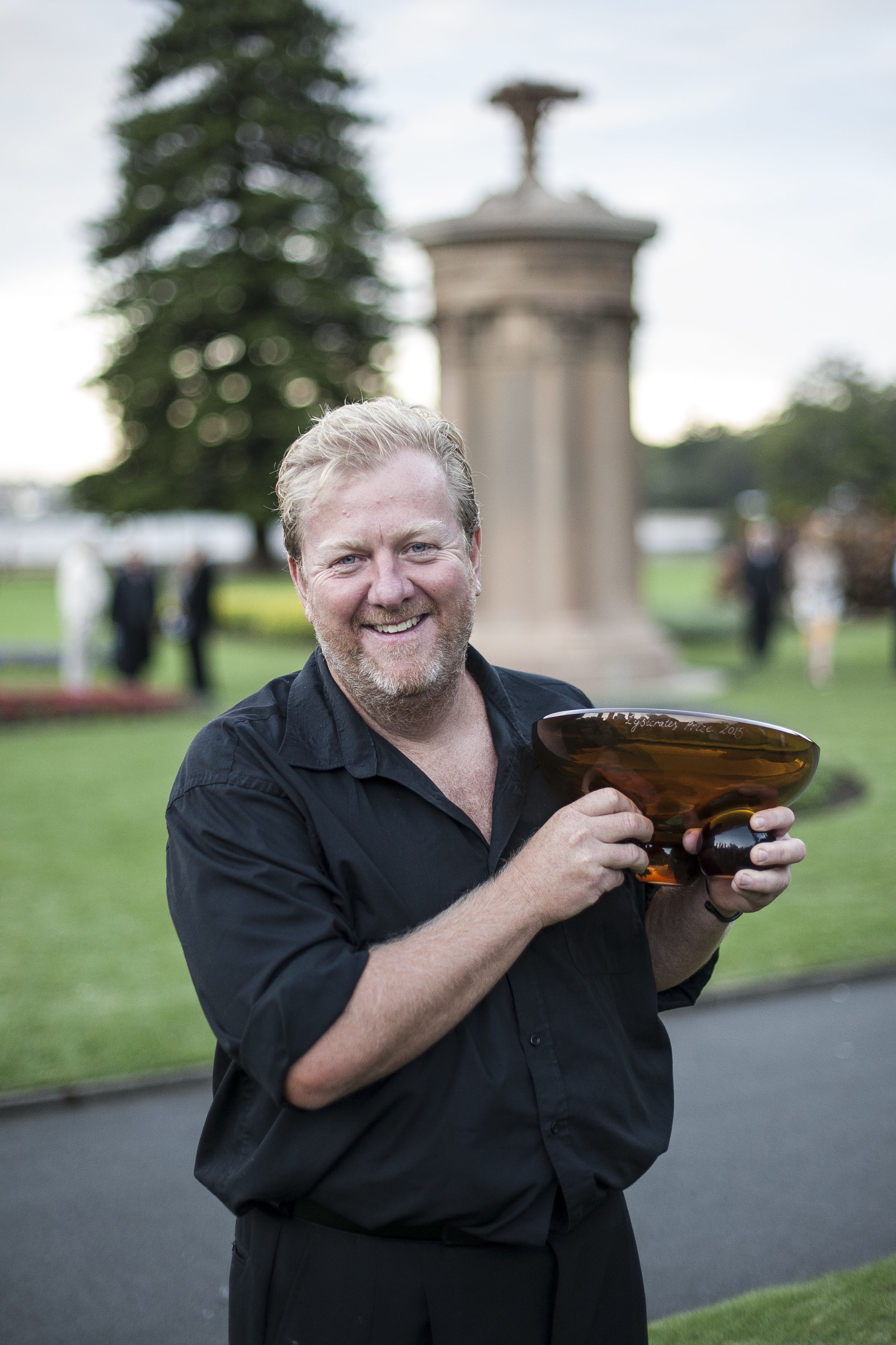
The three finalists for the inaugural 2015 Lysicrates Prize were Steve Rodgers, Lally Katz and Justin Fleming, with Rodgers awarded the prize for his play Jesus Wants Me For a Sunbeam.

It all began early in 2014 when John and Patricia Azarias, the founders of the Prize, took a walk through the Botanic Garden.

John Azarias loves Hellenic culture and had seen the original monument in Athens. On that particular day, as he and his wife approached the sandstone replica (commissioned in 1870 by Sir James Martin), they were struck by how eroded it was becoming. He decided then and there to raise the funds for its restoration in readiness for the Botanic Garden’s bicentenary in 2016.

The original monument was built by a rich sponsor (or choregoi) called Lysicrates to celebrate the winning play at the Dionysia Festival in Athens in 334 BC, as was the tradition during the 4th and 5th centuries BC. The monument has a frieze featuring Dionysus, the god of theatre. In a nice little link, the name ‘Sydney’ is an English version of the French ‘St Denis’, which in turn is a Gallic version of ‘St Dionysius’ – as John explained in his welcoming speech.

Patricia suggested that they also establish a theatre competition associated with the monument as a way to celebrate its restoration. They approached Lee Lewis at Griffin Theatre Company, which is dedicated to the performance of Australian plays, who agreed to run the competition. With some assistance from the NSW Government, along with additional funds raised by John, and the support of the Royal Botanic Garden, they were off.

For the first Lysicrates Prize, an audience made up of Griffin supporters and subscribers, politicians and theatre industry folk gathered at the Conservatorium to watch readings (rehearsed over three days) of the three short-listed plays.

Entering the auditorium, audience members were each given a gold coin with which to cast our vote in large pottery urns.

Rodgers’ Jesus Wants Me For a Sunbeam is adapted from Peter Goldsworthy’s novella and is a haunting story of suffocating love, grief and loss, and a family so close that the parents made an extreme decision when their young daughter is diagnosed with leukemia; a decision their son will struggle to understand.

Darren Yap – who approached Rodgers in the first place about a stage adaptation – directed the extract, which was performed by Jennifer Hagan, Anthony Harkin, Natalie O’Donnell, Rodgers himself and Govinda Röser-Finch.

The emotional scenario and complex moral dilemma posed clearly struck a chord with the audience.

Prize winner Steve Rodgers. Photo: Jessica Lindsay

Prize winner Steve Rodgers. Photo: Jessica Lindsay

Rodgers said of his win: “Jesus Wants me For a Sunbeam isn’t a play yet. It’s just a bunch of scenes and ideas adapted from Peter Goldsworthy’s novel. But because of The Lysicrates Prize, we now get the chance to develop it into a truly important new Australian play. I’m over the moon.

“Philanthropy of this kind in Australia isn’t common, so obviously I’m more than thrilled. This play is about family and explores a kind of love that in one moment you’re completely in sympathy with, and the next, you’re reeling away from in horror. The Lysicrates Prize gives us the chance, to hopefully unleash all that familial complexity on an audience.”

The evening began with Lally Katz’s Fortune, directed by Kate Gaul and performed by Briallen Clarke, Anni Finsterer, Sean Hawkins and Russell Kiefel.

The black comedy is set in a seedy hotel in the US where the woman who owns it has asked a psychic with a crystal ball to tell her about a man who spent time in one of the rooms. The Romany fortune-teller is pregnant and she and her cowboy boyfriend desperately need money to start a new life on his father’s land. Meanwhile, two men who have just lost their Wall Street jobs in the GFC are waiting to book into the hotel: one of them has been around the block, the other is a young Australian who had only just joined the company. It’s an intriguing set-up, the characters are all fascinating and I can’t wait to see how it unfolds.

The night wound up with Justin Fleming’s The Savvy Women, another of his rollicking, contemporary Australian adaptations of Molière, following his success with Tartuffe and The School for Wives.

Directed by Gale Edwards, and performed by Andrea Demetriades, Morgan Powell, Fiona Press and Christopher Stollery, it began with two sisters vying for one man, their parents arguing over which daughter should prevail, and the mother’s sacking of the maid for her massacre of the English language. Fleming’s clever, witty rhymes drew much laughter, especially the maid’s bogan utterings.

Having the audience choose is a different way of commissioning a play these days. The proof will be in the production. But you’d have to say it was an impressive, well-chosen short list. All three extracts were entertaining and showed significant potential; hopefully we will get to see productions of them all in the fullness of time.

Club Swizzle

The Studio, Sydney Opera House, January 21

Valerie Murzak in Club Swizzle. Photo: Prudence Upton

Valerie Murzak in Club Swizzle. Photo: Prudence Upton

As you enter the Sydney Opera House Studio for Club Swizzle, the place is abuzz. People are sitting drinking at a large central, rather elegant bar (which serves pretty expensive drinks though there’s a cheaper bar at the back of the room), friendly waiters and ushers are whizzing around, and entertainer Murray Hill is moving through the crowd chatting.

Then in a snappy piece of choreography the bar is quickly transformed into a performance space, getting the show off to a terrific start.

The concept (by Brett Haylock) of a cabaret-vaudeville show set in a late-night bar is fabulous, as is the production’s set-up. The show itself feels a little undercooked but it’s early days and is bound to develop.

Club Swizzle has more of an old-fashioned vaudeville vibe than its cheekier predecessors La Clique and La Soirée.

Hill, a New York drag king, acts as the MC. His tagline is “the man who puts the ‘king’ back in f#*king funny”. I didn’t actually find him particularly funny but he’s a warm presence with a nice, easy rapport with the audience.

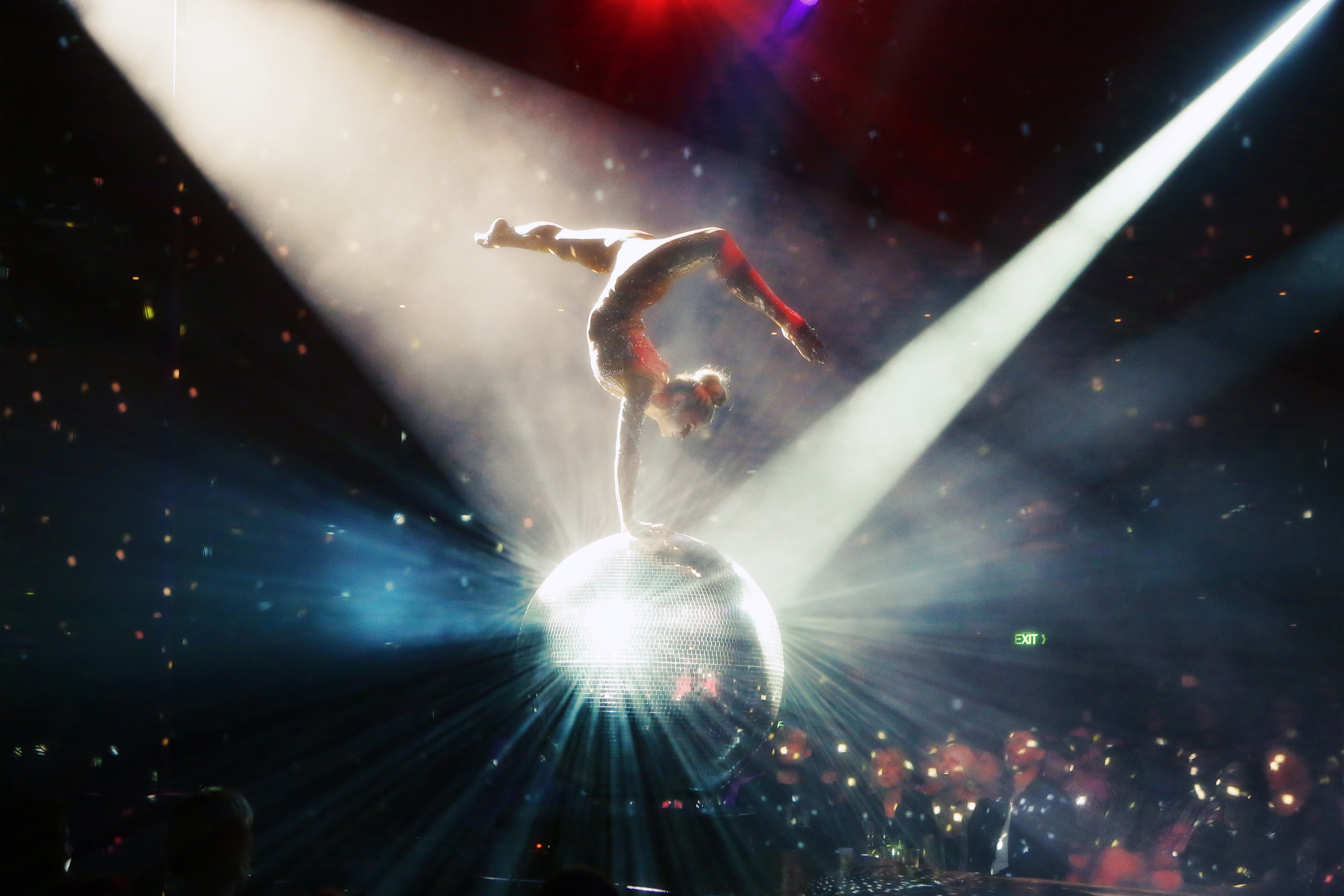
The line-up also includes Movin’ Melvin Brown, an old-school vaudevillian from America who croons and tap dances, Russian circus artist Valerie Murzak who does sexy contortion and balancing on a giant mirror ball and aerial silks, Finnish dancer Anna de Carvalho who performs on a swinging aerial pole, and Australian ‘kamikaze’ diva Meow Meow who sings three numbers. (Ali McGregor replaces Meow Meow in February).

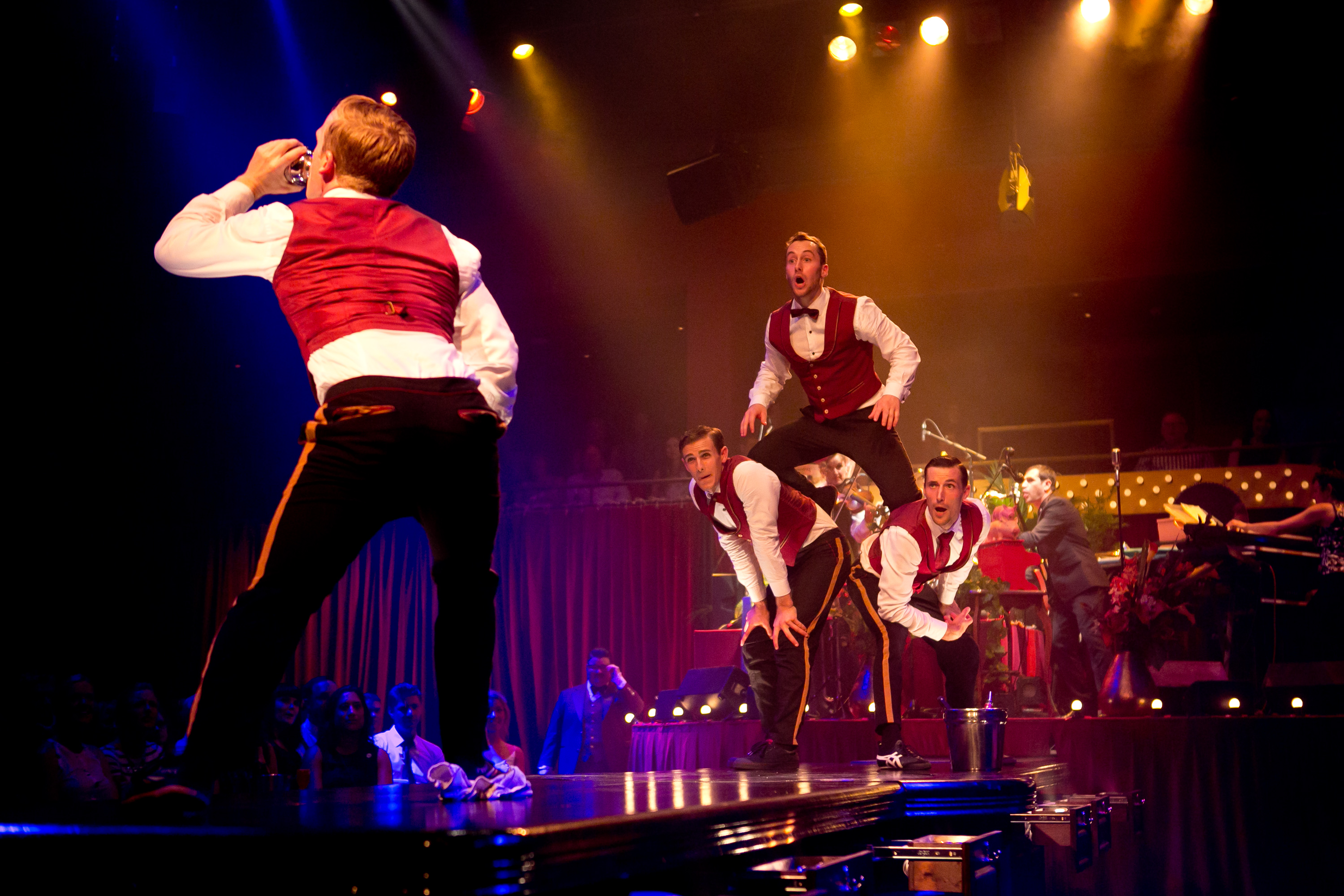
The backbone of the show though are The Swizzle Boys, four acrobats (Tom Flanagan, Joren Dawson, Daniel Catlow and Ben Lewis) who do the lion’s share of the performing.

Dressed as waiters, they certainly work hard for their money, performing numerous acts (balancing, Chinese pole, ropes, teeterboard, hoop diving) with oodles of exuberant enthusiasm, often with drinks in hand. The house band, Mikey and the Nightcaps, are also hot and add to the pumping vibe.

The Swizzle Boys prepare to launch off in Club Swizzle. Photo: Prudence Upton

The Swizzle Boys prepare to launch off in Club Swizzle. Photo: Prudence Upton

Club Swizzle could do with a bit more variety – entertaining though they are, The Swizzle Boys are rather too ubiquitous – and a little more originality among some of the acts. There have been so many shows of this ilk (La Clique, La Soirée, Empire, Limbo to name just a few) in recent years that there’s little here we haven’t seen before.

I also missed the whacky, screamingly funny humour of acts like Captain Frodo squeezing himself through a tennis racquet or oddball comedy-magician Carl-Einar Hackner from La Clique/La Soirée.

It was an audience participation routine when two people are pulled from the crowd to do a pole dance-off that brought the house down on opening night, with Sunrise producer Michael Pell and The Voice contestant Lionel Cole hilariously giving it their all.

As Haylock has noted in interviews, a late-night bar is the natural, anarchic habitat for a various colourful characters. As it stands, a few more eccentric personalities and a bit more of a sense of chaos would give Club Swizzle more zing. But it’s still a lot of fun and got a huge response from the audience.

Club Swizzle plays at the Sydney Opera House until March 15

A version of this review ran in the Sunday Telegraph on January 25

Mystery Musical: Bye Bye Birdie

Reginald Theatre, Seymour Centre, January 24 at 2pm

Cast of Bye Bye Birdie. Photo: Amelia Burns

Cast of Bye Bye Birdie. Photo: Amelia Burns

It’s a measure of the respect Squabbalogic now commands that it can sell out two performances at the Reginald Theatre without audiences having a clue what it is they are going to see.

Tickets to Squabbalogic’s first Mystery Musical were snapped up fast, raising $10,000 for the company, as the company’s artistic director Jay James-Moody told us in his welcome speech before the start of the show. He also revealed that the independent company has applied for funding for the first time.

Anyway, everyone was clearly delighted to be contributing to the cause and was fascinated to see what musical the Squabb team had chosen for the company’s first blind-date show.

With the promised theatre program not being handed out until interval, it wasn’t until the first chords sounded and the cast burst into song that we discovered it was…..(drum roll) Bye Bye Birdie. It was a surprise choice in some ways, as Squabbalogic tends to produce recent musicals we would otherwise be unlikely to see. (Though in another unusual move they are producing Man of La Mancha next month).

The 1960 show with book by Michael Stewart, music by Charles Strouse and lyrics by Lee Adams is pure musical comedy. I have never seen it on stage. In fact, I didn’t really know the show beyond some of the more famous songs like Put On a Happy Face and A Lot Of Livin’ To Do. So the chance to see it at all was great, and then to see it done so well – with just three days rehearsal – was the cream on the cake. I have to say it was a delightful way to spend an afternoon and everyone in the audience seemed to leave with a big smile on their face.

James-Moody starred, directed and “sort of choreographed” as he put it in the program – though in his welcoming remarks he did acknowledge the help of the cast and Nancye Hayes with the choreography.

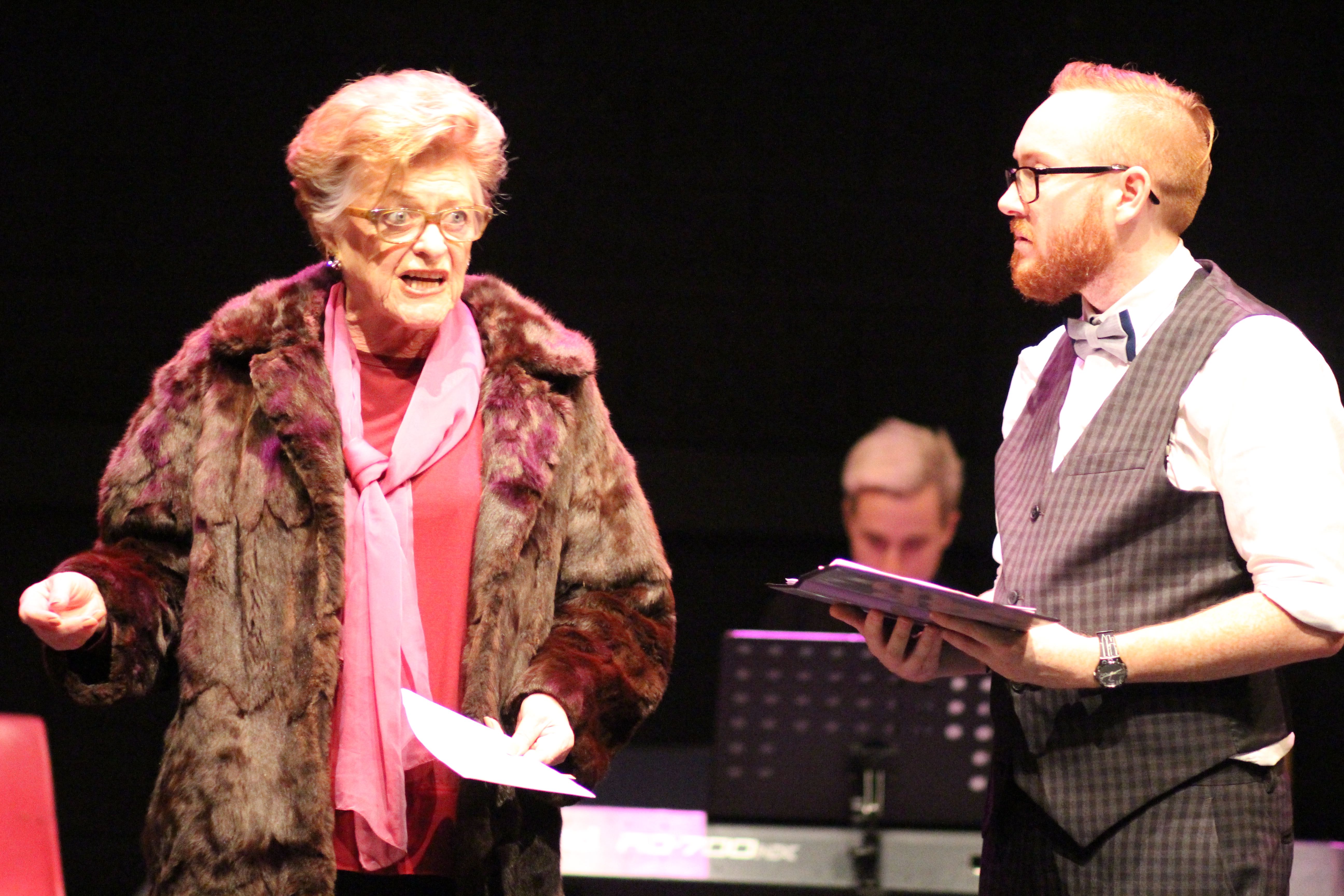
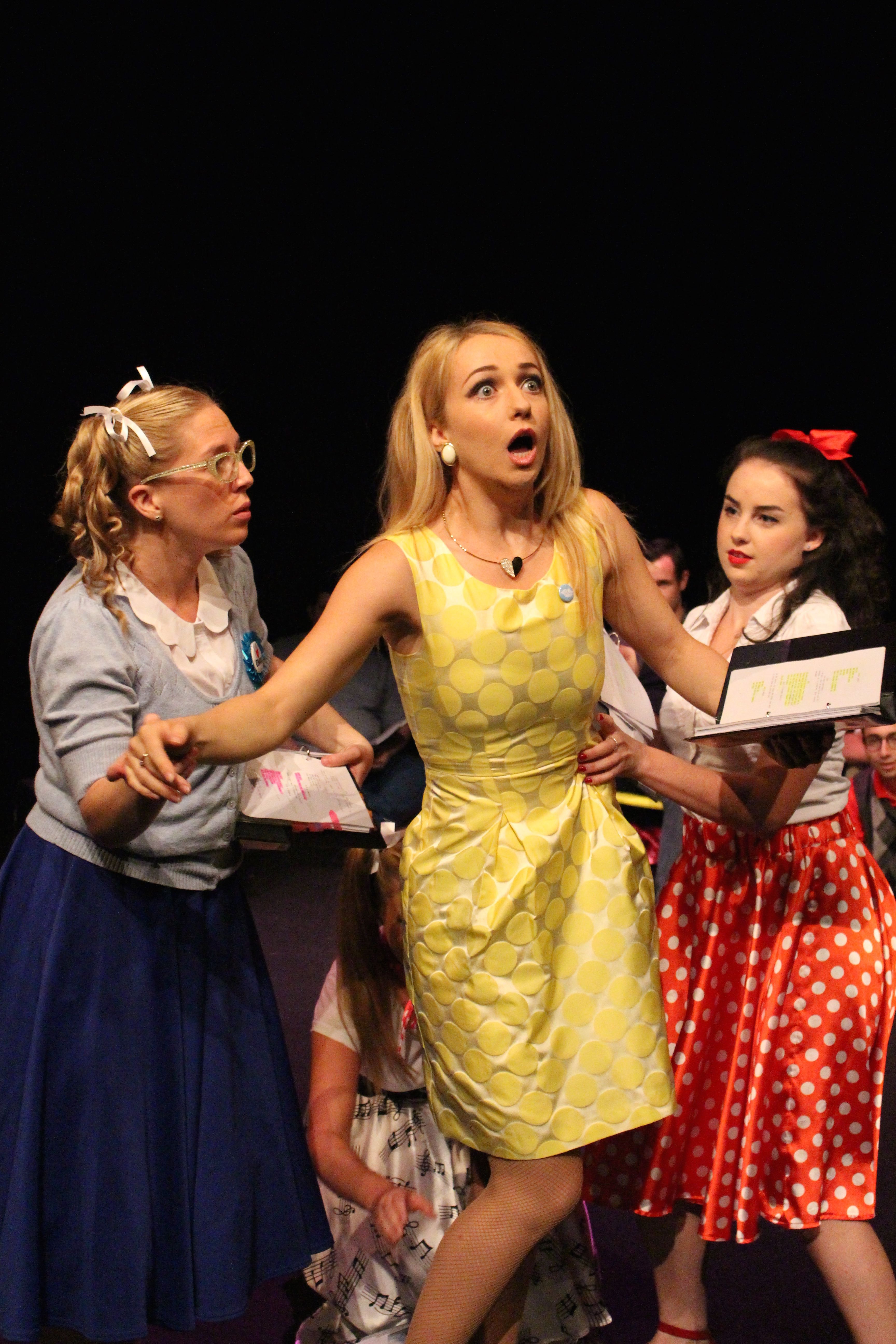
Nancye Hayes as Mrs Peterson and Jay James-Moody as Albert. Photo: Amelia Burns

Nancye Hayes as Mrs Peterson and Jay James-Moody as Albert. Photo: Amelia Burns

He had assembled a terrific group of performers – Johanna Allen, Blake Erickson, Mikey Hart, Nancye Hayes, Jessica James-Moody, Jaimie Leigh Johnson, Rob Johnson, Josie Lane, Michele Lansdown, Adele Parkinson, Garry Scale and Rowan Witt – and cast the show exceptionally well.

Their ranks were bolstered by an ensemble of 15 enthusiastic, talented graduates and students from the Australian Institute of Music (AIM) as the show’s teenagers.

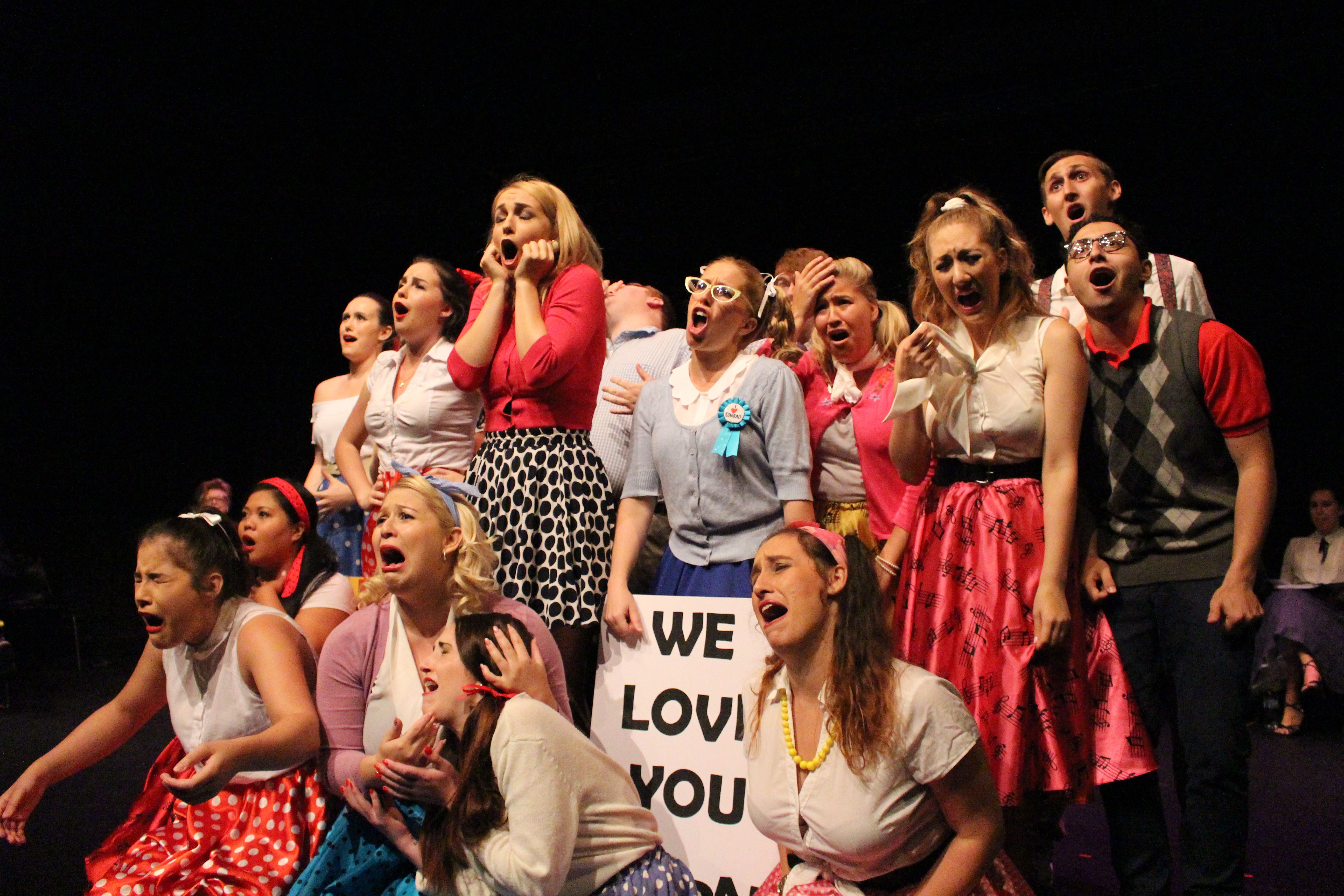
Bye Bye Birdie is an affectionate satire, inspired by Elvis Presley being drafted into the army in 1957. It has plenty of catchy songs, a strong book full of big laughs (which plugs into the growing generation gap between teenagers and their parents), and an old-fashioned, feel-good exuberance about it.

Adele Parkinson as Kim. Photo: Amelia Burns

Adele Parkinson as Kim with Jessica James-Moody and Romy Watson. Photo: Amelia Burns

In a nutshell, the show is set in 1958. Agent/songwriter Albert Peterson, who is already in debt, hears that rock and roll star Conrad Birdie has been drafted.

Albert’s secretary and long-suffering sweetheart Rose Alvarez, comes up with a publicity stunt to bring in some bucks. Albert will write a new song called “One Last Kiss” for Conrad, who will sing it and kiss one of his thousands of fans (picked at random) as he departs. The lucky girl is Kim MacAfee from Sweet Apple, Ohio. Then, says Rosie, Albert will be able to wind up his business, marry her and become an English teacher (as he has been promising for yonks).

Throw in Albert’s domineering, interfering mother, who does all she can to prevent him marrying Rosie, Kim’s disapproving family and jealous boyfriend Hugo Peabody, along with hordes of screaming, swooning fans, and things naturally go pear-shaped.

It’s a hoot that the happy ending has Albert agreeing to walk away from New York and showbiz and head instead for the tiny town of Pumpkin Falls, Iowa to teach English and Domestic Science, with Rose as his wife. Hard to make that outcome fly as a happy ending these days!

Josie Lane as Rosie and Blake Erickson as Maude. Photo: Amelia Burns

Josie Lane as Rosie and Blake Erickson as Maude. Photo: Amelia Burns

As with Neglected Musicals’ rehearsed readings, the cast performed with book in hand. But the standard of performance was remarkable given such little rehearsal time. James-Moody as Albert, Josie Lane as Rosie, Adèle Parkinson as Kim and Nancye Hayes as Albert’s mother were all sensational, performing with just the right, light comic touch. But kudos to the entire cast, each of whom did a fantastic job. Praise too to musical director Hayden Barltrop on keys.

Even without being fully staged, Bye Bye Birdie was a delightful, thoroughly satisfying performance that gave audiences a welcome chance to experience a classic musical comedy. I look forward to the next Mystery Musical with great anticipation.

As for Squabbalogic, which just this week won four 2014 Sydney Theatre Awards for its glorious production of The Drowsy Chaperone, the company just seems to go from strength to strength. Let’s hope funding follows.

Puncture

Riverside Theatre, Parramatta, January 23 at 2pm

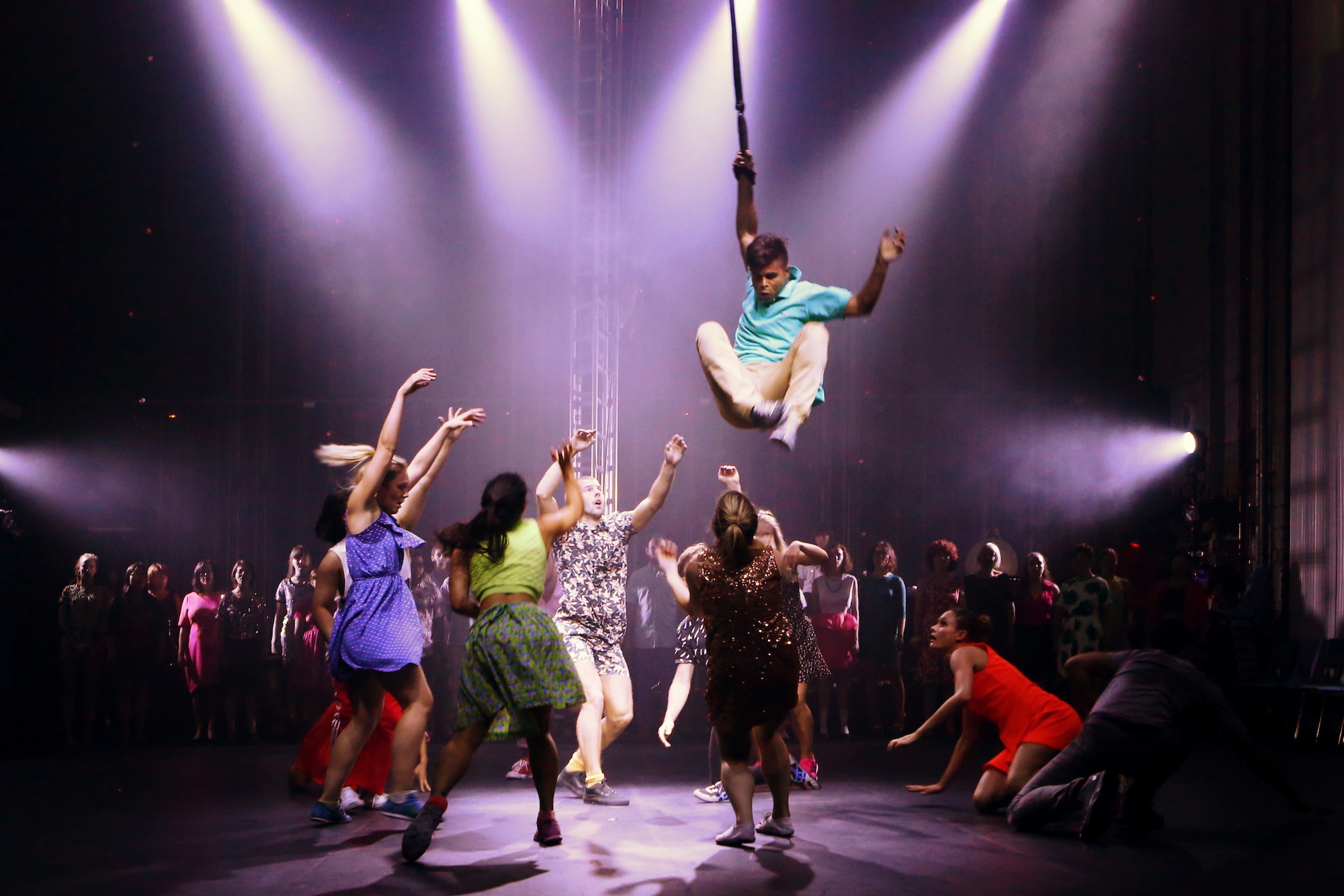
A scene from Puncture. Photo: Prudence Upton

A scene from Puncture. Photo: Prudence Upton

Given a brief season as part of the 2015 Sydney Festival, Puncture is such a lovely show that it begs to be brought back and seen more widely.

Directed by Patrick Nolan with choreography by Kathryn Puie and musical direction by Elizabeth Scott, it is the result of a fruitful collaboration between Legs on the Wall, Form Dance Projects (which fosters dance culture in Western Sydney) and Vox, a vocal ensemble from Sydney Philharmonia Choirs.

For the Festival, it was performed on the stage of Parramatta’s Riverside Theatre with the fire curtain down, a bank of seating at one end and percussionist Bree Van Reyk and pianist Luke Byrne at the other.

The show starts almost subliminally. Faint, shadowy images of dancing figures appear on the two sidewalls of the space (video design by Mic Gruchy). A young woman (Kristina Chan) wanders onto the stage, joined not long after by a young man (Joshua Thomson). Their eyes meet, he moves over to her, then another young man intervenes and drags her away.

The space fills up with young people while choral voices singing the word “Hello” fill the air. Couples form and reform, attractions, arguments and passions flare, as the performers move through various dance forms: courtly, folksy, line dancing, the waltz and the tango, leading eventually to a mosh pit-like frenzy.

There is also aerial work with performers flying through the air, and asoprano (Charlotte Campbell) sings while sitting on an aerial hoop. Not only does she look as relaxed as all get-out, but she then throws in a few confident ‘hoop moves’ on her descent.

The gorgeous choral music by composer Stefan Gregory is seductively eclectic ranging from the baroque to a version of Madonna’s Like a Virgin and is beautifully sung by the choir who are mostly positioned near the musicians but now and again move through the dancers and interact with them.

Chan and Thomson – both acclaimed contemporary dancers – are compelling as the young lovers at the heart of the piece. They lead a strong company that also includes Jay Bailey, Cloé Fournier, Anna Healey, Kei Iishi, Billy Keohavong, Rob McCredie, Hayley Raw, Michael Smith, Stephen Williams and Jessica Wong.

All of them perform with enormous energy and an exciting, high-octane physicality, the sweat literally dripping from them, while managing to project individual personalities at the same time.

Praise too to Mel Page for her colourful costuming and Damien Cooper for his lighting.

The piece (which runs for 60 minutes) ends with the choir singing “I love you” as the dancers move towards the audience, inviting some of them up to dance. I, like many, am terrified of the thought of getting up on stage, and I can’t dance, but I was one of the ones invited and have to say it was a lovely moment (thanks Billy!) and a heart-warming, uplifting conclusion.

Puncture is described as embracing “the risk and ritual of intimacy on a dance floor”. It is a beautiful, moving work about human connection and all the emotions that swirl around that. Let’s hope it returns.

Puncture has its final performance at Riverside Theatre, Parramatta at 2pm today.

A Simple Space

The Aurora, Festival Village, Hyde Park North, January 13

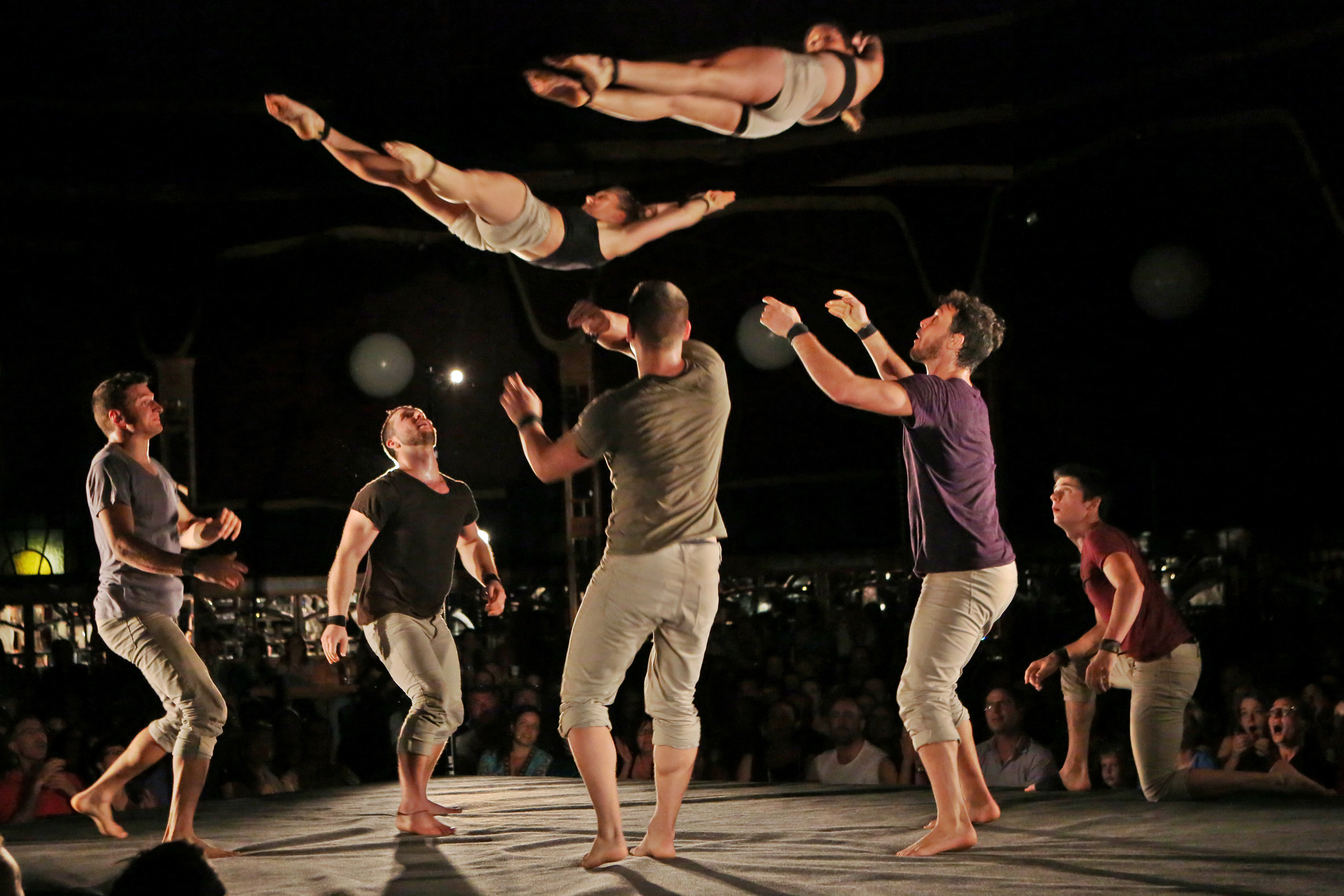
Flying high in A Simple Space. Photo: Prudence Upton

Flying high in A Simple Space. Photo: Prudence Upton

The Sydney Festival has once again created a lively hub at Hyde Park North with its Festival Village set-up, which has been expanded this year to accommodate the crowds.

There are two Spiegeltents in place, with The Aurora home to two circus shows – A Simple Space and LIMBO – running through the Festival.

LIMBO is back after a sellout season at last year’s Festival. It didn’t feel quite so tightly paced on opening night as it did in 2014 but it’s still a terrific, seductive show (see my review from last year).

A Simple Space by Adelaide-based company Gravity & Other Myths is a much more raw but thoroughly charming show. It features a company of seven acrobats – five men (Triton Tunis-Mitchell, Lachlan Binns, Martin Schreiber, Jacob Randell, Daniel Liddiard) and two women (Jascha Boyce and Rhiannon Cave-Walker) – along with a musician (Elliot Zoerner) who provides a driving percussion score and, at one point, steps into the limelight to become a human drum machine.

In terms of aesthetic, A Simple Space is certainly true to its title. It’s circus at the other end of the spectrum from the slick, mega-produced spectacle of Cirque du Soleil. There’s no set, minimal props and basic costuming (lads in jeans and T-shirts, ladies in white shorts and black tops). It’s a decidedly glitz-free zone.

Sitting at such close quarters, we see the sweat and straining muscles, we hear the hard breathing, which all adds to the enjoyable homespun feel.

The vibe is rough-and-ready playful; the performers seem to be having as much fun as we are. They begin with a line-up along the back of the stage – to which they revert at the end of each act.

The show opens with something akin to a drama trust exercise in which they all move around the stage, yelling “falling” as one of them drops and is caught just before crashing – with a comic moment to cap it off.

There are all kinds of impressive balancing acts along with a very funny strip-skipping routine, balloon-moulding, a strong-woman act in which the two ladies each lift a man from the audience to see who can hold them up the longest, and a breath-holding contest.

One of the men solves a Rubik’s Cube while standing on his head. (Someone should get him to duet with Hilary Cole, who solves a Rubik’s Cube while singing in her cabaret show O.C. Diva).

The climax is a routine where the men toss the two women around, throwing them skywards while holding their hands and feet as if airing a blanket, and using them like human skipping ropes.

Overall, it does feel as if  A Simple Space has one or two balancing acts too many (skillful though they are) but even so it’s a really engaging show.

A Simple Space plays in The Aurora as part of Sydney Festival until January 25

Next to Normal

Hayes Theatre Co, January 14

Natalie O'Donnell as Diana. Photo: suplied

Natalie O’Donnell as Diana. Photo: suplied

A musical about manic depression? The brave choice of subject matter was part of Next to Normal’s cachet when it debuted Off-Broadway and then moved to Broadway in 2009, winning three Tony Awards and the 2010 Pulitzer Prize for Drama.

For all the kudos, the musical by Tom Kitt (music) and Brian Yorkey (book and lyrics) is a flawed piece – though it is movingly performed in this production from Geelong’s Doorstep Arts.

The story centres on Diana (Natalie O’Donnell), a grief-stricken, suburban mother with bipolar disorder, and the impact this has on her husband Dan (Anthony Harkin), daughter Natalie (Kiane O’Farrell) and son Gabe (Brent Trotter).

It’s a dark show, and could do with a little more light among the shade – though the uplifting ending feels pat and unconvincing given all that has gone before. The way revelations are staggered during the piece, however, is cleverly done, adding punch to the drama.

The lyrics tend too often towards the platitudinous and the way grief is conflated with bipolar disorder feels a bit hazy, the explanation from one of the psychiatrists being that the condition can be triggered by a trauma.

The music ranges from rock to gentle ballads. Some of it works powerfully but at other times it feels somewhat relentless. The show is essentially sung-through and you can’t help feeling that some dialogue scenes would make for tighter, deeper storytelling and give the show more room to breathe.

So, not the greatest musical ever written. However, Darylin Ramondo directs a tight production that moved me more than the previous one I saw.

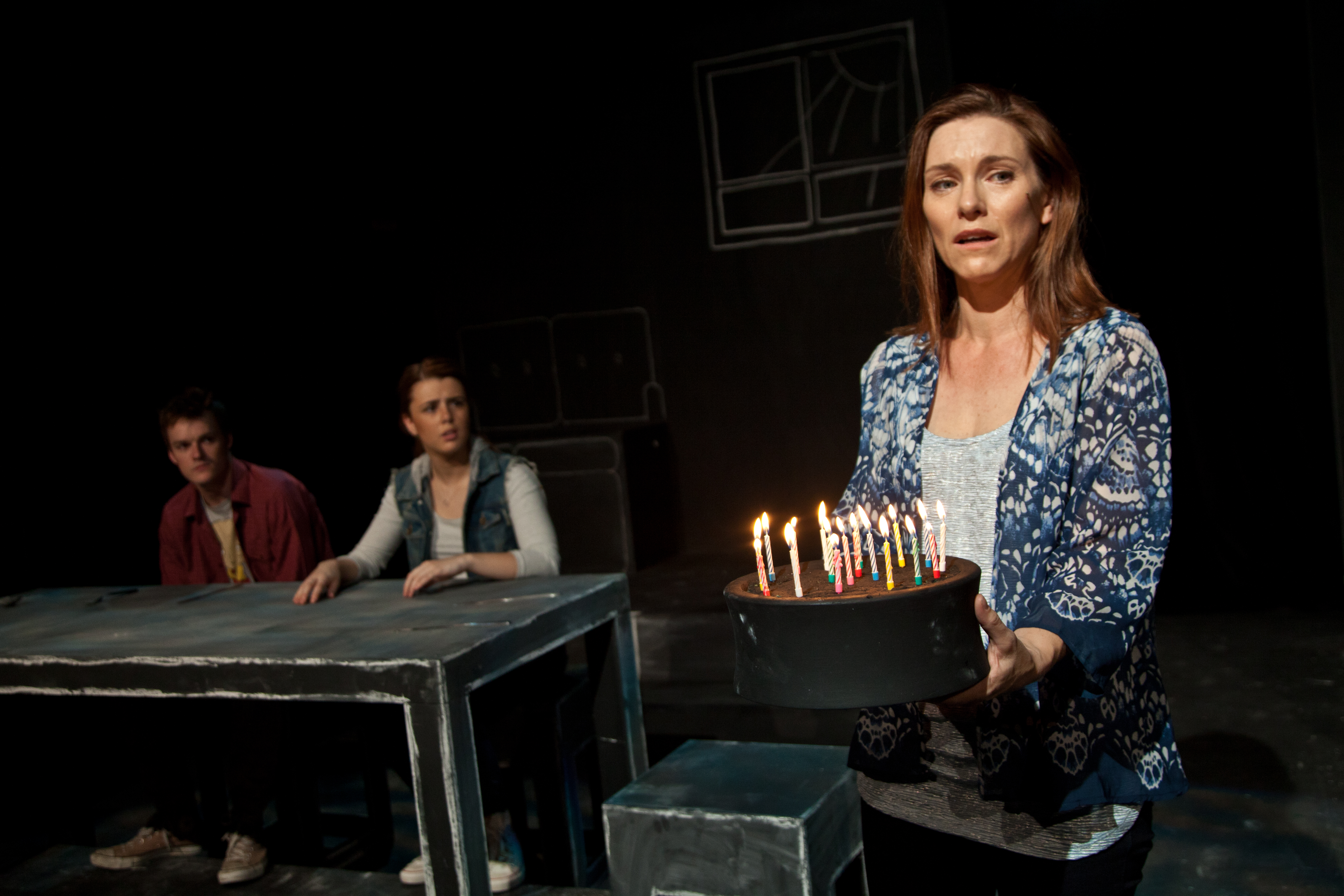
Her design (conceived with Jolyon James) has a suggestion of the film Dogville about it. Taking its cue from a comment Diana makes about her world being black, white and grey, the set is black with a few boxes and a table, onto which the performers draw their environment and vent their emotions with white chalk: an effective device.

Ramondo has also cast the production well. O’Donnell – who spent time with a lady suffering with bipolar as part of her research – is heartbreaking as Diana, portraying her pain and confusion as well as her defiant strength. With her petite frame she looks so slight and vulnerable at times, and then suddenly seems to blaze. She brings warmth and humanity to the role and her beautiful rendition of I Miss the Mountains – in which Diana sings of missing the highs and lows of her condition, which are evened out by her meds – is a highlight.

Harkin is also impressive as the stalwart, devoted but conflicted Dan, who is struggling more than he lets on. Clay Roberts brings an endearing playfulness to Henry, the loyal, stoner boyfriend of Natalie, sympathetically played by O’Farrell. Trotter brings powerful vocals to the role of Gabe, though his dark portrayal would benefit from a little more nuance. Alex Rathgeber is also in fine voice as the two doctors.

This is the first production of Next to Normal seen in Sydney (a production planned for the Capitol Theatre in 2012 didn’t happen) and therefore much anticipated. The show itself may not live up to expectations but the production itself makes it well worth a look.

Next to Normal plays at the Hayes Theatre Co until February 1

A version of this review ran in the Sunday Telegraph on January 18

Sweet Charity remount

Playhouse Theatre, Sydney Opera House, January 16

Verity Hunt-Ballard as Charity. Photo: Jeff Busby

Verity Hunt-Ballard as Charity. Photo: Jeff Busby

In February last year, the Hayes Theatre Co burst onto the Sydney musical theatre scene with a thrilling production of Sweet Charity directed by Dean Bryant and starring Verity Hunt-Ballard.

The ingeniously staged, dirtied-up, gritty take on the 1966 musical had audiences and critics raving (you will find my review on this blog) and three days after opening you couldn’t get a ticket for love nor money.

The show went on to win three Helpmanns for Bryant, Hunt-Ballard and choreographer Andrew Hallsworth and has nine nominations at the 2014 Sydney Theatre Awards to be presented tomorrow (January 19).

The announcement of a remount at the Sydney Opera House’s 400-seat Playhouse Theatre and then a tour to Canberra, Melbourne and Wollongong generated much excitement. But how would the production – created for the intimacy of the 110- seat Hayes Theatre – fare in a bigger venue?

Well, it has sashayed seamlessly into the Playhouse where it received a rapturous response at Friday’s opening night.

Inevitably you lose some of the intimacy but there are compensations. Hallsworth’s fabulous choreography (with nods to Fosse) has more room to sharpen and breathe for starters. And if anything, the performances seem more detailed than ever as most of the original performers revisit their roles.

The grungy staging is essentially the same: an inspired use of a couple of two-way mirrors, a few chairs, a costume rack and a red neon sign at the back saying, “Girls, Girls, Girls” (set design by Owen Phillips).

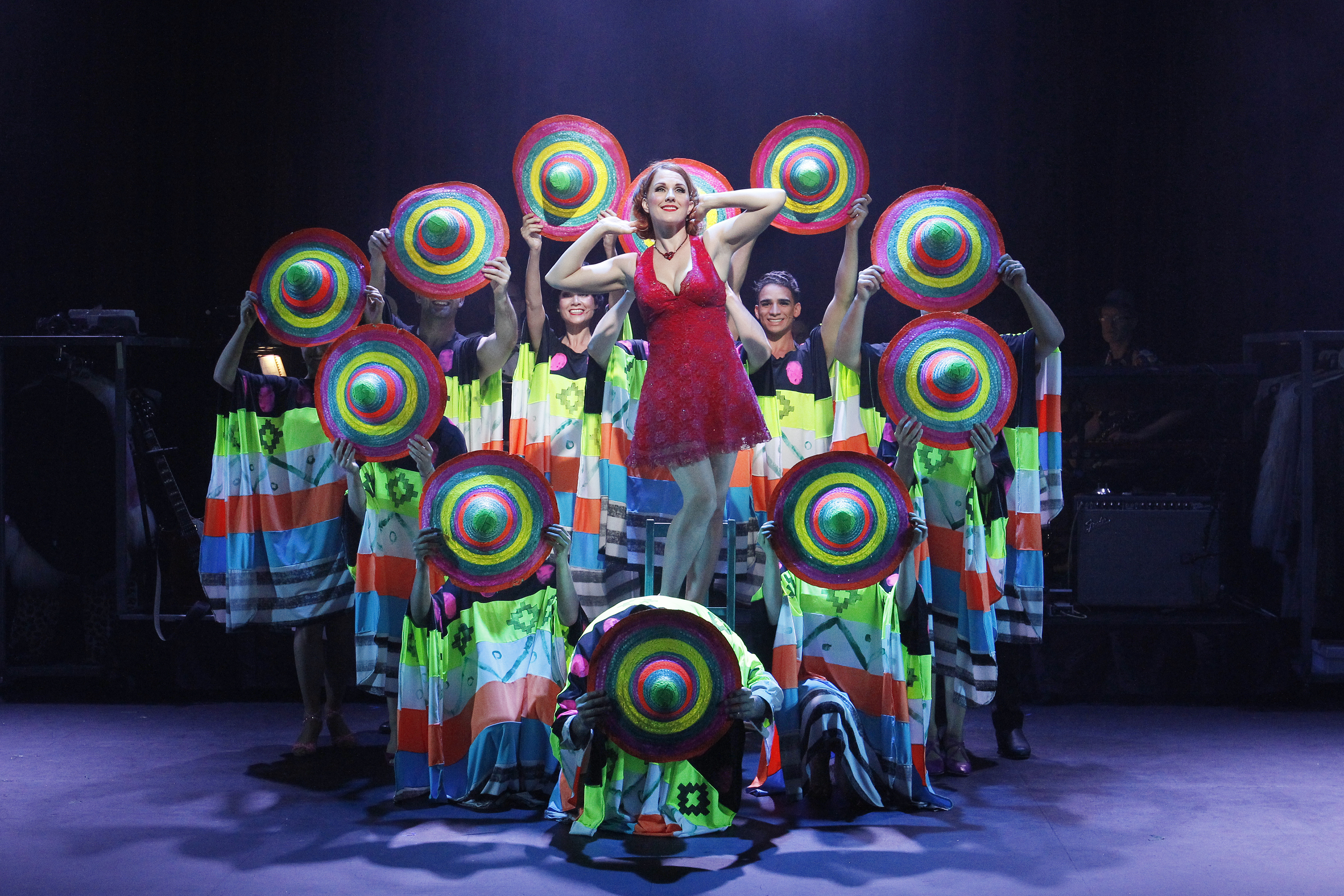
Tim Chappel has revamped some of the costumes adding extra colour and sparkle to various outfits including the witty, surreal costumes for The Frug, which gives the production a little more visual zing in the larger space.

Hunt-Ballard, who gave a sensational performance last time around as Charity Hope Valentine – the dance hall hostess with a heart of gold who keeps looking for love (and at one point an office job) as a passport to a better life – is more stunning than ever.

She radiates such warmth, such sweet, kooky naivety and such sunny optimism that her Charity is irresistibly endearing. Her comic timing is a knockout but always there is the knowledge that Charity uses ditzy humour to deal with her hurt and pain, as a way to bounce back, until that final, terrible let-down.

Hunt-Ballard inhabits the role completely. She sings superbly, dances well and her acting is sublime. But never do we feel that she is busting out a big song-and-dance number. Always the songs emerge organically from the character and the situation whether it’s the exuberant, show-stopping If My Friends Could See Me Now or Where Am I Going? which she delivers in heartbreaking fashion.

She is beyond divine in the role; it’s hard to imagine anyone playing Charity better.

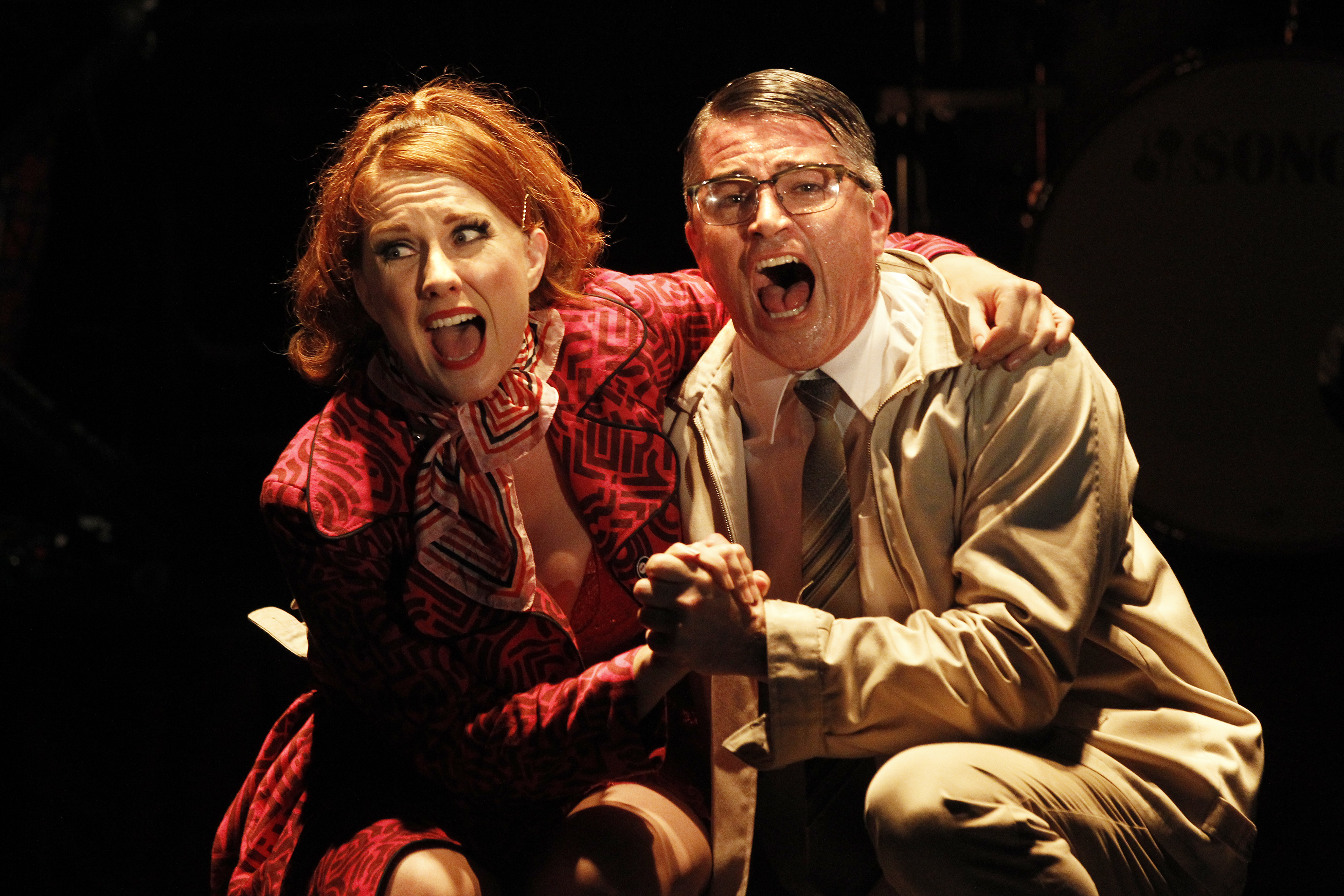
Bryant brings this kind of truth to every aspect of the production. Character and emotion colour every song. Hey Big Spender erupts with the crowd-pleasing blast you expect but the girls look blank, emotionally shutdown, as they display their wares in the meat-market line-up.

Verity Hunt-Ballard, Kate Cole and Debora Krizak. Photo: Jeff Busby

Verity Hunt-Ballard, Kate Cole and Debora Krizak. Photo: Jeff Busby

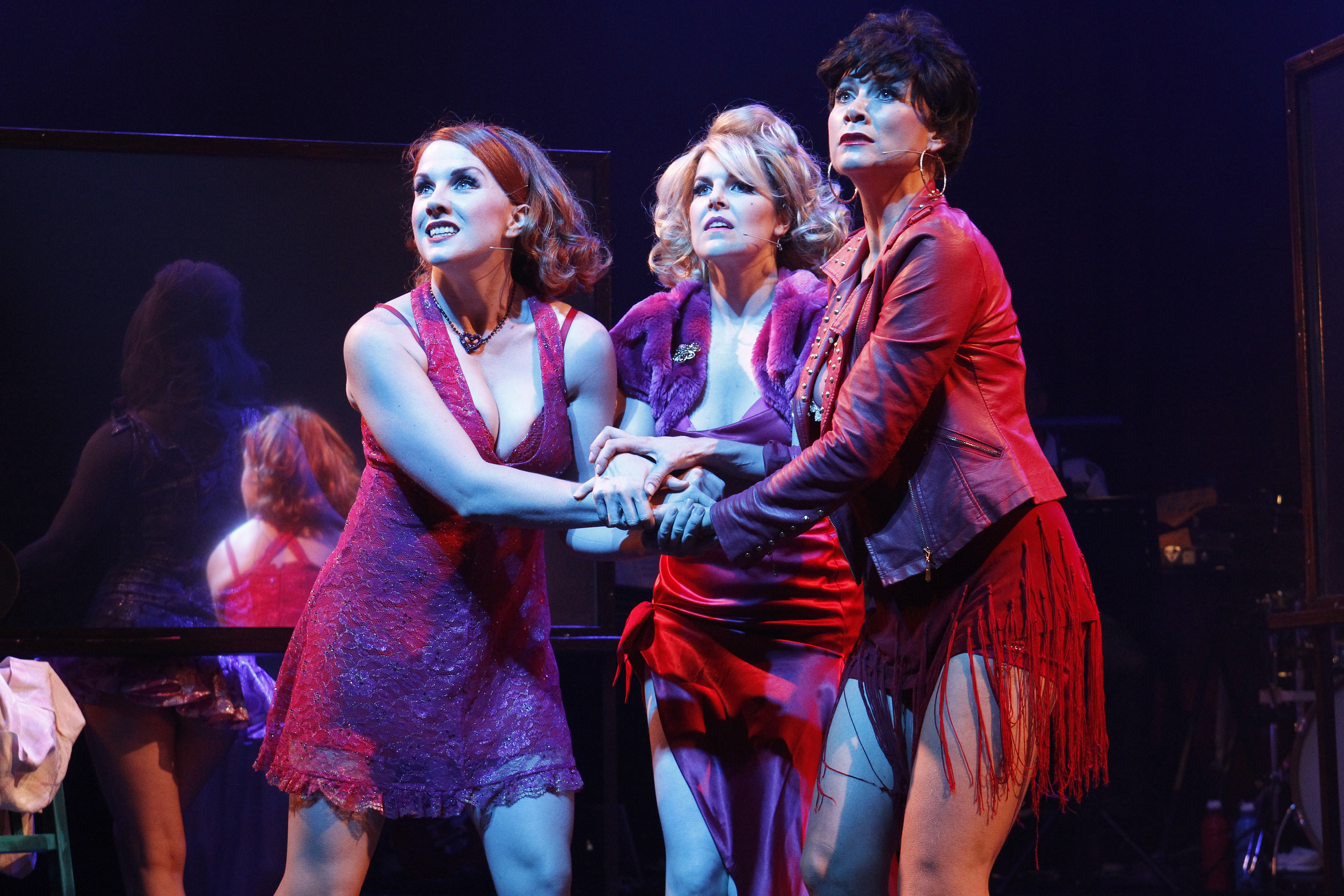
When Hunt-Ballard, Debora Krizak as Nickie and Kate Cole as Helene (two of the other girls from the seedy Fandango Ballroom where Charity works) sing There’s Gotta Be Something Better Than This it feels as exuberant as ever but tinged with palpable sadness: three feisty women, perilously close to being over the hill, knowing they will probably never escape this life.

Cole is new to the production and she is a great addition to the cast, bringing a real weight to the role of Helene.

Martin Crewes reprises the roles of Charlie, Vittorio Vidal and Oscar and again creates wonderfully delineated characters. His suave Vittorio is particularly strong and he sings Too Many Tomorrows with a lovely, classic Italianate tenor sound, then slides effortlessly into a nerdy, Jerry Lewis-tinged Oscar. In fact, his performance sits better in the larger space than in the tiny Hayes where it felt a tad outsized.

Verity Hunt-Ballard and Martin Crewes as Oscar. Photo: Jeff Busby

Verity Hunt-Ballard and Martin Crewes as Oscar. Photo: Jeff Busby

Krizak is once again a delight as the hard-boiled Nickie, nailing her fierce one-liners, and also as Ursula, Vittorio’s glamorous, jealous girlfriend.

As at the Hayes, the band – led by musical director Andrew Worboys on keys – sits along the back of the stage but it’s great to see them given more space and visibility. Worboys’ fantastic, funky, electronic orchestrations of the songs are again a winning, driving element of the production.

Bryant integrates the musicians into the production with Kuki Tipoki playing guitar as well as Big Daddy along with several ensemble roles, while Worboys plays Fandango owner Herman.

Original producers Luckiest Productions (Lisa Campbell, David Campbell and Richard Carroll) and Neil Gooding Productions are joined for the tour by Tinderbox Productions (Liza McLean). They should have a huge hit on their hands.

This is one of the most exciting musical theatre productions I’ve seen in a long time: a show given fresh life and raw, gritty currency by a superb creative team and cast. It has made the leap to the larger space in style. Don’t miss it.

Sweet Charity plays at the Sydney Opera House until February 8; The Playhouse, Canberra Theatre Centre, February 11 – 21; Playhouse, Arts Centre Melbourne, February 25 – March 8; Illawarra Performing Arts Centre, Wollongong, March 11 – 15