The Way Things Work

Bondi Pavilion, November 11
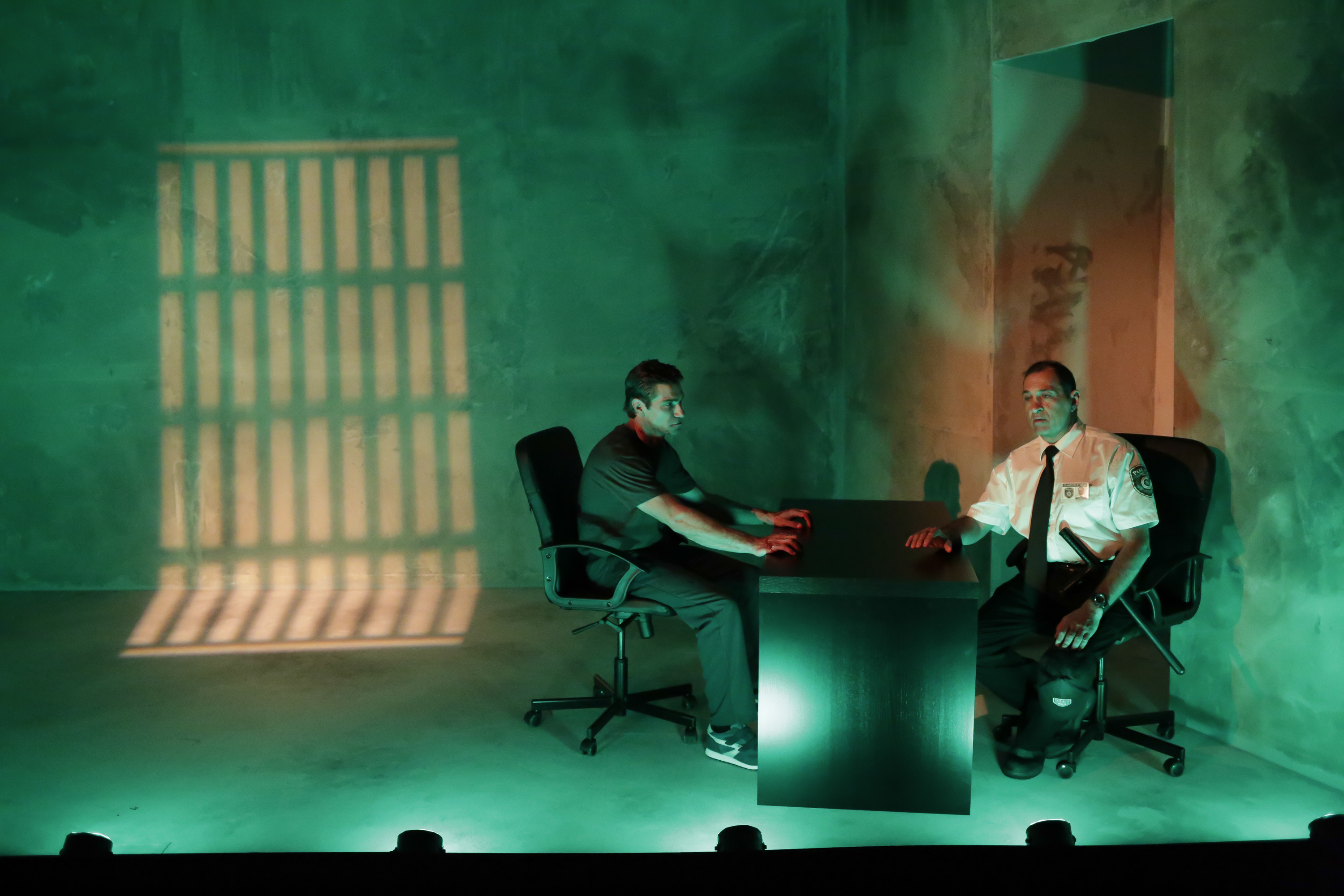
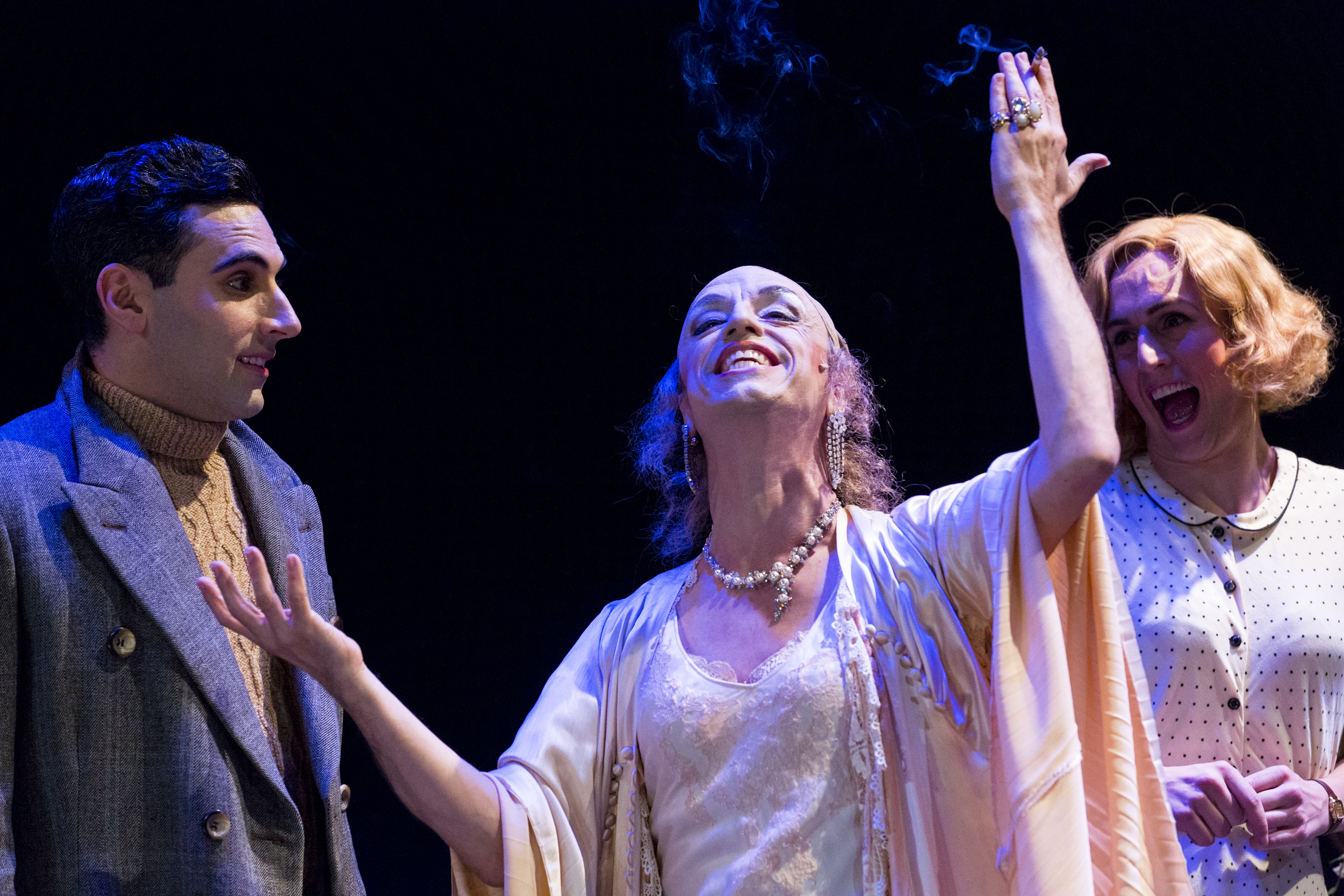
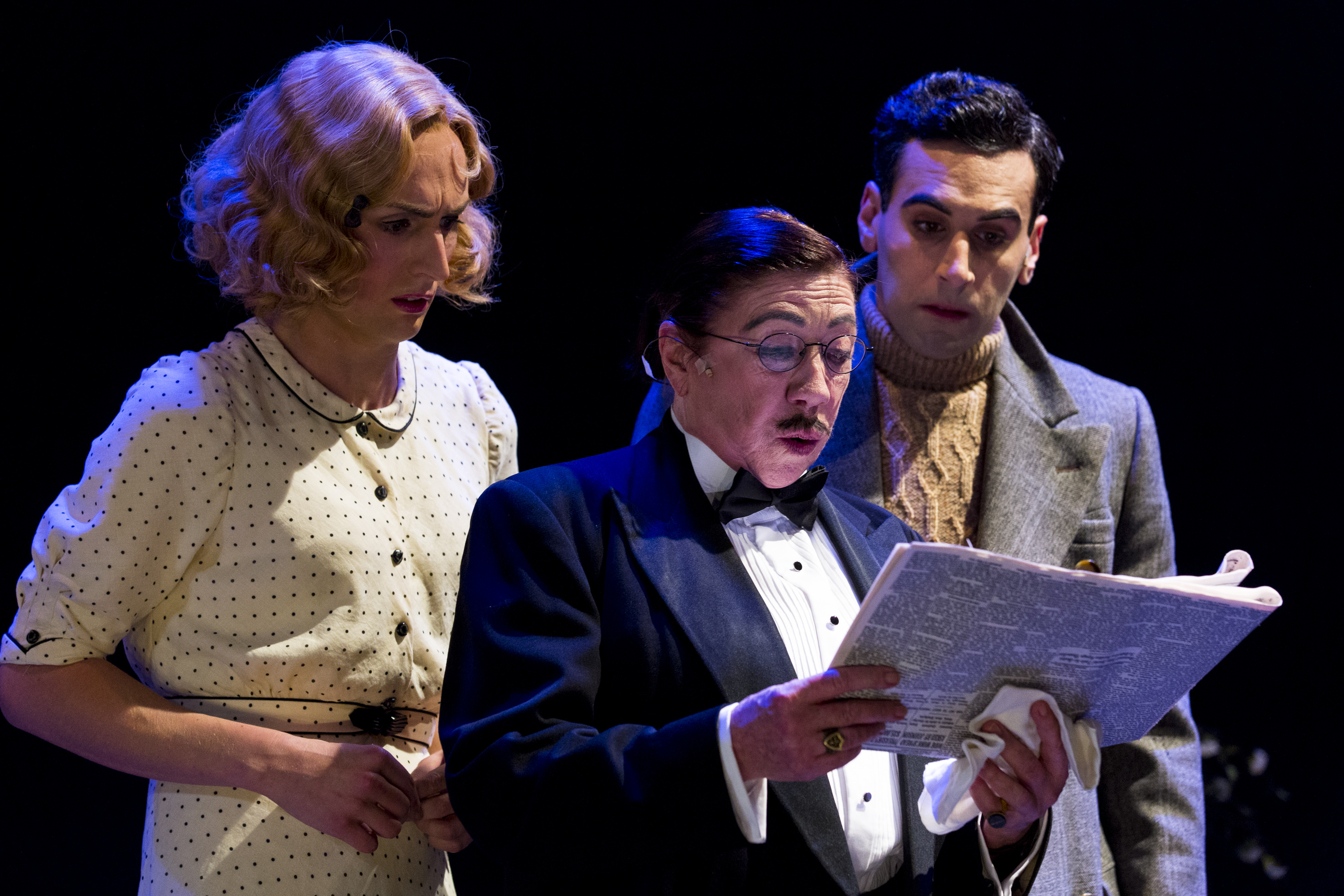
Ashley Lyons and nicholas Papademetriou. Photo: Zak Kaczmarek

Ashley Lyons and nicholas Papademetriou. Photo: Zak Kaczmarek

For his final production as artistic director of Rock Surfers Theatre Company, Leland Kean is directing a new Australian play by Aidan Fennessy called The Way Things Work, which won the inaugural Rock Surfers/Cordell Jigsaw Zapruder (CJZ) Playwriting Commission.

A dark satire about corruption in NSW, from the highest level down to the criminal underbelly, Fennessy won’t have needed to look far for inspiration with the newspapers full of corruption allegations on both sides of NSW politics and elsewhere in the private sector.

Investigative journalist Kate McClymont was a guest on opening night and in a short speech afterwards confirmed that the fiction on stage wasn’t that far removed from reality.

The Way Things Work unfolds in three sections with two actors playing three sets of characters.

The play opens with Minister Barlow (Nicholas Papademetriou) feeling the heat. The Minister (who surname has lent itself to umpteen scathing headlines) has overseen the construction of a multi-million dollar East-West road tunnel, funded by a public-private partnership. He has brought it in on time and on budget. The trouble is, it’s already beginning to crumble because it was built using ordinary concrete not the required “special concrete” and will eventually cost taxpayers vastly more to repair than it did to build.

The project is now the subject of a Royal Commission and the Minister is keen that certain behind-the-scenes deals are not revealed. He calls his departmental secretary (Ashley Lyons), a senior public servant, in for a meeting and puts pressure on him to “forget” a certain name.

In the second section, we meet the two Greek-Australian brothers whose company supplied the concrete and who are engaged in a power struggle of their own as their company is about to be bought out by a major media conglomerate.

The third section features a prison warden (Papademetriou) and a prisoner (Lyons) who have forged a close relationship over many years. The warden has just enlisted the prisoner as a hit man to prevent another of the inmates testifying at the commission, but there is more bubbling away beneath the surface.

Kean, who designed the set as well as directing, stages the play in a concrete box, which changes under Luiz Pampolha’s noir-ish lighting but which lends the piece a consistently tangible feeling of brutality, ruthlessness and claustrophobia, heightened by Jed Silver’s sound.

On opening night Papademetriou rather overplayed the Minister so that the character verged on the cartoonish, undercutting any genuine sense of reality. Some of the dialogue he was given also stretched credibility a little.

But Papademetriou settled down in the next two scenes with two far more potent, believable characterisations and as the play progressed the tension built nicely.

Lyons gives a chameleon-like performance, morphing convincingly from the anxious public servant determined not to compromise his integrity, to the cocky, blinged-up brother, to the prisoner whose sense of betrayal is surprisingly touching.

Running a tight 100-minutes, Kean keeps the action taut, driven by a macho energy. After a somewhat shaky start, The Way Things Work becomes a darkly funny, entertaining play that will certainly resonate with Sydneysiders.

The Way Things Work plays at Bondi Pavilion until November 29. Bookings: www.rocksurfers.org or 1300 241 167

Switzerland

Drama Theatre, Sydney Opera House, November 7

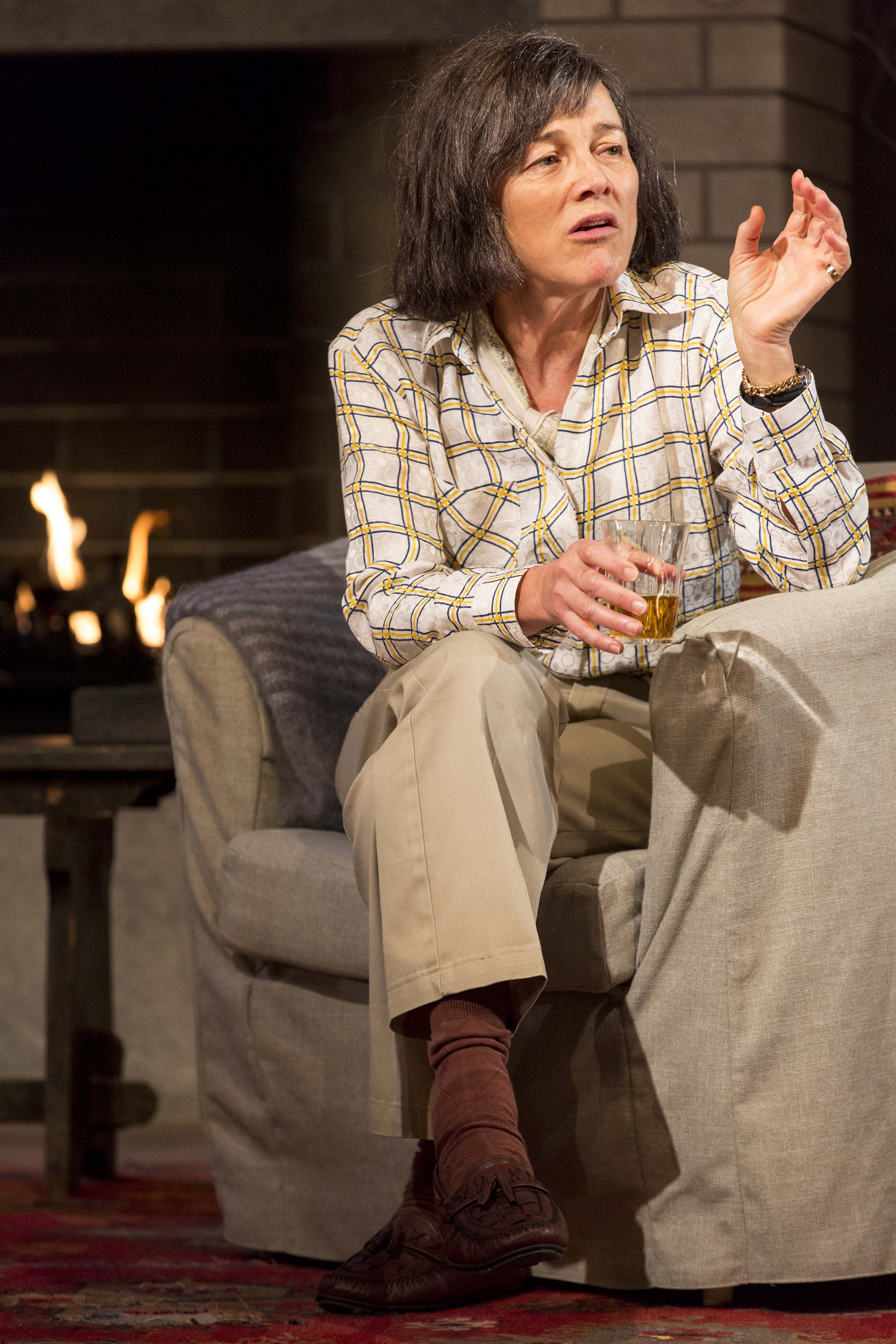
Sarah Peirse and Eamon Farren. Photo: Brett Boardman

Sarah Peirse and Eamon Farren. Photo: Brett Boardman

Joanna Murray-Smith’s new play Switzerland is a gripping psychological thriller about renowned crime writer Patricia Highsmith that creeps up on you slowly and then has you on the edge of your seat.

Highsmith’s novels include The Talented Mr Ripley, one of several she wrote about the psychopathic, sexually ambiguous Tom Ripley, and Strangers on a Train, which Alfred Hitchcock adapted for the screen.

Born in Texas, but bitter about her lack of serious recognition in her homeland as opposed to Europe where she was feted for her literary skill and psychological insight, she lived her last years in Switzerland, land of neutrality, secret bank accounts, picturesque mountain chalets and cuckoo clocks.

Widely regarded as a tough cookie, the eccentric, tight-fisted, hard-drinking, chain-smoking Highsmith (who was bisexual but more drawn to women) was considered misogynistic and cruel, even by her friends. She loved guns and cats and had a strange thing about snails. But Murray-Smith seamlessly weaves into the dialogue pretty much all that you need to know about her.

Murray-Smith’s play was commissioned by Los Angeles’ Geffen Playhouse – but fortuitously for Sydney audiences they agreed to Sydney Theatre Company staging the world premiere.

Set in the early 1990s, the cleverly constructed, tense drama finds Highsmith (Sarah Peirse) living with cancer towards the end of her life in Switzerland.

A young man called Edward Ridgeway (Eamon Farren) arrives from her New York publisher bearing jars of peanut butter (the wrong brand) and cans of soup.

Slightly nerdy and understandably nervous given the incident with the knife that befell the publisher’s previous emissary, Edward’s mission is to try to convince her to sign a deal to write one final Ripley novel.

Highsmith lacerates him with withering, caustic wit, delivered by Peirse with savagely funny brutality. But Edward – who is passionate about Highsmith’s oeuvre – holds his own (even if he can’t pronounce oeuvre) and things start to shift into a game of cat and mouse where it’s not clear who’s the cat.

Michael Scott-Mitchell’s detailed, realistic set (based apparently on Highsmith’s final Swiss home) – with large fireplace, leather chairs, desk with typewriter, framed weaponry, a portrait of Highsmith, thick windows and spiral staircase leading upstairs – makes a virtue of the awkward, wide stage and works superbly in a way you wouldn’t expect for an intimate two-hander.

Nick Schlieper lights it so that it becomes a place of shifting light and shadows, and Steve Francis’s slightly creepy music heightens the growing tension.

Scott-Mitchell’s costuming is also excellent with loose-fitting jeans and mannish socks and shoes for Peirse, and gradually changing outfits for Farren that reflect his character’s evolution.

Sarah Goodes directs an immaculately paced production, drawing superb performances from the two actors, who take you with them through every tiny emotional twist and turn.

Sarah Pierse. Photo: Brett Boardman

Sarah Pierse. Photo: Brett Boardman

The way Peirse reveals sudden flashes of vulnerability, pleasure or admiration beneath the Teflon-tough, gruff exterior is done with a flawless subtlety. She totally inhabits the role. Edward’s transformation is brilliantly judged in an equally subtle performance by Farren.

Murray-Smith celebrates and emulates Highsmith’s writing, while giving us an insight into her fascination with violence and the dark side of human nature. At the same time, she explores a range of ideas including Highsmith’s relationship with her imagination and characters all the while playing intriguing mind games with us. The play is often laugh-out-loud funny too.

As for how the song Happy Talk from the musical South Pacific fits into all this – well, you’ll just have to go and see, but it’s an inspired theatrical moment.

Running 100 minutes without interval, Switzerland is a thrilling piece of writing given a superb production by STC. In some of Murray-Smith’s previous plays you feel her putting words into the mouths of the characters to serve the debate and themes she is discussing. Here the dialogue feels utterly truthful, emerging organically from the mouths of the characters. I don’t think it’s a stretch to say it’s her very best play to date. Highly recommended.

Switzerland plays at the Drama Theatre, Sydney Opera House until December 20. Bookings: www.sydneytheatre.com.au or 9250 1777

A version of this review ran in the Sunday Telegraph on November 16

Daylight Saving

Eternity Playhouse, November 4

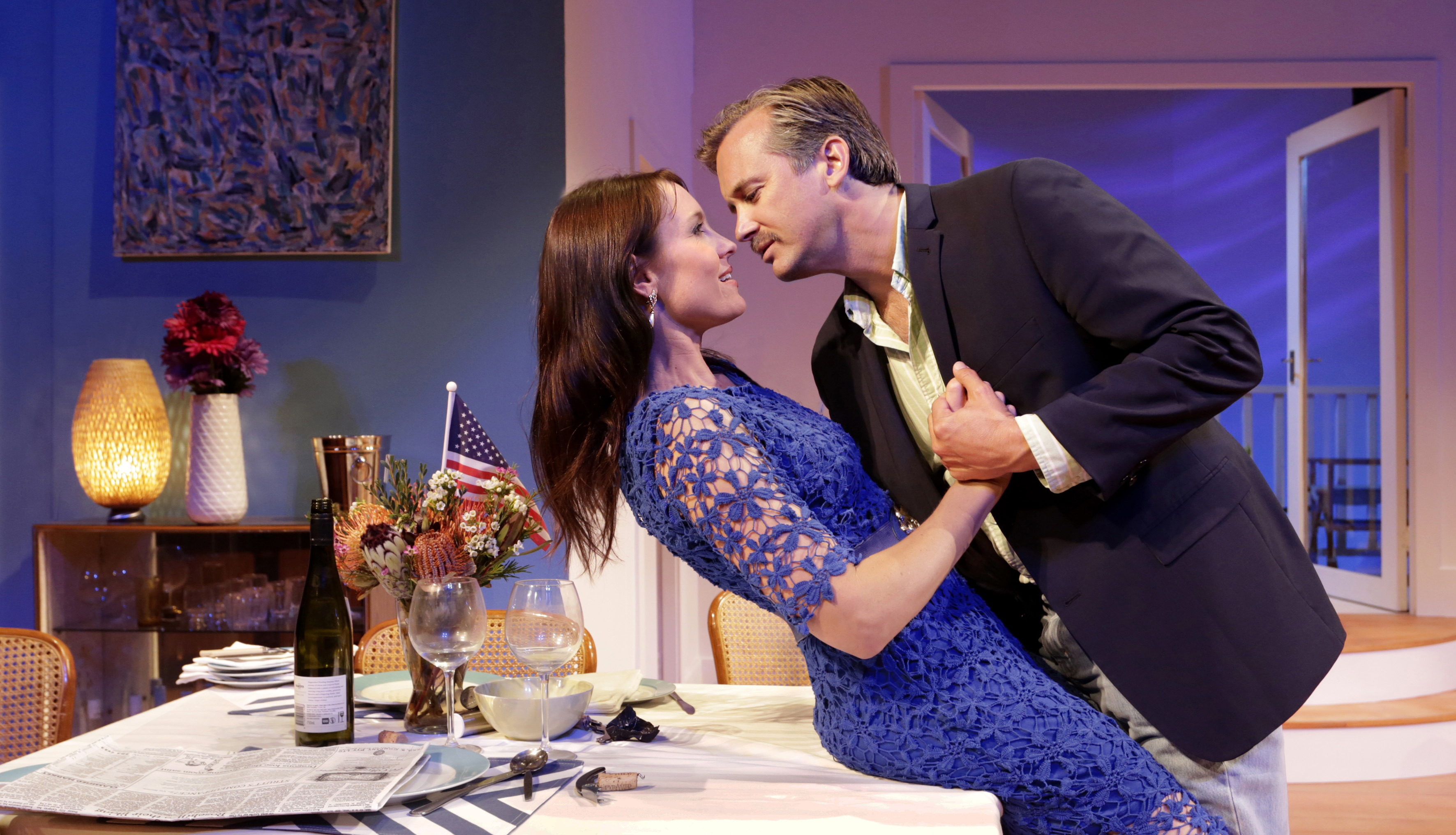
Rachel Gordon and Ian Stenlake. Photo: Helen White

Rachel Gordon and Ian Stenlake. Photo: Helen White

When Nick Enright wrote his 1989 rom-com Daylight Saving, it was a last-ditch effort. Had it not been a success, he had threatened to turn his back on playwriting.

But the play, which premiered at the Ensemble Theatre, was a big hit. Enright went on to a stellar career (cut sadly short when he died from melanoma in 2003) with writing credits including Cloudstreet, The Boy From Oz and the film Lorenzo’s Oil. He also wrote the book and lyrics for the musical Miracle City, currently enjoying a brilliant revival at the Hayes Theatre Co.

Darlinghurst Theatre Company is now staging Daylight Saving (with support form the Enright Family). It’s been lovingly directed by Adam Cook, who has chosen to keep it in its original 1980s time period, but the play itself feels rather dated and lightweight. The humour doesn’t zing in quite the same way that it did back in 1989 (the biggest laugh of the night is a sight gag: a huge, brick-like mobile phone) and its themes of loneliness in marriage, the passing of time and seizing the day don’t have quite the same traction – perhaps because we’ve heard them discussed so often.

Well constructed and elegantly written, the play is stylistically not dissimilar to Alan Ayckbourn or David Williamson. There are some deft, very funny one-liners that the cast deliver with consummate timing,  but the laughs are slow to build and rather sporadic.

Felicity (Rachel Gordon) is a successful restaurateur on Sydney’s northern beaches. She lives in a gorgeous house overlooking Pittwater and would seem to have it all. However, her husband Tom (Christopher Stollery), who manages a top-ranking but temperamental young tennis player Jason Strutt (Jacob Warner), devotes so much time to work that she is feeling increasingly lonely and under-valued.

This time, Tom has forgotten their wedding anniversary as he heads off overseas yet again. So when her old flame Joshua Makepeace (Ian Stenlake), to whom she lost her virginity in America as a student, appears out of the blue Felicity contemplates a romantic night. Somehow the fact that it’s the night that the clocks go back, gifting them an extra hour together, makes it seem even more special.

But plans for a candlelit lobster dinner go awry with a procession of visitors interrupting the evening.

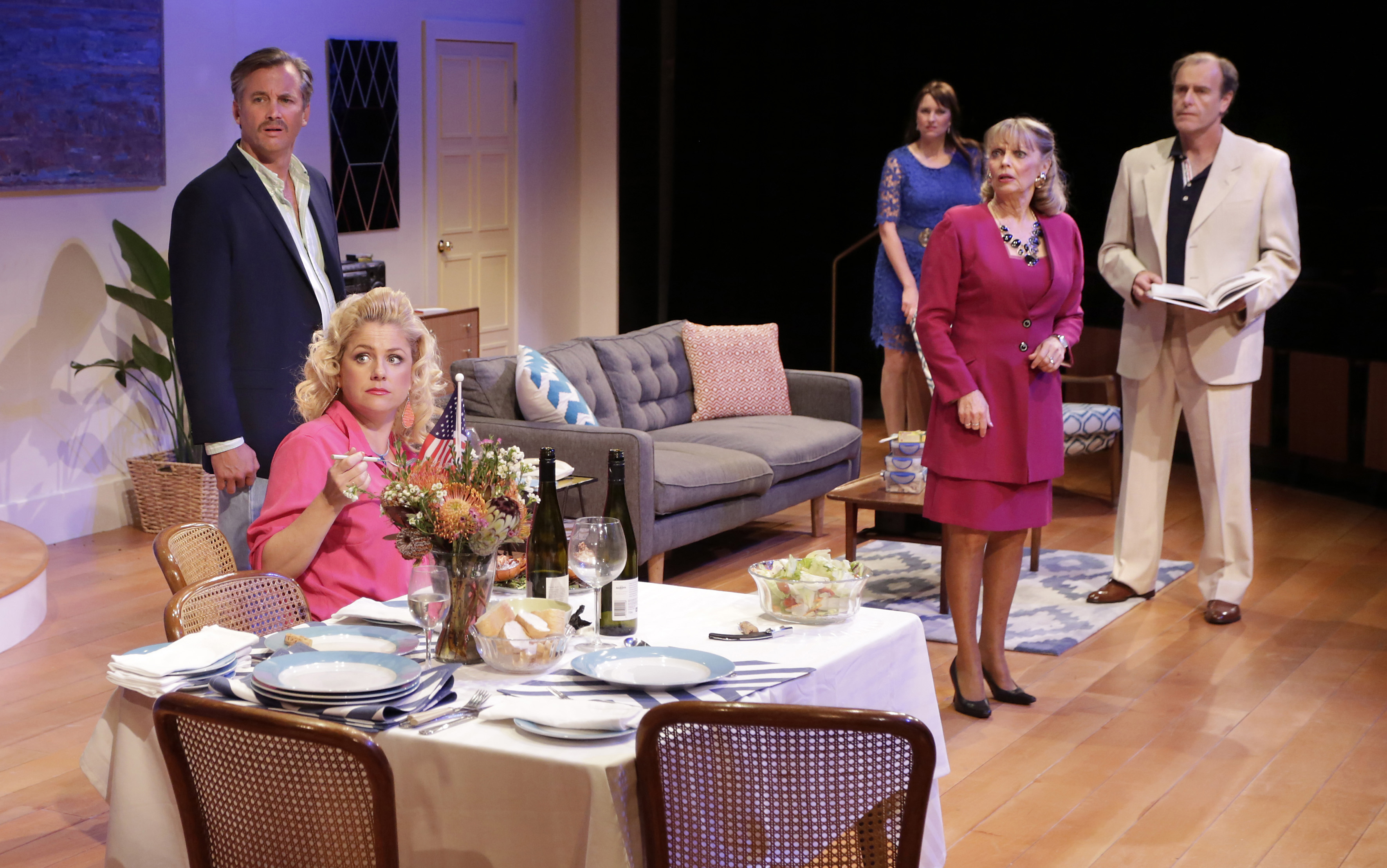
Hugh O’Connor has designed a bright, gleaming set that captures the feel of a comfortable, advantageously positioned waterside home, beautifully lit by Gavan Swift, and his costumes have 80s elements without feeling like a parody.

Helen Dallimore, Ian Stenlake, Belinda Giblin, Rachel Gordon and Christopher Stollery. Photo: Helen White

Helen Dallimore, Ian Stenlake, Belinda Giblin, Rachel Gordon and Christopher Stollery. Photo: Helen White

Cook has gathered a strong cast, with the women in particularly fine form. As Felicity, Gordon gives a performance that feels effortlessly natural and real, her disappointment lying just beneath the surface. Belinda Giblin is absolutely on the money as Felicity’s well-meaning but interfering mother: a North Shore widow with fake tan who arrives like a whirlwind, dispensing advice, inedible cookies and deliciously dry witticisms, delivered to perfection.

Helen Dallimore is also extremely funny as Felicity’s rather boorish next-door neighbour Stephanie, whose boyfriend has given her up for Lent and who is so wrapped up in her own indignation she is oblivious to what’s going on around her.

Stenlake offers the kind of winning charm that Stollery’s grouchy Tom lacks, while Warner plays Jason’s bratishness to the hilt.

Cook has found as much humanity in it as he can, but at the end of the day it all feels rather slight: a play that hasn’t quite stood the test of time but one that is still gently amusing.

Daylight Saving runs at the Eternity Playhouse until November 30. Bookings: www.darlinghursttheatre.com or 02 8356 9987

Miracle City

Hayes Theatre Co, October 24

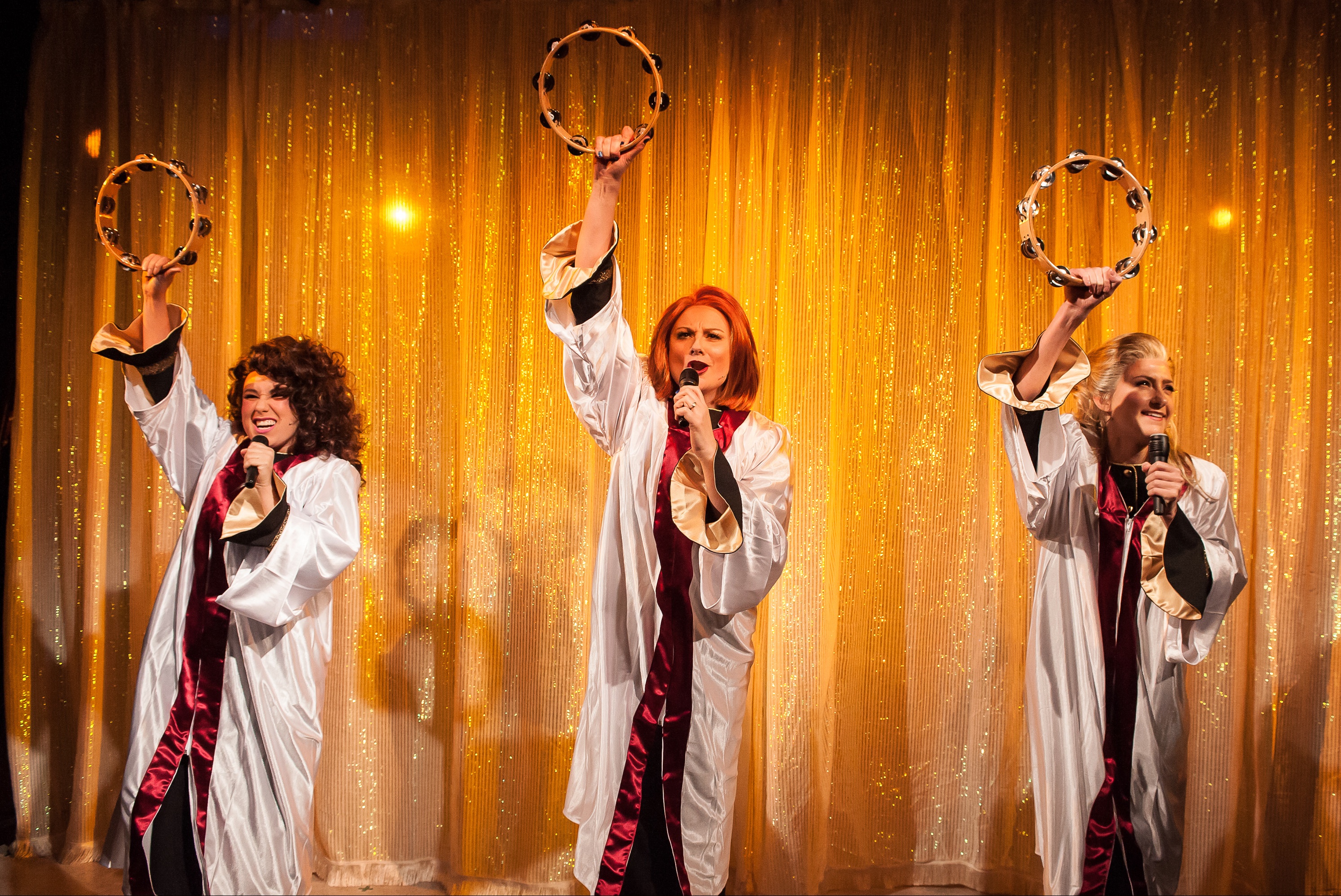
Josie Lane, Marika Aubrey and Esther Hannaford. Photo: Kurt Sneddon

Josie Lane, Marika Aubrey and Esther Hannaford. Photo: Kurt Sneddon

The hotly anticipated second coming of the Australian musical Miracle City is upon us and, praise the Lord, it more than lives up to expectations.

Written by Max Lambert (music) and the late Nick Enright (book and lyrics), the show had a sold out season at Sydney Theatre Company in 1996. For various reasons, it hasn’t been seen since.

But finally Luckiest Production is staging a revival at the Hayes Theatre Co, directed by Darren Yap, with Lambert himself as musical director.

Set in Tennessee, Miracle City tells of US televangelist family the Truswells – Ricky (Mike McLeish), his gospel-singing wife Lora-Lee (Blazey Best) and their wholesome children, 16-year old Loretta (Hilary Cole) and younger son Ricky-Bob (Cameron Holmes).

The musical happens in real time during one of their Sunday morning TV shows. With the cameras on them it’s all gleaming white smiles, glorious country-gospel songs and cheesy, God-will-heal-you joy. But backstage, a much darker story is unfolding.

Ricky is determined to build a Christian theme park (“first you pray, and then you play”) but, unbeknown to Lora-Lee, the Truswell ministry is hemorrhaging money and massively in debt. Possible salvation arrives in the form of filthy rich, fire-and-brimstone preacher Millard Sizemore (Peter Kowitz). But Sizemore wants something shocking in return.

Lambert has described Miracle City as something of an “anti-musical” in that the songs don’t function as they normally do in a book show. They don’t further the action, nor do they illuminate character or motive (though I’ll Hold On does give us an insight into Bonnie-Mae’s pain).

Instead the musical numbers all happen as part of the TV show. They convey the shiny façade that the Truswells present to the world. Reality happens in the dialogue scenes.

They’re beautiful songs, though, ranging from the rousingly uplifting to the comical to the hauntingly moving, and Yap’s excellent cast absolutely nails them.

At the show’s emotional heart, Best gives a stunning performance as a woman whose life is suddenly undone. One minute she is recommending you “find the God in your man”. The next she hardly recognises her husband.

Renowned as an actor in straight theatre, Best gives us a woman who is a glitzy construct of the armour-like wig, make-up and jewellery she wears, then strips herself bare emotionally in a raw, heart-rending performance. And she can sing too.

Hannaford is also quietly affecting as recovering addict Bonnie-Mae. Her soulful, floating rendition of I’ll Hold On is exquisite, and she also unleashes powerhouse vocals with Marika Aubrey and Josie Lane as the trio of Citadel Singers: Aubrey as the down-to-earth, rock-solid Eulella and Lane as the joy-filled, true-believing Charlene.

Cole is perfect as Loretta, looking as angelic as she sounds in her long skirt, cardigan, pearls and hair ribbons, yet hinting at darker corners as her faith, naivety and teenage friction with her mother prove a frightening combination.

Holmes is also excellent as Ricky-Bob, his subtle expressions so incredibly telling and poignant you find yourself watching his every reaction.

Mike McLeish and Blazey Best. Photo: Kurt Sneddon

Mike McLeish and Blazey Best. Photo: Kurt Sneddon

McLeish and Kowitz have less to work with in that Ricky and Sizemore are written with less psychological depth than Lora-Lee, but both actors invest the roles with a cold charisma. The way that Kowitz alone never smiles for the camera is particularly chilling.

Jason Kos completes the cast with a strong performance as the (non-singing) stage manager Billy.

The set by Michael Hankin is little more than a sparkly curtain with a couple of monitors and dressing room tables on either side of the stage, but with Hugh Hamilton’s lighting helping to shift the focus between the TV studio and backstage, it’s all it needs in the tiny space.

Roger Kirk’s costumes, with a red-white-and-blue look for the Truswells, capture the cheap glitz of the world they have created, with Ben Moir’s wigs the fabulous, finishing touch.

Choreographer Kelley Abbey completes the top creative team assembled by Yap and she too finds a way to create movement that works perfectly in the tiny venue.

Miracle City begins in celebratory mode and ends in shattering fashion as we contemplate the disgusting self-interest, ego and abusive behaviour of two men in positions of power, while others find new strength to face the world and carry on.

The show could arguably still do with a little dramaturgical finessing but in just 85 minutes it takes you on a roller-coaster ride that makes you laugh, cry and shudder. It still feels disturbingly relevant and it’s great that it’s finally back. Catch it while you can.

Miracle City runs at the Hayes Theatre Co until November 16. Bookings: www.hayestheatre.com.au or 02 8065 7337

A version of this review ran in the Sunday Telegraph on November 2


Rachel Gordon interview

Rachel Gordon is about to star in Nick Enright’s 1989 rom-com Daylight Saving for Darlinghurst Theatre Company. She talks about the play and the many diverse credits in her bio.

Rachel Gordon. Photo: Helen White

Rachel Gordon. Photo: Helen White

Logie Award nominee Rachel Gordon has some pretty interesting things in her bio besides her many acting credits.

In 2007, she was personally trained by Al Gore and The Australian Conservation Foundation as a presenter for The Climate Change Project.

The following year she spent a month walking the Great Wall of China with various celebrities to raise money for Olivia Newton-John’s Cancer and Wellness Centre.

“Joan Rivers was on it. She turned up and said, ‘When you said the Great Wall I thought you said the Great Mall. What am I doing here?’ She was on the Great Wall of China walking along in her high heels. She was hilarious.

“I’m very lucky to have had a lot of incredible experiences like that,” says Gordon.

And don’t be surprised if Gordon one day adds “politician” to her c.v.

Her great grandfather was Prime Minister Joseph Lyons, while his wife, Dame Enid Lyons, was the first woman in the Australian parliament.

“That’s really cool for a feminist, isn’t it?” says Gordon.

“They died before I was born but I’d like to get into politics and I know my brother is very keen as well so it might be in the blood.

“I have a lot of things I would like to change. I really love that Ghandi quote: ‘Be the change you wish to see in the world.’ There’s no point sitting back and pointing the finger at politicians. I should probably get up and do something, so who knows?”

For the time being, however, Gordon continues to be in demand as an actor.

She is about to star in a production of Nick Enright’s 1989 hit rom-com Daylight Saving directed by Adam Cook for Darlinghurst Theatre Company with a cast including Helen Dallimore, Belinda Giblin and Ian Stenlake.

“Ian Stenlake and I actually went to NIDA together and lived together for a while – not as a couple but in a share house with lots of other students. We’ve never worked together professionally so that’s really nice,” she says.

Gordon is best known for her television work in shows such as The Moodys, Blue Heelers and Home and Away. She has just finished filming a new Channel Seven series called The Killing Field with Rebecca Gibney and Peter O’Brien in which she plays Gibney’s character’s sister.

She has also done plenty of theatre over the years.

“When I first came out of NIDA that’s all I did,” she says. “It took a long time to get much TV work and then that was what I did for a period of time. But over the last couple of years I’ve been doing quite a lot of theatre again and I absolutely adore it. There’s nothing like having an audience in the room with you.”

Enright (The Boy From Oz, Cloudstreet, Lorenzo’s Oil) wrote Daylight Saving for his close friend, actor Sandy Gore. At the time, he was dispirited by his lack of playwriting success and he considered the play a last ditch effort. Fortunately it proved to be a hit, leading to a stellar career. Sadly, he died in 2003 from melanoma, aged 52.

“It’s such an honour to play this role especially because Nick Enright was so dearly loved by pretty much everybody in the theatre community that met him,” says Gordon.

“But I was terrified when I actually got the role because Sandy is such a dear friend and I so want to do the play and her justice. So I called her and told her and she’s been very supportive.”

Gordon plays a successful Sydney restaurateur who contemplates having a fling with an old flame (Stenlake) while her husband is overseas on one of his many business trips. But their candle-lit dinner is constantly interrupted.

“There’s this beautiful feeling in the play, which I think Nick fostered in a lot of his work of really seizing the moment – as he did in his own life. He filled it with so much and affected so many people on so many levels through his generosity of spirit, his largesse, his intellect and his humour. He gave us these wonderful plays and he taught thousands of students.

“There is a real sense of urgency in the play. Felicity, my character, has one night to perhaps live out her dream of being with this ex-flame. We all have these moments in our lives where you think ‘what would have happened if I had taken a different turn?’

“It’s a very charming romantic comedy and I think it will make people laugh and feel happy and hold their dear ones close,” says Gordon.

Gordon’s own dear ones include her two children with actor Jon Sivewright, who she met on Home and Away.

“I’ve got a three-year old and a ten-month old. He’s with the babies at the moment being a very good father,” she says. “They probably feel like they’re on holiday getting everything they want!”

Daylight Saving runs at the Eternity Playhouse until November 30. Bookings: darlinghursttheatre.com or 8356 9987

A version of this story ran in the Sunday Telegraph on October 26

Totem

The Grand Chapiteau, Entertainment Quarter, October 28

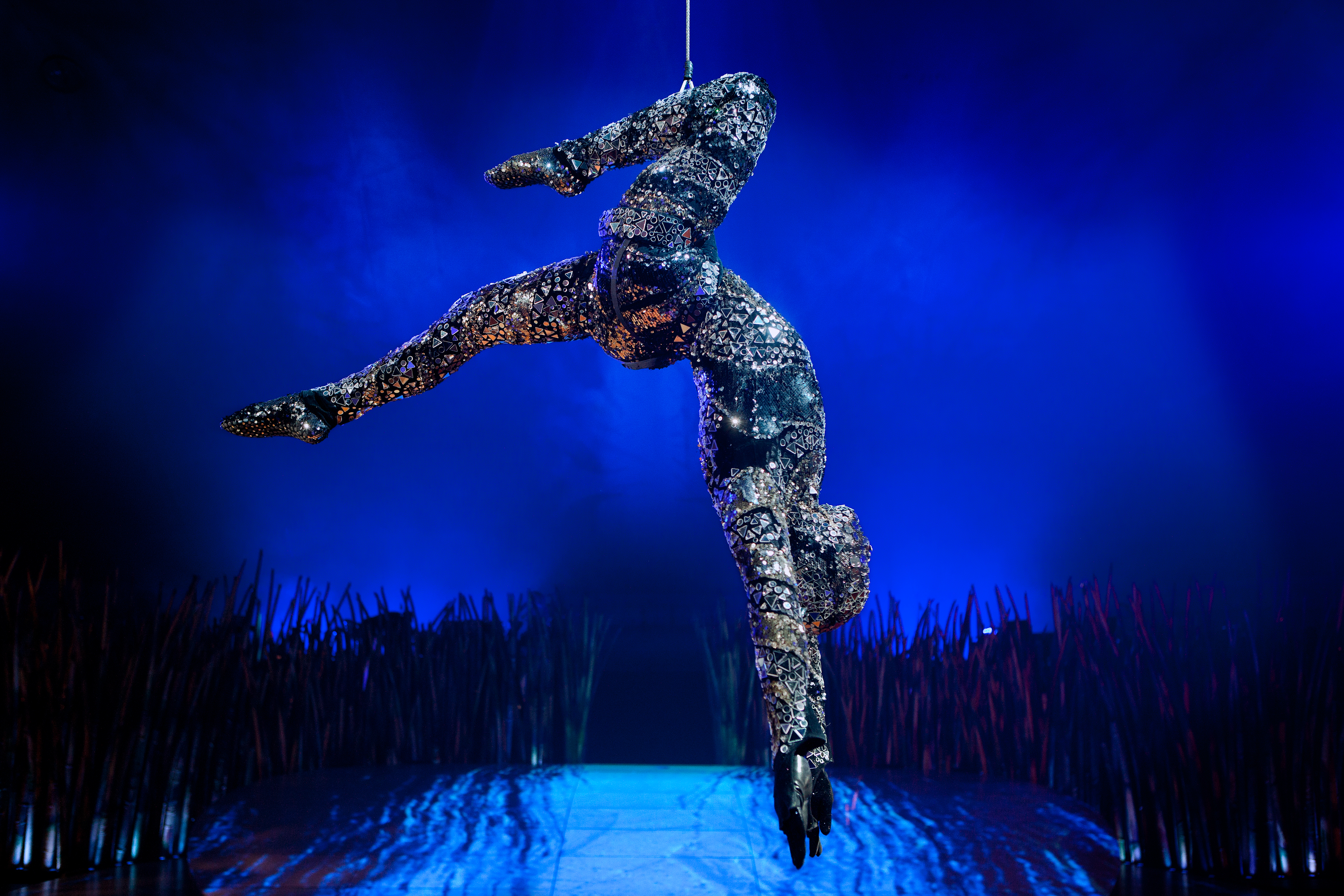
The Crystal Man. Photo: OSA Images, costume by Kym Barrett

The Crystal Man. Photo: OSA Images, costume by Kym Barrett

A regular visitor to our shores since 1999, Canada’s Cirque du Soleil has garnered a reputation for presenting awesomely skilled performers in super-slick productions that look spectacular but feel a bit soulless.

For Totem the company enlisted renowned Canadian theatrical innovator Robert Lepage as writer and director.

One of 19 Cirque du Soleil shows currently playing globally, Totem fits clearly into the company’s body of work, with all its trademark characteristics, but Lepage has managed to add some nice human touches to the show.

A fixed trapeze act by Guilhem Cauchois and Sarah Tessier becomes a delightful mid-air flirtation, for example. A routine on rings is given a humourous, beach twist by having competing, buffed male poseurs in bathers and sunnies being outshone by a bikini-clad woman.

Billed as a journey through human evolution, Totem begins with The Crystal Man descending from the pinnacle of the Big Top like a human mirror ball or glittering Spiderman “to spark life on earth” apparently. In a costume encrusted with 4,500 reflective pieces, it’s a dazzling opening.

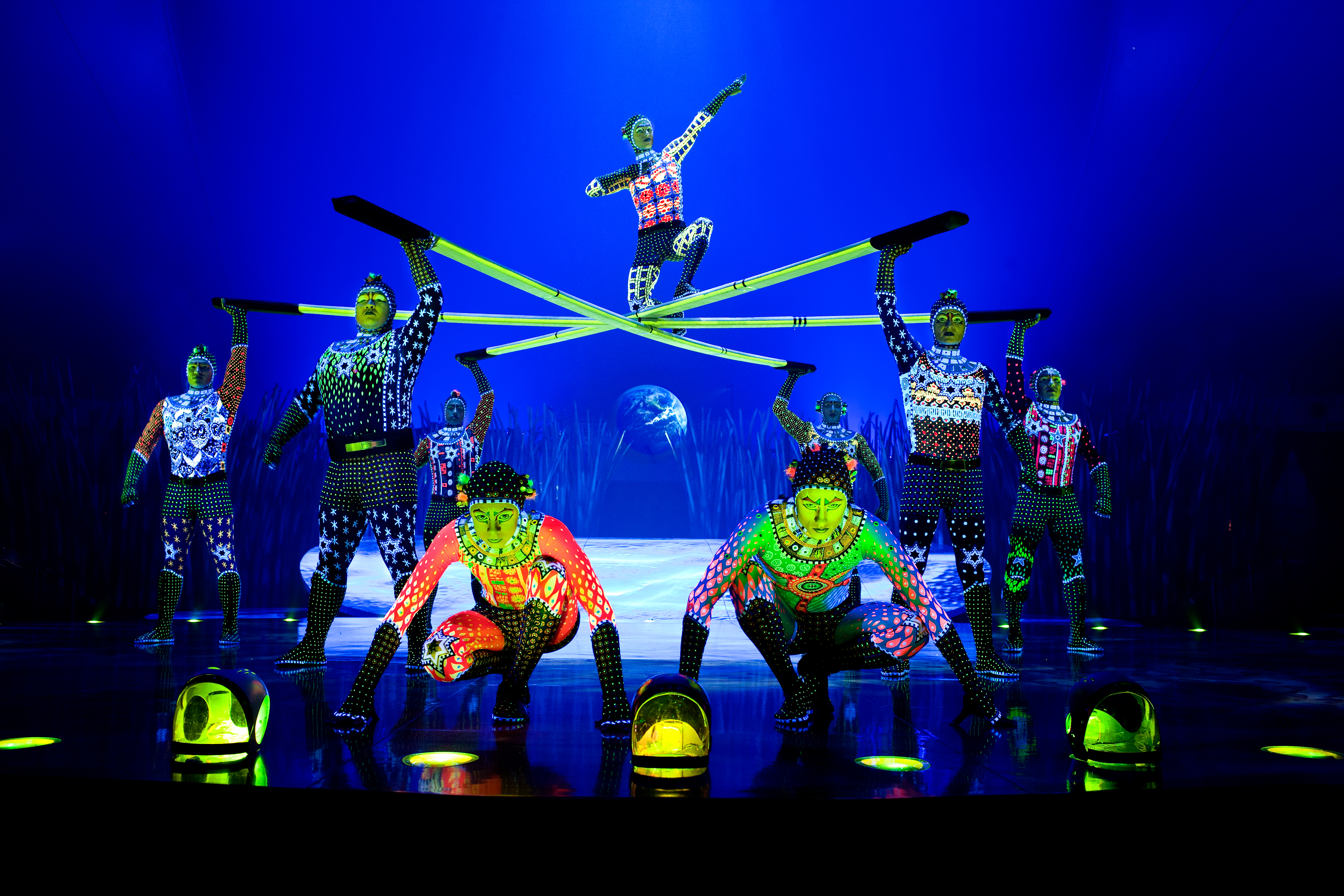
Totem then travels across time from the swamp, where acrobats in amphibian costumes swing on a skeletal carapace, to cosmonauts in glow-in-the-dark Lycra fixing their gaze on Outer space.

Russian Bars. Photo: OSA Images. Costumes by Kym Barrett

Russian Bars. Photo: OSA Images. Costumes by Kym Barrett

Along the way we encounter Native American hoop dancing by Eric Hernandez, a Darwin-like scientist spinning illuminated balls like orbiting planets around a giant transparent funnel, and a cute visual evocation of the ascent of man. But the evolutionary theme feels rather ad hoc, with some of the explanations in the program decidedly far-fetched.

The performance skills are amazing, however, and the show is beautifully staged, with shimmering projections and stunning costumes (designed by Australian Kym Barrett).

Highlights include five young Chinese women (Bai Xiangjie, Hao Yuting, He Xuedi, Wu Yurong and Yang Jie) on towering unicycles kicking bowls into the air and catching them on their heads and on each other’s. The foot juggling Crystal Ladies, identical twins Marina and Svetlana Tsodikova from Belarus who spin mats on their hands and feet, also dazzle.

As is often the case with Cirque du Soleil shows the clowns aren’t terribly funny though and the music has a wishy-washy ambient feel.

With several of the standout acts in the first half of the show, the second half is a slower burn but Totem ends on a high with the Russian Bars act in which acrobats bounce from springy planks to tumble through the air: a real cracker.

So, no great surprises if you’ve seen Cirque du Soleil before but still a highly entertaining show – which it would want to be for the ticket prices, which range from $59 to $345.

Totem is at the Entertainment Quarter until January 4. Bookings: wwww.cirquedusoleil.com It then plays in Melbourne from January 21, Brisbane from April 10, Adelaide from June 11 and Perth from July 31

Blue/Orange

Ensemble Theatre, October 29

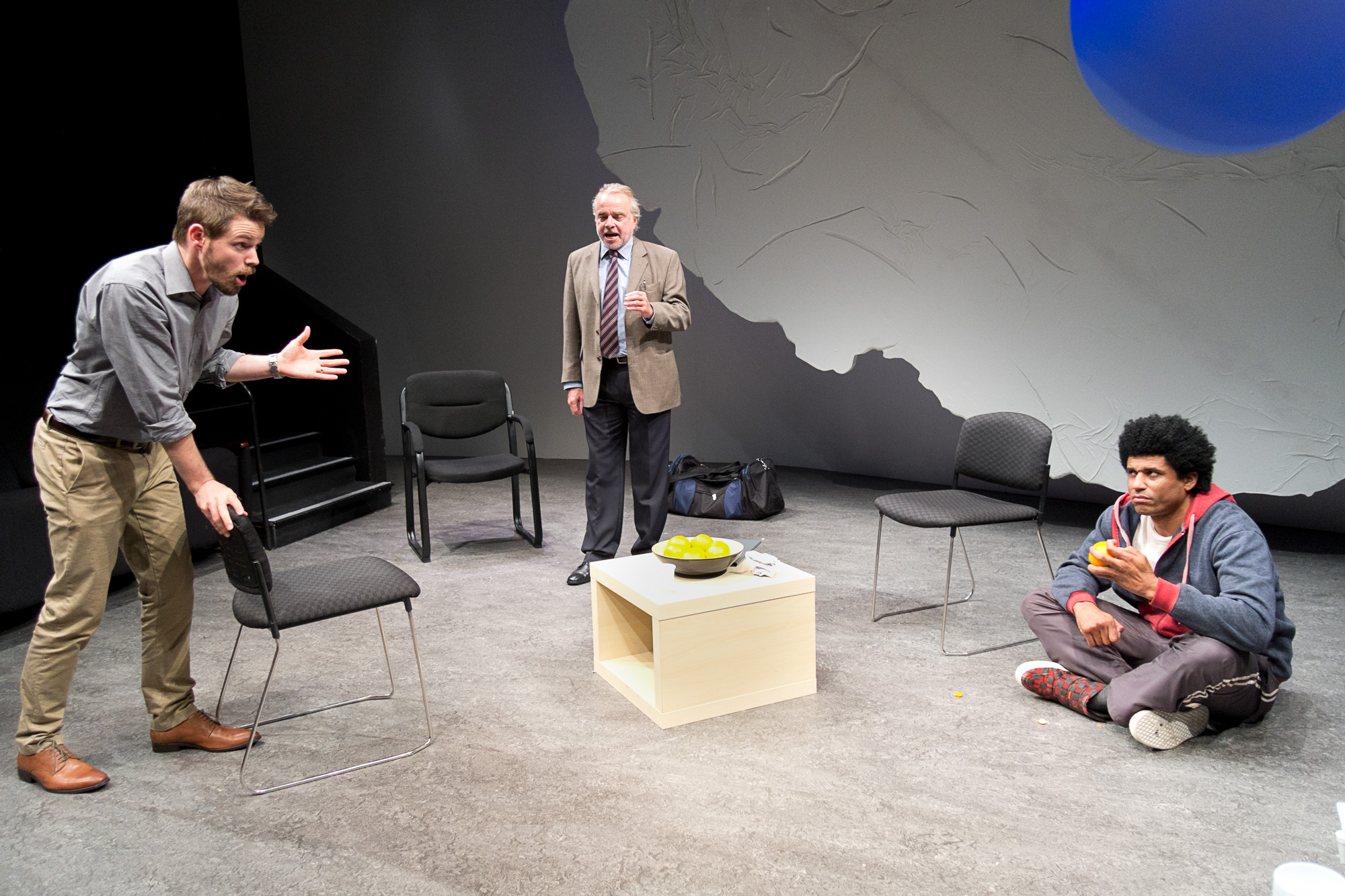
Ian Meadows, Sean Taylor and Dorian Nkono. Photo: Clare Hawley

Ian Meadows, Sean Taylor and Dorian Nkono. Photo: Clare Hawley

Written by British playwright Joe Penhall (who grew up in Australia), Blue/Orange is a fierce comedy bursting with conflicting ideas about mental illness, its diagnosis and its treatment. Premiered by London’s National Theatre in 2000, it is given three exemplary performances in this impressive Ensemble Theatre production.

Christopher (Dorian Nkono), a young black Londoner, is 24 hours away from being released from a psychiatric hospital. The police sectioned him after an “incident” at a market but legally he can only be held for 28 days and he can’t wait to get out. In fact, he is climbing the walls – even without the coffee and coke he craves.

Christopher has been diagnosed as having a borderline personality disorder but Bruce (Ian Meadows), a young trainee psychiatrist who has been treating him, suspects that he is actually a paranoid schizophrenic and wants to keep him at the hospital to do more tests.

He asks his mentor Robert (Sean Taylor), a senior doctor, to sit in on one of their sessions. But instead of supporting Bruce, Robert is dismissive. He is writing a book about “black psychosis” in which he argues that ethnic and cultural factors play more of a role in mental illness that is recognised and argues that growing up black and poor in Britain could go a long way to explaining Christopher’s problem. Besides, he needs the bed for other patients.

Soon the two doctors are at loggerheads. Robert insists Christopher be allowed to go home – even though it becomes clear that he has no home or family to go to. Bruce fights tooth and nail to change Robert’s mind, fearful that Christopher is a danger to himself and others.

As for Christopher, he thinks his father is Ugandan dictator Idi Amin and that the oranges in the room are blue.

Blue/Orange is passionately written. The arguments swing back and forth and Penhall keeps us wondering about the true state of Christopher’s mental health. At times though it feels overwritten, with dialogue turning into big, weighty speeches that feel imposed on the drama.

A couple of the twists don’t ring totally true and it’s hard to believe that the two doctors would argue so vehemently about Christopher in front of him, as they do at times. Robert also feels a tad too overtly Machiavellian. But then the play is also very much about power and ego, with the two doctors shown to be more interested in their own careers than Christopher.

Running two hours and twenty minutes (including interval) Blue/Orange would be sharpened by an edit. But the writing is so robust, and laced with so much humour, that it keeps you thoroughly engaged – especially when performed as well as it is here.

Anna Crawford directs a brisk, well-paced production on a set by Tobhiyah Stone Feller that contrasts a bland room with a large sculptural backdrop at the heart of which is a round void (somewhat reminiscent of an Anish Kapoor void) onto which coloured light is projected (a visual metaphor for Christopher’s confused perceptions).

Taylor is perfectly cast as Robert, capturing his patrician, easy swagger and enunciating each word with crisp precision in his seductively rumbling voice. But his charm becomes almost sinister as he is revealed to be patronising, bitter and manipulative.

Meadows is equally persuasive as the decent, passionate but inexperienced Bruce who speaks his mind with injudicious frankness, and Nkono is wonderful as Christopher, hyper-active one minute, forlorn and touchingly vulnerable the next. Remaining somewhat enigmatic throughout, Nkono’s Christopher certainly defies easy diagnosis, showing how hard it can be to recognise and treat mental illness – particularly when there are other agendas at play.

It’s a fascinating play that would probably be even stronger with an edit but nonetheless it still packs a considerable punch.

Blue/Orange is at the Ensemble Theatre until November 29. Bookings: www.ensemble.com.au or 02 9929 0644

Henry V

Playhouse Theatre, Sydney Opera House, October 23

The cast of Henry V. Photo: Michele Mossop

The cast of Henry V. Photo: Michele Mossop

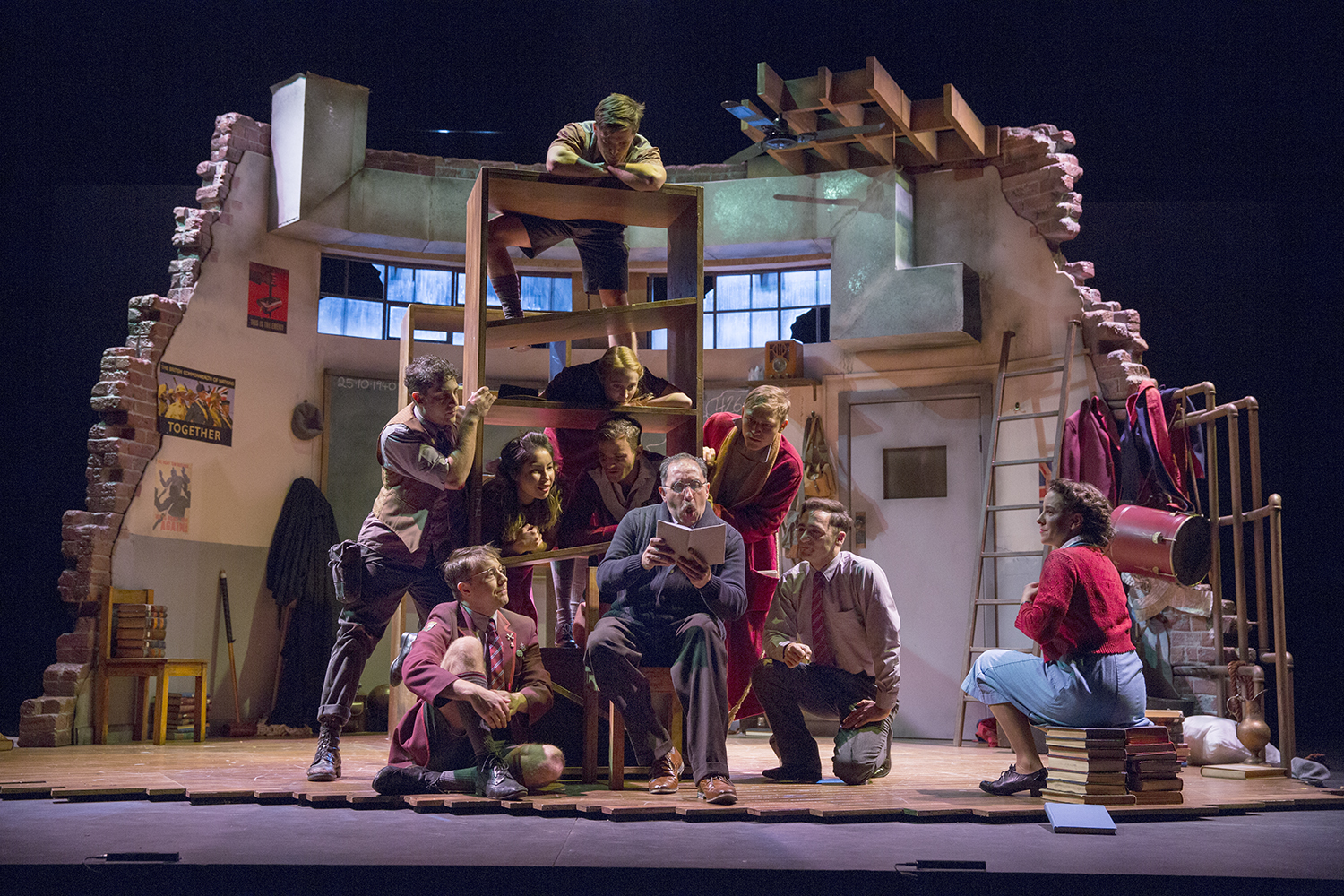
It is 1940. The date is clearly written on the blackboard in a basement room of a London school where a cardigan-wearing teacher (Keith Agius), some of his pupils and the school nurse (Danielle King) take shelter as German bombs rain down outside.

To distract the students from the air raid, the teacher hands out play scripts and an improvised performance takes place. Brief scenes from Richard II and Henry IV Parts 1 and 2 act as a prologue and then we are into Henry V, a play about war.

It’s an inspired device by director Damien Ryan, which doesn’t just frame Shakespeare’s play but runs parallel throughout the multi-layered production. We never forget that this is Henry V as performed by terrified young people during wartime.

Now and again the stories intersect in moments of enormous power – one of them deeply shocking, another incredibly poignant.

Directing for Bell Shakespeare, Ryan proves yet again what an exciting director of Shakespeare he is. Henry V is a dense play yet he brings a customary clarity, energy and modern edge to it.

Ryan was inspired by real life accounts he read of a Boy’s Club, which put on plays and cabarets to raise the spirits of people in London air raid shelters during the Blitz.

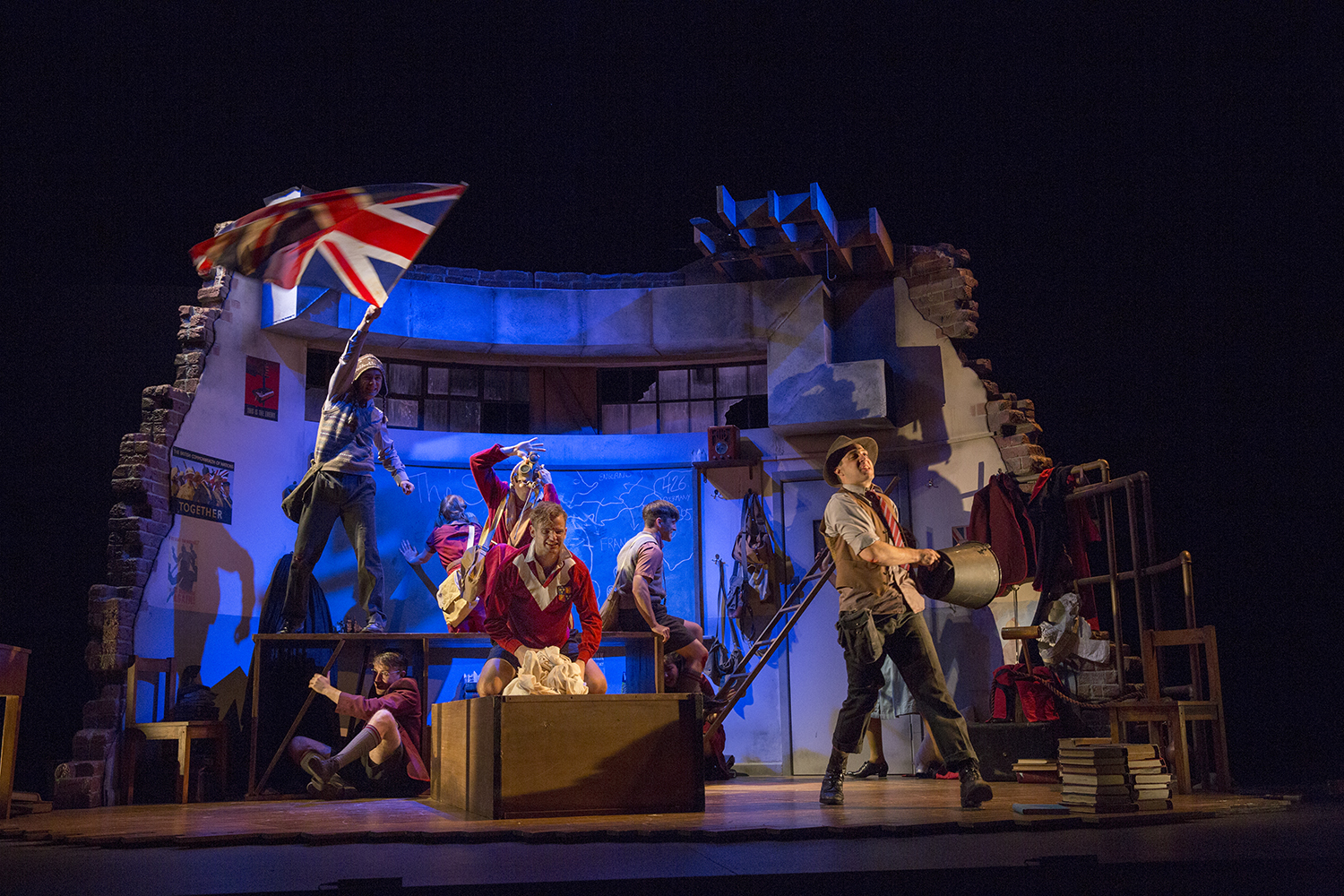
The terrific set by Anna Gardiner gives the cast bookcases, books, blankets, a bucket, newspaper crowns and armour, among various other props, which they use with thrilling invention.

The cast of Henry V. Photo: Michele Mossop

The cast of Henry V. Photo: Michele Mossop

In a play in which Shakespeare calls for the audience to use their imagination on an empty stage, Ryan gets us to do the same but with a plethora of props. Full of surprises, the staging is quite brilliant. It looks improvised, with the actors moving the furniture around at breakneck speed for different scenes, but it’s highly detailed and precisely choreographed. Full credit to movement director Scott Witt who worked with Ryan.

Ryan has gathered a superb ensemble of 10 actors: Keith Agius, Danielle King, Michael Sheasby, Matthew Backer, Drew Livingston, Damien Strouthos, Gabriel Fancourt, Eloise Winestock, Darcy Brown and Ildiko Susany.

Sheasby plays Henry V with the charisma of the captain of the school rugby team. Everyone else plays multiple roles and yet it is always clear who is who and what is happening. Agius makes a wonderful Falstaff (with cushion up his cardigan) and also plays the Chorus, and Winestock is very funny as the feisty, French Princess Katherine, but each and every one of the actors plays their numerous parts with élan.

Eloise Winestock and Michael Sheasby. Photo: Michele Mossop

Eloise Winestock and Michael Sheasby. Photo: Michele Mossop

The sound by Steve Francis, moving vocal compositions by actor Drew Livingston and lighting by Sian James-Holland all contribute magnificently.

Ryan balances the valour and heroism of Henry – who has matured from the callow, irresponsible youth in Henry IV, who hung out in taverns with the reprobate Falstaff, to inspiring leader of his underdog “band of brothers” – with a powerful portrayal of the rank brutality, ugliness and futility of war.

This is one of the most exciting, moving pieces of theatre I’ve seen in Sydney this year. Don’t miss it.

Henry V runs at the Playhouse, Sydney Opera House until November 16. Bookings: www.sydneyoperahouse.com or 02 9250 7777

A version of this review ran in the Sunday Telegraph on October 26


Calpurnia Descending

Wharf 2, October 11

Peter Paltos, Paul Capsis and Ash Flanders. Photo: Brett Boardman

Peter Paltos, Paul Capsis and Ash Flanders. Photo: Brett Boardman

Melbourne’s self-styled “gay DIY drag-theatre” group Sisters Grimm (Ash Flanders and Declan Greene) has made a name for itself subverting classic film genres to create hilarious, high camp stage comedies.

Last year, Sydney Theatre Company had a hit when it presented Little Mercy, which played with the tropes of the “evil child” horror film.

Now comes Calpurnia Descending, a Sisters Grimm production commissioned by STC and Melbourne’s Malthouse Theatre, in which Flanders and Paul Capsis play rival divas. It sounds like a match made in heaven but Calpurnia Descending ends up feeling rather less than the sum of its parts.

It’s 1939. Aging, faded, Broadway legend Beverly Dumont (Capsis) is living as a recluse in a New York apartment with her sinister butler Tootles (Sandy Gore). But when a small-town, wannabe starlet called Violet St Clair (Flanders) comes across her by accident, Dumont agrees to make a dramatic return to the Broadway stage.

Dumont will star as Caesar’s third wife Calpurnia in a tragedy written by her late husband, while St Clair will play Cleopatra.

But will Beverly tolerate Violet when the director (Peter Paltos) is so obviously infatuated with her? And will the not-so-sweet ingénue be content in Beverly’s shadow?

Calpurnia Descending begins in familiar territory with echoes of iconic films like All About Eve, Sunset Boulevard and Whatever Happened to Baby Jane? Then a screen covering the entire stage descends and the production turns filmic. Black and white footage shot live (and badly out of sync) transform the narrative – the rehearsal period – into an old movie. This then morphs into a manic, dizzily colourful, pre-recorded animation in which Beverly appears trapped in a nightmarish video clip or web page.

Where Norma Desmond was undone by the transition from silent films to the talkies, Miss Dumont will struggle to survive in the Internet era where pop stars are the new divas.

Beverly is a gift of a role for Capsis who made his name “channeling” divas as a cabaret performer, and he makes the most of it, playing her spotlight-craving, hard-drinking monstrousness to the hilt while still making her tragic. It’s a fine performance.

Ash Flanders,  Sandy Gore and Peter Paltos. Photo: Brett Boardman

Ash Flanders, Sandy Gore and Peter Paltos. Photo: Brett Boardman

Flanders conveys the ruthlessness beneath the sweet façade beautifully. The cross-gender casting also features Gore in nicely observed, amusing performances as Tootles and Broadway producer Max Silvestri who desperately needs a hit, while Paltos hits just the right note as the dashing, young, diva-struck director.

Calpurnia Descending is technically ambitious and cleverly designed (set and costumes by David Fleischer, AV by Matthew Gingold, animation by Matthew Greenwood, lighting by Katie Sfetkidis, sound by Jed Palmer). It’s also fun but the filmic element feels over-long and the plot twists become confusing.

Directed by Greene, the production goes beyond mere homage or parody but in the end what it’s trying to say isn’t clear. Some have read it as an exploration of the commercialisation of queer culture and appropriation of gay icons (think Katy Perry) but I’m not at all convinced that comes across.

Calpurnia Descending is at Wharf 2 until November 8

A version of this review ran in the Sunday Telegraph on October 19

Once

Princess Theatre, Melbourne, October 18 matinee

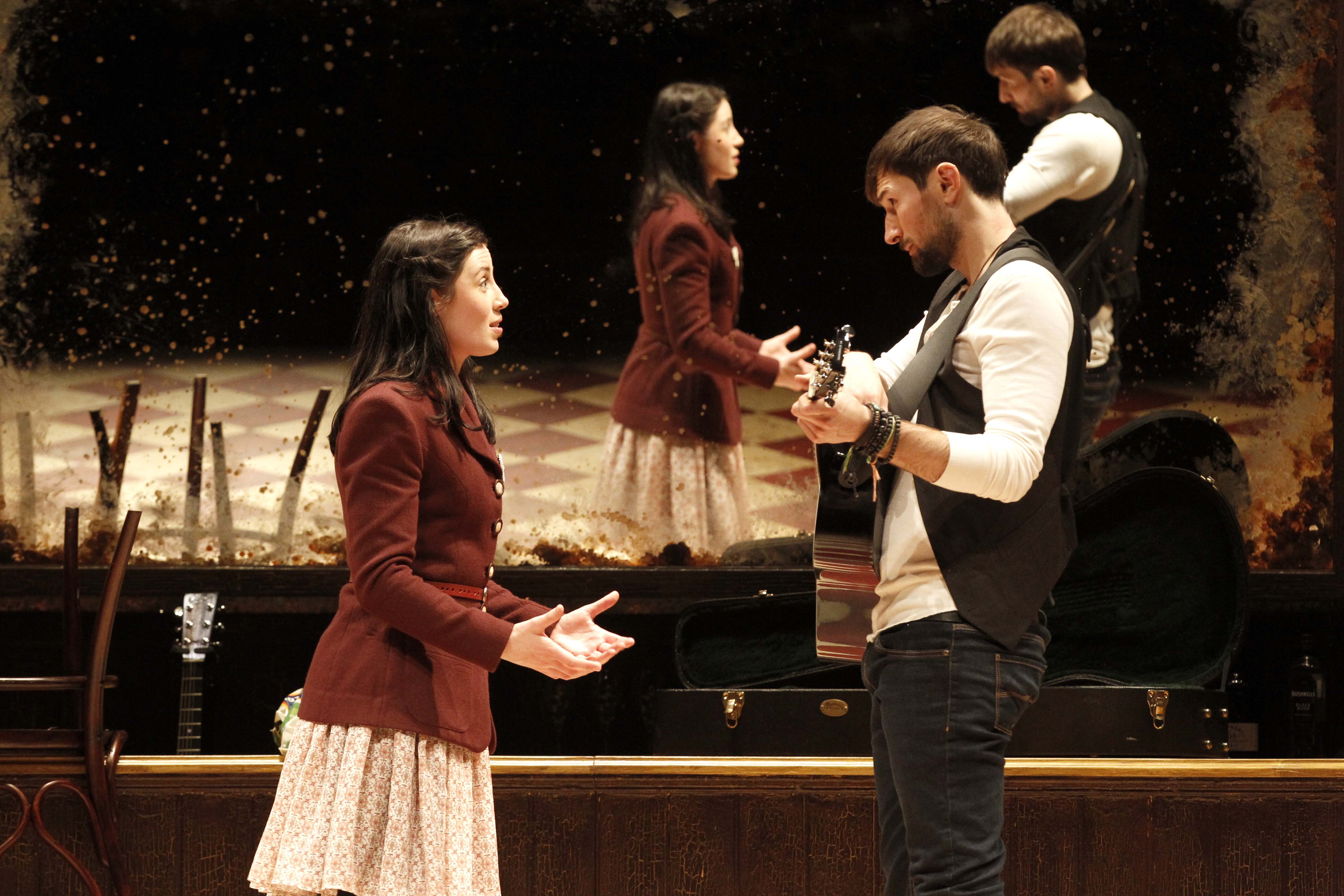
Madeleine Jones and Tom Parsons.  Photo: Jeff Busby

Madeleine Jones and Tom Parsons. Photo: Jeff Busby

Once is a lovely, wistful little musical that could charm the birds from the trees, so it could. It certainly had the audience entranced at the performance I saw.

Based on John Carney’s low-budget 2006 film starring Glen Hansard and Marketa Irglova, who also wrote the songs, it maintains the bittersweet, understated feel of the movie but has enough added brio to really shine on stage.

Winner of eight Tony Awards including Best Musical when it opened on Broadway in 2012, the Australian production is co-produced by John Frost with the Melbourne Theatre Company.

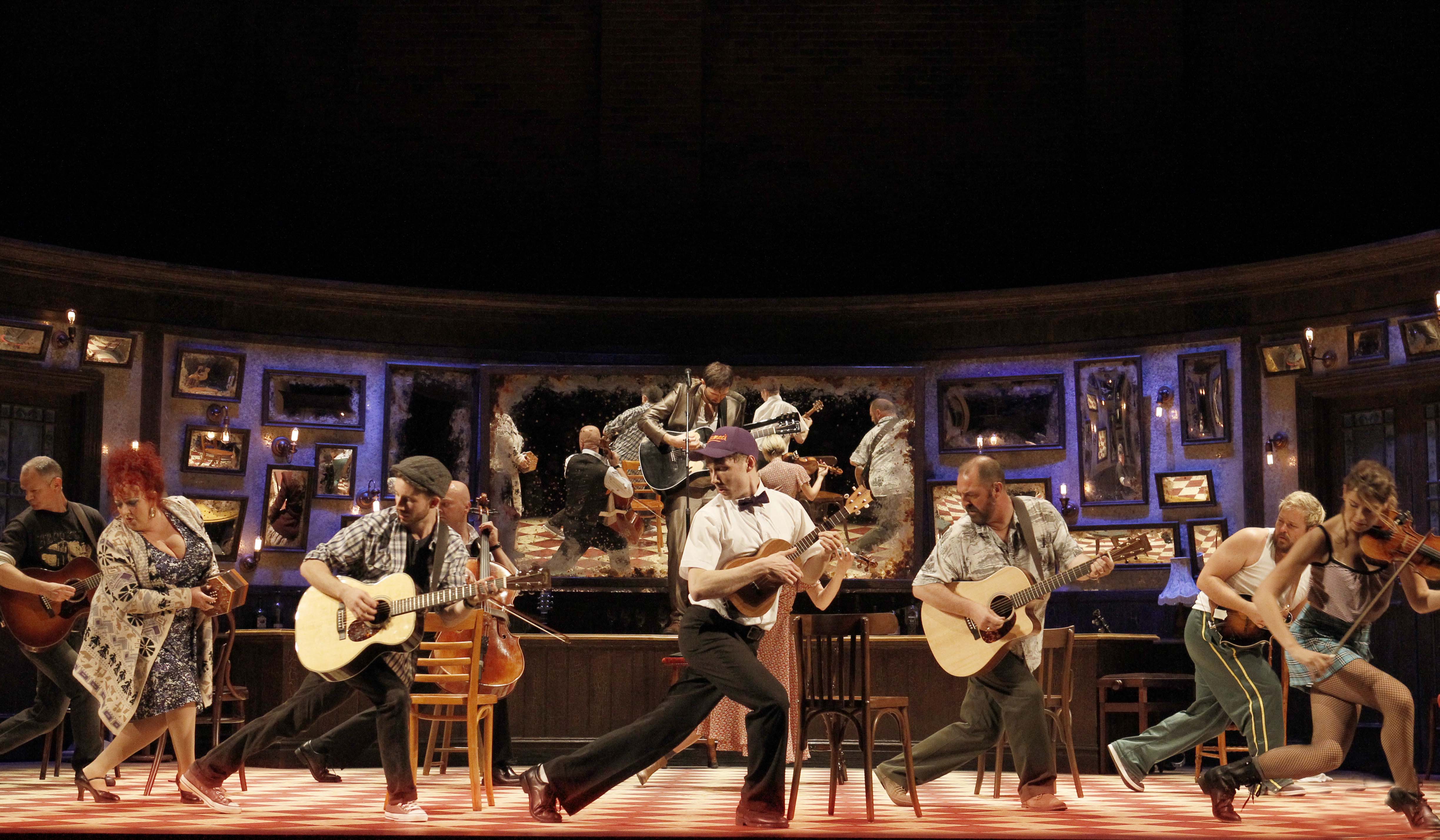
As soon as you enter the auditorium you are swept up into the world of the piece. Several performers are already on stage making music and dancing, joined by various members of the audience who hang around, drink in hand, as if at an impromptu ceilidh in an Irish pub. Then, before we know it, we are into the action of the piece.

Set in Dublin, Once tells the story of an Irish Guy and Czech Girl (we never learn their names). They meet when she passes him busking on the street, howling a song in anger and pain. She recognises some kind of kindred spirit in him. Both are musicians (she plays piano) and both are dealing with difficult, unresolved relationships.

Disillusioned, he is on the verge of giving up music but over the next five days she badgers and cajoles him into recording an album. He meets her mother, daughter and friends – who support him on the album – and as they bond over music, love quietly blooms between them. But it is not destined to be.

Bob Crowley’s set design is an old-style pub with walls covered by framed, tarnished mirrors. A hidden walkway over the top is used for brief scenes when the Guy and Girl escape town. Other than that different locations are suggested with little more than the odd prop moved quickly into place.

The lo-tech nature of the staging adds to the charm. The busking scene segues into a hoover repair shop simply by someone pushing a vacuum cleaner across the stage to Girl, for example. It looks deceptively simple but director John Tiffany has done an ingenuous job of keeping the action flowing in ways that are inventive and often witty.

The direction is complemented by Steven Hoggett’s stunning movement – which isn’t dancing in the ‘big-production-number’ way of many musicals. Instead it combines dancing that emerges directly from the story with more gestural movement that feels deeply imbued with emotion.

Tiffany and Hoggett collaborated on Black Watch, the superb National Theatre of Scotland production seen at the 2008 Sydney Festival, and their work is just as special here.

The cast of Once.  Photo: Jeff Busby

The cast of Once. Photo: Jeff Busby

The songs, which combine a Celtic folksy feel with light pop-rock and gorgeous ballads, spring naturally from the action and seduce with their infectious, lilting rhythms. They include the haunting Academy Award-winning song Falling Slowly.

The fact that the music is performed by the cast, all of whom play instruments (fiddle, guitar, cello, mandolin, drums etc) and most of whom rarely leave the stage, also adds to the charm of the show.

Enda Walsh’s book manages to include sentiment without becoming sentimental and offsets it with lots of humour, from the straight-talking bluntness of Girl to the slapstick humour of her manic drummer friend. When Guy sings a song in the pub, introducing it as one that he wrote, someone in the crowd groans “Aw, fuck.”

The use of surtitles is also cleverly done. Most of the dialogue between the Czech characters is conducted in English with Czech surtitles, but occasionally they speak Czech with English surtitles. It’s a neat touch and used in just the right way.

The production has been beautifully cast. Madeleine Jones (best known in Sydney as a straight actor for companies including Sport for Jove and pantsguys) is gorgeous as Girl, underpinning her pugnacious, straight-speaking feistiness with plenty of heart. Her comic timing is great and she has a lovely voice.

Tom Parsons (who is a British actor) captures Guy’s lanky, slightly daggy-shaggy quality but also conveys his soulfulness and pain, and he sings with a heartfelt rawness. The chemistry between them is tangible and when they sing and make music together it’s magic.

There’s a terrific supporting cast. Amy Lehpamer exudes great energy and zesty charisma as the fiddle-playing, sassy Reza (one of Girl’s Czech friends). Colin Dean is very funny as the grouchy music shop owner Billy who hankers after Girl, as is Susan-ann Walker as Girl’s mother, Brent Hill as Czech drummer Svec, and Anton Berezin as the bank manager with musical aspirations.

The ending is bittersweet. The unfulfilled love story gives the piece an air of melancholy but both Girl and Guy have been reinvigorated by their relationship, while the friendships that blossom – even between the initially hostile Billy and the bank manager – are uplifting. Somehow it all feels real: some things work out, some don’t but that’s life.

A paen to the power of music and the importance of friendship, Once creeps gently up on you and plays with your heartstrings. I must admit I didn’t expect to be so moved by it but I went home enchanted.

Once is at Melbourne’s Princess Theatre until December 31. Bookings: ticketmaster.com.au