The Hayloft Project Relocates to Sydney

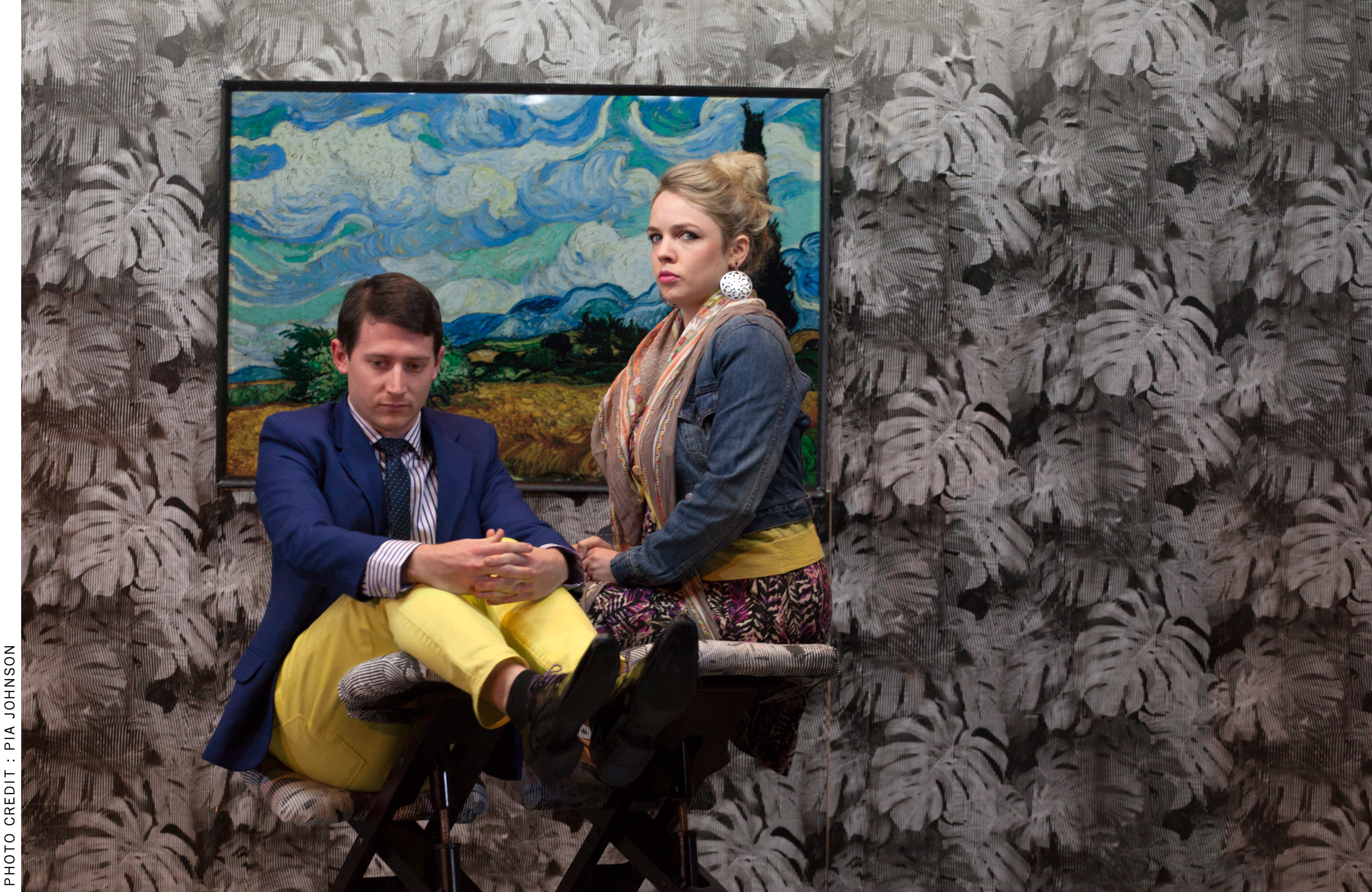
Hayloft's Delectable Shelter. Photo: Pia Johnson

Hayloft’s Delectable Shelter. Photo: Pia Johnson

Founded in 2007 by Simon Stone, The Hayloft Project has quickly established itself as one of Melbourne’s most exciting theatre companies with critics hailing it as “a shining light in Melbourne theatre” and “the hottest property in Melbourne’s indie theatre scene.”

So news that the company is relocating to Sydney in 2014 under its recently appointed artistic director Benedict Hardie is very welcome – at least to theatre lovers at the Sydney end of the Hume Highway.

The move follows in the footsteps of Stone, who left Melbourne to become resident director at Belvoir in 2011, and Anne-Louise Sarks who took over from him as artistic director of Hayloft and has now replaced him at Belvoir as one of two new resident directors.

Hardie describes the relocation as “a very exciting challenge for the company next year, to see if we can’t work up some of our Hayloft magic (in Sydney).”

He says that there was a mix of reasons for the decision, some of them personal. “It’s a bit of a homecoming for me. I’m from the Blue Mountains, I went to school in Penrith so coming back is an exciting new challenge for me and an excuse to see my Mum a bit more.

“I think Sydney is looking like an exciting prospect to a lot of theatre artists,” adds Hardie. “The independent scene in Sydney in the last five or ten years has been expanding and acquiring much more legitimacy and interest from audiences and that means, I think, that the Sydney scene is poised only to expand and get more exciting in the next few years and it’s great to be a part of that.”

As to whether he hopes to keep working with actors already associated with the company he says: “We like to establish long-term collaborative relationships with actors and designers so those who can work in Sydney, then absolutely I would jump at the chance to have them working (with us) but that will be on a case by case basis.

“Many actors that we have worked with before have already relocated to Sydney, some of whom you see regularly on the Belvoir stages, so I am looking forward to reconnecting with some of those actors.”

Actors performing in Sydney who have worked with Hayloft include Gareth Davies, Ashley Zuckerman, Shelley Lauman and Eryn Jean Norvill.

Sydney has already seen several Hayloft productions including Stone’s memorable Thyestes, his version of Spring Awakening and The Only Child, which he adapted from Ibsen’s Little Eyolf.

This week the company will perform its post-apocalyptic, black comedy Delectable Shelter at the Seymour Centre as part of a national tour.

Written and directed by Hardie, the play (which premiered in 2011) is set in a bunker where the last five surviving humans plan a utopian future. The production features an eye-popping design, elaborate, five-part, Bach-style, a cappella arrangements of 1980s love songs (arranged by Benny Davis from The Axis of Awesome) and a range of comedy styles.

“My intention was to write a comedy where I could shine a harsh light on some of the prejudices and fears that people harbour but don’t talk about,” says Hardie. “Then it all became bonkers and I ended up creating this very elaborate play set in a bunker underground and spanning 350 years with choral arrangements of 1980s pop ballads.

“But it’s a lot of fun. Silliness and fun were the guiding principles for a lot of it. It leaves no comedy style unturned.”

Delectable Shelter, Seymour Centre, August 13 – 17

An edited version of this story ran in the Sunday Telegraph on August 11

Fireface: review

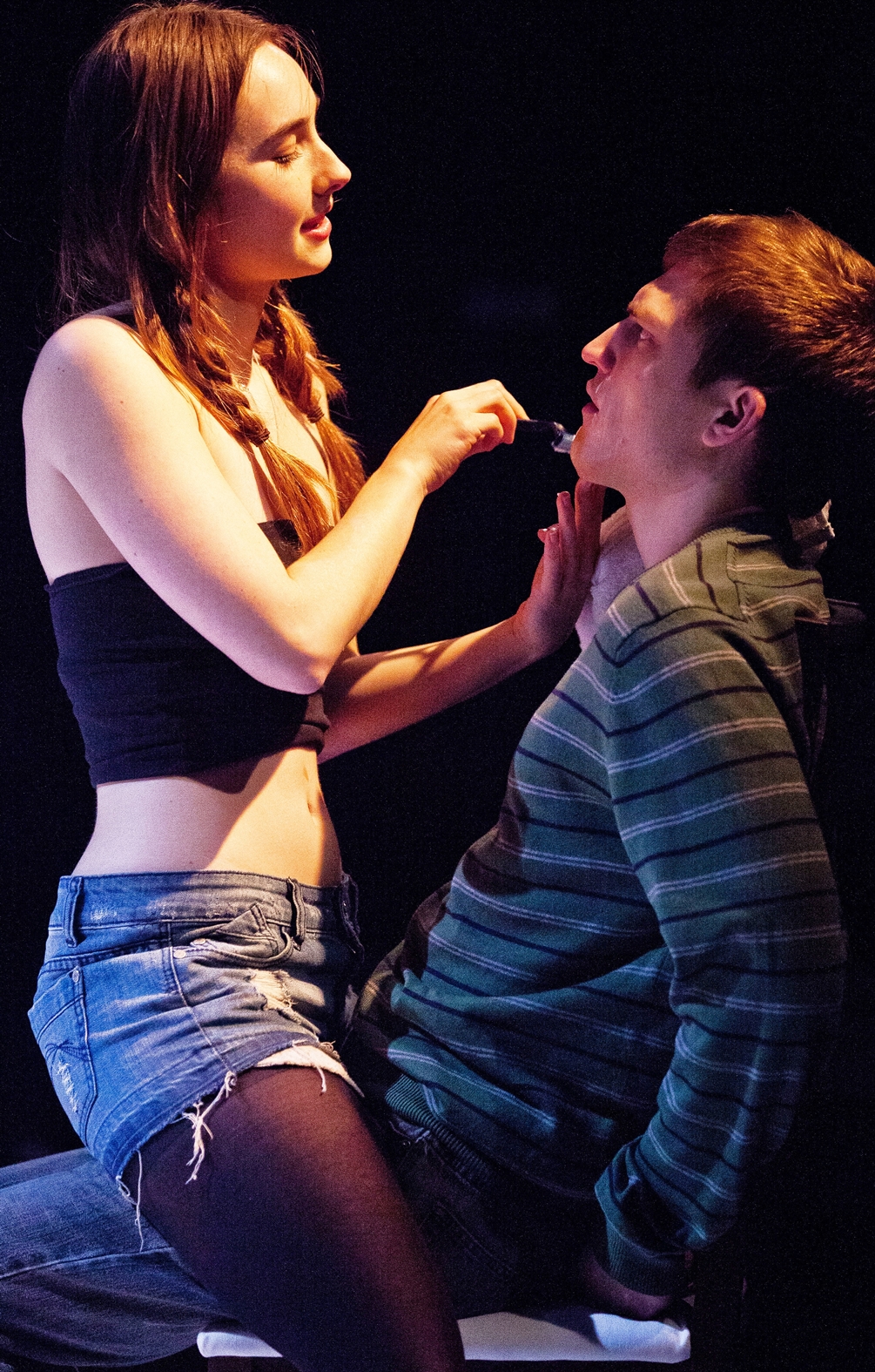
Darcie Irwin-Simpson and Darcy Brown. Photo: Phyllis Wong

Darcie Irwin-Simpson and Darcy Brown. Photo: Phyllis Wong

Stories Like These and atyp Under The Wharf

ATYP Studio 1, August 4

Adolescence can be a confusing, angst-ridden time – particularly if your parents are everything you don’t want to become as an adult. But how much does ineffectual (as opposed to abusive) parenting shape a troubled teenager?

In his 1997 play Fireface (first seen in Sydney when the Sydney Theatre Company presented it in 2001) German writer Marius Von Mayenburg presents us with a middle-class family where communication has broken down.

The parents aren’t talking. The father (James Lugton) would rather read newspaper reports about murdered prostitutes than communicate with his wife (Lucy Miller), while she flaunts herself around the home in various states of undress.

Their alienated children, meanwhile, are exhibiting worrying behavioural traits. The burnt blackbird that the mother discovers wrapped in newspaper behind the garage is surely a warning sign but the father is in denial, dismissing it as nothing serious.

In this emotionally arid world, provocative teenager Olga (Darcie Irwin-Simpson) starts using her burgeoning sexuality as a form of power, solace and a means of escape, first seducing her equally alienated younger brother Kurt (Darcy Brown) and then Paul (Ryan Bennett) who catches her eye because of his motorbike.

Jealous at Paul’s arrival, Kurt’s fascination with flames escalates and he really starts playing with fire. There’s no doubt it will end badly – with no prizes for guessing how.

Von Mayenburg structures his taut 100-minute play using 94 short, snappy scenes.

Directing the play for Stories Like These and atyp Under The Wharf, Luke Rogers punctuates the myriad scenes with sharp blackouts and a surge of sound not unlike the explosive crackle of fire (sound design by Nate Edmondson). At times the momentum falters with so many scene breaks but on the whole Rogers manages to keep the tension building.

Simply staged around a table and chairs (set and costume design by Lucilla Smith), Rogers puts the focus firmly on the performances.

The cast of five are all convincing, with Brown in particular capturing Kurt’s weird, psychotic nature, his face looking increasingly blank and his eyes ever more dead as the play unfolds, while Lugton and Miller give just the right weight to the black comedy, as the parents sidestep responsibility and console themselves with the thought that it won’t be long before their troublesome offspring leave home.

Though we may know where it’s going, Fireface is a dark, disturbing play. Rogers could perhaps ramp up the sense of menace a little more but his production is certainly unsettling and sends you home pondering what you’ve just seen.

Fireface is at the ATYP Studio 1, The Wharf, until August 17

Beached: review

Blake Davis and Kate Mulvany. Photo: Brett Boardman

Blake Davis and Kate Mulvany. Photo: Brett Boardman

Arty (Blake Davis) is a sweet but morbidly obese teenager who dreams of being an explorer or a handsome movie star. In reality, he is marooned like a beached whale at home with his bogan mother JoJo (Gia Carides) who keeps him well fed as a result of her own personal issues.

In order to pay for life-saving gastric surgery, they agree to go on a reality TV show called Shocking Fat Stories where Arty’s struggle to lose enough weight to be able to undergo the operation is charted over 235 days.

And so into their home comes a ruthless, parasitic TV producer (Arka Das) and a stitched-up Pathways to Work CentreLink officer called Louise (Kate Mulvany) whose idea of a bright future for Arty is an office job and a tax file number.

With obesity on the rise and reality TV dominating the ratings, Melissa Bubnic’s black comedy Beached is a timely piece but it doesn’t get to grips with the issues it raises in any serious, in-depth way.

Though the play won the 2010 Patrick White Playwrights’ Award, it still needs work if it is to really hit home. As it is, the characters are one-dimensional and the plot superficial.

The script is full of gags (many of them cheap, some downright gross) but the satire isn’t sharp or clever enough to really shock so the play – particularly the reality TV aspect – comes across as a rather glib parody.

The co-dependent relationship between Arty and his mother could be fascinating but the reason given for JoJo’s compulsive feeding of her son is simplistic in the extreme.

Shannon Murphy directs an ambitious production for Griffin Theatre Company using cameras operated by the hard-working cast of four so that they are seen “live” and on screen.

Mulvany delivers a richly detailed and very funny performance as Louise: an uptight, daggy character whom she evokes with an array of nervous tics and lank hair. But it stretches believability that someone with so many insecurities and personal issues of their own would be employed in such a job – or that she would start a relationship with Arty.

Carides also gives a strong, layered performance as the loving but manipulative JoJo, doing all she can to make her real, while Davis exudes a lovely boyish innocence as Arty – though he is so sprightly and skinny it seems slightly odd for a character who supposedly tips the scales at 400 kg.

Of course, no-one is expecting naturalism here. Murphy and designer James Browne portray Arty as part of the brown, fleshy chair on which he sprawls, inserting Davis into it. It’s a nice idea but doesn’t look terribly effective in practice.

As for the TV producer, he is so crudely and predictably drawn that Das has little to work with but he brings a hard-edged energy to the role.

And so, despite the best efforts of the cast, Beached feels just that. Bubnic certainly raises some interesting, hefty (excuse the pun) ideas and the acting is enjoyable – particularly from Mulvany and Carides – but ultimately Beached feels lightweight.

Beached runs at the SBW Stables Theatre until August 31.

An edited version of this review ran in the Sunday Telegraph on August 4.

Helpmann Awards

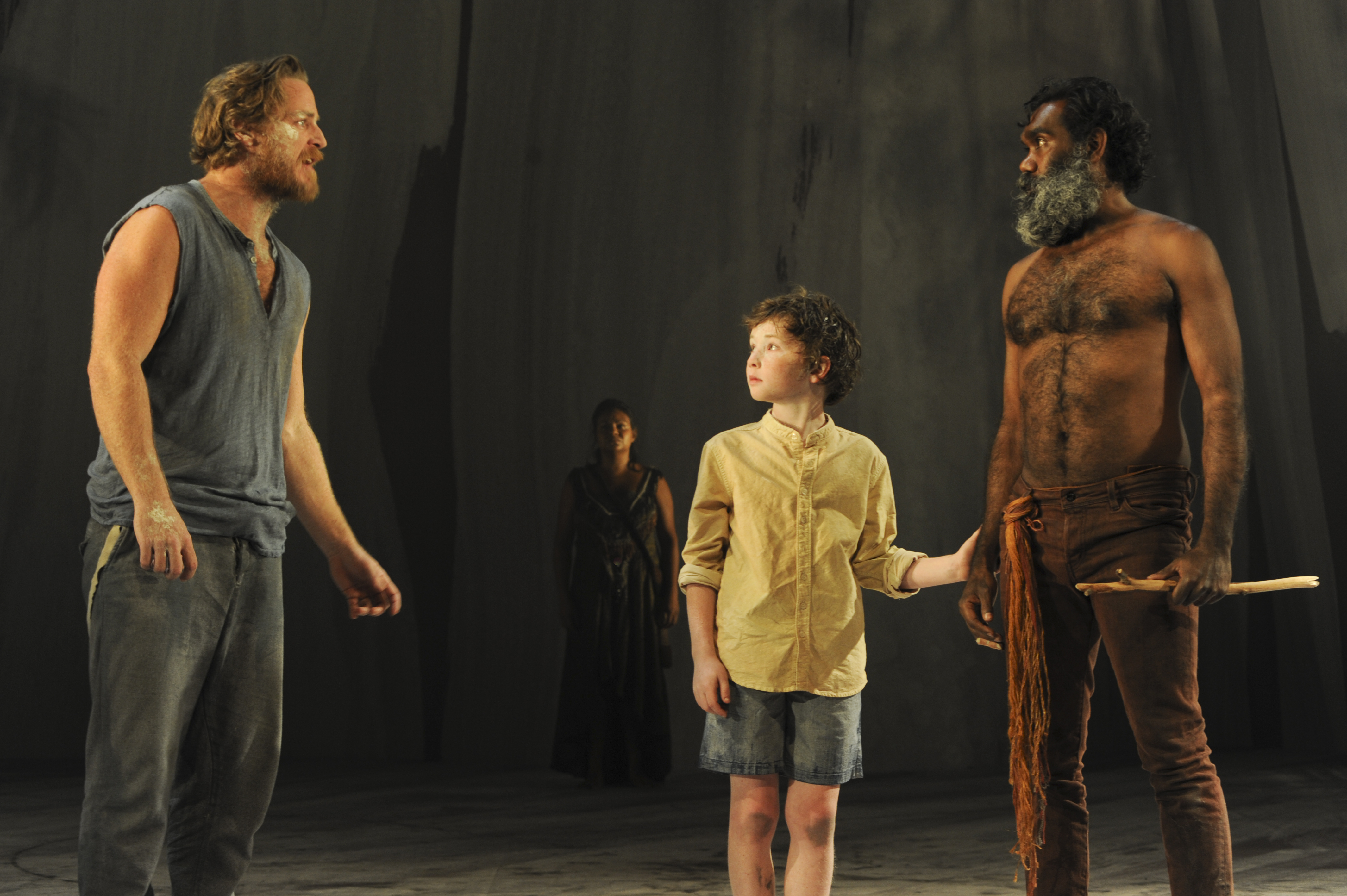
Nathaniel Dean, Ursula Yovich, Rory Potter and Trevor Jamieson in The Secret River. Photo: Heidrun Lohr

Nathaniel Dean, Ursula Yovich, Rory Potter and Trevor Jamieson in The Secret River. Photo: Heidrun Lohr

Sydney Theatre Company’s stage adaptation of The Secret River was the big winner at the 2013 Helpmann Awards, receiving six awards from 11 nominations including Best Play, Best Direction of a Play (Neil Armfield) and Best New Australian Work.

Andrew Bovell’s stage adaptation of Kate Grenville’s award-winning novel was a popular choice at last night’s ceremony at the Sydney Opera House, hosted by Eddie Perfect and Christie Whelan Browne.

However, the musical category has caused a fair amount of discussion on social media, with some believing that South Pacific was unjustly snubbed.

King Kong – the new musical from Global Creatures – had been portrayed in some sections of the media as the main rival to The Secret River in terms of its potential to sweep the awards.

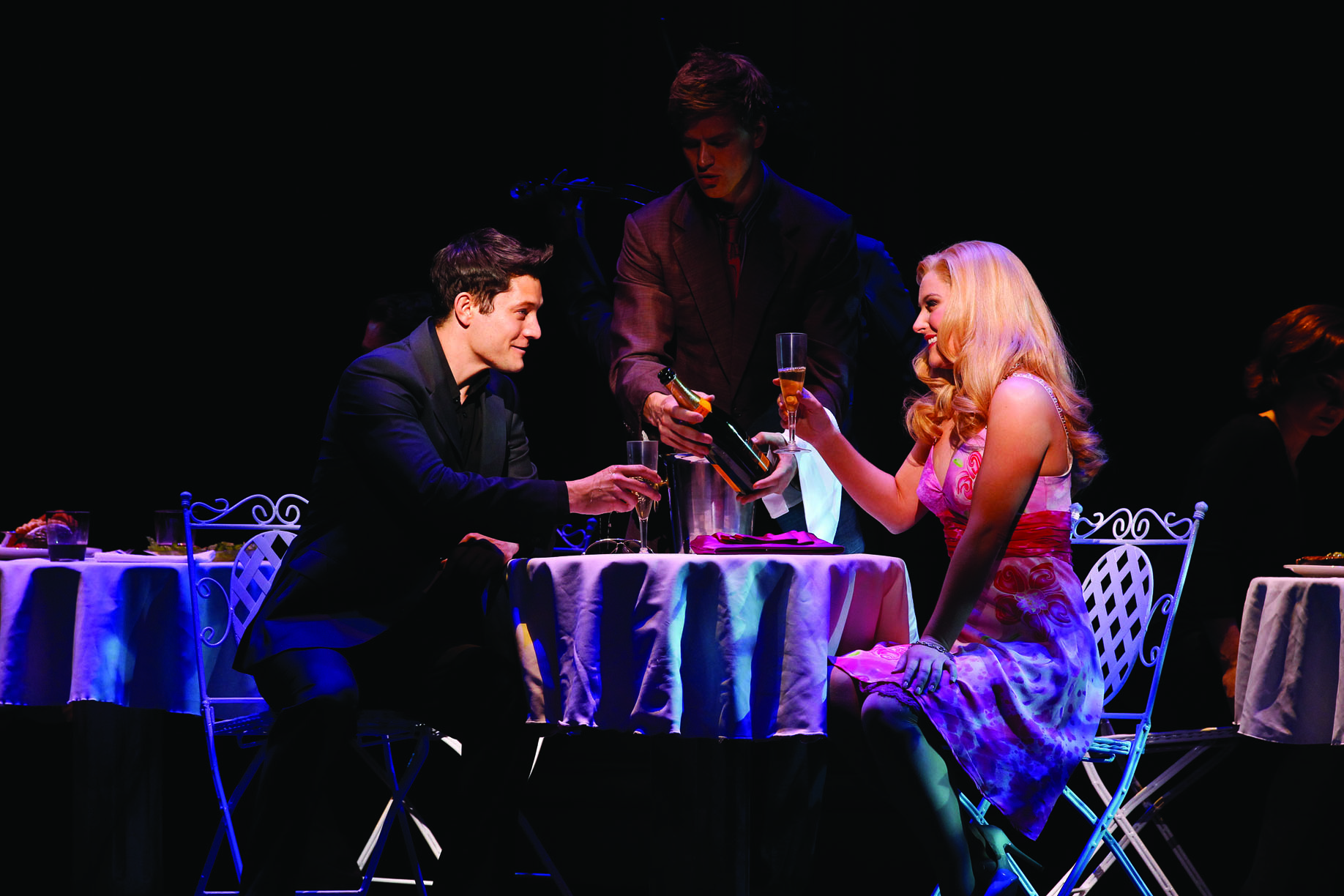
But it was Legally Blonde that took out the main awards in the musicals category, winning five from eight nominations including Best Musical (over South Pacific, The Addams Family and A Funny Thing Happened on the Way to the Forum), Best Direction and Best Choreography in a Musical (Jerry Mitchell) and performing awards for Lucy Durack and Helen Dallimore.

Rob Mills and Lucy Durack in Legally Blonde. Photo: Jeff Busby

Rob Mills and Lucy Durack in Legally Blonde. Photo: Jeff Busby

Tellingly, King Kong was not nominated for Best Musical or Best Direction of a Musical – and rightly so, I would suggest, for a show that most critics agree needs more work on its book.

However, King Kong picked up four design awards (though Marius de Vries’ original music lost out to Iain Grandage’s for The Secret River.)

The show was also given a special award for Outstanding Theatrical Achievement for the design, creation and operation of King Kong – the creature. Apparently there was genuine discussion at one point as to whether King Kong himself could actually be nominated as best performer. He is certainly truly extraordinary but since he is a puppet, common sense prevailed.

Technically King Kong was not eligible for consideration at this year’s awards since it had its opening night on June 15 after the cut-off date of May 31. However, the rules allow for late inclusions in “exceptional circumstances” and given the relatively weak field of musicals over the last year, the decision to include it was presumably made to bolster the field.

For my money, Bartlett Sher’s production of South Pacific – presented by Opera Australia in association with John Frost – was the best musical of the year. Of course, that’s a subjective view, however, it did win Best Musical at the Sydney Theatre Awards over Legally Blonde, Love Never Dies and Chitty Chitty Bang Bang.

There’s also the question of whether a revival should be judged against a new musical, let alone a new Australian musical, and whether we should be giving Best Musical awards anyway to shows that are carbon copies of overseas productions, regardless of how well we perform them. (We could still give awards for performances in a musical).

Among the four nominees for Best Musical this year, only John Frost’s Forum (seen in Melbourne) was a new production created in Australia.

The Helpmann Awards have always been a curious beast. Trying to create live entertainment awards with a national reach in such a vast country where few voters have seen all the nominations in any given category is always going to be a challenge with the inevitable oddities and anomalies occurring as a result. (People can only vote in a category if they have seen at least two nominations.)

There is probably more chance of voters having seen all the nominations in the musicals category than any other as most of them tour nationally – as Legally Blonde and South Pacific did.

There seemed to be a few curious omissions among the nominations this year. With no disrespect to any of the nominated performers, it seemed strange, for example, that none of the cast of South Pacific were nominated despite the production being up for Best Musical.

Such oversights have happened before (remember when Cate Blanchett failed to gain a nomination for her stellar performance in A Streetcar Named Desire).

For me there were one or two others this year but it is inappropriate to name names when, again, these things are so subjective.

Partly I’m sure that this is the result of trying to ensure a broad geographical spread of nominations (though there are always complaints that Sydney and Melbourne are over-represented) and partly because it is the producers who put forward the nominations in the first place, paying a $50 fee per entry.

You can’t help thinking that there must be at least some element of strategy as to who and what a producer nominates in order to raise the profile of a show or a performer.

I have also always found it odd that the Helpmanns give awards for Best International Contemporary Concert. This year Bruce Springsteen & The E Street Band Wrecking Ball won over Coldplay, Barry Gibb and Tedeschi Trucks Band & Trombone Shorty. Doubtless the producing team and their staff work extremely hard to make these tours happen but surely the Helpmann Awards should be about honouring and supporting Australian entertainment.

Among other major awards, Geoffrey Rush won Best Male Actor in a Musical for Forum, Colin Friels won Best Male Actor in a Play for Belvoir’s Death of a Salesman, Alison Bell (who had two nominations in the one category) won Best Female Actor in a Play for Hedda Gabler at the State Theatre Company of South Australia, Opera Australia’s Salome won four opera awards, while Bangarra Dance Theatre collected two.

With 43 categories, it was a loooong night running around four hours. The entertainment helped maintain interest notably Tim Minchin singing “When I Grow Up” from Matilda the Musical, and performances by the casts of Grease and Hot Shoe Shuffle, among others.

For a full list of awards go to: www.helpmannawards.com.au

Disclaimer: Jo Litson is one of the industry voters for the Helpmann Awards.

Moving Parts: review

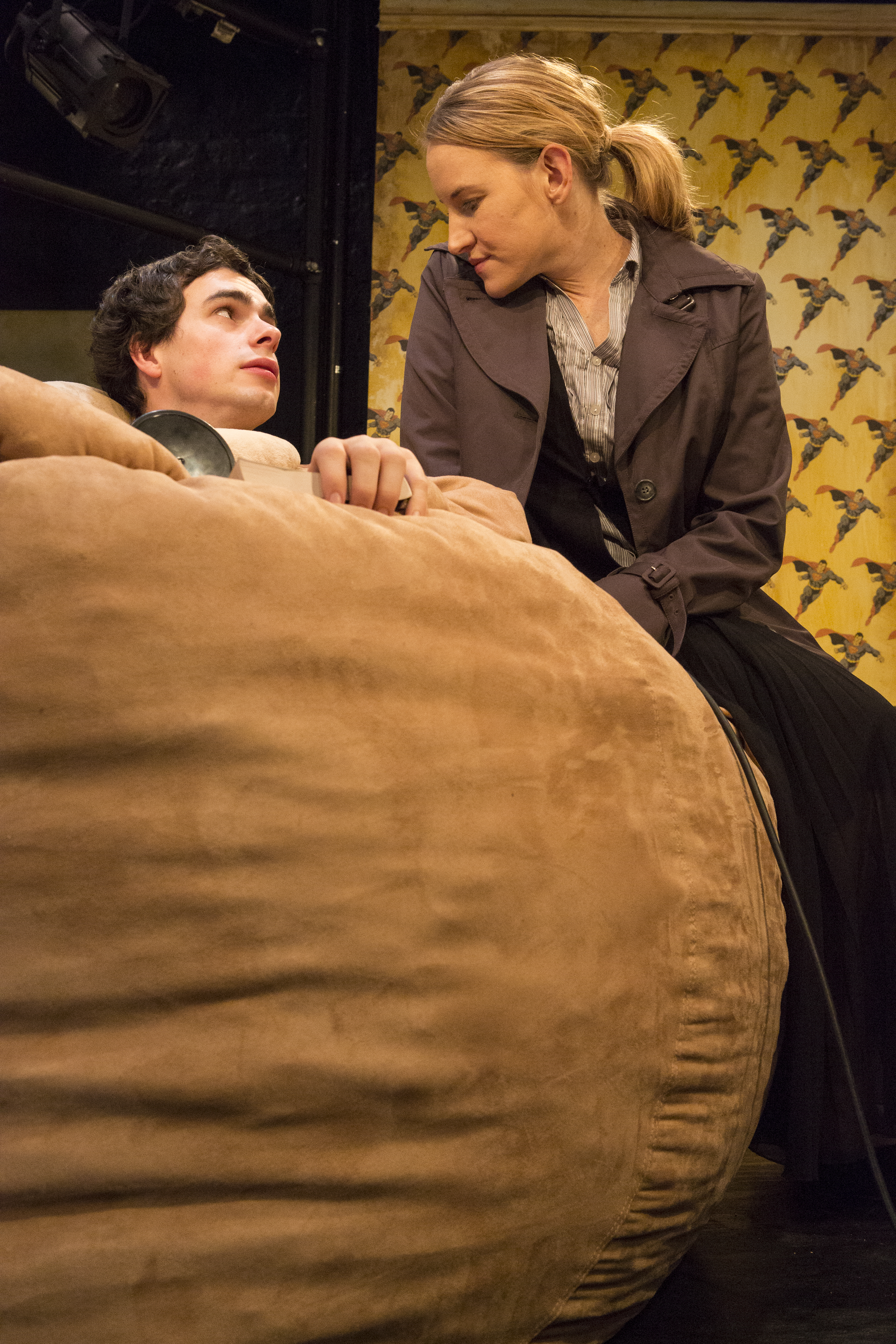
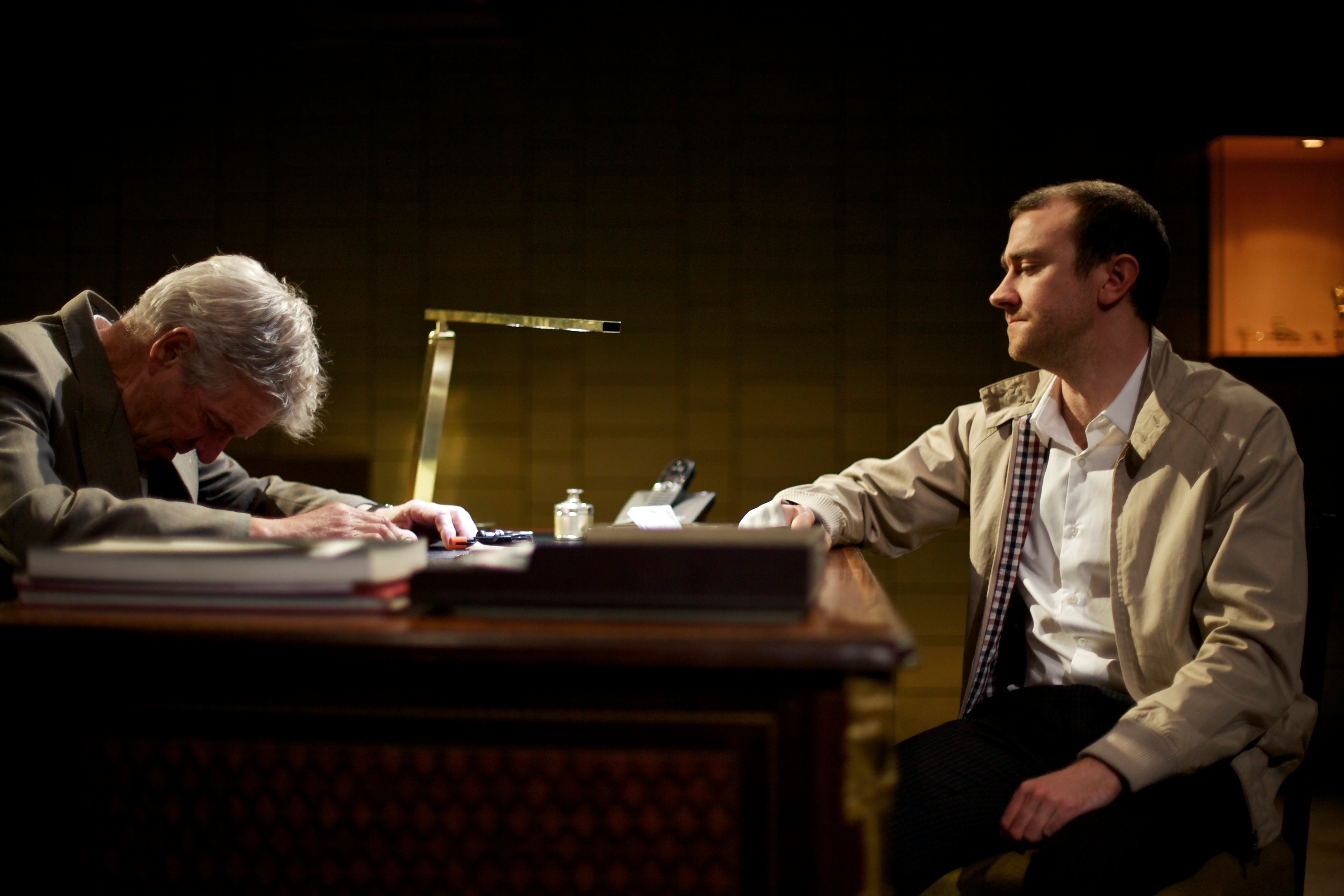
Colin Friels and Josh McConville. Photo: Matt Hart

Colin Friels and Josh McConville. Photo: Matt Hart

David Nobay is the creative director of an award-winning Sydney advertising agency. As a playwright, however, he is a novice. Moving Parts is his first play – and in many ways it shows – but he has been lucky enough to secure two very fine actors in Colin Friels and Josh McConville.

He has also gathered a creative team with a slew of international film credits with lighting by Russell Boyd (who won an Academy Award for Master and Commander), set design by Steven Jones-Evans and costumes by Margot Wilson, while Steve Rogers, a sought-after director of TV commercials and music videos, directs.

Produced by a new company called Will O_Rourke, the production certainly looks very handsome but the play itself still has a way to go.

Moving Parts is a 70-minute two-hander set in an exclusive London jewellery store. It’s almost closing time when a young man (McConville) arrives, ostensibly to buy a prestige watch. It’s not long, however, before we realise that he has other business with the shop owner (Friels).

Suffice to say the play explores family, self-worth, men’s struggle to communicate, resentment and reconciliation, using watches as a metaphor.

Some of the early dialogue feels self-consciously portentous, but there’s no doubt Nobay can write; it’s the structure that lets him down.

He manages to keep you wondering where the play is going but the twists and turns of the plot don’t build enough dramatic tension or particularly surprise you. Just when you think he is going to turn the screw, the plays veers off somewhere else and the tension dissipates.

There are holes in the narrative that need better explanation and a couple of major revelations fail to make the emotional impact they should. The regular use of blackouts also breaks the momentum and building of tension.

Friels is wonderful as the shop owner, moving from smooth-talking salesman to irascible Londoner whose wry, spiky humour covers untold hurt, his voice often a mere whisper. As usual, he performs with such raw honesty it hardly feels he’s acting.

The character and emotional journey of the brooding, younger, Australian man is less developed so McConville doesn’t have a lot to work with. He plays him in a (mostly) coolly restrained fashion that makes him hard to engage with.

The play ends abruptly without reaching a terribly satisfying conclusion but the performances make it worth a look.

NIDA Parade Playhouse until August 10.

An edited version of this review appeared in the Sunday Telegraph on July 28.

Independent Music Theatre: creating a new home for small-scale musicals and cabaret in Sydney

The Independent Music Theatre team. Left to right: Lisa Campbell, David Campbell, Neil Gooding, Michael Huxley, Richard Carroll, Simone Parrott, Michelle Guthrie, Jay James-Moody and Jessica Burns

The Independent Music Theatre team. Left to right: Lisa Campbell, David Campbell, Neil Gooding, Michael Huxley, Richard Carroll, Simone Parrott, Michelle Guthrie, Jay James-Moody and Jessica Burns

Yesterday’s announcement that a new, not-for-profit consortium of producers and organisations called Independent Music Theatre (IMT) is to run the Reginald Murphy Hall in Potts Point as a home for small-scale music theatre and cabaret has my heart singing.

It’s exciting news given the potential for the company to become an important and much-needed addition to Sydney’s musical theatre scene.

Currently known as the Darlinghurst Theatre, the 111-seat venue was home to the Darlinghurst Theatre Company from 1999 until this March when the company vacated it to move into the new Eternity Playhouse in East Sydney, opening in November.

Having won the tender from the City of Sydney Council to become the next resident company, IMT will announce a new name for the venue in the coming weeks.

Describing themselves as a “collaborative partnership”, IMT comprises a team of organisations who already have runs on the board producing small-scale musicals and cabaret: Luckiest Productions (David Campbell, Lisa Campbell and Richard Carroll), Neglected Musicals (Michelle Guthrie), Squabbalogic (Jay James-Moody and Jessica Burns, who are soon to stage Bloody Bloody Andrew Jackson at The Factory in Marrickville), Neil Gooding Productions (who produced the Australian musical The Hatpin by Peter Rutherford and James Millar) and independent producers Michael Huxley and Simone Parrott.

Commercial musicals currently dominate the music theatre scene in Sydney – and there aren’t that many of those each year given the relatively limited audience compared to London or New York.

It’s not that Sydney doesn’t see small-scale, independent musicals but the productions are sporadic and scattered around various venues. Presenting regular shows in one venue will give the work a very useful focus.

Having their own home, where they can support each other, will also give the companies involved a better chance to survive and thrive.

Initially IMT’s audience is likely to be industry-based along with serious musical theatre fans but if the work is good a broader audience will hopefully follow pretty quickly. London’s Menier Chocolate Factory is an obvious model, whose success will doubtless be encouraging for the IMT team.

The chance to see musicals from overseas that would otherwise be unlikely to make it to our shores – whether that be little seen classics or more recent, innovative work – is so important for the development of the artform, as well as for the people who want to make it and perform in it.

Developing new Australian musicals – that most challenging of theatrical beasts – is  something that IMT will hopefully be well placed to undertake in the fullness of time.

It is a small venue but the IMT team are specialists in the field of small-scale music theatre and cabaret and should have the expertise and nous to choose the right shows and make them work in the intimate setting.

Neglected Musicals is already associated with the venue having presented terrific rehearsed readings of nine musicals there including No Way to Treat a Lady, On the Twentieth Century and Variations by Australia’s Terry Clarke and the late Nick Enright.

Stephen Colyer’s Gaiety Theatre (not associated with IMT) has also had success staging musicals there, including Hello Again and Kiss of the Spiderwoman.

The first IMT production is likely to be presented at the start of next year. I can’t wait.

You can find IMT at www.independentmusictheatre.com or follow them on Facebook or Twitter @IMTsydney

Todd McKenney’s Centre Stage Tours: interview

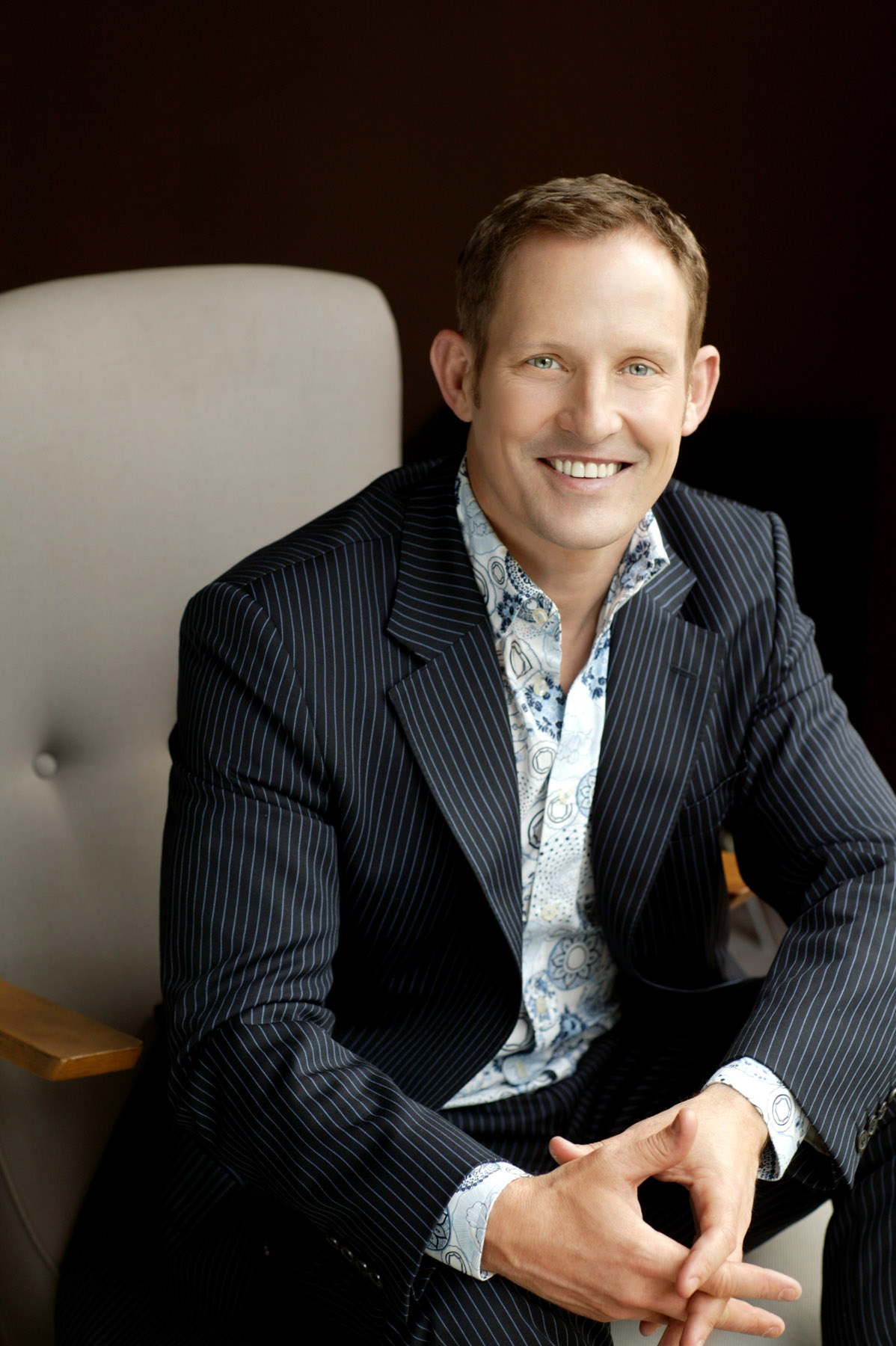
Todd McKenney

Todd McKenney

Todd McKenney is used to being centre stage. Now the musical theatre performer who has starred in shows including The Boy From Oz, Priscilla, Queen of the Desert – the Musical, Crazy for You and Annie among many others, is organising a series of personally guided theatre tours, which will give others the chance to join him there – if only after the curtain has fallen.

Todd McKenney’s Centre Stage Tours will kick off during the Sydney leg of the forthcoming tour of Grease – in which he plays Teen Angel – when he will take people backstage after the show, ending up on stage for photographs with himself and other cast members.

He is also opening up his beautiful, spacious home on Sydney’s Upper North Shore for high tea soirées at which guests will wander his lovely garden then gather around his piano for a relaxed private performance.

The first soirée on August 4, at which he will perform with Nancye Hayes and Chloe Dallimore, sold out within a matter of hours after he chatted about it on radio with Alan Jones. However, there are still some tickets available for his first theatre tours. Some of the proceeds from the tours will go to the Children’s Cancer Institute Australia.

The idea began during a conversation with his friends Julie and Chris Walker, co-owners of several Sydney restaurants including Berta in Surry Hills.

“They said, ‘have you ever thought of taking groups to Broadway and the West End?’” recalls McKenney. “I thought about it more and more and said to Julie, ‘why don’t you run it with me?’ So we looked at putting it together and decided to start closer to home where we have the contacts.”

John Frost, the producer of Grease, and the Lyric Theatre, where the show is playing in Sydney, both loved the idea. “The Lyric are giving us private champagne rooms as the guests arrive, all sorts of stuff. We have had two travel agents contact us now so we are meeting them. It’s just taken off,” says McKenney.

The first tours on offer are dinner-theatre tours on October 25 and November 1 when a group of 30 will dine at Berta, which offers modern Italian cuisine, then go by private coach back to the theatre for pre-show champagne. After seeing they show, McKenney will take them on a backstage tour. There are also sip-a-soda tours on December 1 and 8 after the matinee with an optional meal.

The reason McKenney is able to dine with guests before the show is that as Teen Angel he only sings one song in the second act – however, he plans to dazzle, literally.

“They asked what I wanted to wear and I said, ‘I want to blind them,’ says McKenney with a laugh.

“If I’ve only got one number I want to hit that stage like a human mirror ball so I’ve got a costume covered in Swarovski crystals with silver aviators, a big white quiff and silver crocodile skin boots, which I’ve just had made. So it’s going to be a good look. I’m going to make an impact.”

Into the future, McKenney is performing in another musical for Frost next year, which is yet to be announced. He has also put in a couple of requests.

“There are a couple of shows I really, really want to do before I can’t do them. One of them is Barnum,” he says. “I’m desperate to do Barnum so I rang Frosty one day and he and I have been talking about that for the future. I don’t know if he’s got it.

“It’s a role I’ve always wanted to play. I love the music, I love the character, I love the story. He’s a showman but he’s got a dark side and I get to do acrobatic tricks. It’s an itch which I haven’t been able to scratch – and it’s my Mum’s favourite musical.”

Meanwhile, Dancing with the Stars – where McKenney has made his mark as the “nasty” judge – is set to return to Channel Seven for its 13th season. The line-up has not yet been announced but McKenney is keen to return.

Dancing with the Stars and The Boy From Oz changed my life,” he says. “As long as they keep running it and asking me back, I’ll be there.”

Tour information and bookings: toddmckenneyscentrestagetours.com.au or Julie 0411 424 010.

An edited version of this story appeared in the Sunday Telegraph on July 14. 

Tim Minchin and Toby Schmitz: interview

Tim Minchin and Toby Schmitz discuss Rosencrantz and Guildenstern are Dead and other future projects including the Australian tour of Matilda the Musical and the new musical Minchin is writing.
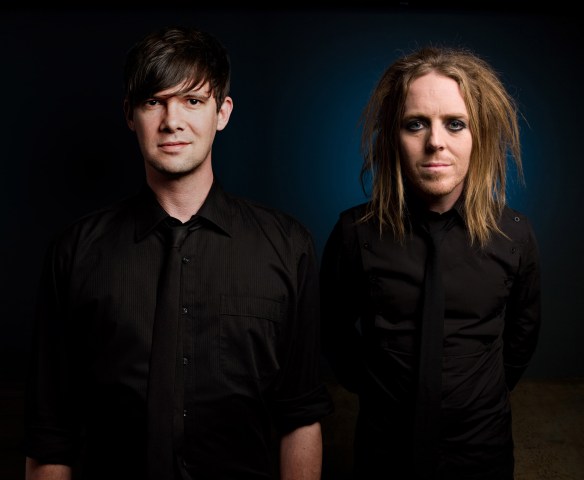
Toby Schmitz and Tim Minchin. Photo: James Penlidis/EllisParrinder

Toby Schmitz and Tim Minchin. Photo: James Penlidis/EllisParrinder

In 1996, Tim Minchin and Toby Schmitz performed together in a University of Western Australia (UWA) student production of Rosencrantz and Guildenstern are Dead – the 1966 play that made Tom Stoppard’s name.

Schmitz was initially cast in one of the lead roles but during rehearsals broke up with the director, who he’d been dating, and promptly found himself demoted to the much smaller part of Hamlet. Minchin played the meatier role of The Player and helped his brother write the music.

Seventeen years on, they about to co-star in the play for Sydney Theatre Company, this time with Minchin as Rosencrantz and Schmitz as Guildenstern: a casting coup that has triggered such demand for tickets, the production has extended before opening.

The excitement at such a double act is hardly surprising. Minchin is now a superstar comedy-musician whose hilarious satirical songs have won him an international cult following and who is regularly hailed “a genius”.

Based in London with his wife and two young children, he recently received rave reviews for his rock star turn as Judas in the UK arena production of Jesus Christ Superstar alongside Mel C and Ben Forster. He has also been winning serious plaudits as the composer/lyricist of the Royal Shakespeare Company’s Matilda the Musical, currently doing a roaring business in the West End and on Broadway, and headed for Australia in 2015 – more of which later.

Schmitz, meanwhile, is one of Australia’s most in-demand actors. In October, he plays Hamlet for Belvoir then jets off to Cape Town to film a second season of US television series Black Sails: a pirate drama prequel to Treasure Island, which premieres early next year.

He is also a successful playwright whose comedy I Want to Sleep with Tom Stoppard was a hit for Tamarama Rock Surfers (TRS) last year and whose latest play Empire: Terror on the High Seas opens at Bondi Pavilion for TRS next month.

Friends since they met as teenagers at a youth theatre company in Perth, an interview with the two of them is a lively affair with thoughtful, intelligent conversation punctuated by sharp wit and much easy banter.

“We arm-wrestled and I lost,” deadpans Minchin when asked how they decided who should play who in Rosencrantz and Guildenstern.

Stoppard’s play was just one of many productions they collaborated on at the UWA drama society, during which time they also performed as a cabaret duo.

In 2004, after Schmitz had graduated from NIDA and Minchin had moved to Melbourne to kick-start a career in music and cabaret, they co-wrote a show with Travis Cotton called This Blasted Earth, which had a short season at Sydney’s Old Fitzroy Theatre.

“It was a musical about putting on a terrible musical,” says Minchin. “The first half was the terrible musical and the second half was the cast saying: ‘I can’t believe we are in this terrible show.’ I think I came away with $50 for my songs and three months of work.”

To date, it hasn’t been revived. “Travis and Tim and I talk about it. It wouldn’t take too much work to re-mould it for 2013,” says Schmitz.

“If we didn’t have anything else to do we would probably do it,” says Minchin. “If we had spare time on an island together it would be fun.”

Spare time, however, is the last thing on their hands right now.

It was Luke Cowling, a co-director of the UWA production of Rosencrantz and Guildenstern, who suggested around four years ago that they revisit the play with the two of them co-starring.

“But then he had a baby, blah, blah, blah and it kind of ground to a half. But my manager Michael knew it was a good idea and wasn’t going to let it go so he set up a meeting with these guys (STC),” says Minchin.

The play is an absurdist tragicomedy in which the two hapless courtiers of the title – minor characters in Shakespeare’s play – find themselves in the spotlight, trapped in a confusing, existential world where most of the drama is happening elsewhere as the plot of Hamlet unfolds predominantly offstage.

On the page, Rosencrantz and Guildenstern seem somewhat interchangeable. They finish each other’s sentences, are mistaken for each other by other people, and even muddle their own names up.

In the stage directions at the start of Act One in which Rosencrantz is tossing a coin that improbably keeps coming up Heads, Stoppard writes that Rosencrantz “betrays no surprise at all – he feel none. However, he is nice enough to felt a little embarrassed at taking so much money off his friend. Let that be his character note.

“Guildenstern is well alive to the oddity of it. He is not worried about the money, but it is worried by the implications; aware but not going to panic abut it – let that be his character note.”

Schmitz and Minchin chuckle at the casual brilliance of Stoppard’s succinct character notes.

“At the beginning you think, ‘I wish you’d given us just a tiny bit more here Tom!” says Schmitz. “But the genius is that you realise he has given you just enough. It’s your job to take one word and riff on it for four pages or hark back to a moment an act ago.”

“We bang on about his incredible genius to be able to write this play at the age he wrote it – you know, almost in a Shakespearean way, how could he have the knowledge?” agrees Minchin.

“But there’s an incredible maturity in how he used that knowledge and I reckon that’s very apparent in the stage directions: ‘Let that be your character note.’ What 29 -year old writes that? The effortless authority at age 29 – I would have wanted to punch him!”

“It becomes quite quickly apparent in performance or on reading out loud even that Stoppard has delineated two quite different personalities,” says Schmitz. “And then in the third act when things start to fall apart for them, lines are crossed and the characters are blurred a little more but I think it’s very clever in its delineation.”

“For the first half of the first act Rosencrantz does a lot of listening,” adds Minchin. “Guildenstern has a lot more text throughout the play. Rosencrantz does a lot more reacting and responding so that when his rants come they are really exceptions to the rule.”

The STC production is directed by Simon Phillips and designed by Gabriela Tylesova who produced the extraordinary sets and costumes for Phillips’ production of Andrew Lloyd Webber’s musical Love Never Dies.

Schmitz was at NIDA with Tylesova and says that even then the students were excited by her special talent – “and it’s not that common among the acting fraternity to go and be interested in any other department at acting school.”

He describes her design as “a vision of Elizabethan England” though Minchin qualifies that as being “not so much Elizabethan England as a traditional, Elizabethan-style Hamlet.

“The set is a minimalist, post-modern set, so it’s a Beckettian, Stoppardian non-specific set with entrances and exits designed to have their own weight because of our (Rosencrantz’s and Guildenstern’s) inability to enter and exit. So the entrances are foreboding and the stage disappears in a converging line into infinity.

“There’s a nod to Godot because the play was a nod to Godot so the set design is very minimal but the costumes make it very clear that it’s a traditional Hamlet. You need that to anchor the play. If you reinterpret what are meant to be the foundations then your house crumbles a bit.”

Not surprisingly, Schmitz and Minchin are relishing Stoppard’s famously dazzling word play.

At one point, Rosencrantz and Guildenstern play a game akin to verbal tennis where they have to keep lobbing questions at each other.

“In that questions game, everything they say is utterly related to the characters and the text as well as relating to a rhythm and a toying and a playfulness,” says Minchin. “It’s scary, man. He’s the monster as they say in jazz. The monster.”

Phillips has gathered an exceptionally fine company of actors for the supporting roles, among them Ewen Leslie as The Player, John Gaden, Christopher Stollery and Heather Mitchell: “an embarrassingly fabulous cast” says Schmitz.

“It’s thrilling when the court (characters) come on. It’s seismic. You can do nothing but be slightly rattled and a rabbit in the headlights – which is exactly the effect you want.”

“I think it’s very difficult to do a brilliant production of a Stoppard play,” adds Schmitz. “You need a sparkling cast, great direction and great resources.

“And you need time too,” says Minchin.

“That’s right, like a Shakespeare you need time to plumb and realise that a lot of it is bottomless but you just have to pull up somewhere and say, ‘OK we’re going to have to make a decision.’ Like all brilliant plays, it just continues to reveal itself,” says Schmitz who first read Rosencrantz and Guildenstern at age 12.

Schmitz played Dadaist Tristram Tzara in STC’s 2009 production of Travesties – his only other experience of performing Stoppard – while for Minchin it’s his first on-stage encounter with the playwright.

However, he has met the playwright a couple of times at awards nights. “The first time I met him it was just me going, ‘oh my god?’” he says. “And the second time he’d become aware of who I was – which is the most profoundly satisfying thing from someone. You want to meet your idols but actually you don’t want to meet them. What you want is for them to meet you.

“He’s so youthful in his curiosity that he had gone ‘OK, that guy wrote Matilda’ so he’d gone away and discovered I do other things.”

Schmitz has also met Stoppard – though it was only the briefest of encounters. “It was during a writers’ festival and a bunch of young playwrights were being herded into a back room at the Opera House to meet him,” says Schmitz. “Someone had told him I’d written a play called I Want to Sleep with Tom Stoppard. He said, ‘I’m just glad it’s not called I just want to sleep during Tom Stoppard.’ I didn’t even name the play, it was my Dad’s title.”

The chance to see Minchin on stage in Jesus Christ Superstar and now Rosencrantz and Guildenstern is something for Sydneysiders to cherish because we’re not likely to see him in another musical or play any time soon given his hectic schedule.

However, we will be seeing Matilda the Musical. Ever since the show premiered in Stratford-upon-Avon in 2010, Australian producers have been vying for the rights.

Adapted from Roald Dahl’s classic children’s novel and featuring songs by Minchin, the RSC production transferred to the West End in November 2011 where it won rave reviews and a record seven Olivier Awards including Best Musical. In April this year it opened on Broadway, again to ecstatic reviews and 12 Tony nominations (though it was pipped to the post for Best Musical by Cyndi Lauper’s Kinky Boots).

At last, a deal has been done for the RSC to present it in Australia in 2015 in association with a local producer, reveals Minchin.

“We actually know who the local producer is going to be (but) it’s still embargoed. I only found out (on Tuesday),” he says. “The plan is for it to open in Melbourne in September 2015.”

Meanwhile, Minchin is busy writing a new musical. “It’s still embargoed even though I’ve been working on it for six months,” he says. “But it’s a very interesting, arty but much-loved early ‘90s film we are adapting for the stage: very conceptual, somewhat Stoppardian. It will be more complex and dark (than Matilda). Even though I am working on it with Matthew Warchus, who was the architect and director of Matilda, we are going to try and start it quietly.”

Minchin is also working on an animated musical film for DreamWorks about animals in the Australian outback and when that is done will put a new solo show together.

Schmitz also has a lot happening. Rehearsals for Belvoir’s Hamlet (his second stab at playing the Prince of Denmark after taking on the role for Brisbane’s La Boite Theatre in 2010) begin while he is still performing in Rosencrantz and Guildenstern, which will make for “an interesting double play”, as he puts it.

At the end of August, TRS will premiere his new play Empire: Terror on the High Seas about a serial killer aboard a luxury cruise liner in the 1920s featuring a cast of 20.

“The first half is my take on an Agatha Christie and the second half descends into something far more gothic and horror,” says Schmitz. “It’s a spectacle. It’s huge and it’s really ambitious. Leland Kean (artistic director of TRS, who is directing) has always done my stuff well and the cast is really talented and stupidly good-looking, I realise.”

Schmitz wrote his first play at NIDA. He won the 2002 Patrick White Playwrights’ Award for Lucky and was shortlisted for the Philip Parsons Young Playwrights Award for Chicks Will Dig You in 2003. His 2007 play Capture the Flag about the Hitler Youth has toured widely and I Want to Sleep with Tom Stoppard was a hit for TRS last year.

“I’ve never had any interest from any (mainstage) theatre company in putting on any of my plays, ever – and this is play number 12. And I’ve had some really popular ones and critically acclaimed and even relatively economically successful ones,” says Schmitz. “But it got to the point a few years ago where I said to Leland Kean, ‘I’m just trying to get a mainstage company to put one on’ – hence I Want to Sleep with Tom Stoppard (with) four middle class people and a couch.

“And he said, ‘for your own soul, write one as if it was going on independently as a commercial thing like The 39 Steps or The Mousetrap or something. Don’t worry about the budget.’ I don’t think he was expecting 20 characters or an ocean liner.”

Given the number of projects they both have on the go, is there no end to their talents?

“I hope not,” fires back Schmitz.

“Is there no end to your ego is really the question,” quips Minchin.

But in the end, they agree, it all comes back to a love of words – and music, in Minchin’s case.

“It’s not multi-skilling,” says Minchin. “It’s a love of language and expressing ideas, wanting to perform other people’s great work and wanting to perform your own. That explains everything I do pretty much.”

“Yes it’s just another way of generating your own material,” says Schmitz. “We’ve both been doing that since before we can really remember.”

Rosencrantz and Guildenstern are Dead plays at the Sydney Theatre from August 6 to September 14. Bookings: 9250 1777 or http://www.sydneytheatre.com.au

Gia Carides: interview

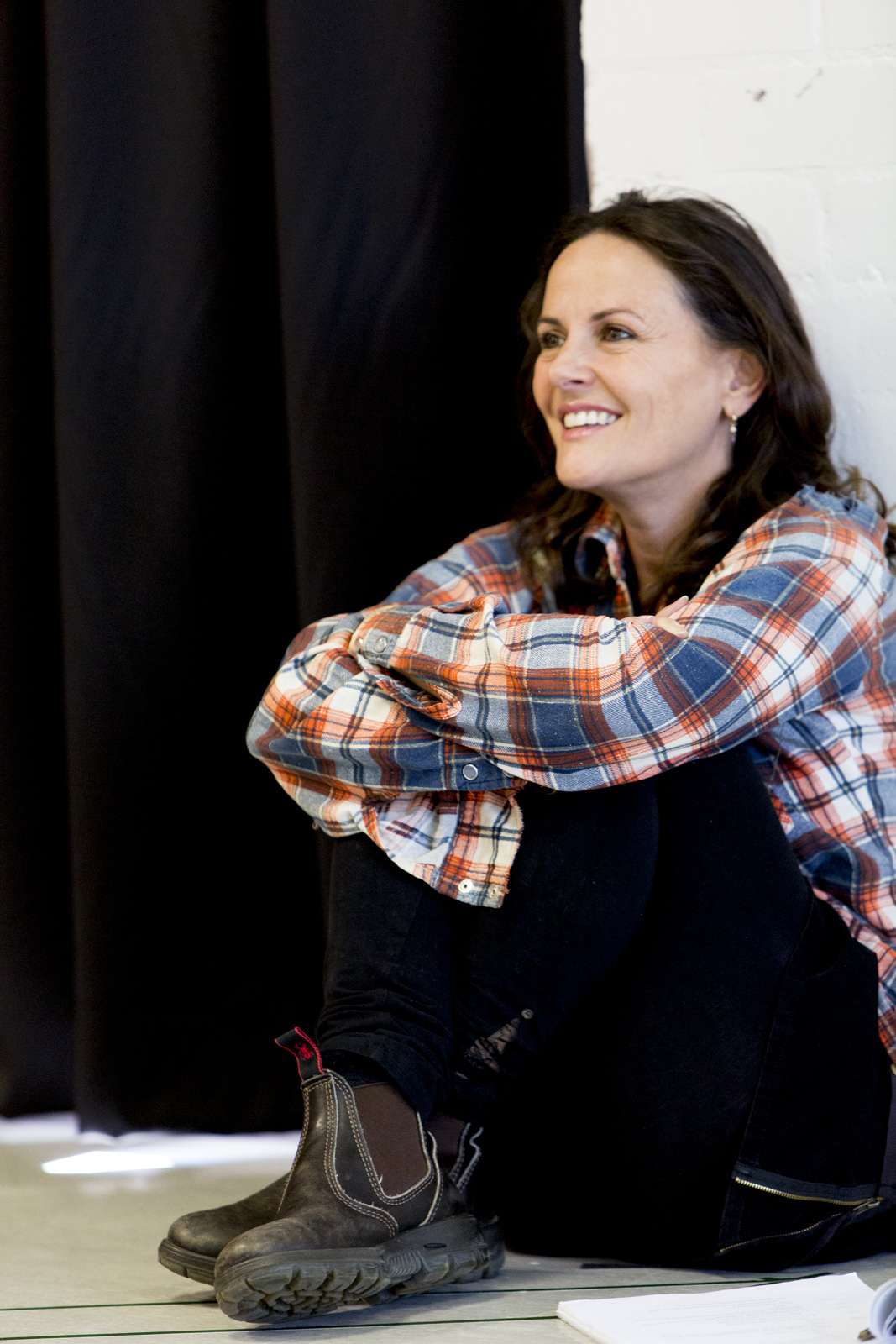
Gia Carides in rehearsals for Beached

Gia Carides in rehearsals for Beached

It’s been over a decade since Gia Carides last performed in a full-length play.

But the actor who is best known for her roles in the films Strictly Ballroom, My Big Fat Greek Wedding and Austin Powers: The Spy Who Shagged Me, is about to make her return to the stage in Beached by Melissa Bubnic for Griffin Theatre Company.

“I did a play in Tribeca, New York (called) Rocket to the Moon just before I had my daughter and she’s ten now so it will be 11 years since I did a full play,” says Carides who lives in Los Angeles with her actor husband Anthony LaPaglia and their daughter Bridget.

“When she was small, the idea of doing theatre and missing bedtime every night wasn’t right but it feels fine now; she’s independent enough.”

In the interim, as well as appearing on television, Carides has done a lot of radio plays in LA and a few months ago performed there in a short play as part of an evening of comedy shorts.

“It was amazing to be on stage again,” she says. “But this is a full play and I’m very excited that it’s Griffin. I did my first play there when I was 14; a play called Dancing Partners. The next time I worked at the Stables was to originate the role of (the teacher) Papa in The Heartbreak Kid. Then I did a production of Michael Gow’s The Kid.

“So I did a bunch of work there in the late 80s and very early 90s, so it’s a lovely to be back.”

Beached, which won the 2010 Patrick White Playwrights’ Award, centres on a massively obese teenager called Arthur, who tips the scales at over 400 kilograms. Requiring a life-saving gastric bypass, he and his mother agree to go on a reality TV show in return for the all-expenses-paid surgery.

Carides plays his protective mother. “My character is kind of enabling this unhealthy life her son has been living. She is certainly not doing this on purpose. She loves her son very much but she is not realising what damage she is doing,” she says.

“The play is definitely about (obesity) but it’s also about reality TV. The family are victims of a reality TV show as much as Arthur is a victim of his obesity.”

The cast also includes Blake Davis as Arthur, Arka Das as the television producer and Kate Mulvany as a CentreLink ‘Pathways to Work’ Officer.

“They are really incredible actors and Shannon Murphy (the director) is a force – she’s so strong and so clever and so smart – and it’s just fantastic to be working with a young, female director. So I love the fact that I’m back with all these ‘youngsters’ who are all so talented,” says Carides smiling.

“It’s a black comedy but definitely has very moving moments as we get inside the heads of all four characters.”

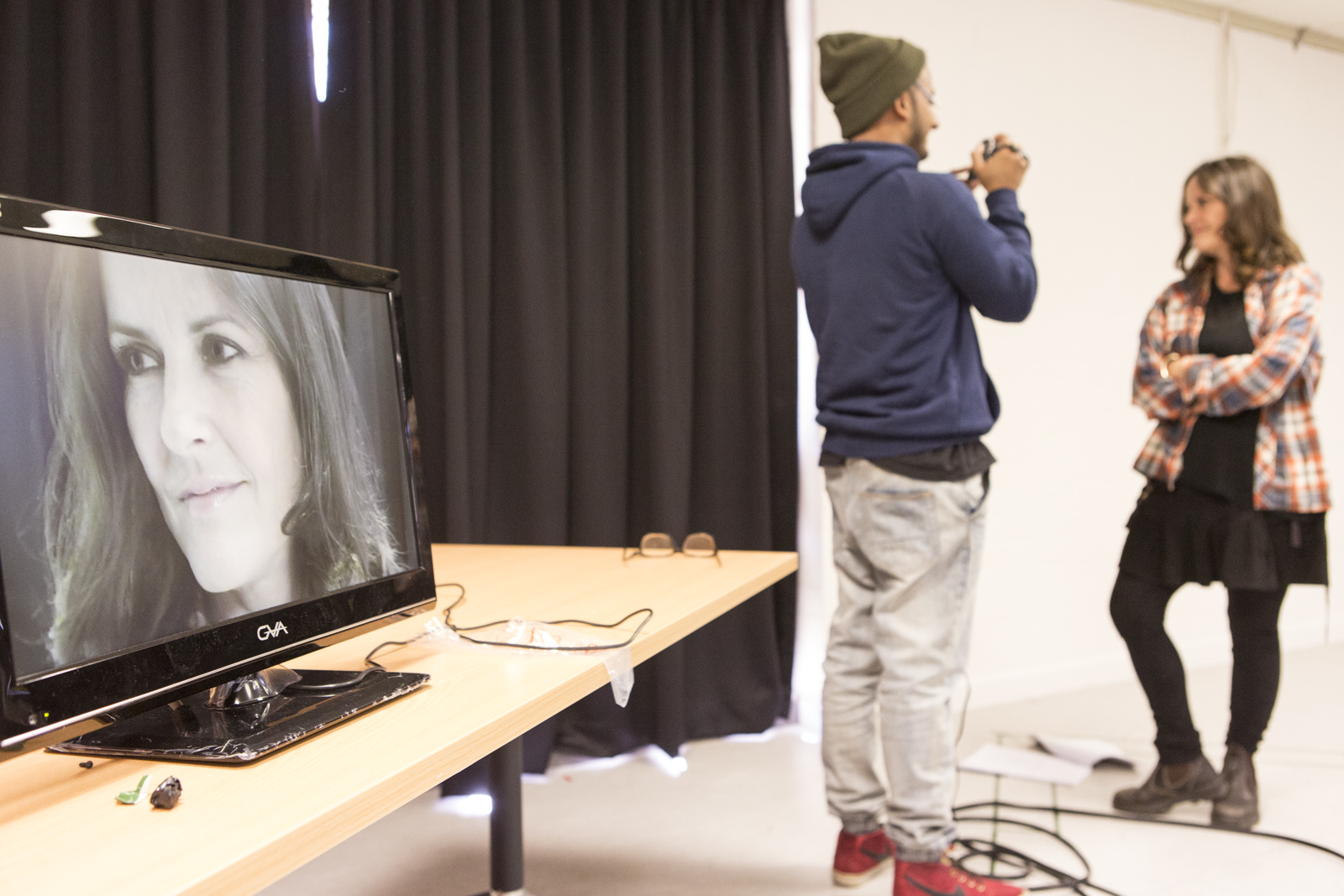
Gia Carides in rehearsals for Beached

Gia Carides in rehearsals for Beached

As for how they will portray Arthur’s obesity, Murphy wants the company to keep that secret – and hopes that reviewers will refrain from giving it away so that it is a surprise for audiences. However, she doesn’t mind revealing that they are using cameras.

“I don’t want to spoil anything but are we are working with film so it’s very ambitious,” says Carides. “We are operating cameras, we are acting live within the scene and acting for the camera so there is a lot going on.”

Approached about the play by an email from Murphy, Carides says she loved the play as soon as she read it and was keen to work with Murphy, who she knows, describing her as “an extraordinary young director, definitely one to watch”.

As luck would have it the season coincided with Bridget’s school summer holidays.

“I grew up here so coming back to Australia for any work is always a really appealing idea,” she says.

Last time she was back she appeared in the 2011 TV drama series Small Time Gangster and in 2008 spent time in Byron Bay working on East of Everything.

“My daughter wasn’t in proper school yet at that point so it suited us as a family,” she says.

“Sometimes my husband will have work that fits into that time frame too so we’ll come out as a family and he’ll do that work. So we really just take it case by case (depending on) whoever gets offered what/when and we just try to work it out.”

Beached plays at the SBW Stables Theatre, July 19 – August 31. Bookings: 9361 8817 or griffintheatre.com.au

An edited version of this story appeared in the Sunday Telegraph on July 7

Samuel Dundas interview

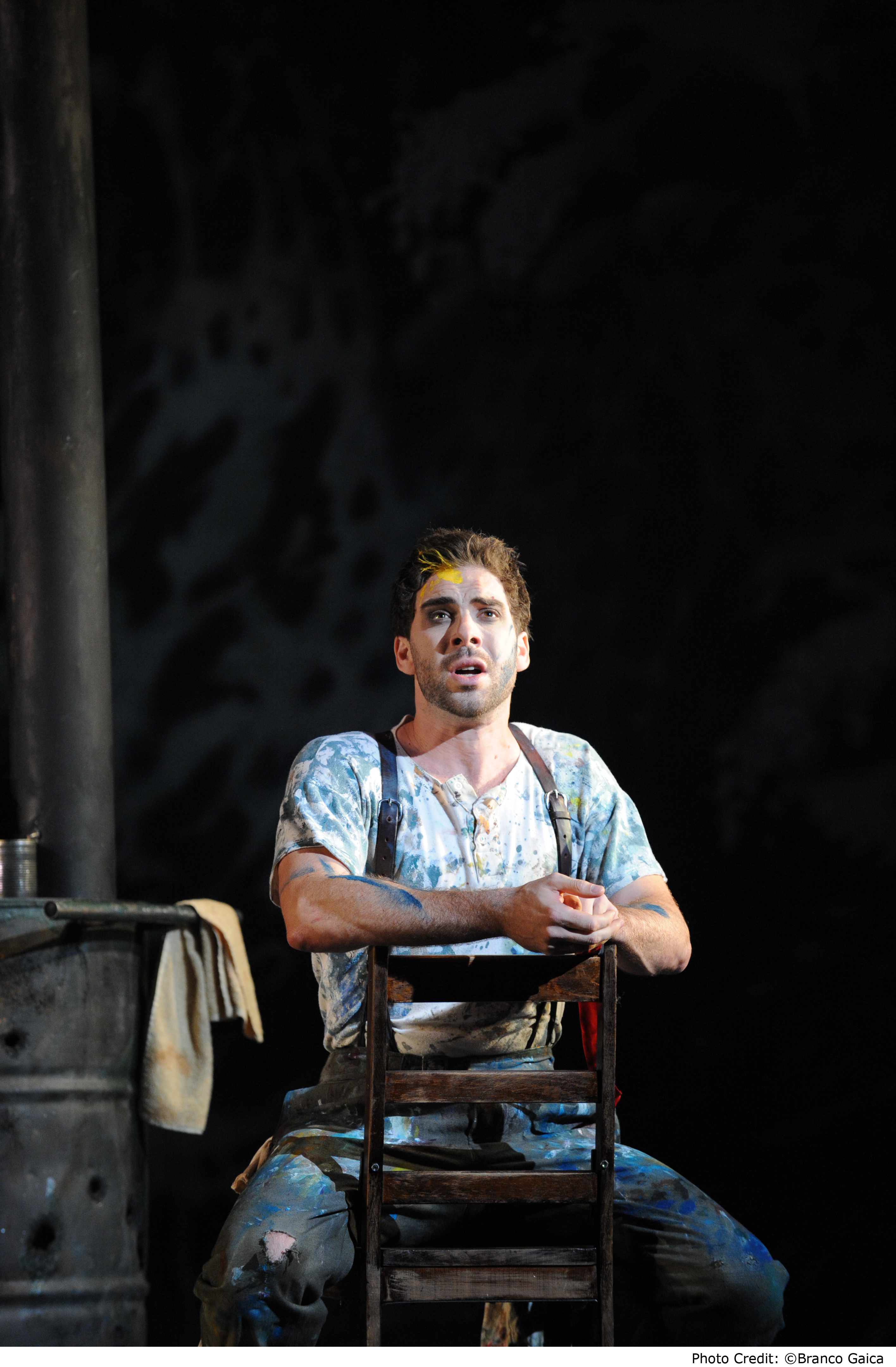
Samuel Dundas as Marcello in La boheme for Opera Australia. Photo: Branco Gaica

Samuel Dundas as Marcello in La boheme for Opera Australia. Photo: Branco Gaica

Samuel Dundas is an exciting young baritone with Opera Australia, who for the past eight years has been steadily building an impressive career. On the face of it, things couldn’t have been going better.

But last year, while playing the sexually voracious Don Giovanni in an OzOpera tour, Dundas had an intimation that things wasn’t quite right.

“I hit this wall. I just wasn’t happy with my singing and it led to this sequence of events (with me beginning to) understand what was required and probably breaking down a whole bunch of conceptions I had about myself and my talent,” he says candidly.

“Whilst I never would have admitted it, I think I had some very inflated ideas of my skill set because of all the opportunities that had been given to me at a very early age. So in hindsight I think that was me going as far as I was going to go on natural talent without having to really address how I sang, how I thought about singing, technique, all those kinds of things.”

The real wake-up call came not long afterwards when he began coaching sessions for OA’s La bohème, in which he played Marcello in Sydney at the start of this year.

“I think there was a pivotal moment when I had my first coaching for La bohème and the coach said, ‘awful’. She meant that with fantastic honesty and it’s changed my life, let alone changed my perspective on my work and my voice,” says the 30-year old singer.

“Now it’s all I do. I want to talk about singing, I want to think about singing, I want to think about technique, I want to talk to as many people as I can and find out what they do, why they do it and if that’s right for me and apply it in the practice room and slowly but surely evolve.”

Dundas is currently playing the small role of the Gaoler in John Bell’s new production of Tosca for OA, followed soon by Sid in Benjamin Britten’s comic opera Albert Herring.

Not only has he thrown himself into rehearsals with more passion than ever before but whenever he hasn’t been in the rehearsal room he has been working in a studio at the Opera Centre, often with a vocal coach.

He agrees to an interview during one of his days in the studio. Open and friendly, he talks with great frankness but without grandstanding in any way. Instead, he comes across as genuinely self-effacing.

“Looking back I realise that everything I’d done wasn’t as good as I’d thought it was – and I hope desperately that I’m not an arrogant person and that there are thoughts I would have to myself,” he says. “I would never think ‘oh, I’m amazing!’ or anything like that.”

His newfound commitment began last year as he prepared for La bohème and is clearly paying off, with his performance as Marcello receiving a nomination for Best Male Performer in a Supporting Role in an Opera at this year’s Helpmann Awards (announced on July 29).

Dundas grew up in Melbourne. His mother loved music and played a lot of it to him and his brother Toby – who is now the drummer with Australian rock band The Temper Trap.

When he was young Dundas played piano and woodwind instruments but gave it all up for sport. Then when he was 16, his mother heard him singing around the house and suggested he take singing lessons.

“I genuinely didn’t want to do it but she worked at my high school and got the teacher to talk to me. One day we had a lesson and he said, ‘you’ve got to keep going with this’ and it went from there,” says Dundas.

Though his brother always wanted to be a rock star, Dundas says he didn’t consciously choose opera over pop music – it was just the way things turned out.

“Singing wasn’t something I was passionate about,” he says. “I just kind of did it because it was what people wanted me to do. I think my voice was always predisposed to classical music so I ended up going down this path. We joke in the family that Toby is the musician and I’m the cover band.”

He did a music degree, not because he particularly wanted to, but because he got a scholarship. Before he graduated, he was offered work with Opera Queensland where he made his professional debut in 2005. He then spent three years in the Victorian Opera’s Young Artist’s Program before joining OA’s Young Artist’s Program in 2010.

His roles for the company include, among others, Marcello, Fiorello in The Barber of Seville and Moralès in Carmen: Handa Opera on Sydney Harbour.

Samuel Dundas as Guglielmo in Cosi fan tutte. Photo: Branco Gaica

Samuel Dundas as Guglielmo in Cosi fan tutte. Photo: Branco Gaica

Last year while playing Guglielmo in Mozart’s Cosi fan tutte he was featured on Barihunks, an online blog dedicated to “the sexiest baritone hunks in opera”, which regularly waxes lyrical about Teddy Tahu Rhodes.

Dundas admits with a laugh that he worked out “diligently” when he heard “that it would be shirts off” for Cosi.

“For eight months I did everything possible. One side of it is vanity and the other is trying to make the most of any opportunity,” he says.

“Now interestingly enough, I’m beginning to work out that there are some detriments vocally to going to the gym so I don’t go in the same way. I don’t think it necessarily affects people in the same way but certainly since I stopped drinking and going to the gym my voice has changed dramatically.”

He suspects that tighter muscles stop you breathing as well. “But each to your own, you make your choice. I try to stay as fit as possible without lifting too much.”

On his 30th birthday last November he decided to give up alcohol until La bohème opened on New Year’s Eve and then, when he felt so good without it, he decided to keep going until his birthday this year.

Whether it’s that or all the work on his technique, he says he has extended the range of his voice at the top end of his register by several notes.

“I have this quiet calm now that I’m doing all I can. I’m working as hard as I can and I want to play all my cards and leave nothing on the table and see what happens,” he says.

In Tosca – Puccini’s great drama of love, jealousy, sacrifice and betrayal – Dundas plays the Gaoler. It’s a very small role (he is also covering the Sacristan) but he doesn’t mind.

“Any chance to sing anything Puccini wrote makes me happy,” he says.

What’s more, he has relished the opportunity to watch singers like baritone John Wegner (who plays the evil Scarpia) in the rehearsal room.

The production, which is directed by John Bell, is set in the 1940s in Mussolini’s Italy.

“John made his intentions very clear on the first day that the characters were going to be as truthful as possible. I think that’s the way opera is going, so John is probably perfect for a show like this,” says Dundas.

“It’s a great opportunity to work with somebody who has a vast amount of experience and is very diligent and calculating in the way he creates character so in terms of a learning experience, it’s wonderful.”

In August, Dundas plays Sid in Britten’s musically complex but frolicsome opera Albert Herring. Set in an English village in Suffolk, a shy lad called Albert is crowned May Queen (or King) because none of the girls are considered virtuous enough.

Sid, meanwhile, is a butcher’s assistant who enjoys pre-marital sex with his girlfriend Nancy. He urges Albert to break free of his dominating mother and when Albert is crowned, slips rum into his lemonade sending Albert off on a night of debauchery.

“He’s kind of the one who sets up all the trouble,” says Dundas. “He is the ultimate contradiction (to Albert) because it’s a morality tale. I think that’s the great thing about being a baritone. You are always the bad guy or the cheeky one. I think it is so much more interesting to play those characters than being the good guy.”

Tosca plays at the Sydney Opera House until August 31; Albert Herring plays August 16 – 30. 

Post Script, July 29: It has just been announced that Samuel Dundas has won the Opera Foundation’s New York Scholarship and will be heading to the Big Apple to study with coaches there.