Black Diggers

Drama Theatre, Sydney Opera House, January 19

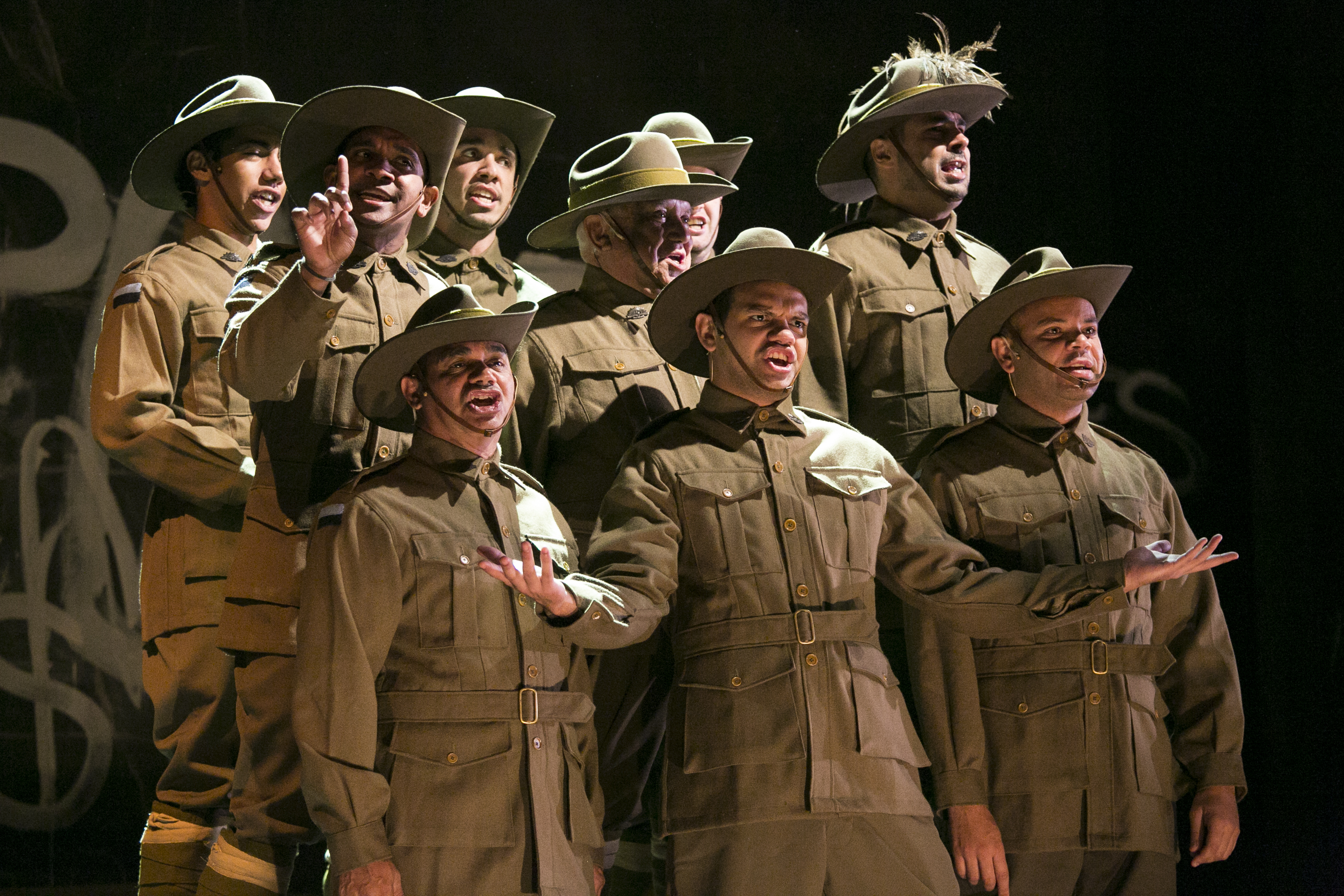
The cast of Black Diggers. Photo: Jamie Williams

The cast of Black Diggers. Photo: Jamie Williams

The words “Lest We Forget” are movingly evoked at the end of Black Diggers but, in fact, this new Australian play is more about illuminating a little known part of Australian history – the role and treatment of around 800 Aboriginal diggers during World War I.

Sydney Festival is presenting the premiere of this important Queensland Theatre Company production written by Tom Wright and directed by Wesley Enoch to coincide with the centenary of the start of the Great War.

Drawing on verbatim and other source material held by the Australian War Memorial, with research by David Williams, Wright has created a script full of short scenes and little vignettes, punctuated by song, which come together powerfully to offer a shocking and moving insight into the subject.

We see why Aboriginal men joined up to serve a King and country that didn’t even class them as citizens, the camaraderie and friendships they forged with other Australian diggers in the trenches and on the battlefields where colour became irrelevant, and their dashed expectations as they returned home having enjoyed an equality they hadn’t previously known, only to find that nothing had changed in Australia.

As one of the characters so eloquently puts it: “They painted my colour back on the day I got off that boat.”

Worse, many found that their own lands were taken away from them and given to other returned servicemen as part of the Soldier Settlement Scheme, which Indigenous soldiers were ineligible to apply to. On top of that, many were ostracised by their own communities. And, of course, many suffered post-traumatic stress disorder.

Enoch directs all this with a light touch, balancing the dark moments with a genial, knockabout humour, though never shying away from the tough themes.

The all-male Indigenous cast play a wide range of characters, black and white, and do a terrific job of delineating them all, sometimes in very brief cameos.

Featuring George Bostock, Luke Carroll, David Page, Hunter Page-Lochard, Guy Simon, Colin Smith, Eliah Watego, Tibian Wyles and Meyne Wyatt, some of the cast are more assured as performers than others but they work together as a strong ensemble and all deserve praise.

Stephen Curtis’s clever set (dramatically lit by Ben Hughes) works on both a practical and metaphorical level. Black walls frame a black stage with a raised central platform and a fire in an oil drum to one side. As the play progresses, the names and dates of soldiers and the battles they fought in are chalked on the walls until they have become covered in white – symbolic of the whitewashing of the Indigenous diggers’ role in our history. Finally, having filled in this gap in our knowledge, the cast wipe away some of the white to spell out the words “Lest We Forget”.

Running around 100-minutes without interval, Black Diggers is a compelling piece of theatre. It tells an important story but does so without hectoring or lecturing, moving us instead to laughter and tears. It deserves to be seen widely.

Black Diggers plays at the Sydney Opera House until January 26. Bookings: 9250 7777 or sydneyfestival.org.au

On the Shore of the Wide World

SBW Stables Theatre, Sydney, January 13

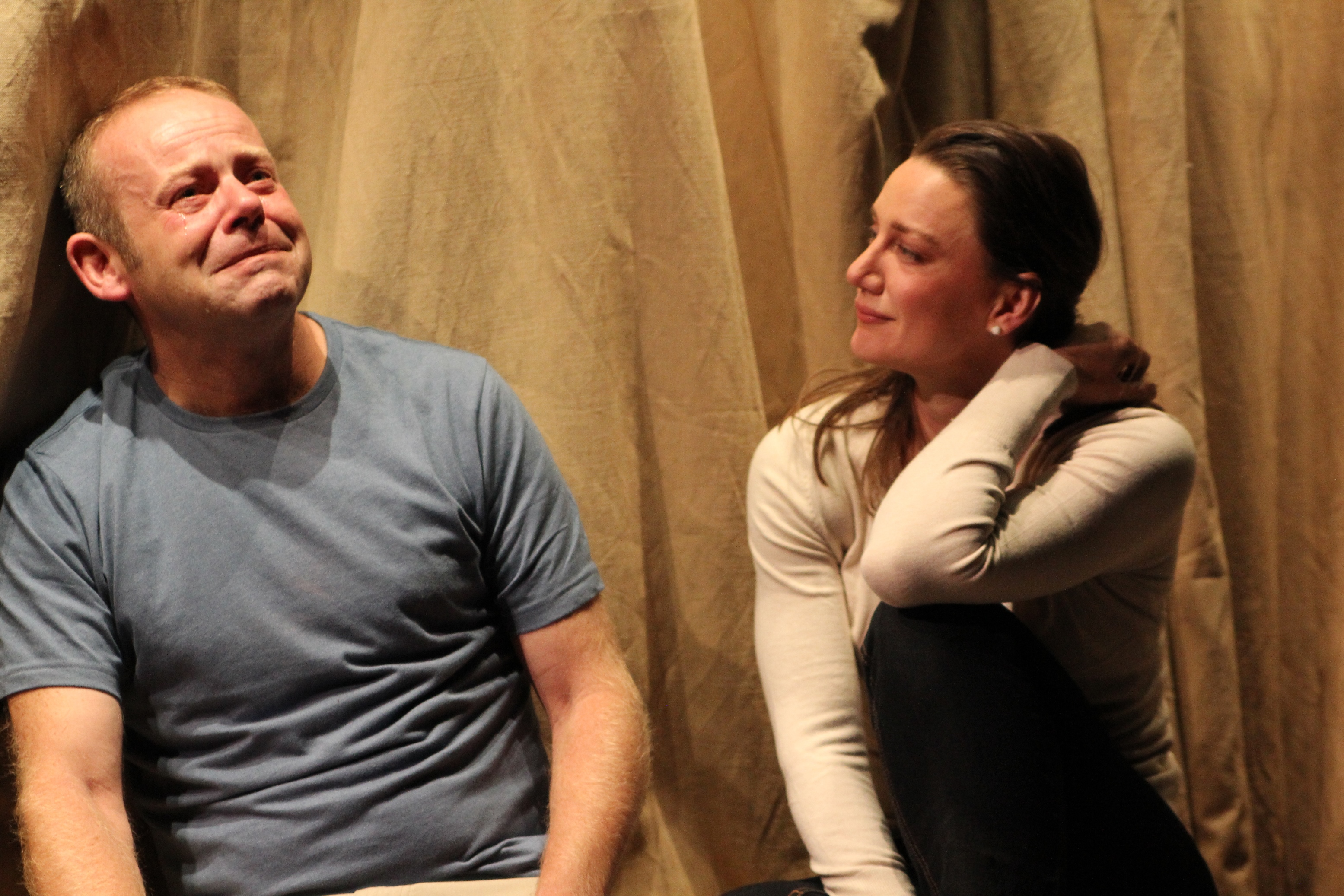
Huw Higginson and Amanda Stephens-Lee. Photo: Rebecca Martin

Huw Higginson and Amanda Stephens-Lee. Photo: Rebecca Martin

In 2012, Anthony Skuse directed pantsguys Productions’ award-winning indie production of Punk Rock, written in 2009 by UK playwright Simon Stephens.

Now, Skuse directs Stephens’ 2005 play On the Shore of the Wide World for pantsguys and Griffin Independent – and it’s another memorable production.

Set in Stephens’ native Stockport, a town in Greater Manchester, the play tells the story of three generations of the suffering Holmes family over the course of nine months.

Peter (Huw Higginson) and Alice (Amanda Stephens-Lee) are muddling along OK but are hurt and upset when their teenage son Alex (Graeme McRae) and his new girlfriend, the spunky Sarah (Lily Newbury-Freeman), want to escape to London. Meanwhile, their sweet but odd younger son Christopher (Alex Beauman) is instantly smitten with Sarah.

Living nearby are Peter’s alcoholic father Charlie (Paul Bertram), who has a close relationship with his grandsons, Christopher in particular, and Charlie’s nervous wife Ellen (Kate Fitzpatrick).

Christopher catches his grandparents unawares one day and is rocked. Then a sudden tragedy forces buried emotions, shame, secrets and regrets to the fore and the family find themselves confronting and opening up to each other as they struggle to find a way to move forward together.

Running three hours including interval, the first act is a slow burn but the second act flies as the emotion builds.

Skuse directs a quiet, beautifully measured, subtle production, in which the actors often stay on stage to watch scenes they aren’t in, the compassion in their eyes intensifying the emotion.

There are excellent performances all round from a cast that also includes Jacob Warner as Alex’s drug-dealing friend Paul, Emma Palmer as a comparatively posh, pregnant publisher who employs Peter to renovate her home and develops quite a bond with him, and Alistair Wallace as John who meets Alice as a result of the tragedy.

Higginson (well-known from ten years playing PC George Garfield in The Bill) is a stand-out though with a heartbreakingly portrayal of the loving but emotionally inarticulate Peter. An engrossing, moving drama.

On the Shore of the Wide World runs at the SBW Stables Theatre until February 1. Bookings: www.griffintheatre.com.au or 02 9361 3817

An edited version of this review ran in the Sunday Telegraph on January 19

Oedipus Schmoedipus

Belvoir St Theatre, January 11

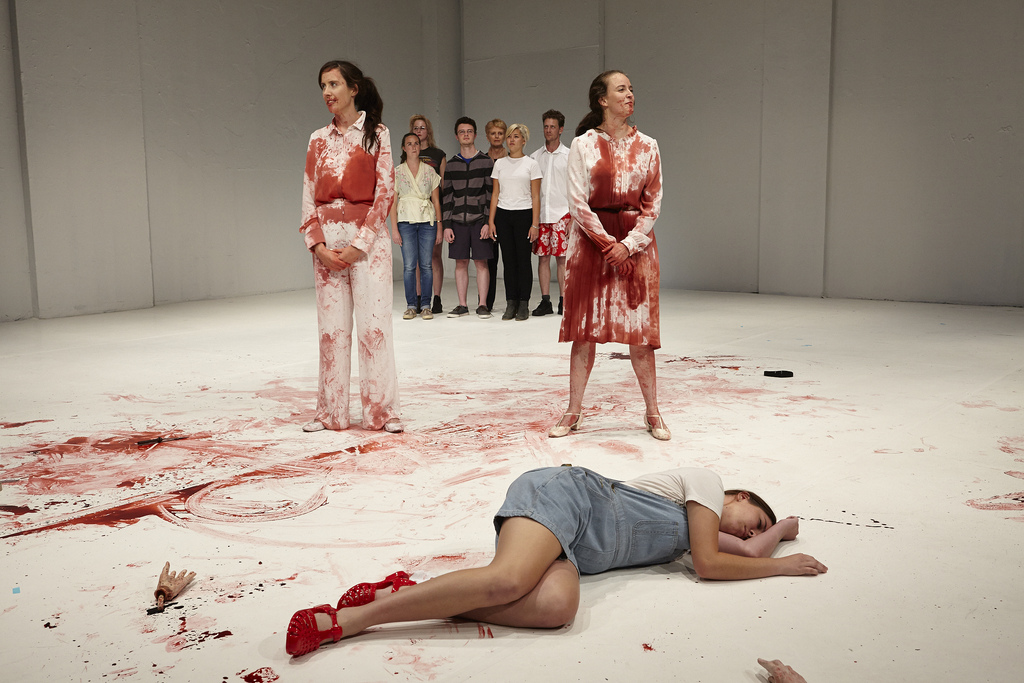
Mish Grigor and Zoe Coombs Marr with volunteers. Photo: Ellis Parrinder

Mish Grigor and Zoe Coombs Marr with volunteers. Photo: Ellis Parrinder

Given the advertised subject matter – famous death scenes in the theatre canon from Aeschylus to Shakespeare and beyond – it’s a fair guess that the two actors dressed all in white, standing smiling on a gleaming white stage, will soon be splattered with blood. And so it proves.

Written by the trio post (Zoe Coombs Marr, Mish Grigor and Natalie Rose), performed by the former two, and presented in association with Belvoir and the Sydney Festival, Oedipus Schmoedipus begins with a bang, literally.  The frenzied opening sequence hurtles through a barrage of gory deaths (think Romeo and Juliet, Othello, Lavinia in Titus Andronicus, Woyzeck etc etc), graphically enough performed that a few people left the theatre, others watched through their fingers, while some shrieked with laughter.

It’s a powerful opening that thrusts you straight into their chosen theme, and one that won’t be forgotten – though the squeamish may find it tough.

From there Oedipus Schmoedipus disintegrates. Purporting to ask the more general question “What is death?” it descends into glib observations and some inane wordplay along the lines of: great white male playwrights/ great white sharks; bitter/ bitters/Angostura Bitters/Angostura Bitters are death. They also flirt briefly with the idea of death as a dream but go nowhere insightful with it.

The show also features 25 volunteers of all ages who have had just a few hours that day to rehearse – though their lines and movements are relayed to them on screens, which the front rows of the audience are able to turn around and watch.

Acting as a chorus, much of what they do seems equally superficial and pointless but in the end it was the fascination of watching people with little or no stage experience negotiating the experience of being there in the glare of the lights that made Oedipus Schmoedipus bearable. For people without acting experience it was an act of bravery – so it was a shame that a couple of actors in the opening night audience laughed so loudly ‘at’ one of the older, less relaxed volunteers.

The play strikes a late chord with the simple statement by the volunteers that they will die, as we all will, and ends in rousing fashion with everyone dancing to Rhianna’s Love the Way You Lie (“just gonna stand there and watch me burn”) but it’s far too little, far too late.

Coombs Marr and Grigor are engaging performers but the material they have given themselves would defeat anyone. Oedipus Schmoedipus must have sounded good on paper for it to launch Belvoir’s 2014 season under the umbrella of the Sydney Festival. In practice it takes a profound subject with plenty of potential for any number of fascinating stage treatments and skates over it with a glibness that is eventually mind-numbing.

Oedipus Schmoedipus plays at Belvoir St Theatre until February 2. Bookings: www.belvoir.com.au or 02 9699 3444

The 13-Storey Treehouse

Sydney Opera House

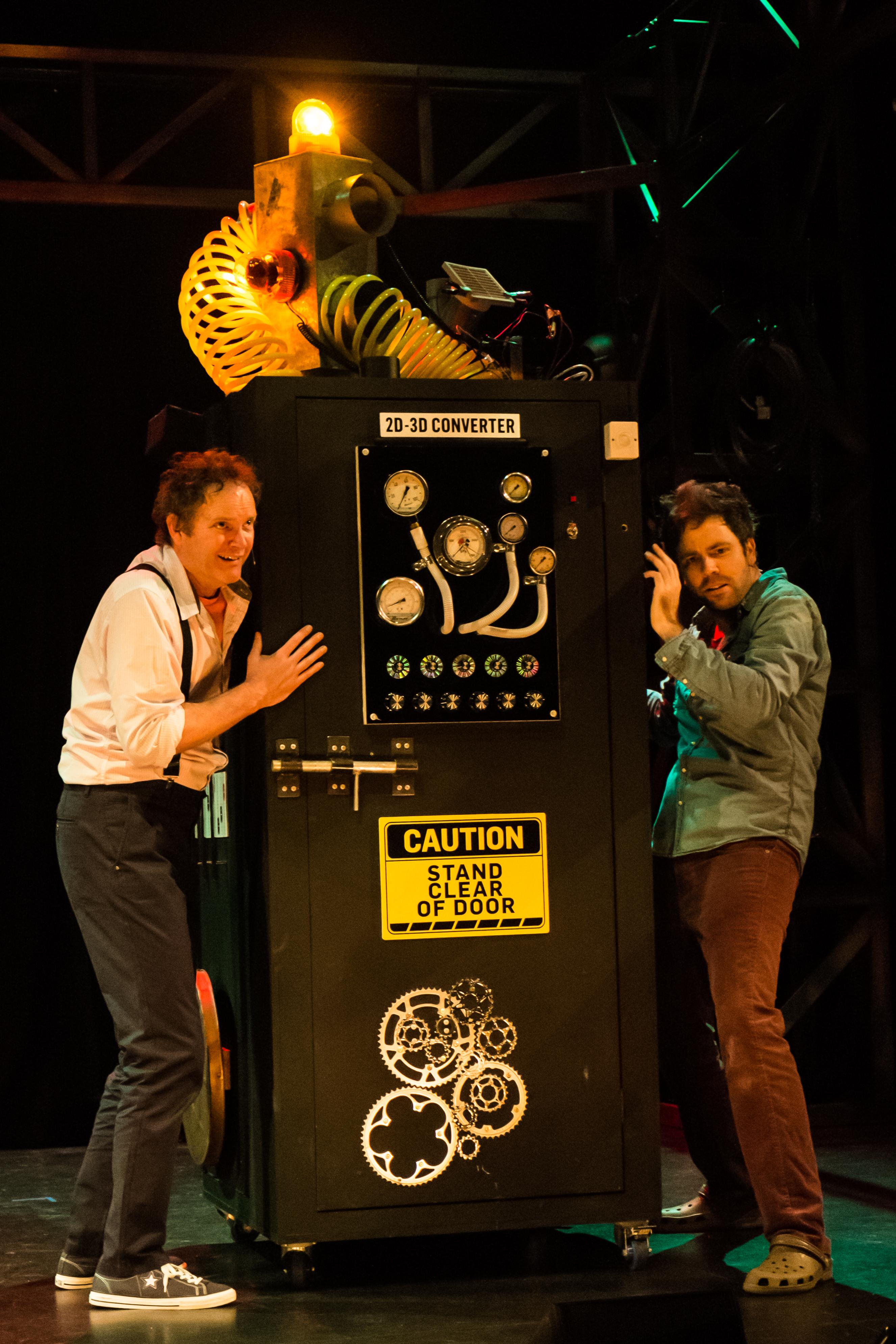
Mark Owen-Taylor and Luke Joslin. Photo: supplied

Mark Owen-Taylor and Luke Joslin. Photo: supplied

Such is the popularity of writer Andy Griffiths’ and illustrator Terry Denton’s children’s book The 13-Storey Treehouse that when the Sydney Opera House programmed a stage production in September it all but sold out before even opening – so a return season was announced quick smart.

It’s not the most obvious book to stage. For starters it’s set in, well, a 13-storey treehouse with a bowling alley, lemonade fountain, see-through swimming pool, man-eating shark tank, vines you can swing on and a secret underground laboratory. And then there are those pesky monkeys, a mermaid/sea monster, a marauding gorilla and a flying cat: all in a fun day’s work in the world according to Andy and Terry but far easier to conjure on the page than the stage.

The premise of the book is that it tells of all the adventures Andy and Terry have when they should be writing their overdue book – adventures, which ultimately become the story of the book.

For the stage production, writer Richard Tulloch gives this meta-joke a theatrical twist. Andy (Luke Joslin) and Terry (Mark Owen-Taylor) arrive at the Sydney Opera House to rehearse a play about the treehouse. The only trouble is they’ve forgotten to write a script or hire any actors and the opening night audience is already in the house.

Their no-nonsense stage manager Val (Sarah Woods) insists that the show must go on. And so with a box of props and a 2D-3D converter that brings drawings to life, they do indeed stage the story of The 13-Storey Treehouse – with the trusty Val agreeing under sufferance to take on the other roles (including the mermaid-sea monster) when they tell her that Nicole Kidman and Russell Crowe were unavailable.

Directed by Julian Louis with design by Mark Thompson, lighting by Nicholas Higgins and sound by Jeremy Silver, the show relies on a large dose of imagination from the audience – which is cleverly, dare I say imaginatively, harnessed by the creative team.

However, the production’s success is also due in large part to the all-stops-out performances of Joslin and Owen-Taylor who both bring ripper comic timing and the manic energy of a hypo child to their roles, working their butts off.

There are some brilliant little moments. A drawing competition between Andy and Terry (which as the adults realise includes sleight-of-hand) drew gasps of appreciation from the kids near me, while the gorilla trampling Mr Barky triggered shrieks of laughter.

The 13-Storey Treehouse runs at the Sydney Opera House until January 25. Bookings: sydneyoperahouse.com or 02 9250 7777


Neighbourhood Watch

Ensemble Theatre, Sydney, December 18

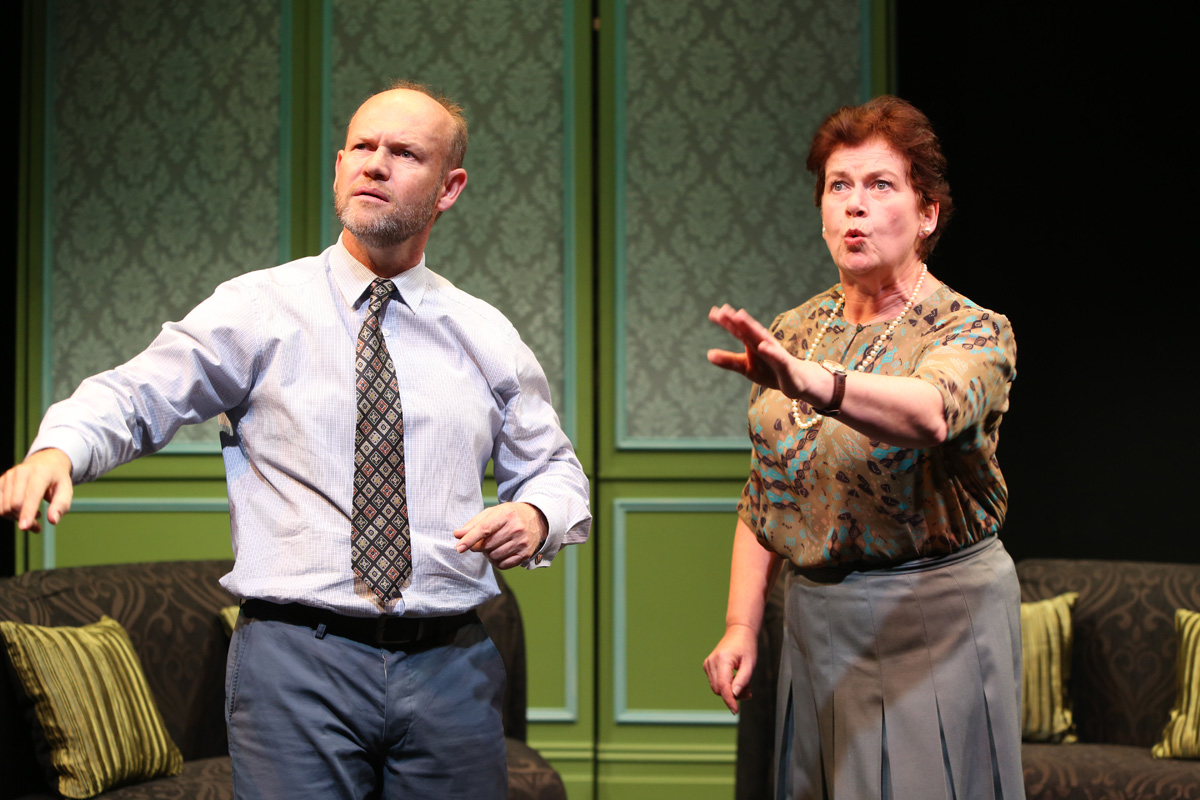
Brian Meegan and Fiona Press. Photo: Natalie Boog

Brian Meegan and Fiona Press. Photo: Natalie Boog

Written in 2011, Neighbourhood Watch is Alan Ayckbourn’s 75th play – and we thought David Williamson was prolific. It may not be vintage Ayckbourn but it’s an entertaining, darkly funny satire.

Tuning into the perennial fear of the unknown or “other”, as well as concerns about the changing face of Britain and the breakdown of society, Ayckbourn proved to have his finger on the pulse: the London Riots happened shortly after the play’s Scarborough premiere.

Devout Christian siblings Martin (Brian Meegan) and Hilda (Fiona Press), both unmarried, move into a nice, middle-class suburb, bringing a garden gnome called Monty and a statue of Jesus with them. They’ve only just arrived when Martin spots a teenager clambering over the next-door fence. Taking the boy to be an intruder and warned by neighbours about the “drugs, violence and incest” in the nearby, run-down council estate, he decides to form a neighbourhood watch committee.

Joining Martin and Hilda, are local gossip Dorothy (Gillian Axtell), ex-security guard Rod (Bill Young), Gareth (Jamie Oxenbould), a whining engineer with a mania for medieval punishment devices, Gareth’s promiscuous wife Amy (Olivia Pigeot) and Magda (Lizzie Mitchell), a troubled music teacher who lives next door with her aggressive husband Luther (Douglas Hansell).

Before long, the do-gooders have become every bit as frightening as the “riff raff and vermin” they are supposedly protecting themselves from, instituting a gated community with ID cards, volunteer vigilantes and a set of stocks on the roundabout into town.

The characters never feel entirely real but under the direction of Anna Crawford the excellent cast give sterling performances, doing their utmost to bring them to vibrant life.

Press is disturbingly good as Hilda, proving every bit as pushy as she is pious, while Meegan’s Brian merges decency and tyranny with self-satisfied ease. Oxenbould meanwhile is very funny as the wimpy Gareth, whinging about his wife’s behaviour one minute and pontificating over the difference between stocks and pillories the next.

The second act in which Ayckbourn focuses on the characters’ personal issues isn’t as sharp as the first and peters out a bit, but Crawford’s well-paced production keeps us engaged.

Neighbourhood Watch is a morality tale that underlines the potential danger of religious fervour and any form of dictatorship no matter how seemingly benign. We know we are being fed a message by Ayckbourn but it’s done with plenty of humour and enough of a sting in the tail to make us ponder.

Neighbourhood Watch runs at the Ensemble Theatre until January 24. Bookings: ensemble.com.au or (02) 9929 8877

An edited version of this review ran in the Sunday Telegraph on December 29

2013: The Year That Was

December 31, 2013

The last day of 2013 seems a good time to look back over what happened on the boards during the last 12 months. Here are some personal arts highlights from Sydney theatre predominantly: productions and people that will live on in my memory long past tonight’s Sydney Harbour midnight firework display heralding a new year.

MUSICAL THEATRE

Tony Sheldon, Katrina Retallick and Matt Hetherington in Dirty Rotten Scoundrels. Photo: Kurt Sneddon

Tony Sheldon, Katrina Retallick and Matt Hetherington in Dirty Rotten Scoundrels. Photo: Kurt Sneddon

It was a pretty patchy year in musicals. My two out-and-out highlights were The Production Company’s Gypsy in Melbourne and Dirty Rotten Scoundrels in Sydney.

Gypsy

Caroline O’Connor was phenomenal as Rose, giving us everything we’d hoped for and so much more: a stellar, unforgettable performance that was both monstrous and heartbreaking. For me, it was the musical theatre performance of the year.

Dirty Rotten Scoundrels

Matt Hetherington was impressive as Herbie in Gypsy but really came into his own with a superb performance as the vulgar Freddy Benson in Dirty Rotten Scoundrels. Co-starring with Tony Sheldon – who made a welcome homecoming from the US as the suave Lawrence Jameson, a part tailor-made for him – Scoundrels was a delightful, perfectly cast, stylish, laugh-out-loud production. Amy Lehpamer shone as Christine Colgate and Katrina Retallick was riotously funny in a scene-stealing performance as Jolene Oakes (after another scene-stealing turn in The Addams Family earlier in the year). Scoundrels was a real feather in the cap for up-and-coming producer George Youakim. The show deserved to sell out but despite reviews your mother might write, it struggled at the box office. Instead Sydney audiences opted for the familiar, even when reviews were much less favourable.

Squabbalogic

Confirming its growing value to the Sydney musical theatre scene, indie musical theatre company Squabbalogic led by Jay James-Moody enlivened things immeasurably with terrific productions of Bloody Bloody Andrew Jackson and Carrie with Hilary Cole making an impressive debut as Carrie.

Jesus Christ Superstar

The British arena production starring Tim Minchin, Mel C and Ben Forster really rocked with Tim Minchin in commanding form as Judas – giving a superstar performance, in fact.

ELSEWHERE IN MUSICALS….

The Lion King proved just as stunning visually a second time around but the first act felt flat with the dialogue scenes slowing the action, not helped by some underpowered performances. However, Nick Afoa made a promising debut as Simba.

Premiering in Melbourne, King Kong was an ambitious production and the puppetry used to create Kong himself was breathtaking. In fact, Kong the creature was awesome, the musical’s book less so. Esther Hannaford was lovely as Ann Darrow.

Lucy Maunder was the standout in Grease, owning the role of Rizzo. Her moving rendition of “There Are Worse Things I Could Do” was the emotional and musical highlight of the production.

Michael Falzon as Leo Szilard. Photo: Gez Xavier Mansfield Photograph

Michael Falzon as Leo Szilard. Photo: Gez Xavier Mansfield Photograph

Michael Falzon was in superb voice as physicist Leo Szilard in new musical Atomic, giving a beautifully wrought performance. In fact, the entire ensemble was terrific. Written by Australian Danny Ginges and American Gregory Bonsignore (book and lyrics) and Australian Philip Foxman (music and lyrics), the structure of the musical could do with some honing but the show has great potential.

I also enjoyed Jaz Flowers and Bobby Fox in the 21st anniversary production of Hot Shoe Shuffle. And what a treat to be able to see Kristin Chenoweth and Idina Menzel in concert at the Sydney Opera House within 10 days of each other.

THEATRE

It was an impressive year in Sydney theatre both in the mainstream and independent sectors with a large number of excellent productions and performances. Never has the discussion among the Sydney Theatre Critics in the lead-up to the Sydney Theatre Awards (to be presented on January 20 at Paddington RSL) been so protracted, agonised and, at times, heated.

Among my own personal highlights were:

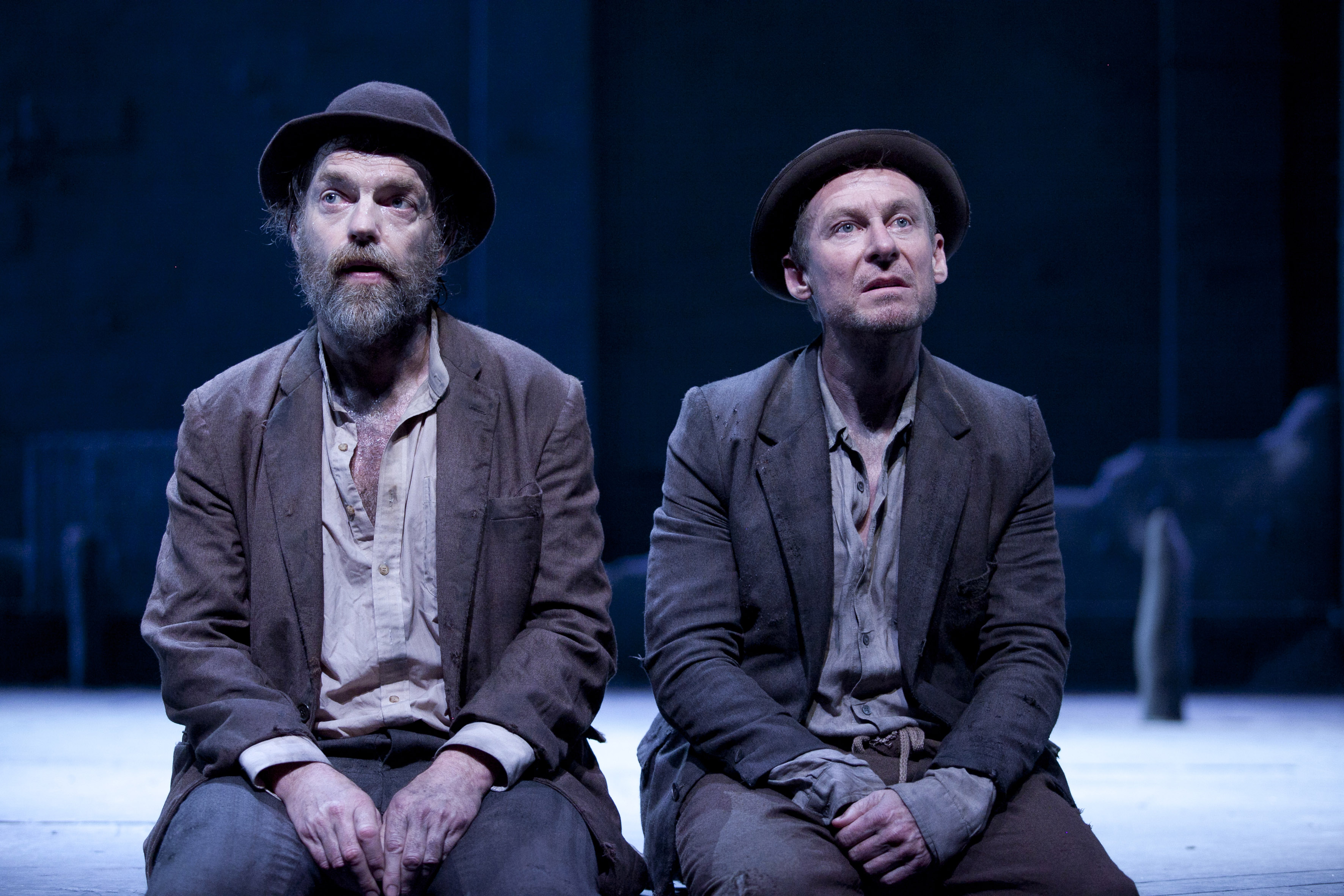
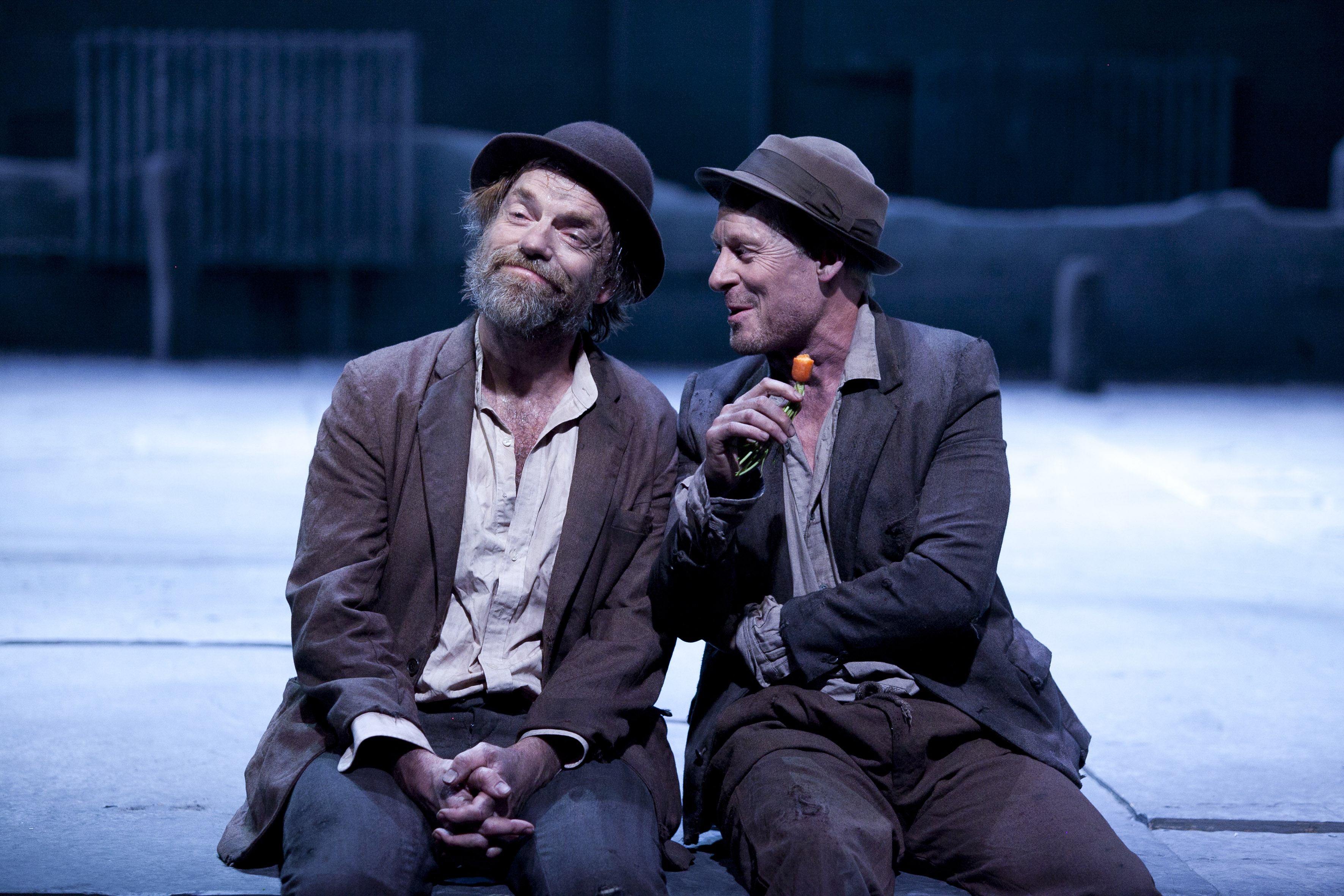
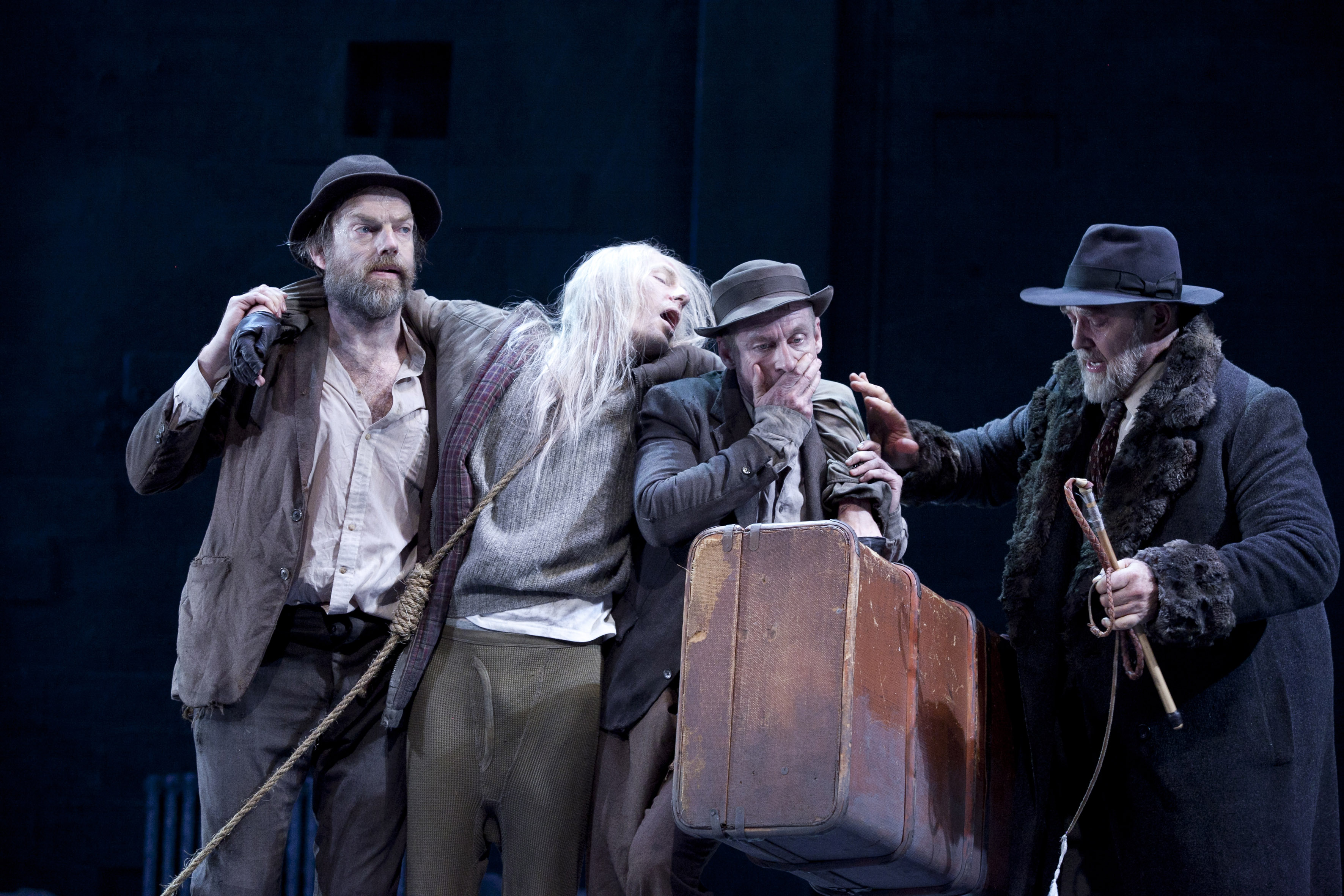
Waiting for Godot, Sydney Theatre Company. Directed by Andrew Upton after an injured Tamas Ascher was unable to fly to Australia, this was a mesmerising production full of tenderness, humanity, pathos and humour to match the bleakness. Richard Roxburgh, Hugo Weaving, Philip Quast and Luke Mullins were all exceptional. Wow to the power of four.

Hugo Weaving, Philip Quast,  Richard Roxburgh and Luke Mullins in Waiting for Godot. Photo: Lisa Tomasetti

Hugo Weaving, Philip Quast, Richard Roxburgh and Luke Mullins in Waiting for Godot. Photo: Lisa Tomasetti

The Secret River, Sydney Theatre Company. Eloquently staged by director Neil Armfield, Andrew Bovell’s stage adaptation of Kate Grenville’s novel used both English and the Dharug language to tell the story movingly from both sides.

Rosencrantz and Guildenstern are Dead, Sydney Theatre Company. Another fabulous STC production starring Toby Schmitz and Tim Minchin, directed by Simon Phillips on a brilliant set by Gabriela Tylesova that played with optical illusion.

Angels in America, Belvoir. Staging Parts One and Two, this marvellous production directed by Eamon Flack confirmed that Tony Kushner’s play is a truly sensational piece of writing that sweeps you up in its epic vision. The fine cast included Luke Mullins, Amber McMahon, Marcus Graham and Mitchell Butel – all superb. (Mullins also gave a fine performance in Kit Brookman’s Small and Tired Downstairs at Belvoir. What a year he’s had).

The Floating World, Griffin Theatre. A devastatingly powerful production of John Romeril’s classic Australian play directed by Sam Strong. Peter Kowitz’s performance left you utterly gutted. Valerie Bader was also excellent.

The Motherf**ker with the Hat, Workhorse Theatre Company. The independent scene was unusually strong in Sydney in 2013 and this was one of the real stunners. Directed by Adam Cook in the intimate space at the TAP Gallery, the tough play kept you on the edge of your seat. Troy Harrison and Zoe Trilsbach gave riveting, grittily truthful performances. If you missed it, the production has a return season at the new Eternity Playhouse in September.

Cyrano de Bergerac, Sport for Jove. Sport for Jove’s outdoor Shakespeare productions are now a highlight on the Sydney theatre calendar. Damien Ryan’s production of Edmond Rostand’s sweeping, romantic comedy Cyrano de Bergerac was gloriously uplifting with an inspiring, verbal tornado of a performance by Yalin Ozucelik as Cyrano.

Lizzie Schebesta and Yalin Ozucelik in Cyrano de Bergerac. Photo: Seiya Taguchi

Lizzie Schebesta and Yalin Ozucelik in Cyrano de Bergerac. Photo: Seiya Taguchi

Jerusalem, New Theatre. A wonderful production of Jez Butterworth’s brilliant play directed by Helen Tonkin that has justly snared a large number of nominations at the Sydney Theatre Awards.

Penelope, Siren Theatre Company. Kate Gaul directed a tough, challenging, indie production of Enda Walsh’s play, set in the bottom of a drained swimming pool, which riffs on the ancient myth. Another clever use of the small TAP Gallery, here playing in traverse.

Sisters Grimm. It was great to see the acclaimed, “queer, DIY” Melbourne company in Sydney with two of their trashy, gender-bending, outrageously funny productions: Little Mercy presented by STC and Summertime in the Garden of Eden as part of Griffin Independent. A hoot, both of them. (How drop dead beautiful was Agent Cleave in Summertime in drag and beard?). Can’t wait to see their production of Calpurnia Descending at STC in October.

All My Sons, Eternity Playhouse. The beautiful new Eternity Playhouse, a gorgeous 200-seat venue now home to the Darlinghurst Theatre Company, opened its doors with a fine, traditional production of All My Sons directed by Iain Sinclair with great performances all round, among them Toni Scanlan and Andrew Henry.

OTHER OUTSTANDING PERFORMANCES….

Besides those mentioned above I loved Sharon Millerchip in Bombshells at the Ensemble, Lee Jones in Frankenstein also at the Ensemble, Cate Blanchett in The Maids for STC, Paul Blackwell in Vere for STC, Ewen Leslie in Rosencrantz and Guildenstern are Dead and in Hamlet at Belvoir (where he took over from Toby Schmitz whose performance I also liked very much), John Bell as Falstaff in Bell Shakespeare’s Henry 4 and Damien Ryan as Iago in Sport for Jove’s Othello.

OPERA AND BALLET

The Ring Cycle, Opera Australia. I was lucky enough to see The Ring Cycle in Melbourne. It was my first Ring and I was utterly thrilled by it. Numerous visual images will stay with me forever as will performances by Terje Stensvold, Stefan Vinke, Susan Bullock, Warwick Fyfe and Jud Arthur among others. As is his forte, director Neil Armfield brought the relationships to the fore and found enormous emotion and humanity. Conductor Pietari Inkinen, who took over at short notice, harnessed the musical forces superbly. A very special experience.

David Hansen and Celeste Lazarenko. Photo: Keith Saunders

David Hansen and Celeste Lazarenko. Photo: Keith Saunders

Giasone, Pinchgut Opera. At the other end of the spectrum, small-scale, indie company Pinchgut delivered a sparkling production of Francesco Cavalli’s baroque opera with countertenor David Hansen dazzling in the title role.

Cinderella, Australian Ballet. Alexei Ratmansky’s beautiful, witty Cinderella was a joy with some meltingly lovely pas de deux for Cinderella and her Prince, divinely performed by Leanne Stojmenov and Daniel Gaudiello. Jerome Kaplan designed the gorgeous costumes and some clever surrealist staging effects.

VISITING PRODUCTIONS AND ARTISTS

How lucky we were to see Angela Lansbury and James Earl Jones in Driving Miss Daisy, the National Theatre’s brilliantly bonkers production of One Man, Two Guvnors, Kneehigh Theatre’s Brief Encounter, the Paris Opera Ballet’s exquisite Giselle, Semele Walk at the Sydney Festival, which gave Handel’s oratorio a wacky twist in a catwalk production with costumes by Vivienne Westwood, and firebrand soprano Simone Kermes singing with the Australian Brandenburg Orchestra.

There was much, much more. Barry Humphries‘ Weimar cabaret concert for the Australian Chamber Orchestra, for example. In the end, too much good stuff to mention it all.

And now, bring on 2014….

Cyrano de Bergerac

Bella Vista Farm, Baulkham Hills, December 15

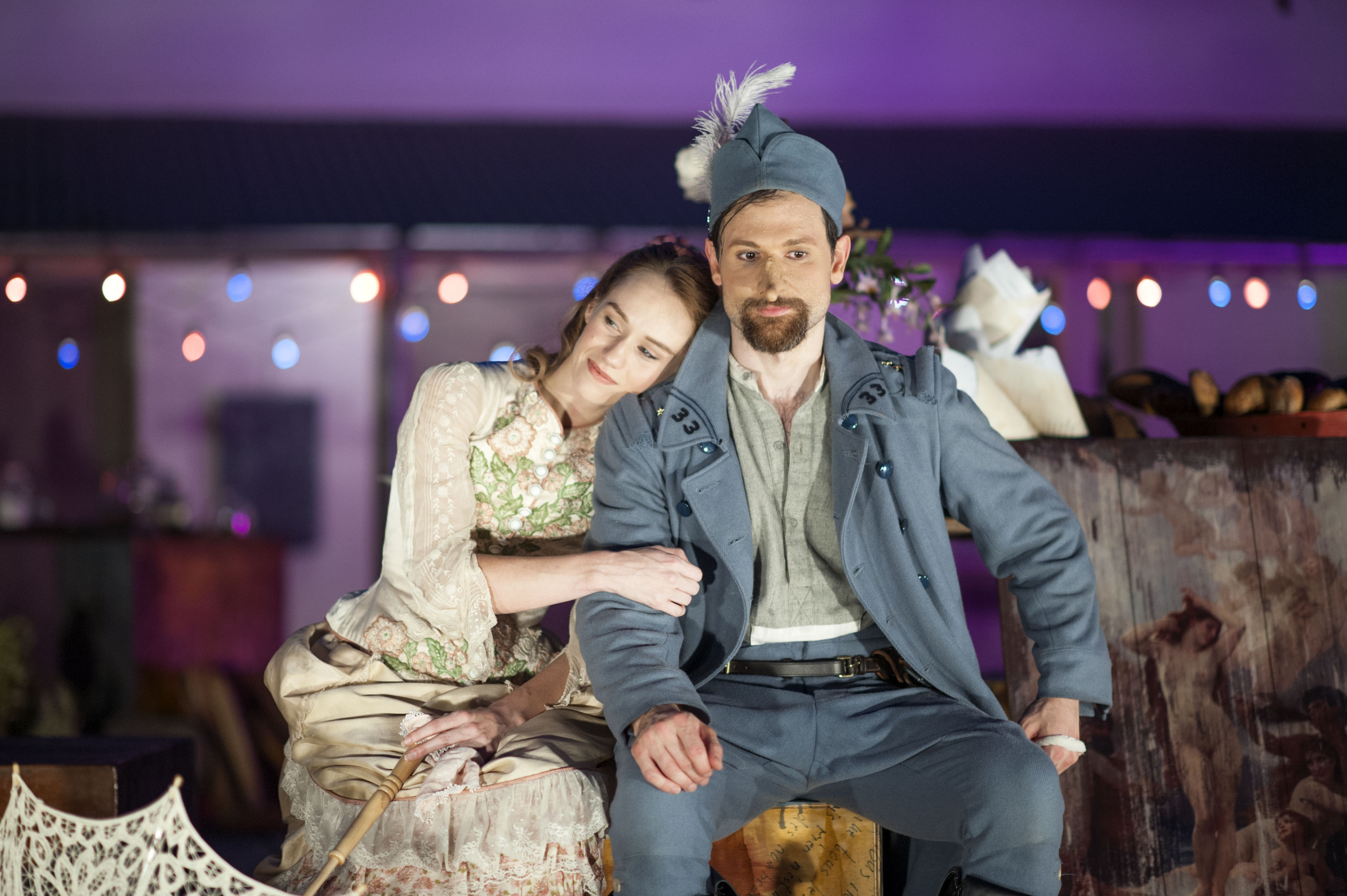
Lizzie Schebesta and Yalin Ozucelik. Photo: Seiya Taguchi

Lizzie Schebesta and Yalin Ozucelik. Photo: Seiya Taguchi

Independent company Sport for Jove celebrates its fifth year in 2014. In that short time its outdoor Shakespeare productions have become a highlight on the Sydney theatre calendar.

This season alongside Much Ado About Nothing, the company presents a marvellous production of Edmond Rostand’s 1897 French masterpiece Cyrano de Bergerac: an epic five-act romantic comedy full of poetry, passion and humanity.

One of the great love stories, it tells of maverick soldier-poet Cyrano de Bergerac, an uncompromising man full of passion and wit, who runs rings around everyone verbally and is equally adept with a sword.

He falls in love with the beautiful, intellectual Roxane who would have been his were it not for his enormous nose. Instead, he helps Christian – who is handsome but no Einstein – to woo Roxanne with passionate letters. Only on Cyrano’s deathbed does Roxane discover that he has been the love of her life.

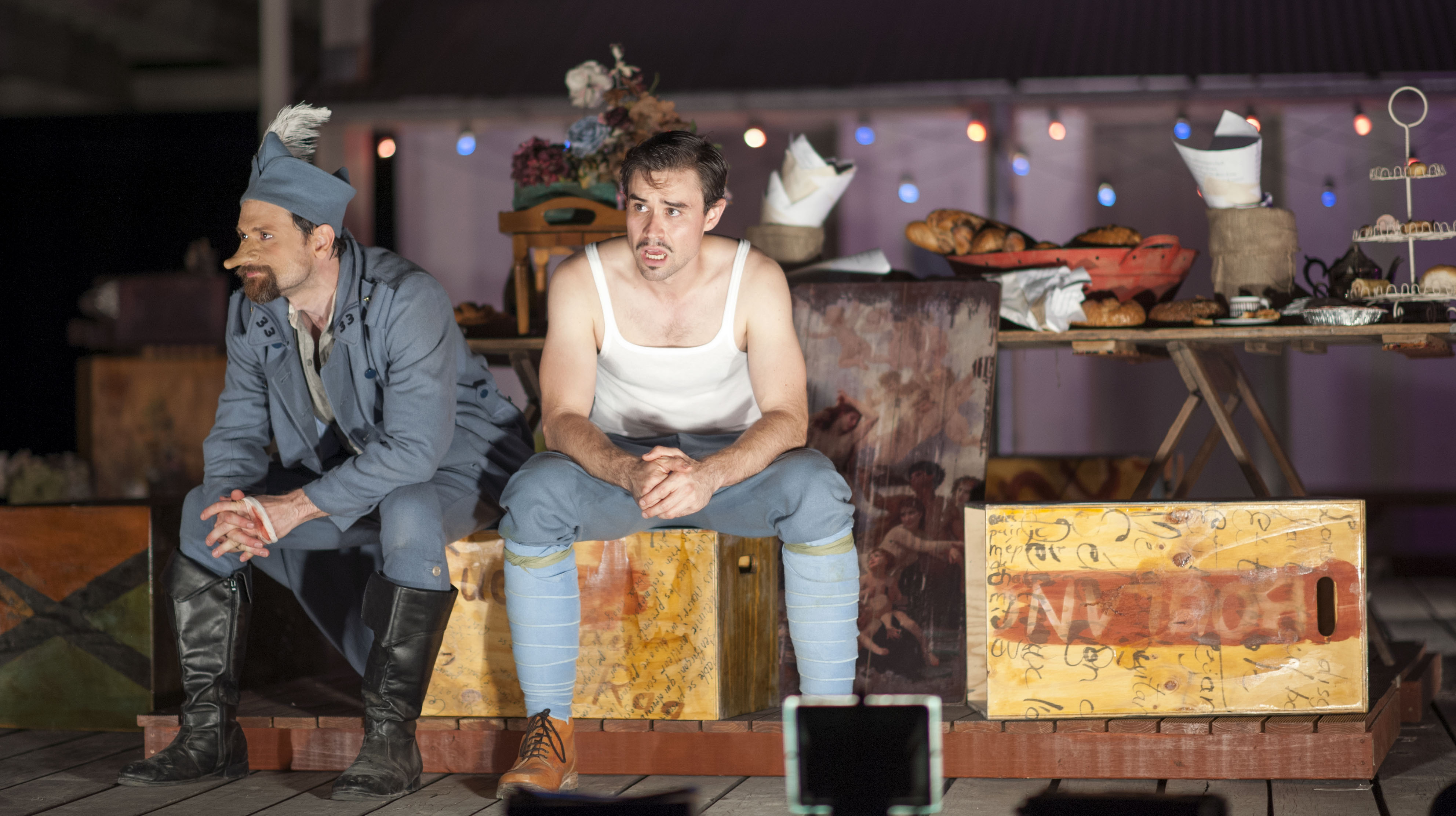
Sport for Jove’s artistic director Damien Ryan has written a vibrant adaptation using verse and prose, which is faithful to Rostand’s original but moves the action from 1640s Paris to the Belle Epoque and the start of World War I.

With a keen sense of how to use the outdoor space, Ryan directs a production that is playful and full of verve yet ultimately extremely moving. Barry French’s set makes the most of the lovely surrounds at Bella Vista Farm, using the homestead balcony for the famous wooing scene (Rostand’s nod to Romeo and Juliet) and a shed for the war scenes, which are greatly enhanced by David Stalley’s sound design. The aptly named French also has fun suggesting the French setting with baguettes to the fore in the boulangerie, while Anna Gardiner’s costumes are a delight.

Yalin Ozucelik is outstanding as the swash-buckling Cyrano, capturing his cockiness, volubility and wit as well as his aching heart and self-loathing. At times he is like a verbal tornado. Lizzie Schebesta is a lovely, feisty Roxanne and Scott Sheridan is very funny as Christian – though the scene when he snaps, wanting Roxane to love him for himself rather than the words that Cyrano puts into his mouth is very touching.

Yalin Ozucelik and Scott Sheridan. Photo: Seiya Taguchi

Yalin Ozucelik and Scott Sheridan. Photo: Seiya Taguchi

The rest of the 16-strong ensemble, who between them play around 50 characters, are uniformly strong.

The production runs three hours but it’s so engaging the time flies. There are few better ways to spend a night under the stars so pack a picnic and treat yourself to one of the best nights of theatre on offer right now.

Cyrano de Bergerac is at Bella Vista Farm, Baulkham Hills until December 30, then Everglades Garden, Leura, January 11 – 26. Bookings: sportforjove.com.au

An edited version of this review ran in the Sunday Telegraph on December 22

Richard Roxburgh interview

Richard Roxburgh chats about Waiting for Godot, Cyrano de Bergerac and Rake.

Hugo Weaving and Richard Roxburgh in Waiting for Godot. Photo: Lisa Tomasetti

Hugo Weaving and Richard Roxburgh in Waiting for Godot. Photo: Lisa Tomasetti

In a case of life imitating art, Richard Roxburgh and Hugo Weaving spent the first seven days of rehearsal not only waiting for Godot but waiting for Hungarian director Tamas Ascher.

As in Beckett’s play, he never appeared. Ascher couldn’t make the trip to Australia because of a back injury so Andrew Upton ended up directing the Sydney Theatre Company’s superb production, now playing, in which Roxburgh plays Estragon to Weaving’s Vladimir.

“For the first week it was ‘waiting for Tamas’ so the overlaps between rehearsals and the play (meant) there were all these hilarious moments,” says Roxburgh. “I wonder if it’s ever happened before, the director not turning up.”

It was while Ascher was directing Roxburgh and Weaving in STC’s acclaimed production of Uncle Vanya, which toured to the Lincoln Center Festival in New York, that the idea of doing Godot was born.

“We were rehearsing the scene between Astrov (Weaving) and Vanya (Roxburgh) when Vanya has disgraced himself with the pistol and he’s whinging about his life. It’s one of those unfortunately funny moments. We shared a cigarette as we sat there moping and Tamas just burst out laughing and said, ‘It’s Estragon and Vladimir,’” recalls Roxburgh.

“That’s where the whole idea came from so it was strange to do it without Tamas. I suppose for the first week we were (second-guessing what Ascher might have done). We know Tamas well enough and Anna Lengyel his translator was in the room. She’s a dramatist in her own right and incredibly intimate with his work and methods and style and modes of thinking. But then when it become clear that Tamas wasn’t coming, Andrew had to step up and make decisions so that became another part of the process.”

Roxburgh has never seen Beckett’s landmark, absurdist play but is thrilled to be performing in a production of it – particularly with Weaving.

“It’s obviously one of those plays that you know and I’d always hoped I would find the right environment to do it in and so when it cropped up it was perfect. Hugo and I have such a great chemistry and such great fun together,” he says. “There’s a reliability to that relationship that feels like it could be fleshed out in different ways.”

The two leading Australian actors have known each other a long time. “I essentially became an actor because of seeing Hugo,” says Roxburgh.

“I saw him play Toby Belch in his third year touring production of Twelfth Night when he was at NIDA. It toured to Canberra where I was at university and seeing what he did in that (inspired me). I can remember the production. There were some really fine actors in his year but his Toby Belch was just this landmark of a thing. It was so full of the joy of performance and not without subtlety that I just thought, ‘God, whatever that is I would love to have a piece of that in my life.’

“That really stuck with me. I think the first time we worked together was when I ended up casting him as Warburton, the homeless priest character in a production of That Eye, the Sky that I did in the Sydney Festival years ago. Then we cast him in the first episode of (ABC-TV series) Rake. Then we did Vanya, so we’ve always been in touch.”

Roxburgh says that during Godot rehearsals it wasn’t the play’s bleakness or abstraction that he found tricky but the way Beckett is “dealing with an entirely invented world in a way that doesn’t conform to the ordinary rules of society. Conversation, emotional logic, all of those thing that we kind of adhere to and that you operate within in a normal play aren’t there or if they are they are interspersed so it’s like you get refracted elements of those things throughout. That’s really a bitch to get hold of. It doesn’t conform to the usual rules. There’s no kind of essential narrative logic or emotional logic running through it so getting it into your head is hard. People always say ‘how do actors learn lines?’ Normally you think ‘that’s nonsensical, that’s just what we do’ but in this case it was so hard.”

Although the play is bleak and steeped in what Roxburgh describes as “a kind of apocalyptic sadness”, it is also very funny, with the STC production finding a great deal of humour.

“(Beckett) was pulling a lot from the energy and the dynamism of vaudeville, from the Marx Brothers and Buster Keaton. All of that energy is in the play as well,” says Roxburgh. “I’m sure there have been incredibly bleak, depressing versions of this play but that’s not the version we are doing.”

Next year, Roxburgh plays Cyrano de Bergerac for the STC (November 11 – December 20); something he suggested to the company.

“It’s a beautiful story that I absolutely love. I’ve always wanted to do it so I talked to them about it,” he says. “I thought Jeremy Sims did a really beautiful Cyrano here (at STC in 1999 directed by Marion Potts) as a kind of chamber piece, which I couldn’t have imagined prior to seeing it but I thought it was really great. But we are going to do a large-scale thing, which I think is great for the gallantry and the fun and the majesty of it.”

Meanwhile, Roxburgh returns to our television screens in February as Cleaver Greene, the brilliant but incorrigible, womanising, self-destructive criminal barrister in the third series of Rake – the award-winning ABC comedy-drama series, which he co-created, produces and stars in.

A US remake starring Greg Kinnear as the barrister, now called Keegan Deane, and Miranda Otto as his ex-wife will begin screening in January.

Roxburgh says that he wasn’t interested in playing the role in the US. “There would have been a great reason to do it financially but I suppose I felt that I have done my Cleaver and if I did one that I had to compromise on or that I didn’t feel I had as much creative control over, I would have hated it. And so in the end we thought it was much safer to say that we get somebody fantastic in America to do it – and I think Greg Kinnear is fantastic. I can’t think of anyone better to do Cleaver over there.”

Asked why the character has been renamed, Roxburgh grins. “That was at my insistence. I just thought, ‘he can’t have Cleaver’. Cleaver is named after the mayor of the town I grew up in – Cleaver Bunton, who was the mayor of Albury. There’s something about that that’s terribly personal and that was part of the fun of the original imagining of the thing.”

Filming for Rake in Australia wrapped just a couple of weeks before rehearsals for Godot began. Roxburgh admits he would have liked to have had a break after “the intensity” of Rake. “But luckily my character in Godot has to look hideous and aged and exhausted and spent so it’s perfect!” he quips.

“But I do need to have time off (after Godot) to get my batteries back in order. It was very hard this year (shooting Rake). We didn’t have (co-creator/writer) Peter Duncan. He and Andrew Knight wrote the scripts but Peter was working on the American one so he was over there. So on a day-to-day basis the ten phone calls I would have had with him in the previous series saying, ‘rewrite this, this doesn’t work, I can’t say that, this doesn’t make sense’ couldn’t be had so we had to find a way of getting through that this time, which made it exponentially more tricky. Thank god for (director) Jessica Hobbs who was really extraordinary and stepped up to do a lot of that work.

“But it was tricky because we knew where the bar had to be and we knew we couldn’t do something sub-optimal. And you know when it’s right. You can feel it, you can hear it, so when it wasn’t you just couldn’t let that go. It actually made this season so much harder but I think it’s worked. I think it’s paid off and it’s absolutely beautiful this season.”

Roxburgh confirms that the forthcoming Australian series will be the last.

“I do think you could continue to take Cleaver on all kinds of magical mystery tours,” he says. “I feel like he’s this character you could put in a jungle in Borneo and see what would happen and there would be fun to be had with that. But we were always determined to leave it with grace and dignity and leave people wanting more rather than less. It got to a point where we were having to massage story lines because they were too similar to ones we had already done.

“And also I suppose I want to see what else I’ve got,” says Roxburgh. “Having said that, I’m going to miss Cleaver terribly because I absolutely love that character. There’s so much of my clown in Cleaver and I will miss him.”

Waiting for Godot plays at Sydney Theatre December 21. Bookings: 9250 1777. Read my review here: https://jolitson.com/2013/11/25/waiting-for-godot/

An edited version of this story appeared in the Sunday Telegraph on November 3

Nick’s Bar

Nick Enright

Nick Enright

Sydney will soon have a theatre named after Nancye Hayes (the former Darlinghurst Theatre). Now, it has a theatre bar named after the late, much-missed Australian playwright Nick Enright.

Last night, Darlinghurst Theatre Company and the Enright family hosted a wonderful event in the foyer at the newly opened Eternity Playhouse where friends and colleagues of Enright’s, including Nancye Hayes, gathered to celebrate the news that the foyer bar will be known as Nick’s Bar.

Enright’s brother Ian also announced that, over the next three years, the Enright family is supporting Darlinghurst Theatre Company to produce three plays by the renowned Australian playwright, starting with Daylight Saving in 2014.

Enright, who died in 2003 at age 52 of a melanoma, was a dearly loved man of the theatre. A prolific writer for film, television and the stage, he was also an actor, director and teacher who was Head of Acting at NIDA between 1983 and 1984.

His playwriting credits include On the Wallaby, Daylight Saving, St James Infirmary, Mongrels, A Property of the Clan, The Quartet from Rigoletto, Blackrock, Good Works, Spurboard and A Man with Five Children. Together with Justin Monjo he also adapted Tim Winton’s Cloudstreet for the stage.

He wrote the book and lyrics for many musicals including The Venetian Twins, Variations and Summer Rain with composer Terrence Clarke; The Betrothed, Mary Bryant and The Good Fight with David King; and Miracle City with Max Lambert. He also wrote the book for The Boy From Oz, which went on to become a hit on Broadway.

Enright co-wrote the screenplay for Lorenzo’s Oil, which earned him an Academy Award nomination.

Last night’s event included performances and talks by friends of Enright’s who remembered a man who was warm and witty, wrote comedy and lyrics with effortless ease, and was also a great mentor to many young artists. David Marr (who runs Enright’s estate with Ian Enright) also recalled the playwright’s “ferocious” but insightful editing of his biography of Patrick White.

Enright wasn’t a great drinker himself, said Marr, but understood that red wine and conversation go together so the naming of a bar after him was an apt tribute.

Marr was the MC – a role he said that we didn’t need (given that everyone in the room knew each other) but had to have because Enright loved the formalities of the theatre.

Genevieve Lemon opened the show with “I’ll Hold On” from Miracle City – a heart-breakingly beautiful song, beautifully sung, bringing back great memories of the show, which surely deserves to be seen again soon.

Lynne Pierse and Doug Hansell performed “Love Has Lousy Timing” from the first version of Summer Rain, which was subsequently cut from the show, Paul Capsis sang Lou Reed’s “Perfect Day”, Jay James-Moody gave us the ever-popular comedy number Jindyworoback from The Venetian Twins with composer Terry Clarke at the piano and Tony Sheldon brought the night to a moving end with “If I Don’t Have You” from Variations (recently given a concert performance by Neglected Musicals).

Sandy Gore did the honours in officially opening “Nick’s Bar”. During a lively, touching speech she revealed that Enright had been so frustrated and depressed at his plays not being picked up and staged that he vowed that he would stop playwriting if Daylight Saving (which he wrote for her in 1989 after Marr suggested he tackled a comedy) was not a success – and she believed him. Happily it sold out and Enright’s career took off.

Mark Kilmurry directs Daylight Saving for the Darlo next year (October 30 – November 30).

“If you need any assistance on the mother, it’s my mother and I can tell you how it’s done,” said Marr.

Hopefully, Daylight Saving is just the first of many Enright revivals to come.

Marr also paid tribute to remarkable Sydney pop artist Martin Sharp who died on Sunday. The Eternity Playhouse is named after Arthur Stace who famously chalked the word “Eternity” on Sydney’s pavements for 30 years after hearing a sermon at the Burton Street Tabernacle now converted into the theatre. Sharp included the word in several works including his 1977 poster Eternity Haymarket! and also illuminated it on the Sydney Harbour Bridge for the New Year’s Eve celebrations leading into 2000.

Waiting for Godot

Sydney Theatre, November 16

Hugo Weaving and Richard Roxburgh. Photo: Lisa Tomasetti

Hugo Weaving and Richard Roxburgh. Photo: Lisa Tomasetti

It’s just three years since Ian McKellen and Roger Rees toured here in a British production of Waiting for Godot that played up the vaudevillian theatricality in Samuel Beckett’s extraordinary, absurdist drama, with Vladimir and Estragon relating to each other like a well-oiled comedy duo.

Now comes a Sydney Theatre Company production starring Richard Roxburgh as Estragon and Hugo Weaving as Vladimir that undoes you emotionally in a far more profound way. The comedy is still there, beautifully so ­– though less self-consciously vaudevillian – but beneath both the humour and the existential bleakness is great tenderness, humanity, pathos and a disarming sense of caring.

Even the oppressed Lucky (Luke Mullins) gently wipes the face of his tyrannical master Pozzo (Philip Quast), having helped him to his feet at they prepare to depart in Act Two. It’s an incredibly touching moment that takes you completely by surprise and has you suddenly re-evaluating their relationship.

The production was to have been helmed by Hungarian director Tamas Ascher, who directed Roxburgh and Weaving in the STC’s acclaimed 2012 Uncle Vanya. When an injury left him unable to fly, Andrew Upton stepped into the breach, with Ascher’s assistant Anna Lengyel as his associate, and directs a production of great clarity that is light on its feet yet terribly moving.

Zsolt Khell’s stark set resembles a charred, empty theatre, open to the back wall, within a false proscenium studded with broken and missing light bulbs. The famous tree is a thin streak of trunk with a single branch that arches heavenwards, disappearing from view.

It is beautifully lit by Nick Schlieper, who bathes the stage in a sudden snap of blue light as night descends, while Alice Babidge’s costumes are suitably tattered and worn.

Weaving and Roxburgh are like two sad but resilient clowns who have made their way together, for better or worse. Roxburgh’s boyish Gogo is the more lost, despairing and occasionally angry, tugging plaintively at his ill-fitting boots and looking to Didi for comfort and food, yet he is playfully funny too.

Weaving’s Didi is jauntier and more in control, rolling the words around his mouth as he enunciates crisply like an old theatrical pro, the one who seems to remember more of the past, including the fact that they are to meet the enigmatic Godot.

Hugo Weaving, Luke Mullins, Richard Roxburgh and Philip Quast.  Photo: Lisa Tomasetti

Hugo Weaving, Luke Mullins, Richard Roxburgh and Philip Quast. Photo: Lisa Tomasetti

Quast and Mullins are more than their match as Pozzo and Lucky who appear in both acts, helping to alleviate the endless waiting.

Mincing onto the stage, his back arched dramatically as if promenading amongst high society, Quast is superb as the pompous, grandiose Pozzo: a big, corpulent figure compared to his scrawny servant. With his rich, resonant voice, Quast’s Pozzo is like a ringmaster in the first act, brutally in control. In the second act, now blind, he staggers on like a wounded bull, his authority undone.

With long, straggly white hair, Mullins is a ghostly yet feral presence and knocks you for six with his explosive, tortured outpouring of Lucky’s famous “thinking” monologue.

On opening night Rory Potter completed the exemplary cast as the boy who arrives, twice, to say that Godot won’t be coming.

In this thrilling, incredibly special production, you experience afresh Beckett’s iconic, exquisitely written play about everything and nothing. It really does seem to encompass the whole of life. Unforgettable.

Waiting for Godot runs at the Sydney Theatre until December 21. Bookings: 9250 1777 or sydneytheatre.com.au

An edited version of this review appeared in the Sunday Telegraph on November 24